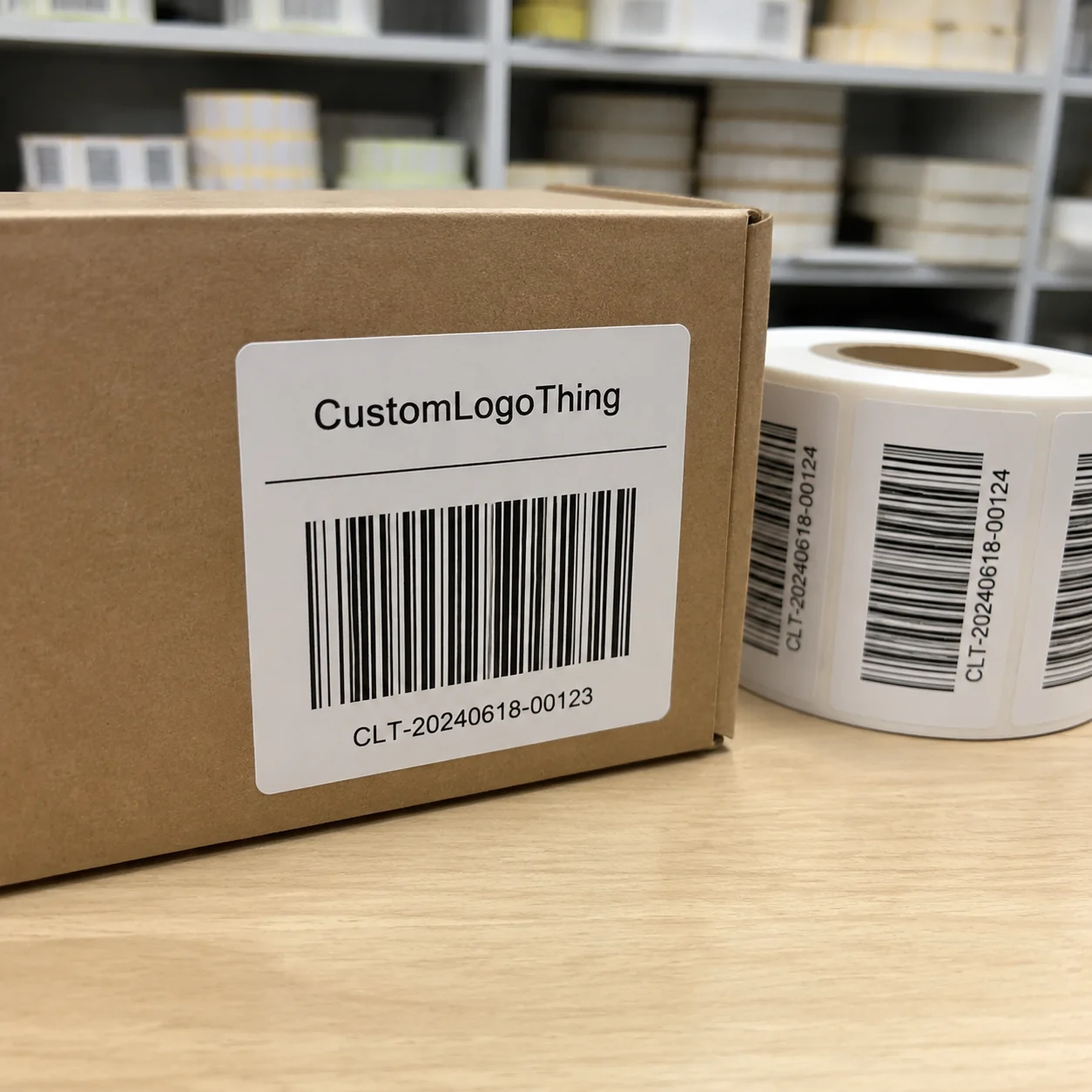
If you are asking for a Hang Tags Supplier Quote for cosmetics brands, the first thing to define is not the price. It is the job the tag has to do. A hang tag is rarely just a small card with a price on it. In beauty packaging, it often acts as a brand signal, a compliance surface, a merchandising aid, and a tactile detail that changes how a product is judged before it is even opened.
That matters because cosmetics buyers notice finish quality quickly. A polished bottle with a thin, curling tag looks unfinished. A simple jar with a crisp tag, good stock, and clean print can look more deliberate than a much more expensive pack that was specified loosely. The difference is usually not dramatic design. It is execution.
For brands that sell skincare sets, fragrance, gift bundles, brushes, or accessory kits, hang tags also solve a practical problem: they keep the primary package uncluttered. Instead of forcing every detail onto the bottle, jar, or carton, the tag can carry the parts that need to be seen but do not belong on the primary label.
Why cosmetics hang tags do more than hold a price
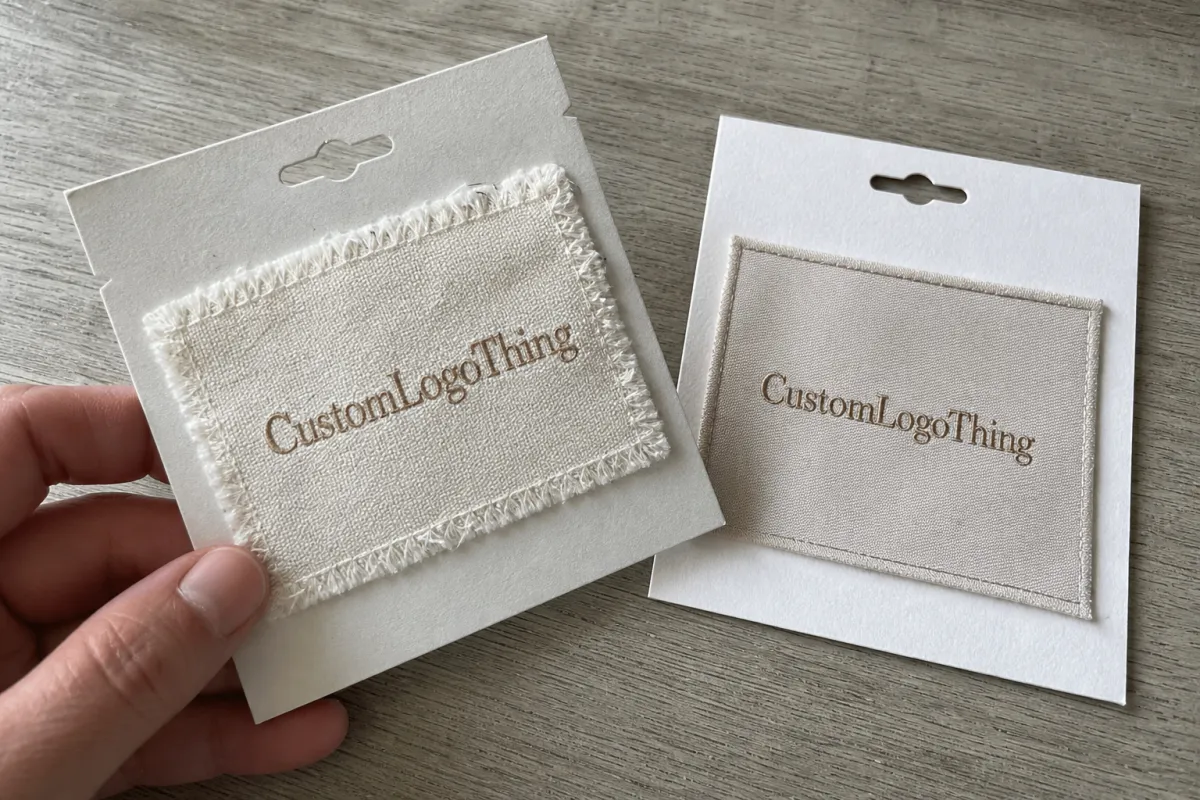
In beauty packaging, the hang tag has three functions at once. It supports brand perception, carries product information, and helps the item present properly on shelf or in a mailer. Small piece, big workload. That is why spec mistakes show up so quickly.
For limited editions and seasonal drops, hang tags often do more than a standard label ever could. They can identify scent families, regimen steps, shade ranges, kit contents, or promotional claims without crowding the main pack. That leaves the bottle or jar visually clean, which is usually what premium brands want. The tag becomes the place where the practical detail lives.
There is also a display-side reality that gets overlooked. Brushes, tools, sample packs, and some accessory sets need hanging or pegging to sit correctly in retail fixtures. If the tag is too heavy, too flimsy, or punched in the wrong place, it twists, tilts, or blocks product visibility. A tag that looks attractive in a PDF can still fail on the pegboard.
“The cheapest tag is often the most expensive one after reprints, rejected lots, and time lost to correction.”
When a buyer requests a Hang Tags Supplier Quote for cosmetics brands, the supplier needs to know whether the tag is primarily decorative, informational, or functional. Does it need a barcode? Does it need to carry country-of-origin text, ingredient notes, or a QR code? Will it be tied to the product, looped through a carton, or pegged in a retail fixture? Those answers change both price and production method.
Packaging organizations such as Packaging Institute-type resources tend to stress the same principle: the best packaging performs because structure, print, and end use are aligned. Cosmetic tags are no different. A beautiful tag that cannot survive handling is only a prototype with good lighting.
Tag styles, materials, and finishes that fit beauty packaging
Not every hang tag should be treated like a tiny poster. Cosmetics usually benefit from smaller, cleaner formats that match the scale of the product. A 40 x 60 mm tag can work for a lip balm or travel-size skincare item. A 70 x 100 mm card gives more breathing room for gift sets, bundles, and premium retail packs. Once the information gets cramped, the design starts to look cheap even if the materials are decent.
Material choice has a bigger effect than many brand teams expect. 350gsm C1S artboard is a common starting point because it prints cleanly and holds shape well. Coated art paper produces sharper color and finer detail. Kraft board supports natural or clean-beauty positioning, but only if the design is built around lower contrast and a more restrained palette. Soft-touch laminated stock adds a quiet matte feel that reads premium without demanding attention.
There is no universal best stock. The right option depends on the product, the sales channel, and how much handling the tag will see. Tags in subscription boxes and mailers often need more scuff resistance than tags sitting on a shelf. If the finish is too delicate, abrasion shows quickly. If the board is too thin, the tag droops and feels disposable.
Finish options worth paying for
Foil stamping, embossing, spot UV, matte lamination, and rounded corners are the finishes that usually justify their cost. Not because they are decorative extras, but because they alter the way the tag feels in hand and how it behaves under store lighting. A small gold foil mark on a fragrance tag can sharpen the whole presentation. Use too much foil, though, and the pack starts looking busy rather than premium.
Attachment style deserves the same attention as the print. String, ribbon, elastic cord, plastic loop, and pre-punched holes all create different assembly and display results. A satin ribbon suits luxury positioning but takes longer to tie and package. A plastic loop is fast in higher-volume lines. Pre-punched holes need correct placement, or the tag hangs crooked and rotates to the wrong side every time the item is moved.
Readability is non-negotiable. Tiny text on a glossy finish can disappear under retail lighting, especially if the type is light or the contrast is weak. Ingredient statements, warning lines, batch-coding zones, and barcodes all need enough space and enough quiet area around them. If the layout cannot hold that information without clutter, the tag is too small. That is a production limitation, not a design preference.
For buyers comparing options before requesting a Hang Tags Supplier Quote for cosmetics brands, the following table is a practical starting point.
| Tag option | Typical use | Cost impact | Buyer tradeoff |
|---|---|---|---|
| 350gsm artboard, matte print | Everyday skincare, travel sizes | Lower | Clean look, fewer finishing costs |
| Soft-touch laminated stock | Premium gift sets, fragrance | Medium | Better hand feel, slightly higher unit price |
| Foil + emboss + custom shape | Luxury launches, limited editions | Higher | Stronger shelf impact, longer lead time |
| Kraft board with one-color print | Natural or eco-positioned lines | Lower to medium | Authentic look, less color flexibility |
For sustainability claims, ask what board is FSC-certified and what inks are used. The FSC system is worth checking at fsc.org. If your brand claims recycled content, responsibly sourced paper, or a lower-impact pack, the supplier should be able to show how the material supports that claim. A vague answer is not enough. If the claim needs to appear on pack, ask for the documentation early.
Specifications buyers should lock before requesting a quote
Most quote delays come from fuzzy specs. Not because suppliers are trying to drag their feet. Because the brief leaves too many decisions open, and the estimate changes every time those missing details are filled in. If you want an accurate Hang Tags Supplier Quote for cosmetics brands, lock the essentials before sending the request.
- Size: exact width and height in mm or inches.
- Material: paper stock, board weight, or special substrate.
- Print sides: single-sided or double-sided.
- Finish: matte, gloss, soft-touch, foil, embossing, or spot UV.
- Hole position: top center, corner, offset placement, or custom die.
- Attachment: string, ribbon, loop, or no attachment.
Artwork specs matter too. Send the file format you actually have, not the one you wish you had. PDF is usually the safest production file. AI or EPS can work if fonts are outlined and linked images are handled correctly. Bleed is typically 3 mm unless the supplier specifies otherwise. Color mode should be CMYK for process print, with PMS or spot color callouts where brand accuracy is critical.
That color point matters more in cosmetics than in many other categories. A warm blush pink that prints too peach, or a deep black that turns soft and gray, can make a premium line feel inconsistent. If exact color is central to the brand, ask for PMS matching and confirm whether the finish, stock, or ink system will affect the result. Some boards absorb color differently. Matte coatings can mute saturation. Metallic finishes shift the appearance more than designers expect.
Functional requirements belong on the quote form. If the tag needs a writable area for batch coding, say so. If it needs a barcode with a defined quiet zone, specify it. If it carries regulatory text, leave enough room for the type size and line spacing to remain readable after print. A tag that looks elegant but cannot perform in production is only good at generating new problems.
Reference images save time. A sample from a past run, a competitor tag, or even a rough mockup gives the supplier a real target instead of a vague description. That usually reduces assumptions and cuts down on revision rounds. It also exposes hidden issues early, especially if the desired finish or construction is unusual.
For brands that need related packaging components, it can help to review Custom Labels & Tags before finalizing the brief. Sometimes a standard format with better specification is more effective than creating a new structure from scratch.
Cost, pricing, and MOQ factors behind a hang tag quote
The price of a cosmetic hang tag is mostly a function of material, setup, finishing, and quantity. More board, more color, more finishing, more handling. That is the unglamorous math behind most quotes, and it explains why two visually similar tags can land at very different price points.
What pushes cost up? Heavy stock, custom dies, foil, embossing, multiple print colors, special coatings, and non-standard shapes. What keeps cost down? Common sizes, rectangular cuts, one- or two-color print, and larger quantities. A brand can move the quote significantly just by changing one or two structural choices.
MOQ is tied to setup efficiency. If a press, die, or finishing step requires preparation time, the supplier has to recover that time somewhere. That is why small runs cost more per unit. It is not arbitrary; it is production reality. The same tag in 500 pieces and 5,000 pieces may look identical on a screen, but the production economics are completely different.
A practical buyer should always ask for tiered pricing. Not one number. Ask for 500, 1,000, 3,000, and 5,000 units if the project size allows it. That shows where the real breakpoints are. Sometimes the jump from 1,000 to 3,000 pieces barely changes the unit cost. Sometimes it drops sharply. Without the breakpoints, you do not know whether you are paying for the design or paying for inefficiency.
Here is a simple way to interpret order levels:
| Order level | Best for | Typical unit cost behavior | Watch out for |
|---|---|---|---|
| 500 pcs | Launch tests, small seasonal drops | Highest per unit | Setup fees dominate the quote |
| 1,000 pcs | Small retail runs, sampling programs | Moderate | Custom finishes can still drive price up |
| 3,000 pcs | Steady sellers, regional launches | Better balance | Check storage and forecast needs |
| 5,000+ pcs | Core SKUs, large campaigns | Lowest per unit | Inventory risk if artwork changes later |
The lowest quote is not always the smartest one. A cheap tag can hide weak color control, soft cutting, poor hole placement, or finishes that scuff too easily in transit. If the first shipment arrives with warped edges or visible variation between lots, the real cost shows up as inspection time, complaints, and replacement runs. That is where the bargain usually breaks.
Ask for a quote breakdown that separates unit price, tooling, setup, finishing, and shipping. A supplier that can explain each line clearly is usually easier to manage than one that gives a single lump sum with no detail. If the pricing feels slippery, it usually is. Transparent pricing does not remove complexity, but it does make the tradeoffs visible.
Production steps, lead time, and approval checkpoints
The normal workflow is straightforward: inquiry, spec confirmation, artwork review, quote, proof, production, finishing, and packing. Most delays happen when one of those steps is rushed or skipped. The order itself is rarely the issue. The approvals are.
Delay usually comes from missing dielines, low-resolution art, unapproved color changes, or slow feedback loops between the buyer, design team, and supplier. A factory can only move as fast as the slowest approval. If the proof sits for four days waiting on a sign-off, that is four days lost. Production teams cannot recover that time without compressing other jobs, and that often creates mistakes.
Timing depends on complexity. Simple hang tags with standard stock and print can move faster than jobs that need foil, embossing, custom die cuts, or layered finishing. A straightforward run may take around 10-15 business days after proof approval. Specialty work can move into the 15-25 business day range, especially if there are multiple finishing stages or international shipping is involved.
Proofing is not a formality. Digital mockups are useful for layout and text placement, but they do not tell you everything about the final feel. For premium cosmetics tags, a physical sample is better if stock, coating, or color quality needs to be judged by hand. If the run is large or the finish is difficult to repeat, a final pre-production approval is cheap insurance. It is cheaper to approve a sample than to rewrite a full shipment.
Basic print quality control logic is consistent across packaging production: a clean approval trail reduces remake risk. No one wants to pay twice because a logo was approved too small or a barcode was positioned too close to the edge. That kind of mistake is preventable, which is why it is so frustrating when it happens.
If your order needs transit confidence or testing references, ISTA standards are useful starting points. See ista.org for packaging test resources. That guidance matters more for cartons and outer packaging than for the tag alone, but cosmetic hang tags often ride inside the same supply chain and still need to arrive clean, flat, and undamaged.
What makes a reliable cosmetics packaging supplier worth the switch
A reliable supplier is not the one with the loudest claims. It is the one that gives clear communication, accurate proofs, stable quality, and revisions without unnecessary drama. That sounds basic because it is basic. The problem is that basic competence is still what separates a smooth order from a painful one.
Cosmetics brands should care first about color consistency, cut precision, and response time. If those three are weak, every order becomes a mini project. If they are strong, the rest of the process becomes much easier to manage.
Repeat-order consistency matters more than one-time polish. A brand may like the first shipment and dislike the second because the black softens, the hole shifts by 2 mm, or the finish feels slightly different. Good suppliers document the approved spec so future runs stay aligned. That is especially useful for beauty lines that repeat seasonally or run in waves throughout the year.
Range is also practical. If one supplier can handle labels, hang tags, folding cartons, inserts, and other beauty packaging components, the sourcing team spends less time translating requirements between vendors. Fewer handoffs mean fewer interpretation errors. It also reduces the old problem where each supplier assumes someone else checked the details.
Transparent quote structure is another sign of competence. You should be able to see what you are paying for: stock, print, finishing, die cut, packing, freight. If the quote is just a number with no context, you are trusting the seller more than the process. That may work for a one-off sample, but it is risky for repeated production.
For proof of capability, a supplier’s Case Studies can reveal more than a polished marketing page. You want signs of small-format precision, premium finish control, and repeat-run consistency. Vague language does not help you predict the next shipment. Production evidence does.
If you need a specific run quoted, Contact Us and ask for a spec-based quote rather than a generic brochure number. The two are not interchangeable. One is built around your production requirements; the other is built around averages.
Next steps to request the right quote and avoid rework
Before you ask for a hang tags supplier quote for cosmetics brands, assemble a short quote packet. Keep it focused. The supplier does not need your brand manifesto. They need the production facts that affect pricing and approval.
- Quantity: provide the exact count and, if useful, request tiered pricing.
- Size: give dimensions or a dieline.
- Stock: specify the paper type or ask for a recommendation.
- Finish: list foil, embossing, lamination, or spot UV if required.
- Artwork: send print-ready files and include PMS colors where accuracy matters.
- Attachment: specify ribbon, string, loop, or hole-only construction.
- Delivery target: state the date you actually need the goods in hand.
Also identify where the product will sell. Retail, e-commerce, gifting, subscription boxes, and influencer mailers create different handling conditions. A tag that works well on a shelf may not hold up as well if it rubs against tissue paper, inserts, or other packaging elements in a mailer. That detail affects stock choice and finish choice more than many buyers expect.
Ask for written confirmation of unit price, tooling, setup fees, and shipping. Verbal quotes are useful at first contact, but they are not enough once the order is moving. Written breakdowns prevent the familiar “that line was assumed” problem. Assumptions are expensive in packaging.
If the design includes premium finishes, an unusual shape, or very small text, request a sample or mockup before full production. That one step can prevent a full reprint. Reprints hurt more than sample fees, especially when they disrupt a launch calendar or leave a brand with mismatched inventory.
The cleanest path is simple: send the specs, compare the options, review the proof, and confirm the hang tags supplier quote for cosmetics brands before production starts. Good sourcing is not about guessing the lowest number. It is about verifying that the tag will look right, read clearly, and arrive ready to use.
What details should I send for a hang tags supplier quote for cosmetics brands?
Send quantity, dimensions, material, print sides, finish, attachment style, and artwork files. Include compliance text, barcode requirements, and the target delivery date. Reference images help the supplier quote faster and with fewer revisions.
What is the usual MOQ for cosmetic hang tags?
MOQ depends on paper stock, print method, and finishing complexity. Standard custom runs often start at a few hundred pieces, while specialty finishes may require more. Higher quantities usually reduce unit price because setup costs are spread across more pieces.
How much do custom hang tags for cosmetics usually cost?
Price depends on size, material, print coverage, finishing, and order volume. Simple tags cost less; foil, embossing, and custom shapes increase cost. Ask for tiered pricing so you can compare unit cost at different volumes instead of relying on a single estimate.
How long does production usually take after I approve the proof?
Simple tags can move faster than specialty jobs with foil or embossing. Lead time also depends on quantity, proof approval speed, and shipping method. Confirm the timeline in writing before placing the order so the schedule matches the launch date.
Can I match my cosmetic brand colors on hang tags?
Yes, but you should request PMS or spot color matching if brand accuracy matters. Digital proofs help with layout; physical samples are better for finish and color checks. Always approve the proof before production starts.