Buyer Fit Snapshot
| Best fit | create seasonal label art year round for packaging buyers comparing material specs, print proof, MOQ, unit cost, freight, and repeat-order risk where brand print, material, artwork control, and repeat-order consistency matter. |
|---|---|
| Quote inputs | Share finished size, material target, print colors, finish, packing count, annual reorder estimate, and delivery region. |
| Proofing check | Approve dieline scale, logo placement, barcode or warning zones, color tolerance, and any recyclable or compostable wording before bulk production. |
| Main risk | Vague material claims, crowded artwork, or missing packing details can create delays even when the unit price looks attractive. |
Fast answer: Create Seasonal Label Art Year Round: Material, Print, MOQ, and Cost should be specified like a repeatable production item. The safest quote includes material, print method, finish, artwork proof, carton packing, and reorder notes in one written spec.
What to confirm before approving the packaging proof
Check the product dimensions against the actual filled item, not only the sales mockup. Ask for tolerance on folds, seals, hang holes, label areas, and retail display edges. If the package carries a logo, QR code, warning copy, or legal claim, reserve that space before decorative graphics fill the panel.
How to compare quotes without losing quality
Compare board or film grade, print process, finish, sampling route, tooling charges, carton quantity, and freight assumptions side by side. A lower quote is only useful if the supplier can repeat the same color, closure quality, and packing count on the next order.
How to Create Seasonal Label Art That Sells Year-Round If you are learning how to create seasonal label art, the first thing I tell clients is that a label can change a shopper's opinion in less than a second, long before anyone reads the ingredient deck or compares a $4.99 bottle against a $6.49 competitor on the same shelf. The quickest path is to treat the seasonal layer as a controlled variation, not a fresh identity, because that keeps the shelf read clear and the press schedule predictable. I remember standing beside a 10-color Mark Andy flexographic press at a converting plant outside Milwaukee, Wisconsin, watching a simple winter motif on a 2.6 mil clear BOPP pressure-sensitive label turn a vanilla syrup bottle into something that felt giftable instead of routine, and I still think about that moment because it was one of those rare times where the shelf told the whole story before the sales deck even got opened.
The strongest seasonal label art does not shout. It borrows just enough from a holiday, a weather pattern, or a campaign calendar to feel timely, while the logo, type hierarchy, and pack structure stay familiar enough that the product still reads as part of the same family. Honestly, I think that balance is kind of the whole craft, and it is why how to create seasonal label art is as much a branding exercise as it is a print production exercise. A smart seasonal update can run on 60# uncoated paper, 2.0 mil white BOPP, or 350gsm C1S artboard and still feel like it belongs to the core SKU line, which is the part that keeps everybody from spiraling in proof review over a $0.15-per-unit run at 5,000 pieces.
Brands that do this well tend to think in systems, not one-offs. They do not redesign from scratch for every winter, spring, or limited-time flavor. They build a repeatable framework, then swap in a new color story, a new illustration set, or a specialty finish such as matte varnish, spot UV, or cold foil. That is the practical side of how to create seasonal label art, and it is the part that saves time, money, and a pile of headaches on press day. I have seen a team burn through a whole afternoon at a plant in Grand Rapids because someone wanted to "make the snow a little more festive," which is designer code for "we are all staying late." A little structure goes a long way.
For brands that need an immediate starting point, our Custom Labels & Tags page is a useful way to think through formats, materials, and finishes before a designer ever opens a file, especially if the line will be printed on 2,500 or 25,000 labels and needs a 12- to 15-business-day production window after proof approval.
How to Create Seasonal Label Art?
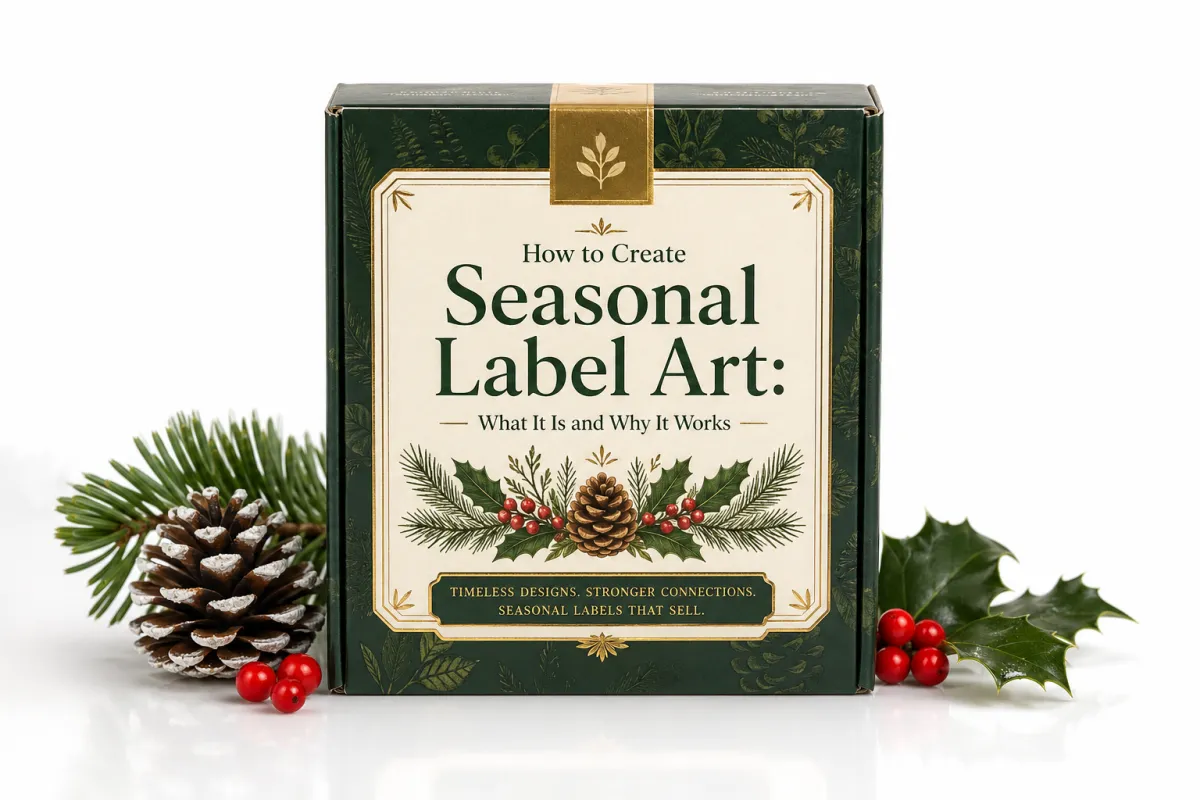
Seasonal label art is artwork that changes with holidays, weather, promotions, regional events, or limited-time campaigns while the core brand system stays intact. The logo placement, typography rules, and SKU architecture do not get tossed out every time a new season rolls around. Instead, how to create seasonal label art becomes a matter of adjusting the outer layer: a cranberry palette for winter, fresh greens for spring, sun-washed oranges for summer, or harvest tones for fall. The brand still feels like itself, just dressed for the moment, which is exactly what you want when the product has to work hard in a crowded aisle from Chicago to Charlotte.
I have seen this work on the floor in a plant near Columbus, Ohio, where a beverage client ran the same 500 ml bottle year-round, but changed only the label illustration and a small callout panel. The core label stayed identical, which kept changeovers clean and reduced waste by nearly 8 percent on that line, but the winter version with a snow-dusted pine branch sold better in club stores because buyers said it looked like a gift. That is the quiet power of how to create seasonal label art: it can nudge perception without forcing a full relaunch, and it can do it without making the operations team mutter under their breath all week.
Why does it work so well? Shoppers notice novelty, especially on crowded shelves where every bottle, pouch, or carton is fighting for the same three seconds of attention under fluorescent fixtures in a grocery store or warehouse club. A seasonal cue gives the eye a reason to stop. It can also create urgency, especially when the label says "limited batch," "holiday blend," or "summer reserve" in a controlled way and the retailer knows the promo runs for six to eight weeks. If you build the artwork carefully, how to create seasonal label art becomes a repeatable sales tool rather than a once-a-year design stunt.
Here is where people get confused: a seasonal refresh is not the same as a rebrand. A rebrand changes the identity system, often including logo adjustments, typography updates, and a new color family. Seasonal label art keeps the identity intact and only changes a defined layer. I tell clients to think of it like a jacket over a work uniform. The jacket can be loud, metallic, matte, foil-stamped, or illustrated, but the uniform underneath still tells you who the brand is. And yes, I have seen a few jackets that were trying very hard to be the main character, usually on an 11-ounce jar in a mockup that had too much glitter and not enough breathing room.
That distinction matters because it defines scope. If you know how to create seasonal label art, you can plan for shorter design cycles, fewer approvals, and tighter print specs. If you blur the line and start changing the core identity too, every round of proofs becomes a referendum on the whole brand. I have sat in those meetings in Dallas and Atlanta, and they usually stretch a 2-week project into a 2-month argument with three stakeholder groups and a fourth person who wants "just one more option" right before lunch, which is somehow the most dangerous sentence in packaging.
One client meeting still stands out to me. A specialty sauce brand in Portland wanted a Valentine-themed line extension, and the first creative round had hearts everywhere, metallic script, and enough pink to hide the product name. On the sample wall it looked festive; on the shelf it looked like three different products fighting each other. We stripped the design back to one accent color, one small illustration, and a clean ribbon shape, and suddenly the pack felt deliberate on a 4-color digital proof printed on 2.2 mil matte BOPP. That is a big lesson in how to create seasonal label art: restraint usually sells better than decoration overload.
Seasonal cues also help with launch strategy. A winter label can support a hot cocoa mix, a peppermint protein shake, or a giftable candle set sold at $12.99 in a seasonal end cap. A summer label can make a chilled beverage feel brighter and more refreshing in a cooler door at 38 degrees Fahrenheit. The same structure can support different retail moments, which is why how to create seasonal label art is so valuable for Brands That Sell through grocery, specialty, club, and e-commerce channels at the same time.
"We thought we needed a whole new label system," one brand manager told me after seeing first-round comps, "but we really needed a smarter seasonal layer that still fit our current line." I hear that a lot, and usually the second version is the one that gets approved after a 90-minute review with marketing, sales, and the prepress team.
If you want a deeper view of the manufacturing side, the Packaging Industry resources from PMMI are useful for understanding how design choices affect line speed, material selection, and downstream handling. That matters because how to create seasonal label art is never just a visual decision; it is a material and production decision too, whether the job is being printed in Cincinnati, Monterrey, or Dongguan.
How Seasonal Label Art Works Across Brand and Print Systems
The cleanest way to approach how to create seasonal label art is to build it on top of a stable brand framework. The logo should stay in a predictable place, the typography should keep its hierarchy, and the SKU system should remain easy to scan across the whole family. If you have three flavors, four package sizes, and two regional versions, the structure needs to be disciplined or the plant will spend more time sorting files than printing labels. I have watched that happen at a converter in Louisville, and it is not charming. It is expensive.
In the factory, version control is not a theory; it is the difference between a clean run and a pallet of misprinted stock. I have watched teams set up master files, then create seasonal variants by swapping one art layer, one accent palette, and one copy block while keeping the dieline, barcode position, and legal panel untouched. That method keeps how to create seasonal label art manageable for designers, prepress techs, and press operators all at once, which is exactly what a good packaging system is supposed to do when a 20,000-piece order needs to ship in 13 business days.
There are a few seasonal treatments I see over and over, and each one has a different production profile. Holiday illustrations can add charm, but they also need enough open space so they do not crush the product name. Weather-driven palettes are simpler and often safer for large runs. Foil accents, specialty varnishes, and soft-touch finishes can make the label feel premium, but they also change lead times and setup costs by $150 to $600 depending on tooling and plate count. If you are learning how to create seasonal label art, start by choosing the treatment that fits your actual production window, not just the mood board pinned up in the conference room.
Flexographic, digital, offset, and screen-print workflows all handle seasonal changes differently. Digital is usually forgiving for shorter runs and frequent art changes, especially when a brand wants 250 to 5,000 labels with multiple versions and needs them in 7 to 10 business days. Flexographic printing becomes attractive as volume rises and the art is locked, but every color change or finish change can add setup time on an 8-color or 10-color press. Offset is strong for consistent image quality on larger promotional runs, while screen-print can add tactile ink effects that work beautifully on specialty bottles or jars. Knowing those tradeoffs is a core part of how to create seasonal label art without creating avoidable production pain, and frankly, it saves you from making the same mistake twice or three times when the calendar gets aggressive.
I had a supplier negotiation in Shenzhen where a client wanted a clear film label with metallic ink, white underlay, and a cold-foil accent on a two-week clock. The artwork looked beautiful on-screen, but the plant asked a simple question: how many separate hits can the press handle without slowing the line below the target? Once we mapped the design to the actual equipment, we dropped one effect, kept the premium feel, and held the schedule at 14 business days from proof approval. That is the practical side of how to create seasonal label art: the design has to match the machine, not the other way around.
Retail behavior matters too. Limited-run artwork can support launches, gift sets, end-cap displays, regional promotions, and cross-merchandising programs. A winter tea label can sit beside a cookie tin and suddenly feel giftable. A summer beverage label with bright citrus art can carry the same product into a cooler display and feel fresh enough to justify another purchase. The label does not do all the work, of course, but seasonal cues can help a buyer understand the use case in a split second at 36 inches of shelf distance.
The file architecture should be boring in the best possible way. We usually recommend a master folder with the dieline, linked images, legal copy, barcode files, font licenses, and a separate seasonal version folder so no one accidentally sends the wrong art. A naming system like brand-sku-size-season-version is not glamorous, but it is much better than "final_final2_reallyfinal." For how to create seasonal label art at scale, discipline beats improvisation every time, even if improvisation feels more exciting in the moment.
For teams building fiber-based secondary packaging alongside labels, FSC documentation becomes relevant very quickly, and the same discipline applies to chain-of-custody paperwork and art approval. If the seasonal program includes cartons or tags, I always ask the client to confirm those details before the first proof is signed off, especially if the carton is 350gsm C1S artboard or a 16-pt SBS fold-up. A pretty label is nice; a label that can be printed, packed, and traced cleanly is far better.
Cost and Pricing Factors for Seasonal Label Art
Pricing for seasonal label art has two sides: the creative side and the production side. On the creative side, you are paying for concept development, illustration, copywriting, prepress cleanup, proofing, and version management. On the production side, you are paying for plates, setup, finishing, test runs, material choices, and sometimes additional quality checks. If a client asks me how to create seasonal label art on a sensible budget, I usually start by separating those two buckets so we can see where the money actually goes, because otherwise the quote looks like a mystery novel with too many characters and one missing invoice.
For a simple seasonal refresh, artwork development might land around $250 to $800 per SKU if the brand already has a strong template and only needs a color shift, a short headline change, and one new illustration element. A more involved seasonal system, especially one that needs custom drawing, multiple product sizes, and revised legal panels, can run from $1,500 to $4,000 per line. Those numbers move depending on who is doing the work, how many revision rounds are allowed, and whether the client wants source files organized for future annual updates. That is one reason how to create seasonal label art is worth planning early; it is much cheaper to design with reuse in mind than to rebuild every season from scratch like nobody has better things to do.
Production pricing shifts quickly with run length and finish complexity. Here is a simple way I explain it to brands that are comparing options for how to create seasonal label art and print it cleanly:
| Print Option | Best For | Typical Setup | Approx. Unit Cost | Notes |
|---|---|---|---|---|
| Digital pressure-sensitive labels | Short seasonal runs, many SKUs, fast turnarounds | Low setup, quick file changes | $0.15 to $0.32 at 5,000 pieces | Strong choice for variable art and frequent version swaps on 2.2 mil or 2.6 mil facestock |
| Flexographic labels | Higher volumes, repeat seasonal programs | Plate and press setup required | $0.08 to $0.18 at 20,000 pieces | Efficient once the art is locked and the run is stable on a 6-color or 8-color line |
| Offset printed labels | Detailed imagery and large promotional runs | Longer make-ready | $0.10 to $0.22 at 15,000 pieces | Excellent image quality, especially on 350gsm C1S artboard or coated paper |
| Screen-print embellishment | Tactile effects, specialty products, premium packs | Extra setup for ink layers | $0.03 to $0.12 added per unit | Best used as an accent, not the only print method, because registration adds complexity |
Those numbers are not universal, and I would never pretend they are. A 2.6 mil clear BOPP label with a matte varnish and one white plate is a very different job from a textured paper label with foil and spot gloss. Still, the table gives a useful range for how to create seasonal label art without getting blindsided by cost. If a quote looks too low, ask what was left out; if it looks too high, ask which elements are driving the price. I have saved clients from bad surprises more than once by asking that one annoying but necessary question.
Hidden costs show up more often than clients expect. Extra proof cycles can add three to five business days and a few hundred dollars. Barcode changes can trigger new prepress checks. Regulatory updates can force a late copy revision. Moisture, abrasion, and cold storage testing can add both time and material waste if they are left until the end. I have seen a cold-chain yogurt label fail because the adhesive was fine at room temperature but marginal after 36 hours in refrigerated storage at 38 degrees, and nobody wants that surprise after 20,000 labels are already staged. That kind of failure is exactly why production teams get that haunted look around 4:30 p.m.
For distribution testing, the ISTA test methods are a sensible place to check handling and shipping performance. If your seasonal label art sits on a package that will be packed, palletized, and shipped through variable conditions, the graphics cannot be judged in isolation from the package system around them. A label that survives a 48-inch drop test and a hot truck route in July is doing real work.
The best value is usually the design that can be reused. A one-off holiday label may feel inexpensive at the start, but if you rebuild it from scratch next season, the cost compounds quickly. A reusable template with swappable art zones, approved copy blocks, and a stable dieline may cost more upfront, but it can save money for three or four seasonal cycles. That is often the real answer behind how to create seasonal label art that performs commercially instead of merely looking nice in a proof.
How to Create Seasonal Label Art: Step-by-Step Process and Timeline
The most reliable process for how to create seasonal label art starts with a tight brief. Define the seasonal moment first: is this winter, summer, a harvest promotion, a regional event, or a retailer-exclusive gift pack? Then collect the brand assets, the dieline, the legal copy, the SKU list, and the print specs before anyone starts sketching. If the brief is vague, the design rounds will drift, and the approvals will drag. I have seen this play out more times than I care to admit, and the only thing that gets more chaotic is the shared drive folder with seven versions of the same file.
I usually ask for three things on day one: the current label file, the production specs, and the retail objective. If the client wants a supermarket end-cap, I need to know shelf distance, lighting, and whether the pack will sit in a wet tray or on a dry shelf. If the goal is a gift set, I need the dimensions of the carton and the position of the label on the primary pack. That kind of detail is not busywork. It is the difference between how to create seasonal label art that prints well and art that only looks good on a monitor in a studio at 72 degrees.
A realistic timeline is usually longer than people hope and shorter than the horror stories they have heard. For a straightforward seasonal relabel, I like to see 5 to 7 business days for concept development, 2 to 4 business days for internal review, 2 to 3 business days for prepress cleanup, and another 3 to 5 business days for proofing and final release. If the project needs specialty foil, cold-foil registration, or multiple SKUs, add more time. A solid seasonal program often lands at 12 to 15 business days from proof approval to production release, and that assumes nobody changes the headline at the last minute because "it just needs to feel a little warmer." You can probably hear my eye twitch from here.
That timeline gets tighter around holiday promotions. In the plants I have worked with in North Carolina and northern Illinois, the schedule for fall and winter releases can fill months ahead, especially if the job needs premium finishes or long runs of matching cartons. If you are learning how to create seasonal label art for a holiday window, start earlier than feels necessary. Printers can move quickly, but not if your files arrive in a pile of unanswered email attachments at 4:58 p.m. on a Friday.
Here is the basic workflow I recommend:
- Define the theme - pick one seasonal idea and one emotional goal, such as cozy, bright, festive, or refreshing.
- Gather the assets - logo files, dieline, product shots, copy, legal text, and finish notes.
- Sketch the hierarchy - make sure the brand name reads first, the seasonal cue reads second, and the claim reads third.
- Check printability - review bleed, safe zones, line thickness, color limits, and barcode placement.
- Proof the art - compare digital comps, hard proofs, and if needed, substrate samples under shelf lighting.
- Release clean files - send packaged files with a naming convention that the converter can actually trust.
That may sound straightforward, but each step has traps. I have seen a beautiful holiday label fail because the white underprint was not thick enough on clear film. I have seen a summer beverage label get rejected because the type in the net contents field dropped below the minimum size in the proof. I have also seen a clear, well-organized workflow save a client from a very expensive rerun at a plant in St. Louis. That is why how to create seasonal label art is never just a creative exercise; it is a prepress discipline, and the press does not care how pretty the concept board looked.
File prep deserves its own attention. The dieline should be final, the bleed should be generous enough for trimming tolerance, and the safe area should protect text from the edge. If the job uses Pantone colors, lock them early. If it is CMYK, ask how those colors behave on the chosen substrate, because a bright red on paper can look dull on clear film or gloss BOPP. Finish callouts also need to be unambiguous: matte varnish, soft-touch lamination, spot UV, or cold foil should be specified clearly so the plant is not guessing, especially if the line is running 18,000 labels per hour.
Review cadence is another place where projects slip. If three departments need approval, set the calendar before the first round starts. I prefer one consolidated review rather than three separate rounds of tiny comments that fight each other. It is far easier to approve how to create seasonal label art with a single decision-maker, or at least one clear lead, than to let marketing, sales, and operations each make changes in isolation. That turns a simple seasonal update into a conference call marathon nobody asked for.
For brands with multiple seasonal versions, version control needs to be visible at every step. A master file should never be copied blindly into five random folders. I use labeled folders for concept, revisions, final, and printer-release files so no one wonders which version was approved. If you are managing a larger seasonal family, this one habit will save hours and reduce the chance of an embarrassing shelf mix-up, especially when the program includes a winter SKU, a spring SKU, and a retailer-exclusive club pack.
Common Mistakes When Designing Seasonal Label Art
The biggest mistake I see with how to create seasonal label art is trying to make the theme do too much work. A label covered in snowflakes, candy canes, glitter lines, and giant script may feel festive in a presentation, but on shelf it can bury the product name and make the pack hard to shop. Seasonal art should support the brand story, not swallow it. If a shopper needs five seconds to find the flavor, the design is already losing, and that is a hard truth nobody enjoys hearing in a room full of mockups and caffeine.
Another common problem is chasing trends too hard. A design that leans on a fad illustration style or a meme-like graphic can date itself before the season ends. I once watched a client in Minneapolis insist on an ultra-trendy hand-drawn style for a spring promo, only to realize six weeks later that the brand looked disconnected from its core line. The safer move is usually a modest seasonal layer with one memorable element, not a full visual costume. That approach is more durable for how to create seasonal label art that still feels current next year, and it keeps you from having to explain why the label now looks like it belonged to a different decade.
Printability issues are just as damaging as design mistakes. Tiny text can disappear, especially on textured paper or matte stock. Thin reverse type can fill in on press. Oversaturated color can muddy a clean illustration. Special effects that look great on a screen may turn into registration problems if the printer has to lay down white, metallic, and varnish in tight alignment on a 6-color line. If the design cannot survive a real press check, it is not finished. A gorgeous file that falls apart on press is just expensive art with a very short career.
One packaging floor mistake I have seen more than once is mismatched seasonal art across labels, cartons, and point-of-sale materials. The bottle says winter, the carton says holiday, and the shelf talker says New Year, so the whole program feels stitched together at the last second. A coordinated system is a better answer. Even a simple seasonal campaign should share a color logic, a motif family, and a copy tone so the program reads as one piece across a 12-ounce bottle, a countertop display, and a carton shipper.
Late approvals cause a lot of pain. A team may spend weeks debating illustration style and then rush the final copy review into a 24-hour window. That is how you end up with missed legal lines, barcode placement problems, or a proof that needs three emergency corrections. If you want to understand how to create seasonal label art without expensive rush fees, protect the final approval window as if it were press time, because in practice it is.
Compliance mistakes are another easy way to create trouble. Net contents can get covered by an overzealous graphic element. Required claims can be phrased incorrectly. A barcode can be placed under a metallic area that makes scanning less reliable at a grocery checkout. Even the best seasonal art should respect the basic rules of packaging communication. I tell clients that the design may be emotional, but the legal panel and product facts still need to behave like adults in the room.
Material and storage conditions also get overlooked. A design that looks fine in a studio may fail in a cold room, a humid warehouse, or a freezer case. If the label uses an adhesive that is marginal in moisture or a stock that scratches easily, the art can be perfect and the package still looks tired by the time it reaches shelf. This is where how to create seasonal label art overlaps with actual packaging science, and it is why I always ask about the end environment before approving a final look.
For clients who want to compare label structures before they commit, our Custom Labels & Tags resource is a practical place to review formats that can support both short seasonal runs and repeat annual updates, from roll labels on 3-inch cores to sheeted tags for retail kits.
Expert Tips and Actionable Next Steps for Seasonal Label Art
If you want to make how to create seasonal label art easier next season, build a reusable toolkit now. Keep a master template, a few approved color ranges, motif libraries, finish callouts, and pre-cleared copy blocks in one place. That way, the next winter or summer program starts from a strong base instead of a blank screen. I have seen brands cut their concept time by half simply because they did this one thing well, and I wish more teams would steal that habit earlier instead of waiting for the second painful annual cycle.
Design modularly whenever you can. A stable top panel, a fixed logo lockup, and a lower message area can support winter, spring, summer, and harvest variations without a full redesign. If the artwork is modular, your team can swap in new imagery or a seasonal headline while keeping the production structure intact. That makes how to create seasonal label art more predictable for the plant and less stressful for marketing, which is one of those rare moments where everyone wins and nobody has to pretend they enjoy surprise revisions.
Always test the art on the actual substrate. Paper, BOPP, clear film, and textured stocks all change the way ink and finish behave. A muted olive green can look rich on uncoated paper and dull on glossy film. White underprint can make a clear label pop, but only if the opacity is right. I have stood at a proof table holding the same design on three materials, and the differences were obvious enough that one version got cut immediately. That is why how to create seasonal label art should include substrate testing early, not as a final surprise when everybody is already in a meeting room with stale coffee.
Light matters more than most teams realize. Compare mockups under retail lighting, not just in the design studio. Then check them again in the actual environment: bright grocery aisles, cooler doors, damp warehouse conditions, or a gift display near a front counter. Seasonal art can lose a lot of charm if the colors flatten under fluorescent light or if the foil catches reflections in the wrong place. I always tell teams to view the label in the place where it will earn its keep, whether that is a 4-foot shelf in Phoenix or a refrigerated end cap in Toronto.
For shipping and durability, tie your artwork review to actual handling scenarios. If the pack travels through distribution, ask whether the label should be checked against ISTA 3A or another transport test plan. If the package may rub against other cartons, build in enough ink coverage and finish protection to survive that contact. Good seasonal art is not fragile; it is designed to stay attractive after the truck ride, the warehouse stack, and the 300-mile route from the converter to the DC.
"The best seasonal label is the one the operations team can run cleanly and the shopper can understand instantly." I have repeated some version of that line in plant meetings from Ohio to Guangdong, and it still holds up when the job is running 25,000 labels at a time.
Here is a simple action list to keep moving:
- Audit your current label files and identify one SKU that can handle a seasonal refresh without structural changes.
- Choose one seasonal theme and one emotional cue, such as cozy, crisp, festive, or bright.
- Gather the dieline, legal copy, barcode files, and material specs before the first concept is drawn.
- Set a production deadline first, then work backward to the proof and approval dates.
- Ask the printer for substrate, finish, and file-format preferences before release.
If you are trying to keep the program cost-effective, resist the urge to create too many versions at once. One core seasonal label art system and two or three controlled variants are usually enough for most brands. More versions mean more proofing, more risk, and more inventory complexity. I would rather see a brand execute one seasonal family beautifully than juggle six versions that never quite match. That sounds less flashy, sure, but the shelf does not hand out awards for chaos.
There is also a strong business case for planning seasonal art as an annual system. Once the master dieline, color logic, and finish rules are set, future updates become easier to approve and cheaper to produce. The art can still feel fresh, but the operational structure stays familiar. That is the real prize in how to create seasonal label art: a design method that supports both creativity and repeatability across a $0.12 digital run and a 30,000-piece flexo order.
If you are ready to put the idea into motion, start with one product, one seasonal moment, and one press-ready timeline. Lock the dieline, decide the finish, and test the substrate before the first big creative review. Then build the next version from what you learn on the first run. That is how strong packaging programs grow, one controlled improvement at a time, and it is also how to create seasonal label art that sells year-round without losing the brand's voice.
For a brand like Custom Logo Things, the smartest move is usually to pair the creative plan with the right label construction, because how to create seasonal label art only works as well as the materials, proofs, and press decisions underneath it. Start with a clear system, keep the seasonal layer disciplined, and the pack will do its job in every season, from a spring launch in Atlanta to a winter gift set in Seattle.
How do you create seasonal label art without losing brand consistency?
Keep the logo, type system, and core layout stable while swapping only the seasonal color palette, imagery, or accent treatments. Use a brand-approved template so every version feels related, even when the visual theme changes from winter to summer. I always advise clients to review the seasonal proof against the core SKU side by side before they sign off, because that one comparison usually reveals whether how to create seasonal label art is staying inside the brand guardrails, especially on a 12-ounce bottle or a 16-ounce jar.
How far in advance should seasonal label art be started?
Start planning several months before launch so concept work, proofing, and production have room to breathe. If the label needs foil, specialty varnish, or multiple SKUs, add extra time for approvals and material sourcing. Holiday and gift-season projects should be treated as the earliest priority because printers and converters fill those schedules quickly, and the most reliable way to handle how to create seasonal label art is to build a timeline before the creative team gets attached to the first concept.
What does seasonal label art usually cost?
Cost depends on concept complexity, number of versions, revision rounds, and whether the art needs custom illustration or typography. A simple seasonal refresh may land in the low hundreds per SKU, while a full line with multiple variants can move into the low thousands. Production costs rise when the design uses specialty inks, foils, or several setup changes, so the best answer to how to create seasonal label art on budget is usually to build a reusable template that can carry future updates.
How many seasonal versions should a brand create?
Most brands should start with one core seasonal version and a few controlled color or copy variations for channel or region differences. Create only as many versions as your production schedule and inventory system can support cleanly. If the artwork is being used across labels, cartons, and marketing assets, keep the variation count manageable, because how to create seasonal label art gets harder fast once the file tree starts multiplying.
What files and specs do I need for seasonal label art?
Provide the final dieline, linked images, outlined fonts or packaged files, and clear print specifications. Confirm bleed, safe area, color mode, finish notes, and barcode placement before sending art to prepress. Ask the printer or converter for their preferred file format so there are fewer revisions later, and keep the source files organized because that one habit makes how to create seasonal label art much easier the next time you refresh the line, whether the job runs on paper, BOPP, or 350gsm C1S stock.