Buyer Fit Snapshot
| Best fit | Waterproof Mailers for Subscription Kits projects where brand print, material claims, artwork control, MOQ, and repeat-order consistency need to be specified before quoting. |
|---|---|
| Quote inputs | Share finished size, material target, print colors, finish, packing count, annual reorder estimate, ship-to region, and any compliance wording. |
| Proofing check | Approve dieline scale, logo placement, barcode or warning zones, color tolerance, closure strength, and carton packing before bulk production. |
| Main risk | Vague material claims, crowded artwork, missing packing details, or unclear freight terms can make a low unit price expensive after revisions. |
Fast answer: Waterproof Mailers for Subscription Kits: Film, Print, MOQ, and Carton Packing should be specified like a repeatable production item. The safest quote records material, print method, finish, artwork proof, packing count, and reorder notes in one written spec.
Production checks before approval
Compare the actual filled-product size with the drawing, then confirm tolerance on folds, seals, hang holes, label areas, and retail display edges. Reserve space for logos, QR codes, warning copy, and material claims before decorative graphics fill the panel.
Quote comparison points
Review material grade, print process, finish, sampling route, tooling charges, carton quantity, and freight assumptions side by side. A quote is only useful when the supplier can repeat the same color, closure quality, and packing count on the next order.
I have watched waterproof Mailers for Subscription kits rescue a launch during a rain-soaked week at a Shenzhen fulfillment center, and I have watched bargain versions unravel a month of planning faster than a 10:30 a.m. courier scan. I remember one Tuesday on a line in Bao'an District where a low-cost mailer failed a 15-second hose spray test, and by the time we opened the outer carton, three sample kits had already softened at the corners and lifted at the seam tape. That was the moment I stopped treating outer packaging as "just shipping." If your subscription kit carries anything that hates humidity, wet concrete, or a porch left slick after a storm, waterproof mailers for subscription kits are the difference between a clean unboxing and a refund request written with damp hands.
For a packaging buyer, I would define waterproof Mailers for Subscription kits in plain language: a sealed poly mailer or co-extruded film mailer built to keep rain, splashes, warehouse moisture, and last-mile grime away from the contents. I am not talking about a glossy pouch with a logo and a hopeful sales pitch. I am talking about film structure, seam design, and closure method working together, usually in a 2.5 mil to 3.5 mil construction with a 25 mm flap and a pressure-sensitive adhesive. Beauty kits, wellness drops, apparel samples, and subscription packs with paper inserts or sachets all depend on that level of construction more than most suppliers admit, and I have had more than one rep in Dongguan try to talk around that point with a sample that looked pretty but said very little.
High price does not guarantee good performance, and I have seen brands pay for a so-called premium bag that did little beyond looking polished on a quote sheet. I have also seen brands choose a sensible 2.5 mil co-ex mailer, keep the print to one black logo and a return-marking panel, and ship 18,000 kits with fewer than 20 damage claims over a three-month run. That is the sort of math that holds up in a real warehouse in Ningbo or Suzhou. Waterproof Mailers for Subscription kits should protect the product, keep the brand presentation sharp, and avoid turning fulfillment into a shrine to overdesign. If a mailer needs three layers of explanation before it can survive a wet sidewalk in Seattle or a damp dock in Rotterdam, it is the wrong mailer.
Why waterproof mailers for subscription kits matter
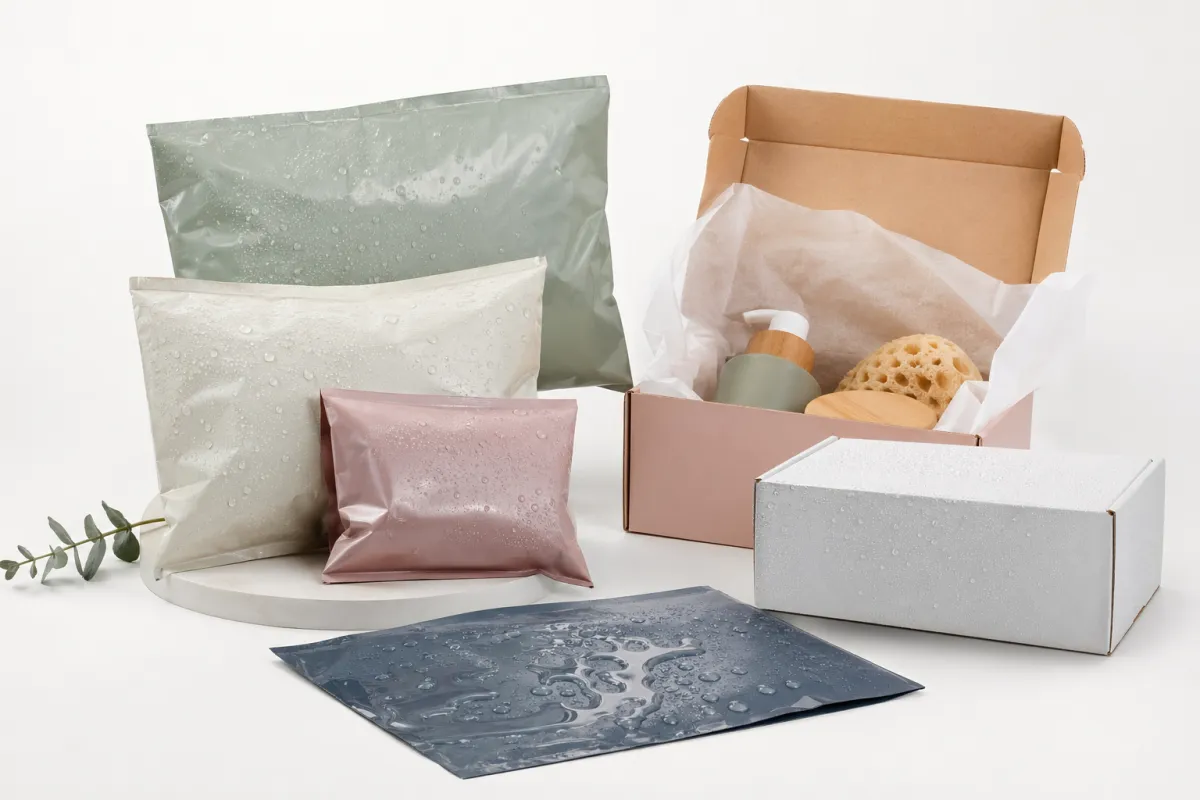
Waterproof mailers for subscription kits matter because the final stretch of delivery is messy, and customers are not careful with parcels. I once sat in a client meeting in Los Angeles where a beauty brand spread 200 returned kits across a conference table, and 17 of them showed water damage from nothing more dramatic than a damp porch, a delayed UPS scan, and a night temperature swing from 63 F to 49 F. The products inside were fine. The cardboard sleeve had gone soft enough to bend with one finger. The outer mailer had looked acceptable on the sample sheet, which is usually the moment right before somebody pays for a reprint and a second round of shipping.
In practical use, waterproof mailers for subscription kits are sealed poly or co-extruded film mailers made to block moisture from rain, condensation, damp concrete, and random splashes from a loading dock. They are not magic, and I would never describe them as submarine protection, but they absolutely change the odds. A properly built mailer helps a kit survive porch exposure, cold truck temperature swings, and the kind of rough handling that happens when cartons move from one metal cart to another inside a fulfillment center in Guangdong or New Jersey. That is actual protection, not marketing theater, and I say that after spending too many mornings on factory floors watching people test bags with a kind of grim optimism that usually lasts until the first seam opens.
Beauty boxes with paper cards and sachets need them. Wellness subscriptions with powders, oils, and printed instructions need them. Apparel sample programs, pet treat kits, and craft bundles with labels, tissue, and promo inserts need them too. Once the outer package gets wet and the contents wrinkle, warp, or stick together, the unboxing moment disappears. I have seen one soggy insert turn a $48 monthly subscription into something that felt closer to a $4 mistake, especially after the customer opened it beside a front door in Chicago and found the promo card glued to the pouch. That kind of damage does not just cost money; it makes the whole brand feel careless.
"We stopped replacing damaged kits every week after we switched from a bargain mailer to a properly sealed co-ex bag in Dongguan. The difference was obvious after the first Guangzhou rainstorm in April."
People often treat waterproof mailers for subscription kits as if weather were the only concern. They also shape the brand experience. The right mailer keeps graphics clean, keeps package dimensions consistent, and keeps the packing line moving without drama. If you want to compare outer packaging styles, I would start with Custom Packaging Products and then narrow the field to Custom Poly Mailers so you can compare structure, print coverage, and budget side by side. I like that route because it turns vague opinions into something you can actually compare without guessing from a glossy mockup or a vendor PDF that leaves out the flap spec.
How waterproof mailers for subscription kits work
The easiest way to understand waterproof mailers for subscription kits is to break them into three parts: the outer film, the seam structure, and the closure. On a solid mailer, the outer layer resists moisture, the inner layer helps the seal hold, and the flap adhesive or heat seal keeps the opening shut under pressure. If one of those three pieces is weak, the whole package turns into a liability. It may look fine in a photo proof, then fail the first wet-handling test in the warehouse. I have had a bag that looked gorgeous under studio lights peel open after a simple squeeze test, which is just a rude thing for packaging to do.
People often mix up waterproof mailers for subscription kits with water-resistant mailers. The difference matters. Water-resistant mailers can shrug off a brief drizzle or a light splash. True waterproof-style construction usually means better seam control, stronger film structure, and a closure that does not peel when the package bends in a courier cage or a cold truck. I like to ask suppliers for the exact film composition, because "heavy-duty" tells you almost nothing until you see the thickness, seal width, and adhesive type in writing. Honestly, "heavy-duty" is one of the most abused phrases in packaging sales, right next to "premium" and "best quality," which mean very little without a proper spec sheet.
What the seal is doing
Seal performance is where waterproof mailers for subscription kits earn their keep. A 25 mm adhesive flap sounds simple, but the adhesive formula, liner release, and pressure required to close it all affect real-world performance. Heat-seal closures can improve consistency for high-volume runs, while a strong pressure-sensitive flap works well for many subscription operations that pack 800 to 2,000 units a day in Shenzhen, Dongguan, or the Incheon logistics zone. Side seams matter too. I have seen a 3.0 mil bag fail because the seam width was too narrow by 2 mm, which is the kind of tiny miss that costs real money later and looks invisible until the first rainstorm.
What happens in transit
Think about the package's full trip. It might sit on a wet warehouse floor for 14 minutes, ride in a cold truck for six hours, then hit warm porch air and build condensation on the inside. Waterproof mailers for subscription kits handle those changes better than plain poly or paper-based outer wraps. I usually suggest transit-style checks inspired by the ISTA test framework, because a bag that survives a clean conference table in Santa Monica is useless if it fails a bounce, drop, and humidity cycle in a real distribution lane. I have made that mistake myself early on, trusting a sample that looked neat in a boardroom and then folded like a cheap umbrella after a 1.2 meter drop.
There is also the brand side of the equation. If the mailer arrives flat, clean, and intact, your logo still looks like you approved it. If the edge scuffs, the flap peels, or the film wrinkles badly, the customer notices before they touch the kit. That is why I prefer waterproof mailers for subscription kits with a clean, simple print zone and a reliable closure area rather than a bag crowded with decorative noise. A good package should protect the kit first and still look like it belongs in your brand system. Too much decoration around a weak seal is like putting lipstick on a leak, and I say that with real affection for design teams and no affection at all for avoidable claims.
| Option | Typical unit price at 5,000 pieces | Lead time | Best for | Tradeoff |
|---|---|---|---|---|
| Stock poly mailer, no print | $0.08-$0.12 | 3-7 business days | Fast restocks, simple shipping | Weak brand presence, limited sizing |
| Custom printed waterproof mailer | $0.15-$0.24 | 12-15 business days from proof approval | Subscription kits with branded unboxing | Higher upfront cost, more proofing |
| Heavy-duty heat-seal mailer | $0.22-$0.35 | 15-22 business days | Fragile, moisture-sensitive kits | More machine setup and tighter specs |
If you want a packaging benchmark beyond supplier claims, I also like checking sustainability and material references from FSC when the subscription kit includes paper inserts, cards, or outer paperboard components. A common setup I see in Seoul and Portland uses a 350gsm C1S artboard instruction card with a matte aqueous coat, paired with a 2.5 mil mailer and a 1-color black logo on the outside. The mailer itself is usually plastic film, so that reference does not solve everything, but it helps you make cleaner choices across the full kit. Teams who care enough to look at the whole system usually end up with fewer surprises later, especially when they are shipping 10,000 units out of Guangdong every month.
Bottom line: waterproof mailers for subscription kits work because they combine material, seam, and closure into one controlled system. You do not get protection from a shiny brochure. You get it from a film structure chosen on purpose, a closure tested with real packing pressure, and a seal area that keeps working when the weather gets ugly. The more boring that sounds, the better the bag usually performs, and the fewer claims your support team will see in the first 30 days after launch.
What should you test before ordering waterproof mailers for subscription kits?
Before you place a full order, test waterproof mailers for subscription kits with the exact finished pack, not a paper proxy. I want the real inserts, the real pouch, the real closure pressure, and the real carton configuration, because a mailer that looks fine on a sample table can still fail once a warehouse crew packs it at speed. The fastest way to catch problems is to combine a spray test, a drop test, a humidity hold, and a quick seal inspection under bright light.
- Fit: confirm the kit slides in without forcing the corners against the seal area.
- Closure: check whether the adhesive flap or heat-seal line holds after repeated handling.
- Transit stress: simulate shaking, stacking, and a short drop from waist height.
- Moisture exposure: test damp floors, light spray, and condensation from cold-to-warm movement.
If the sample survives those checks, you have a much better shot at a clean launch with waterproof mailers for subscription kits. If it fails any of them, adjust the size, film thickness, or closure spec before production, because the cheapest correction is the one made before the order is printed.
Key factors that affect cost and pricing
The price of waterproof mailers for subscription kits comes down to a handful of variables buyers can actually control: film thickness, dimensions, print coverage, closure style, and whether the order is stock or fully custom. A 6 x 9 inch plain mailer does not live in the same price bracket as a 12 x 15 inch printed mailer with a reinforced flap and a bilingual return zone for Canada and the U.S. That may sound obvious, yet I still see people compare quotes as if all bags follow the same rules. They do not, and I get a little twitchy every time someone tells me "it is basically the same thing" because it usually is not.
Film thickness is one of the first levers. A 2.0 mil bag may work for light apparel samples, but a 3.0 or 3.5 mil bag usually gives better stiffness for kits with hard-edged items, such as boxed serums, metal tools, or a 350gsm C1S artboard booklet pack. Thicker is not always smarter. I have seen teams buy 4.0 mil mailers because they sounded safer, then pay more in freight and packing labor because the bags were bulkier, stiffer, and slower to fold at the line. That is money slipping out of the budget in quiet ways, which is the worst kind because nobody gets to point at one obvious mistake.
Print coverage matters too. Full-coverage CMYK on both sides costs more than a single-color logo in one corner. If your brand can live with a clean white mailer, a black logo, and one accent line, you can often save $0.03 to $0.07 per unit at mid-volume. On a 20,000-piece order, that turns into $600 to $1,400, which is real money instead of a rounding error. I have had clients stare at that math, blink twice, and then suddenly become very interested in restraint, especially after seeing how much cleaner the unboxing photos looked on a matte white base.
Freight matters just as much. A cheap mailer that tears easily can force you to add tissue, poly inserts, or extra tape, and suddenly the "budget option" is not cheap anymore. I once negotiated with a supplier in Dongguan who wanted to keep the bag price at $0.19, but the quote hid bulky carton packing that pushed landed cost up by $1,140 on a 10,000-piece run. We changed the carton count per case from 200 to 400, cleaned up the print coverage, and brought the landed cost down without touching the core protection spec. That is the real work. It is not glamorous, but it is exactly the kind of work that keeps a launch from turning into a mess.
For a practical sourcing check, I tell brands to compare three buckets: unit price, freight, and failure risk. If one supplier offers waterproof mailers for subscription kits at $0.15 and another offers them at $0.18 with a stronger seal and tighter print control, the cheaper quote may still lose once you count replacement kits and customer service time. Your warehouse labor is not free, no matter how often people speak as if it were. I have had to remind more than one team that the cheapest bag can become the most expensive mistake after the first 500 parcels leave a dock in New Jersey or Vancouver.
If you are early in the process, here is the blunt version: do not buy the thickest bag because it feels safe. Buy the bag that fits the kit, protects the contents, and matches the shipping profile. A small run of 1,000 pieces might justify a simpler stock solution. A 25,000-piece subscription program usually rewards better customization because the per-unit savings compound quickly, especially if the supplier in Vietnam or Guangdong can hold the same plate charge across multiple monthly runs. I know that sounds less exciting than a shiny spec sheet, but I have never seen a spec sheet pay a damage claim.
- Lower price, higher risk: stock film, plain closure, limited sizing, minimal print, and a 3 to 5 day turn in a warehouse with no custom packaging line.
- Mid-range balance: custom size, 1-2 color print, reliable adhesive flap, standard thickness, and an order that usually lands in 12-15 business days from proof approval.
- Premium control: custom structure, heat-seal option, stronger barrier, tighter print registration, and batch testing at the plant in Shenzhen or Dongguan before release.
I have seen brands get smarter by asking for sample credits or freight offsets before locking an order. Suppliers often have room to move on setup fees, carton configuration, or bundle pricing if you ask directly and bring real volume to the table. That is especially true with waterproof mailers for subscription kits, where the supplier knows repeat orders are likely if the fit and seal are right. Calm negotiating beats loud haggling every time, and a polite, specific buyer usually gets more traction than the person trying to win by volume of voice alone.
Step-by-step process and timeline for ordering waterproof mailers for subscription kits
Ordering waterproof mailers for subscription kits goes faster when you know the exact kit dimensions before you ask for a quote. Measure the finished packed kit, not just the product pieces. That means inserts, promo cards, sachets, pouches, tissue, and any little freebie the marketing team decides to add at the last minute. I have seen a 9 x 12 inch bag fail to fit a kit that "should have fit" because the folded insert card was 7 mm thicker than the buyer expected and the outer pouch had a hard edge. Nobody enjoys the face I make when that happens, and yes, it is the same face every time.
- Confirm the kit spec. Record finished dimensions, weight, edge sharpness, and whether the contents need a flat or gusseted profile.
- Choose the closure. Decide between pressure-sensitive flap, heat-seal, or a reinforced adhesive flap for higher security.
- Request physical samples. Test two or three versions of waterproof mailers for subscription kits with the actual contents inside, not dummy paper.
- Review print and proof. Check logo position, seam clearance, color contrast, and barcode visibility before production.
- Approve production. Lock the spec only after the sample survives handling, spray, and packing-line checks.
The sample stage is where most mistakes get caught, and I wish more buyers respected it. One wellness client sent me a sample approval note saying the bag "looked fine," then the first production run came back 12 mm short because no one tested the actual serum bottle, a 350gsm C1S artboard card, and a foil sachet together. We fixed it, but not before losing a week and paying for air freight on a rushed replacement batch from Hong Kong. Waterproof mailers for subscription kits reward brands that test early and punish the ones that wing it. I have learned that the hard way enough times to say this with feeling.
For timing, a plain stock mailer may ship in 3 to 7 business days. A custom printed order often needs 12 to 15 business days from proof approval, and a custom size with special adhesive or heavier film can take 15 to 22 business days depending on the plant's queue in Guangdong, the plate room schedule, and carton packing. I always tell clients to build in a buffer of 7 to 10 days for shipping delays, warehouse receiving checks, and one inevitable revision. That buffer has saved more launches than any fancy spreadsheet, which is a sentence I never thought I would say in packaging work but here we are.
Artwork and production do not run on the same clock. A proof can move in 24 to 48 hours if your logo files are ready and your brand colors are clear. Manufacturing time depends on film sourcing, printing plates, slitting, and packing the final cartons. If you need waterproof mailers for subscription kits for a renewal window or a quarterly drop, order earlier than you think you need to. The supply chain does not care about your campaign calendar, and it certainly does not care that your launch party has candles, custom playlists, and a rented coffee cart.
I also recommend planning for re-order logic. If a launch uses 8,000 mailers per month, do not wait until the last carton is empty to reorder. That leaves no room for QA issues, freight delays, or a last-minute size tweak. A 15% buffer is usually safer than a heroic rush order. It is cheaper too, even if some teams dislike hearing that because it sounds less exciting than "we'll make it work." I have never seen "we'll make it work" save a fulfillment team from a stockout in the last 48 hours before send day.
During one factory visit in Ningbo, a plant manager showed me how they shaved a full half day off the schedule simply by standardizing the fold direction of waterproof mailers for subscription kits. The bags loaded into cartons faster, the carton counts became more predictable, and the packing crew made fewer mistakes. Small choices like that do not make the sales deck, but they absolutely help the shipment arrive on time. That is the unglamorous truth of production: tiny details are where most of the calendar disappears or gets saved.
Common mistakes with waterproof mailers for subscription kits
The worst mistake I see with waterproof mailers for subscription kits is buying a bag that looks tough but fails where it matters most: the seam, the flap, or the closure edge. A shiny surface and a bold logo can hide bad engineering for exactly one sample review. After that, the weak spot shows up in the field, usually on a rainy Tuesday when no one wants to deal with claims. I have seen this more times than I care to count, especially on runs that left a plant in Shenzhen and landed in Seattle two days later in a wet carton.
Another classic mistake is choosing the wrong size. If your kit has a folded booklet, a pouch, and a sample vial, a tight fit can stress the seal and make the package look crushed before it leaves the warehouse. Waterproof mailers for subscription kits need enough room for the actual packed shape, not just the theoretical product footprint. Give the bag 5 to 10 mm of breathing room on critical edges when possible, because a strained closure turns into a future complaint. I say "future complaint" because somehow the person who approved a tight bag is always the first one to ask why the customer is unhappy.
Some brands also overprint the bag without checking how the ink interacts with the film. Certain finishes, especially heavy coverage near the flap, can affect seal performance or make the closure area less reliable. That does not mean branded bags are a problem. It means print placement matters. Keep artwork away from the active seal zone and the fold line unless the supplier has tested that exact layout in Dongguan or Taichung. Otherwise, you are gambling with the one area that has to work every time, which is a very strange place to be casual.
Then there is the sample trap. A single approved sample does not prove the entire production run will behave the same way. Film lots, adhesive batches, and print settings can shift across runs, which is why I always push for batch checks and transit testing. The supplier may swear the quality is identical, and sometimes it is. Sometimes it is not. I trust data more than confident voices in a factory office, especially when the confident voice is holding a bag that has not been through a 1.5 meter drop, a humidity cycle, and a carton compression test.
Brands also forget to test the package in actual fulfillment conditions. A bag that handles a tabletop splash test may fail after the crew packs 500 units back to back, warms the adhesive with hand pressure, and stacks cartons three high in a humid warehouse in Manila or Miami. That is why I like real-world checks that mimic the warehouse, not just a demo at the desk. Waterproof mailers for subscription kits are only as good as the worst condition they need to survive. If the worst condition in your warehouse is a crowded Friday afternoon and a humid dock door, test for that, not for the ideal version you drew on paper.
"Pretty packaging is nice. A dry kit is better. If the choice is between a perfect mockup and a reliable seal on a 3.0 mil mailer, I'll take the reliable seal every time."
The common mistakes are boring, which is exactly why they keep happening. Bad size. Weak seam. Lazy testing. Too much print near the closure. No shipment simulation. None of those are glamorous failures, but each one can turn waterproof mailers for subscription kits into a costly lesson. I wish I had a more dramatic way to say it, but honestly, boring mistakes are the ones that keep eating budgets in the quietest possible way.
Expert tips for stronger seals and better branding
If you want stronger performance from waterproof mailers for subscription kits, start with a disciplined test routine. Fill the sample with the real kit, not empty inserts, then spray the exterior, leave it in a humid room for a few hours, and shake it lightly 20 to 30 times. After that, inspect corners, seam edges, and the flap line under bright light. I do not care how nice the artwork looks if the adhesive edge starts lifting after a 15-second spray. I have said that in more than one factory, usually while holding a sample that was clearly trying to embarrass somebody.
Ask suppliers for the exact film structure and adhesive details. I want to know whether the mailer is single-layer, co-extruded, or reinforced, and I want the adhesive spec in writing, not buried in a vague sales sentence about "premium protection." If a supplier cannot tell you the film thickness in microns or mils, I move on. The same goes for unclear seal methods. Waterproof mailers for subscription kits should come with technical answers, not poetry, and certainly not a hand wave plus a promise that "it should be fine."
Branding should be clean, deliberate, and easy to read at a glance. A strong logo, one or two accent colors, and a clear return-marking zone usually work better than a crowded layout with six messages fighting for space. I learned that the hard way in a factory outside Guangzhou, where a client insisted on full-panel artwork and then complained that the package looked noisy in photos. We switched to a simpler layout, kept the matte white base, and the photos improved immediately. Less drama. Better result. I still think that was one of the easiest fixes I have ever made, which is rare enough that I remember it almost too well.
Negotiation helps too. Ask for tiered pricing at 5,000, 10,000, and 20,000 units. Ask whether sample credits can be applied to the first production run. Ask if carton packing can be optimized to reduce freight by 8% to 12%. These are not aggressive questions. They are normal business questions. Suppliers expect them, and many will sharpen the quote if they think you are serious about placing waterproof mailers for subscription kits on a repeat schedule. I have had suppliers go from guarded to surprisingly helpful once they realized the buyer was actually thinking past the first order.
One of my favorite supplier conversations went like this: I asked a plant manager in Dongguan to move the print panel 6 mm higher and widen the adhesive zone by 3 mm. That tiny change improved the closure consistency and let us keep the same film cost. The client still got the look they wanted, and the line stopped rejecting bags at pack-out. That is what smart packaging work looks like. Not flashy. Just effective. And frankly, I will take effective over flashy all day long.
- Test with reality: real kit, real humidity, real handling, real closure pressure, and a 1.5 meter drop check if the parcel moves through air freight.
- Keep artwork practical: clean logo placement, safe zones, and no seal interference, especially on the last 20 mm near the flap.
- Document specs: thickness, film type, seal width, adhesive type, carton count, and the exact proof approval date.
- Negotiate the whole quote: unit price, freight, setup fees, sample credits, and pack count, not just the headline number.
My honest view? Waterproof mailers for subscription kits perform best when teams stop treating them like a generic shipping item and start treating them like part of the product experience. If your mailer looks sloppy, the customer assumes the kit inside was handled the same way. If it arrives crisp, dry, and branded with restraint, the whole subscription feels more valuable than the raw contents alone. That reaction is not magical; it is just human, and it shows up in repeat orders as clearly as any chart from a customer retention tool.
Next steps for waterproof mailers for subscription kits
Start with the finished kit, not the wishful version in someone's spreadsheet. Measure the assembled pack after all inserts, cards, samples, and freebies are inside. Then compare those numbers against your target mailer size with at least 5 mm of clearance where the seal and corners need room to behave. That one habit saves a surprising amount of rework on waterproof mailers for subscription kits. I know because it has saved me from more than one embarrassing "we need a bigger bag" meeting in a room full of people who thought the first sample would fit.
Next, ask for two or three sample options from different suppliers. One should be the budget choice, one should be the middle option, and one should be the stronger protection build. Fill all three with the real kit, not test sheets. Then expose them to spray, humidity, a couple of drops from waist height, and 10 minutes of rough handling. I know that sounds simple. Simple is good. Simple is how you avoid expensive guessing, and expensive guessing is how a lot of packaging projects go sideways in the final week before launch.
Then compare the full landed cost, not just the unit quote. Add freight, cartons, sample charges, customs if applicable, and the cost of any extra inner protection you may need because a cheaper mailer is weak. If one option is $0.14 and another is $0.18 but the cheaper one causes 2% damage claims, the "savings" disappear quickly. I have seen teams celebrate a low quote and then spend $2,400 replacing damaged kits out of a Texas warehouse. That is not savings. That is theater, and it is a lousy kind of theater because the audience is angry.
If your launch date is fixed, build your schedule backward from receiving. Give proofing 2 to 4 business days, sample testing 3 to 5 business days, production 12 to 15 business days from proof approval, and shipping a buffer of at least 7 business days. That may feel conservative, but waterproof mailers for subscription kits are one of those items that always look simple until you need them fast. Then everyone suddenly remembers time exists. I have never once had a launch team tell me they wished they had left less time for packaging.
My final recommendation is easy: choose waterproof mailers for subscription kits by fit, seal reliability, and total landed cost, not hype. If the bag fits the kit properly, closes cleanly, and survives the tests that matter, you have the right packaging. If it only looks impressive on a render, keep looking. Real shipments do not care about renderings. They care about whether the bag actually does its job on a wet dock, in a cold truck, and on a porch that has seen better days.
I have spent enough time on factory floors to know this much: the best waterproof mailers for subscription kits are the ones that make your fulfillment team faster, your customer happier, and your damage claims smaller. That is the whole job. Everything else is decoration. And if a package can save you from one angry email with a damp photo attached, I would call that a very good day.
FAQ
Are waterproof mailers for subscription kits truly waterproof or just water-resistant?
Most waterproof mailers for subscription kits are built to resist rain, splashes, damp floors, and brief moisture exposure, but performance depends on the film, seams, and closure. I would treat them as protective shipping mailers, not dive gear. If your kit is especially sensitive, ask the supplier to test samples with spray, humidity, and a short soak edge case rather than trusting a label that says "premium" and nothing else. I have seen that label do a lot of work it did not deserve.
What thickness should I choose for waterproof mailers for subscription kits?
Thickness depends on the kit weight, whether there are sharp edges, and how much handling the package gets between packing and delivery. For lighter subscription kits, 2.0 to 2.5 mil can work; for heavier or more fragile packs, 3.0 to 3.5 mil is often safer. I would not buy thicker film just because it sounds tougher. Pay for the thickness that solves a real problem in waterproof mailers for subscription kits. If the bag is only heavier on paper but not better in transit, you are just buying extra cost with a bigger number attached.
How much do waterproof mailers for subscription kits usually cost?
Price usually shifts with size, film thickness, print coverage, order quantity, and whether the mailer is stock or custom. At 5,000 pieces, a basic stock option may sit around $0.08 to $0.12 per unit, while custom printed waterproof mailers for subscription kits often land around $0.15 to $0.24. I have also seen a clean one-color custom run in Dongguan hit exactly $0.15 per unit for 5,000 pieces with a 12 to 15 business day schedule from proof approval. Always count freight and replacement risk too, because a low unit price means very little if the mailers fail in transit.
How long does it take to produce waterproof mailers for subscription kits?
Timelines vary, but stock mailers can ship in a few business days, while custom printed runs usually need 12 to 15 business days from proof approval. Special sizing, stronger seals, or a busy factory schedule can push that longer. I would build in extra time for testing and reproofing, because waterproof mailers for subscription kits tend to expose every delay in the chain if you cut the schedule too tight. The calendar does not bend just because the marketing team has a launch date in bold on the slide deck.
Can I print branding on waterproof mailers for subscription kits without hurting performance?
Yes, as long as the print method and placement do not interfere with the film or seal area. Keep artwork away from the active closure zone, and ask for a finished sample so you can inspect how the logo behaves after folding, sealing, and packing. Pretty art means nothing if the bag leaks, and I have seen more than one beautiful print job turn into a disappointing shipment because someone crowded the adhesive edge on waterproof mailers for subscription kits. That is one of those annoyances that feels minor in proofing and huge in the warehouse.