Buyer Fit Snapshot
| Best fit | Kraft Window Pouches Bulk projects where brand print, material claims, artwork control, MOQ, and repeat-order consistency need to be specified before quoting. |
|---|---|
| Quote inputs | Share finished size, material target, print colors, finish, packing count, annual reorder estimate, ship-to region, and any compliance wording. |
| Proofing check | Approve dieline scale, logo placement, barcode or warning zones, color tolerance, closure strength, and carton packing before bulk production. |
| Main risk | Vague material claims, crowded artwork, missing packing details, or unclear freight terms can make a low unit price expensive after revisions. |
Fast answer: Kraft Window Pouches Bulk: Specs, Pricing, and Lead Time should be specified like a repeatable production item. The safest quote records material, print method, finish, artwork proof, packing count, and reorder notes in one written spec.
Production checks before approval
Compare the actual filled-product size with the drawing, then confirm tolerance on folds, seals, hang holes, label areas, and retail display edges. Reserve space for logos, QR codes, warning copy, and material claims before decorative graphics fill the panel.
Quote comparison points
Review material grade, print process, finish, sampling route, tooling charges, carton quantity, and freight assumptions side by side. A quote is only useful when the supplier can repeat the same color, closure quality, and packing count on the next order.
Custom Logo Things
Kraft Window Pouches Bulk: Specs, Pricing, and Lead Time
Buying kraft window pouches bulk is one of those packaging decisions that looks simple on paper and then starts touching half your launch plan once you get into the details. The pouch has to protect the product, show enough of it to build trust, print cleanly, fit your fulfillment flow, and still make sense at the quantity you actually plan to reorder. That is why kraft window pouches bulk work best when the product itself can do part of the selling: coffee beans, granola, tea, nuts, dried fruit, supplements, and smaller retail goods that benefit from a natural, honest presentation. A well-planned pouch gives you the kraft look, the product visibility, and a format you can keep using without redesigning the whole package every time stock runs low.
The window often does more than another logo treatment ever could. A clear panel reduces uncertainty in a matter of seconds, and that little bit of proof matters. A shopper can see color, texture, fill level, and freshness cues right away, which cuts down the hesitation that slows a purchase. In my experience, that is one of the quiet reasons kraft window pouches bulk do so well in categories where the contents are part of the brand story. In many aisles, the first question is not, “What brand is this?” It is, “What am I actually getting?”
Kraft Window Pouches Bulk: Why the Window Sells the Product
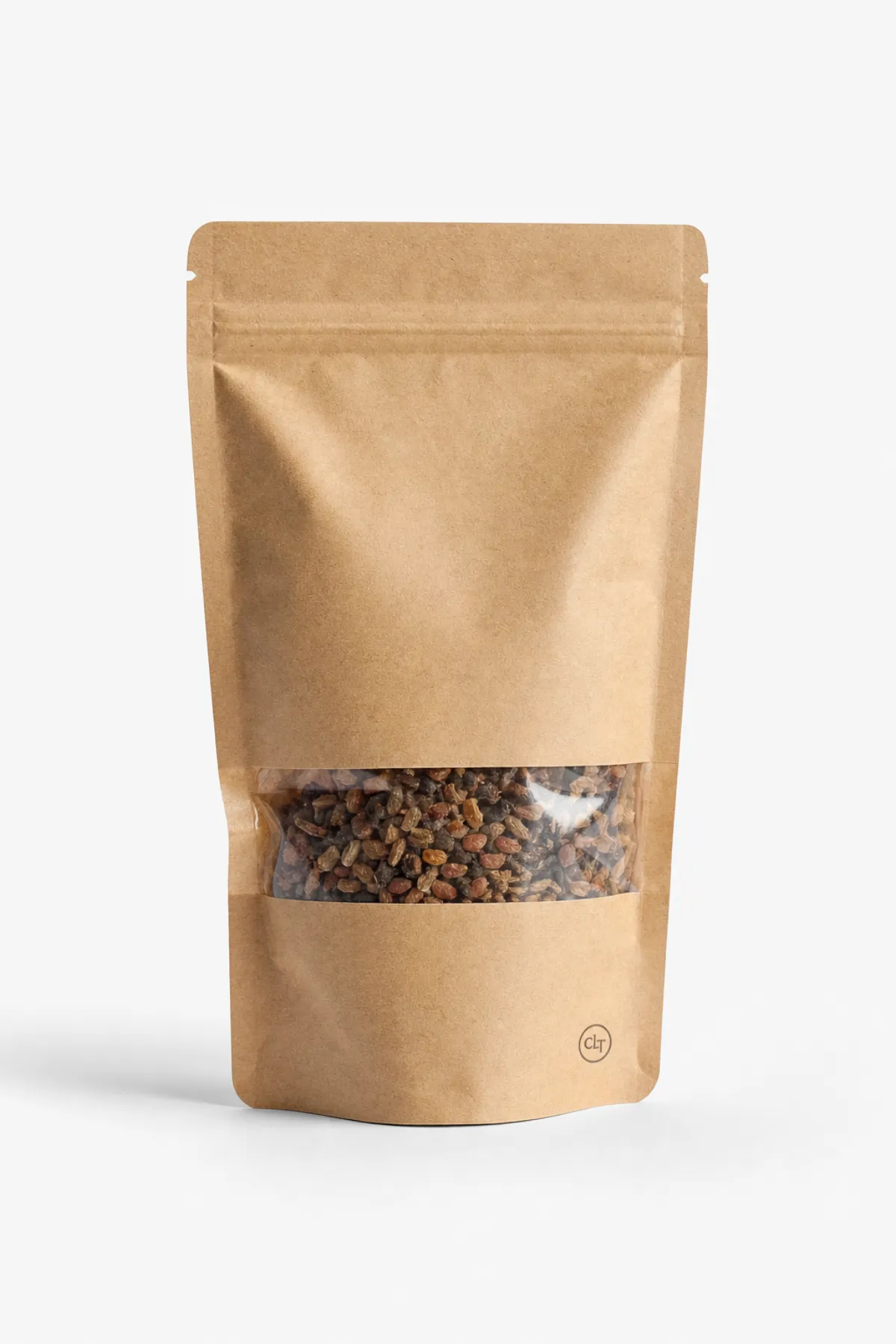
Packaging buyers usually run into a simple tension: hide the product for a cleaner canvas, or show it and let it do part of the conversion work. kraft window pouches bulk resolve that tension in a practical way. The kraft surface keeps the pack grounded and natural, while the window adds enough visibility to answer the shopper’s biggest question before they ever pick it up. That becomes especially valuable in self-service retail, where the package has to carry the conversation on its own.
Transparency lowers perceived risk. People trust what they can verify. When granola looks chunky and fresh, coffee beans look consistent, or dried fruit shows a rich color, the pouch stops feeling generic. That is why kraft window pouches bulk often perform well in competitive aisles where decisions happen fast and the shelf view is doing a lot of the heavy lifting. The pouch is not just a container; it is a visual proof point.
Food and wellness brands see the strongest results in categories where freshness cues matter. Coffee roasters use kraft window pouches bulk to show roast color and bean quality. Tea brands use them to highlight leaf shape and cut consistency. Snack brands rely on the window to make the contents feel generous and clean. Supplement brands use them when the dosage form itself helps establish trust. The same logic applies to nuts, trail mix, protein bites, candies, and even small-batch non-food products such as bath salts or craft goods.
If the product can be seen clearly, it usually needs fewer words to sell. That is why the strongest kraft window pouches bulk orders start with the product, then build the artwork around it.
The format also gives branding room without forcing a heavy visual load. A kraft base creates a natural, handmade impression. The window breaks up the surface so the pack does not feel overly dense or promotional. Many brands want exactly that balance. They are not trying to shout across the shelf. They want to look trustworthy, practical, and easy to buy.
At Custom Logo Things, the first question is never only “Can we print it?” The more useful question is, “Will this structure help the product sell?” That is the right way to evaluate kraft window pouches bulk, especially if the order will repeat. If the pack works on shelf, in photos, and in fulfillment, it earns its place quickly.
Product Details for Kraft Window Pouches Bulk Orders
Several pouch formats can support kraft window pouches bulk orders, and the right one depends on how the product is displayed, stored, and opened. Stand-up pouches are the most common choice because they present well and leave enough panel space for branding, legal text, and variant information. Flat pouches work when a lower profile makes more sense, especially for sample packs, lighter snacks, or refills. Side-gusset options suit coffee and dry goods that benefit from a more box-like fill shape and efficient pallet use.
Functional features matter as much as the outer appearance. A resealable zipper is standard for many kraft window pouches bulk orders because it improves usability after opening. A tear notch makes first access easier. A hang hole can matter for peg display. Degassing valves are common on coffee bags and, in some cases, on specialty dry goods with natural release. Those choices should follow the product instead of being added just because they are available.
Window size changes the way the entire pack is read. A larger window shows more product, which can improve trust and visual appeal, but it also reduces printable surface area. A smaller window preserves more kraft space for branding and can create a more restrained, premium feel. Shape matters too. Rectangles feel orderly. A curved or shaped window can feel softer and more designed, though it may add tooling complexity. For many kraft window pouches bulk orders, the right answer is not the largest possible opening. It is the right amount of visibility for the category.
Print approach changes the result as well. Some buyers want the raw kraft look with a simple one-color logo. Others prefer full custom artwork with matte accents or selective gloss. Labels can work when the first run is small, but once volume rises, direct print usually gives a more consistent result and a lower cost per unit. If the shelf plan depends on a premium cue, finish matters: matte usually reads natural and modern, while bright gloss tends to feel louder and more promotional. In kraft window pouches bulk, that choice can change how the brand is read from a few feet away.
Choosing the right configuration becomes easier when you start with product behavior. Fragile snacks need protection from breakage. Aromatic products need better seal performance. Moisture-sensitive powders need strong barriers and reliable closure systems. Retail display products may need a window that holds up well under bright store lighting. The spec should follow the use case, not the other way around. That is the difference between a pouch that looks good in a mockup and one that actually performs in the market.
Materials, Barrier Layers, and Specifications
Most kraft window pouches bulk orders use a paper-faced exterior paired with an inner barrier film that handles product protection. The outer kraft layer creates the natural look and the printing surface. The inner structure is where the real performance lives. Common constructions include kraft with PET and PE, kraft with metallized film and PE, or other food-safe laminate combinations selected for the product’s sensitivity to oxygen, moisture, and light. If the product is highly aromatic or prone to going stale, the barrier package matters far more than the decorative outer layer.
Buyers should confirm a basic specification checklist before approving kraft window pouches bulk production. Start with dimensions, fill volume, zipper type, window size and placement, seal strength, gusset depth if any, and whether the pouch needs tear notches or hang holes. Then confirm print coverage, finish, and whether the pouch will be shipped pre-filled or empty. If the item is food contact, ask for documentation that matches your market requirements. If the brand is making sustainability claims, those claims should be specific and supportable rather than vague.
Barrier tradeoffs are where packaging decisions become practical instead of theoretical. A stronger barrier helps maintain freshness, but not every brand needs the same structure. Coffee needs oxygen control and often benefits from a valve. Snacks need moisture protection so they stay crisp. Powdered products need a seal that helps control clumping and leakage. In some cases, a slightly lighter barrier can lower cost and improve recyclability positioning, but that only makes sense if the product can still make it from the packing line to the shelf to the pantry without trouble. That is why kraft window pouches bulk should be spec’d around shelf life, not a generic sustainability claim.
Appearance and certification are not the same thing. A kraft outer layer can support a natural brand story, and an FSC-certified paper component can add credibility, but neither one automatically makes the full pouch recyclable everywhere. Local collection systems vary. Film structures vary. Some packages look eco-friendly while still being technically complex. For packaging buyers who need a clearer framework, the standards conversations at FSC and the testing guidance from ISTA are useful reference points when comparing materials and transit risk.
Specification details also affect line performance. A zipper that is too stiff can frustrate consumers. A weak seal can create leaks in transit. A window placed too close to a seal line can complicate manufacturing and increase failure risk. A pouch that looks great in a render may still be the wrong choice if it puffs badly under temperature swings or does not stack neatly in cartons. That is why technical review is not optional on kraft window pouches bulk jobs. The pack has to work as a product, not only as a graphic asset.
From a buyer’s standpoint, the best specification sheet is short, clear, and measurable. If a supplier cannot tell you the exact laminate stack, closure type, and tolerance range, keep asking until the picture is complete. Good suppliers do not hide behind generic language. They explain why one structure costs more, why one window layout is easier to manufacture, and why a certain finish may extend lead time. That honesty is worth far more than a low quote that falls apart during proofing.
Pricing, MOQ, and Unit Cost for Kraft Window Pouches Bulk
Pricing for kraft window pouches bulk comes down to six main factors: pouch size, material structure, print coverage, window complexity, zipper style, and order quantity. A small pouch with a simple clear window and one-color print will cost less than a large pouch with a custom-shaped window, full-color graphics, a matte finish, and a premium zipper. That may sound obvious, yet many quotes are compared as if those details do not matter. They do.
As quantity rises, unit cost usually drops. Setup, tooling, and production overhead are spread across more pieces. A 5,000-piece order of kraft window pouches bulk may price very differently from a 20,000-piece order even if the product is the same. The breakpoints become even more noticeable once printing plates, film setup, and quality checks are included. In practical terms, buyers should expect the strongest unit pricing at volumes that fit standard production efficiency rather than one-off custom runs.
A useful planning range helps when you are building a margin model. For simple retail-ready kraft window pouches bulk with limited print and standard closures, pricing may land around $0.12-$0.22 per unit at higher volumes. More customized pouches with richer graphics, stronger barrier layers, or shaped windows often move into the $0.18-$0.42 range at 5,000 pieces, sometimes higher if the structure is complex. Coffee bags with valves and premium finishes can go beyond that depending on the format. These are planning numbers, not promises, but they are realistic enough to shape an early budget conversation.
MOQ deserves the same attention. Some suppliers quote a low minimum to win attention, then recover margin through tooling, artwork setup, or shipping. Others hold a higher MOQ but give cleaner pricing. For kraft window pouches bulk, the better question is not only “What is the minimum?” It is “What does that minimum actually cost after everything is included?” If a quote looks unusually low, ask what is missing.
To compare offers properly, ask for the same inputs on every quote. That sounds basic, yet it is where most purchasing mistakes happen. The comparison should include pouch size, film construction, window layout, zipper style, print colors, finish, quantity, shipping method, sample cost, and any tooling or plate charges. If one quote includes freight and another does not, the numbers are not comparable. If one supplier assumes an unlabeled stock pouch and another is pricing a fully custom print job, the difference is not a bargain. It is a category error.
| Configuration | Typical Use | Indicative Unit Cost at Scale | Pricing Impact |
|---|---|---|---|
| Simple stand-up pouch with standard window | Granola, tea, snacks, dry goods | $0.12-$0.22 | Lower setup complexity and faster production |
| Custom-printed pouch with zipper and larger window | Retail food, supplements, boutique products | $0.18-$0.32 | More print coverage and more film handling |
| Premium pouch with valve, matte finish, and shaped window | Coffee, specialty foods, premium gift packaging | $0.24-$0.42+ | Higher material cost and added manufacturing steps |
| Large-volume replenishment run with repeat spec | Established SKUs with stable demand | Often lowest unit cost tier | Best price efficiency because setup is spread across more pieces |
For brands that reorder regularly, the cost conversation should include inventory strategy too. A slightly better unit price helps, but a packaging stockout is more expensive than many buyers expect. If your sales cycle depends on consistent supply, a formal replenishment plan through Wholesale Programs can reduce surprises and keep kraft window pouches bulk aligned with demand. That matters especially for seasonal products, subscription packs, and private-label lines that cannot afford missed shipments.
One last pricing detail is worth checking early: ask whether samples are free, paid, or credited back after order placement. Ask whether the quote includes shipping to your warehouse or FOB pricing only. Ask whether art changes after proof approval trigger extra fees. Small items like those can change the effective cost per pouch more than buyers expect. The cleanest quotes are the ones that leave little room for guesswork.
Process, Timeline, and Lead Time for Production
The ordering process for kraft window pouches bulk usually starts with a spec review. You send the product type, target size, fill weight, window preference, print needs, and delivery goal. A good supplier then checks the structure, confirms whether the format is feasible, and flags any issues before artwork is finalized. That early review does more than it seems to on the surface. It removes the delays that are easiest to prevent.
After the initial review comes artwork preparation and proofing. This stage can move quickly when the files are clean and the dimensions are already confirmed. It slows down when the brand is still deciding between sizes, window shapes, or finish options. For kraft window pouches bulk, the fastest jobs are the ones where the buyer has already made the structural decisions. The supplier is not trying to invent the package from scratch; they are turning a confirmed spec into production-ready artwork.
Sampling is often the next checkpoint. Some buyers approve from digital proofs alone, while others want a physical sample or a pre-production mockup. That depends on risk tolerance and category complexity. Food brands, especially coffee and premium snack lines, often prefer one extra sample round because a small change in window size or zipper placement can change the entire look and feel. If the pouch needs to sit well on shelf, the sample is not optional. It is part of quality control.
Production timing for kraft window pouches bulk depends on order size, material availability, print complexity, and shipping method. A common window for straightforward jobs is about 12-18 business days after final proof approval, though complex orders can take longer. Transit time sits on top of that. Air freight moves faster but costs more. Ocean freight lowers shipping cost but stretches the schedule. If the launch is tied to a retail promotion or seasonal window, buyers should work backward from the in-store date rather than the order date.
Delays usually show up in three places: incomplete artwork, last-minute spec changes, and material sourcing issues. If the customer changes the pouch size after proofs are approved, the production file usually needs to be revised. If the window shape is unusual, tooling may take extra time. If a specific laminate or zipper is out of stock, substitutions need review. That is why complete information up front saves time later. For kraft window pouches bulk, a day lost at the approval stage can become a week lost at shipment.
A simple planning framework helps. Week one: inquiry, quote, and spec confirmation. Week two: artwork, proofing, and sample approval if needed. Weeks three and four: production. After that: packing, freight booking, and delivery. That timeline shifts with complexity, but it gives buyers a realistic starting point. If your order is tied to a launch date, build in buffer time. Packaging almost always takes longer than people hope and shorter than they fear, but only when the brief is complete from the start.
For brands that run recurring replenishment, the production calendar should be treated like any other supply chain element. That means forecast visibility, reorder points, and a backup plan for peak periods. A supplier that understands kraft window pouches bulk should be able to discuss all three without making it feel complicated. Clarity is the real service.
Why Choose Us for Kraft Window Pouches Bulk Orders
The difference between a generic pouch supplier and a packaging partner shows up in the details. With kraft window pouches bulk, consistency matters as much as the first sample. The print tone needs to stay stable. The window placement needs to repeat accurately. The closure needs to feel the same from one run to the next. If a supplier cannot maintain that kind of repeatability, the brand pays for it later in complaints, rework, and inventory headaches.
Custom Logo Things is built around that reality. The goal is not to push a one-size-fits-all pouch. The goal is to match the structure to the product, the shelf, and the reorder plan. That matters because the best packaging choice for coffee is rarely the best choice for granola bars, and a sample bag for a boutique retail item is not the same thing as a long-term replenishment SKU. A buyer should expect direct guidance, not generic optimism.
There is a commercial side to trust as well. Marketplace-style sourcing can work for simple stock items, but custom work needs better proofing and tighter quality checks. On kraft window pouches bulk, small errors are expensive because they tend to repeat across the full order. A supplier that catches issues early can save far more than the lowest initial quote. That is why we treat communication as part of quality control, not as an afterthought.
Sustainability claims should be handled with the same care. Vague green language is easy to write and hard to defend. Better guidance is specific: what the pouch is made of, what the barrier does, what can be certified, and where recycling assumptions stop. That is the kind of conversation serious packaging buyers want. It also keeps awkward questions from retailers and customers from showing up later.
If you are comparing suppliers, ask which one is willing to talk plainly about limits as well as strengths. The strongest partner on kraft window pouches bulk is not the one with the loudest promise. It is the one that can explain the tradeoffs in Cost, Lead Time, shelf life, and presentation without hiding behind jargon. That is where better decisions come from.
Next Steps to Order Kraft Window Pouches Bulk
Before requesting a quote for kraft window pouches bulk, gather the essentials: pouch size, product type, fill weight, window preference, quantity, print colors, finish, zipper needs, and target ship date. The more complete the brief, the cleaner the quote. A good first request should make it easy for a supplier to answer with a real recommendation instead of a placeholder price.
Ask for a sample or spec sheet review before committing to production. If the product is sensitive to moisture, aroma, or breakage, test the configuration against that risk. If the brand cares about shelf impact, compare two or three layouts side by side. The best kraft window pouches bulk decision is usually not the most decorative one. It is the one that balances protection, merchandising, and unit cost in a way your team can sustain.
It helps to compare configurations in a practical way. For one SKU, a larger window may improve sell-through. For another, a smaller window may protect the brand look and keep the pouch more premium. For coffee, a valve may be worth the extra cost. For snacks, a simpler structure may produce a better margin. The point is to choose based on the product, not habit.
If your business needs repeat ordering, talk through replenishment planning early. A steady order cadence usually creates better pricing and fewer stock problems than sporadic emergency buying. That is where Wholesale Programs can help brands that want a more structured buying process. Once the spec is stable, kraft window pouches bulk becomes easier to forecast, easier to reorder, and easier to explain internally.
Ready-to-order buyers usually move fastest when they have a clean spec, a clear budget band, and a delivery target they can defend. If that fits your situation, the practical move is simple: collect the exact pouch dimensions, laminate preference, window size, and reorder quantity first, then compare quotes on the same basis. That way you can choose the pouch that protects freshness, shows the product honestly, and keeps the unit cost where it needs to be.
Final thought: if you want a packaging format that balances natural presentation, product visibility, and repeat-order economics, kraft window pouches bulk is one of the strongest options on the table. Get the spec right, compare quotes on the same basis, and the pouch will do more than hold product — it will help move it.
Frequently Asked Questions
What products work best in kraft window pouches bulk orders?
Coffee, tea, granola, nuts, dried fruit, candies, supplements, and small retail goods tend to perform well because the window helps shoppers verify what they are buying. The best structure still depends on the product’s sensitivity to moisture, oxygen, light, and breakage, so the barrier layer should match the item, not just the shelf look.
How do I compare prices for kraft window pouches bulk?
Compare the same pouch size, material structure, window size, print coverage, zipper type, and quantity. Then confirm whether tooling, samples, shipping, and setup charges are included. That is the only reliable way to compare quotes without accidentally mixing different products into the same price conversation.
What MOQ should I expect for kraft window pouches bulk orders?
MOQ varies by size, print method, and customization level. Smaller or simpler runs may be possible, but larger orders usually bring the best unit cost. If you are still testing demand, ask for pricing at two or three quantity tiers so you can see where the breakpoints begin.
Can kraft window pouches bulk orders be customized with branding?
Yes. Many brands use custom print, branded labels, spot finishes, or a tailored window layout to keep the pouch aligned with the product line. The key is to confirm artwork requirements early so proofing does not slow down production later.
How long does production usually take for kraft window pouches bulk?
Lead time depends on final artwork approval, material availability, order size, and shipping method. Straightforward orders can move within a few weeks after approval, while more complex runs take longer. The fastest projects are the ones where the spec is complete before quoting starts.