Logo printed tote bags seem straightforward until procurement starts. Then the real variables appear: material, handle style, print method, artwork quality, lead time, freight, inspection, and whether the quote includes the details the buyer assumed were standard.
A tote is not just a bag with a mark on it. It is a branded item that gets folded, carried, loaded, and judged in public. If the construction is weak or the print is inconsistent, the brand absorbs the visible failure.
The upside is that a tote can stay in circulation for months. That makes it more useful than many short-life promo items, but only if the bag is built well enough to be kept and reused.
A good tote does not need to be fancy. It needs to carry weight, keep the mark readable, and hold up after repeated use.
Why logo printed tote bags punch above their weight
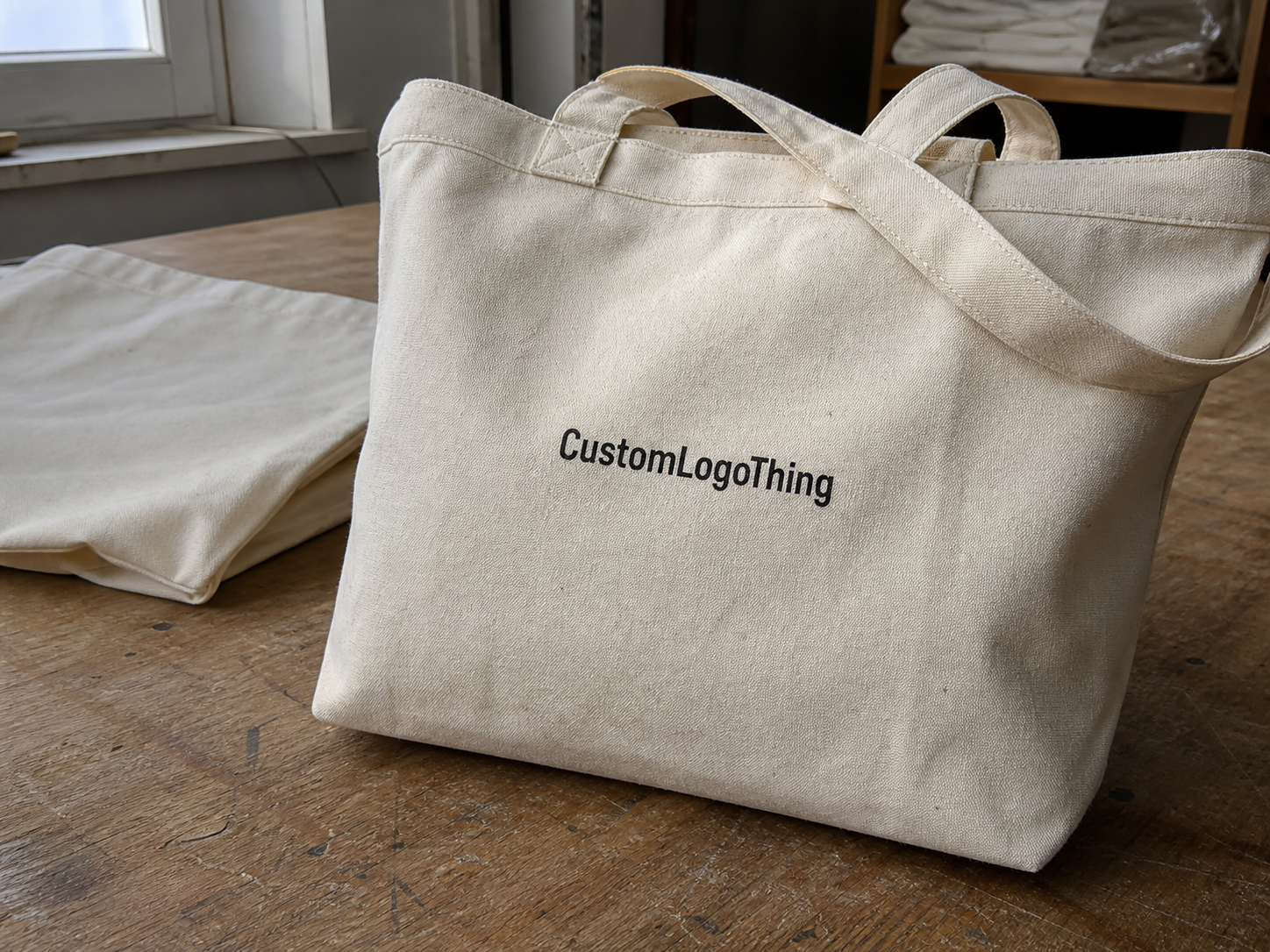
Totes get used in public, which is why they work as a branding vehicle. A mailer disappears after unboxing. A flyer gets tossed. A tote keeps moving through stores, offices, events, and commutes.
For retailers, events, and promotions, logo printed tote bags do two jobs at once. They carry product and they carry the brand. That combination is hard to beat at a low unit cost when the bag is sturdy enough to stay in use.
Buyers often focus on logo size and ignore the structure around it. That is a mistake. Proportions, seams, gussets, handle welds, and film finish all change how the logo reads once the bag is filled and folded.
A design that looks balanced in a flat proof can look cramped near a fold line or seam. The visual result matters because people do not separate the brand from the bag when they see it in use.
The practical point is simple: the bag has to work as a bag before it can work as branding. If it does both, you get useful packaging instead of throwaway promo material.
How the printing process works from art file to finished bag
The production path starts with artwork prep, then the print method is chosen, then tooling or screens are made if needed, then the film or bag body is printed, cured or dried, converted into the finished bag, and inspected before packing. Missing a step early usually costs time later.
For logo printed tote bags, three print methods come up most often. Flexographic printing is efficient for higher-volume runs once setup is absorbed. Screen printing works well for bold logos and limited colors. Digital printing is useful for short runs, samples, or jobs where setup cost would otherwise dominate.
The right method depends on quantity, artwork complexity, and color sensitivity. A one-color logo can be efficient in flexo or screen. A multi-color layout with fine type may need digital or a simpler art treatment to survive at bag scale.
The substrate matters too. LDPE tends to feel softer and more flexible. HDPE is usually crisper and lighter. Recycled blends can vary more from batch to batch, which can affect ink adhesion and edge sharpness.
Thickness is another key decision. Lightweight promotional bags may sit around 1.5 to 2 mil, while heavier carry bags often need 2.5 mil or more depending on use and handle design. If the tote will carry bottles, boxed goods, or repeated daily loads, thin film is the wrong place to save money.
Artwork prep is where many orders slow down. Common issues include raster logos that will not scale cleanly, missing fonts, RGB files that need conversion, and art placed too close to a seam or gusset. Vector art is the safest starting point.
Clean outlines, defined colors, and enough clear space around the mark make production easier. Small type and hairline strokes are risky because film movement, ink spread, and registration tolerances all work against detail. If a logo only reads on screen, it probably needs simplification.
Buyers should expect a proof before production starts. That is where print size, placement, color targets, and packing notes get locked in. If brand color matters, use Pantone references or another clear standard instead of “close enough.”
Cost, pricing, and MOQ factors buyers should compare
Pricing is driven by more variables than most first-time buyers expect. Bag size, film gauge, handle style, print colors, coverage, quantity, finishing, and packing requirements all affect the final number. If the order needs custom carton packing or nested folding, the price can move again.
Logo printed tote bags get cheaper per unit as volume rises because setup cost is spread over more pieces. That is the real meaning of MOQ. A 5,000-piece run can absorb plate or screen setup in a way a 500-piece order cannot.
Design complexity changes the economics too. A single bold spot color is usually cheaper than a full-wrap design or a multicolor graphic that needs tight registration. Extra colors mean extra setup, more proofing, and more chances for drift.
Here is a directional comparison for budgeting. These are not universal prices, but they are useful for framing an RFQ.
| Print method | Typical MOQ | Indicative unit cost | Best fit | Main watch-out |
|---|---|---|---|---|
| Flexographic | 5,000+ | $0.10-$0.28 | Higher-volume retail and promotion runs with simple spot colors | Plate/setup charges and less flexibility for late artwork changes |
| Screen printed | 250-2,500 | $0.35-$1.10 | Bold logos, limited colors, and mid-size promotional orders | Slower throughput on large orders and tighter limits on fine detail |
| Digital | 100-1,000 | $0.75-$2.00 | Short runs, testing, launches, and artwork that changes often | Higher per-unit pricing and narrower substrate choices |
Hidden costs can erase a low quote fast. Rush fees, split shipments, extra proofs, plate changes, freight upgrades, and reprint allowances all matter. The cheapest bid is often the one that left out the most things.
To compare quotes fairly, keep the same size, gauge, color count, delivery window, and freight terms across suppliers. If those inputs differ, the price gap is not meaningful.
For transit protection, buyers sometimes use ISTA testing as a benchmark when cartons will move through distribution rather than sit in a warehouse. For recycled-content claims or sustainability checks, EPA guidance is a better baseline than marketing copy.
Step-by-step production steps and timeline planning
The cleanest orders start with a one-page brief. Include the use case, target quantity, dimensions, material preference, logo files, and delivery deadline before asking for quotes. That gives suppliers a real spec instead of three different interpretations.
The approval chain is usually quote, artwork review, proof, revisions, and final sign-off. Each step protects the order, but each one can also create delay if the buyer takes days to answer basic questions about placement or color.
Logo printed tote bags can move quickly when the order is simple. Repeat runs with existing tooling may only need a short production window, while custom sizes, special inks, or larger quantities need more time for setup, drying, curing, and inspection. A practical planning window is often 12 to 15 business days from proof approval for a straightforward run, but that can stretch if the art needs cleanup or the freight plan is incomplete.
Shipping is where many event timelines fail. The bags may leave production on time and still miss the event because receiving appointments, cross-docking, or final-mile freight were not planned early enough. Build in a buffer.
The most common delay points are predictable: late artwork changes, color corrections after proofing, and incomplete ship-to details. Fix those three and you reduce risk more than you would by chasing a faster press.
Common mistakes that make orders more expensive
Buying on price alone is the most expensive shortcut in the category. A thinner bag with weak handles can create product complaints, while a better spec protects both the customer experience and the brand image. The tote should fit the carry load.
Another common mistake is using artwork that looks fine on a monitor but prints poorly at bag scale. Tiny type, hairline strokes, and dense gradients can turn muddy once they hit film. If the logo needs to be read from a few feet away, simplify it.
Logo printed tote bags also get more expensive when buyers add colors without a clear reason. Each extra color means more setup, more chance of registration drift, and more time spent checking proofs. If the design works as a strong one-color imprint, that is often the better production choice.
Skipping the proof review is another predictable failure. Wrong placement, bad scaling, and the wrong Pantone selection are all avoidable if someone checks the proof with a production mindset. Ask the practical questions: Is the logo centered relative to the handle? Is the print large enough to read? Does the color still hold against the film?
Another mistake is mismatching bag construction to the use case. A boutique purchase bag, a trade-show giveaway, and a heavier carry bag do not need the same gauge, handle design, or print coverage. If the bag will hold heavier items, increase thickness and handle strength before spending more on decoration.
Finally, watch the packing spec. If the bags are folded too tightly or packed too loosely, the warehouse can create wrinkles, warped handles, or damaged print edges. Small packing decisions matter more than they get credit for.
Expert tips for better results and fewer surprises
Start with the feel of the brand. Glossy film reads differently from matte film, and a reinforced handle changes the perceived value faster than many buyers expect. If the campaign should feel premium, the surface and structure need to support that.
Keep the logo area clear. A strong mark with good contrast usually performs better than a crowded layout. On flexible packaging, restraint is often the better choice because the substrate already reflects light and movement.
If color fidelity matters, ask for a sample or a similar production example. That helps for franchise work, seasonal launches, or retail rollouts where the brand cannot tolerate a loose match. A sample tells you more than a verbal promise.
Here is the quote discipline that saves time: confirm what is included before approval. Setup, proofs, freight, defect replacement terms, and handling charges should all be explicit. Logo printed tote bags are not complicated, but quotes often are.
For heavier items, upgrade the structure before spending more on ink coverage. A thicker film, better welds, or a stronger handle usually improves the user experience more than an extra color ever will. That is a packaging call, not a design preference.
Packaging standards can help frame the quality conversation. ISTA protocols are useful if the cartons need to survive distribution, not just one truck ride. EPA guidance is the cleaner reference point if recycled-content claims or waste reduction language will appear in the brief.
The best tote orders are usually boring in the right ways. The art is clear, the material is appropriate, the proof is approved quickly, and the delivery window has slack built in. That is not glamorous, but it avoids rework.
Next steps before you request quotes
Build a one-page spec sheet before you send anything out. Include size, material, gauge, handle type, print colors, quantity, artwork file type, and deadline. The more consistent the brief, the easier it is to compare bids that actually mean the same thing.
Prepare print-ready vector art and identify any brand colors that need close matching. If the logo contains fine text or thin strokes, check whether it still reads at the final print size. Buyers often discover too late that an art file was finished but not production-ready.
Logo printed tote bags force a tradeoff procurement teams know well: lowest price, fastest turnaround, or best presentation quality. You can usually maximize two of those, not all three. Decide which two matter most before the quotes arrive.
Request at least two comparable quotes and ask each supplier to confirm MOQ, proof timing, production lead time, and freight method. Keep the approved proof and the final spec sheet tied to the purchase order.
If the bags are going to carry your name through a store, an event, or a customer handoff, treat them like a packaging component with performance requirements. That mindset usually produces cleaner art, better pricing comparisons, and fewer surprises when the cartons arrive.
FAQ
What makes logo printed tote bags cost more or less?
Quantity is the biggest lever because setup cost gets spread over more units at higher volume. Material thickness, print colors, artwork complexity, and handle construction also affect the price. Rush production, proof revisions, and special shipping can add cost beyond the base quote.
How long does a custom tote bag order usually take?
Lead time depends on artwork approval, print method, and order size. Simple repeat jobs usually move faster than first-time custom runs because the setup is already defined. Build in extra time for freight and any proof changes so the bags arrive when needed, not just when production ends.
What artwork works best for printed plastic tote bags?
Vector files are preferred because they stay sharp at any size. Simple logos with strong contrast usually print cleaner than thin lines or dense gradients. If brand color accuracy matters, provide Pantone references or exact color targets so the production team is not guessing.
Can I order low quantities of logo printed tote bags?
Yes, but the unit price is usually higher because setup costs are spread across fewer bags. Short runs make sense for events, launches, or test campaigns. Ask whether the supplier offers digital or short-run printing if MOQ is a concern.
How do I make sure the final bags match my brand?
Approve the proof carefully for size, placement, and color. Confirm the bag style, thickness, and handle type before production starts. Keep the final spec sheet tied to the order so the production team and buyer stay aligned, and the finished bags match the intent instead of a late assumption.