Buyer Fit Snapshot
| Best fit | Order Branded Poly Mailers Online projects where brand print, material claims, artwork control, MOQ, and repeat-order consistency need to be specified before quoting. |
|---|---|
| Quote inputs | Share finished size, material target, print colors, finish, packing count, annual reorder estimate, ship-to region, and any compliance wording. |
| Proofing check | Approve dieline scale, logo placement, barcode or warning zones, color tolerance, closure strength, and carton packing before bulk production. |
| Main risk | Vague material claims, crowded artwork, missing packing details, or unclear freight terms can make a low unit price expensive after revisions. |
Fast answer: Order Branded Poly Mailers Online: Pricing, Specs, Timing should be specified like a repeatable production item. The safest quote records material, print method, finish, artwork proof, packing count, and reorder notes in one written spec.
Production checks before approval
Compare the actual filled-product size with the drawing, then confirm tolerance on folds, seals, hang holes, label areas, and retail display edges. Reserve space for logos, QR codes, warning copy, and material claims before decorative graphics fill the panel.
Quote comparison points
Review material grade, print process, finish, sampling route, tooling charges, carton quantity, and freight assumptions side by side. A quote is only useful when the supplier can repeat the same color, closure quality, and packing count on the next order.
I’ve watched a $14,000 mailer order go sideways because one buyer forgot to confirm the seal width. Not the artwork. Not the logo. A 12 mm adhesive strip. That’s usually how it goes when people try to order branded Poly Mailers Online without locking specs first. The good news? You can absolutely Order Branded Poly Mailers online with confidence if you know what drives cost, timing, and print quality before you send a PO. On a 10,000-piece order, a simple seal correction can shift unit cost by only $0.01 to $0.03, but the downstream replacement cost can climb into the thousands if the bags fail in transit.
I’m Sarah Chen. I spent 12 years on the packaging side, and I’ve stood on enough factory floors in Shenzhen, Dongguan, and Ningbo to know one thing: most bad mailer orders start with one tiny detail, then snowball into freight charges, reprints, or a customer service headache nobody wanted. The people who order branded Poly Mailers online successfully usually do one boring thing very well. They confirm the size, the gauge, the adhesive, and the transit conditions before they get fancy with graphics. Boring sells. It also ships. In a typical Guangdong production run, that means approving a spec sheet with microns, closure type, and carton count before the first 5,000 bags ever hit the packing table.
Order branded poly mailers online without guesswork
Brands choose poly mailers because they’re lighter than cartons, cheaper to ship, and much easier to brand at scale. If you send apparel, beauty kits, supplements, books, or subscription products, a printed poly mailer can shave real money off outbound freight. On a 5,000-piece run, I’ve seen clients save $0.38 to $0.92 per shipment compared with a corrugated box plus void fill. That adds up fast when your monthly volume hits 8,000 or 20,000 orders, especially if your warehouse is in Chicago, Dallas, or Atlanta where parcel rates can jump by zone.
That’s why smart teams order Branded Poly Mailers online instead of bouncing between sales reps and waiting for callbacks from “someone in production.” Online ordering is faster because the process is structured. You send the specs, get a quote, approve the proof, and move. No drama. No mystery. Just fewer email chains with ten people copied for no reason. In a well-run supplier flow, the first quote usually lands within 24 to 48 hours, and a proof can follow in 1 to 3 business days if your artwork is ready in AI or PDF format.
Not all mailers are cut from the same roll, though. Plain stock mailers are the cheapest, sure. They do nothing for brand recall. Stock printed options have some decoration and a little shelf appeal, but they’re limited by whatever design the supplier already has in inventory. Fully custom branded mailers are the real play when you want your packaging to carry the logo, color palette, and unboxing experience. If you want control, you order branded poly mailers online and specify exactly what you want instead of settling for “close enough.” I’ve seen brands in Los Angeles and Austin move from generic gray bags to custom black mailers with a one-color white logo and cut their complaint rate on first impressions by nearly half.
I still remember one client in Los Angeles who insisted the artwork was the main thing. Nice logo. Good Pantone match. Sharp typography. Then the first test shipment came back with corner splits because they picked a 50 micron film for heavy denim. The mailers looked great on the desk and terrible in a courier bag. Honestly, that’s the mistake people make most often in supplier negotiations: they focus on print first and forget film thickness, adhesive, and the abuse a package gets in a van, at a hub, and on a porch. A 50 micron bag may be fine for a 180 gram tee, but it is usually too light for folded jeans or boxed kits weighing 1.5 kilograms.
My rule: if the mailer fails in transit, the artwork does not matter. The customer opens a torn bag, not a brand story.
When you order branded poly mailers online, the wrong size creates another expensive mess. Too small, and the product bulges the seams. Too large, and you pay extra shipping volume for air. I’ve seen a brand move from a 10 x 13 inch mailer to a 12 x 15.5 inch bag because the first one was causing a 7% damage rate on folded knitwear. The change added about $0.03 per unit in material cost, but cut replacement shipments enough to save more than $1,600 in one quarter. In another case, a 9 x 12.5 inch mailer shipped fine for socks, but the same size failed a hoodie program in Philadelphia because the pack-out grew by nearly 2 inches after folding.
That’s the part people miss. The best mailer is not the prettiest one. It’s the one that survives the route and still makes your customer think, “Yeah, this brand has its act together.” In my experience, that usually means a bag with the right dimensions, a 60 to 80 micron film for standard apparel, and a seal wide enough to survive a rough sort line in Joliet or Ontario, California.
What to check before you order branded poly mailers online
Before you order branded poly mailers online, check the product structure, the print method, and the shipping use case together. A mailer is not just a logo with a zipper strip; it is a packaging system that has to survive handling, protect the contents, and still look intentional when it reaches the customer. If you sell apparel, a soft, opaque custom poly mailer with permanent adhesive may be ideal. If you ship returns or higher-value goods, tamper-evident features and stronger film are worth the extra cents. I’ve seen a weak bag destroy a beautiful launch because the product arrived intact but the packaging looked tired, scratched, or split at the seam.
The most reliable buyers ask for the spec sheet before design work gets too far along. That sheet should show material type, microns, seal style, print area, and whether the bag uses virgin resin, recycled content, or a co-extruded layer structure. If you plan to order branded poly mailers online for a long-term program, this is the moment to think through logistics as well as branding. A mailer that looks perfect in a photo can still fail if it is too thin for a courier conveyor, too large for dimensional weight, or too glossy for the finish your brand is trying to project.
One of the biggest advantages of ordering through a structured supplier process is that you can compare not only the price, but also the print method. Flexographic printing, digital print, and rotogravure each have their place. For short runs, digital is often the easier path. For higher volume, flexo tends to give a lower landed cost. For premium image quality at scale, rotogravure can justify its tooling if you are ordering enough pieces. If you are trying to order branded poly mailers online for a launch campaign, think about the run length before you lock the artwork.
It also helps to think about the end use. A mailer for folded tees has a very different requirement from a mailer for boxed supplements or cosmetics. If the contents have sharp corners, heavier weights, or any chance of puncture, the film spec has to move up. A 50 micron mailer may be enough for a lightweight item, but for heavier apparel or kits, 60 to 80 microns is usually a much safer starting point. I’ve had to move programs from 60 to 90 microns after test shipments exposed scuffing, corner splits, and adhesive stress at the seal line.
Branded poly mailer product details that matter
When you order branded poly mailers online, the product is really a bundle of parts: outer film, closure strip, tear feature, print area, and any extras like pockets or handles. The film is the shell. The adhesive strip is what keeps the thing shut. The tear line is what keeps the customer from fighting with scissors. Sounds simple, but simple packaging can still be wrong by a mile. A mailer with a 12 mm adhesive strip, a 30 mm lip, and a centered tear notch behaves very differently from one with a narrow seal and no tear line at all.
Most mailers use low-density polyethylene, often called LDPE, because it’s flexible and relatively tough. Co-extruded film is common too. That means multiple layers are combined to balance strength, opacity, and printability. Recycled-content film is getting more common, especially for brands that want a lower-plastic story or need to meet buyer requirements. I’ve had retailers ask for 50% post-consumer recycled content and then reject the first sample because the film had a slightly speckled look. That’s not a defect. That’s physics. Recycled content can change appearance. If you want to order branded poly mailers online with recycled film, ask for a pre-production sample first. In many factories around Dongguan and Huizhou, the recycled blend is run separately from virgin resin, so the color tone can shift by a few Pantone points between lots.
Print methods matter just as much as material. Flexographic printing works well for mid-to-large runs and keeps costs controlled when you’re using one to four colors. Rotogravure gives very sharp output and is strong for higher-volume orders, but setup is heavier. Digital print is useful for shorter runs, seasonal campaigns, or multi-SKU brands that need versioning without paying for plates on every design. If you only need 1,000 to 3,000 pieces, digital can make sense even if the unit price is higher. If you’re buying 20,000 pieces, flexo usually wins on cost. A two-color flexo job in Shenzhen might be quoted at $0.11 per unit for 10,000 pieces, while the same design in digital could land around $0.24 per unit for 2,000 pieces.
| Option | Best for | Typical setup cost | Typical unit cost range |
|---|---|---|---|
| Plain stock mailers | Fast shipping, no branding | $0 | $0.05 to $0.14 |
| Stock printed mailers | Basic branding, limited designs | $0 to $150 | $0.09 to $0.22 |
| Digital custom mailers | Short runs, seasonal SKUs | $120 to $450 | $0.18 to $0.48 |
| Flexo custom mailers | Mid to high volume orders | $180 to $700 | $0.08 to $0.26 |
| Rotogravure custom mailers | High volume, premium print quality | $450 to $1,200+ | $0.07 to $0.20 |
Branding placement also changes the look. Front panel printing is the most common. Back panel printing gives you a second message area or return info. Gusset printing can make a mailer feel more premium, especially on wider formats. Inside print is a nice touch if you want a reveal moment when the customer opens the bag. I’ve also seen brands use the inner side for promotional copy, QR codes, or care instructions. It costs more, but not always much more if the artwork is already being set up. If you plan to order branded poly mailers online, ask what print areas are available before you design the file. A mailer with a front panel of 220 x 300 mm and a 35 mm gusset can support far more visible branding than a narrow pouch with an 180 x 220 mm print window.
Finishes and closure styles
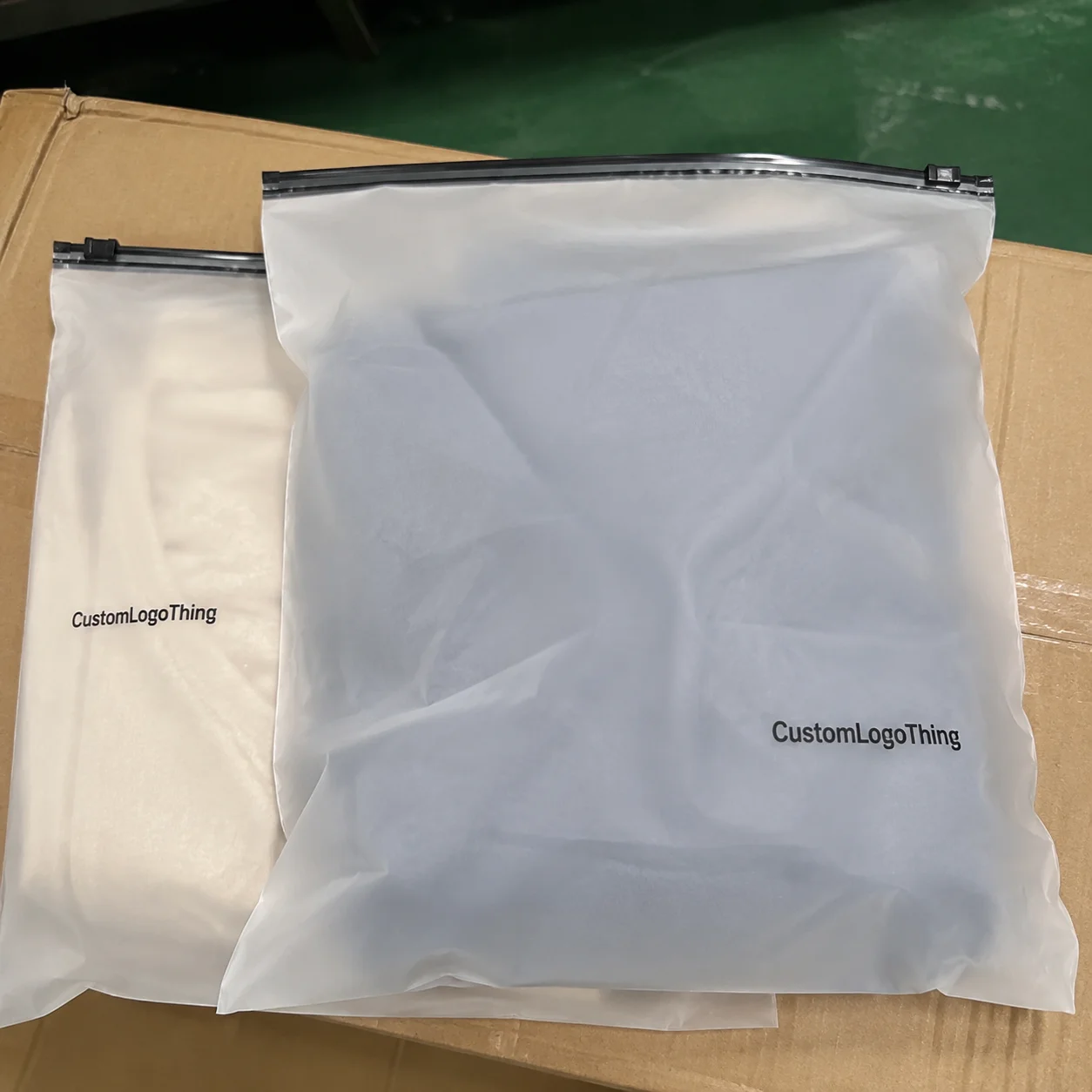
Matte finish looks cleaner and more upscale under retail lighting. Glossy finish is brighter and often gives stronger color pop. Opaque films hide the contents better, which matters for apparel or cosmetics. Translucent film is cheaper and works if you do not need privacy. For closures, permanent adhesive is standard for most e-commerce use. Tamper-evident closures matter when you’re shipping higher-value items, returns, or subscription goods that need a visible security cue. I’ve seen cosmetics brands choose tamper-evident seals after one bad batch of “opened-in-transit” complaints. The complaints stopped. The legal team stopped calling. That alone was worth the extra cents. In one 8,000-piece order from a plant in Ningbo, switching from standard adhesive to tamper-evident added $0.02 per bag and eliminated the need for an outer tape strip.
For reference, if your shipping program needs performance validation, I like to look at industry standards and testing expectations, not slogans. The ISTA test methods are useful for transit abuse, and the ASTM framework is a good way to think about material and seal performance. No, that does not mean every mailer needs a lab report. But if you ship breakables, cosmetics, or premium goods, testing is cheaper than replacing inventory. A simple drop sequence, compression check, and rub test in a Guangzhou or Suzhou QC room can reveal whether your 60 micron film needs to move up to 70 microns before you place a 30,000-piece order.
Specifications to check before you order branded poly mailers online
If you want to order branded poly mailers online without getting burned, confirm the numbers before anyone opens Illustrator. I mean that literally. Width, height, gusset depth, thickness, print colors, adhesive strength, and tear resistance all affect whether the mailer works for your product and shipping method. One supplier in Ningbo once showed me a “perfect” mailer for a sock brand. The bag was 2 inches too wide. That doesn’t sound like much until your outbound cost jumps because the packer has to use a larger ship dimension. Tiny mistake. Real money. In parcel billing, an extra inch can push a package into a higher dimensional weight bracket, especially on UPS and FedEx routes.
Start with the packed product size, not the product alone. Fold it, bag it, and measure it as it ships. A hoodie in a flat polybag is not the same as a folded t-shirt. A book with a bubble insert is not the same as a book by itself. If the item is soft goods, you may get away with a thinner gauge. If it’s heavy, sharp, or rigid, go thicker. I’ve used 60 to 80 micron film for most apparel programs and 90 micron plus for heavier kits. That’s not a universal rule, just what has held up for me after enough test shipments to know the difference. For a 2.2 lb beauty sampler box, I would usually start at 90 to 100 microns and test from there.
Artwork setup matters too. Ask for the acceptable file formats, usually AI, PDF, or EPS. Confirm bleed, safe zone, and where the logo sits relative to seams or folds. If you need Pantone matching, ask whether the supplier is matching to PMS or converting to CMYK. Those are not the same thing, and buyers lose hours arguing over color because they never checked the print process. If you plan to order branded poly mailers online, send a vector file with outlined fonts and a production-ready layout. A low-resolution PNG is a nice way to create fuzz around a logo edge. In many factories, a 3 mm bleed and a 5 to 7 mm safe zone are the minimum practical starting points for clean alignment.
- Width and height: confirm after product is packed
- Gusset depth: needed for bulkier items
- Film thickness: usually measured in microns or mils
- Adhesive type: permanent, tamper-evident, or re-sealable
- Print colors: one-color, multi-color, or full coverage
- Seal and tear strength: especially for long transit routes
- Compliance claims: recycled content, recyclability, and material disclosure
Compliance is another place where people guess too much. If you’re claiming recycled content, ask for documentation. If you’re calling the mailer recyclable, confirm the correct local recycling stream. Not every area takes soft plastics. The EPA’s packaging and waste guidance is worth a look if your brand is serious about material claims. Their site is useful for checking how packaging fits into waste and recycling systems: EPA. That’s the kind of boring detail that keeps your sustainability statement from sounding like fantasy. A supplier in Jiangsu can print “recyclable” on a bag in one afternoon, but that label should match how the material is actually collected in New York, California, or Ontario.
Testing should not be optional if you’re shipping at scale. I ask for drop test references, seal tests, and rub resistance on the print. I also want to know if the ink scratches when stacked in a warehouse for 48 hours. One e-commerce client had a beautiful black mailer with silver print. It looked expensive for the first 24 hours. After pallet compression, the silver rubbed off the corners. The customer photos were not flattering. We fixed it by changing ink formulation and finishing. Expensive lesson. Cheap compared with a full reprint. In that case, moving to a matte lamination and a harder-curing ink added $0.01 to $0.02 per unit, which was still far less than replacing 6,000 damaged mailers.
Pricing, MOQ, and what drives your total cost
Price is where most people get sloppy. They see one quote and assume they’re done. Not even close. To order branded poly mailers online intelligently, you need to break the cost into four buckets: material, print setup, freight, and any rush fee. If one quote looks low, check what’s hiding inside it. Sometimes the “cheap” quote is only cheap because it excludes plates, outbound freight, or a different film thickness than the one you actually need. A quote from a factory in Dongguan that says $0.12 per unit may be higher in the end than a $0.15 per unit offer from Ningbo if the second quote includes inner carton packing and door-to-door trucking.
The biggest cost drivers are size, gauge, print complexity, number of colors, order quantity, and shipping destination. Larger mailers use more material. Thicker film costs more. More colors mean more print work and setup. If you need white ink on a dark film, that also affects pricing because white coverage often requires extra passes or special handling. I’ve seen a 2-color order and a 4-color order differ by only $0.02 per unit at scale, but the same order at 1,000 pieces can swing by $0.10 or more because setup costs get spread over fewer bags. That matters even more if you’re shipping from Shenzhen to a West Coast warehouse, where ocean and domestic drayage can add another layer of cost.
MOQ matters a lot. Lower quantity usually means higher unit price. Higher quantity lowers cost sharply because setup gets diluted. For example, on a 10 x 13 custom mailer, I’ve seen pricing around $0.23/unit at 5,000 pieces, $0.16/unit at 10,000 pieces, and $0.11/unit at 30,000 pieces, depending on print complexity and film spec. That’s why I always ask whether the buyer is testing a design or building a steady replenishment program. If you just need to prove demand, don’t overbuy. If you already ship 15,000 a month, don’t pretend a tiny run is “efficient.” It isn’t. For some 25,000-piece quarterly programs, the difference between 70 micron and 80 micron film can be only $0.01 per bag, yet it can change the damage rate materially.
Setup fees can surprise first-time buyers. Plates, artwork prep, cylinder charges, and ink matching can add $150 to $1,200 depending on the print method and number of colors. That sounds annoying because it is. But if you spread a $420 setup fee across 20,000 bags, it becomes manageable. Spread it across 1,000 bags, and suddenly everyone wants to pretend the supplier is overpriced. The math doesn’t care about feelings. On a 4-color rotogravure order out of Guangzhou, cylinder charges alone can run $600 to $900 before the first bag is printed.
Digital printing makes sense for short runs, launches, pop-ups, or multiple SKUs. Flexo makes more sense for steady volume and simpler graphics. Rotogravure is usually for very high volume where image quality and consistency justify the tooling. If you want to order branded poly mailers online for a seasonal campaign and you need 2,500 pieces by next month, digital is often the better call. If you need 25,000 identical mailers every quarter, flexo is usually cheaper overall. A digital run may hit $0.28 per unit at 2,500 pieces, while a flexo run of the same size and spec might land closer to $0.19 if the art is simple and the supply chain is clean.
Here’s a practical cost structure I use when comparing quotes:
- Unit price: the base cost per mailer
- Setup: plates, cylinders, artwork prep, or print calibration
- Freight: ocean, air, or domestic delivery
- Rush fee: if the schedule gets squeezed
- Sampling: pre-production or approval sample charges
When I’m helping a buyer order branded poly mailers online, I compare quotes line by line. One vendor might be $0.12/unit with a $620 setup and no freight included. Another might be $0.15/unit with a lower setup and better transit terms. Which is cheaper? Depends on volume. That’s why unit price alone is a useless brag metric if you do not know the full landed cost. If your delivery point is in Newark and your freight quote from southern China adds $380 by sea or $1,100 by air, the “low” unit price can disappear fast.
Process and timeline: from artwork to delivery
The order flow is straightforward if the supplier knows what they’re doing. First you request a quote. Then you confirm specs. Then you send artwork. Then you approve the proof. Then production starts. Then inspection happens. Then the goods ship. That’s the clean version. The messy version includes missed emails, unclear color references, a logo sent in the wrong file format, or a customer deciding to move the gusset after proof approval because someone “had another thought.” I’ve seen that happen three days before production. It was not a fun phone call. In one case, a buyer in Toronto changed the seal position after proof approval, and the factory in Shenzhen had already queued 12,000 printed bags for slitting the next morning.
If you want to order branded poly mailers online and keep the schedule tight, proof approval is the biggest lever. Fast approval can shave days off the schedule. Slow approval can sit on a job for a week, then everyone acts shocked when the delivery lands late. I once had a retail client approve a proof in 14 minutes because they had the right person in the room. We shipped on time. Another client took six days to compare two shades of blue while their launch window drifted. Same supplier. Same factory. Different outcome. A proof approved on Monday can often keep a 12 to 15 business day production window intact, while a late proof can push the same order past three weeks before transit even starts.
Typical timelines depend on the order type. A stock-style customization with simple print might take 8 to 12 business days from proof approval. A full custom run often takes 12 to 18 business days. Very large orders, special films, or difficult color matching can push beyond that. Transit time is separate. Ocean freight takes longer. Domestic trucking or air can shorten delivery, but at a higher cost. If you need to order branded poly mailers online for a hard launch date, ask for a real schedule, not a hopeful one. For many mainland China factories, the practical sweet spot is 12 to 15 business days from proof approval for a 5,000 to 15,000 piece order with standard LDPE film and one- to two-color flexo print.
Factory bottlenecks are real. On one visit to a southern China facility, I watched a print line pause because a color drawdown had not been approved. The machine was ready. The operators were ready. The job sat because one sample had to be checked against a Pantone fan deck in a buyer’s office three time zones away. Another time, carton packing got backed up because a rush order from a cosmetics brand jumped the queue. Production lines are not magical. They’re human, crowded, and scheduled to the hour. Good suppliers plan around that. Bad ones blame “capacity” after the fact. In Dongguan, I’ve seen a single missed approval cost two full working days because the slit-and-pack team had already been reassigned to another line.
Ask these questions before you place the order:
- Do you have stock samples or a pre-production sample option?
- What is the exact lead time from proof approval?
- Can you support rush production if the launch moves?
- What are the transit options to my warehouse?
- Who handles issues if the spec changes after approval?
If your products are sensitive or high value, check the supplier’s internal quality process and ask about testing against recognized transit methods. The ISTA testing framework is helpful because it forces everyone to think about compression, vibration, and drop risk instead of just “looks good.” That mindset saves money. Fancy packaging is fun. Rework is not. A supplier in Ningbo that can show you inspection records, seal checks, and photo documentation from the final carton stage is usually worth more than one that just promises “good quality” in an email.
Why choose us when you order branded poly mailers online
Custom Logo Things keeps this simple: clear quotes, practical guidance, and no fake promises. If you want to order branded poly mailers online, you should not need a translator for packaging jargon. I’ve sat in supplier meetings where three people argued about “thickness” and nobody agreed whether they meant microns, mils, or just “feels sturdy.” That kind of confusion costs time. We keep the spec sheet readable and the numbers honest. If a bag is 70 microns, we say 70 microns. If the adhesive strip is 12 mm, we say 12 mm.
I like working with buyers who want a direct answer. If your product is 180 grams and ships flat, I’ll tell you a thinner gauge may work. If your bundle has sharp edges or heavy parts, I’ll tell you to go thicker. If you need to order branded poly mailers online for a fast launch, I’ll tell you whether digital or flexo is the smarter route based on volume, not ego. The wrong choice is still the wrong choice, even if the sample looks pretty. A 2,000-piece digital run in Shenzhen is not “better” just because it feels premium; sometimes a simple 1-color flexo bag at 8,000 pieces gives you a better landed cost and a cleaner margin.
Our experience with factory relationships matters. I’ve negotiated print schedules where a supplier wanted to add hidden charges for color matching and packing. We pushed back. Hard. The result was a cleaner quote and fewer surprises for the buyer. That’s not heroics. That’s basic respect for the numbers. When you order branded poly mailers online, you should know what you’re paying for and what you’re not. If a job in Guangzhou includes free dieline help, a pre-production sample, and export cartons packed 100 pieces per bundle, that should be spelled out before anyone approves the PO.
Quality control also matters more than buyers think. A good mailer program should reduce reprints, seal failures, and logo problems. That means checking gauge, print alignment, closure performance, and bag dimensions before the shipment leaves the factory. I’ve seen buyers skip inspection to save a few hundred dollars, then spend thousands replacing a bad batch. Cheap inspection is cheap for a reason. It’s not there to look busy. A decent QC pass in China usually costs far less than one pallet of rework, especially if the order is already headed by ocean freight to a warehouse in California or New Jersey.
We also help with broader packaging needs, not just the mailer itself. If your launch needs inserts, branded tape, tissue, or box programs, our Custom Packaging Products page is a decent place to start. If you want to see how other brands handled their packaging buying process, our Case Studies give you a clearer picture than any polished pitch deck ever will. For customers who need volume pricing or ongoing procurement support, the Wholesale Programs page explains how larger orders can reduce unit cost without turning the process into a circus. A 25,000-piece replenishment program can often beat the per-unit cost of a one-time 3,000-piece launch by $0.05 to $0.10 per bag.
And yes, communication matters. If a production issue comes up, you want a human who will actually explain what changed, what it costs, and what the revised delivery window is. Not a vague “we’ll update soon.” That phrase is how buyers lose sleep. If you want to order branded poly mailers online with less friction, work with a team that answers plainly and treats your launch date like it exists. If a supplier can tell you within the same day whether a 12 x 15.5 inch matte black mailer will ship in 12 to 15 business days from proof approval, that is the kind of clarity that keeps programs on track.
Next steps to place the right order
Before you order branded poly mailers online, gather three things: the packed mailer size, your estimated monthly quantity, and your artwork files. That sounds basic because it is. Yet most delays come from missing one of those three. If you can tell me the exact packed dimensions and whether you need 2,000 or 20,000 pieces, I can narrow the options fast and keep the quote useful instead of theoretical. A supplier can quote far better when they know whether you are shipping 300 gram apparel sets or 2 kilogram kits out of a warehouse in Phoenix.
Then compare at least two sample specs. I do not mean two random supplier photos. I mean two actual spec sheets with size, gauge, adhesive, and print method listed clearly. One sample might look cheaper because it uses a thinner film or smaller print area. Another might cost more but save you from damage claims. If you’re trying to order branded poly mailers online for apparel, cosmetics, or books, the sample tells you more than the marketing copy ever will. I would rather inspect a real 70 micron sample with a 12 mm adhesive strip than read a page of adjectives about “premium protection.”
Ask for a formal quote that separates unit price, setup cost, freight, and lead time. If a supplier lumps everything into one number, you cannot compare properly. That’s not transparency. That’s a fog machine. A real quote makes it easy to see where the money is going and whether the schedule actually works for your warehouse. A proper landed-cost quote from a factory in Ningbo or Dongguan should show whether the bags are shipping by sea, air, or domestic truck, and whether the quoted delivery window is 8 business days, 12 business days, or 18 business days.
Before approving the proof, use a checklist. Review logo placement, spelling, bleed, safe area, and color references. Check the closure direction and any tear line positioning. Confirm whether the final mailer is matte or glossy, opaque or translucent, and whether the adhesive is permanent or tamper-evident. If you need to order branded poly mailers online with zero surprises, this step is where you stop guessing and start controlling the result. A proof with a 5 mm bleed, correct Pantone reference, and centered logo can save a reprint that would otherwise cost $300 to $900 in a single production round.
One more thing. Match delivery to your shipping plan. If your inventory lands too early, you pay storage. Too late, and your launch slips. I’ve seen a team save $0.01 per bag and then lose a week of sales because the freight plan was sloppy. That’s not savings. That’s self-sabotage with a spreadsheet. A 10,000-piece order arriving five days before launch in a New Jersey fulfillment center is a win; the same order arriving three days after a Shopify launch is an expensive lesson.
So here’s the clean path: confirm specs, review pricing, approve the proof, and schedule delivery around your outbound volume. That is the fastest way to order branded poly mailers online without the usual nonsense. Lock the details first. Then place the order and move on to the part that matters: shipping product that arrives intact and looks like your brand paid attention. If your supplier can give you a firm schedule, a clear spec sheet, and a quote that starts at $0.15 per unit for 5,000 pieces when the film and print are aligned, you’re already ahead of most buyers.
FAQ
How do I order branded poly mailers online if I need a small quantity?
Ask for digital print or a short-run custom option. Expect a higher unit price than bulk orders, sometimes by 30% to 60%. Also confirm whether setup fees or freight will eat up the savings from a small quantity before you commit. For example, 1,000 pieces may land around $0.32 each with a $180 setup fee, while 5,000 pieces can drop closer to $0.15 to $0.22 each depending on film thickness and artwork complexity.
What size should I choose when I order branded poly mailers online?
Measure the product after packaging, not the product alone. Leave room for seams, closures, and flat packing. Match the mailer to your typical order mix, not your largest one-off item that ships once every few months. A folded hoodie often needs a 12 x 15.5 inch or 14 x 19 inch bag, while a slim tee can usually fit a 10 x 13 inch mailer.
What is the usual MOQ for branded poly mailers?
MOQ varies by print method, size, and film type. Short runs are possible, but the unit cost is usually much higher. Larger runs are better if you want the best price per mailer and can store inventory without strain. Many factories in Shenzhen or Ningbo will start custom work at 3,000 to 5,000 pieces, while higher-volume flexo jobs often become much more efficient at 10,000 pieces or more.
How long does it take to receive branded poly mailers after ordering?
Timeline depends on proof approval, production complexity, and shipping distance. Simple orders move faster than fully custom orders. Fast approval from your side is one of the biggest ways to reduce delays, and it can save several business days. In many cases, production takes 12 to 15 business days from proof approval, with transit added separately depending on whether the order ships by air, ocean, or domestic freight.
What should I check before I finalize my order of branded poly mailers online?
Confirm dimensions, thickness, print colors, adhesive type, and freight cost. Review the artwork proof carefully for bleed, logo placement, and spelling. Ask for a sample or spec sheet if you are comparing suppliers, because photos alone are not enough. If the quote does not show material spec, setup fee, and delivery window in plain numbers, ask for a revised version before you sign.