Order Cheap Custom Shipping Boxes That Still Ship Cleanly
Cheap Custom Shipping Boxes only make sense when the spec is tight. If the carton is oversized, underbuilt, or overprinted, the savings disappear into damage claims, more void fill, slower pack-out, and reorders. The first run is often where buyers learn that the low quote was attached to the wrong configuration.
The better goal is not the absolute lowest price. It is the simplest box that protects the product, prints clearly, and keeps fulfillment predictable. That is where cost control and shipping performance overlap.
Shipping cartons are both packaging and logistics. A box that is too loose wastes cube. A box that is too decorative adds cost without improving transit performance. A box that is too weak creates a recurring cost every time a shipment is replaced or repacked. The economics are straightforward once the spec is treated as part of the shipping system.
The useful levers are limited: board grade, dimensions, and print coverage. If those are set well, the rest usually stays in range.
Why cheap custom shipping boxes fail when the specs are too loose
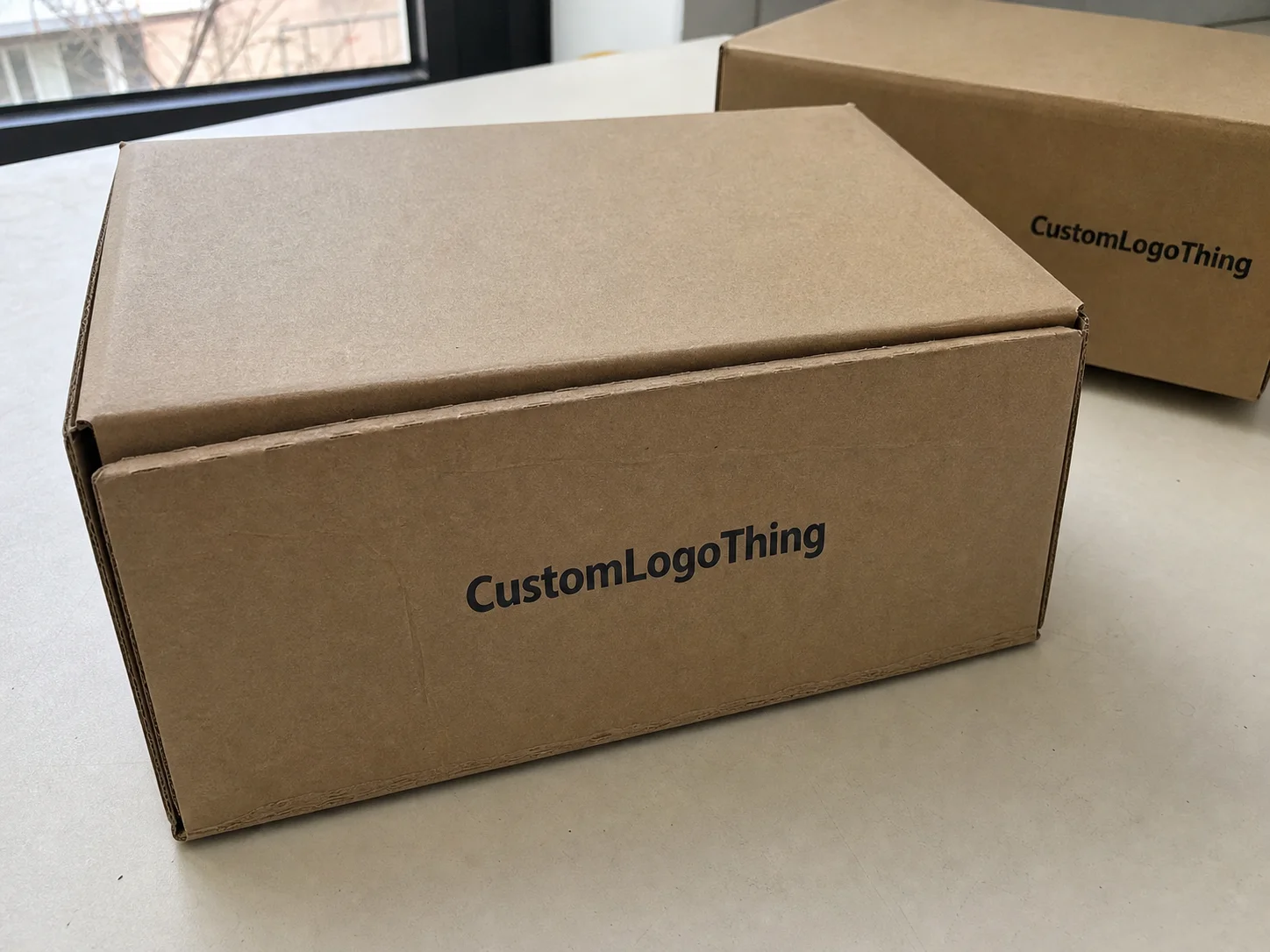
The cheapest quote is often the most expensive carton once it enters a warehouse. A box that looks fine on a sample table can behave differently when it is packed, stacked, handled by conveyors, or dropped in a parcel stream. That is where cheap Custom Shipping Boxes usually fail: the box is too big, too light, or specified with print and finish that do nothing for transit.
Most hidden cost shows up in ordinary places. Board weight matters. So does box size. So does print coverage. A larger carton uses more paperboard and increases freight cube. Extra headspace also means more void fill, which adds labor. Those are the costs that turn a “cheap” spec into a poor operating choice.
Think of the carton as a shipping tool, not a sheet of cardboard. It has to protect the product, support the brand, and stay within a sensible landed cost. If it fails in transit, the low unit price no longer matters.
Practical rule: if a cheaper spec creates more pack time or more damage, it is not cheaper. It is deferred cost.
The usual failure modes are predictable:
- Oversizing: too much dead space raises board usage and freight cube.
- Overprinting: full coverage and dense artwork push cost up fast.
- Wrong flute selection: a light flute can work for small goods, but not for heavier loads or rougher lanes.
- Unnecessary finish: coatings, texture treatments, and premium effects add cost without improving shipping performance.
The right question is not “What is the cheapest box?” It is “What is the simplest box that protects the product and keeps fulfillment efficient?” That framing usually saves more money than chasing another supplier quote.
Board grades and print choices that cut cost without weakening the box
Board selection is where cheap Custom Shipping Boxes either stay efficient or drift into waste. For light ecommerce shipments, E-flute often gives the best mix of stiffness, print quality, and cost. If the product is heavier or the carton will take more abuse, B-flute or a stronger corrugated structure usually makes more sense. A single-wall build with 32 ECT works for many standard orders. When weight, stacking pressure, or rough handling increase, 44 ECT is the safer spec.
Print is the other major cost lever. A one-color logo on one or two panels is usually far cheaper than full-wrap graphics or heavy ink coverage. That is not a downgrade if the artwork is clean. In practice, a simple logo on kraft board gives a strong cost-to-brand ratio for shipping cartons where transit performance matters more than shelf display.
Design files matter more than many buyers expect. Vector artwork reduces prepress friction. Limited print areas keep production simpler. Tiny reverse type, dense solids, and unnecessary gradients can all push up cost or raise the risk of print variation.
If the packaging has to serve more than one channel, compare structures before trying to force one box to do everything. A carton built for shipping does not need the same finish as one built for retail display. For teams sorting through formats, Custom Packaging Products gives a wider view of what can stay consistent without forcing a retail finish onto a transit box.
Two references are useful when buyers want a technical benchmark. For transit testing language and performance methods, ISTA is the standard reference point. For responsible fiber sourcing claims, FSC matters when paperboard origin needs to be documented.
Size, style, and strength specs buyers should lock in first
Start with the product, then choose the carton. Empty space gets paid for twice: once in board, again in freight. For cheap Custom Shipping Boxes, inside dimensions matter more than a clean-looking outside spec.
Lock the internal dimensions first. If fit is tight, confirm caliper or board thickness. Ask for edge crush strength or burst data. For heavier or awkward products, closure style matters too. A carton that needs locking tabs, dust flaps, or inserts should be specified that way from the beginning, not patched later with tape and extra labor.
Different structures are built for different jobs:
- Mailer-style tuck boxes: good for lighter goods, curated ecommerce kits, and shipments where presentation matters.
- Regular slotted cartons: better for heavier products, warehouse handling, and straightforward pack lines.
- Roll-end and specialty styles: useful when the unboxing experience carries real value and the carton is not just a transit shell.
A box that saves a penny and fails a drop test is not a saving. It is a future replacement order.
Testing does not need to be elaborate, but it should be real. Many teams use ISTA-style logic or internal drop and vibration checks that approximate the route the parcel actually takes. That is more useful than approving a sample that only looks good on a desk.
Warehouse handling also changes the spec. Flat-packed boxes that are manually assembled can tolerate one kind of structure. Semi-automated lines and stacked pallet storage need another. If the production environment is ignored, the box may be “cheap” only because the buyer did not account for how it will be used.
Pricing, MOQ, and unit cost: what changes the quote fastest
Pricing follows a few familiar variables: size, board strength, print count, finish, quantity, and freight method. The quote moves with each one. Cheap Custom Shipping Boxes stop being cheap the moment the spec gets more complicated than the product requires.
MOQ matters because setup cost has to be spread across the run. A smaller order usually has a higher unit price. A larger run often lowers the per-box cost, sometimes sharply, but only if the inventory can be stored and used in time. Chasing the lowest unit price while sitting on pallets for a year is not savings. It is inventory risk.
Below is a directional pricing view. These are not universal numbers, because dimensions, board source, and freight route change the result.
| Option | Best use | Typical unit cost at 5,000 pieces | Strength and print notes | Main tradeoff |
|---|---|---|---|---|
| Corrugated mailer, E-flute | Light ecommerce and subscription shipments | $0.45-$0.95 | Good print surface for a simple logo; tidy and light | Less suitable for heavier goods or rough handling |
| Regular slotted carton, B-flute | Heavier shipping and warehouse packing | $0.28-$0.70 | Strong, efficient, and usually the best value per cubic inch | Less retail-polished unless the branding is kept simple |
| Mailer with larger print coverage | Brand-forward ecommerce and gifting | $0.60-$1.40 | Good visual impact, but ink and setup costs rise | More expensive without better shipping performance |
| Premium coated presentation box | Retail packaging and high-touch unboxing | $0.90-$2.10+ | Nice finish and more visual impact, with more finishing steps | Often unnecessary for a pure shipping carton |
The biggest quote jumps usually come from custom tooling, multiple print zones, and board specs that are heavier than the product needs. A disciplined approach is to test a moderate run first, then scale once the box proves itself in actual fulfillment.
Process and turnaround: from dieline approval to freight booking
The order process should be boring. First confirm the dimensions and box style. Then approve the dieline. Then review the artwork. Then lock the board grade, finish, and print count. If sampling is needed, do it before mass production starts. That sequence keeps cheap Custom Shipping Boxes from turning into expensive remakes.
Delays usually come from vague sizing, slow artwork approval, and last-minute changes after the proof is already out. Every change after proofing adds time. If the barcode is too small, the logo is outside the safe area, or the bleed is off, production stops while files get corrected.
Simple box runs with standard print often move faster. Custom structural changes, specialty coatings, and detailed wrap printing take longer. A realistic timeline is often 12-15 business days after proof approval for a straightforward run, with more time if sampling, finishing, or tight freight scheduling are involved. Freight is separate from production, so the delivery date should include both the factory timeline and the shipping timeline.
That separation matters. If the receiving team is not ready when the pallet arrives, the delay is not really a production delay. It is a planning problem. For teams comparing formats, Custom Shipping Boxes can be weighed against Custom Poly Mailers if the fulfillment mix changes by product type.
A clean process also helps repeat orders. Once the dieline, proof, and artwork are approved, reorders move faster and with less risk. The box stays consistent. The pack line stays predictable.
Where factory buyers get the best repeat-order value
The best repeat-order value usually comes from direct factory pricing and a spec that stays stable. Once dimensions, board grade, and artwork are locked, the supplier can repeat the job with less setup friction. That matters more than people admit. A box that is cheap on paper but drifts in size, stiffness, or color from batch to batch creates small operational problems that add up quickly.
Factory-direct sourcing also makes it easier to compare material choices. Buyers can ask for a lean version, a stronger version, and a print-light version without rebuilding the entire job. That turns the quote into something useful instead of decorative. A good supplier should be able to explain why one board spec supports your fulfillment flow better than another, and where the extra spend is actually going.
Useful signs are not hard to spot:
- Clear spec sheets: inside dimensions, board type, print area, and finish are spelled out.
- Stable production: reorders match the approved sample closely.
- Responsive proofing: questions are answered before the press runs.
- Multiple price options: the quote shows a lower-cost path and a stronger path.
The lowest supplier is not always the best supplier. The better one keeps cheap Custom Shipping Boxes affordable while protecting transit performance, pack speed, and the first impression the customer gets when the carton arrives.
A useful rule holds up across most packaging programs: start with the product and the workflow, then build outward. A clean logo, the right board, and dimensions that fit tightly usually outperform a flashy box with weak structure. Good branded packaging is often quiet. It does its job and stays out of the way.
Next steps to place the order without overbuying inventory
Before requesting a quote, gather the basics: product dimensions, estimated quantity, box style preference, print location, and any shipping constraints. If the product varies in size, specify the largest version and the tolerance you can accept. Guessing at this stage tends to be expensive.
Ask for at least two options. One should be the leaner spec with lower unit cost. The other should be the stronger or more presentation-focused version. That comparison makes the spend visible. If the carton is mostly for ecommerce shipping, the leaner option often wins. If it is doing retail packaging work as well, the stronger option may justify itself.
- Confirm the inside dimensions and fit target.
- Choose the board grade and print approach.
- Approve the dieline and artwork proof.
- Lock pricing, MOQ, and lead time.
- Book freight so receiving is ready when the cartons ship.
Request a sample or proof if the box size is new. One bad dimension call can waste an entire run. If you are still deciding between packaging formats, review the broader range of Custom Packaging Products before locking the final spec.
Cheap custom shipping boxes are worth buying when they are built around the product instead of wishful thinking. Keep the structure simple. Keep the print restrained. Keep the dimensions tight. That is how the box ships cleanly, supports the brand, and stays in a sensible cost range.
How cheap can custom shipping boxes get without going flimsy?
The lowest useful cost usually comes from a simple board spec, standard print, and a size matched closely to the product. If the carton gets thinner than the shipment requires, the savings disappear in damage, returns, and repacks. The cheapest useful option is the one that survives the actual shipping route.
What MOQ should I expect for cheap custom shipping boxes?
MOQ depends on box size, print method, and whether the job needs custom tooling. Smaller runs usually cost more per unit because setup gets spread across fewer pieces. If volume is uncertain, ask for two quote tiers so unit price can be weighed against storage risk.
Which box style is usually the cheapest for custom shipping orders?
A standard corrugated mailer or a regular slotted carton is often the most cost-efficient starting point. Simple structure and limited print coverage usually cost less than presentation-style boxes. The right style depends on product weight, packing speed, and whether the carton also needs to do retail display work.
Does full-color printing make cheap custom shipping boxes much more expensive?
Yes. Full coverage usually raises cost because it increases ink use, prepress complexity, and the chance of color variation. A single-color logo or limited-panel print is usually the better budget move. If the brand only needs to read clearly, keep the print area small and clean.
How long does production take after artwork approval?
Simple box runs usually move faster once the dieline and proof are approved. Lead time increases when the order includes special board grades, custom sizing, or more detailed finishing. Freight is separate from production, so the delivery date should include both the factory timeline and the shipping timeline.


