Custom Shipping Box Sizes: Order Boxes That Fit Better
Custom Shipping Box Sizes Start With a Hidden Cost Problem
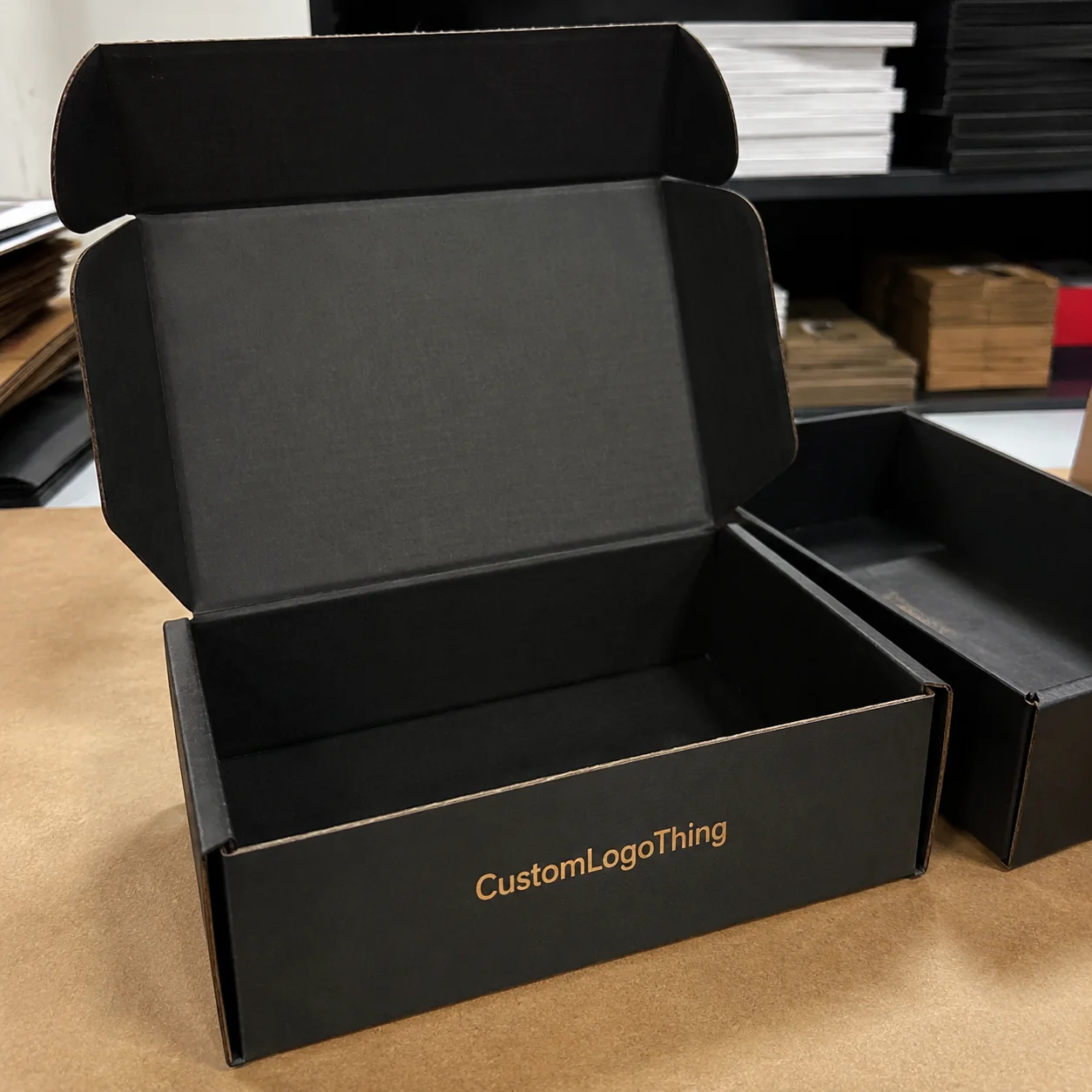
A box that is two inches too large on each side can become a recurring bill. Custom shipping box sizes matter because excess air gets paid for more than once: in corrugated board, in void fill, in warehouse cube, and sometimes in dimensional weight.
Picture a small candle, skincare jar, electronics accessory, or subscription item shipped in a stock carton that “basically works.” The product arrives most of the time, so the box stays in use. Quietly, though, the operation absorbs extra kraft paper, slower packing, weaker product control during drops, and a higher chance of crushed corners or scuffed retail packaging.
That is the part buyers often miss. A carton can look inexpensive on a quote sheet and still be expensive after it leaves the packing bench. If a $0.42 stock box pushes a parcel into a higher billable weight tier while a $0.58 fitted carton avoids that jump, the cheaper box is not really cheaper.
Custom shipping box sizes are made-to-order length, width, and depth specifications for corrugated boxes. Instead of choosing only from stock dimensions, the buyer defines the internal space around the product, protective materials, packing method, carrier requirements, and desired presentation.
The goal is not always the smallest box possible. That misconception causes plenty of damage. The right box is the smallest tested box that still protects the item, closes cleanly, stacks predictably, and gives the warehouse team enough tolerance to pack it the same way on a busy Monday as they would during a slow afternoon.
Custom sizing becomes especially valuable for subscription kits, fragile goods, cosmetics, electronics, apparel sets, promotional mailers, product bundles, and awkward silhouettes. If a product ships thousands of times a month, even a quarter-inch decision can become a material, freight, and labor decision.
Packaging math is unforgiving: a box that saves pennies at purchase can cost dollars across freight, storage, labor, replacement shipments, and customer disappointment.
How Box Sizing Works: Inside Dimensions, Board Grade, and Fit
Boxes are usually ordered by inside dimensions, not outside dimensions. Your product, insert, tissue, molded pulp tray, paper wrap, air pillow, divider, or manual has to fit inside the usable packing space. The board thickness adds to the exterior footprint.
The standard dimension sequence is length, width, and depth. Length is the longest opening-side panel. Width is the shorter opening-side panel. Depth is the vertical distance from the opening to the base. A 10 x 6 x 4 inch box is not operationally the same as a 10 x 4 x 6 inch box, especially if the product is top-loaded or if a 4 x 6 inch shipping label needs a flat panel.
Corrugated flute changes the real-world fit. E-flute is thin, often around 1/16 inch, and is common for custom printed boxes where surface appearance matters. B-flute is typically near 1/8 inch and offers good puncture resistance. C-flute, often around 5/32 inch, is common for shipping cartons because it balances cushioning and stacking strength. Double-wall board adds strength, but it also adds thickness, cube, and usually cost.
Box style changes clearance too. Regular slotted containers, often called RSC boxes, are efficient and familiar for fulfillment teams. Roll-end mailers create a cleaner opening experience but use folded panels that reduce internal tolerance. Die-cut shippers can look polished, yet they need more precise structural design. Tuck-top cartons, inserts, and roll-end front-lock styles each consume space differently.
The useful question is not just “Will it fit?” Better questions are more operational: Will it fit after the insert is added? Will the closure stay flat? Will the product shift during a 30-inch drop? Will the box hold up if five filled cartons are stacked in a hot truck?
Transit testing standards give buyers a practical reference point. The International Safe Transit Association publishes packaged-product testing protocols that simulate drops, vibration, compression, and other distribution hazards. Not every project needs a full lab test, but the thinking is useful: a good fit on a desk is not proof of a good fit in a parcel network.
Key Factors Before You Choose a Shipping Box Size
Start with product measurements, then keep going. Measure the item at its widest points, including caps, pumps, handles, cords, corners, hang tabs, and any feature that sticks out. Then add the real pack-out: accessories, manuals, samples, cables, thank-you cards, return labels, stickers, seasonal inserts, and branded packaging elements.
Fragility changes the clearance. Apparel can often tolerate close packing because it compresses. A glass dropper bottle, ceramic mug, candle jar, electronics device, or sharp-edged metal part needs engineered space. That space may be paper cushioning, molded pulp, foam, corrugated dividers, or a die-cut insert. The right answer depends on product weight, drop risk, and how much movement the item can survive.
Order variability is another hidden driver. If customers commonly buy one, two, or three units, one universal box may look convenient but perform badly. A two-size or three-size system often reduces void fill and improves pack consistency. For example, a skincare brand might use one 6 x 4 x 3 inch internal box for single-item orders, an 8 x 6 x 3 inch mailer for two-item orders, and a 10 x 8 x 4 inch shipper for gift sets.
Fulfillment speed deserves more attention. A box that is too tight can slow packing by 10 to 20 seconds per order because staff have to angle products, fight flaps, or rework closures. Multiply that by 500 orders a day and the labor cost becomes visible. Oversized boxes create the opposite problem: more paper stuffing, more tape, more space on the packing bench, and less efficient carton flow.
Branding can also influence dimensions. Logo placement, label panels, opening direction, QR codes, tape strips, and front-facing unboxing moments all need surface area. If you are ordering Custom Shipping Boxes with exterior printing, confirm where shipping labels will sit before approving artwork. A beautiful logo hidden under a carrier label is not doing much work.
Shipping method adds another layer. Parcel carriers price partly around weight and cube. Marketplace fulfillment programs often prefer compact, scannable, stackable cartons. Regional couriers may handle parcels differently than national networks. Palletized freight rewards boxes that stack cleanly without overhang. Even small changes can improve pallet patterns; a box that fits 12 per layer instead of 10 can reduce freight cube on larger replenishment orders.
Sustainability is measurable here, not just a slogan. Better sizing can reduce corrugated area, void fill, split shipments, and warehouse volume. If fiber sourcing matters to your brand, the Forest Stewardship Council provides certification programs that many packaging buyers use when specifying paper-based materials.
Cost and Pricing: What Changes Your Unit Cost
Custom shipping box sizes are priced through a mix of structure, material, quantity, print, and production setup. Length, width, and depth are only the starting point. Board grade, flute type, box style, ink coverage, coatings, tooling, packing format, and delivery destination all influence the quote.
For simple corrugated shippers, a small run may feel expensive because setup time is spread across fewer units. Larger orders usually bring the unit cost down. As a rough planning range, plain or one-color corrugated boxes may land around $0.55 to $1.40 per unit at moderate quantities, while full-color custom printed boxes or die-cut mailers can run from about $1.20 to $3.50 or more depending on size, board, print area, and order volume. Heavy-duty or specialty structures can exceed that. Treat these as budgeting bands, not universal prices.
Minimum order quantity matters. A 250-piece test run can be useful for validating a new product packaging setup, but it rarely shows the best unit economics. At 1,000, 2,500, or 5,000 pieces, setup, printing, and machine time are distributed more efficiently. The buyer’s job is to find the point where inventory risk and price efficiency make sense together.
Tooling is another variable. A standard RSC box may need minimal setup. A die-cut mailer, window, insert, locking tab, dispenser feature, or unusual shape may require a cutting die, structural design time, or prototype review. Tooling fees are often one-time charges and may start in the low hundreds for simple dies, then rise with size and complexity.
| Option | Typical Use | Cost Pattern | Operational Tradeoff |
|---|---|---|---|
| Stock shipping box | Low-volume orders or broad product mix | Lower setup cost, often higher void fill and freight cube | Easy to buy, less precise fit |
| One fitted custom size | Single hero product or stable kit | Higher setup effort, better material control | Efficient if order profile is consistent |
| Two-size box system | Brands with single and bundle orders | More SKUs, often lower total landed cost | Needs warehouse discipline and reorder tracking |
| Die-cut printed mailer | Branded unboxing and retail-style presentation | Higher tooling and print cost | Strong package branding, tighter structural tolerances |
Print choices shift the economics. One-color logo printing is usually simpler than full-coverage exterior graphics. Interior printing adds setup and registration demands. Soft-touch coatings, flood coats, metallic ink, or specialty varnishes can make sense for Premium Retail Packaging, but they also increase cost and sometimes lead time.
Compare total program cost, not box price alone. Quote one perfect-fit size, one two-size system, and one slightly flexible bundle size. Then estimate void fill, storage cube, labor time, damage rate, and carrier charges. The lowest quote is not always the lowest-cost packaging program if the board grade is weak, tolerances are loose, or returns increase by even a small percentage.
Process and Timeline From Measurements to Delivered Boxes
A clean buying process prevents expensive almost-right cartons. Start by gathering product dimensions, product weight, common order combinations, and protection needs. Then choose a box style, select a board grade, define artwork requirements, request a quote, review a dieline or structural sample, approve production, and schedule delivery.
Before asking for pricing, prepare the essentials: internal dimensions, target quantity, destination, box style preference, print requirements, packed weight, desired in-hand date, and any special handling requirement. If you do not know the exact board grade yet, describe the product and shipping route. A good packaging supplier can narrow the options.
Sampling is not a formality. A plain structural sample can confirm fit, closure, and product movement before artwork enters the discussion. A printed sample can validate color, logo placement, barcode areas, opening direction, and the branded packaging experience. For a first run, that extra step can prevent thousands of wrong boxes from arriving at the warehouse.
Timelines vary. Simple custom corrugated boxes with basic printing may often move in roughly 10 to 20 business days after proof approval, depending on quantity and production capacity. Die-cut mailers, heavy ink coverage, inserts, specialty coatings, or multi-part packaging systems can take longer. Freight time adds another layer, especially if boxes ship flat on pallets rather than by parcel.
Most delays are avoidable. Incomplete artwork, changing dimensions after dieline approval, unclear pack-out instructions, slow sample feedback, and last-minute quantity changes can all stretch the schedule. The safest first order includes buffer time because real products reveal details that spreadsheets miss: a cap that catches on a flap, a paper wrap that compresses unevenly, or a label panel that needs another half inch.
A practical sequence for custom shipping box sizes is simple: measure, mock up, sample, test pack, quote, approve artwork, then produce. Rushing straight from measurement to a 5,000-piece order is tempting. It is also how brands end up with boxes that almost fit, which is the most frustrating kind of packaging failure.
Common Sizing Mistakes That Create Damage, Waste, or Delays
The most common mistake is measuring only the bare product. A bottle may be 2.2 inches wide, but the packed unit might need 3 inches after a sleeve, insert, paper wrap, and movement allowance. Add a manual, gift note, sample sachet, or return card and the fit changes again.
Another frequent mistake is using one oversized box for every order. Purchasing likes the simplicity. Fulfillment likes fewer SKUs. But freight, storage, void fill, and customer perception can suffer. Customers notice when a tiny item arrives in a carton stuffed with paper. That waste becomes part of the brand experience.
Too-tight packaging creates its own damage pattern. Corners crush. Panels bulge. Closures pop. Packers use extra force. Labels wrinkle across seams. If a box must be squeezed shut, it is not a stable shipping system. Small handling allowances, often 1/8 to 1/4 inch depending on the structure and product, can make packing far more repeatable.
Dimensional weight surprises deserve special attention. Lightweight products can become expensive when the box volume crosses a carrier threshold. A plush item, apparel set, plastic accessory, or cosmetic bundle may weigh very little but bill as a larger parcel because of cubic size. Evaluate carton dimensions against carrier pricing rules, not just against the product on a table.
Board strength is another trap. A thin board might look fine for a single shipment but fail under compression during storage or transport. If cartons will be stacked on pallets, stored in humid conditions, or shipped through parcel networks, ask about edge crush test, burst strength, flute, and expected stacking load. ASTM and ISTA test methods are useful references for teams building repeatable packaging design standards.
Artwork can break when size changes. A logo centered on one dieline may look low or crowded on another. Barcode panels, shipping label zones, opening flaps, tape lines, and regulatory markings can shift. Every approved size should have its own final dieline and proof, not a casual resize from a previous box.
Document the final pack-out. Take photos. Record internal dimensions, board grade, flute, insert specs, void fill type, packed weight, and closure method. Future reorders become much easier when the approved configuration is written down instead of stored in someone’s memory.
Measure, Test, Quote, and Order With Fewer Surprises
Start with a simple checklist. Measure the product at its widest points. Weigh the packed item, not just the product. Choose the protective material. Identify the most common order combinations. Decide whether the box needs plain shipping performance, branded unboxing, or both.
Then build a sizing matrix. Single-item orders get one target internal size. Multi-item orders get another. Fragile orders may need a different protection plan. Promotional bundles might justify a seasonal size if the volume is high enough. This matrix does not need to be complicated; even four rows can expose waste that a single “universal” carton hides.
- Single item: product plus protection, with minimal movement and a clean closure.
- Two or three items: grouped layout, divider plan, and tested label panel.
- Fragile item: engineered clearance for cushioning, compression, and drops.
- Promotional bundle: room for inserts, samples, and seasonal product packaging.
Test with real products. Pack the item. Shake it gently. Check closure tension. Inspect corner clearance. Confirm that the shipping label fits on a flat panel. If possible, run a small internal drop and handling simulation before approving a production order. It is not a substitute for formal lab testing, but it catches obvious fit problems quickly.
Request quotes with complete specifications: internal dimensions, quantity, board grade if known, box style, print details, ship-to location, timeline, and whether you need samples. If you are comparing cartons with other formats, such as Custom Poly Mailers for soft goods or a broader mix of Custom Packaging Products, keep the same assumptions for packed weight, labor, and damage risk so the comparison stays honest.
Finally, compare the full program: storage, labor, freight, damage, returns, and presentation. A box is not just a box once it enters order fulfillment. Better sizing makes every shipment tighter, safer, and easier to repeat without forcing the warehouse to improvise.
FAQ
How do I measure for custom size shipping boxes?
Measure the packed product, not only the bare product. Use internal box dimensions in length, width, and depth order, then include padding, inserts, dividers, manuals, accessories, and any movement that must be controlled in transit. Add a small handling allowance so warehouse staff can pack consistently without forcing the product into the carton.
Are custom shipping box sizes more expensive than stock sizes?
The unit price can be higher on small runs, especially if tooling, special board, or custom printing is involved. The total cost may be lower if the custom size reduces dimensional weight, void fill, product damage, storage space, or return shipments. Ask for quotes at several quantities so you can see where the price break makes sense.
What is the best box size for ecommerce shipping?
The best size is the smallest tested size that fits the product, protective materials, labels, and packing workflow without crushing or shifting. Brands with varied carts often need two or three box sizes instead of one universal shipper. Compare common order combinations before choosing final dimensions.
How long does it take to order custom shipping boxes?
Timeline depends on structure, quantity, print complexity, sampling needs, and how quickly artwork and dimensions are approved. Simple corrugated boxes usually move faster than die-cut mailers, printed interiors, inserts, or specialty finishes. First orders should include extra time for structural samples and fit testing.
Can custom shipping box sizes reduce shipping costs?
Yes. The savings are clearest when oversized cartons are triggering dimensional weight charges or requiring excess void fill. A tighter box can also improve palletization, reduce warehouse cube, and lower material waste. The biggest gains usually appear when box size, board strength, packing method, and carrier rules are evaluated together.