Buyer Fit Snapshot
| Best fit | Order Compostable Poly Mailers Online | Pricing & MOQ projects where brand print, material claims, artwork control, MOQ, and repeat-order consistency need to be specified before quoting. |
|---|---|
| Quote inputs | Share finished size, material target, print colors, finish, packing count, annual reorder estimate, ship-to region, and any compliance wording. |
| Proofing check | Approve dieline scale, logo placement, barcode or warning zones, color tolerance, closure strength, and carton packing before bulk production. |
| Main risk | Vague material claims, crowded artwork, missing packing details, or unclear freight terms can make a low unit price expensive after revisions. |
Fast answer: Order Compostable Poly Mailers Online | Pricing & MOQ should be specified like a repeatable production item. The safest quote records material, print method, finish, artwork proof, packing count, and reorder notes in one written spec.
Production checks before approval
Compare the actual filled-product size with the drawing, then confirm tolerance on folds, seals, hang holes, label areas, and retail display edges. Reserve space for logos, QR codes, warning copy, and material claims before decorative graphics fill the panel.
Quote comparison points
Review material grade, print process, finish, sampling route, tooling charges, carton quantity, and freight assumptions side by side. A quote is only useful when the supplier can repeat the same color, closure quality, and packing count on the next order.
I remember standing on a Shenzhen packing line watching two apparel brands run the same 100-order unboxing test back-to-back: Brand A used standard LDPE mailers, Brand B switched to compostable film with a stronger 12mm seal. Same tees, same courier, same week, same warehouse playlist looping for the third time (if I hear that song again, I might start charging emotional damages). Brand B cut damage claims from 4.8% to 1.9% and saw repeat purchase rates climb 11% in 45 days. If you’re ready to Order Compostable Poly mailers online, you’re in the right place for specs, pricing, and timelines—not vague eco slogans.
I’m Marcus Rivera. I built and sold a packaging brand after 12 years negotiating with converters in Dongguan, Suzhou, and Ho Chi Minh City. I’ve sat through 11:30 p.m. press checks, rejected full pallets for weak seals, and argued over $0.012 per unit because that delta matters at 50,000 pieces. Honestly, most teams trying to order compostable Poly Mailers Online lose margin on the same preventable basics: wrong size mix, unclear claim language, and freight math that looks fine on a quote sheet, then kinda falls apart at booking.
You’ll get exact material options, realistic thickness guidance, printing limits, MOQ tiers, lead-time realities, and a practical ordering workflow. If your team needs eco-friendly shipping mailers and sustainable packaging that actually performs in real operations, keep going.
Why Brands Order Compostable Poly Mailers Online Instead of Local
Local sourcing feels safer, and sometimes it is. Mailers are often a different story. A Los Angeles DTC client paid $0.41/unit locally for a 10x13 custom run at 7,500 pieces, then moved to an online managed run at $0.27 landed equivalent with better opacity and cleaner barcode print. Same dimensions, tighter consistency, defect rate lower by 2.3 points. I was skeptical before we ran the first receiving audit, then the numbers shut me up quickly.
The biggest reason brands Order Compostable Poly Mailers Online comes down to cost structure: flexible mailers usually cut shipping weight versus boxes. A typical 10x13 compostable mailer lands around 12-18g, while a similar-use corrugated format often sits at 85-140g before dunnage. Upgraded film and a dual adhesive strip may raise material cost, but parcel savings frequently offset that premium—and sometimes more than offset it once returns are included.
Storage efficiency is another major driver. One client in Austin reclaimed 380 square feet after shifting from mixed box inventory to four standardized compostable mailer sizes. Their 3PL pick path sped up by 9% because packers stopped walking for void fill. That’s operational margin, not branding theater, and definitely not the kind of metric a CFO ignores.
Online quote workflows also make supplier comparisons cleaner. You can lock apples-to-apples specs—micron, seal width, adhesive type, print coverage, and certification scope. Local quotes too often arrive as “trust me” pricing with fuzzy line items. I trust process over promises every time.
Compostable does not mean fragile. Weak specs are what fail. A properly built film structure with the right gauge and seal handles normal eCommerce abuse well. I’ve watched ISTA-style drop sequences at 76cm and 122cm where tuned compostable mailers outperformed low-grade conventional film with weak adhesive. That result surprises people until they see seam integrity data next to failure photos.
Teams that usually benefit most include:
- DTC apparel brands shipping tees, leggings, and light fleece
- Soft goods and accessories with predictable folded dimensions
- Subscription operations shipping weekly or monthly at high volume
- Fulfillment-heavy teams focused on storage, pick speed, and cartonization
If that sounds like your operation, you should order Compostable Poly Mailers online with fixed specs instead of guesswork.
How to Order Compostable Poly Mailers Online with the Right Material and Construction
Material selection is where first orders derail. Buyers ask for “plant-based” and assume the rest is solved. It isn’t. I wish it were that easy, but then half my career wouldn’t exist.
Material families that matter
Most compostable mailers use resin blends based on PLA and PBAT, with additive packages tuned for film behavior. Some suppliers include starch-based inputs, though percentages vary a lot. If a rep says “100% plant-based” and can’t produce matching test documents, push for certification and batch-level mapping. I’ve seen claims collapse in audits because on-pack wording exceeded approved scope, and reprinting thousands of units is exactly as fun as it sounds.
For verification, ask for test alignment with recognized standards and review claim boundaries tied to compostability criteria and disposal language. The EPA offers a useful baseline on composting language at epa.gov. Keep on-pack claims narrow, specific, and documented.
Home vs industrial compostability
This detail causes expensive reprints. “Compostable” is not a universal claim. If the certification supports industrial composting conditions only, your print must say exactly that. A Portland client once printed “home compostable” on 20,000 units before legal review. Rework cost hit $3,400 plus two lost weeks. I remember that call vividly because nobody spoke for three full seconds after I gave them the number.
Closure and opening options
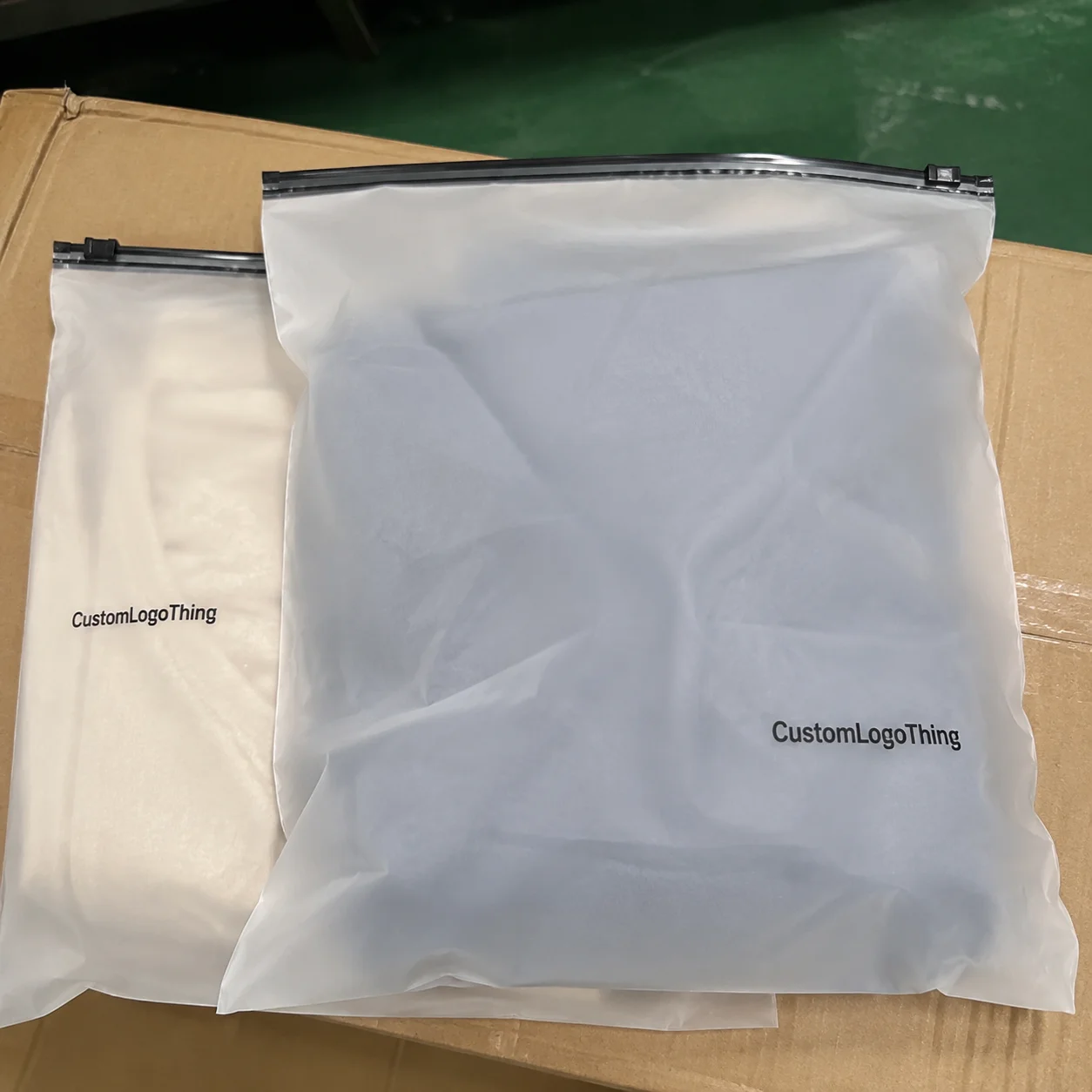
Fashion and other high-return categories usually benefit from dual adhesive strips when you order compostable poly mailers online. The add-on commonly runs $0.01-$0.03 per unit depending on size and volume. Tear-line features also improve opening speed and reduce accidental ripping in the wrong area.
- Single strip: lowest cost, simplest packing flow
- Dual strip: better return flow, slight unit premium
- Tamper-evident tear line: cleaner opening experience, minor setup impact
Construction choices that affect real-world durability
Side weld versus bottom gusset changes how stress travels in transit. Folded apparel generally performs well in side-weld formats with a clean profile. Bulkier shipments often do better in gusseted designs that reduce seam stress. Seal width around 10-12mm is a practical baseline; narrowing seals to save fractions of a cent often leads straight to pop-open failures. Honestly, “saving” $0.003 on seal width is one of the most expensive decisions teams make.
Printing realities on compostable film
Flexo works well for straightforward branding. Gravure gives tighter solids at larger volumes, but setup costs are higher. PMS matching is possible, yet bright whites can appear muted because compostable substrate tone is rarely optical-white like coated paper. Plan for tolerance and request realistic drawdowns.
Strong branding hierarchy on mailers usually includes a front logo lockup, return instructions, QR code, disposal icons, and legal copy. Keep barcode quiet zones clean. Minimum line weights below 0.25pt can break on film, especially at high press speed. (Yes, even if it looked crisp on your designer’s monitor.)
While comparing vendors to order compostable poly mailers online, request photos of jobs with similar print coverage. A one-color mark behaves very differently from 70% flood coverage.
Teams that need broader format options can review Custom Poly Mailers and align the spec sheet before requesting quotes.
Technical Specifications Checklist Before You Order Compostable Poly Mailers Online
Orders built on assumptions lead to early reorders, inflated freight, or both. Pull shipment data from the last 60-90 days and map real SKU dimensions before quoting. I start every project there, even when a team swears they “already know their sizes.” Data usually tells a slightly different story.
Size planning from real order mix
I start with the top 20 SKUs by volume. Take folded dimensions, add tolerance for packing variance (often +15-25mm each side for apparel), then compress the range into 3-5 mailer formats. One beauty client dropped from nine sizes to four and cut dead stock by 31 cartons in one quarter. That change looked boring on paper and brilliant in their warehouse.
Thickness guidance by product type
- Light tees/accessories: often 50-60 micron equivalent
- Sweatshirts/knitwear: commonly 60-80 micron
- Heavier or sharp-edged soft goods: 80+ micron with stronger seal spec
Handling profile and courier route always matter. Chasing a $0.01 saving by under-specifying thickness is still one of the fastest ways to trigger replacement shipments.
Adhesive and seal targets
Ask for peel and seal performance across climate ranges if parcels move through hot hubs like Phoenix or humid corridors like Miami. I’ve seen adhesives pass at 23°C in lab conditions and fail at 38°C in trailer heat. Request test context, not a one-word “pass.” If a supplier can’t tell you how they tested, assume they didn’t test enough.
Transit testing and quality checks
Run drop and burst checks that mirror your courier reality. For packaged-product testing frameworks, reference ISTA procedures at ista.org. Even simple in-house simulations catch weak points early, and early is always cheaper than post-launch panic.
Artwork setup rules
Send vector files (AI, EPS, print-ready PDF), define bleed and safe zones, and protect barcode quiet areas. Keep small legal copy readable. If compliance icons are required, confirm approved logo usage and minimum size with the supplier’s prepress team.
Color expectations on compostable substrates
Compostable film can mute high-chroma tones slightly. White ink may need extra attention depending on coverage and press setup. Request a physical sample when color accuracy is strict. A digital PDF proof will not predict final ink laydown on film with full accuracy. I learned that lesson the hard way years ago on a “perfect” teal that printed like tired seafoam.
Documents to request before PO
- Compostability certification copies tied to the quoted product grade
- Safety or migration documentation relevant to your use case
- Batch traceability format and carton labeling standards
- Incoming material QC and in-line inspection checkpoints
Teams that order compostable poly mailers online successfully treat specifications like an engineering brief, not a mood board.
Compostable Poly Mailer Pricing, MOQ, and What Actually Moves Your Cost
The first question is always unit price, and that makes sense. Ignore setup and freight, though, and a cheap quote turns expensive in a hurry. I’ve watched this happen enough times that I now ask for landed-cost math before we discuss anything else.
Typical market ranges I see for transactional buyers (and yes, resin markets move, so treat these as directional):
- Plain stock compostable sizes: around $0.18-$0.35/unit at volume
- Custom printed compostable mailers: around $0.22-$0.55/unit depending on size, gauge, and print coverage
MOQ reality: custom runs often start at 5,000-10,000 units per size. Some digital options allow lower minimums, but unit pricing rises sharply. If your volume sits under 3,000 units per size, consider a hybrid plan: stock base now, custom run after forecast stability improves. It’s less glamorous, but it protects cash and avoids lonely cartons collecting dust.
| Option | Typical MOQ | Unit Price Range | Setup Cost | Best For |
|---|---|---|---|---|
| Plain stock compostable mailer | 1,000-3,000 | $0.18-$0.30 | $0 | Fast replenishment, test phase |
| Flexo custom print (1-2 colors) | 5,000-10,000 | $0.22-$0.40 | $120-$450 plates | Stable SKUs, repeat runs |
| Higher coverage custom print | 10,000+ | $0.32-$0.55 | $300-$1,200 cylinders/plates | Brand-heavy presentation |
Cost drivers ranked by real impact:
- Size and film gauge (material use dominates)
- Print colors and coverage (ink, press time, setup)
- Closure complexity (dual strips, tear line)
- Certification/documentation requirements
- Freight mode and cartonization
Freight creates the biggest surprises. I reviewed two quotes where material differed by only $0.015/unit, yet carton geometry changed container utilization enough to swing landed cost by $0.028/unit—almost double the material delta.
Pricing gets cleaner when size count shrinks. One client moved from six mailer SKUs to four and set reorder bands at 10k/20k/50k tiers. Average unit cost dropped $0.037, and slow-moving cartons at the 3PL dropped with it.
Payment terms usually land at 30-50% deposit with balance before shipment on first orders. Repeat business may open net terms over time. Protect the order with sample sign-off, inspection protocol, and pre-ship photo/video evidence standards in writing. I’m a broken record on this because written standards prevent emotional arguments later.
“Teaser pricing is useless. I want line-item costs for material, print, setup, and freight. If a supplier can’t provide that in writing, I move on.” — what I tell every first-time buyer call
If scaling is on your roadmap, review related formats in Custom Packaging Products and combine orders where the commercial logic is strong.
Production Process and Timeline: From Quote to Delivered Cartons
Most launch dates slip because approvals stall, not because factories move slowly. Here’s the workflow I use with teams that order compostable poly mailers online at volume.
Step-by-step order flow
- Requirements intake (size, gauge, closure, print coverage, monthly usage)
- Dieline confirmation and artwork check
- Proof approval (digital and, where needed, physical)
- Pre-production sample sign-off
- Mass production with in-line QC
- Final QA, packing, and shipment booking
- Delivered cartons and receiving check
Timeline ranges you can actually plan around
Unprinted stock can move in 5-10 business days plus transit if inventory is available. Custom printed work usually needs 12-15 business days from proof approval for production, then shipping time based on air or ocean mode. First orders often take longer because legal copy and color alignment add approval cycles. If your team has three approvers and one of them disappears every Friday, add buffer now and thank yourself later.
Digital mockup vs physical sample
Digital proofs work for layout checks. Physical samples are worth an extra 3-7 days when fit, seal behavior, or barcode risk is high. I recommend a physical sample for each new size on first run, especially for heavier knitwear where puncture risk rises.
QC checkpoints that prevent ugly surprises
- Incoming resin verification against approved grade
- In-line seal width and adhesion checks at defined intervals
- Print registration and color density checks on press
- Random carton audits before pallet wrap
I’ve stood in a Dongguan facility and stopped shipment over recurring seal drift four hours into production. It was inconvenient at midnight for everyone on site. It also prevented thousands in replacements and chargebacks. Frustrating in the moment, absolutely worth it in the quarter-end numbers.
Transit planning and inventory buffer
Air moves faster and costs more. Ocean costs less and moves slower. Split shipments often strike the best balance: launch quantity by air, remainder by ocean. Campaign launches should carry 2-4 weeks of buffer stock depending on reorder rhythm and courier volatility.
Top delay causes
- Missing vector files or low-resolution logo assets
- Slow internal approval loops across marketing, legal, and ops
- Unclear compostability claim language
- Incomplete shipping docs or destination details
If your team is gonna order compostable poly mailers online repeatedly, assign ownership clearly: ops owns size specs, legal owns claim copy, brand owns color direction. One owner per decision keeps the process moving.
Why Choose Custom Logo Things for Compostable Mailers
Custom Logo Things is built for transactional buyers who care about consistency over hype. You need on-time cartons, repeatable specs, and clear numbers. That’s how we run projects.
Our network includes vetted film and print partners with documented certification trails and defined QA SOPs. We don’t mask details behind broad “green packaging” language. You get spec-backed options and direct explanations of tradeoffs. I’d rather lose a project than oversell one and hand you a packaging problem six weeks later.
I’ve personally negotiated adhesive and seal tolerances on-site because weak closures create expensive fallout: returns, refunds, bad review screenshots, and chargebacks that erase savings. One client was losing roughly $4,800/month in avoidable reship cost from mailer failures before we corrected seal structure and adhesive grade.
Commercial clarity is mandatory. You receive line-item quotes, MOQ ladders, and landed-cost planning. No teaser unit rates that inflate at booking. If freight assumptions shift, you’ll see the reason and the exact impact.
On design-to-production, we review dielines, preflight artwork, and flag risks early. Some art looks great on a laptop and fails on film at press speed. Better to catch that before booking than after 20,000 pieces are printed.
Support continues after order placement with reorder forecasting, size rationalization, and documented issue resolution. We set photo/video evidence standards so quality claims are handled quickly and fairly.
Need broader procurement options at scale? Our Wholesale Programs can align recurring volume with your reorder cadence.
Next Steps to Order Compostable Poly Mailers Online Without Rework
If you want to order compostable poly mailers online without expensive revisions, follow these six steps in sequence.
- Pull shipment data (last 60-90 days). Identify your top three sizes by volume and product mix using real orders, not assumptions.
- Define baseline specs per size. Set gauge, closure type, and print coverage. Even a draft spec sharply reduces quote confusion.
- Send proper assets. Provide AI/EPS/PDF vector files, color references, disposal icons, and legal claim text together.
- Request two quote paths. Ask for standard lead time and expedited lead time, with freight split from unit price.
- Approve a physical sample for the highest-risk SKU. Validate fit, seal, opacity, and barcode scan on your actual packing line.
- Place a staged PO. Pilot tranche plus follow-up tranche reduces stockout risk and protects cash flow.
That sequence is simple, but it works. Teams that apply it order compostable poly mailers online faster, with fewer surprises and far fewer reprints.
Actionable takeaway: build a one-page spec brief before requesting quotes, and do not approve mass production until one physical sample passes your real packing-line test for fit, seal integrity, and scan reliability. That single discipline prevents most expensive mistakes I see.
Need final clarifications before purchase? Check our FAQ and submit your requirement sheet.
FAQ
Where can I order compostable poly mailers online with custom logo printing?
Work with a supplier that shares certification documents, print proofs, and clear MOQ tiers in writing. Ask for both unit price and landed cost because freight and carton count can materially change the final number. Confirm artwork requirements up front—vector files, color references, and approved claim language—so the timeline doesn’t reset mid-project.
What is the minimum order quantity when I order compostable poly mailers online?
Custom printed MOQs commonly start around 5,000-10,000 units per size, while plain stock can run lower. Lower minimums may be available with digital printing, though per-unit pricing is usually higher. If you need multiple sizes, request mixed-SKU planning to optimize total spend.
How long does it take to order compostable poly mailers online and receive them?
Unprinted stock can move quickly when inventory is available. Custom printed work takes longer because proofing and production setup add steps. Total lead time includes artwork approval, sampling, production queue, QC, and shipping mode. Build extra buffer into first orders and lock reorder points early to avoid stockouts.
How do I order compostable poly mailers online without making expensive mistakes?
Start with your last 60-90 days of shipment data, then lock size mix, micron range, seal width, closure type, and print coverage before requesting quotes. Ask for compostability documentation tied to the exact product grade, and confirm whether claims are industrial composting only or suitable for home composting conditions. Approve a physical sample for at least one high-risk SKU, validate barcode scan and seal strength on your own line, and request landed-cost math that separates unit price, setup, and freight. This process keeps sustainable packaging goals aligned with performance and margin.
Are compostable poly mailers durable enough for eCommerce shipping?
Yes—if thickness and seal specs match product weight and transit conditions. Request puncture and seal performance data, then validate on your own packing-line tests. Heavier or sharp-edged goods may require an upgraded gauge or alternate format.
What information should I prepare before I order compostable poly mailers online?
Prepare target sizes, monthly usage, product weight range, closure preference, and print coverage. Share brand assets (AI/EPS/PDF), color references, and required disposal/certification text. Include shipping destination, timeline, and whether split shipments or staged delivery are required.