Custom Football Stickers look harmless until they meet the real football environment: sweat, rain, turf dust, equipment bags, cold bleachers, car windows, coolers, and a season of impatient hands. That is the point where a sticker stops being a decoration and starts behaving like a small piece of team branding, fan merchandise, packaging, or event production.
The buying challenge is not imagination. Most teams already know the logo, mascot, colors, and slogan they want to use. The harder question is whether the sticker is built for the job. A helmet reward decal, a sponsor sticker in a booster pack, and a fan giveaway at a game-day table may share the same artwork, but they do not face the same wear.
What Custom Football Stickers Are Really Built to Do
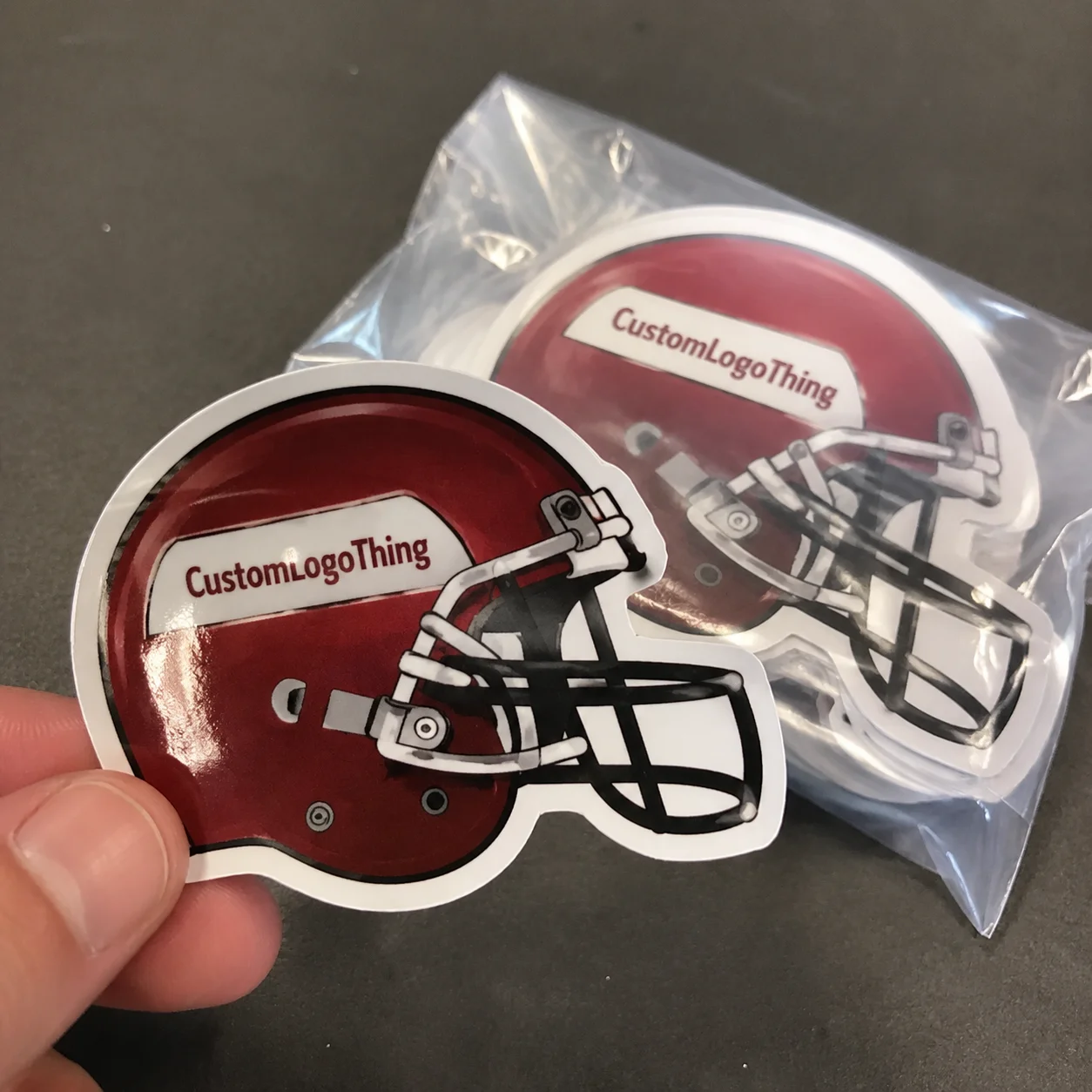
A football sticker has a rougher life than many buyers expect. It may be peeled by a player with sweaty hands, pressed onto a curved helmet, carried loose in a backpack, stuck on a bottle that gets washed, or used as a seal on merch packaging. Good custom football stickers are specified around use first and artwork second.
Common formats include helmet reward decals, team logo stickers, player number stickers, sponsor decals, water bottle stickers, laptop stickers, car window decals, packaging seals, and camp or tournament handouts. They also fit neatly into Custom Labels & Tags programs when a team wants a cleaner way to brand bags, boxes, folders, or giveaway kits.
From a buyer’s angle, this is package branding as much as it is decoration. A sticker can make a booster club fundraiser feel more finished, give retail packaging a stronger team identity, or help tie product packaging together for online merch orders. The logo matters, obviously. The material decides whether the finished piece still looks good after the first week.
Planning should start with four questions: where will the sticker go, who will apply it, how long should it last, and will it live indoors, outdoors, or somewhere in between? Those answers influence material, adhesive, finish, cut style, packaging format, and even proofing time.
A sticker that looks sharp on a screen can fail on a curved helmet, a textured bottle, or a damp cooler lid. The use case should drive the spec.
How Football Sticker Materials, Adhesives, and Finishes Work
Most football applications call for film rather than paper. Paper can be fine for indoor handouts, envelope seals, or short-term packaging. For water bottles, gear, coolers, vehicles, and outdoor use, white vinyl-style film or BOPP-type stock usually makes more sense because it resists moisture and holds color better. Clear film works when the design needs a transparent background or a “floating” logo effect. Specialty stocks can add metallic, frosted, or textured effects, though they also add cost and proofing complexity.
Adhesive deserves the same attention as the face stock. Standard permanent adhesive suits many giveaways and long-term placements. Removable adhesive is better for temporary promotions, short campaigns, or surfaces that should not be marked after removal. Higher-tack adhesives can help on difficult plastics or curved surfaces, but they should be tested before a full run if helmets, textured bottles, or equipment bins are involved.
Finishing changes both appearance and durability. Gloss makes colors pop and gives stickers a bright fan-shop look. Matte reduces glare and can feel more polished on branded packaging. Lamination or a protective coating adds resistance against scuffs, moisture, and handling, which matters when decals rub against pads, bottles, laptops, or gear bags.
The quick comparison below covers the material choices most teams ask about first:
| Material | Best Use | Typical Strength | Watch For |
|---|---|---|---|
| Paper | Indoor handouts, short-term packaging seals | Low cost, easy to apply | Poor moisture and abrasion resistance |
| White film / vinyl-style stock | Water bottles, gear, fan giveaways | Good durability and color hold | Opaque background unless cut around the design |
| Clear film | Glass, clear bottles, layered logo looks | Clean transparent effect | Light colors may need white ink behind them |
| Laminate or coated film | Higher-wear outdoor use | Better scuff and moisture resistance | Slightly higher cost and thickness |
Cut style is another practical decision. Die-cut stickers are cut through the liner and face stock so the finished piece follows the shape of the artwork. Kiss-cut stickers are cut through the sticker layer but left on a larger backing sheet. For small helmet rewards, number sets, or player packs, kiss-cut sheets are often easier to peel, count, and distribute.
Outdoor exposure needs a blunt answer. UV light can fade inks, rain can expose weak adhesives, and repeated rubbing can dull the finish. If a sticker is expected to survive a season outdoors, ask about coating, lamination, adhesive compatibility, and expected service life. For shipped kits or bundled merchandise, resources from groups such as the ISTA and the Packaging School and packaging industry resources can help buyers think through transit wear, compression, and handling.
Printing method matters, although it should not turn into a distraction. Digital printing is efficient for short and medium runs, especially when there are several designs, player names, or sponsor versions. Larger orders may benefit from more standardized production because setup is spread across more units and consistency becomes easier to manage.
Key Specs to Decide Before You Design the Artwork
Size should come from the surface, not the artboard. A helmet reward decal, laptop sticker, mailer seal, and car window decal are viewed from different distances and applied to different shapes. A logo that reads clearly from twenty feet may be too detailed for a one-inch helmet decal, while a small sponsor mark may disappear on a fan giveaway table.
Shape comes next. Circles, rectangles, and ovals are efficient, easy to cut, and quick to apply. Contour-cut mascots, football shapes, shields, and number decals look more custom, but they need enough border space for the blade to follow the line cleanly. Thin mascot limbs, sharp interior corners, and tiny cutouts can become fragile at small sizes.
Artwork quality is not a design preference; it is a production requirement. Vector files such as AI, EPS, or editable PDF are preferred because they scale without soft edges. High-resolution raster files may work if the size is final and the image is clean. Screenshots, compressed social media images, and phone photos of old logos usually print poorly, especially when the sticker is small or contour cut.
Color control also needs attention. Team colors should be supplied as Pantone, CMYK, or approved brand values when accuracy matters. Screen color is not a production standard. “Close enough” can look wrong beside uniforms, banners, spirit wear, or Custom Printed Boxes used for merch kits. Organized packaging design prevents those small mismatches from multiplying across a whole rollout.
Clear material adds one more production question: does the artwork need white ink? On transparent stock, white, yellow, pale gray, and light accent colors can disappear unless a white base is printed underneath. If the goal is a transparent background with a strong logo, that decision belongs in the first proofing round, not after approval.
Readability is where many football decals break down. Thin strokes, tiny sponsor lines, distressed textures, and complex mascots can fill in after cutting, coating, or lamination. The test is simple: reduce the artwork to the actual printed size. If the design loses meaning, simplify it before production.
Approvals can slow an order as much as artwork issues. Schools, leagues, sponsors, and licensed marks may need signoff before printing, especially when stickers will be sold, used in fundraising, or packaged with merchandise. That step protects the buyer from reprints, sponsor complaints, and missed event deadlines.
Process and Timeline From Artwork to Finished Stickers
The usual workflow is simple: define the use case, choose material and finish, submit artwork, review the proof, approve production, print, finish, cut, pack, and ship. Delays usually appear when the brief is vague, files are incomplete, or the artwork changes after proofing begins.
Proofing is the most valuable checkpoint in the order. The buyer should confirm size, cut line, spelling, sponsor placement, player numbers, background color, and format: die-cut, kiss-cut, sheeted, or rolled. A small proofing miss becomes a large production miss once hundreds or thousands of pieces are printed.
Timeline depends on complexity. A single team logo can move fairly quickly if the file is clean and the material is standard. A multi-player pack with names, numbers, several cut shapes, and individual sorting takes longer because every variable adds setup, proofing, and inspection time. Each revision can trigger another proof, even when the change feels minor.
Production has a fixed sequence. Printing lays down the artwork. Finishing adds coating or laminate if needed. Cutting shapes the sticker. Quality checks confirm count, edge quality, registration, color consistency, and packaging format. Clean files and specific instructions make that sequence easier to control.
Teams should order before media day, fundraiser launch, camp registration, senior night, playoff travel, or tournament check-in. Waiting until uniforms are packed is how rush charges, missed approvals, and expensive shipping options enter the project.
Build in buffer time for school approvals, booster review, sponsor signoff, and shipping. If decals will be applied to outdoor equipment or vehicles, application conditions matter too. Cold, dusty, oily, or damp surfaces can make even a good adhesive perform badly.
Pricing, MOQ, and Unit Cost Factors to Expect
Sticker pricing is driven by size, quantity, material, finish, number of artwork versions, cut complexity, packaging format, and any special features. Bigger decals use more material. Intricate contour shapes take more cutting time. Player-by-player versions or sponsor variations add proofing, sorting, and handling.
Minimum order quantities exist because setup, printing, cutting, and packing require production labor before the first usable sticker is finished. Small runs are possible, but the unit price is usually higher because setup is spread across fewer pieces.
As a broad planning range, simple small runs may land around a few cents to well over a dollar per sticker depending on size and construction. Larger quantities often reduce the unit cost sharply. Specialty effects, lamination, white ink on clear stock, individual packing, or multiple personalized versions can push the price higher. Exact pricing still needs a quote because material yield, artwork count, and finishing choices change the math.
| Order Type | What Drives Cost | Buyer Expectation |
|---|---|---|
| Small team logo run | Setup spread over fewer pieces | Higher per-sticker cost |
| Player pack with names/numbers | Version count, proofing, sorting | More admin time, moderate unit cost |
| Large booster or event run | Higher quantity, fewer setup hits per piece | Lower unit cost, higher total order |
Special features add cost for practical reasons. Metallic film, clear stock with white ink, lamination, contour cutting, sequential player names, and individually packed sets all require extra material, setup, or handling. If the sticker is part of a paid merch item, that cleaner presentation may be worth the added spend. If it is a one-day handout, a simpler construction may be the better buy.
To get a useful quote, send size, quantity, preferred material, indoor or outdoor use, number of versions, artwork files, deadline, and shipping location. If the project also ties into larger Custom Packaging Products, mention that early so the sticker spec fits the broader package branding plan.
Value is not the same as the lowest unit price. A cheap decal that peels from a helmet, fades on a bottle, or frustrates volunteers during application is expensive in a different way. The better question is whether the sticker matches the surface, the season, and the way the team Will Actually Use it.
Step-by-Step Guide to Ordering Team Sticker Packs
Start by listing every sticker type needed. That may include helmet reward decals, main logo stickers, sponsor stickers, water bottle decals, merch packaging seals, player number sets, and fan giveaway pieces. One order can cover a lot of ground if the uses are separated before quoting.
Assign a use case to each sticker. The application surface and environment determine whether paper, durable film, clear film, removable adhesive, permanent adhesive, or a laminated option makes sense. This is where a buyer saves money: not every sticker needs the most durable construction, and not every sticker can get away with the cheapest one.
Measure the actual surfaces. Use a helmet shell, bottle, laptop, mailer, folder, cooler lid, or car window instead of guessing from a mockup. Curves matter. So do vents, seams, ridges, safety labels, and textured plastic.
Then organize the artwork. A clean folder with logo files, mascot art, sponsor marks, outlined fonts, and team color references makes proofing faster. If personalization is part of the order, send player names and numbers in a spreadsheet. Avoid sending roster details scattered across emails, screenshots, and text messages; that is how errors creep in.
Choose finish and cut style after the use case is clear. Gloss, matte, die-cut, kiss-cut, sheeted, and roll format all affect the look and the application process. Sheeted stickers are often easier for volunteer distribution. Rolls can be faster for packaging lines or larger giveaway prep.
Review the proof like a production checklist. Confirm dimensions, cut line, bleed, spelling, quantity, colors, finish, material, and every design version before approval. For player packs, check the roster against the source spreadsheet, not memory.
Finally, plan distribution before the order arrives. Decide whether the stickers go into player bags, sell as merch, ship with online orders, get handed out at games, or get applied by staff before the season starts. Sticker logistics sound minor until a box of mixed pieces lands on a Friday afternoon.
Common Mistakes That Make Football Decals Disappointing
The first mistake is choosing the wrong material. Indoor paper stickers are not built for water bottles, coolers, equipment bins, or car windows. If moisture, sunlight, washing, or abrasion are likely, the construction needs to be tougher.
The second mistake is overloading a small design. Tiny sponsor text, thin outlines, distressed effects, and cramped mascot details may look fine on a monitor. Once printed, cut, and handled, they can turn muddy. Small stickers reward bold shapes, clean contrast, and fewer details.
The third mistake is skipping a real size check. A sticker can look balanced on screen and still feel undersized on a helmet or oversized on a phone case. Print a paper mockup at actual size and place it on the surface. That five-minute check catches problems that a digital proof cannot.
The fourth mistake is assuming every adhesive works on every surface. Textured plastics, powder-coated bottles, curved helmets, rubberized finishes, dusty coolers, and oily surfaces all challenge adhesion. If the surface is unusual, test before committing to the full run.
The fifth mistake is rushing proof approval. Misspelled player names, wrong numbers, outdated sponsor logos, incorrect colors, and tight cut lines are preventable. Once production starts, prevention becomes reprint cost.
The sixth mistake is ignoring application conditions. Cold surfaces, dust, moisture, sunscreen, and oily hands can weaken adhesion. Clean, dry surfaces at moderate temperature give stickers their best chance to bond.
The seventh mistake is ordering the exact count and nothing more. Teams usually need extras for replacements, late roster changes, sponsor requests, fundraising samples, and bad applications. A modest overage is often cheaper than a second rush order.
For buyers watching sustainability claims, ask specific questions rather than accepting vague language. If paper components are involved, sourcing may be checked through FSC. For film-based stickers, the conversation is different: durability, waste reduction through correct ordering, liner handling, and realistic end use often matter more than a broad “eco” label.
Next Steps Before You Request a Sticker Quote
Before requesting pricing, write a short project brief. Include the sticker purpose, quantity, deadline, application surface, indoor or outdoor use, preferred size, finish, and whether the order should be die-cut, kiss-cut, sheeted, or rolled. A specific brief produces a more useful quote.
Collect the best artwork available. Vector logo files are ideal, along with approved sponsor marks, team color references, and player names or numbers in a spreadsheet if the order includes personalization. If the sticker program connects to branded packaging or merchandise, keep the design direction consistent across those pieces.
If budget is tight, choose the primary use case first. Durable helmet decals, fan giveaway stickers, and polished merch seals solve different problems. Lock the priority, then decide whether secondary stickers should match or use a simpler spec.
Ask for a recommendation when the surface is difficult. Helmets, textured coolers, sports bottles, vehicle glass, and outdoor bins each have different adhesive and durability considerations. A short spec review before ordering is much cheaper than discovering a mismatch during application.
When the proof arrives, review it with the people who know the roster, sponsors, colors, and deadline. That quick group check is often the difference between a clean rollout and a scramble.
Before ordering custom football stickers, measure the surface, confirm the artwork, note the deadline, and share the real use case. The best finished pieces are not just good-looking. They fit the season, the team, the surface, and the way fans and players will handle them.
What size custom football stickers work best for helmets?
Helmet reward decals are usually small enough to fit without interfering with vents, logos, warning labels, or safety markings. Larger helmet logo decals need careful measuring against the shell curve. The best size depends on helmet model, placement area, design shape, and league or school rules.
Are football team stickers waterproof?
They can be water-resistant or outdoor-suitable when printed on durable film with the right adhesive and protective finish. Not every material is built for wet use. Paper stickers are best for short-term indoor applications, while vinyl-style or film-based stickers are better for bottles, coolers, vehicles, and equipment.
How much do custom football decals cost?
Cost depends on size, quantity, material, finish, cut shape, artwork version count, and special features such as clear film, white ink, metallic effects, lamination, or individual packing. Higher quantities usually reduce unit cost because setup and handling are spread across more pieces.
Can I order custom football stickers with player names and numbers?
Yes. Personalized versions need organized data and careful proofing so every name, number, and spelling is correct before production. A spreadsheet is usually the cleanest format for roster information, especially for full team packs, senior night sets, or player-specific merch.
What artwork file is best for football logo stickers?
Vector files such as AI, EPS, or editable PDF are preferred because logos, type, and outlines stay sharp at different sizes. High-resolution PNG or TIFF files may work for some designs, but low-resolution screenshots and social media images often print blurry.


