Order Custom Heavy Duty Stickers for Tough Surfaces
A sticker can look perfect on day one. Then the edge curls, the print scuffs, or the whole thing slides off a powder-coated toolbox, shipping crate, cooler, outdoor machine panel, or handled product case. Cute.
That is usually when buyers start asking whether custom heavy duty stickers are worth specifying instead of basic promotional stickers. For rough surfaces, outdoor exposure, repeated handling, or product information that actually needs to survive, the answer is often yes.
Durability is not magic. It is a spec. The sticker has to match the surface, the exposure, the application method, and the abuse it will see after it leaves the production floor.
What Makes Custom Heavy Duty Stickers Different?
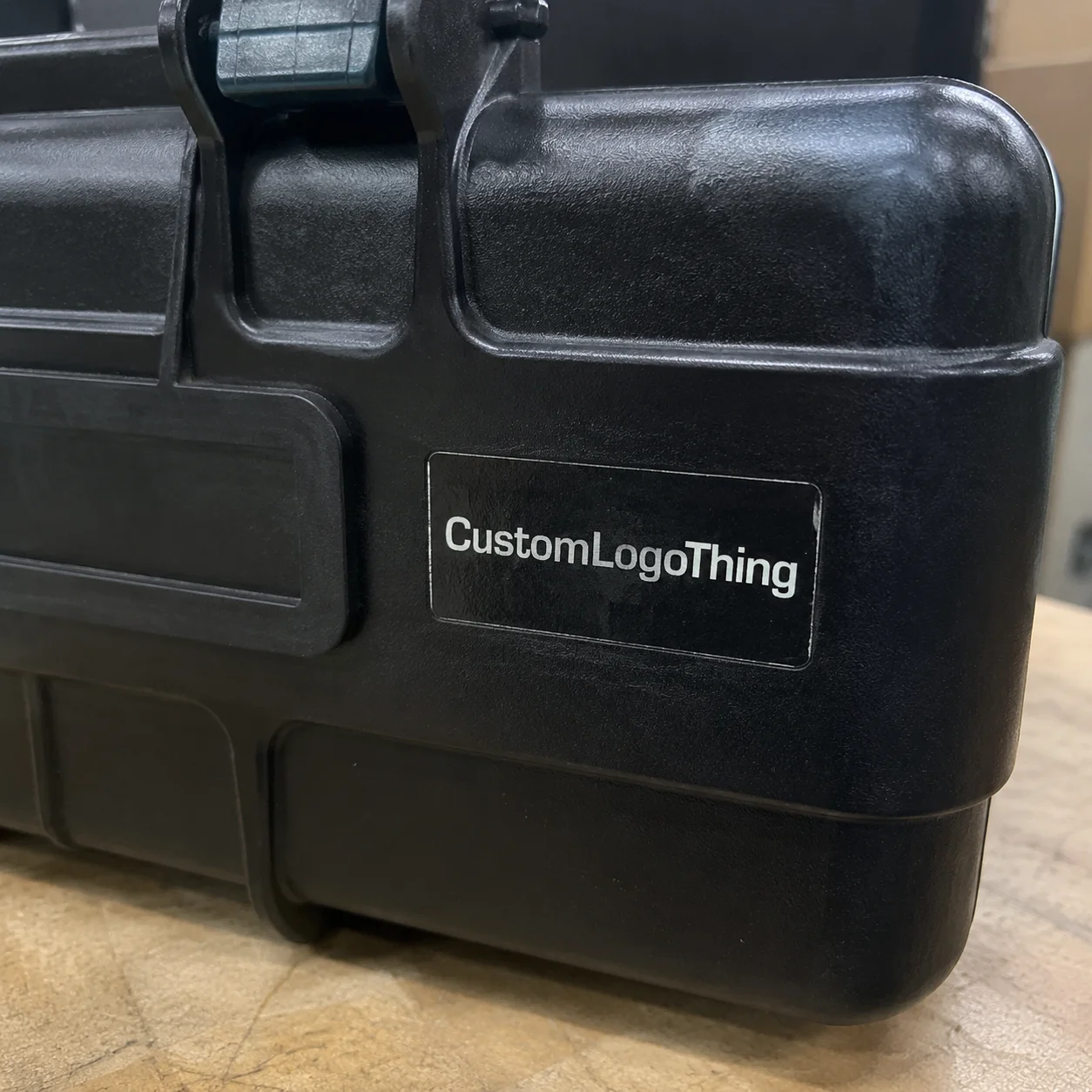
Custom heavy duty stickers are pressure-sensitive decals built for conditions that ordinary paper labels and light-duty vinyl stickers were never meant to handle. A paper label may be fine for a dry retail carton, a short-term event handout, or an indoor shelf tag. Put that same label on a contractor’s storage bin, a reusable tote, a marine cooler, or equipment housing that gets wiped with cleaner every week, and the weak spots show fast.
A heavy-duty construction usually combines four things: a stronger face stock, a more suitable adhesive, an ink system chosen for the exposure, and a protective laminate or coating. The label may be printed on vinyl, polyester, BOPP, or another film instead of paper. The adhesive may be permanent, high-tack, freezer-grade, removable, or outdoor-rated. The surface may get a gloss laminate, matte laminate, UV coating, or scuff-resistant overlay.
Most failures start with one bad assumption: “durable” is treated as a single feature. It is not. Durability comes from the right combination of material, adhesive, ink, finish, cut style, and surface preparation. A thick sticker with the wrong adhesive can fail faster than a thinner sticker with the right one. A premium matte finish can still look beaten up if it is not protected for the amount of rubbing, stacking, or cleaning it will face.
Standard vinyl stickers are a useful upgrade from paper, but they are not automatically industrial-grade decals. Basic vinyl can work well for indoor branding, laptop decals, packaging inserts, and short-term outdoor use. Heavy-duty stickers are better suited for industrial identification, outdoor branding, warning labels, asset tags, moisture-exposed product packaging, and branded packaging that needs to last beyond the first unboxing photo.
Packaging buyer’s rule of thumb: if the sticker goes on a difficult surface, gets handled often, lives outdoors, or carries important product information, specify it like a packaging component. Not a decoration.
How Durable Sticker Materials and Adhesives Work
The face material is the visible layer that carries the print. Vinyl is flexible and conformable, which makes it useful for curved surfaces, outdoor decals, helmets, toolboxes, and uneven equipment panels. Polyester, often called PET, is more dimensionally stable and usually resists stretching, heat, and chemical exposure better than softer films. BOPP is common in product labeling because it is moisture-resistant, thin, and clean-looking on bottles, jars, and retail packaging. Specialty films can add metallic effects, tamper evidence, extra thickness, or higher temperature resistance.
Adhesive performance has its own vocabulary. Tack is the initial grab when the sticker first touches the surface. Peel strength describes resistance when the sticker is pulled away from the edge. Shear strength is the adhesive’s ability to resist sliding under load. Dwell time is the period after application when the adhesive flows into microscopic surface texture and builds bond strength.
That last one matters more than buyers expect. A sticker may feel secure after ten seconds, but many pressure-sensitive adhesives reach stronger bond levels after 24 to 72 hours. Apply labels, stack the product immediately, ship it across the country, and then blame the sticker when edges lift. Classic.
Permanent adhesives are used when removal is not the priority. Removable adhesives make sense for temporary promotions, reusable containers, or surfaces that should not be damaged. High-tack adhesives help on textured plastics, powder-coated metal, corrugated plastic, and other surfaces where standard adhesive contact is limited. Freezer-grade adhesives are built to grab at low application temperatures and stay attached in cold storage. Outdoor-rated adhesives are chosen for rain, sun, temperature swings, and long exposure cycles.
Protective finishes do a lot of the quiet work. A gloss laminate gives strong color pop and a smooth wipeable surface. A matte laminate reduces glare and gives premium packaging a more controlled look, but the wrong matte film can show rub marks. UV coatings help protect printed graphics from sunlight. Scuff-resistant overlays are useful on labels that will be stacked, dragged, cleaned, or handled every day.
Rough, oily, low-energy, textured, curved, or powder-coated surfaces deserve testing. Low-energy plastics such as polyethylene and polypropylene are especially challenging because adhesives do not wet out easily. Powder coating varies by texture and chemistry. Even cardboard can be tricky if it is dusty, waxed, or made from heavily recycled board with loose fibers.
Key Specs to Confirm Before You Order
A useful quote starts with useful details. Before requesting custom heavy duty stickers, gather the finished size, shape, quantity, surface material, indoor or outdoor use, expected lifespan, application method, and exposure conditions. A 3-inch round sticker for a retail jar is not the same job as a 6-inch warning decal for a textured equipment panel, even if both use full-color printing.
- Finished size and shape: width, height, radius corners, custom die-cut outline, or standard circle, oval, square, or rectangle.
- Quantity: 250, 500, 1,000, 5,000, or larger runs can change the print method and unit price.
- Surface: plastic, coated metal, glass, painted wood, cardboard, rubberized coating, or textured housing.
- Exposure: sunlight, rain, salt air, oil, cleaners, refrigeration, abrasion, and temperature swings.
- Supply format: rolls, sheets, kiss-cut singles, die-cut singles, or labels prepared for hand or machine application.
Surface type matters more than almost anything else. Glass is smooth and high-energy, so many adhesives bond well if the glass is clean and dry. Powder-coated metal may look smooth, but its texture and coating chemistry can reduce adhesive contact. Plastics vary wildly. PET and PVC are generally easier than polyethylene or polypropylene. Cardboard can accept labels well, but dusty fibers or wax coatings can weaken the bond. Painted wood adds another variable because the adhesive is bonding to the paint layer, not directly to the wood.
Environmental stress changes the build. Outdoor equipment needs UV protection and a film that tolerates expansion, contraction, rain, and heat. Refrigerated packaging may need adhesive designed for cold surfaces and condensation. Oil, hand sanitizer, solvents, and cleaning chemicals can attack both ink and adhesive. Abrasion from stacking, shipping, or repeated handling calls for a protective laminate rather than bare print.
Artwork can make or break the result. Vector logos are best for sharp edges. Bleed is usually 0.0625 to 0.125 inch beyond the cut line, depending on the production setup. Safe area should keep text and QR codes away from the edge, often at least 0.0625 inch inside the trim. If the sticker prints on clear or metallic film, white ink may be needed behind graphics so colors do not look weak. Small type should be checked at actual size; 4-point legal copy may technically print, but it may not be readable after lamination, glare, or surface texture gets involved.
If your project also includes boxes, inserts, hang tags, or product sleeves, coordinate stickers with the broader Custom Packaging Products plan. Package branding looks more intentional when labels, cartons, and inserts share the same color targets, finish style, and logo spacing.
Process and Timeline from Artwork to Finished Stickers
The production path is straightforward, but each step protects the final result. It starts with a quote request and spec confirmation. The supplier reviews the surface, use case, size, quantity, material preference, and artwork. Then comes artwork review, a digital proof, material selection, printing, lamination or coating, cutting, quality checks, packing, and shipping.
Proofing is the buyer’s best chance to catch problems before production. Review the finished size, spelling, cut line, orientation, color expectations, quantity, roll direction if applicable, and any notes about white ink or clear material. If the artwork includes a QR code, scan it from the proof and check the printed size. For most packaging uses, QR codes below about 0.75 inch can become unreliable, especially on curved surfaces or textured finishes.
Timeline depends on construction. Straightforward digitally Printed Vinyl Stickers may move from proof approval to shipment in about 5 to 8 business days, depending on queue and quantity. Heavier-duty builds with specialty laminate, aggressive adhesive, color matching, custom tooling, or unusual materials may take 10 to 15 business days or longer. Large roll label jobs, exact PMS matching, or automated application requirements can add more review time.
Testing adds time. It also saves orders. If the decals are going on powder-coated metal, textured plastic, outdoor rental equipment, cold storage bins, or containers exposed to cleaners, build in a small test window before the full run. Apply samples to the real surface, wait 24 to 72 hours, then rub, flex, chill, heat, wet, or clean the sticker the same way it will be treated later.
Rush production may be possible for simple shapes, stocked materials, and clean artwork. Heavy-duty specifications usually need more planning because the material choice affects performance, not just appearance. Organizations such as ISTA publish transport testing resources that show how vibration, compression, moisture, and handling expose weak points across packaging systems.
Cost, MOQ, and Quote Factors That Change Unit Price
Sticker pricing is driven by material, adhesive, size, shape, quantity, print coverage, finish, cutting style, packing format, and freight. A small square label on sheets usually costs less than a large custom die-cut outdoor decal with high-tack adhesive and scuff-resistant laminate. Full-bleed print, metallic film, white ink, individual trimming, and specialty packing can also move the price.
Quantity has a strong effect because setup, proofing, machine time, waste, and quality checks are spread across more pieces. A 3-inch full-color durable vinyl sticker might land around $0.75 to $1.40 per piece at 500 pieces, then drop closer to $0.22 to $0.45 per piece at 5,000 pieces, depending on laminate, cut style, and print coverage. Specialty polyester with an aggressive adhesive may cost more, especially in smaller runs.
| Option | Typical Use | Relative Cost | Practical Notes |
|---|---|---|---|
| Standard vinyl with gloss laminate | Outdoor branding, toolboxes, coolers | Moderate | Good balance of flexibility, color, and weather resistance for many jobs. |
| Polyester with scuff-resistant laminate | Asset tags, equipment labels, industrial decals | Higher | Strong dimensional stability and better resistance to heat, rubbing, and cleaning. |
| High-tack adhesive film | Textured plastic, powder-coated metal, rough bins | Higher | Best tested on the actual surface before a full production run. |
| Sheeted labels | Hand application, short runs, mixed designs | Low to moderate | Easy to distribute and apply manually, not ideal for automated labeling. |
| Roll labels | Production lines, bottles, jars, cartons | Varies | Requires unwind direction, core size, and gap specs for machine application. |
Minimum order quantity is not only a sales policy. Some films, adhesives, laminates, and die-cutting setups have practical minimums because material waste and machine setup are real costs. Digital printing keeps many custom orders accessible at 100 to 500 pieces, but specialty constructions may make more sense at 1,000 pieces or above. Flexographic production can be efficient for larger roll label runs, especially for repeat product packaging and retail packaging programs.
Standard shapes usually cost less than complex Custom Die Cuts. Rounded rectangles, circles, and ovals are efficient. Intricate shapes with tight points, thin extensions, or deep interior cuts can slow cutting and weeding. Roll labels may be best for automated product lines, while kiss-cut sheets or individually cut pieces may be better for field teams, installers, or promotional kits.
The cheapest sticker can become expensive if it fails after the product ships. If a label carries safety information, brand identity, instructions, a QR code, or warranty details, failure creates rework, replacement cost, and customer frustration. Give the supplier the full use case, not just the size and quantity. That is how you get a quote for the right sticker, not merely the lowest line item.
Common Mistakes That Shorten Sticker Life
The first mistake is choosing by appearance alone. A soft-touch matte decal may look excellent on a sample sheet. Put it on a greasy equipment case that gets dragged across a truck bed, and the finish is only one small part of the job. Start with the surface and exposure, then choose the look.
Poor surface prep causes many failures. Dust, oil, wax, moisture, silicone residue, cold surfaces, and fresh paint can all weaken adhesion. Even fingerprints can reduce bond strength on smaller labels. For many hard surfaces, a clean lint-free wipe and isopropyl alcohol are enough, but some plastics and coated surfaces need different cleaning guidance. Confirm compatibility before using aggressive solvents because cleaners can haze plastic or damage paint.
Application temperature is another quiet problem. Many pressure-sensitive adhesives prefer application above roughly 50°F to 60°F, though freezer-grade products are built for colder conditions. If the surface is too cold, the adhesive may not flow properly into the texture. If condensation is present, the adhesive bonds to moisture instead of the surface.
Dwell time matters. Applying custom heavy duty stickers five minutes before shipping, washing, stacking, or outdoor use asks the adhesive to perform before it has built full strength. Giving the label 24 hours is better. For demanding surfaces, 72 hours is safer.
Artwork can shorten useful life too. Thin type disappears under glare or scuffing. Low contrast becomes unreadable on matte or textured surfaces. No bleed creates white slivers at the edge. Tiny QR codes fail after the label curves around a bottle or gets scratched. Critical text placed too close to the cut edge may be lost if there is normal cutting movement, often around 1/32 inch depending on equipment and material.
Skipping samples is risky for outdoor equipment, industrial containers, textured plastics, refrigerated packaging, or products exposed to cleaners. A small pilot run can reveal edge lift, color shift, laminate glare, or adhesive weakness before thousands of pieces are produced.
Expert Tips for Longer-Lasting Outdoor and Industrial Stickers
Match the construction to the failure risk. For sun, specify UV-resistant inks and a UV-protective laminate. For textured surfaces, ask about high-tack adhesive. For heat, dimensional stability, or chemical exposure, polyester may outperform softer vinyl. For repeated handling, stacking, or wiping, use a scuff-resistant laminate instead of relying on unprotected ink.
Test on the real surface whenever possible. Apply the sticker with firm pressure, then check it after 24, 48, and 72 hours. Try a light peel at the edge. Rub it with a cloth. Expose it to moisture, cold, heat, or cleaner if those conditions are part of daily use. Lab data is useful, but field behavior depends on the exact surface and the application routine.
Application technique is simple. Not casual. Clean the surface with the recommended method, let it dry fully, apply within the adhesive’s temperature range, avoid touching the adhesive, and use firm pressure across the entire label. A squeegee, roller, or thumb pressure around the edges helps the adhesive wet out. On larger decals, apply from one side to the other to reduce trapped air.
Round the corners. Sharp square corners lift more easily when bumped, scraped, or cleaned. A 1/8-inch corner radius can make a noticeable difference on labels that see regular handling. On small product labels, even a modest radius helps reduce edge picking.
Store unused labels correctly. Keep rolls wound in the proper direction, store sheets flat, avoid high heat and humidity, and keep them out of direct sunlight before application. Many pressure-sensitive labels are best used within about 6 to 12 months, depending on adhesive and storage conditions. If a roll has been sitting in a hot warehouse for a year, test it before applying it to finished goods.
For sustainability-minded packaging teams, material choice and end-of-life claims need care. A durable film label may extend product life or reduce relabeling waste, but it can also affect recyclability depending on the package substrate. The EPA recycling resources are a useful starting point for broader recycling considerations, though exact packaging claims should be checked against the specific material stream.
Next Steps Before You Send Artwork for Production
Before production, define the job in practical terms. What surface will receive the sticker? How long should it last? Will it live indoors, outdoors, in a freezer, in a warehouse, on a truck, or in a customer’s hands? Is the goal branding, identification, warning, instruction, tamper evidence, or decoration? A sticker used for package branding on a clean retail box has a very different duty cycle than a decal on a rental tool case.
- Confirm the surface material, including coating, texture, and any cleaning process used before application.
- List exposure conditions such as UV, rain, oil, abrasion, refrigeration, salt air, cleaners, or high heat.
- Choose a lifespan target, such as 6 months, 1 year, 3 years, or the expected life of the product.
- Set the finished size, quantity, cut style, finish, and supply format: rolls, sheets, or individual die cuts.
- Prepare artwork with vector logos, outlined fonts, bleed, safe margins, and color notes.
- Request samples or a pilot run if the surface is rough, curved, cold, oily, outdoor, or heavily handled.
Photos help. Send a close-up of the surface and a wider image showing where the label will sit. Mention if the area is curved, recessed, coated, dusty, chilled, or wiped with chemicals. If the label must match custom printed boxes, hang tags, pouches, or other Custom Labels & Tags, share those references early so the finish and color expectations are aligned.
Print-ready files keep the process moving. Vector artwork in AI, EPS, or production-ready PDF format is usually preferred for logos and line art. Raster images should be high resolution at final print size, often 300 dpi or higher. Add bleed, keep text inside the safe area, outline fonts, and call out exact color targets if brand matching matters. If clear, chrome, kraft, or colored material is being used, specify where white ink should print.
For demanding applications, a small pilot run is not wasted money. It is a controlled check before the full quantity. Apply the sample to the actual surface, wait through the adhesive dwell period, and put it through the same handling the final product will see. If the decal lifts, scuffs, fades, or becomes unreadable, adjust the construction before scaling up.
Custom heavy duty stickers perform best when they are treated like a specified packaging component, not an afterthought. Share the surface, exposure, artwork, quantity, and application details up front. The result has a much better chance of surviving real handling, outdoor use, and tough surfaces.
FAQ
What are custom heavy duty stickers usually made from?
Most are made from durable films such as vinyl, polyester, or BOPP, paired with a stronger adhesive and a protective laminate or coating. The best material depends on the surface, indoor or outdoor use, and whether the sticker must resist abrasion, moisture, sunlight, cleaners, or chemicals.
How long do heavy-duty custom stickers last outdoors?
Outdoor life depends on material, ink, laminate, sun exposure, climate, surface prep, and how much the sticker is rubbed or cleaned. For outdoor use, ask for an exterior-rated film, UV-resistant print protection, and an adhesive matched to the actual application surface.
Do custom heavy duty decals stick to textured plastic or powder-coated metal?
They can, but those surfaces often need a high-tack adhesive and real-world testing because low-energy plastics and textured coatings reduce adhesive contact. Clean the surface carefully, apply firm pressure, and allow 24 to 72 hours of dwell time before exposing the decal to heavy use.
What affects the price of custom heavy duty stickers the most?
The biggest cost factors are size, quantity, material, adhesive, laminate, shape, print coverage, and whether the stickers are supplied on rolls, sheets, or as individual pieces. Specialty films, aggressive adhesives, Custom Die Cuts, and low quantities generally increase unit cost.
Should I order samples before a full run of durable stickers?
Yes. Samples are smart when stickers will be applied to rough, curved, oily, cold, outdoor, or frequently handled surfaces. A small test helps confirm adhesion, readability, finish, and resistance before you commit to a larger production order.


