A hockey puck is one of the harder surfaces to label well. It gets handled with damp hands, dropped into bags, stacked in cartons, and sometimes moved from cold storage to room temperature in a short window. That is why Custom Hockey Puck stickers need more planning than a standard promo decal. On this product, the build usually matters more than the artwork.
Most buyers mean a printed adhesive decal sized for the flat circular face of a real puck. These labels are used for team merchandise, sponsor giveaways, tournament souvenirs, fundraising items, and retail pucks sold through pro shops or team stores. The core challenge is fitting clear graphics onto a small round surface and keeping the label bonded to textured rubber.
If you already order Custom Labels & Tags or other Custom Packaging Products, the same logic applies here: match the material to the surface, plan for storage and handling, and spec enough durability for the actual use case.
Why custom hockey puck stickers fail faster than most buyers expect
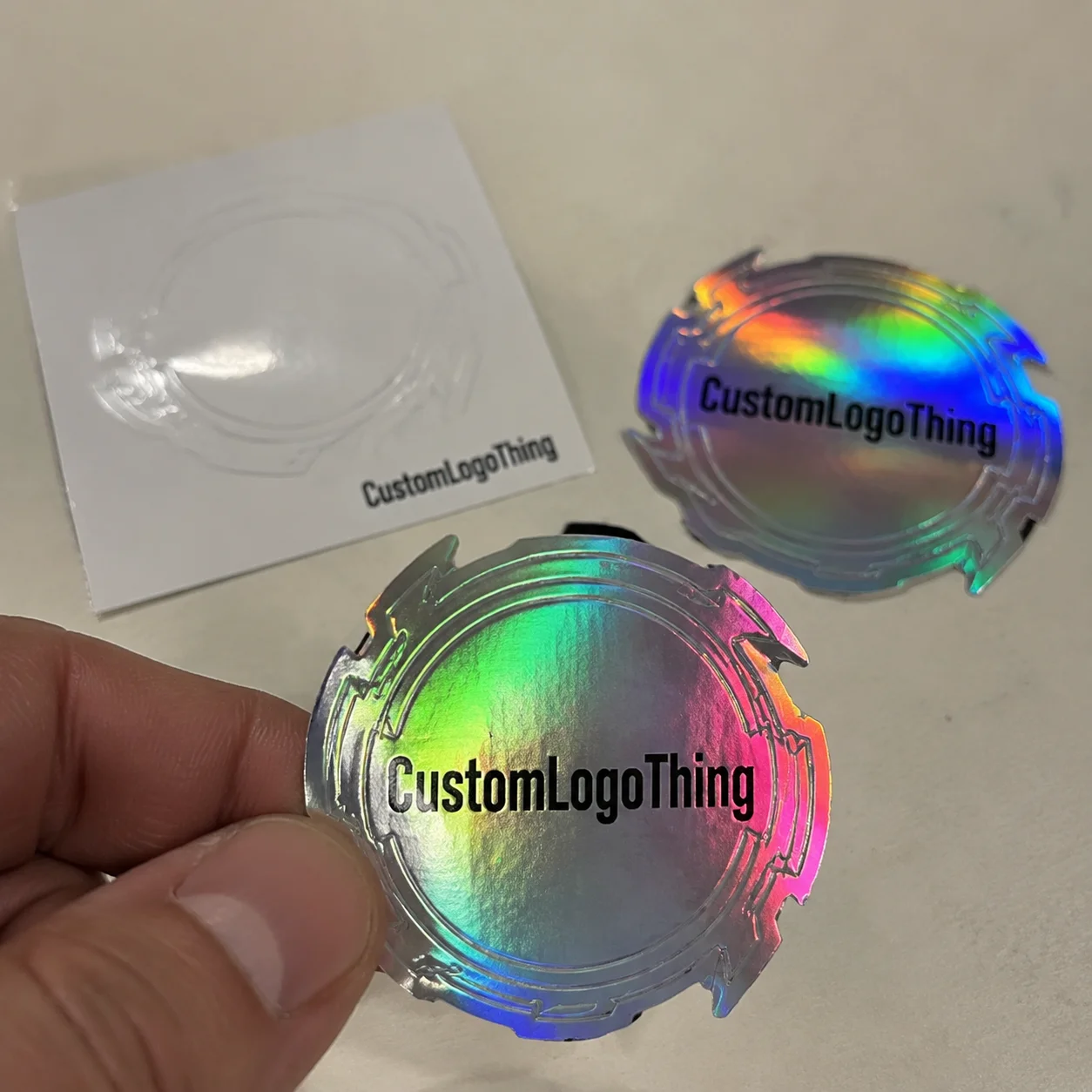
A puck face is not a smooth label panel. It is usually vulcanized rubber with fine texture and a raised rim around the usable center area. A decal placed there has to deal with moisture, hand oils, friction, cold, and edge stress. That makes it less forgiving than many boxes, bags, or cartons.
Most failures show up in familiar ways:
- Edge lifting when the decal is sized too close to the rim
- Scuffed print on labels without laminate or top protection
- Poor bond caused by dust, oil, moisture, or cold puck faces during application
- Moisture damage on paper stocks
- Crowded artwork that becomes hard to read at small diameter
A strong logo on the wrong stock becomes a weak product quickly. A simpler design on the right film with the right adhesive usually performs better.
Practical rule: treat a hockey puck more like a textured industrial surface than a smooth retail label panel.
Before ordering, confirm the usable face diameter, expected handling, and whether the puck is mainly for display, giveaway use, or resale. Those details do more to determine success than decorative extras.
How custom hockey puck stickers stick to rubber without peeling
A puck decal is simple in structure, but each layer matters: face material, pressure-sensitive adhesive, release liner, and often a laminate or topcoat. Once applied, the adhesive has to make close contact with the fine peaks and valleys of the rubber surface.
Rubber is not especially easy to label. It may carry fine dust, handling residue, or light surface film. The texture also reduces total contact area unless the adhesive has enough tack and the label is applied with pressure. Good adhesion comes down to clean, dry surface contact.
Best face materials for puck labels
White BOPP is often the best starting point. It prints cleanly, resists moisture, and usually costs less than vinyl. For event souvenirs, fundraiser items, sponsor giveaways, and team merch, BOPP with permanent adhesive and laminate is often the best value choice.
Vinyl is the tougher option when the pucks will be handled heavily or sold as retail souvenirs. It costs more, but the added flexibility and scuff resistance can justify it.
Paper is usually only suitable for short-term indoor display. It marks easily, absorbs moisture, and wears faster along the edges.
A laminate or protective topcoat is usually worth it. Gloss boosts color and logo pop. Matte reduces glare and hides fingerprints better. Either one improves resistance to rubbing.
Placement matters too. Most labels belong on the flat face only. The sidewall introduces more curvature and rougher texture, which makes long-term adhesion less reliable.
Specs that matter most: size, material, adhesive, and finish
A standard hockey puck is about 3 inches in overall diameter, but the usable flat face is smaller once you account for the raised rim. Many circular labels for pucks fall around 2.25 to 2.65 inches, but the right size depends on the actual puck and the visual margin you want around the edge.
Sizing and artwork fit
Small circles show errors quickly. Keep a bleed of at least 0.0625 inch, and hold logos, borders, and text inside a safe zone of about 0.125 inch from the trim. If art runs too close to the rim, slight placement shifts become obvious.
Simple artwork nearly always works better. Bold logos, strong contrast, thicker lines, and short text blocks hold up well. Fine outlines, long sponsor lists, and tiny type do not. If text drops below about 5 to 6 points, readability gets risky.
Material and adhesive choices
Most buyers are choosing among a few practical material families:
| Material | Best Use | Durability | Relative Cost | Notes |
|---|---|---|---|---|
| White BOPP | Event pucks, promo merch, fundraiser items | Good | $ | Moisture resistant, crisp print, strong value |
| White Vinyl | Retail-ready souvenirs, heavy handling | Very good | $$ | Tougher face stock, flexible, often paired with laminate |
| Paper | Short-term display only | Low | $ | Least resistant to scuffs and moisture |
Adhesive choice matters as much as the face stock. A standard permanent adhesive may work on some puck faces, but textured rubber often benefits from a more aggressive permanent tack. The right choice depends on the actual puck surface, storage conditions, and how much handling the finished puck will see.
Finish and print details
Gloss suits brighter graphics and sponsor-heavy designs. Matte gives a softer look and cuts glare under arena lighting. Special finishes can be used, but on a puck decal they rarely matter as much as film, adhesive, and laminate.
Keep print decisions realistic at this size. Avoid hairlines and overly fine effects. On small round labels, clean graphics usually outperform more complex treatments.
What should you know before ordering custom hockey puck stickers?
The puck itself should shape the spec. Before placing an order, measure the usable flat area, decide how the pucks will be handled, and match the material to the actual use. A one-night giveaway, a retail souvenir, and a fundraiser puck that will be passed around constantly do not need the same build.
Define whether the priority is appearance, durability, or both. If the decal is mainly for display, print quality and centering may matter most. If it will be touched, packed, or sold in a shop, durability has to carry more weight.
Ask for a proof and confirm the final diameter before production begins. Small round artwork leaves little room for correction, and a sizing mistake is much cheaper to fix before printing than after application.
Production process and lead time: from artwork proof to packed order
The production path is fairly direct, but delays usually come from missing quote details or repeated proof revisions. A typical order moves through these stages:
- Quote request with size, quantity, use case, and deadline
- Artwork review and file check
- Confirmation of puck face diameter
- Digital proof creation
- Customer proof approval
- Material setup and print scheduling
- Printing, lamination or topcoat, and die cutting
- Inspection, packing, and shipping
The proof stage deserves extra attention because small round decals leave little room for error. The design needs to look centered, the trim line has to make sense, and text must stay far enough from the edge.
Digital printing is often the best fit for short runs, multiple versions, event-specific names, or sponsor variations. Larger runs may justify other print methods where unit economics improve.
Lead time depends on proof approval, finish choice, quantity, and shipping distance. A simple order may move in about 7 to 10 business days after proof approval. More involved jobs often fall into the 12 to 15 business day range. Rush production is sometimes possible, but it leaves less room to catch specification issues.
Shipment format is also worth discussing. Rolls work well for batch application. Sheets can be easier for small teams or mixed kit packing.
For broader packaging and handling benchmarks, resources from ISTA and PMMI/Packaging World can help ground performance expectations in real shipping and handling conditions.
Cost and pricing breakdown for small decals on hockey pucks
Small labels are not automatically cheap labels. A 2.5-inch circle looks simple, but the final quote depends on face stock, adhesive grade, laminate, print method, quantity, number of versions, die cutting, and packing format.
Volume has a major effect on unit cost. A run of 100 to 250 labels usually carries a noticeably higher per-piece price because setup is spread over fewer units. Costs usually improve at 1,000, 2,500, or 5,000 pieces.
| Tier | Typical Specs | Approximate Quantity Range | Estimated Unit Range |
|---|---|---|---|
| Basic indoor promo | Paper or economy film, permanent adhesive, no laminate | 500-1,000 | $0.12-$0.24 |
| Durable event souvenir | White BOPP, permanent or higher-tack adhesive, gloss or matte laminate | 1,000-5,000 | $0.18-$0.32 |
| Premium retail-ready | Vinyl, stronger adhesive, protective laminate, tighter color control | 1,000-5,000 | $0.28-$0.48 |
These are starting ranges, not fixed rules. Freight, finish complexity, SKU count, and revision time can all move the total.
The hidden expense in this category is under-specifying the build. If labels fail after staff or volunteers apply them to hundreds of pucks, the real cost includes wasted labor, replacement material, and weaker presentation at the merch table.
Compare quotes carefully and make sure size, material, adhesive, finish, packing format, and shipping terms actually match before deciding which option is better.
Common mistakes when ordering puck labels for teams, events, and resale
The first mistake is usually artwork. Buyers try to fit too much detail onto a small circle. Fine outlines, long taglines, narrow sponsor lines, and intricate backgrounds rarely survive that reduction. Bold and readable usually wins.
Material choice is another common issue. Paper often looks cheaper on the quote, but on rubber pucks exposed to moisture and handling, it is usually the wrong compromise.
Surface preparation also gets overlooked. Even a good adhesive struggles to bond to dust, oil, or condensation. Wipe the puck face first, let it dry fully, and apply firm pressure from the center outward. If the pucks were stored cold, let them come closer to room temperature before labeling.
Sizing mistakes cause both visual and functional problems. A decal pushed too close to the raised rim has a higher risk of lifting, and slight off-center placement becomes more obvious. Leaving some margin often looks more deliberate and performs better.
Late planning creates avoidable problems too. Orders placed at the last minute leave no room for proof corrections, test application, or shipping issues. If the pucks matter for fundraising, sponsor exposure, or resale, consider a short test run first.
Simple truth: the cheapest quote only looks cheap before labor, handling, and replacement costs are counted.
Smart next steps for ordering the right puck stickers the first time
A smooth order usually starts with a short checklist before pricing is requested:
- Measure the usable flat face of the puck
- State whether the pucks are display pieces, giveaways, or resale merchandise
- Note handling conditions such as cold storage, moisture, or frequent contact
- Confirm quantity and whether multiple versions are needed
- Share the in-hand deadline, not only the ship date
- Indicate finish preference such as gloss or matte
Artwork prep matters too. Supply vector files when possible, outline fonts, include bleed, and note the target diameter clearly. If sponsor branding or team colors depend on accurate color, say so early.
Ask for material guidance based on actual use. “These pucks will be sold in a rink shop and handled often” is more useful than simply asking for a glossy sticker.
For higher-visibility projects, ask for a proof and consider a sample set or short-run test. That helps answer three practical questions:
- How the circle fits the real puck face
- How the print surface handles rubbing and repeated contact
- How well the perimeter stays bonded after application
A practical decision path
If the puck is mainly a display souvenir, focus first on print clarity and finish. If it will be handled repeatedly, prioritize film stock, laminate, and stronger permanent adhesive. If it is part of a retail presentation, balance shelf appearance with enough durability to survive customer contact.
Sustainability may still come up, but performance on textured rubber often points buyers toward film constructions. It is still worth asking about right-sized dies, sensible material selection, and responsible sourcing where relevant. For fiber-based standards in adjacent packaging categories, FSC remains a useful reference.
The strongest results come from treating puck decals as a real specification, not an afterthought. Confirm the surface, match the adhesive, choose a face stock that can tolerate handling, and leave enough time for a proper proof.
What are the best materials for custom hockey puck stickers?
Film materials such as BOPP and vinyl are usually the best options because they handle moisture, rubbing, and repeated contact better than paper. A permanent adhesive with stronger tack often performs better on textured rubber, and laminate is a smart upgrade for souvenirs, team merchandise, and retail display.
Do custom hockey puck stickers stick well to real hockey pucks?
Yes, they can perform well on real pucks if the decal is sized for the flat face and built with the right material and adhesive. The puck surface should be clean and dry before application, and firm pressure during application helps the adhesive make better contact with the rubber texture.
How much do custom hockey puck stickers usually cost?
Pricing depends on diameter, quantity, material, adhesive, finish, and whether tooling is required. Short runs usually have higher unit costs, while larger orders bring the per-piece price down. The most useful quote comparison matches all specifications rather than looking only at the lowest unit number.
What is the typical turnaround time for custom hockey puck stickers?
Turnaround depends on proof approval, quantity, printing method, finishing, and shipping distance. A simple order may move fairly quickly after approval, while jobs with laminate, multiple revisions, or several versions often take longer. For tournaments and events, leave extra time for proof corrections and delivery buffer.
Can I use custom hockey puck stickers for fundraising or team merchandise?
Yes. They work well for team shops, commemorative pucks, sponsor promotions, tournament giveaways, and fundraiser bundles. A durable film construction is the safer choice if supporters will handle the pucks often, and bold artwork usually gives the strongest result at this small size.