What Custom Hockey Puck Stickers Actually Need to Do
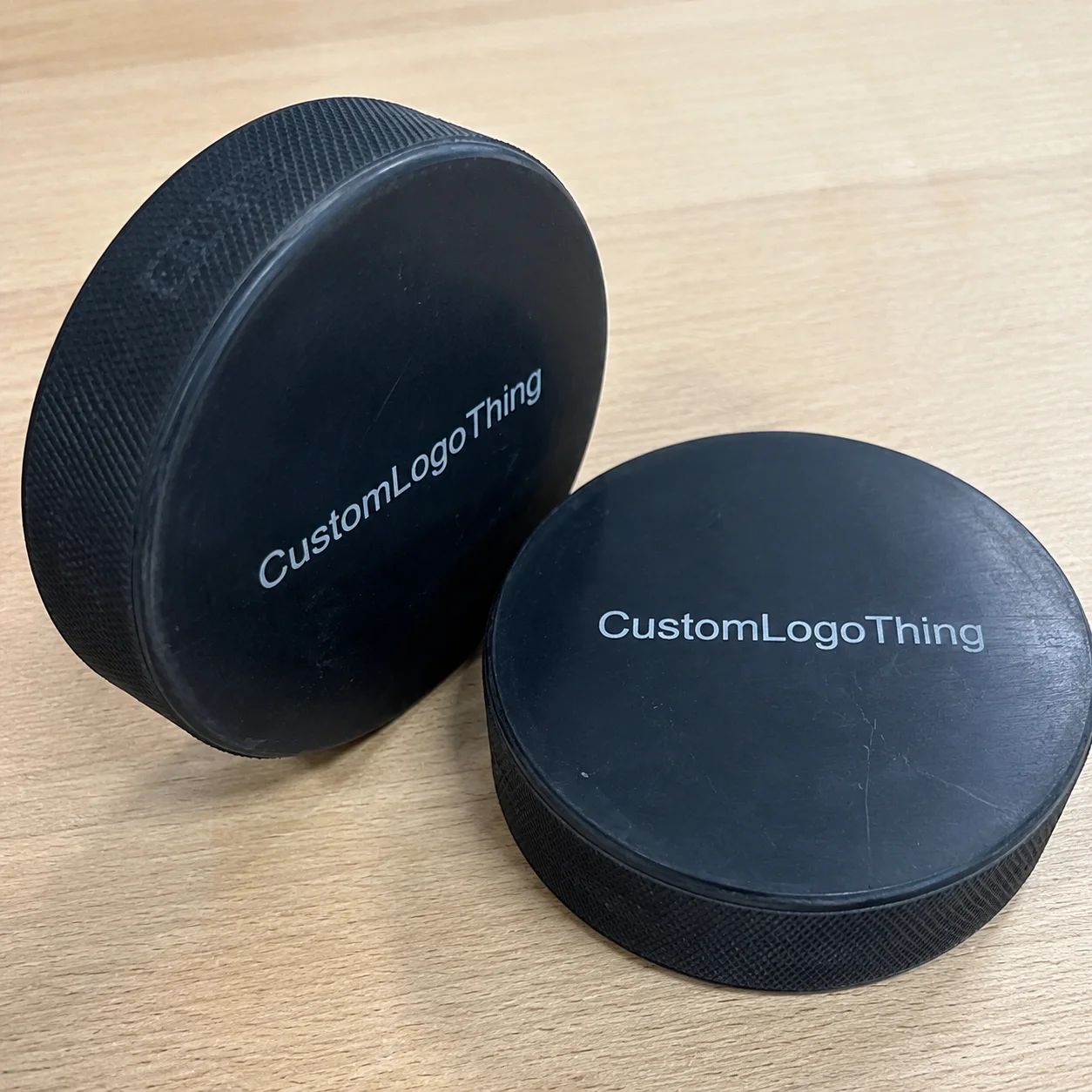
A puck sticker looks simple until it lands half a millimeter off-center on black rubber. Custom hockey puck stickers are printed decals sized for the flat face of a regulation, souvenir, or promotional puck, but their job is not just “put the logo in a circle.” They have to make a small object look intentional.
That means centered artwork. Clean edges. Type that stays readable after the puck has been stacked in a carton, handled by players, bagged for a tournament, or passed across a merch table by a volunteer who has already sold 60 pieces before lunch. The adhesive also has to bond to rubber, a surface far less cooperative than glass, coated paperboard, or smooth plastic.
Buyers use puck decals for team merchandise, tournament souvenirs, booster club sales, corporate giveaways, commemorative games, coach gifts, youth hockey fundraisers, and retail add-ons. A small team order might be 100 decorated pucks for a banquet. A tournament could need 500 pieces split by division. A team shop may want laminated decals, barcoded packaging, and a display format that matches the rest of its branded product packaging.
There is a practical divide between a stickered puck and a molded or directly printed puck. Molded or screen-printed decoration can make sense for licensed retail programs, large repeat runs, or designs that will not change for several seasons. A stickered puck usually fits shorter runs, event dates, sponsor versions, limited fundraisers, and seasonal artwork. Setup cost stays lower. Proofing moves faster. Version changes are less painful.
The buyer’s real goal is plain: order a puck decal that looks sharp, applies cleanly, and survives normal storage and handling without looking like a shortcut.
Practical callout: A puck decal is not just a round label. Black rubber, circular geometry, and hand-applied placement make small artwork and alignment flaws much more visible.
How Puck Sticker Materials, Adhesives, and Finishes Work
Most puck decals are built from pressure-sensitive label materials: a printable face stock, adhesive layer, and release liner. Common face stocks include vinyl, other synthetic films, and coated paper. They all print. They do not all behave the same once they are handled, stacked, rubbed, or packed against rubber.
Vinyl and film-based stocks are usually the better fit for merchandise, display pieces, and repeated handling because they resist moisture and scuffing better than economy paper. Coated paper can still work for short-term giveaways, especially if the puck is handed out once and kept as a basic souvenir. The difference is easy to feel. Film reads as a product decal; paper reads as a promotional label.
Adhesive selection matters because hockey pucks are vulcanized rubber. Depending on the puck, the surface may have fine texture, dust, mold release residue, or slight oils. Any of those can weaken the bond. A clean, dry surface gives the adhesive a better chance, but large orders or powdery-feeling pucks should be tested before production. For hand-applied projects, a quick wipe with a clean, lint-free cloth is often enough; for difficult rubber, follow the supplier’s prep recommendation instead of improvising with aggressive solvents.
Finishes change both appearance and durability. Gloss laminate makes color brighter and gives sponsor logos a more retail-ready look. Matte laminate reduces glare, useful under rink lighting or banquet-room fluorescents. Unlaminated decals reduce cost, but they are easier to scuff during stacking, packing, and repeated handling.
Ink behavior deserves attention early. Rich colors, fine mascot lines, and small type need clean artwork and strong contrast. A navy ring may look elegant on a white screen proof, then flatten once it sits against a black puck edge. Red can print deeper after lamination. Small gray type can disappear. Review the proof at actual size, not enlarged on a monitor where every detail looks more generous than it is.
Durability has limits. A laminated puck decal can hold up well as merchandise, display, or keepsake decoration. It should not be sold as a playing-surface graphic expected to survive slap shots, ice abrasion, and board contact. If the puck will actually be used in play, ask about direct printing or molded options instead. Stickered pucks are best treated as decorated merchandise, not performance equipment.
If sustainability claims matter, ask for specifics. The Forest Stewardship Council is a useful reference point for paper-based materials. Film decals are usually chosen for durability rather than recyclability. For larger shipments, ISTA procedures offer a practical framework for thinking about carton strength, transit handling, and distribution risk.
Size, Shape, Artwork, and Centering Specs That Matter
A regulation hockey puck is about 3 inches in diameter, but the printable face is usually smaller. The outside edge may be rounded, beveled, textured, or marked by molded details. Many puck decals fall around 2.25 to 2.75 inches in diameter, but the correct size depends on the actual puck. Mini pucks, souvenir pucks, foam pucks, and novelty formats can vary enough that guessing creates waste.
Build the design around three print zones: bleed, trim line, and safe area. Bleed is extra artwork extending beyond the cut edge so a tiny shift does not leave a white sliver. The trim line is the intended cut circle. The safe area is where essential text, logos, dates, jersey numbers, and sponsor marks should stay. For a 2.5-inch round decal, a safe margin of at least 0.125 inch is a reasonable starting point. Small type, detailed crests, and sponsor rings often need more breathing room.
Round decals reveal alignment problems faster than rectangles. A rectangular label on a box can sit 1/16 inch off and still pass at a glance. A circular crest on a black puck looks wrong with a much smaller shift because the eye compares the design to the rubber edge. If volunteers are applying the decals by hand, the artwork should forgive slight placement variation. Center-weighted logos, simple rings, and clean circular borders are easier to apply than dense layouts with type pressed against the perimeter.
Artwork should be bold. Thick lettering, simplified mascots, strong contrast, and fewer sponsor marks usually produce a better puck than a poster-style design shrunk to 2.5 inches. Sponsor logos are the common failure point. Ten logos around one puck may satisfy a spreadsheet, but if each logo becomes fingernail-sized, the final product looks crowded and the sponsors get poor visibility. For multi-sponsor pieces, use the puck for the main design and move secondary marks to a backer card, belly band, hang tag, or small retail packaging element.
Vector files are preferred for logos and text because they scale cleanly. AI, EPS, SVG, and press-ready PDF files are easier to inspect than screenshots or copied web graphics. High-resolution PNG, TIFF, or PSD files may work if they are large enough, but compression artifacts and fuzzy edges show quickly on small decals. As a working rule, raster artwork should be at least 300 dpi at final print size. More resolution helps when fine detail is unavoidable.
Color management can be more consequential than buyers expect. A design that looks balanced on a backlit screen may lose contrast against the puck. If the decal is part of a larger branded program with Custom Printed Boxes, hang tags, mailers, or team shop displays, keep color references consistent while allowing the printer to adjust contrast for the black background. Matching a brand color is useful. Making the puck readable is usually more useful.
Pricing, MOQ, and Unit Cost Factors for Puck Decals
Pricing for custom hockey puck stickers is shaped by quantity, decal diameter, material, laminate, artwork versions, setup time, proofing, cutting method, packing format, and whether the decals are supplied loose, on sheets, or already applied to pucks. Application labor changes the quote quickly because centering each decal takes time, especially on two-sided designs.
MOQ means minimum order quantity. Short runs are possible in many cases, but unit cost drops as setup, proofing, material handling, printing, cutting, and packing are spread across more pieces. A 50-piece order can be perfectly reasonable for a coach gift or senior night. It will not price like 500 tournament pucks.
| Order Scenario | Typical Quantity | Common Construction | Estimated Decal Cost Range | Best Fit |
|---|---|---|---|---|
| Small team gift | 50-100 pieces | Film or coated paper, optional laminate | $0.65-$1.50 per decal | Banquets, coach gifts, senior night |
| Tournament batch | 250-500 pieces | Film label with gloss or matte laminate | $0.35-$0.85 per decal | Event souvenirs and sponsor handouts |
| Retail merch run | 500-1,000 pieces | Durable vinyl with laminate | $0.22-$0.60 per decal | Team stores and pro-shop displays |
| Applied decorated pucks | 100-1,000 pieces | Vinyl decal applied to supplied puck | Varies with puck and labor | Ready-to-sell merchandise or event kits |
Those ranges are planning numbers, not a price list. A simple one-color logo on a standard round decal costs less than a full-color laminated decal with four sponsor versions and individual packing. Premium vinyl, stronger adhesive, gloss or matte laminate, and application labor all raise the unit cost. That extra spend often makes sense if the puck will sell for $8 to $15 as merchandise instead of being handed out free at registration.
Versioning can quietly affect cost. A tournament may need one design for each division, one sponsor lockup for each rink, or a different date for each game. Each change can add proofing, file setup, press organization, and packing steps. It may not be a major increase, but it should be disclosed before the quote is finalized.
The cleanest buying move is to request quantity breaks at realistic levels: 100, 250, 500, and 1,000 pieces, for example. Then compare the point where the cost curve supports the fundraiser, gift budget, or merch margin. Ordering 1,000 pieces just because the unit cost looks better can backfire if the design expires after one event.
If you are also buying sleeves, mailers, hang tags, or other Custom Packaging Products, ask whether the pieces can be quoted together. Coordinating the puck decoration and packaging design reduces mismatched colors, awkward label sizes, and retail displays that look assembled from unrelated parts.
Process, Timeline, and Production Steps Before You Order
The production workflow is fairly direct, but each step protects the final piece. A typical order starts with puck type and printable face size. From there, the supplier recommends material, checks artwork, prepares a digital proof, confirms decal diameter and placement, prints the design, laminates if required, cuts the decals, packs them, and ships them. If pucks are decorated before shipment, application and inspection are added.
Decal-only orders often run about 5-10 business days after proof approval for straightforward quantities and standard materials. Applied puck orders commonly take longer, often 10-15 business days or more, depending on puck sourcing, application labor, inspection, and packing. Rush work is easier when artwork is final, the quantity is clear, and no specialty stock is required. If sponsors are still debating logo order, the clock has not really started.
The proofing stage is the buyer’s best chance to catch spelling, jersey numbers, sponsor names, tournament dates, memorial wording, and logo placement. Read the proof slowly. Print it at actual size if possible. A QR code that scans on a 12-inch screen may fail once it is reduced, laminated, curved under glare, and viewed in rink lighting.
Material availability also affects schedule. Standard white film with gloss laminate is usually easier to source than clear film, metallic effects, textured finishes, or unusually aggressive adhesives. Most puck projects do not need specialty construction. Clean artwork, dependable film stock, and consistent application usually outperform a flashy finish that complicates timing.
Quality control should include more than counting pieces. For decal-only orders, check print clarity, cut consistency, liner condition, color, and whether any sheets show lifting edges. For applied pucks, inspect centering, bubbles, edge adhesion, scuffs, and version counts. A small sampling plan is better than opening one box, seeing the top layer looks fine, and assuming the rest is identical.
Shipping needs planning because pucks are heavy for their size. A carton of decorated pucks can stress tape, corners, and inner packing, especially in parcel networks. For larger shipments, carton weight, stack pattern, and edge protection matter. This is the same product-packaging discipline used for dense promotional items, sample kits, and heavy retail packs.
Do not schedule delivery for the event day. Build in time to inspect, count, organize by version or division, and solve any freight problem before the banquet, tournament, opening night, or sponsor activation. A few extra days can prevent a very expensive hour in the rink lobby.
Step-by-Step Ordering Guide for Teams and Event Planners
Good ordering starts with a short spec sheet. It does not need to look polished. It needs to give the supplier enough information to quote the item you actually expect to receive.
- Choose the puck format. Decide whether the decal will go on regulation pucks, souvenir pucks, mini pucks, foam pucks, or another promotional format. The puck controls decal diameter, adhesive needs, and shipping weight.
- Confirm the printable face. Measure the flat area or ask the puck supplier for the recommended decal diameter. If the puck has molded marks, a recessed face, or heavy texture, send photos with a ruler in the frame.
- Collect final artwork. Gather team logos, sponsor marks, brand colors, dates, player names, division names, and any league requirements before proofing. Chasing files after quoting slows production.
- Select material and finish. Use economy construction for short-term handouts. Consider laminated film for retail merchandise, awards, and longer-term keepsakes. Gloss gives punch; matte reduces glare.
- Request quantity breaks. Ask for 100, 250, 500, and 1,000 pieces if those volumes are realistic. Confirm whether application is included or whether decals arrive on sheets for your team to apply.
- Review the proof at actual size. Check spelling, sponsor order, logo centering, edge margins, dates, and QR code readability. Approve only after every required stakeholder has signed off.
- Plan receiving and distribution. Store decals flat and clean. Store decorated pucks in labeled cartons by version, division, or sponsor group so event crews are not sorting under pressure.
If the puck decal is part of a merch table, think beyond the sticker. A header card, branded tray, belly band, or coordinated label can make the puck feel more finished. Custom Logo Things also supports related Custom Labels & Tags, useful for booster club sets, tournament packs, and sponsor gifts where the packaging has to carry more information than the puck face can hold.
Common Mistakes That Make Hockey Puck Decals Look Cheap
The first mistake is using artwork with too much detail. Thin outlines, tiny mascot features, sponsor tags, and fine script fonts can disappear at puck size. A design that works on a hoodie or dasher-board banner may not survive a 2.5-inch circle.
Low contrast is close behind. Dark green, navy, maroon, charcoal, and black can look rich on screen, then flatten against the puck’s rubber edge. If a team color is dark, add a white keyline, brighter accent, or simplified border to separate the art from the puck.
Surface prep is another common weak spot. Dust, loose rubber particles, and residue can cause lifting edges or small bumps under the decal. For hand application, clean hands, a flat work surface, and a repeatable centering method make a visible difference. If volunteers are applying hundreds of decals, give them extras. A 2% to 5% overage is sensible for learning curve, misalignment, and damaged pieces.
Proof approval can go wrong in a quiet way. Buyers often review a large PDF on a laptop and assume every detail will stay readable. Review at actual size. If a name, date, or QR code feels marginal on paper, it will not improve after printing, cutting, packing, and handling.
The cheapest material is not always the cheapest outcome. Economy labels may be fine for a free handout. For a keepsake sold as merchandise, a scuffed or lifting decal can lower the perceived value of the entire item. Better material, clean printing, and careful application serve the same purpose as good branded packaging: they make the recipient feel the product was made with care.
- Too much detail: Simplify crests, sponsor blocks, and background textures.
- Poor contrast: Test dark colors against a black edge before approval.
- No safe area: Keep key content away from the trim line.
- Weak prep: Apply only to clean, dry puck surfaces.
- Wrong material: Match the decal construction to expected handling.
Practical Next Steps Before Requesting a Puck Sticker Quote
Before requesting a quote, create a short spec list: puck type, decal diameter, quantity, deadline, finish preference, application requirement, and shipping destination. Those details remove most of the guesswork from the first pricing conversation.
Prepare the artwork package with vector logos whenever available. Include brand colors, approved sponsor files, and a short note about design priority. If the team crest matters more than the sponsor ring, say that. If a memorial date or tournament division must be prominent, call it out before proofing begins.
Ask the supplier to confirm material recommendation, proofing process, estimated turnaround, quantity breaks, and finishing method. The decal may be kiss-cut on sheets, die-cut as individual pieces, laminated for durability, or supplied for manual application. Kiss-cut sheets are often easier for teams applying decals by hand because the liner stays organized. Individually cut decals can look cleaner in kits but may add packing time.
If volunteers will apply the stickers, order a small overage. Ten extra pieces on a 250-piece order is not wasteful if it prevents a short count after a few crooked applications. Store finished decals flat, away from heat, dust, and moisture. For decorated pucks, avoid tossing them loose into bins where decal edges can rub during transport.
The best custom hockey puck stickers start with clean artwork, the right adhesive, realistic timing, and a quote request detailed enough to price accurately. Keep the design bold. Protect the safe area. Choose the finish based on use, not novelty. The finished puck should feel like real merchandise, not a round sticker pressed onto rubber at the last minute.
FAQ
What size should custom puck stickers be for a standard hockey puck?
Most designs are sized to fit the flat circular face with a small margin around the edge. A regulation puck is about 3 inches across, but the decal is usually smaller so it does not crowd the rounded edge. Confirm the exact diameter against the puck being used because souvenir, regulation, mini, and novelty pucks can vary. Keep important text and logos inside the safe area so the design does not look cramped or trimmed too close.
Do custom hockey puck decals stick well to rubber?
They can stick well when the correct adhesive is used and the puck surface is clean, dry, and free of dust or residue. Rubber texture and surface oils can affect adhesion, so prep matters more than it would on smooth paperboard or plastic. For retail or long-term display use, a stronger film material and laminate are usually better than an economy paper label.
How much do personalized hockey puck stickers usually cost?
Cost depends on order quantity, size, material, finish, artwork setup, cutting method, packing format, and whether the stickers are applied to pucks before shipping. Unit cost usually decreases at higher quantities because setup, proofing, and production time are spread across more pieces. Request several quantity breaks to compare budget options without changing the design.
Can I order hockey puck stickers for a tournament or fundraiser?
Yes. Puck stickers work well for tournaments, sponsor giveaways, booster club sales, banquet gifts, and commemorative game merchandise. For fundraiser sales, use cleaner artwork, stronger materials, and a finish that makes the puck feel like a finished retail item. For events with multiple sponsors or divisions, confirm whether each artwork version changes the quote or timeline.
What artwork file is best for custom hockey puck labels?
Vector files are preferred for team logos, sponsor marks, and text because they scale cleanly without becoming blurry. High-resolution PNG, TIFF, or PSD files may work if the image is large enough and not compressed. Before approval, review the proof at actual size to make sure small text, dates, and sponsor logos remain readable.