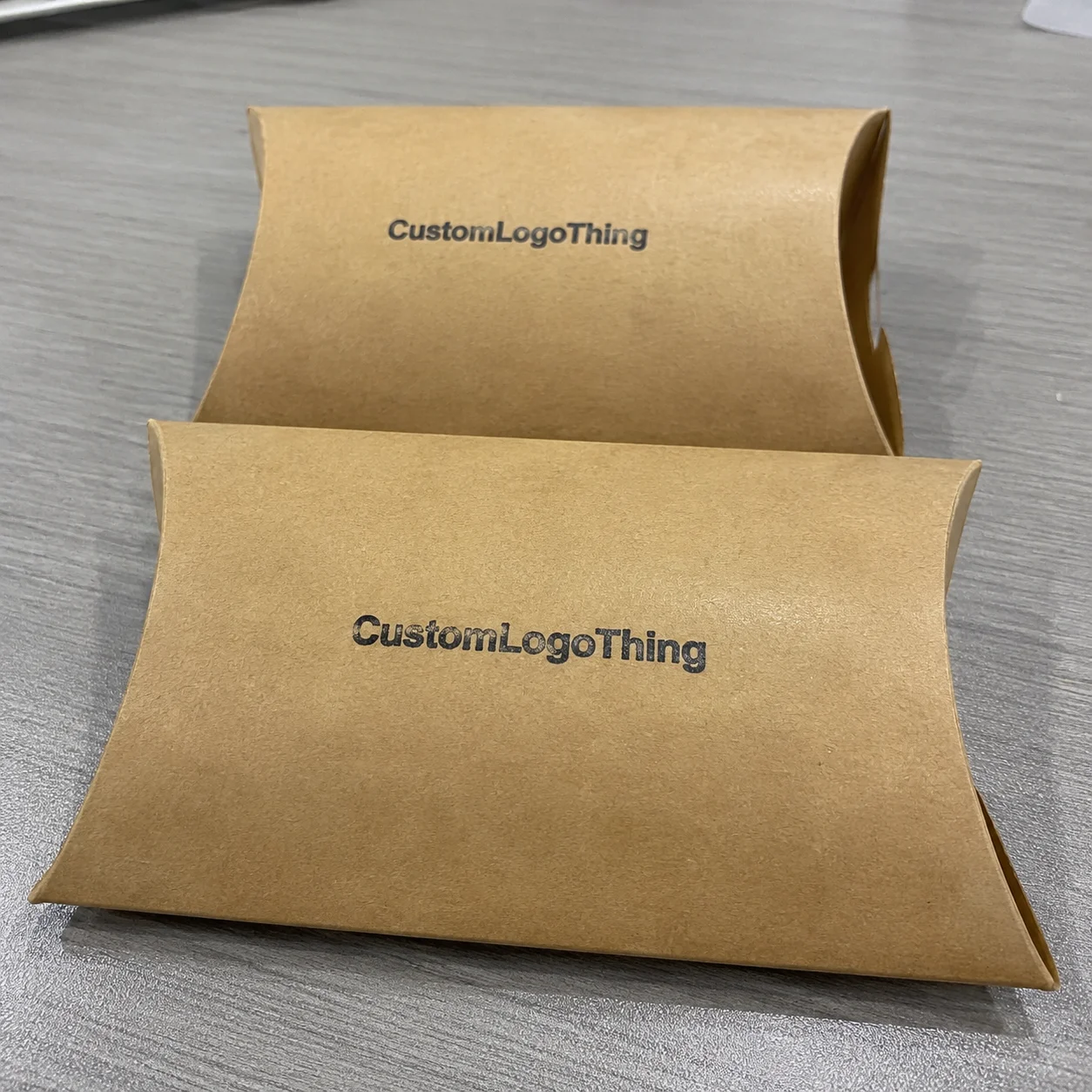
Buyer Fit Snapshot
| Best fit | order custom recyclable product packaging buyer review for packaging buyers comparing material specs, print proof, MOQ, unit cost, freight, and repeat-order risk where brand print, material, artwork control, and repeat-order consistency matter. |
|---|---|
| Quote inputs | Share finished size, material target, print colors, finish, packing count, annual reorder estimate, and delivery region. |
| Proofing check | Approve dieline scale, logo placement, barcode or warning zones, color tolerance, and any recyclable or compostable wording before bulk production. |
| Main risk | Vague material claims, crowded artwork, or missing packing details can create delays even when the unit price looks attractive. |
Fast answer: Order Custom Recyclable Product Packaging Buyer Review: Claims, Protection, MOQ, and Cost should be specified like a repeatable production item. The safest quote includes material, print method, finish, artwork proof, carton packing, and reorder notes in one written spec.
What to confirm before approving the packaging proof
Check the product dimensions against the actual filled item, not only the sales mockup. Ask for tolerance on folds, seals, hang holes, label areas, and retail display edges. If the package carries a logo, QR code, warning copy, or legal claim, reserve that space before decorative graphics fill the panel.
How to compare quotes without losing quality
Compare board or film grade, print process, finish, sampling route, tooling charges, carton quantity, and freight assumptions side by side. A lower quote is only useful if the supplier can repeat the same color, closure quality, and packing count on the next order.
If you want to order custom recyclable product packaging, start with the material, not the marketing pitch. I’ve stood on a corrugator floor in Shenzhen while a brand owner stared at a pile of mixed-material trays and realized the “premium” unboxing they paid for was eating their margin by $0.18 per unit on a 7,500-piece run. That’s not a cute story. That’s a budget problem in Guangdong, plain and simple. And yes, I’ve seen brands save real money when they order custom recyclable product packaging made from a smarter board structure instead of chasing shiny finishes that do nothing for performance.
The truth is simple: order custom recyclable product packaging when you need easier disposal, cleaner sourcing, and fewer headaches for customers who do not want to peel plastic from paper like they’re defusing a bomb. Good recyclable packaging can cut waste, support retail compliance, and still protect the product. If your box, mailer, sleeve, or insert is built right, you can have strong branded packaging and practical recovery at the same time. I’ve seen that work for beauty launches in Los Angeles and subscription boxes shipped out of New Jersey.
Recyclable is not the same thing as recycled-content or compostable. People mix those up all the time, then wonder why a retailer rejects the claim. I’ve had buyers send me artwork with “eco-friendly” slapped across the lid and no documentation behind it, which is basically a legal speed bump. If you’re going to order custom recyclable product packaging, understand the substrate, the coating, the print method, and the actual disposal path before you sign off. A carton that works in Toronto may be rejected in certain curbside programs in Texas or California, and that detail matters more than the pretty mockup.
Why I Tell Brands to Order Custom Recyclable Product Packaging
I’ll make this quick. When you order custom recyclable product packaging, you’re not just buying a box. You’re buying a shipping decision, a retail presentation decision, and a customer-service decision. I’ve seen a skincare brand in Portland switch from a PET plastic tray plus chipboard sleeve to a fully recyclable paperboard setup and save about $0.21 per unit on a 10,000-piece run. That added up to $2,100 in direct packaging savings before freight. The old setup looked fancy. The new setup looked smarter and actually fit the product. Funny how that works.
Here’s the business case, with numbers instead of vibes. Recyclable packaging can reduce landfill waste, make disposal easier for customers, and clean up your brand story without sacrificing protection. If your customer can flatten the carton, toss it into curbside recycling, and move on with their day, you have fewer complaints and fewer “what do I do with this?” emails. That matters for retail packaging, ecommerce packaging, and wholesale sets shipped from Chicago, Dallas, or Vancouver.
There’s a difference between recyclable, recycled-content, and compostable, and I’ve had to explain that difference to more than one procurement team over coffee and bad conference-room cookies in Newark. Recyclable means the package can enter a recycling stream if the local system accepts it. Recycled-content means the board includes recovered fiber, like 30% post-consumer waste or 60% recycled linerboard. Compostable means it can break down under specific composting conditions, which most curbside systems do not provide. If you order custom recyclable product packaging with the wrong claim, you may create legal and retail problems you did not budget for.
Most people overpay for sustainability because they ask for a finish first and a function second. That’s backwards. If you want to order custom recyclable product packaging that actually helps the business, start with the product weight, the shipping method, and the retail presentation. A 120g serum bottle does not need the same structure as a 2 lb vitamin jar. I learned that after standing in a factory in Dongguan while a client insisted on a 400gsm folded carton for a product that kept collapsing in transit. The board was too light. The expectation was too expensive. The fix was a 350gsm C1S artboard sleeve with a 1.5mm paperboard insert, and suddenly the carton stopped sounding like a maraca.
Factory-floor reality: the packaging that gets praise in a meeting is not always the packaging that survives freight. I’ve watched a “premium” mixed-material insert fail ISTA-style transit checks while a plain kraft insert passed with room to spare on a 1,200-mile route from Illinois to Colorado.
That’s why I push brands to order custom recyclable product packaging with a real structure plan. If your box needs to ship through parcel networks, it should survive compression, vibration, and drop testing aligned to ISTA methods. If you’re selling retail, your package branding has to support shelf appeal too. Good packaging does both. Bad packaging picks one and hopes. And hope is not a production spec.
Custom Recyclable Packaging Options for Product Brands
When brands order custom recyclable product packaging, they usually start with one of five structures: folding cartons, corrugated mailers, paperboard sleeves, kraft inserts, or molded fiber trays. Each has a lane. Each has a price point. And each works better for some products than others. I’ve seen supplement brands in Atlanta try to use a molded pulp tray for a cosmetic duo kit and then complain the presentation looked too industrial. Well, yes. That’s what molded fiber looks like. It’s honest. Sometimes too honest.
Folding cartons are the bread and butter for cosmetics, supplements, and small retail items. A 350gsm SBS carton with a matte aqueous coating can look polished without wrecking recyclability, and in a 5,000-piece run it often lands around $0.18 to $0.42 per unit depending on print coverage. Corrugated mailers are better for ecommerce shipping and subscription boxes because they handle crush better and usually cost $0.32 to $0.78 per unit at 5,000 pieces. Paperboard sleeves work well when you already have a primary container and just need branded packaging around it. Kraft inserts are simple, strong, and often cheaper than molded parts. Molded fiber trays are good when you need separation and protection with a strong recycling story, especially for items packed in Vancouver or Montreal where fiber recovery messaging is part of the sales pitch.
Here’s where each option usually works best when you order custom recyclable product packaging:
- Cosmetics: folding cartons, sleeves, and coated paperboard with precise print registration and a 0.5 mm dieline tolerance.
- Supplements: rigid-feeling folding cartons, tamper-evident labels, and internal kraft supports for 90mm to 120mm bottles.
- Apparel: corrugated mailers and tissue-lined cartons for retail packaging and shipping from hubs like Los Angeles, Atlanta, or Charlotte.
- Electronics accessories: corrugated inserts, kraft trays, and display-ready outer boxes that can hold 250g to 1.5kg items without bowing.
- Food-contact outer packaging: recyclable paperboard with compliant inks and clear claim language, especially for dry goods and non-direct-contact wraps.
- Subscription boxes: corrugated shippers with printed interiors and minimal mixed materials to keep recovery simple for customers in curbside markets.
The substrate matters more than most buyers think. SBS gives you a smooth white surface for crisp graphics. Kraft paperboard gives you a more natural look, and it hides scuffs better. Corrugated brings structure and shipping strength, usually with E-flute or B-flute depending on the product weight. Recycled paperboard fits nicely when the customer wants a stronger recycled-content story. Molded pulp and molded fiber are useful for inserts and protective cavities, especially when you need the box to stay recyclable as a whole and still survive a 36-inch drop test.
Look versus function? That’s the real trade. A premium matte finish can make a box look expensive, but if it adds a film layer that complicates recycling in your market, I’d question the value. A simple aqueous coating is often enough. I’ve negotiated with mills in Shanghai and converters in Vietnam that wanted to upsell every surface treatment under the sun. One supplier from a WestRock-linked network quoted me an extra $0.06 per carton for a soft-touch effect on a 20,000-unit run. For a beauty launch in Manhattan, maybe that’s fine. For a mid-market ecommerce brand shipping 800 orders a week? That’s just margin disappearing into a fancy texture.
When you order custom recyclable product packaging, ask whether the finish is still widely recyclable in curbside systems. Not every coating behaves the same. If the supplier cannot explain the difference between aqueous coating, varnish, and film lamination in plain language, keep moving. No drama. Just move. A supplier in Ho Chi Minh City who can explain the substrate and coating in one sentence is worth more than a sales rep in Chicago waving around adjectives.
| Packaging Option | Best Use | Typical Unit Cost at 5,000 pcs | Recyclability Notes |
|---|---|---|---|
| Folding carton | Cosmetics, supplements, retail boxes | $0.18–$0.42 | Usually curbside recyclable if no film lamination |
| Corrugated mailer | Ecommerce, subscription boxes | $0.32–$0.78 | Widely recyclable; strong shipping performance |
| Kraft sleeve | Secondary branding, gift sets | $0.10–$0.26 | Simple fiber-based structure, easy to recover |
| Molded fiber tray | Product separation, protective inserts | $0.20–$0.55 | Good fiber recovery story; verify local acceptance |
If you want to order custom recyclable product packaging that fits your budget, choose the structure first, then add the print layers That Actually Sell product. That’s how you avoid paying for packaging design that looks great in a mockup and mediocre on a loading dock in Tacoma.
Specifications That Matter Before You Order Custom Recyclable Product Packaging
Specifications are where good projects stay alive. If you want to order custom recyclable product packaging without back-and-forth hell, bring exact numbers. I’m talking product dimensions to the millimeter, unit weight, and the shipping environment. “Small box” is not a spec. It’s a guess, and guesses are expensive. I once saw a buyer in Austin approve a carton using only a photo next to a coffee mug. The box arrived, the bottle rattled, and everyone acted shocked. Cute. Also predictable.
You Need to Know the following before you order custom recyclable product packaging:
- Dimensions: product length, width, height, and any protrusions, ideally in millimeters.
- Weight: product weight per unit and packed weight per shipper, such as 180g, 420g, or 1.2kg.
- Print area: where the logo, barcode, ingredients, and legal copy go, including safe margins.
- Insert needs: cavity size, product restraint, and whether a tray is required for the 1st inner pack.
- Shipping method: retail shelf, parcel mailer, pallet freight, or export carton from ports like Long Beach or Savannah.
- Finish: matte, gloss, aqueous, spot UV, or no coating at all.
Stock sizes can save money. Custom dimensions can save the product. I’ve seen startups choose a stock folding carton because it knocked $0.04 off the unit price, then spend twice that in void fill and damage claims because the box was loose by 12mm on each side. That’s not smart savings. That’s accounting cosplay. If your product sits inside too much dead space, the shipping cost rises and the unboxing gets sloppy. If you choose too tight a fit, you risk scuffing, broken seals, or crushed corners.
Here’s what you should send your supplier on day one when you order custom recyclable product packaging: a dieline if you have one, exact product measurements, barcode placement, Pantone or CMYK references, finish preferences, target quantity, and the recycling requirement for your market. If you sell in retail channels, include any shelf-ready or compliance requirements too. If you don’t have a dieline, that’s fine. But don’t pretend you do. A clean brief beats a fake one every time, especially if your factory is in Dongguan or Ningbo and the production window is tight.
Common mistakes? Plenty. Buyers choose a coating that breaks recyclability. They under-specify the board grade. They forget to test the package with actual transit forces. Or they approve a beautiful prototype that collapses when two other cartons sit on top of it. I still remember a meeting where a buyer insisted on a laminated insert because “it feels premium.” We ran the sample. The insert delaminated under humidity at 85% RH. Premium? Sure. In a very short-lived way. That carton would not have survived a summer run from Miami to Phoenix.
To order custom recyclable product packaging responsibly, think about compliance claims as carefully as graphics. If you print “recyclable” on the box, you need a basis for that claim. The Federal Trade Commission’s Green Guides and your retailer’s rules may apply, and local recycling access matters. For reference on broader packaging and recovery topics, the EPA recycling guidance is a useful baseline. It’s not a substitute for legal advice, but it beats guessing.
Also, don’t overcomplicate it. If your package is fiber-based and widely accepted, say that clearly. If a component is not recyclable, disclose it. Buyers appreciate honesty more than a green halo with no substance. That’s how you protect trust when you order custom recyclable product packaging for retail packaging, ecommerce packaging, or wholesale sets shipped into markets like Ontario, California, or Illinois.
Pricing, MOQ, and What Actually Changes Your Quote
Let’s talk money. When brands order custom recyclable product packaging, the quote usually changes because of six things: material, print complexity, size, inserts, coating, and shipping destination. Nothing magical. No secret formula. Just manufacturing. A 4-color folding carton with a standard aqueous finish costs less than a carton with spot UV, embossing, and a custom molded insert. Shocking, I know. On a 5,000-piece run in East Asia, that difference can be $0.12 to $0.38 per unit depending on the finish stack.
Small runs cost more per unit because setup is fixed. Large runs spread that setup across more units. That’s why a 3,000-piece run might land at $0.44/unit while a 20,000-piece run drops to $0.19/unit for the same basic carton. The board mill still wants to be paid. The press operator still wants to be paid. The freight truck is not donating its time out of love for your brand story. If your factory is in Shenzhen and your warehouse is in New Jersey, the ocean freight line item alone can swing by several hundred dollars depending on the sailing date.
MOQ depends on the process. Digital printing can allow lower quantities, often from 500 to 1,500 pieces for simpler jobs. Offset usually wants more volume, commonly 2,000 to 5,000 pieces and up. Flexographic setups can make sense on corrugated, but plate costs matter. Specialty finishing like foil or embossing often raises the floor because of setup and tooling. If you’re testing a product launch, start smaller with a standard structure before you order custom recyclable product packaging in a full production run.
Here’s a practical breakdown of what usually changes the quote:
| Cost Driver | Typical Impact | Buyer Tip |
|---|---|---|
| Material type | Can shift price by 20%–60% | Choose the lightest board that still protects the product |
| Print coverage | More inks and more passes increase cost | Use full coverage only where it sells |
| Finish | Matte, gloss, or soft-touch changes cost structure | Ask if aqueous can replace film lamination |
| Insert or tray | Adds material and tooling cost | Test a kraft insert before paying for molded tooling |
| Freight | Can add $120 to $1,800 depending on route | Get the ship quote before approving the final art |
Hidden costs are where people get annoyed. Tooling. Plates. Sample packs. Freight. Warehousing. Sometimes even rework if artwork lands late and the factory has already loaded the press. I’ve negotiated enough quotes with suppliers like International Paper-linked converters, DS Smith facilities, and WestRock-capable mills to know that the line item you ignore is usually the one that hurts later. Ask for an itemized breakdown before you order custom recyclable product packaging. If a supplier in Guangzhou gives you one neat number and five vague promises, that’s not a quote. That’s a bedtime story.
If you’re buying through wholesale channels, or you want to compare runs for multiple SKUs, ask about Wholesale Programs. That can help if you plan to order 2 or 3 structures in parallel, especially for a product line refresh in Q3 or Q4. And if you need exact scope details, our Custom Packaging Products page is the place to start. I’m not a fan of vague quotes. They waste time and make everyone look sloppy.
For reference, a simple recyclable paperboard carton might start around $0.16/unit at 10,000 pieces, while a printed corrugated mailer with interior branding may sit closer to $0.48/unit depending on size and print coverage. Those are real-world ranges, not fairy dust. When you order custom recyclable product packaging, the cheapest option is not always the best value if it increases damage or returns by even 2% on a 50,000-order season.
How to Order Custom Recyclable Product Packaging Without Delays
How do you order custom recyclable product packaging without delays?
There’s a clean process if people stop improvising. First, request a quote with exact specs. Then approve the structure. Then review artwork. Then request samples. Then confirm production. Then schedule delivery. That’s the sequence. If you reverse it, you’ll burn time and probably money. I’ve watched a client approve artwork before the dieline was finalized, and the barcode landed right on the glue flap. That was a fun five-day delay. For me, at least. Not for them. The factory in Shenzhen charged a rush fee, and nobody enjoyed that invoice.
- Send product measurements: length, width, height, and weight.
- Share the target quantity: 1,000, 5,000, 10,000, or more.
- Provide branding files: AI, PDF, or layered artwork.
- Confirm the material: kraft, SBS, corrugated, or recycled board.
- Review a sample: plain white sample or printed prototype.
- Approve production: only after fit, print, and claim review.
Lead time depends on the full chain. Sampling can take 3 to 7 business days for simple structures and 7 to 10 business days if structural revisions are needed. Production may take typically 12-15 business days from proof approval for standard folding cartons, or 15 to 22 business days for custom inserts and specialty finishes. Freight can add another 3 to 12 business days depending on destination, whether you’re shipping into Dallas, Toronto, or Rotterdam. If you’re placing an order before a product launch or retail window, build in buffer time. I’d rather have a boring calendar than a panicked one.
What slows projects down? Incomplete specs. Late artwork. Vague sustainability claims. Constant changes to box size. Last-minute insert edits. Also, buyers who want to order custom recyclable product packaging and then keep changing the shipping destination every other day. That’s not a packaging problem. That’s a planning problem. I’ve watched a 6,000-piece run get delayed because the delivery address moved from an LA 3PL to a warehouse in Phoenix after proof approval. Same box. New headache.
One thing I always insist on: approve the prototype with the actual product inside. Not a blank mockup. Not a photo. The real product. I learned that on a factory visit in Dongguan where a premium candle line looked perfect in an empty sample carton, then failed once the glass vessel and wax sleeve were inserted. The lid lifted. The sidewalls bowed. The fix was a 2mm larger insert cavity and a stronger board grade. Cheap lesson. Better than a warehouse full of bad boxes. A 1,500-piece correction is annoying. A 15,000-piece reprint is a disaster.
If you want to order custom recyclable product packaging without delays, send the target ship date with the specs and artwork in the same message. One email. One brief. Clean and direct. That’s how serious buyers get faster answers. Also, it keeps the factory from guessing which version is final, which sounds obvious until you’ve watched three PDFs with “FINAL_v2” in the filename.
Why Choose Custom Logo Things for Recyclable Packaging
Custom Logo Things should be the practical choice, not the loudest one. If you want to order custom recyclable product packaging, you need a team that talks in specs, not slogans. I’ve spent too many years watching packaging suppliers promise the moon and then hand over a box that fails on fit, print, or freight. That’s a waste of everyone’s time, especially if your launch window is only 21 days away.
What matters most? Material guidance. Print consistency. Structural support. Clear communication. When a buyer comes to us with a tricky product, I want to know the weight, the retail channel, the shipping method, and the claim they need to support. Then we can recommend a structure that makes sense. A 2-ounce skincare serum does not need the same build as a 24-ounce supplement bottle, and I’m not pretending otherwise. In many cases, a 350gsm C1S artboard with a 1.2mm insert does the job better than a flashy hybrid setup.
We also pay attention to tolerance. Board stock has variation. Printing has registration limits. Inserts need breathing room or the product will rattle or jam. That’s not theory. That’s what I’ve seen on real factory floors while checking first articles by hand in Shenzhen and Yiwu. A good supplier understands when to push a tighter spec and when to allow a little room so the production run stays stable. If the cavity is 0.8mm too tight, production does not “work it out.” It just scrapes labels and creates reject piles.
What I trust: sample support, production oversight, and clear answers about what actually stays recyclable after printing and coating. If a supplier can’t explain that in plain English, I don’t trust the quote.
We can help with packaging design, custom printed boxes, retail packaging, and package branding that fits the product and the budget. No fluff. No fake green theater. If your goal is to order custom recyclable product packaging that protects the product and supports the brand, then the conversation should start with dimensions and materials, not vague “premium feel” adjectives. I’d rather hear “350gsm C1S, aqueous coat, 5,000 units, ship to New Jersey” than “make it feel elevated.” The first one is usable. The second one is a mood.
And yes, I care about documentation. If you need a specific recycled-content level, we’ll ask for it. If you need FSC-related sourcing information, we can discuss options and verify what applies through FSC resources and supplier records. If you need structural testing guidance, I’ll point you to the right specs and ask the right questions. That’s how I work. Straight answers. Fewer surprises. Better packaging, usually from factories in southern China or the Pacific Northwest depending on volume and timeline.
When brands choose us for recyclable packaging, they’re not buying packaging fluff. They’re buying a process that helps them order custom recyclable product packaging with fewer revisions and fewer avoidable mistakes. That saves money, and money is still the language most teams understand. It also saves the 11th-hour Slack message nobody wants to write at 9:47 p.m.
Next Steps to Order Custom Recyclable Product Packaging
If you’re ready to order custom recyclable product packaging, prepare three things before you ask for a quote: product dimensions, target quantity, and branding files. Add your recycling goals and budget range too. That gives your supplier a real starting point instead of a guessing game. Guessing games cost money. They always do. A client in Boston once skipped the budget range and got three wildly different quotes from $0.17 to $0.61 per unit. Same product. Same board family. Different assumptions. Lovely waste of a Tuesday.
Then compare 2 or 3 structure options. For example, a folding carton, a corrugated mailer, and a paperboard sleeve may all fit the same product, but each changes the unit price, the shelf look, and the disposal story. If the product is fragile or premium, ask for a sample or prototype. If it’s a retail line, compare what the box looks like under bright store lighting in Miami or Seattle, not just on a screen at 100% zoom.
My advice from years of factory visits and supplier negotiations? Send the specs, artwork, and target ship date together. One package. One email chain. If you drip-feed details over a week, you slow the whole order down. And if you want to order custom recyclable product packaging with fewer revisions, be specific about what “recyclable” means in your market. In the U.S., that may mean curbside-friendly fiber only. In parts of Europe, it may also mean clear material labeling and recycled-content documentation.
So yes, order custom recyclable product packaging only after you’ve matched material, budget, and timeline to the actual product. That’s how you get Packaging That Sells, ships, and recycles without drama. I’ve seen too many projects fail because someone picked the look first and the structure later. That road leads straight to reprints and apologies.
Start with the right build. Then move fast. Preferably with a dieline, a real deadline, and a supplier who can tell the difference between a board spec and a sales pitch.
FAQ
How do I order custom recyclable product packaging for a small MOQ?
Start with a standard structure and a smaller print run to keep setup costs down. Ask whether digital printing or a stock-size box can reduce the minimum order quantity. In many cases, 500 to 1,500 pieces is possible for simple jobs, especially with digital printing in cities like Dallas or Vancouver. Provide exact dimensions and product weight so the supplier can recommend the cheapest workable build.
What materials are best when I order custom recyclable product packaging?
Kraft paperboard, corrugated board, recycled paperboard, and molded fiber are the most common recyclable options. Choose based on product weight, shipping method, and whether the box needs premium shelf appeal. A 350gsm C1S artboard carton works well for cosmetics, while E-flute corrugated is often better for ecommerce shipping. Avoid mixed-material finishes if local recyclability is a priority.
How much does it cost to order custom recyclable product packaging?
Cost depends on material, size, print coverage, finish, inserts, and order quantity. A simple recyclable paperboard carton can start around $0.16/unit at 10,000 pieces, while a printed corrugated mailer may sit closer to $0.48/unit depending on size and print coverage. Shipping, tooling, and sample costs can add to the final quote, so ask for an itemized breakdown before approval.
How long does it take to order custom recyclable product packaging?
Lead time depends on sampling, artwork approval, production, and freight. Simple structures typically take 12-15 business days from proof approval for production, while sampling can take 3 to 7 business days. Freight may add another 3 to 12 business days depending on the route and destination, such as New Jersey, California, or Ontario.
Can I print full-color designs on recyclable packaging?
Yes, full-color printing is common on recyclable paperboard and corrugated packaging. The key is choosing inks, coatings, and finishes that do not compromise recyclability. A supplier should confirm whether your design still meets your recycling goals before production starts, especially if you want to keep a curbside-friendly claim. Aqueous coating is often the cleanest choice for fiber-based cartons.