Your bag order usually slows down before printing even starts

A retail launch is booked. A trade show is close. Your carryout bags are almost gone. Then the supplier asks for three missing details: bag size, handle style, and artwork format. That is usually where Logo Printed Plastic bags lead time and moq stop sounding simple and start affecting the schedule.
Printing itself is rarely the main delay. Approval gaps do more damage. So do fuzzy dimensions, low-resolution logos, and vague requests like “standard thickness.” Most buyers are trying to pin down three things quickly: a realistic lead time, a workable MOQ, and pricing that matches the quantity they can actually use.
The tradeoff is straightforward. Stock-size printed bags are usually faster and easier to buy in modest quantities. Fully custom sizes, heavier gauges, frosted films, reinforced handles, metallic inks, or large ink coverage add setup, review time, and more chances for the quote to shift once final specs arrive.
Plastic bag sourcing is a three-way tradeoff between speed, customization, and unit cost. Push for speed and you may need a stock size, fewer print colors, or a higher per-piece price. Push for customization and the minimum order quantity usually rises. Push only for the lowest unit cost and you may end up storing bags you will not use before a design change.
The practical move is to finalize the spec early, compare quotes built on the same assumptions, and separate one-time setup charges from repeat-order pricing. Buyers who do that avoid the usual problems: underbuilt film, vague freight terms, and delivery dates that sound fine until someone asks whether “lead time” means factory completion or actual arrival.
Which logo printed plastic bag style fits your use case
Bag style affects performance, appearance, and cost before printing even enters the discussion. Choose the wrong construction and a good logo will not save the result.
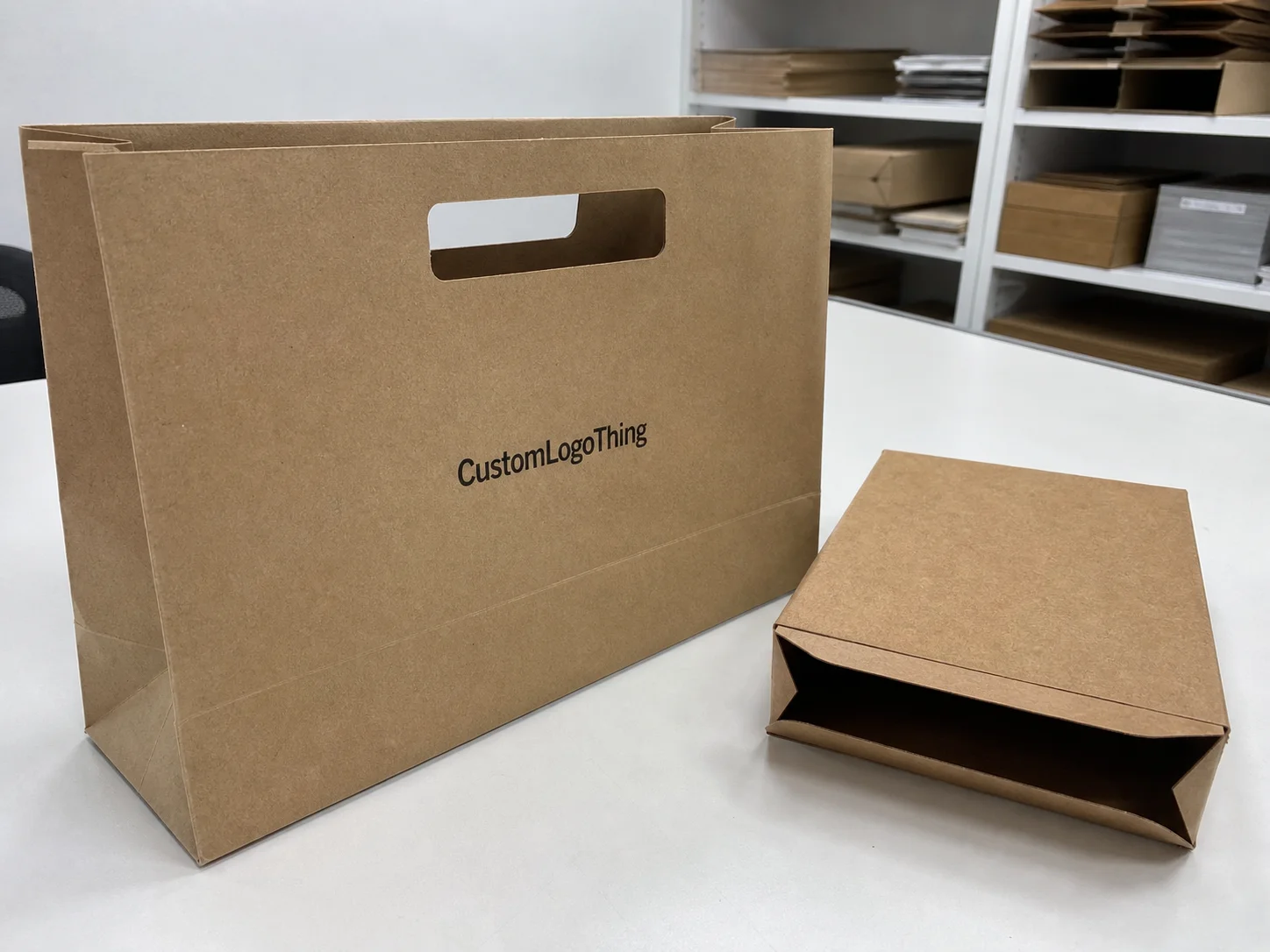
Die-cut handle bags are common for boutiques, trade shows, lightweight apparel, and promotional handouts. Patch handle bags add reinforcement around the grip area for heavier contents. Soft loop handle bags sit higher on presentation and are common in fashion, cosmetics, gifts, and premium retail.
T-shirt bags are the workhorses for grocery, convenience, food service, and high-volume carryout. Drawstring bags fit event kits and handouts. Zipper bags work for resealable small parts, accessories, pharmacy use, or grouped product sets. Merchandise poly bags are standard for apparel protection, e-commerce packing, and retail overbagging.
The resin matters almost as much as the style. LDPE is softer and more flexible, making it a common choice where hand feel and presentation matter. HDPE is stiffer, lighter, and often more cost-efficient for functional carry bags. PP offers higher clarity and a crisp look, but feels less soft and creases differently in use.
- LDPE: softer feel, good print surface, common for retail bags
- HDPE: lighter, stiffer, lower-cost option for high-volume utility bags
- PP: better clarity and sharper appearance, but less forgiving in hand
Construction details also change how the order behaves in production and shipping. Side gussets and bottom gussets affect how the bag opens and packs. Soft loop handles add labor and usually extend lead time. Printing on one side versus both sides changes plate and registration requirements. Each choice seems small on its own, but together they can shift both MOQ and price.
Many buyers overspec the first order. For a basic event giveaway or retail carryout bag, a standard size with one-color branding often wins on every practical metric: lower MOQ, shorter turnaround, and less setup risk. Premium builds make sense when the bag is part of the product experience rather than a disposable handoff.
Specs that change performance, print quality, and compliance
Suppliers do not need a rough description. They need a usable spec: width, height, gusset, film thickness, target load, seal style, print colors, finish, and packing quantity per carton. Leave out one of those and the supplier fills in the gap with an assumption, which often leads to a requote.
Thickness is a common problem area. Buyers see 1.25 mil, 1.5 mil, 2.0 mil, or metric equivalents in microns. Roughly, 1 mil equals 25.4 microns. Moving from 1.25 mil to 2.0 mil changes feel, tear resistance, carton weight, storage footprint, and cost. For many small retail LDPE bags, 1.5 to 2.0 mil is a practical range. Heavier goods may need thicker film, handle reinforcement, or both.
Most volume orders use flexographic printing, which works well for spot colors and longer runs on film. More colors usually mean more plates, more setup time, and tighter registration demands. On flexible film, an extra color is not always a minor upgrade.
Artwork is another frequent source of delays. Suppliers usually want vector files such as AI, EPS, or press-ready PDF, plus Pantone references if color accuracy matters. A web logo may look fine on screen and still be unusable for production. Bleed, safe margins, and print position should be settled before proof approval, especially if the design sits near a die-cut handle or seal area.
Important: Proof approval is not a formality. Once artwork, dimensions, and layout are approved, later changes can reset timing and add remake cost.
Compliance also belongs early in the process. Depending on the market, you may need to ask about recycled content, local bag restrictions, thickness thresholds tied to reusable classifications, or labeling requirements. If environmental claims matter, ask for the actual material specification or certification basis. The EPA has useful packaging guidance, and FSC may matter if your broader packaging program also uses paper bags.
Packing details affect freight and distribution more than many buyers expect. Ask for carton dimensions, pieces per carton, master pack count, and labeling options early, especially if the order ships to multiple locations or through a 3PL. A low unit price is less attractive if the cartons are inefficient to store or redistribute.
Logo printed plastic bags lead time and MOQ: what drives pricing
MOQ is usually driven by plate setup, press time, material allocation, and packing labor. Stock sizes on standard film often allow lower starting quantities, while custom dimensions, specialty finishes, and reinforced handles push minimums up quickly.
A practical benchmark looks like this:
| Bag Type | Typical MOQ Range | Common Lead Time Range | Pricing Notes |
|---|---|---|---|
| Stock-size die-cut or merchandise bag, 1-color print | 1,000-5,000 pcs | 2-5 weeks plus transit | Lower setup burden, easier for trial orders and reorders |
| Custom size retail bag, 1-2 colors | 5,000-10,000 pcs | 4-7 weeks plus transit | Balanced option for branding and better volume efficiency |
| Patch handle or soft loop bag with custom print | 5,000-20,000 pcs | 5-8 weeks plus transit | More labor, more material, higher presentation standard |
| T-shirt bag in bulk | 10,000+ pcs | 3-6 weeks plus transit | Highly quantity-sensitive; strong pricing only at scale |
Those ranges vary by supplier, region, and season. Domestic printing can reduce transit time but still carry setup minimums. Imported programs may look cheaper at higher quantities, then lose the advantage once freight, port timing, or duties enter the picture.
The main price drivers are usually size, resin, gauge, print colors, print coverage, quantity tier, finish, handle style, and shipping destination. Larger bags use more material. Heavier film raises both resin cost and freight weight. More colors add setup. High-coverage ink can affect drying, registration, and scrap. Often the jump from 1,000 units to 5,000 or 10,000 changes the cost curve more than a small design tweak.
One-time charges should be separated from recurring cost. Plates, cylinders, artwork cleanup, sampling, or color matching may appear as tooling fees or setup charges. Ask what can be reused on repeat runs and whether plate storage has a time limit. Repeat-order pricing should improve if the dimensions, print layout, and colors stay the same.
A realistic market range, not a promise: a stock-size LDPE die-cut bag with one-color print may land around $0.18-$0.32 per piece at 5,000 units, depending on thickness, coverage, packing, and freight assumptions. A heavier soft loop bag can climb into the $0.45-$0.90+ range. Small orders can still work in total dollars, but the unit cost rises quickly because fixed setup is spread across fewer pieces.
Ask for at least three quantity breaks and one alternate gauge. Also confirm whether freight is included, estimated, or excluded. Many “cheap” quotes rely on thinner film, lighter packing assumptions, or freight left out until later.
What is the typical lead time and MOQ for logo printed plastic bags?
For most buyers, the short answer is simple: Lead Time and MOQ depend first on whether the bag is stock-sized or fully custom, then on print complexity, film thickness, handle construction, and volume.
Simple stock-size bags with one-color printing often start around 1,000 to 5,000 pieces and may ship in 2 to 5 weeks plus transit. Fully custom retail bags more often start around 5,000 to 10,000 pieces with 4 to 7 weeks plus transit. Premium constructions, heavier gauges, and more labor-intensive handles can push both the MOQ and turnaround higher.
A useful rule of thumb: lower MOQ usually means a higher price per bag, while deeper volume improves unit economics and increases storage risk.
Production timeline and approval steps from quote to delivery
“Lead time” is not one number. It is a chain: inquiry, spec review, quote, artwork check, proofing, sample approval if needed, PO or deposit release, production, packing, and shipping. One slow step can move the whole schedule.
For a stock-size bag with simple custom print, a broad estimate is often 2 to 5 weeks for production after proof approval, plus transit. Fully custom sizes, thicker film, or more involved handle construction usually need 4 to 8 weeks before freight is added.
Delays usually show up in ordinary places: low-resolution artwork, unconfirmed dimensions, confusion over gusset direction, late Pantone changes, or sample approval loops that drag for days. Freight planning creates its own risk. A supplier may accurately quote 15 business days for production after approval; that does not mean the bags arrive at your warehouse in 15 business days.
Factory lead time and delivered-to-door timing are different numbers. Domestic ground transit may add several days to a week. International freight can add several weeks, and the gap between air and ocean can erase a unit-price advantage if the order is running late.
Repeat orders usually move faster, but only if nothing important changes. Existing plates, prior proof approvals, and documented specs remove a surprising amount of back-and-forth. If the deadline matters, build in buffer—especially for custom bags, imported orders, or projects with multiple approvers.
If distribution testing matters because the bag is part of a broader fulfillment system, review standards from ISTA. That is more relevant for e-commerce or multi-stop distribution than for a simple retail handoff, but it can matter depending on the program.
Quote faster with the exact details suppliers need upfront
Fast, accurate quotes start with complete information. Use this checklist:
- Bag type: die-cut, patch handle, soft loop, T-shirt, zipper, drawstring, or merchandise poly
- Exact dimensions: width × height × gusset, plus handle style if relevant
- Thickness: target mil or micron
- Material: LDPE, HDPE, or PP, plus virgin or recycled-content preference
- Artwork file: vector AI, EPS, or press-ready PDF
- Print details: one side or two sides, number of colors, Pantone references, approximate ink coverage
- Quantity: target run plus alternate quantity breaks
- Ship-to location: ZIP code or country for freight accuracy
- Required in-hand date: an actual date, not “ASAP”
Helpful extras include target budget, end use, desired recycled content, carton-pack preference, and whether this is a reorder using existing plates. Missing details create noise quickly. No thickness? The quote may assume lighter film than you need. No ship-to location? Freight becomes guesswork. No artwork? Plate count and setup cost may change later.
Request alternates on purpose. Ask for a lower-MOQ option, a nearby stock-size substitute, and pricing for one-color versus two-color print. That shows whether a small compromise saves 5%, 20%, or almost nothing.
Supplier comparisons only work if the assumptions match. Confirm whether the quote includes plate fees, sample charges, freight, duties or import-related costs, packed quantity per carton, and estimated production time after approval. That makes landed-cost comparison far more useful.
Next steps to buy the right bags without overordering
Buying well is not about finding the lowest number on a quote sheet. It is about ordering the right bag, in a quantity your business can use, with the real constraints understood before production begins.
A practical workflow is simple. Get three quotes: one for the exact spec you want, one lower-cost alternate, and one faster-turn option using a stock size or simpler print. Then check the order quantity against your inventory cycle. A seasonal promotion, a single-location launch, and a steady replenishment program should not all use the same volume strategy.
If the deadline matters more than squeezing the last fraction from the unit price, lock artwork early and stop reopening minor changes. If cash flow matters most, compare a smaller starter run against a deeper run with better economics. The right answer depends on reorder cadence, storage space, and how likely the branding is to change.
Before contacting suppliers, have five things ready: spec sheet, artwork, ship-to location, target quantity, and required delivery window. That shortens the path to a usable quote and keeps the decision grounded in the basics: which bag style fits the job, what quantity you can realistically consume, and which tradeoff you are making between speed, customization, and inventory risk.
FAQ
What is the usual MOQ for logo printed plastic bags?
MOQ depends on bag style, print method, film type, and whether you are using a stock size or a fully custom size. Stock-size printed runs can start around 1,000 pieces, while fully custom retail bags often begin closer to 5,000 pieces or higher. The reason is usually setup economics, not supplier stubbornness.
How long is the lead time for custom logo printed plastic bags?
Lead time usually includes artwork approval, production, packing, and shipping, not just time on press. Stock-size bags with simple printing often move in 2 to 5 weeks plus transit. Fully custom bags commonly run 4 to 7 weeks plus transit, and premium handle styles or thicker gauges can extend that further. Always confirm whether the quoted timing is factory completion or delivered-to-door timing.
What affects the price of logo printed plastic bags the most?
The biggest cost drivers are size, material, film thickness, quantity, print colors, and handle construction. Heavy ink coverage, reinforced handles, and custom dimensions all raise cost. Freight also matters because bags are bulky relative to weight, so carton count and destination can shift landed price noticeably.
Can I order logo printed plastic bags with a low MOQ for a small business?
Sometimes, yes. The easiest path is usually a stock bag size, one-color print, and a simpler construction such as a die-cut or merchandise bag. A lower MOQ nearly always means a higher per-unit price, so the real question is whether the lower cash commitment is worth the premium.
What information should I send to get an accurate plastic bag quote fast?
Send the bag style, exact dimensions, film thickness, material, artwork file, print details, quantity, ship-to location, and required in-hand date. If recycled content, carton packing, or compliance requirements matter, include those too. Ask whether plates, samples, freight, and other one-time charges are included so you can compare quotes on equal terms.