Heavy-duty protection that ships without surprises
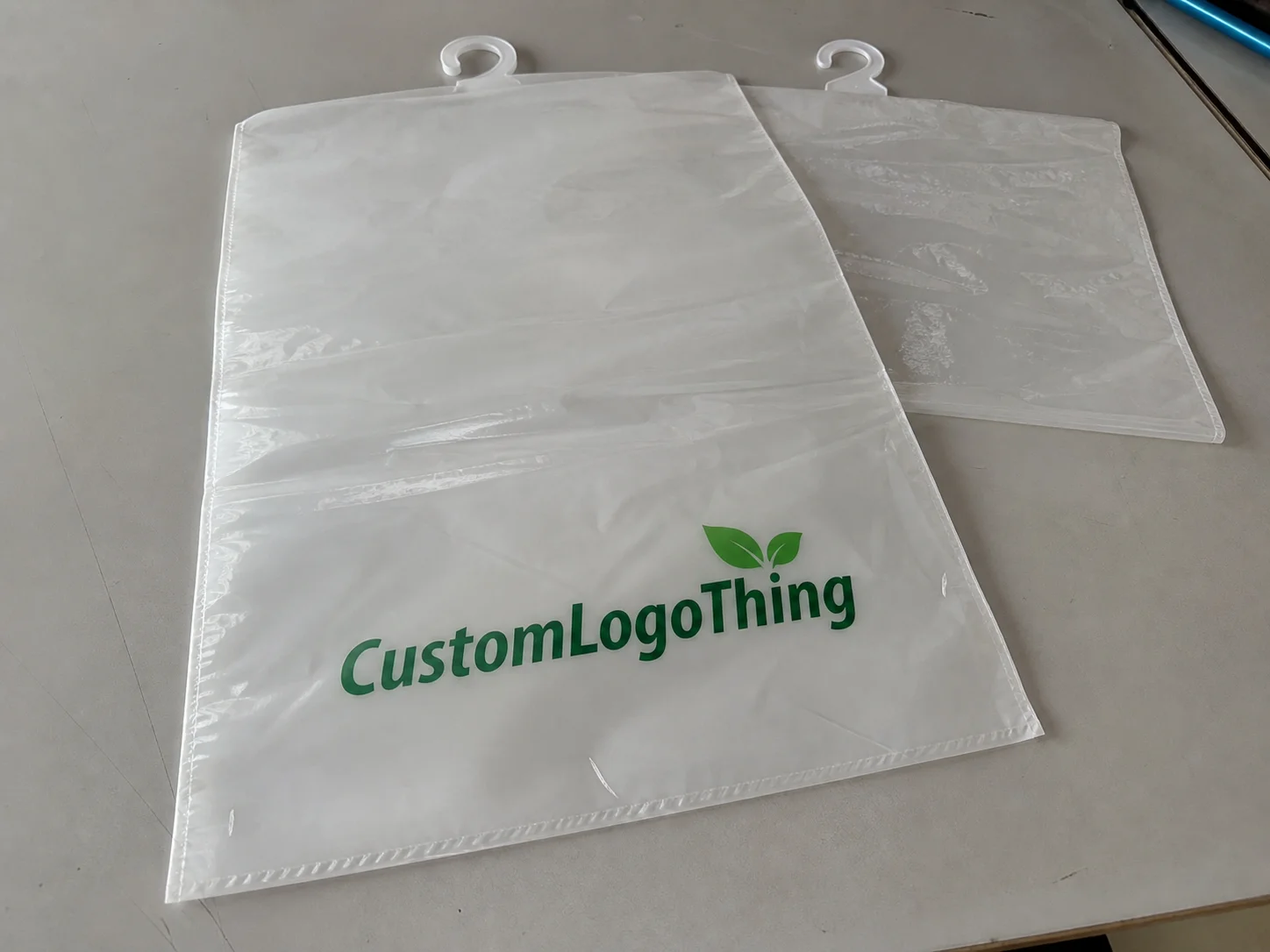
Standard garment bags fail in predictable ways: seams split under heavy coats, thin film turns brittle in cold storage, and hanger openings stretch during handling. For bulk buyers, Lead Time and MOQ matter alongside bag strength, because a durable bag that arrives late or in the wrong quantity still creates a procurement problem.
Heavy-Duty Garment Bags are used where the bag affects storage, freight protection, and presentation: apparel brands shipping suits and outerwear, uniform programs, dry cleaners, costume departments, and fulfillment operations. In those settings, the bag is part of the process, not just a dust cover.
The value of heavier construction shows up in fewer punctures from zippers and hanger points, fewer side-seal failures under carton compression, and less repacking. Buyers often focus only on thickness, but performance also depends on resin blend, seal design, gusset depth, hanger opening construction, and closure style. A well-made 2.5 mil bag can outperform a poorly converted 3.0 mil bag.
Practical takeaway: If garments are heavy, stored long term, shipped long distance, or handled repeatedly, better bag construction often costs less than damaged inventory and rework.
The buying goal is simple: enough protection without unnecessary freight, setup cost, or excess inventory. That is why MOQ, production schedule, and final delivery date should be reviewed before artwork approval.
Material choices, thickness, and construction details
Most heavy-Duty Garment Bags are polyethylene, but the film structure changes performance. LDPE is softer and clearer, which helps retail presentation and easy garment identification. LLDPE blends usually provide better puncture resistance and toughness for shipping and repeated handling. Reinforced polyethylene structures can improve tear resistance and seal strength for larger or heavier garments.
Thickness is usually measured in mils. Light dust covers may be 1.0 to 1.5 mil, while heavy-Duty Garment Bags often run 2.0 to 4.0 mil. For suits, uniforms, and standard outerwear, 2.0 to 2.5 mil is common. For leather, bulky coats, or reusable formats, 3.0 mil and above is often safer. Thicker film improves durability, but it also increases resin use and cost per piece.
Construction details matter as much as gauge. Gussets add room for bulky garments. Vent holes help trapped air escape during packing, but they should be sized carefully so protection is not weakened. Hanger openings need reinforcement or a sound die-cut design to avoid stretching under load. Closure choice also changes performance and cost: open top is simplest, while zippers and adhesive flaps add convenience but increase converting steps.
Printing affects both appearance and production. Clear film with one-color branding is usually straightforward. Frosted, tinted, or opaque film adds material handling and setup complexity. Flexographic printing is common for higher volumes because it can handle logos, text, and handling marks at a reasonable cost.
The right specification depends on garment weight, storage duration, shipping method, and whether the bag’s main job is protection, presentation, or both. Sustainability requirements should be discussed early as well. If the broader packaging program includes cartons or paper inserts, chain-of-custody standards from groups such as FSC may still matter at the program level.
Specs buyers should lock in before requesting a quote
Slow quoting usually starts with an incomplete brief. The fastest pricing comes when the bag is fully defined before requesting numbers. Start with:
- Dimensions: width x length, plus gusset depth if needed
- Film thickness: in mils or microns
- Material type: LDPE, LLDPE blend, reinforced PE, antistatic option
- Closure style: open top, zipper, adhesive flap, hook-and-loop, custom opening
- Print coverage: unprinted, one-color, multi-color, frosted, tinted, opaque
- Packing format: flat packed, on wickets, retail folded, case count per carton
Size needs more attention than many buyers give it. A bag that is too short bunches hems and wrinkles garments. Too narrow, and shoulders strain side seals. Too large, and film waste, freight cube, and presentation issues increase. Measure the longest style and widest shoulder profile, then allow enough room for loading without oversizing.
Performance requirements should also be stated early. Ask about tensile strength, dart impact resistance, seal integrity, and gauge tolerance. If clarity matters, define it with a sample rather than vague wording. If the bags will run through semi-automated packing, dimensional repeatability and closure consistency become more important.
Extra features can change both quote accuracy and schedule: vent holes, antistatic treatment, odor expectations, retail folding, custom hanger slots, or recycled-content film. Recycled-content structures may support sustainability goals, but they do not all offer the same clarity or tear performance, so they should be tested against the actual use case. The EPA offers basic guidance on recycling and materials.
Incomplete specs extend timelines more than manufacturing does. Lock the bag spec first, then request pricing. For ordering questions, a supplier’s FAQ page can help when comparing stock sizes against a custom format.
Cost, pricing, and heavy duty garment bags lead time and moq drivers
Price usually moves with a small set of variables: film gauge, bag dimensions, resin formulation, print coverage, closure type, and order quantity. Larger bags consume more film. Moving from 2.0 mil to 3.0 mil increases material usage significantly. Adding a zipper, gusset, or reinforced hanger area raises converting complexity.
MOQ exists because custom bags involve setup, print plates, possible tooling, and enough run length to justify machine time. Smaller orders are possible, but the unit cost is usually higher because fixed costs are spread over fewer pieces. Those costs may appear as setup charges, tooling fees, or a higher quoted piece price.
Here is a practical comparison of common spec levels and how they often affect price and minimum order quantities:
| Specification Level | Typical MOQ Range | Approx. Unit Cost Range | Main Cost Drivers |
|---|---|---|---|
| Clear LDPE, 2.0 mil, no print, open top | 3,000-5,000 pcs | $0.18-$0.28 each | Film usage, dimensions, carton pack |
| LLDPE blend, 2.5 mil, 1-color print, vent holes | 5,000-10,000 pcs | $0.24-$0.38 each | Print plates, gauge, punching steps |
| Frosted heavy-duty PE, 3.0 mil, zipper closure | 8,000-15,000 pcs | $0.38-$0.62 each | Zipper insertion, resin load, opacity additive |
| Oversized 3.5-4.0 mil, multi-color print, gusseted | 10,000-20,000 pcs | $0.55-$0.95 each | Large format converting, ink coverage, freight cube |
These ranges are realistic for many custom runs, but they are not universal. Oversized bags for gowns, uniforms, or leather apparel may run higher. Freight also needs review. Large bags can ship a lot of air if pack configuration is inefficient, so carton count and pallet cube should be part of the quote comparison.
Ask directly whether the quote includes print plates, die charges, zipper insertion, vent punching, labels, samples, and freight assumptions. The only fair comparison is total landed cost, not the lowest base piece price.
For recurring programs, compare two or three quantity breaks. A 5,000 / 10,000 / 20,000-piece structure often shows where the price curve starts to flatten. Sometimes a larger order justifies inventory; sometimes it does not, especially for oversized or heavily printed bags.
What affects heavy duty garment bags lead time and moq?
Three factors usually drive timelines and minimums together: customization level, material availability, and quantity. A standard clear bag with no print will usually move faster than a frosted, gusseted, zipper-closed bag with multi-color branding because it needs fewer setup and approval steps.
Material availability matters because not every resin blend, color tint, or gauge is stocked. Standard dimensions and common film structures usually offer the shortest path. Custom colors, unusual openings, or dedicated extrusion runs often need more time and a higher MOQ to justify the changeover.
Quantity can cut both ways. Higher volumes may reduce the per-piece price, but they also require more raw material, converting time, and floor space. Factory scheduling can still delay a simple job if the next production slot is full.
Artwork is another overlooked driver. One-color logos usually approve faster than fine-line art, gradients, or layouts that wrap across panels. If print sits near a seal or hanger opening, extra review may be needed before release.
Packing format matters too. Flat-packed bags in standard cartons are simpler than retail-folded sets, wicketed stacks, or bags packed with inserts. Each added step raises labor and can push the minimum economic quantity upward.
In short, MOQ and turnaround are shaped by film type, thickness, print setup, tooling, and packing choices. A complete brief produces a cleaner quote and fewer delays.
Lead time, production steps, and what actually affects turnaround
Lead time is not one number; it is a sequence. A typical production flow looks like this:
- Specification confirmation
- Artwork review and proof approval
- Material allocation or resin sourcing
- Film extrusion or preparation of film stock
- Printing, if required
- Converting, sealing, punching, gusseting, zipper insertion, or folding
- Inspection and quality release
- Packing, palletizing, and shipment dispatch
For many custom orders, a practical production window is about 12 to 20 business days from final approval, plus transit. Simpler unprinted work on standard materials can be faster. Custom tint, thicker gauges, or multi-step finishing can take longer.
The most common delays are preventable: missing dimensions, unresolved artwork, questions about vent placement, late opacity changes, or confusion about zipper position. Each unresolved point can stop production release.
Heavier gauges may also require line adjustments to maintain gauge consistency. Custom colors can require blend preparation or approval. Reinforced openings, specialty punching, and zipper insertion add handling steps. Tight print registration on frosted or tinted film can extend setup time as well.
A useful distinction is made to stock versus made to order. Standard film and dimensions can often be replenished more quickly, while true custom work depends on raw material planning, proof approval, and available machine time. If demand is recurring, a reorder program with approved specs and art can shorten future orders.
Quality checks should stay inside the schedule. For garment bags, key checkpoints include seal strength, dimensions, gauge tolerance, print registration, closure function, and carton counts. For shipments exposed to parcel handling or multi-stop distribution, some buyers also align testing expectations with ISTA guidance.
If speed matters, complete specs matter more than urgency emails. Approve one artwork version, provide the full ship-to address early, decide whether samples are required, and lock construction before release. If process questions remain, a solid FAQ can clarify approvals, reorders, and shipping windows.
What makes a supplier reliable for repeat orders
Reliable supply starts with process control, not just fast email replies. A dependable supplier should maintain a consistent film formulation, reasonable gauge tolerance, and repeatable seals from run to run. That matters because garment bag programs usually become replenishment items, not one-time buys.
Ask for proof rather than promises: sample sets, spec sheets, production tolerances, artwork guidelines, and a clear reorder process. If the same bag is reordered months later, buyers should know whether print plates are retained, whether color standards are archived, and whether setup charges apply again.
Communication also matters. Good suppliers flag risks early, explain what can be expedited, and clarify acceptable substitutions if demand changes. For garment bags, the most useful quality checks are straightforward:
- Seam inspection for weak or inconsistent seals
- Dimensional checks on width, length, and gusset depth
- Gauge verification across the web
- Print registration and ink adhesion review
- Zipper or closure function testing
- Hanger opening durability under load
The best support usually comes from clear quoting, honest discussion of MOQ and lead time, and practical guidance on where to spend and where not to overbuild.
Next steps to get an accurate quote and timeline
To get an accurate quote the first time, gather the essentials before reaching out: finished dimensions, target quantity, material, film thickness, closure style, artwork file, and required delivery window. If the bag replaces an existing item, photos and a sample can shorten review time.
Ask for two or three quantity breaks. That makes MOQ decisions easier and shows how volume affects unit cost. Also confirm whether tooling fees or setup charges are one-time or recurring.
For first-time custom orders, decide whether you need plain film samples, printed mockups, or a pre-production sample before release. Samples add time, but they can prevent errors in fit, opacity, closure placement, or branding.
Keep priorities clear. If the bags are mainly for storage and shipping, do not pay for presentation features that do not add value. If retail appearance matters, say so early. Buyers who want fewer surprises should also review the supplier’s FAQ and reorder process before placing the first PO.
Strong packaging programs are built on clear specs, realistic timelines, and total landed cost review. Confirm Lead Time and MOQ together, and choose a construction that matches actual handling conditions.
FAQ
What is the usual heavy duty garment bags lead time and MOQ for custom orders?
Lead time depends on bag specs, print complexity, and whether the material is already in stock. A common production range is about 12 to 20 business days after final approval, plus transit time. MOQ is usually driven by setup costs, film thickness, print requirements, and converting steps such as zipper insertion or custom punching.
How does material thickness affect garment bag pricing and lead time?
Thicker film generally increases price because it uses more resin and may run slower during conversion. Heavier gauges do improve tear resistance, puncture performance, and durability during shipping and warehouse handling. Some specialty thicknesses or reinforced structures can also add sourcing or production time if they are not standard stock items.
Can I order custom printed heavy duty garment bags in a smaller MOQ?
Yes, smaller MOQs are sometimes possible, but the unit cost is usually higher because fixed setup work is spread over fewer pieces. Bag size, print color count, closure style, and special finishes can all raise the minimum order threshold. If you need a lower MOQ, standard materials and simple print layouts usually offer the best path.
What information do I need for an accurate quote on garment bags?
Provide dimensions, thickness, material type, closure style, print artwork, and quantity. It also helps to state whether the bags are intended for retail presentation, storage, shipping, or repeat reuse. Include the delivery address and target in-hand date so freight and schedule can be checked properly.
How can I reduce turnaround time without compromising quality?
Finalize the artwork and bag specs before requesting production, choose standard materials where possible, and keep the print layout simple if speed matters. Approve samples quickly and maintain tight communication during prepress and scheduling. The best shortcut is a complete spec sheet, not last-minute pressure after the PO is placed.