Buyer Fit Snapshot
| Best fit | Order Printed Plastic Envelopes in Bulk for Shipping projects where brand print, material claims, artwork control, MOQ, and repeat-order consistency need to be specified before quoting. |
|---|---|
| Quote inputs | Share finished size, material target, print colors, finish, packing count, annual reorder estimate, ship-to region, and any compliance wording. |
| Proofing check | Approve dieline scale, logo placement, barcode or warning zones, color tolerance, closure strength, and carton packing before bulk production. |
| Main risk | Vague material claims, crowded artwork, missing packing details, or unclear freight terms can make a low unit price expensive after revisions. |
Fast answer: Order Printed Plastic Envelopes in Bulk for Shipping should be specified like a repeatable production item. The safest quote records material, print method, finish, artwork proof, packing count, and reorder notes in one written spec.
Production checks before approval
Compare the actual filled-product size with the drawing, then confirm tolerance on folds, seals, hang holes, label areas, and retail display edges. Reserve space for logos, QR codes, warning copy, and material claims before decorative graphics fill the panel.
Quote comparison points
Review material grade, print process, finish, sampling route, tooling charges, carton quantity, and freight assumptions side by side. A quote is only useful when the supplier can repeat the same color, closure quality, and packing count on the next order.
If you need a packaging option that protects flat products, keeps shipping weight under control, and keeps your branding in front of the recipient, order Printed Plastic Envelopes in Bulk. That move is practical, not theatrical. A good mailer closes quickly, stacks neatly, and gives your outbound process a repetitive rhythm that a cardboard box often cannot match. A carton still protects almost anything, yet it usually demands corrugated board, filler, extra handling, and storage that compounds every day. If you order printed plastic envelopes in bulk, you can combine lower cost per shipment, faster packout, and a sharper packaging image in one decision. Many teams also call them poly mailers or custom shipping mailers, which tells you how closely the category is tied to ecommerce speed rather than display.
The bigger advantage is operational consistency. Small one-off runs frequently introduce surprises: color drift, odd sizes, last-minute artwork tweaks, and setup charges that quietly reshape a budget you thought was already final. I have seen procurement teams lose half a day just chasing a tiny change in seal width because nobody locked the spec early enough. In most channels, order Printed Plastic Envelopes in bulk gives you stable pricing, repeatable specs, and a replenishment cycle that does not wobble under pressure. That matters for apparel, documents, soft goods, and subscription products that move well in flat packaging. The real question is margin, throughput, and whether your packing team is spending energy on decisions or on execution. In other words, are you buying packaging, or buying back labor hours?
For teams that treat shipping mailers as part of the customer journey, a simple diagnostic usually works best: identify the dominant SKU size, required durability, and print complexity, then map those to the right quantity tier before asking for quotes. Every buyer who ships regularly eventually runs into the same equation, then realizes the winning strategy is matching spec to ship behavior, not just chasing the loudest sample photo. That is where a little discipline pays off, kinda boring on paper and very useful in the warehouse.
Why order printed plastic envelopes in bulk pays off fast
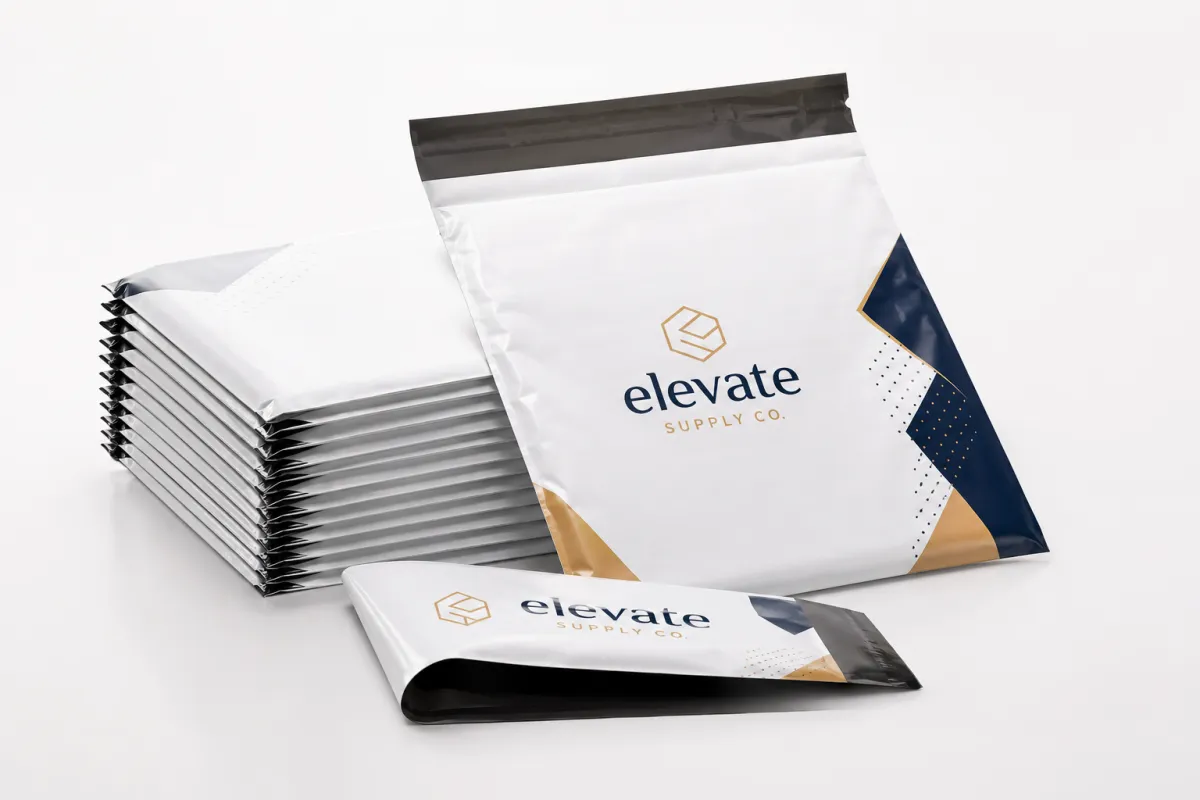
Think of a team that ships folded jerseys in a flimsy box with oversized void fill. No one notices the waste first shift, the operations manager does. Empty cubic inches turn into extra freight weight, and every gram is paid by someone. Order printed plastic envelopes in bulk, and the same flow usually improves in three practical ways at once: less packaging per parcel, fewer pack-station decisions, and less idle inventory waiting for the next reorder cycle. The result is quiet margin lift, not loud transformation.
Printed plastic mailers perform best for flat, non-fragile cargo. Apparel, inserts, document packets, and light kits all benefit from controlled geometry instead of improvised cushioning. A correctly sized envelope usually means no rushed tape swirls, no void-fill hunts, and fewer freight-size surprises. If a picker can fold, insert, seal, and stage a parcel quickly, the team can run higher volume without adding headcount. A steady order for order printed plastic envelopes in bulk creates predictable habits because the same spec stays in play instead of constant re-rules every week.
Brand exposure follows function. A shipping mailer is a moving touchpoint, and every parcel has one guaranteed moment of contact with your logo. Print consistency decides whether that contact feels deliberate or accidental. Strong registration, clean color, and a stable seal line are the difference between a polished brand moment and a rough one. Buyers often underestimate the long tail: a slightly off logo on 500 pieces is a cosmetic issue, while the same drift on 20,000 is a prolonged image problem that repeats itself through every outbound lane. Branded shipping envelopes make that effect even more visible because the package itself becomes part of the customer memory.
Volume also changes the economics in a way managers can defend with one chart. Repeated small orders recycle setup fees again and again, while larger blocks spread those fixed charges across more units. If your core ship dimensions are stable, order printed plastic envelopes in bulk at threshold quantities and let the arithmetic do the talking. Small orders can still be useful for testing, but repeating them after the SKU mix has settled keeps hidden fees in the system. That is not a glamorous insight, but it is the one that tends to show up on the P&L.
A printed mailer earns its place only if the packing line can trust it. Weak sealing and mismatch sizing erase branding value fast.
A hidden advantage appears in operations continuity. Reordering the same specification locks in artwork, thickness, and closure type across campaigns, which helps forecasting and avoids the chaos of near-identical versions that do not match. Internal teams stop re-labeling bins or arguing over which version ships this week. If you want a packaging program that behaves like a machine instead of a mood, order printed plastic envelopes in bulk and set the standard once.
For broader terminology and packaging structure references, packaging.org is a useful industry resource, especially if your team is still debating whether a mailer, sleeve, or pouch best matches your product profile.
Product details: what you're actually buying
Before you order printed plastic envelopes in bulk, it helps to identify the material stack instead of just the visual sample. The two common families are LDPE and co-extruded film, the same structures many buyers shorthand as poly mailers. LDPE remains the workhorse because it is lightweight, flexible, and straightforward to form into clean mailers. Co-extruded film earns attention when toughness, print surface, and opacity all need to move up together. Think of it as one layer optimized for appearance while another carries mechanical strength.
Construction details are part of performance, not a side note. Buyers usually choose among self-seal adhesive strips, tamper-evident closures, opaque films, and reinforced seams depending on how much risk they tolerate in transit. Order printed plastic envelopes in bulk for ecommerce and self-seal must be firm enough to stay closed after vibration and still easy enough to close quickly at the line. If contents include confidential paperwork, tamper-evident architecture often matters more than visual complexity. In a healthcare-adjacent shipment I reviewed last year, that single choice cut obvious opening claims to nearly zero.
Print process choice changes both quality and cost. Flexographic printing remains the go-to route for most volume runs because it handles up to about four colors with stable repeatability and competitive setup economics. Gravure can pull finer detail on very large programs, yet the higher initial investment makes it practical only when the order size and art complexity justify it. For first programs with simple logos and direct brand marks, one- or two-color flexo is often the cleanest path to control cost and execution risk.
Product class matters just as much as print process. Shipping mailers are engineered for speed and handling; retail envelopes prioritize front-facing presence; specialty sleeves are often tuned for fixed inserts and can become overengineering in routine shipping workflows. If you want to order printed plastic envelopes in bulk without paying for unnecessary complexity, match the structure to the actual handling environment. A pretty sample helps nothing if it does not fit the route home through your warehouse.
| Mailer type | Best for | Typical thickness | Relative cost | Practical note |
|---|---|---|---|---|
| LDPE shipping mailer | Apparel, soft goods, flat inserts | 60-80 micron / 2.4-3.2 mil | Low | Good starting point if you want to order printed plastic envelopes in bulk for standard ecommerce use. |
| Co-extruded mailer | Improved strength and print consistency | 70-100 micron / 2.8-4 mil | Medium | Often worth it when the mailer needs better opacity or a cleaner branded surface. |
| Opaque privacy mailer | Documents, confidential inserts, premium presentation | 80-100 micron / 3.2-4 mil | Medium to high | Useful if the contents should not show through under bright light. |
| Tamper-evident mailer | Secure shipments, returns, controlled handling | 90-120 micron / 3.5-5 mil | Higher | Choose this when seal integrity matters more than saving a few cents. |
A recurring confusion in procurement is treating “plastic envelope” and “mailer” as interchangeable and then discovering the bill of materials tells a different story. Those terms overlap, yet film architecture changes behavior. If you order printed plastic envelopes in bulk without confirming whether the structure is LDPE, co-extruded, or another film build, you can compare the wrong spec and pay for assumptions. Similar names can hide meaningful differences in performance.
If you need external standards context for closure, transport, and handling claims, ISTA remains one of the stronger points of reference for transport hazard and packaging test methods. That perspective matters the moment a supplier claims “this should be enough” but cannot attach a clear test framework.
Key specifications that affect performance and branding
Most avoidable losses begin with poor spec discipline. If you are preparing to order printed plastic envelopes in bulk with reliable results, define thickness first. Thin laminates around 60-70 micron often handle folded apparel or paper inserts well when abuse levels are low. Heavier material in the 80-120 micron range tolerates edge pressure and rougher handling better. Higher thickness usually improves durability and cost resistance, though it also raises spend and can alter fold behavior.
Dimensions make or break throughput. A mailer that is too tight causes jams, forcing reps to reseal or rework parcels. A mailer that is too loose increases package volume, consumes extra shipping cubic, and reads like low-quality fulfillment. The useful dimension set is the interior area: width, length, seal allowance, and usable depth. For folded shirts and soft garments, common inner dimensions include 9 x 12 inches, 10 x 13 inches, 12 x 15.5 inches, and 14 x 19 inches. If you order printed plastic envelopes in bulk, ask every vendor for internal geometry, not only outside measurements. The outside number can make a package sound right while the usable opening tells a different story.
Print and finish influence both feel and durability. Single-color is often the sharpest, most reliable option for heavy-usage programs. Two-color can still look premium if the contrast is deliberate. Full-surface branding usually raises cost because larger ink laydown increases print stress. Matte finish gives a subdued, controlled look and usually hides fingerprints better. Gloss raises visual impact but can show handling wear faster. If you order printed plastic envelopes in bulk, let finish follow the brand promise and the logistics reality, not the sales deck.
Opacity matters in ways people underestimate. If privacy or premium perception matters, ask for a film with meaningful pigment load and backing consistency. Transparent materials can work for curated retail-looking packs, while exposed contents can weaken trust for personal documents, medical inserts, or branded collections with a cleanliness standard. Teams that order printed plastic envelopes in bulk for documentation batches often regret ignoring this point until after initial proofing.
Transit behavior should be tested before volume commitment. A durable sample must prove seam strength, tear behavior, and resistance to humidity swings and abrasion. A pretty sample can pass a visual check and still fail in a carrier van. Ask suppliers to confirm seam construction method, thickness tolerance bands, and the handling profile they designed around. Before you order printed plastic envelopes in bulk, a clear sample sheet can prevent costly reprints. I have seen that one step save a launch from a very expensive do-over.
- Request tolerance ranges for thickness, width, and usable depth rather than trusting nominal numbers alone.
- Confirm print limits for fine lines, small type, and any gradient-based design element before approval.
- Verify seal behavior so the closure remains secure under vibration and repeated handling.
- Validate opacity expectations when privacy, content visibility, or perceived quality depends on blocked light.
Pricing when you order printed plastic envelopes in bulk
Purchase decisions settle on math, not adjectives. If you want to order printed plastic envelopes in bulk with fewer surprises, separate the pricing drivers and monitor each one: film grade, thickness, dimensions, ink coverage, color count, and quantity. Setup and proofing charges are part of the full cost. Freight and shipping terms can shift an attractive FOB quote into a different total. Two quotes that look close can diverge when hidden fees sit in footnotes.
For simple one-color branded mailers, teams often see these rough landed ranges before expedited shipping and duty effects:
- 1,000 pieces: roughly $0.30-$0.65 each for a basic printed mailer, depending on size and coverage.
- 5,000 pieces: roughly $0.18-$0.34 each when the spec is stable and print coverage remains moderate.
- 10,000 pieces: roughly $0.11-$0.25 each for standardized runs with straightforward artwork.
These ranges are directional, not universal. A low-profile transparent design will price differently from a heavy opaque tamper-evident build, and both will shift with ink complexity. Still, the slope is usually unmistakable: as order volume rises, unit pricing tends to improve significantly. A 1,000-piece launch is a useful validation level. At 5,000 and 10,000 pieces, the economic leverage appears in both cost and operational predictability.
MOQ thresholds require attention during early planning. Suppliers can quote tiny runs, but the math often hurts because setup and prepress overhead sit too close to each unit. Most teams discover order printed plastic envelopes in bulk becomes truly compelling at 1,000 and stronger by 5,000 or 10,000 once they commit to one spec and one replenishment rhythm. Tie these numbers to monthly shipping velocity and ask for quoted price breaks instead of accepting a single quantity anchor.
Landing cost discipline avoids unpleasant surprises. Setup fees, proof rounds, artwork revision cycles, split shipments, duties, and rush handling can all distort the final number. A low base price that excludes freight and inspection risk has less value than a complete landed quote. If you order printed plastic envelopes in bulk, request a full landed-cost breakdown before approval, then compare totals side by side rather than comparing only unit rates. That is the part that tends to protect budget after the first purchase order gets signed.
| Quantity tier | Typical pricing effect | What usually improves | Buyer tradeoff |
|---|---|---|---|
| 1,000 pieces | Highest unit cost | Fast test of size, print, and closure behavior | Useful for validation, weak for long-term margin goals. |
| 5,000 pieces | Strong drop in unit price | More stable color consistency and cleaner replenishment | More floor space tied up, usually a strong value point for order printed plastic envelopes in bulk. |
| 10,000 pieces | Lowest unit cost for repeat designs | Best economics for long-running shipping formats | Largest upfront outlay, which requires reliable sales velocity. |
Cost control does not require sacrifice. Keep artwork minimal, hold color counts to what the brand needs, and avoid blanket full-coverage printing unless the use case requires it. Match package dimensions to actual contents and skip oversized safety margins that inflate freight. A disciplined spec keeps quality intact while sustaining the savings that make order printed plastic envelopes in bulk a serious commercial option.
If your organization runs repeat demand, the Wholesale Programs page is still worth checking because recurring volume often unlocks cleaner planning and cleaner pricing structures.
Process and timeline from artwork to delivery
A repeatable order flow keeps teams off emergency calls. The core sequence is simple: request quotes, lock the specification, review artwork, approve proof, authorize production, inspect run quality, then ship. This flow works when each step is complete before the next starts. Delays usually come from unclear artwork, unresolved approvals, or uncertain handling details that get pushed downstream.
Artwork is where timelines either hold or unravel. A supplier can print only what is provided with sufficient resolution, bleed, and separation quality. Low-resolution files and micro-detail-heavy logos almost always trigger revisions. If you order printed plastic envelopes in bulk for a major campaign, route final files in vector format and include color references up front. Guessing brand color from a screenshot wastes both time and trust. I have seen projects slip a week because a designer sent a compressed mockup instead of the final art. Annoying, yes; avoidable, absolutely.
Typical timelines depend on route-to-market, build complexity, and revision depth. A straightforward domestic run often lands in about 12-15 business days from proof approval when everything is clear. International runs can take 15-30 business days before goods enter transit, plus transport time. Air options move faster but cost more; ocean lowers rate and extends duration. If you order printed plastic envelopes in bulk for launches, split the timeline into production lead and delivery lead so the go-live date is based on actual dock arrival, not just production sign-off.
The most common delay pattern is always the same: incomplete art, spec changes after proof, and rushed shipping instructions. Preventing that means sending a complete order package from the start: final size, quantity, color count, closure style, destination, and intended in-hand date. If these inputs are clear, suppliers have far fewer reasons to stall.
Inspection should be discussed before release. Look for checks on print registration, seam strength, count confirmation, and carton condition. Those controls reveal whether the process can hold stable quality across the full lot. If your team plans to order printed plastic envelopes in bulk repeatedly, process consistency matters more than one-time visual impressiveness.
- Gather final size, quantity, color count, closure style, and deadline in one approved brief.
- Request landed-cost pricing so freight and handling do not become afterthought items.
- Approve proofs against the exact artwork and tolerance limits before production.
- Confirm production and shipping timelines as separate checkpoints.
- Inspect cartons on arrival for seal quality and count variance before releasing stock to the warehouse.
If you need quick clarification on proofing and lead-time expectations, the FAQ page can be useful for baseline policy and ordering mechanics before you finalize the purchase.
Why choose us for bulk printed plastic envelopes
Packaging suppliers often win on visuals first and then win or lose on consistency. The practical test appears later, after your first full pallet has been unpacked. If you want to order printed plastic envelopes in bulk with fewer surprises, supplier capability should be judged on repeatability: film thickness control, dimension discipline, and proof alignment across production lots.
At Custom Logo Things, the useful value is less showmanship and more execution discipline. Preflight reviews, clear size advice, and direct feedback on print limitations help teams avoid late-stage surprises. A supplier that flags a thin logo line before press time saves days and protects budget. If you order printed plastic envelopes in bulk, early warnings are often worth more than last-minute miracles.
Quality checks should be objective. Seam inspections, print acceptance criteria, count audits, and carton packing standards are measurable signals of seriousness. A factory that can explain adhesion control, thickness variance management, and carton layout for transit safety is usually a supplier that understands repeat-business economics. If you order printed plastic envelopes in bulk, that operational discipline is the real insurance against expensive correction cycles.
Good partners also prevent inflated stock decisions. Some providers push high-quantity quotes because bigger often feels safer in the short term. A large box of unused mailers can tie up cash and obscure weak demand swings. A thoughtful supplier helps you pick a spec that fits the actual workflow. For predictable, flat, and lightweight products, a right-sized mailer beats a premium overbuilt one in most cost-performance evaluations.
What that means for your business:
- Fewer packing stoppages because the format is matched to the product.
- Fewer production reissues from artwork problems discovered after approval.
- Better margin once unit price follows real volume behavior.
- Consistent outbound appearance through stable registration and finish control.
That is the practical upside of working with a volume-minded packaging partner. Less noise. More repeatable outcomes.
How do you order printed plastic envelopes in bulk without mistakes?
The common failure mode in custom mailer programs starts with partial information and ends with correction loops. You do not need perfection on day one, but you do need completeness. A useful first brief should include final size, expected quantity, color count, closure method, opacity requirements, and delivery deadline. Those fields keep the project from stalling on basics and stop scope drift before production starts.
Ask for a physical sample or full material spec before committing. Samples are often skipped because they feel slow, yet they shorten risk. Thickness, stiffness, opacity, and sealing behavior reveal themselves better in hand than in previews. If you order printed plastic envelopes in bulk for seasonal SKUs, a sample lets you verify actual fit, weight behavior, and corner resilience before placing a large order.
Proof approval needs a focused pass. Check logo placement, type scale, seal clearance, and finish notes before sign-off. If the approved proof is not aligned with the final artwork file and documented tolerances, the production team will naturally execute the documented version, not your assumptions. A calm checkout process starts when proof review is disciplined.
Two habits regularly protect budgets. The first is requesting landed pricing at multiple quantity breaks. The second is comparing standard sizes before customizing every dimension. Custom profiles can increase setup time and costs, and they can make replenishment less agile. Custom is valid when a real handling issue demands it. If no issue exists, standard dimensions often deliver better value for order printed plastic envelopes in bulk with predictable reorders.
Use this checklist before final submission:
- Final usable dimensions and seal allowance
- Quantity tier and expected reorder frequency
- Print color count, approved logo files, and finish decision
- Closure style and privacy/opacity requirements
- Delivery address and target receiving deadline
Any missing field can turn into an avoidable revision. Pause and close those gaps before sending payment confirmation. With the spec stabilized, you can order printed plastic envelopes in bulk with confidence and fewer corrections. That is the cleanest way to keep the purchase from turning into a round of back-and-forth nobody planned for.
Frequently Asked Questions
What is the usual MOQ when I order printed plastic envelopes in bulk?
Suppliers usually become more competitive at and beyond the 1,000-piece and 5,000-piece thresholds, though exact MOQ changes with size, print complexity, and material. Trial quantities can work for testing, but the per-piece cost usually remains higher because setup is spread across fewer units. If you plan recurring orders, request pricing at two or three quantity levels and compare complete landed cost before you order printed plastic envelopes in bulk.
How long does it take to print custom plastic envelopes in bulk?
Timeline depends on several stages: artwork approval, production setup, proof confirmation, inspection, and shipping. Simple, standard-size programs run fastest when files and approvals are final. Complex artwork, heavier ink loads, and custom dimensions add time. Ask for separate updates on production completion and shipment arrival so you can align campaign launch dates more accurately when you order printed plastic envelopes in bulk.
What thickness should I choose for printed plastic mailers?
Light to medium gauges work for low-risk folded goods and paper packages. Heavier gauges suit sharper edges, rougher handling, and higher tear-risk journeys. Privacy needs and premium perception push teams toward more opaque builds, especially for documents or messy interiors. Do not confuse heavier film with automatically better; the right value point is tied to shipping path and product geometry once you order printed plastic envelopes in bulk.
Can I print my logo on both sides of the envelopes?
Two-sided printing is possible, but it usually raises cost and can impose stricter process limits depending on film and print method. If exterior impact drives your brand message, a focused one-sided treatment often performs better than spread ink coverage. Ask for a two-side proof so placement, readability, and transparency effects are clear before you order printed plastic envelopes in bulk.
How do I keep costs down without hurting quality?
Pick standard dimensions wherever practical. Keep the color palette lean. Avoid dense ink areas unless they improve readability or conversion impact. Combine demand into larger blocks when volume forecasts support it; batch consistency typically beats fragmented purchasing even with carrying inventory. That path usually keeps costs controlled without shrinking brand quality when you order printed plastic envelopes in bulk.
If you are ready to order printed plastic envelopes in bulk, send final size, quantity, print colors, closure type, and target delivery date in one complete request. That level of clarity usually returns a better quote and reduces interpretation gaps. If your goal is reliable shipping, clean print, and controlled unit economics, the strongest next step is simple: lock the spec, verify the proof, and order printed plastic envelopes in bulk against the actual product and reorder rhythm you expect.

