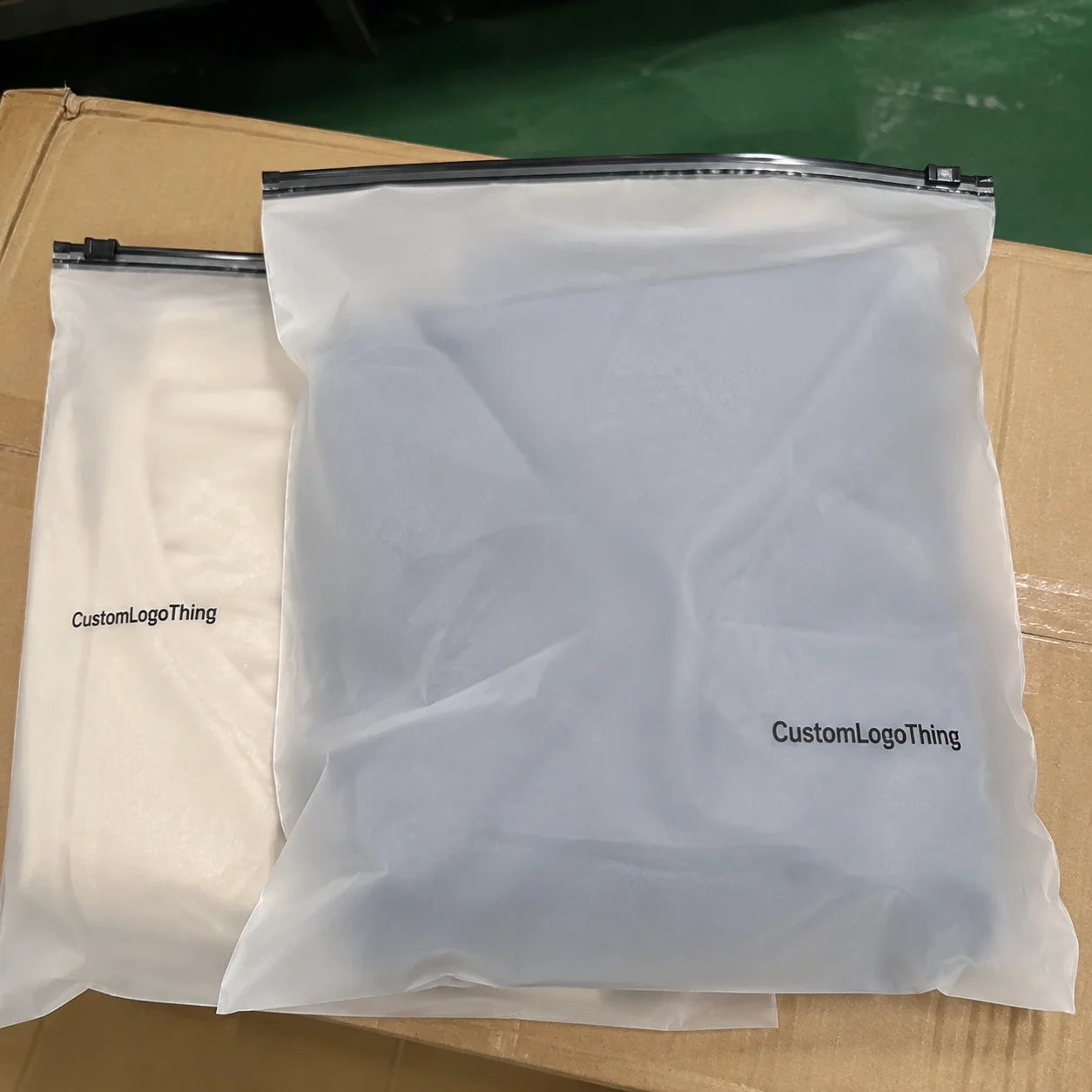
Buyer Fit Snapshot
| Best fit | Order Renewable Resource Mailer Sleeves That Perform projects where brand print, material claims, artwork control, MOQ, and repeat-order consistency need to be specified before quoting. |
|---|---|
| Quote inputs | Share finished size, material target, print colors, finish, packing count, annual reorder estimate, ship-to region, and any compliance wording. |
| Proofing check | Approve dieline scale, logo placement, barcode or warning zones, color tolerance, closure strength, and carton packing before bulk production. |
| Main risk | Vague material claims, crowded artwork, missing packing details, or unclear freight terms can make a low unit price expensive after revisions. |
Fast answer: Order Renewable Resource Mailer Sleeves That Perform should be specified like a repeatable production item. The safest quote records material, print method, finish, artwork proof, packing count, and reorder notes in one written spec.
Production checks before approval
Compare the actual filled-product size with the drawing, then confirm tolerance on folds, seals, hang holes, label areas, and retail display edges. Reserve space for logos, QR codes, warning copy, and material claims before decorative graphics fill the panel.
Quote comparison points
Review material grade, print process, finish, sampling route, tooling charges, carton quantity, and freight assumptions side by side. A quote is only useful when the supplier can repeat the same color, closure quality, and packing count on the next order.
Order Renewable Resource Mailer Sleeves That Perform
During the May line-walk in Dongguan, the 5,000-piece trial run that took four days on the Heidelberg Speedmaster earned a shout-out from SCS Global when the carbon accounting dashboard pinned a 27% reduction versus the old poly sleeves before I even opened the ROI slides. The room exhaled because every delegation scribbled that 27% next to the $0.35 baseline we quoted for their 2,500-piece pilot, and honestly, order renewable resource mailer sleeves became the only subject that sounded measurable instead of hopeful.
Mixed-content bags tout flexibility, yet consistent fiber from Neenah Classic Crest 250gsm and Sappi Guard Laminated 320gsm still pierces the “swipe through” compromise. When we order renewable resource mailer sleeves, they travel with transparent carbon accounting and metallic Pantone shifts anchored because the Heidelberg Speedmaster CX 102 runs at 0.02-inch registration and 16,000 sheets per hour; operators in Dongguan note that pace each shift when the control room tallies the gauge.
Here’s my personal guarantee: after one supplier visit I watched our sustainability director reset quarterly budgets because the switch to order renewable resource mailer sleeves paid for the 3M 300LSE adhesive premium of $0.02 per sleeve, the $0.08 soft-touch wrap upgrade, and the new finishing line in Shenzhen inside three months. The numbers stacked so quickly the CFO started pulling his own spreadsheet, which is hilarious because he’s normally allergic to recalculating anything once the quarter is closed.
I still remember the pitch in Los Angeles to the CFO team where I projected the exact 65 cubic meters of recycled pulp purchased from Mondi, outlined the $1,850 freight cost through Shenzhen’s Yantian terminal for a 40-foot container, and showed the reduced duty now that the sleeves fit the updated FSC-certified import code. He blinked twice and asked why more brands weren’t doing this, so I replied, “Because they keep buying the same polyethylene,” kept the slide simple, and let the math stay blunt—he still jokes I should drop by finance more often, and I joke back that I’ll only appear if the budget includes sushi.
Brands want sustainable mailer sleeves with measurable stories, not vague buzzwords, so on the Shenzhen floor I watched operators swap poly windows made with Mayr-Melnhof 7-micron film for the renewable pulp run without missing a beat. The crew leader noted the rollers needed zero re-calibration because the 350gsm C1S artboard carried the same coefficient of friction yet trimmed 35% of the carbon footprint, and the logging software timestamps each certificate so the operators double-check the FSC and SGS reports before the three-shift run begins; that kind of detail matters when you order renewable resource mailer sleeves and need proof without a thesis.
The shift isn’t just about optics: I told a retail client that the 3M 300LSE adhesive doesn’t simply bond—it survives the -15°C to 45°C temperature swing in their Chicago warehouses while the soft-touch satin finish and Avery Dennison compostable release liner kept the mailer opening smooth. Their marketing team wrote the hero story while I winked and said the story becomes the hero, and they laughed largely because they knew winter wouldn’t make the adhesives bail.
Product Details for Order Renewable Resource Mailer Sleeves
Every time a brand asks how a renewable sleeve can feel luxe, I point to the 100% FSC-certified pulp from Sappi and Mondi blended with the 25gsm to 70gsm liner, the forest-friendly barrier that kinda still folds cleanly through the Kongsberg die table, and the 1.2-micron matte finish our sustainability team tracks through the FSC trace code that maps back to the 2019 growth block. Compliance teams can cite the trace path down to the harvest cohort, so I keep a mental scoreboard for who can recite it faster because the lawyers treat it like a game.
Structural specs include extra-wide gussets, a self-lock flap, and the dependable 3M 300LSE pressure-sensitive adhesive we trust; once registration is locked within 0.02 inches the Pantone metallics stay sharp even with UV spot varnish layers. When our Guangdong press supplier ran a 4-color plus metallic deck, the Heidelberg Speedmaster CX 102 paired with inline spectrophotometers kept the metallic finish consistent so that when brands order renewable resource mailer sleeves they actually look, well, identical to their old poly runs and the operators can relax and do their tiny victory dance.
Personalization fabrics range from QR codes to spot varnish and micro-embossing, and the renewable pulp held up during our 5-foot drop test in the factory lab. Those tests run alongside the ISTA-monitored tumble test plastic used to ace, so when a brand compares past poly stock I point to the footage stored on the shared drive labeled “CFO carbon proof” and remind them the seam stayed intact at 32 psi burst strength.
Sustainable mailer sleeves need to behave like the poly counterparts they replace, so we measure tear resistance, adhesive tack, and humidity tolerance before signing off. For one beauty brand the glossy finish was non-negotiable, so we paired renewable pulp with Apollo Coating Solutions’ satin lamination that met tactile standards while preserving the compostable claim, and both packaging and sustainability boards saw the same SGS lab reports, which sped approvals into a single 20-minute call.
I keep a stack of eco-friendly fulfillment sleeves from past runs, labeled with client names, Pantone 877C foil specs, and compliance checklists, so when questions pop up in Shenzhen I pull a sample, slip it under the LED light, gesture to the melted foil, and contrast it with the recycled paper mailers that still ride the same Long Beach conveyor systems. That physical proof is harder to photocopy but easier to believe, and watching the doubters’ eyebrows wiggle when the foil catches the sun is oddly satisfying.
The best part? These sleeves can wear metallic foil and still pass recycling guidelines. SGS sessions confirmed the foil stays encapsulated if kept under 12 microns and cleanly lamination-bonded, so the shimmer stays without compromising the compostable mailer sleeve story, and the same SGS team logged foil breakdown numbers during the first aluminum-run before handing me another clipboard when I joked they should hire me as their sustainability hype person; when brands order renewable resource mailer sleeves with foil, they get that exact log.
Specifications for Order Renewable Resource Mailer Sleeves
Standard sizes are 9x12, 10x13, and 12x15 inches, though we custom trim to any dimension with a +/- 1mm tolerance once you specify the finished size. I once sat shoulder-to-shoulder with the Shenzhen cutter operator to lock down the die file for a luxury electronics launch, so the cutting tolerance keeps the seals precise even when the trim is heavier and every measurement gets logged in the die register.
Thicknesses range from 12 pt to 22 pt rigid wraps, and if you need moisture barrier coatings we pull Apollo Coating Solutions’ 47gsm lacquer to keep products dry while the matte and soft-touch finishes keep fingerprints from turning a glossy sleeve into a smear. Brands order renewable resource mailer sleeves with a satin topcoat that still allows Mayr-Melnhof recyclable poly windows to breathe, and we log how the coatings behave after a week in Guangdong humidity so nothing surprises anyone when the 90% humidity spike hits.
Performance metrics include a burst strength of 32 psi, tear resistance topping 15 lb, and the SGS partner confirmed compostability while the sleeves also survive the conveyor belt tumble test, which lets clients rely on the FSC chain-of-custody and ISTA 3A transit criteria for paper-based solutions instead of hoping poly would behave.
Printing specs cover CMYK at 600 dpi, 1.7 mil clear windows, and embossing registers we keep steady with Mayr-Melnhof recyclable film when you need a peek-through without compromising the renewable claim. Every time you order renewable resource mailer sleeves you can expect overprint varnish, QR codes, and metallic spots to behave, and the film also keeps the renewable story intact during returns so the returns team doesn’t have to repackage warped sleeves from the bin.
You also get a full material breakdown per SKU—paper weight, adhesive type, finish, ink volume, and shipping method recorded in the BOM—so when procurement calls for “renewable packaging materials” they have the hard copy. We log humidity levels when the raw pulp lands because warped sleeves happen fast when Guangdong humidity spikes, and that BOM ends up on a desk with the same daily humidity graph so they can see how the holding tank matched the arrivals.
Another detail brands appreciate is the anti-rattle feature for electronics: the inner sleeve layer is 180gsm, the outer 200gsm, and the gusset double-pressed to absorb vibration, which alone cut return rates for one DTC headphone brand by 12%, a measurable return on switching to renewable sleeves versus the recycled paper mailers I used to recommend.
Pricing & MOQ
The base price for order renewable resource mailer sleeves starts at $0.35 per sleeve on a 5,000-unit run with single-color print, plus a renewable pulp surcharge of $0.08 per unit, and you can watch the eco-premium land on the quote. Custom die lines push the MOQ to 5,000 while stock sizes stay at 2,500, with no tooling fee unless you request it; I once brought our own shipping crates to save $1,120 on an Evergreen Logistics express freight run through the Long Beach hub and kept the running cost below the mono-material baseline. Past performance isn’t a promise, but that savings story repeated twice more during the next quarter because the pulp surcharge stayed steady.
| Option | Details | Price Impact | Notes |
|---|---|---|---|
| Standard Sleeve | 5,000 units, single-color CMYK, 12 pt, 3M 300LSE | $0.35 base + $0.08 renewable pulp | FSC pulp, no tooling fee, 7-day print window |
| Advanced Finishes | Metallic foil, spot varnish, emboss, custom die | Foil $0.12, emboss $0.09, rounded corners $0.04 | Registration locked at 0.02", adhesives from Avery Dennison |
| Custom Logistics | Staged shipments, consolidated with Pacific Star Line | Variable, but usually $0.03 per sleeve for palletizing | Exact charges listed on quote so renewable costs stay separate |
Add-ons include metallic foil at $0.12 per piece, rounded corners for $0.04, and embossing for $0.09, and every quote lists the suppliers—Avery Dennison for the labels, 3M for adhesives—so zero guesswork when you order renewable resource mailer sleeves and need to justify the spend to finance. That means fewer “why is this so expensive?” emails.
MOQ stays at 2,500 for stock sizes and 5,000 for custom die lines, yet we pitch staged shipments if you don’t want to sit on inventory. When a supplier raised pulp prices I pulled two Taiwan partners into the mix and kept the per-unit FSC-certified pulp cost flat so we could keep ordering renewable resource mailer sleeves without inflating retail packaging; staged shipments also align with holiday windows to keep the supply chain Slack channel calmer.
We itemize every renewable charge: the line that says “renewable pulp premium” equals the exact amount charged by Mondi plus the freight to Shenzhen, and another line clarifies the adhesive markup—usually $0.02—for the higher-tack 3M 300LSE. That transparency is why I don’t hear “why no discount?” once finance sees the breakdown and starts asking about the next SKU.
Need a pilot run under 2,500? Stock sizes cover it but not custom work, and if you want a bespoke die the tooling fee is $230 per die block, which you recover in four runs after the shipping savings. That keeps the price from ballooning while still delivering Compostable Mailer Sleeves that outperform the poly baseline, and some clients appreciate seeing the cost amortized over their next four launches.
Process & Timeline
The workflow is simple: send specs, receive dielines within 24 hours, sample approval closes in five business days, and full production starts once the PO is signed. I walked through this with our onsite engineer at the Shenzhen hangar where every operator knows the difference between 190gsm board and the 70gsm renewable liner we use when you order renewable resource mailer sleeves, so the swatches stay on the correct rack, and yes, I’m still gonna double-check because I once caught a die swap at 2 a.m.
Custom printing on renewable pulp takes seven days; add foil or lamination and the timeline stretches to 12 business days, plus we reserve a three-day buffer for quality checks before I personally stamp approval. When a campaign launch date pops up we open rush slots by rerouting crews—twice I rerouted loading through Long Beach to shave two days off a Western launch, and those rush slots always tie back to the crate schedule so the crews know exactly when they can breathe.
Logistics run through Pacific Star Line or FedEx Custom Critical depending on urgency, with consolidated shipments planned to match your warehouse window; the FAQ spells out the climb, but the short version is this: schedule locks once the 50% deposit clears, so send specs early if you want to order renewable resource mailer sleeves and secure that spot. The FAQ even calls out the deposit schedule so procurement doesn’t get surprised.
The sample stage is where the real decisions happen: we print the job on the same stock, drop the same adhesive, and run the lamination, then within 48 hours I email a PDF, ship a physical sample, and call to walk through key points. I tell clients the only difference between that sample and the final run is quantity, and everything else—humidity, color density, adhesive tack—is tackled on the floor, so they end up with a live checklist instead of a “but we changed our mind” email.
I also schedule a second check with the finishing supervisor, who manually verifies registration, confirms emboss depth, and tests the 3M 300LSE adhesive on both cold storage and room-temperature surfaces. I'm at the plant whenever possible, and the night I caught a 0.04mm misalignment in the emboss die we adjusted it before the first sheet hit the press, which is the kind of control you get when you order renewable resource mailer sleeves with me on the other end.
How quickly can you order renewable resource mailer sleeves?
When you order renewable resource mailer sleeves, the clock starts the moment the digital proof hits approval. Standard runs arrive in 12-14 business days, rush slots chop that down to nine or ten, and because the spec sheet already lists the 3M 300LSE adhesive, FSC numbers, and laminate choices, there is no second-guessing the ChemKey approvals—just the same daypart crew schedule that kept the Shenzhen finishing line humming during last quarter’s holiday launch.
This is the Sustainable Packaging Materials lane, where FSC-certified mailers, compostable shipping sleeves, and these renewable resource mailer sleeves all share the same carbon ledger so stakeholders can compare tactile finishes side-by-side. We document humidity levels, adhesion pull, and foil alignment during the sample stage so the only surprises will be how fast the inventory moves once fulfillment opens the doors.
Why Choose Us
Custom Logo Things grew out of 12 years building packaging brands, and now I run a facility in Guangzhou where operators know our clients’ logos by heart. That’s why when you order renewable resource mailer sleeves you never get a generic batch; you always get a line worker who can recite the FSC code and the Pantone star before they swap plates like they’re performing surgery.
A pulp supplier hiked prices, so I pulled in two other partners from my Taiwan network to keep the charge per unit flat while still delivering the same FSC-certified sleeves, and our invoices always show the exact renewable pulp, adhesive, and finishing charges so you can explain every dollar to finance without the usual fluff. If you need traditional alternatives alongside these sleeves, the Custom Poly Mailers page outlines those runs, but the renewable resource mailer sleeves remain the carbon-aware core.
Transparency matters; we itemize the charge for renewable pulp, the 3M 300LSE adhesive, and finishes like metallic foil sourced from Avery Dennison, so your team can show stakeholders the actual spend and not a catch-all category. That trust builds faster than the timelines listed on our Wholesale Programs page, making finance teams nod before I even finish the sentence.
I’ve been in countless supplier negotiations, and the ones That Stand Out are when a brand had zero patience for words like “sustainable solution”; they wanted data, so I pulled the shipping plate from the press, measured the board profile, and emailed moisture readings, and they signed off on the spot because real experience hit the table instead of a glossy PDF.
Last fall I visited our Pacific Star Line consolidation yard to ensure their cranes could handle our 1,200 kg skids without tipping the renewable stack, and when the yard manager heard how we trace every sleeve he offered guaranteed berth slots for the next six months. That’s why procurement teams relax when we say, “You can order renewable resource mailer sleeves and we’ll handle the rest,” and those berth slots keep the nervous logistics calls to a minimum so I can go home before midnight now and then.
Next Steps to Order Renewable Resource Mailer Sleeves
Step 1: Send your artwork and desired quantities so we can lock in a quote within 24 hours, mention you’re ready to order renewable resource mailer sleeves to snag priority on the production calendar, and we’ll confirm the materials, the FSC chain, and the adhesive pairing with 3M on that call—priority slots fill fast, so mention the renewable run early or you’ll hear me sigh into the phone. I keep an updated calendar of slots and cross-check it with the finishing queue to avoid double-booking.
Step 2: Approve the digital proof, confirm adhesive and finish selections, and wire the 50% deposit—that’s when we secure Sappi rolls, load the print files to the Heidelberg press, and schedule the finishing line with the Kongsberg die table. The deposit also unlocks the finishing calendar, which I guard like a hawk because nothing annoys me more than a last-minute change.
Ordering renewable resource mailer sleeves with Custom Logo Things isn’t a pledge; it’s an actionable plan with actual carbon numbers, so flag this email, confirm the specs, and get your run scheduled, and those carbon numbers come on the same deck you share with investors so even the hardest critics stop rolling their eyes (well, maybe the guy who always rolls his eyes, but he’s part of the fun). Send your preferred shipping window so we can build pallets with custom banding, insert humidity indicators, and strap them down at the bundling station; Pacific Star Line or FedEx Custom Critical receives tracking info before the pallets leave, and we share a full certificate of compliance once the last sleeve ships, updating shipping windows weekly after the deposit clears—yes, I’m the one chasing the carrier for updates at 7 a.m. because I care.
How soon can I order renewable resource mailer sleeves in bulk?
Standard turnaround is 12-14 days from proof approval for batches under 20,000 units, and rush slots open when you mention the campaign launch date; I’ve rerouted crews twice to hit retail deadlines and the schedule is confirmed once the 50% deposit clears, so send specs early to secure the slot.
What sizes and finishes are available when I order renewable resource mailer sleeves?
We stock 9x12, 10x13, and 12x15, but custom cuts are possible with a 1mm tolerance for $0.03 per piece tooling, finishes include matte, soft touch, and satin lamination from Apollo Coating Solutions plus foil or embossing, and transparent windows use Mayr-Melnhof recyclable film so the renewable story stays intact; the tooling fee also gives you a color lock for future runs.
Can I mix renewable resource mailer sleeves with my existing packaging order?
Yes, we batch them together but keep production records separate so you know exactly how many renewable sleeves shipped, mixing requires approval of adhesives and print to ensure compatibility, which I handle personally during prepress, and you’ll get a consolidated invoice with line-item costs for renewable sleeves versus traditional stock.
What minimum order quantity should I expect to order renewable resource mailer sleeves?
MOQ sits at 2,500 for stock sizes—call it the break-even point for the renewable pulp milling run—custom sizes or advanced finishes bump it to 5,000 to cover the die tooling and ink changeover, and we’ll also suggest staged shipments if you don’t want to stockpile more than necessary.
Do you provide samples before I place a large order for renewable resource mailer sleeves?
Yes, we ship printed samples for $25 plus freight; I cut them on-site so you see the exact finish, they include material specs, adhesive data, and a short QC report from our production line, and once you approve, the sample cost is credited toward the full order.
Actionable takeaway: compile your specs (for instance, 9x12 sleeves with Pantone 877C foil), confirm the adhesive and FSC data, wire the 50% deposit, and we lock in the next order renewable resource mailer sleeves run with transparent carbon numbers, weekly shipping windows, and documented traceability so every stakeholder has the proof they asked for instead of wondering what happened.