A sticker that behaves perfectly in Arizona can curl, fade, or peel fast in Hawaii. Salt air, humidity, UV exposure, cooler condensation, sunscreen residue, sand, and shipping distance all punish weak specs. Cute artwork helps, sure. But custom stickers Hawaii buyers can trust need the right material, adhesive, finish, and production plan. Physics, as usual, is rude.
Custom Stickers Hawaii: What Makes Island Orders Different
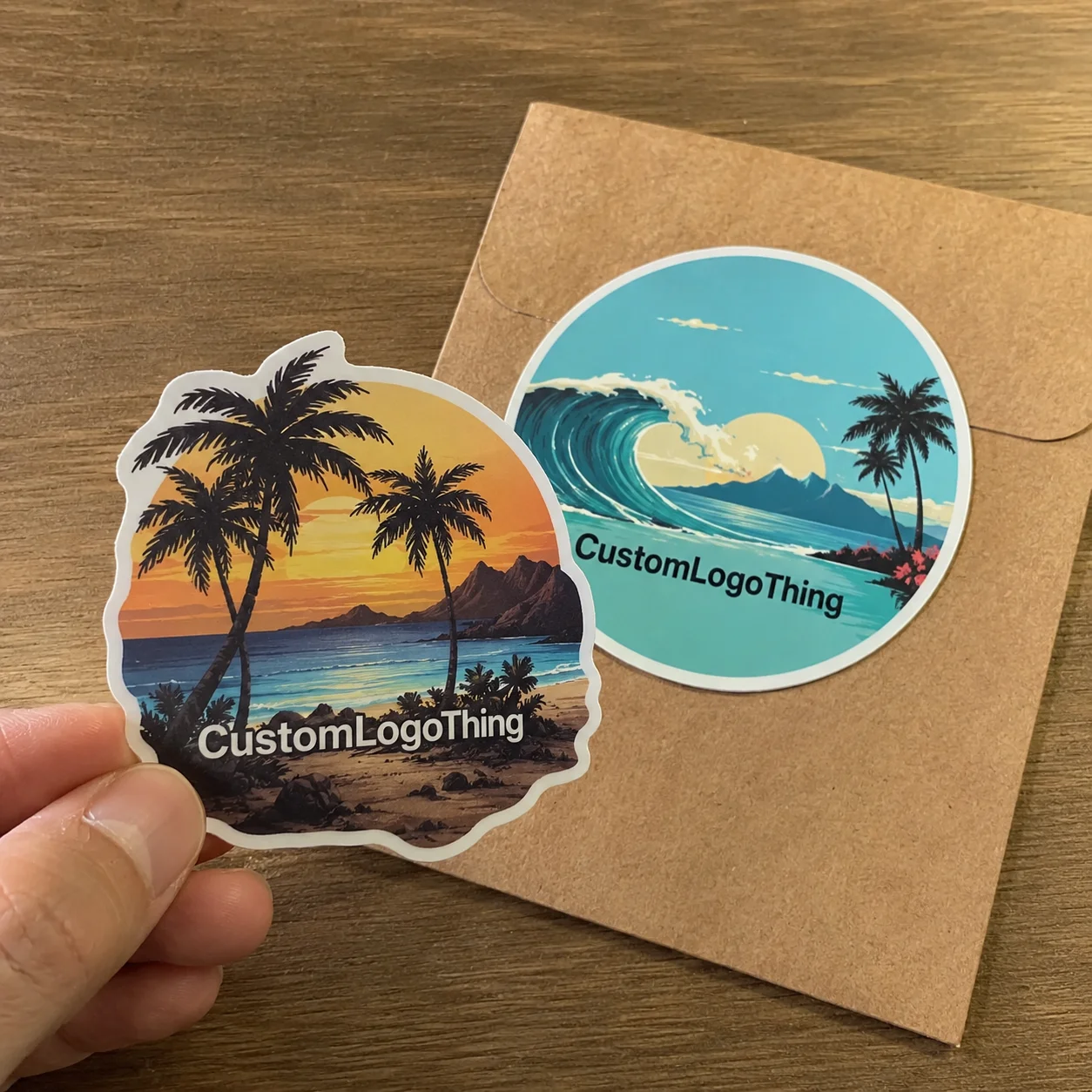
For most buyers, custom stickers Hawaii means printed adhesive graphics for local brands, tourism shops, food trucks, surf schools, events, resorts, cafés, makers, nonprofits, and product packaging across the islands. That may be a 2-inch logo sticker handed out at a farmers market, a waterproof bottle label for a sunscreen brand, a branded QR code decal at a hotel concierge desk, or a die-cut retail sticker sold beside postcards and keychains.
The difference is not geography alone. It is use case.
A laptop giveaway sticker does not need the same construction as a refrigerated poke bowl label. A truck window decal has different demands than a paper thank-you sticker on a bakery bag. A surfboard decal gets punished by water, wax, sunlight, and handling. One generic quote cannot cover all of that unless the printer is guessing. And guessing is not a procurement strategy, even if people keep trying it.
Better buying starts before pricing. Define the application surface, target lifespan, indoor or outdoor use, expected moisture exposure, and whether the sticker is for promotion, retail packaging, branded packaging, compliance information, or resale. A cheap paper sticker and a laminated vinyl sticker may both be “stickers,” but they are not the same product. Comparing those quotes side by side is like comparing a paper umbrella to a rain jacket.
Before asking for a quote, settle the basics: material, finish, adhesive, size, shape, cut style, quantity, artwork setup, shipping method, and real deadline. These choices drive cost and performance. They also prevent the classic mess: approving the cheapest option, receiving Labels That Look fine in the box, then watching the edges lift after two days on a chilled bottle.
How Sticker Materials, Adhesives, and Finishes Hold Up in Humid Coastal Conditions
A sticker is a stack of parts. The face stock is the printable material. The adhesive bonds it to the surface. The ink carries the design. The laminate or coating, if used, protects the print. The liner is the backing paper or film. The cut style controls how the sticker peels, presents, and applies. You do not need a chemistry degree. You do need enough vocabulary to avoid ordering the wrong thing.
Paper is the low-cost option for dry indoor use: bakery seals, thank-you labels, short-term retail tags, and mailer stickers. It can look excellent, especially with matte or textured finishes. It also hates water. White vinyl is the safer all-purpose choice for outdoor decals, tourist stickers, gear labels, laptops, coolers, and higher-handling uses. Clear vinyl works well for windows, bottles, and product applications where the container should show through. BOPP film is common for food, beverage, cosmetic, and retail packaging because it resists moisture better than paper and applies well to many containers.
Adhesive matters as much as face stock. Permanent adhesive is typical for packaging, outdoor decals, and labels that should stay put. Removable adhesive suits temporary promos, window campaigns, event signage, and short-term displays where residue would annoy someone later. Freezer-grade adhesive helps with cold storage and condensation. High-tack adhesive is useful for textured surfaces, curved containers, powder-coated metal, and some low-energy plastics that reject normal adhesive like a bad first date.
Finishes change both appearance and durability. Gloss boosts color and shine. Matte gives a softer retail look and photographs cleanly. Soft-touch feels premium, though it can scuff depending on handling. UV coating adds some light protection. Laminate is the more serious choice for abrasion, moisture, and repeated use. For island conditions, laminated vinyl is often the practical default for outdoor decals, surf gear, vehicle windows, tourist merchandise, coolers, water bottles, and stickers that may live near salt spray.
Practical rule: if the sticker will be wet, handled daily, chilled, shipped, wiped, or used outdoors, start with film material and ask whether laminate is included. Ink durability and material durability are related, but they are not the same thing.
Pricing, MOQ, and Unit Cost: What Drives the Sticker Quote
Sticker pricing is driven by size, material, quantity, finish, shape, number of designs, proofing time, packing method, and shipping. The cheapest quote often skips something important. Shocking, I know. If one vendor includes laminated vinyl and another quotes uncoated paper, the lower price is not a bargain. It is a different spec.
Small custom runs may land around $0.20 to $1.50+ per sticker, depending on size and construction. A simple 2-inch paper circle in a batch of 500 may sit near the low end. A 4-inch laminated die-cut vinyl sticker in a smaller batch can move much higher. Larger runs drop unit cost because setup, proofing, finishing, and packing time spread across more pieces. For many buyers, 1,000 pieces cost only modestly more than 500, which is why quantity breaks matter.
Digital printing supports smaller batches, multiple designs, and faster setup. It is usually the right path for event stickers, test runs, seasonal artwork, and low to mid-volume product labels. Roll-label production makes sense for hundreds or thousands of labels used on jars, bottles, pouches, boxes, or bags. Larger offset or flexographic label jobs can reduce unit cost at scale, but they often require higher minimums, cleaner files, tighter color control, and more disciplined approvals.
| Sticker Type | Best Use | Typical Quantity Range | Rough Unit Cost Range | Key Tradeoff |
|---|---|---|---|---|
| Paper sheet stickers | Dry indoor promos, bakery seals, mailers | 100 to 1,000+ | $0.08 to $0.45 | Low cost, weak moisture resistance |
| BOPP roll labels | Food, beverage, cosmetics, product packaging | 500 to 10,000+ | $0.05 to $0.35 | Great for packaging, less “souvenir sticker” feel |
| Laminated vinyl stickers | Outdoor decals, retail stickers, gear, laptops | 100 to 5,000+ | $0.20 to $1.50+ | More durable, higher unit cost |
| Custom die-cut stickers | Tourism merch, brand giveaways, visual impact | 100 to 5,000+ | $0.30 to $2.00+ | Strong presentation, more finishing complexity |
Shape affects cost. Circles, squares, rectangles, and rounded rectangles are efficient. Intricate die-cut shapes take more finishing time, and custom tooling may apply on certain production methods. Kiss-cut sheets are convenient for giveaways because the backing stays larger than the sticker. Singles feel better for retail sale. Roll labels are better for application speed and inventory control.
Shipping to Hawaii deserves its own line item. Ask for the landed cost, not just the print quote. Freight, air shipment, delivery location, carton count, and inter-island movement can change the final number. For orders tied to a launch or event, request pricing at 250, 500, and 1,000 pieces. The best buy is often one tier above the first quantity someone had in mind.
Process and Timeline: From Artwork Proof to Delivered Stickers
A clean sticker order usually follows a predictable path: choose specs, submit artwork, receive a quote, approve a digital proof, print, coat or laminate, cut, pack, ship, and inspect on arrival. Simple digital orders can move quickly after proof approval, sometimes within a few business days for production. Specialty materials, custom shapes, large quantities, roll finishing, or Hawaii delivery deadlines need more buffer.
The production clock usually starts after proof approval, not when someone first emails a blurry logo from their phone. Nobody loves that part, but it matters. A printer cannot responsibly cut a custom shape from a low-resolution screenshot. For clean output, send vector art when possible: AI, EPS, or print-ready PDF. Raster images should usually be 300 DPI at final print size. If the file needs resizing, rebuilding, color adjustment, font repair, or cut-line creation, add time.
Proofing details are not busywork. Check final size, bleed, cut line, safe zone, color mode, resolution, font outlines, embedded images, and finish notes. For Custom Die-Cut Stickers, the cut path should be clear and not too fragile around thin artwork. For roll labels, confirm unwind direction if labels are machine-applied. For QR codes and barcodes, print a proof at actual size and scan it. A QR code that works on a glowing monitor can fail after shrinking, coating, and printing. Lovely little trap.
Lead time can also shift because of laminate cure time, die cutting, sheet finishing, roll finishing, multiple SKUs, split shipments, rush capacity, and material availability. Standards from groups such as the International Safe Transit Association are more focused on transport testing than sticker construction, but the same principle applies: real shipping conditions expose weak packaging decisions. Build the schedule backward from the actual need date.
For launches, farmers markets, hotel events, festivals, pop-ups, weddings, and seasonal retail pushes, give yourself breathing room. A practical schedule might allow 1 to 2 business days for quoting, 1 to 3 days for artwork cleanup and proofing, 3 to 10 business days for production depending on complexity, and additional time for delivery. Rush production exists, but rush fees are basically a tax on late decisions.
Step-by-Step Ordering Guide for Better Sticker Specs
Good ordering starts with the surface. Packaging, bottles, cars, surfboards, laptops, helmets, windows, coolers, mailers, and retail displays all create different performance demands. A sticker for a cardboard mailer may only need to survive shipping and unboxing. A decal for a cooler may face water, ice, abrasion, and constant handling. A clear window decal needs a different material than a freezer label on a plastic tub.
- Define the application. List the exact surface: glass, plastic pouch, kraft box, coated carton, aluminum, powder-coated metal, car window, flexible bottle, or cooler. If the sticker supports product packaging, note whether it will be applied by hand or machine.
- Choose the durability level. Indoor short-term stickers can be simple. Outdoor, wet, refrigerated, or high-handling products need film materials, stronger adhesive, and protective finishes.
- Pick the format. Roll labels suit application speed and organized inventory. Sheets are easy for giveaways and storage. Singles feel polished for retail. Kiss-cut stickers peel cleanly. Die-cut stickers create stronger visual impact.
- Set the size and shape. Base it on viewing distance, package layout, and application surface. A tiny logo may look clean on screen and useless in real life. Happens constantly.
- Prepare artwork correctly. Use vector logos, outlined fonts, embedded images, proper bleed, and a clear cut path for custom shapes. If using brand colors, provide Pantone references or approved CMYK values.
- Request proof and quantity breaks. Check spelling, color expectations, barcode readability, QR code scanning, roll direction, backing style, and final dimensions before approval.
For buyers building a full branded packaging system, stickers often connect with boxes, hang tags, belly bands, and inserts. If you are also planning cartons, mailers, or Custom Packaging Products, keep the sticker finish aligned with the rest of the packaging design. Glossy labels on matte custom printed boxes can work, but it should be intentional, not accidental.
If the sticker is acting as a product label, review the label panel like any other packaging component. Ingredients, net weight, warnings, batch codes, QR codes, and contact information need enough space. For retail packaging, readability matters more than squeezing in every graphic element from the brand board. Small type on a curved bottle is where optimism goes to die.
Common Mistakes That Make Island Stickers Fail
The first mistake is choosing paper for wet, outdoor, refrigerated, or beach-adjacent use. Paper has its place. A cooler full of condensation is not one of them. If the sticker will touch ice, live on a drink bottle, sit near a sink, or ride along in a beach bag, start with vinyl or BOPP and discuss laminate.
The second mistake is skipping laminate on stickers that will be rubbed, handled, washed, exposed to sunlight, or applied to gear. Some inks are durable. Some materials are durable. That does not mean the printed surface will resist keys, sand, sunscreen, salt, or repeated wiping. A gloss or matte laminate can add meaningful abrasion resistance and moisture protection.
The third mistake is ignoring the application surface. Curved bottles stress the label edge. Textured packaging reduces contact area. Powder-coated metal can be stubborn. Glass is usually friendly but still needs the right adhesive if chilled. Plastic pouches can flex and wrinkle. Waxy cartons can fight adhesion. If possible, name the surface and send a sample or photo before ordering stickers for real products.
The fourth mistake is ordering too small. Tourism stickers, retail labels, and promotional decals need readable text from a realistic distance, not from a designer zoomed in at 400 percent. A 1.25-inch logo sticker may look adorable on a screen and pointless on a counter display. For giveaways, 2 to 3 inches is often more useful. For retail souvenir stickers, 3 to 4 inches usually gives artwork room to breathe.
The fifth mistake is comparing quotes without matching specs. A matte BOPP roll label with freezer-grade adhesive is not the same product as an uncoated paper sheet sticker. A laminated die-cut vinyl single is not the same as a square paper label. Ask each supplier to quote the same size, material, finish, adhesive, quantity, packing format, and shipping method. Otherwise, the comparison is noise wearing a spreadsheet costume.
The sixth mistake is waiting until the week of an event. Hawaii shipping leaves less forgiveness in the schedule. Weather, carrier delays, address issues, and inter-island routing can all create friction. If the stickers are for a hotel event, resort welcome kit, food launch, surf contest, wedding, or festival booth, add buffer. The cost of a missed deadline is usually higher than the cost of ordering earlier.
Checks to Make Before Samples or Approval
Before contacting a printer, build a simple spec sheet. Include quantity, size, shape, material preference, finish, application surface, indoor or outdoor use, expected lifespan, number of designs, packing format, and delivery location. If the sticker will be used on food, beverage, cosmetics, marine gear, resort products, or retail merchandise, say that early. The printer should not have to decode the use case from a logo file and three vague sentences.
Samples are worth ordering when performance matters. Test the sticker on the actual surface for 24 to 72 hours if timing allows. Check edge lift, color appearance, scuffing, moisture exposure, and peel strength. For refrigerated labels, test after chilling and warming. For bottles, test after condensation forms. For outdoor decals, test sun exposure if practical. For retail stickers, check how they look in display lighting, not just on a desk.
Ask direct supplier questions: Will this material handle humidity? Is laminate included? Is the adhesive permanent, removable, freezer-grade, or high-tack? What is the landed cost to Hawaii? When does production start? What file format do you need? Can I get a hard copy sample or material swatch? If sustainability claims matter to your package branding, ask about paper sourcing, recyclability, and FSC options through the Forest Stewardship Council.
Approval deserves patience. Check spelling, phone numbers, QR codes, Hawaiian place names, brand colors, cut lines, final dimensions, and roll direction. If the sticker supports Custom Labels & Tags, confirm how it works with the rest of the package: box finish, label placement, barcode area, and any required regulatory text. A proof is not decoration. It is the last cheap place to catch expensive mistakes.
Buyers ordering custom stickers Hawaii should treat the job like a small packaging project, not a throwaway print order. The right specs prevent wasted money, missed deadlines, and sad peeling edges. Better material, clean artwork, realistic timing, and honest landed-cost pricing will beat the bargain option almost every time.
FAQ
What material is best for custom stickers in Hawaii?
Vinyl is usually the safest all-purpose option for outdoor, humid, or high-handling use. BOPP works well for many product labels, especially food, beverage, cosmetic, and retail packaging. Paper is best for dry, indoor, short-term applications where water resistance is not needed.
How much do custom Hawaii stickers usually cost?
Small runs can often range from about $0.20 to $1.50+ per sticker depending on size, material, finish, and cut style. Larger quantities usually lower the unit cost, so ask for multiple quantity breaks. Shipping should be included in the final landed cost, especially for orders with firm delivery dates.
How long does it take to produce and ship custom stickers to Hawaii?
Simple sticker orders may move quickly after proof approval, but specialty materials, die cuts, multiple SKUs, or large runs need more time. Production timing usually starts after the final proof is approved. Build in extra buffer for air or freight shipping, inter-island delivery, events, and product launch deadlines.
Are waterproof stickers necessary for Hawaii businesses?
They are strongly recommended for outdoor use, refrigerated packaging, beach products, drink bottles, surf gear, and tourist merchandise. Water-resistant material is not always enough; laminate and the right adhesive may also matter. Indoor paper stickers can still work for dry packaging, thank-you labels, and short-term promotions.
What artwork files should I send for custom sticker printing?
Vector files such as AI, EPS, or PDF are preferred for logos, cut lines, and clean scaling. Raster images should be high resolution, usually 300 DPI at final print size. Include bleed, safe zones, outlined fonts, embedded images, and clear notes for shape, size, and finish.