What Outdoor Stickers Custom Orders Need to Survive Outside
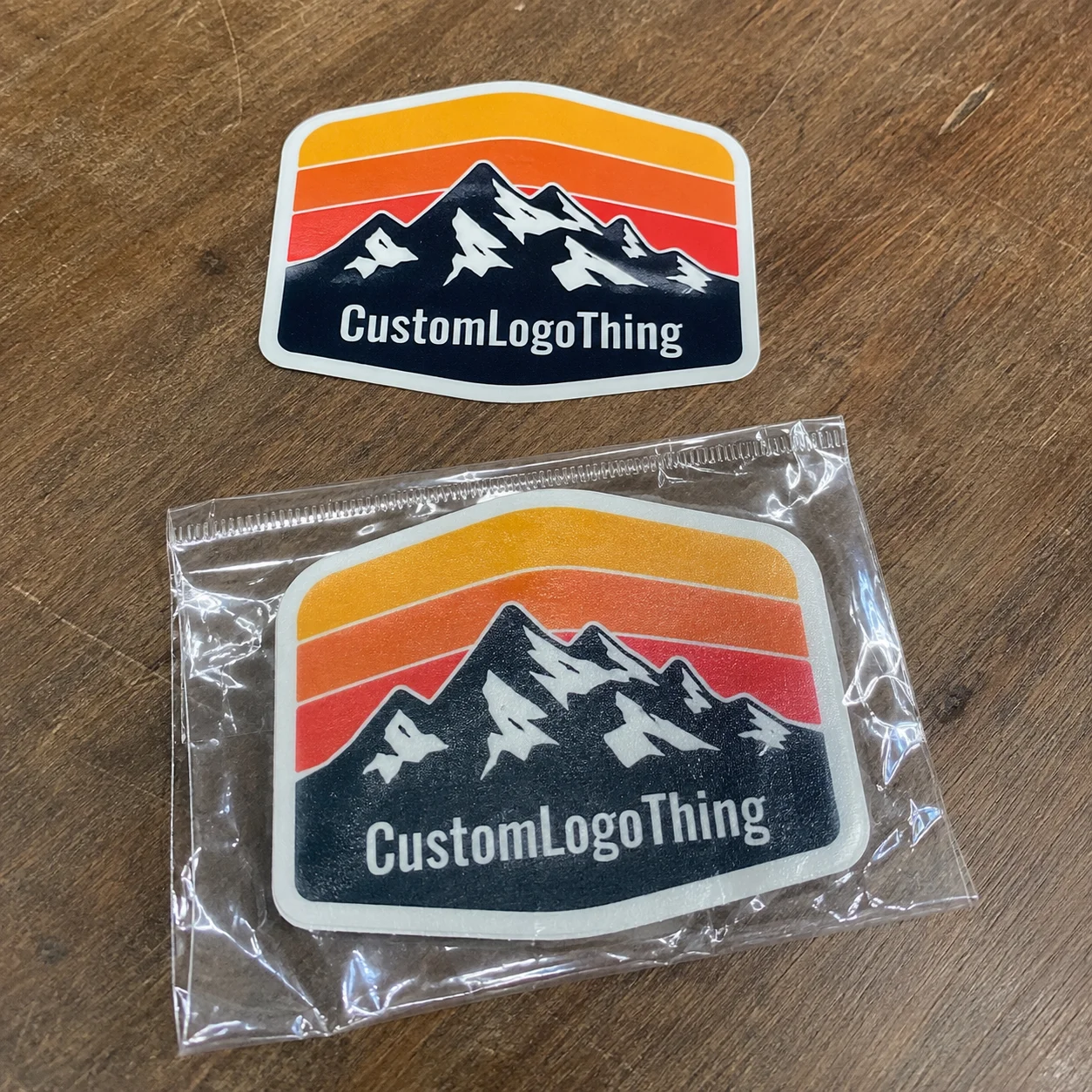
The first place an outdoor sticker usually fails is not the printed face. It is the edge. Water, UV exposure, abrasion, heat, cold, and surface contamination all attack the weakest point first, which is why outdoor stickers custom buyers need to specify the film, adhesive, laminate, shape, and application surface as one connected system.
An outdoor sticker is a pressure-sensitive label or decal built from weather-resistant face stock, outdoor-rated adhesive, durable inks, and a protective finish. That sounds straightforward. It is not. A 3-inch vinyl decal with rounded corners, permanent acrylic adhesive, UV-cured ink, and gloss laminate will behave very differently from a paper sticker with a light varnish, even if the artwork looks nearly identical on screen.
The difference between a short-term promotional sticker and a long-life outdoor decal is not just price. A giveaway sticker for a weekend event may only need to survive a few weeks on laptops, water bottles, or packaging inserts. A service decal on equipment, a hard hat label, a cooler sticker, or a vehicle window decal may need to handle months or years of sunlight, rain, washing, scraping, and dirty hands.
Durability is often treated like a single feature. It is not. It comes from material selection, adhesive chemistry, print method, ink curing, lamination, die-cut shape, and correct application pressure. Even a strong adhesive can fail early if the sticker is applied to oily plastic at 38°F, or if the design has long, sharp points that invite edge lift.
Good sticker specs start with three plain questions: where will it be applied, how long should it last, and what kind of wear will it face? A farmers market jar label, a fleet maintenance decal, a marine gear sticker, and a retail packaging seal need different answers. Define those conditions early and the quote becomes more accurate, the material choice gets easier, and the finished decal has a better chance of staying put.
How Weatherproof Sticker Materials and Adhesives Work
A weather-ready sticker is made in layers. The usual stack includes the liner, adhesive layer, face film, printed ink, and an optional overlaminate or protective varnish. Each layer has a job. The liner protects the adhesive until application. The adhesive wets out onto the surface. The film carries the print. The ink creates the image. The laminate protects the image from abrasion, moisture, oils, and sunlight.
White vinyl is the workhorse for many outdoor stickers custom projects because it is flexible, water-resistant, and forgiving on curved or slightly irregular surfaces. It is common on toolboxes, helmets, bottles, hard cases, equipment, and general promotional decals. Cast vinyl is usually more conformable and dimensionally stable than economy calendered vinyl. Calendered vinyl can still be a practical choice for flatter surfaces and shorter exposure windows.
Clear vinyl suits glass, windows, and transparent product packaging when the buyer wants a “no-label” look. The catch is opacity. If the artwork must stay solid on tinted glass, dark bottles, or colored products, the print usually needs a white ink backing under the color. Without that white layer, reds can turn muddy, small type can disappear, and brand colors may look thinner than expected.
Polyester is stiffer than vinyl and often chosen for dimensional stability, tear resistance, and equipment labeling. It can be a good match for safety labels, asset tags, electronics, and industrial decals. BOPP, or biaxially oriented polypropylene, is common in product packaging and roll labels. It handles moisture better than paper and is often used for bottles, jars, and personal care packaging, though it is not always the best fit for rough outdoor abuse.
Adhesive choice matters as much as face stock. Permanent adhesive is common for long-term decals. Removable adhesive helps with temporary promotions, window graphics, and rental equipment, but removable does not guarantee residue-free removal after heat, moisture, and long dwell time. High-tack adhesive helps on rougher or harder-to-bond surfaces. Freezer-grade and low-temperature application adhesives are used when stickers are applied or stored cold. Low-energy plastics such as HDPE and some textured polyolefins may require specialty adhesive because standard acrylic adhesive can struggle to wet out and anchor.
UV resistance, water resistance, and abrasion resistance are separate targets. A sticker can resist rain but fade in harsh sunlight. Another can hold color well but scuff when dragged across a cooler or tool bin. Gloss laminate gives color pop and easier wipe-down. Matte laminate softens glare and often fits Premium Retail Packaging or branded packaging with a more natural feel. Textured or scuff-resistant films are worth pricing for high-handling environments.
Practical callout: If the sticker will be handled, washed, rubbed, or shipped loose in bins, ask about abrasion resistance separately from waterproofing. Those are different performance targets.
For broader packaging durability thinking, industry groups such as the International Safe Transit Association provide useful context around distribution stress and packaged-product movement, even though sticker adhesion testing sits in its own category.
Key Specs to Decide Before You Ask for a Quote
A clean quote starts with clean specs. Before requesting pricing, gather the sticker size, shape, quantity, application surface, indoor or outdoor exposure, expected lifespan, artwork colors, finish, roll or sheet format, and application method. If a field team will apply the decals by hand instead of a packing line applying them under controlled conditions, say so. Application consistency affects real-world performance.
Size and shape deserve more attention than many buyers give them. Thin points, tiny reverse text, and sharp corners can create lifting risks outdoors because they reduce adhesive contact and make the edge easier to catch. Rounded corners are not just a design preference; a 1/8-inch radius or larger can help reduce edge picking on frequently handled decals. Very small stickers, such as 0.5-inch seals, often need simplified artwork because fine detail fills in quickly once ink spread, laminate thickness, and cutting tolerance are included.
Format affects labor. Kiss-cut stickers stay on a backing sheet and peel away easily, which is helpful for handouts and retail inserts. Die-cut stickers are cut to the outer shape of the design and look polished for branded merchandise. Square-cut stickers are economical for simple shapes. Sheeted labels are convenient for small teams applying by hand. Roll labels work better for larger quantities, dispensers, and machine application. For buyers ordering both decals and Custom Labels & Tags, matching the format to the packing workflow can save hours on the floor.
The application surface is one of the biggest spec drivers. Glass is usually friendly if clean. Powder-coated metal can vary depending on texture and coating chemistry. Painted metal, stainless steel, HDPE bottles, Corrugated Shipping Boxes, coolers, and textured plastics all behave differently. A sticker that bonds nicely to a glossy jar may lift on a molded plastic case. Corrugated shipping boxes add another complication because fibers, dust, and surface roughness reduce adhesive contact.
Artwork setup affects performance and readability. Use bleed beyond the cut line, usually around 0.0625 to 0.125 inch depending on the printer’s requirement. Keep important text inside a safe area. Provide vector cut lines for custom shapes. Convert fonts or package them properly. If using QR codes outdoors, keep strong contrast and enough size; many teams use at least 0.8 to 1 inch for reliable scanning, depending on distance and print quality. Color matching may require a Pantone reference or printed proof, especially for packaging that must line up with boxes, labels, or displays.
| Use Case | Typical Material Direction | Finish to Consider | Key Risk |
|---|---|---|---|
| Farmers market jar label | BOPP or vinyl | Gloss or matte laminate | Ice bucket moisture and hand oils |
| Hard hat decal | Flexible vinyl | Scuff-resistant laminate | Curved surface and abrasion |
| Fleet service sticker | Vinyl or polyester | UV-resistant laminate | Sun, washing, and edge lift |
| Window promotion | Clear or white vinyl | Gloss laminate | Opacity, removability, and glare |
Instead of asking only for “waterproof stickers,” describe the real-use environment. Will the sticker sit in full sun, go through refrigerated storage, ride on a truck, flex on a curved bottle, or rub against tools? Those details help a supplier recommend an outdoor sticker printing spec instead of guessing.
Cost, Pricing, and Unit Cost Drivers for Outdoor Decals
Sticker pricing is driven by material, print setup, ink coverage, size, shape complexity, laminate, quantity, finishing format, proofing requirements, and delivery needs. A simple 2-inch white vinyl circle on sheets costs less than a 5-inch contour-cut clear decal with white ink, heavy laminate, and tight color matching. The artwork may look equally simple to the buyer. The production path is not.
Unit cost usually drops as quantity rises because setup, press calibration, artwork checks, and finishing time are spread across more pieces. Digital production can make low quantities practical, especially for short runs, sampling, or seasonal packaging design. Larger runs may unlock better per-piece economics, particularly when roll finishing, efficient gang layouts, or repeat tooling are involved.
Premium cost drivers are easy to miss during early budgeting. Specialty adhesive, clear material with white ink, metallic film, holographic film, heavy laminate, complex die-cuts, variable data, sequential numbering, and tight brand color matching can all add cost. So can extra proofing rounds. If a decal must match other Custom Packaging Products such as custom printed boxes, belly bands, or retail labels, build in time and budget for color review.
The cheapest indoor paper sticker is not a bargain outdoors. Paper absorbs moisture, curls at the edge, scuffs easily, and can split when removed. For a short indoor promotion, paper may be fine. For rain, coolers, freezer condensation, product washing, or sun exposure, film materials are usually the safer path. Paying a few cents more per sticker can prevent failed packaging, customer complaints, and rework.
Minimum order quantities depend on material, press setup, and finishing. Low quantities may be possible digitally, sometimes starting around 50 to 100 pieces for simple formats. For common vinyl decals, useful price breaks often appear around 250, 500, 1,000, and 5,000 pieces. As a rough planning example, a 3-inch laminated vinyl sticker might land around $0.35 to $0.90 each at moderate quantities, while larger or specialty decals can run higher. Size, material, finish, and supplier setup matter enough that these figures should be treated as planning ranges, not fixed pricing.
| Cost Driver | Why It Changes Price | Buyer Tip |
|---|---|---|
| Quantity | Spreads setup and finishing time across more units | Ask for three quantity tiers before choosing |
| Laminate | Adds material and an extra finishing step | Use it for sun, scuffing, washing, or handling |
| White ink on clear film | Requires an extra ink layer and setup control | Specify which artwork areas need opacity |
| Complex cut shape | Slower cutting and more waste risk | Simplify thin points and tight inside corners |
| Special adhesive | Uses a less common material construction | Share the exact surface before quoting |
To get clean pricing, include dimensions, quantity breaks, substrate preference, finish, application surface, expected outdoor life, roll or sheet preference, and delivery deadline. A quote for 500, 1,000, and 2,500 pieces usually gives a buyer a better feel for budget versus inventory than one isolated number.
Process and Timeline from Artwork to Finished Stickers
A typical outdoor stickers custom production flow starts with spec review, then artwork preflight, digital proof, material confirmation, print setup, printing, curing or drying, lamination, cutting, quality checks, packing, and shipping. Straightforward repeat orders can move quickly. New adhesives, unusual surfaces, or tight launch dates need more front-end review.
Artwork preflight is the technical check before proofing. The team looks at resolution, fonts, bleed, safe area, color mode, cut paths, white ink layers, and small detail limits. Raster images generally need enough resolution at final size, often 300 dpi for crisp sticker printing. Vector artwork is preferred for logos, type, and cut lines because it scales cleanly and gives the cutter a precise path.
Proofing is the buyer’s checkpoint. Size, layout, copy, cut line, finish, and any special layers should be confirmed before production begins. Proof approval is not the best moment to redesign the whole sticker, but it is exactly the moment to catch a wrong phone number, a missing bleed, a cut line too close to text, or a white ink layer that covers more than intended.
Lead time depends on order size, material availability, proof approval speed, finishing complexity, and whether testing or samples are requested. Many simple digital sticker runs can move in several business days after proof approval. Larger laminated decals, specialty materials, or custom finishing may take closer to 10 to 15 business days. Shipping time sits on top of that. Rush work is easiest when the specs are complete, artwork is print-ready, and the proof is approved quickly.
Samples are worthwhile for new surfaces, high-value product launches, challenging adhesive conditions, or labels applied by a field team instead of a controlled packing line. A small test run can reveal issues that a PDF proof cannot show: edge lift on a powder-coated cooler, glare on a QR code, weak opacity on dark glass, or poor bond to a textured plastic case.
For broader sustainability and material sourcing questions, some buyers also ask how sticker materials fit into their product packaging goals. If fiber-based packaging is part of the project, the Forest Stewardship Council is a useful authority for responsible paper and board sourcing. Film stickers have different end-of-life considerations, so sustainability goals should be discussed before materials are selected.
Build in time for application testing before a launch, especially for plastics, coated metal, curved bottles, and containers that see moisture. Clean the surface, apply at normal working temperature, press firmly, and allow dwell time before judging the bond. Adhesive strength right after placement is not always the same as strength after 24 to 72 hours.
Common Mistakes That Make Outdoor Stickers Fail Early
The most common failure is simple: a good sticker is applied to a bad surface. Dirt, oil, dust, wax, silicone residue, cold temperature, condensation, and texture can all prevent adhesive from making full contact. A clean, dry surface is part of the spec. For many applications, wiping with a suitable cleaner and allowing the surface to dry fully makes a measurable difference.
Edge lift is another frequent problem. Sharp corners, long narrow points, undersized adhesive contact, flexible surfaces, and light application pressure all increase the chance that an edge starts to rise. Once water and dirt get under that edge, failure accelerates. Rounded corners, adequate border width, and firm pressure during application are boring details, but they work.
Material chosen only by appearance can create expensive surprises. Clear film looks excellent on a proof, then the design disappears on tinted glass or dark packaging because no white ink was specified. High-gloss laminate can make colors pop, then create glare that hurts QR code scanning. A very rigid polyester label may look premium, then struggle on a tight curve where flexible vinyl would have conformed better.
Overpromising durability without defining the environment is risky. Full sun in a dry desert, salty coastal air, freezer condensation, shaded porch use, and repeated pressure washing are not the same test. A sticker that holds up nicely on retail packaging under covered storage may not be the right decal for marine gear or exposed fleet equipment.
Unlaminated stickers can be acceptable for short campaigns, indoor use, or light-duty giveaways, but they often scuff or fade faster under rough handling. If the sticker will ride on a water bottle, cooler, hard case, bike frame, or service tool, laminate is usually worth discussing. The added layer protects the ink and gives the edge a little more structure.
QR code and barcode mistakes are easy to avoid. Keep codes large enough, use high contrast, avoid tight curves, and be careful with high-glare gloss finishes. Test scans on an actual printed sample, not just a screen. A code that scans under office lighting may struggle outdoors in bright sun or on a curved bottle.
One more detail: outdoor adhesives need pressure and dwell time. Press the sticker firmly across the full area, especially the edges, and avoid water exposure right after application if the adhesive supplier recommends a settling period. Performance five minutes after placement may not represent full bond strength.
Build a Sticker Spec You Can Actually Order
A good sticker order starts with a short, practical checklist. Write down the intended surface, outdoor exposure, target lifespan, sticker size, shape, quantity, finish, artwork file type, and deadline. Add whether the stickers will ship on rolls, sheets, or individually cut pieces. If the decals are part of a larger packaging design system, include the related materials so color and finish choices do not fight each other.
- Surface: glass, metal, painted metal, HDPE, corrugated, cooler plastic, window, or coated packaging.
- Exposure: rain, sun, ice buckets, freezer storage, salt air, abrasion, washing, or vehicle use.
- Lifespan: short promotion, seasonal campaign, one-year use, or longer equipment labeling.
- Construction: vinyl, polyester, BOPP, clear film, permanent adhesive, removable adhesive, or high-tack adhesive.
- Finish: gloss, matte, textured, scuff-resistant, or UV-resistant laminate.
- Artwork: vector logo, bleed, safe area, cut line, QR code, white ink layer, and color targets.
Choose one primary performance goal first. Waterproofing, UV resistance, removable use, freezer performance, scuff resistance, and curved-surface conformity are not always solved by the same material. A removable window decal has different priorities than a permanent warning label on equipment. A bottle label for product packaging has different handling stress than a bumper decal.
Order samples or a short test run when the sticker goes onto difficult surfaces, expensive products, or customer-facing packaging with brand risk. Testing is especially useful for textured plastic, powder-coated metal, flexible containers, and dark glass. Even 25 to 50 samples can provide better information than guessing from a screen proof.
A simple test is enough for many projects. Clean the surface the same way your team will clean it during production. Apply the sticker at normal working temperature. Press firmly with a squeegee, roller, or thumb pressure across the full face and edges. Wait for adhesive dwell, then expose the sample to water, sunlight, handling, cold, heat, or rubbing based on the real use. Photograph any edge lift, whitening, ink wear, or adhesive residue.
Share photos of the application surface with the manufacturer, especially if the surface is textured, coated, flexible, or plastic. A close-up photo and a wider product photo can answer questions that a written description misses. If the sticker must coordinate with Custom Printed Boxes, tags, inserts, or other branded packaging, mention that early so the finish and color choices work together.
With the right specs, outdoor stickers custom projects become easier to price, faster to produce, and more reliable in the field. The graphic still matters. The quiet technical choices behind it are what keep the sticker stuck, readable, and on-brand after the weather and handling begin.
Outdoor Sticker FAQs
Are custom outdoor stickers actually waterproof?
They can be water-resistant or waterproof when made with film materials, outdoor-rated adhesive, durable inks, and a protective laminate. Paper-based stickers are usually not the right choice for rain, ice buckets, coolers, or repeated washing. Waterproof performance still depends on proper application to a clean, dry surface with enough pressure and dwell time.
How long do outdoor custom decals last?
Lifespan depends on material, laminate, sun exposure, abrasion, surface type, and climate. Short-term promotional stickers may only need weeks or months, while vinyl or polyester decals with laminate can be specified for longer outdoor use. Ask for a durability recommendation based on the actual environment instead of relying on a generic lifespan claim.
What is the best material for outdoor sticker printing?
White vinyl is a common all-purpose choice because it handles moisture, sun exposure, and curved surfaces well. Polyester can be better for higher durability, dimensional stability, or equipment labeling. Clear vinyl works well for windows and transparent effects, but opaque artwork usually needs white ink underneath.
How much do custom weatherproof stickers cost?
Cost depends on size, quantity, material, adhesive, finish, shape, ink coverage, and whether the order needs specialty features like white ink or heavy laminate. Larger quantities usually reduce unit cost because setup and finishing time are spread across more stickers. For an accurate quote, provide dimensions, quantity tiers, surface type, finish preference, and expected outdoor use.
Can outdoor stickers custom orders be made removable?
Yes, removable adhesives are available, but they must be matched carefully to the surface and expected exposure. Removable does not always mean residue-free on every surface, especially after heat, sun, moisture, or long dwell time. Test removable stickers on the actual surface before using them for windows, painted items, rental equipment, or temporary promotions.


