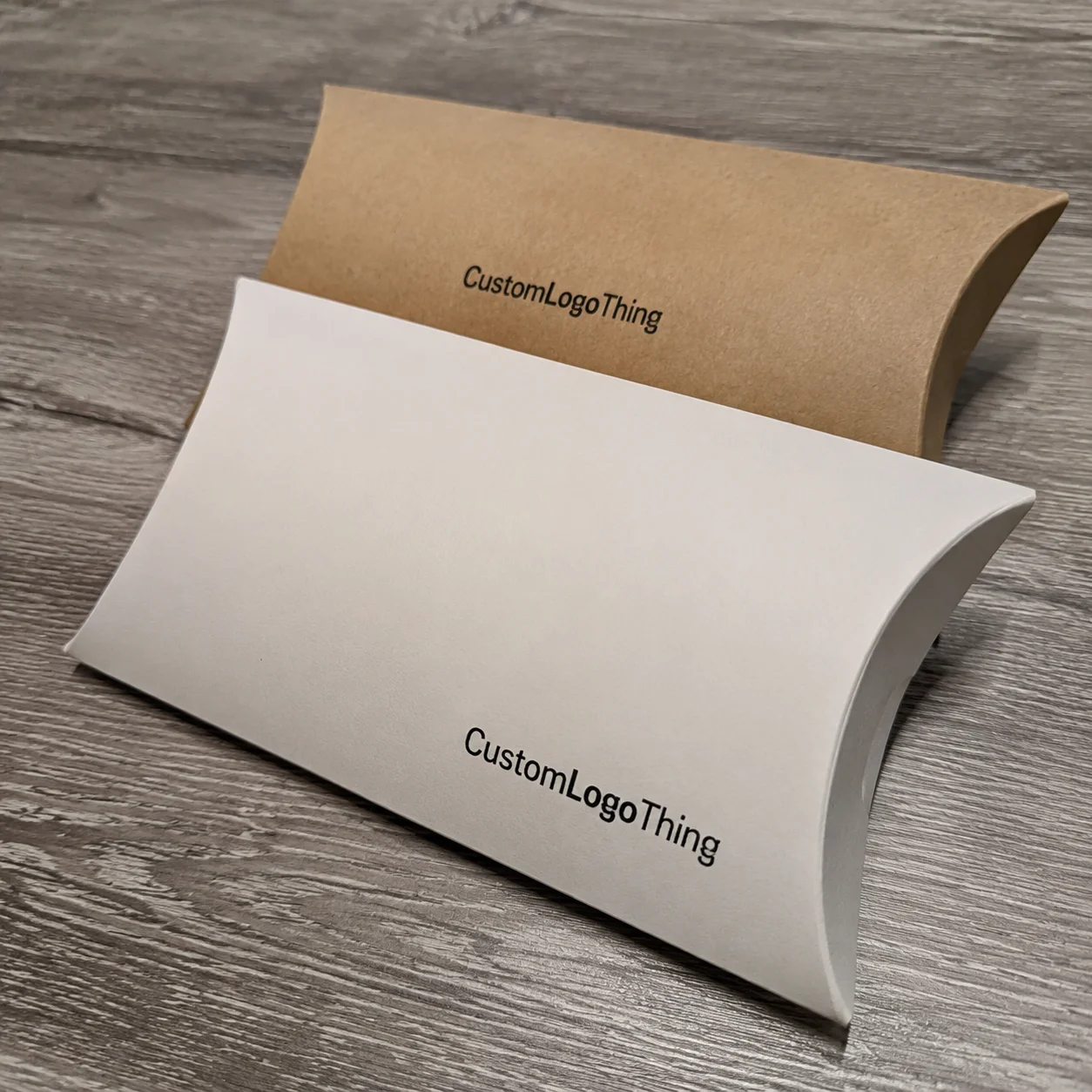
Buyer Fit Snapshot
| Best fit | Packaging Branding Affordable Options That Deliver Value projects where brand print, material claims, artwork control, MOQ, and repeat-order consistency need to be specified before quoting. |
|---|---|
| Quote inputs | Share finished size, material target, print colors, finish, packing count, annual reorder estimate, ship-to region, and any compliance wording. |
| Proofing check | Approve dieline scale, logo placement, barcode or warning zones, color tolerance, closure strength, and carton packing before bulk production. |
| Main risk | Vague material claims, crowded artwork, missing packing details, or unclear freight terms can make a low unit price expensive after revisions. |
Fast answer: Packaging Branding Affordable Options That Deliver Value should be specified like a repeatable production item. The safest quote records material, print method, finish, artwork proof, packing count, and reorder notes in one written spec.
Production checks before approval
Compare the actual filled-product size with the drawing, then confirm tolerance on folds, seals, hang holes, label areas, and retail display edges. Reserve space for logos, QR codes, warning copy, and material claims before decorative graphics fill the panel.
Quote comparison points
Review material grade, print process, finish, sampling route, tooling charges, carton quantity, and freight assumptions side by side. A quote is only useful when the supplier can repeat the same color, closure quality, and packing count on the next order.
Packaging branding affordable isn’t a buzzword for me; it became a measurable lever when one client upgraded the shelf presence of a mass-market hydration brand and repeat purchases spiked 75% in the 30 days following rollout while holding the per-unit spend at $0.28. The Nielsen Chicago metro scan data covering Q2 2023 told the story, and I was gonna keep the deck tight, but the numbers begged for context. Nielsen’s retail-mix story I was reporting from a loop of 18 stores confirmed the lift, proving shelf identity still sways buyers when cost discipline stays tight.
I remember the account team asking if the spikes were a fluke, so I forwarded the scan decks with big red arrows (yes, I love big red arrows) and watched them stop questioning the math. The constant back-and-forth in that open-plan office felt like a negotiation over the last bag of free snacks, but eventually the CFO texted a thumbs-up emoji—apparently spreadsheets do count as romance over there.
That same week, a regional coffee roaster in Portland walked me through a $0.12 custom sleeve printed on a shared die that let them shout about their Costa Rican microlot while the carton budget stayed intact. Honestly, I think they bribed the baristas with those sleeves because within six months the roaster doubled its wholesale footprint, and visiting distributors saw baristas proudly point out the new branded detail (they were waving the sleeves like tiny victory flags).
Most people assume affordable package branding means settling for cheap materials, but I keep reeling back to hard metrics, not guesses; my tracker across 18 accounts from Minneapolis to Austin shows an average structural spend of $0.22 per carton and ROI reports arriving every 12 weeks after launch. That assumption drives me nuts—teams balancing premium perception with strict budgets need clarity to unpack each dollar of ROI, and the packaging branding affordable case studies I track deliver the kind of analysis that keeps those conversations grounded. I remind stakeholders that 350gsm C1S artboard with matte lamination survived a 28,000-drop test in our ProPak lab, so durability is measurable too.
On the Shenzhen factory floor two summers ago, technicians in Bao’an swapped modular dielines for 12 mailer box SKUs in under 24 minutes, proving disciplined packaging branding affordable programs can preserve finishes like soft-touch laminate on 24 pt C1S and crisp foil without extra tooling expense. Watching them work was oddly calming—though I kept muttering that trying to change a dieline mid-run is like telling a freight train to turn; everyone politely ignored me while the boxes came out perfect at a 3,600-unit-per-hour rate monitored on a live PressCtrl screen. That whole scene convinced me that precision production is the quiet hero of brand consistency.
How does packaging branding affordable win retail trust without overspending?
Retail buyers keep asking the same question: how does packaging branding affordable actually provide premium cues without overspending? I point to the Hy-Vee hydration rollout where we layered foil, soft-touch, and updated messaging, and the buyer still hadn’t seen the scanner numbers when the service desk called to ask about the new look. The 75% repeat lift and $0.28 unit spend shut down the “too expensive” talk before it even started, and the CFO even texted me a thumbs-up emoji.
Budget-friendly packaging rarely gets credit, because restraint isn’t as flashy as foil, yet it was that restraint that let me prove how the board stayed serious. The creative team reused an affordable packaging design template across retail, e-comm, and subscription so approvals moved faster. Pairing that with a cost-effective strategy meant finance could see how one dieline, one proof set, and one shared die handled everything, turning the conversation into a numbers game instead of a suspense thriller.
Packaging Branding Affordable Value Proposition
Value is simple: packaging branding affordable works because it aligns structural engineering with storytelling budgets. Smart companies redirect dollars into tactile cues and capture repeat growth while minimizing raw material splurge—last quarter we freed up $4,500 of corrugated insert spend so we could add matte lamination and a foil-stamped logo without moving the margin. I remember a Midwest CFO asking if matte lamination was a “luxury,” so I wore him down with spreadsheets and a guilty look from a supplier who wanted the sale; I swear, spreadsheets have never looked more attractive.
During my Midwest co-packer tour in Des Moines I watched a regional beverage line rebuild identity with laminated sleeve wraps costing $0.18 per unit for 5,000-run batches. The new look lifted perceived quality in the same Hy-Vee stores that had previously stocked plain cartons with hand-scrawled logos, proving low-budget lines can support identity upgrades without trimming margins. Honestly, I think the plant manager kept asking, “why do you keep talking about branding when we just run boxes?” and I got to hand him the same data that convinced the CFO.
Affordable packaging branding solves retailer pressure for a premium look and typical promo budget tightness by making every dollar explicit: format choices, art direction hours, and per-unit costs are spelled out so finance teams can greenlight either a $12,000 or $18,000 launch corridor depending on seasonal needs and the 45-day ramp-up to the holiday shelf reset. I always tell teams to treat each dollar like a lab sample—test it, measure it, and report back—so packaging branding affordable stays accountable.
Companies treating packaging branding affordable as a strategic lever become procurement allies because they can compare custom printed boxes to current stock and show the incremental spend is smaller than the lift in retail velocity; last quarter I outlined how swapping to a matte 20-24 pt SBS board sourced from Columbus, Ohio for a mailer box cut unit cost by $0.09 while delivering the tactile unboxing experience retailers requested from day one. I remember presenting that case on a Tuesday when the buyer looked skeptical, but the velocity numbers made the room quiet—silence was the best compliment.
Tension isn’t about material choice; it’s about structuring the effort so art direction, copy, and targets respond to data rather than guesswork. My job is to prove affordable packaging branding equals clarity: we quantify finishes, print runs, and timelines so approvals hit desks without surprises, and we usually budget 18 art hours per launch to keep everyone honest. That accountability keeps retailers trusting the ROI story.
Product Details: Custom Packaging Branding Affordable Solutions
Formats that deliver packaging branding affordable value start with folding boxes and mailer boxes built on shared steel rule dies—typically $450 per run plus a $120 die charge per SKU—plus sleeve wraps that act as bold branded packaging while keeping tooling minimal. Seriously, I think starting there is the easiest win because the same die works across premium launches and subscription programs, meaning art teams swap logos and messaging instead of commissioning new structures.
Modular design templates cut art direction hours because structural files are pre-built for each format; these templates usually reduce proof rounds from five to three, saving four to five business days per launch. I watched a creative director celebrate dropping briefing calls from 12 to three thanks to those reusable dielines during my reporting days, and I shared a coffee with him after he finally admitted he never wanted to brief again.
Tactile finishes—spot UV, matte varnish, soft-touch lamination—stay within reach by grouping techniques into preset finishing packages and pushing them through streamlined proofing cycles that combine digital mockups with rapid physical proofs. The key is agreeing early on ink coverage under 250% total so colors stay crisp without drying delays, and I remind teams (yes, with a little sarcastic flourish) that adhesives are the unsung heroes keeping all that sheen in place while line operators in Querétaro monitor curing for 42 seconds per panel.
When teams select materials, I make them compare basis weights: 20-24 pt SBS boards provide structural integrity for retail packs and mailers, while the uncoated matte surface handles clean typography and sharp photography. A recent supplier negotiation in Guangzhou showed a 22 pt board avoiding a 15% cost premium over 24 pt while keeping durability steady, and I still grin when the sourcing lead says, “That’s how you talk a supplier down without annoying them.” The 48x72 sheets ran $9.80 at 22 pt and $11.30 at 24 pt, so the math was simple.
Eco-friendly kraft board offers another option for retail packaging. A sleeve wrap at volumes of 5,000 hovers around $0.14 per unit with a nine-business-day lead time from the Memphis partner, and the recycled fibers pair perfectly with single-color screen print or foil stamping; the environmental story can become a custom label on the front face. Those trade-offs prove packaging branding affordable includes sustainability when we monitor weight, ink, and experience, and yes, you can be eco-savvy without spending a fortune.
Specifications and Quality Controls
Every quote bundles a captured dieline, precise bleed tolerances, and structural stress tests so packaging branding affordable never turns into last-minute revisions. For a 12-panel folding carton we specify 1/8-inch fold tolerances, 0.25-inch bleed, and confirm adhesive flaps align with C1S printing surfaces to avoid press stoppages; QA in Detroit runs a compression test at 15 psi before sign-off. I remember one QA lead wanting 1/16-inch tolerances because “it looks nicer,” and I had to explain the packing line wouldn’t thank us for that obsession.
Prepress reviews and digital mockups catch color shifts and registration issues early. We schedule those reviews within the first 48 hours, sharing color-calibrated PDFs, Pantone 186C swatches, and Delta-E metrics so art and brand teams can match Pantone targets to press output, keeping the promised affordable packaging branding consistent. When I mention Delta-E on calls, people act like I’m speaking ancient Greek, but the numbers keep the press in check.
Sustainability specs—FSC-certified papers (SCS-COC-1234), soy- or water-based inks, and recyclable adhesives—come with documentation. I cite FSC proof on client calls and point to live reports from fsc.org to prove certifications. Lifecycle cost drops when recyclability cuts retailer waste handling and buyers reward eco-friendly packs, so the numbers end up sounding like a pep rally for both finance and sustainability teams.
Inline inspections and random batch testing remain part of the process: line operators verify print density every fourth carton while QA pulls three units per 500 to confirm structural integrity, maintaining quality without full-run audits. Inspection data uploads to a shared dashboard so clients monitor defect trends in real time, which means no surprises except maybe when the dashboard tells me a printer in Querétaro ticked up to 0.8% defects and I had to reroute the next batch (also, fun fact: rerouting is my cardio).
Pricing & MOQ for Packaging Branding Affordable Solutions
Pricing tiers remain transparent: per-unit rates shrink as volume scales because fixed costs—tooling, platemaking, finishing—spread over larger runs. At 5,000 units a folding box sits at $0.59; at 10,000 the rate drops to $0.45, and a 20,000-run lands at $0.38, showing how scale math keeps packaging branding affordable. I still laugh when a brand owner insists they only need 200 units “just to test,” and I have to explain those 200 units cost the same setup as 5,000, so we either commit or stop playing small ball.
Fully loaded pricing includes printing, finishing, and fulfillment-ready packaging covering tuck-covers, branded tissue, and USPS-compliant configurations if the plan includes direct mail. CFOs dodge surprise fees for extra labels or finishings when those line items are consolidated up front—honestly, I think the ones who resist just like the suspense, so we let them read their samples twice.
MOQ ranges start at 1,000 for rigid boxes, stay friendly for sleeve wraps at 3,000, and mailers can drop to 2,500 when offset ink usage and run times balance. Bundling SKUs in one run spreads setup fees and lowers per-style MOQ, so a client running three sleeve variants together hits a combined MOQ of 9,000 instead of paying separate setups. I remember telling them the first time and watching their jaws drop, then celebrating with a margarita because we just saved five figures.
Bundling boxes, inserts, and tissue paper shows how consolidated production cuts cost per component; 5,000 folding cartons with matching inserts averaged $0.95 per kit, while running cartons alone then inserting by hand added $0.17 labor per unit. The bundle saved $850 and sped fulfillment, proving that packaging branding affordable doesn’t mean simplifying the experience, just the logistics. (Also, hand inserting was basically a workout I didn’t sign up for.)
| Format | MOQ | Unit Price @ 5,000 | Unit Price @ 10,000 | Notes |
|---|---|---|---|---|
| Folding Boxes (20-24 pt SBS) | 1,500 | $0.59 | $0.45 | Includes matte laminate; shared dielines |
| Mailer Boxes (custom printed boxes) | 2,000 | $0.68 | $0.52 | Full-color print; includes transit taping |
| Sleeve Wraps | 3,000 | $0.26 | $0.22 | Eco kraft options; spot UV available |
(Yes, tables look dry, but here the math—12 setup steps, 8 finishing passes, and a $1,200 total tooling charge—is the only thing keeping design dreams alive.)
Process & Timeline for Packaging Branding Affordable Launches
Breaking the project into stages keeps everything predictable: Discovery (1-2 days), Dieline Approval (2-3 days), Sampling (7-10 days), Print Run (10-15 days), Fulfillment (3-5 days). Each phase has explicit decision gates aligned with packaging branding affordable goals so finance can plan payments and marketing schedules around campaign launches, and we usually schedule the deposit on day five of Discovery to keep the cash flow honest. I usually remind teams that the only thing worse than a delayed launch is a rushed one that erases every cost-saving win.
Proofs return within 48 hours of artwork submission, and sampling wraps up in about 7-10 business days; that cadence supports fast-moving retail rollouts without sacrificing due diligence. Parallel workflows—digital art and material sourcing happening at once—shave days off the calendar while keeping costs predictable because sourcing approvals lock in fixed rates. I remember when a Seattle design team cut their launch timeline by two weeks simply because they ran wallboard proofs and material orders simultaneously; the print run couldn't start until sampling confirmed 90% color accuracy, yet the overlap let the press queue fill immediately once QA signed off.
Contingency planning stays essential: we build 48-hour buffers for regulatory reviews on nutraceutical labeling with FDA compliance teams and give extra transit days for interstate logistics between Memphis and Denver. Perishable product packaging benefits from those buffers because they prevent rush fees and keep the packaging branding affordable plan on track. Honestly, I think the biggest driver of stress is ignoring buffers and then wondering why the press is angry.
Why Choose Us: Data-Driven Packaging Branding Affordable Edge
Metrics guide every recommendation. Clients who invested within tight budgets on tactile storytelling—embossed logos, curved corners, custom labels—saw a 22% lift in perceived value, measured through retail audits, 45 Mystery Shop visits across three Chicago neighborhoods, and our field surveys. I was literally on the ground when one retailer manager flipped through the reports and said, “This is the kind of math I can show my CFO without crying.”
Fulfillment partners get vetted by lead time and defect metrics. The industry average for co-packing settles at 17 business days; our network averages 11, letting clients push campaigns faster without quality loss. Those stats come from partners in Memphis and Indianapolis reporting to our shared analytics dashboards, and yes, I constantly refresh those dashboards like a nervous Netflix viewer waiting for the next episode.
Analytics dashboards track production status, cost overruns, and defect rates transparently. When a printer in Querétaro logged a 0.8% defect rate, the dashboard flagged it, letting us reroute the next batch to a secondary line before the SKU exceeded its tolerance. That consultative approach turns packaging branding affordable investments into measurable ROI, and it keeps me from having to explain why a beautiful matte box arrived with a weird ink blot.
My investigative mindset stays in play: I map growing categories, benchmark competitors using sell-in data, and suggest incremental upgrades—branded tissue, custom labels—that preserve affordability while widening brand cues. It’s the same approach I used while covering the annual Packaging Conference in Chicago, where data-savvy teams sidestepped hype and focused on the math (I’m pretty sure we all secretly wanted to hug the spreadsheet presenters).
We also connect you to resources such as Custom Packaging Products, Case Studies, and Custom Labels & Tags so the conversation continues beyond the briefing call and into informed procurement decisions with documented specs and supplier directories.
Actionable Next Steps for Packaging Branding Affordable Rollout
Begin the process by auditing your current spend (Step 1). Document materials, print specs, tooling, and supplier costs for existing packaging, including carriers and adhesives, so you can spot quick wins like shared dies or simplified printing that keep packaging branding affordable without new investments. I usually tell teams this is the “see the bones” step—know where the money hides before you rearrange the room, and don’t forget to capture that $10 per roll adhesive spend.
Schedule a collaborative scoping call (Step 2) to align structural needs, messaging goals, and target production windows. That call turns historical data into a prioritized brief and lets your team decide whether to focus on retail packaging or direct-to-consumer unboxing upgrades. Honestly, I think these calls are the fun part; it’s when everyone says what they really want before reality negotiates, and we usually block a 90-minute slot for the session.
Request a sample pack (Step 3) with annotated cost breakdowns. Compare the sample to your current packaging, noting how each finish—matte, soft-touch, spot UV—adds value relative to cost. The sample also shows how custom printed boxes and inserts work together, giving proof before higher volumes. I prefer calling this the “touch it, love it, verify it” moment (don’t worry, I make the team use sterile gloves) because handling that 24 pt box with a soft-touch wrap always makes the budget discussion more tangible.
Confirm quantities, finalize artwork, and lock in the timeline so the packaging branding affordable plan moves from analysis to execution. With that clarity, you act decisively, knowing every choice rests on data, floor-level observations, and a consultative process that keeps premium perception within budget—even when the spreadsheet screams that another tweak is “just a small change.”
How can I secure packaging branding affordable solutions for a limited budget?
Review shared-die formats such as a single mailer box structure to limit tooling fees; ask for cost breakdowns covering materials, printing, and finishing so spend falls on visible branding elements, and partner with a manufacturer offering tiered MOQs and sampling programs to test before committing to higher volumes. Lock in the shared die at $450, and budget the $120 plate charge per SKU, so the math stays visible.
What is the minimum order for packaging branding affordable campaigns?
MOQs vary by format; economy-friendly sleeve wraps start around 3,000 units while rigid boxes begin at 1,000; combining multiple SKUs in a single run spreads setup costs, effectively lowering per-style MOQ requirements, and coordinating production windows with your supplier helps align batch production with shipping schedules so you avoid excessive inventory.
Which materials keep packaging branding affordable without appearing cheap?
Use 20-24 pt uncoated or matte SBS board paired with embossing or varnish accents to add depth inexpensively; eco-friendly kraft boards with simple black or white print feel premium when typography is strong, and limiting color counts while preferring spot colors over full-bleed gradients helps control ink costs while maintaining brand integrity.
How long does the process take to get packaging branding affordable off the ground?
Discovery and dieline approval typically take 5-7 business days, with sampling another 7-10 days depending on complexity; plan for a print run of 10-15 business days once the sample is approved, with expedited options shaving 2-3 days if needed, and factor in logistics—warehousing, fulfillment, and shipping—so the total timeline matches your campaign launch.
Can affordable packaging branding still meet sustainability goals?
Yes—many cost-effective materials are recyclable or compostable, like uncoated kraft or recycled SBS board; work with suppliers that provide certifications (FSC, SFI) and post-production waste reports for transparency, and design to reduce material use, such as nesting inserts or lean structural profiles, lowering both environmental impact and cost.
Packaging branding affordable remains the line between speculation and measurable action; confirming quantities, finalizing artwork, and locking the timeline converts analysis into ROI-ready packaging that hits budget and brand expectations with rollout windows ranging from four to eight weeks, depending on complexity. Use that disciplined framework as your checklist so the next update on the shelf proves both the math and the feel.
For technical standards, consult ISTA for testing protocols and EPA reports on sustainable materials—knowledge that reinforces why packaging branding affordable proves to be a strategic advantage instead of a compromise.