Buyer Fit Snapshot
| Best fit | Packaging Budget Bulk Order projects where brand print, material claims, artwork control, MOQ, and repeat-order consistency need to be specified before quoting. |
|---|---|
| Quote inputs | Share finished size, material target, print colors, finish, packing count, annual reorder estimate, ship-to region, and any compliance wording. |
| Proofing check | Approve dieline scale, logo placement, barcode or warning zones, color tolerance, closure strength, and carton packing before bulk production. |
| Main risk | Vague material claims, crowded artwork, missing packing details, or unclear freight terms can make a low unit price expensive after revisions. |
Fast answer: Packaging Budget Bulk Order: Cut Costs Without Cutting Corners should be specified like a repeatable production item. The safest quote records material, print method, finish, artwork proof, packing count, and reorder notes in one written spec.
Production checks before approval
Compare the actual filled-product size with the drawing, then confirm tolerance on folds, seals, hang holes, label areas, and retail display edges. Reserve space for logos, QR codes, warning copy, and material claims before decorative graphics fill the panel.
Quote comparison points
Review material grade, print process, finish, sampling route, tooling charges, carton quantity, and freight assumptions side by side. A quote is only useful when the supplier can repeat the same color, closure quality, and packing count on the next order.
I’ve spent enough time on factory floors in Dongguan and Shenzhen to know this: a smart packaging budget bulk order can protect margin better than a flashy box ever will. I remember one client who was obsessed with “premium feel” until I stood next to him in the plant and pointed at the pile of rejected cartons from a 12,000-unit run. Not very premium when 8% of them are getting binned, right? We cut a few unnecessary specs, moved from a soft-touch finish to a matte aqueous coating, and suddenly the numbers stopped looking like a horror movie.
I once watched a client save $0.18 per unit by deleting custom inserts they did not need and switching to a cleaner carton spec in 350gsm C1S artboard. On 20,000 units, that was a real number, not marketing fluff. That one change paid for freight from Shenzhen to Los Angeles and still left room for better branding. Honestly, I think that is the kind of win people should brag about more often.
If you’re buying in volume, the goal is not to find the cheapest quote and pray. The goal is to build a packaging budget bulk order that lowers unit cost, keeps damage rates down, and avoids surprise charges that show up after the PO is signed. I’ve seen buyers chase a low sticker price on a 5,000-piece quote, then get hammered by freight, tooling, proofing, and rework. Cute spreadsheet. Expensive mistake. I still laugh a little when someone says, “But the quote was so low,” like the universe just forgot about the rest of the bill.
Custom Logo Things works with brands that need custom printed boxes, labels, mailers, and full product packaging programs that actually hold up in transit. If you care about packaging design, sure, aesthetics matter. But if the box arrives crushed or the coating rubs off in the carton after 3,000 miles of trucking, your package branding didn’t help much. Pretty is fine. Pretty and functional is better. Revolutionary concept, I know.
Why a packaging budget bulk order can save more than it costs
A proper packaging budget bulk order saves money in three places right away: unit cost, setup cost, and repeat production cost. The first time I sat with a tea brand in Dongguan, they were ordering 1,000 boxes at a time because they thought that was “safer.” It wasn’t. They were paying for die cutting, plates, and proofing over and over again. One bulk run at 10,000 units lowered their unit cost by 22%, and the color consistency improved because the press crew wasn’t resetting the job every two weeks. Less chaos. Fewer headaches. A rare gift.
The value proposition is simple. Bigger quantity spreads out fixed costs. That means your packaging budget bulk order can cut the per-unit price while also giving you more control over color, board stock, and finish consistency. In packaging, consistency is not a luxury. It is how you keep returns and complaints from eating your margin. I’ve seen one mismatched batch of 15,000 sleeves create a month of customer service emails because the Pantone shifted from 186 C to a muddy red. That is not a budget win. That is a small administrative disaster wearing a barcode.
Most buyers make the same mistake. They look at the quote line that says “unit price” and ignore the rest of the landed cost. Landed cost includes freight, plating, tooling, sample revisions, quality checks, customs if applicable, and the ugly part nobody wants to discuss: rework. A packaging budget bulk order is only cheap if the box arrives usable, on time, and in the quantity you actually need. For example, a 10,000-piece folding carton quote at $0.15 per unit means nothing if the freight bill adds another $0.06 and the reprint from a dieline error adds $400.
And yes, budget packaging still has a job to do. It has to protect the product, fit the brand, and survive the shipping lane. A candle box for retail display has different needs than an ecommerce mailer for supplements. If the structure is wrong, the savings disappear into damage claims. I’ve sat in a supplier meeting in Shenzhen where a brand owner tried to save $0.06 by reducing board thickness from 350gsm to 300gsm, then lost $1.40 per unit in damaged glass replacements. That math is embarrassing. I remember staring at the sample pile and thinking, “We really did all this to save pocket change?”
So the right mindset is this: a packaging budget bulk order is not about buying “cheap.” It is about buying smart. You want a spec that matches the product, a quantity that matches your sales velocity, and a production plan that does not explode with hidden fees. That’s it. No magic. Just cleaner numbers.
If you need a starting point for sourcing, our team often pairs volume orders with Custom Packaging Products that fit standard retail and ecommerce sizes. That one decision alone can save 7 to 10 business days of back-and-forth on dielines and freight estimates.
Packaging budget bulk order options that actually hold up
Not every box type is suited for a packaging budget bulk order. Some structures are easier to print. Some are cheaper to ship flat. Some make your product look more premium without adding much cost. The trick is knowing which ones deserve your money and which ones are just pretty on a sample table. I’ve watched buyers in Guangzhou fall in love with samples that cost $1.20 each to produce, then panic when they realized the actual unit economics belonged in a different planet.
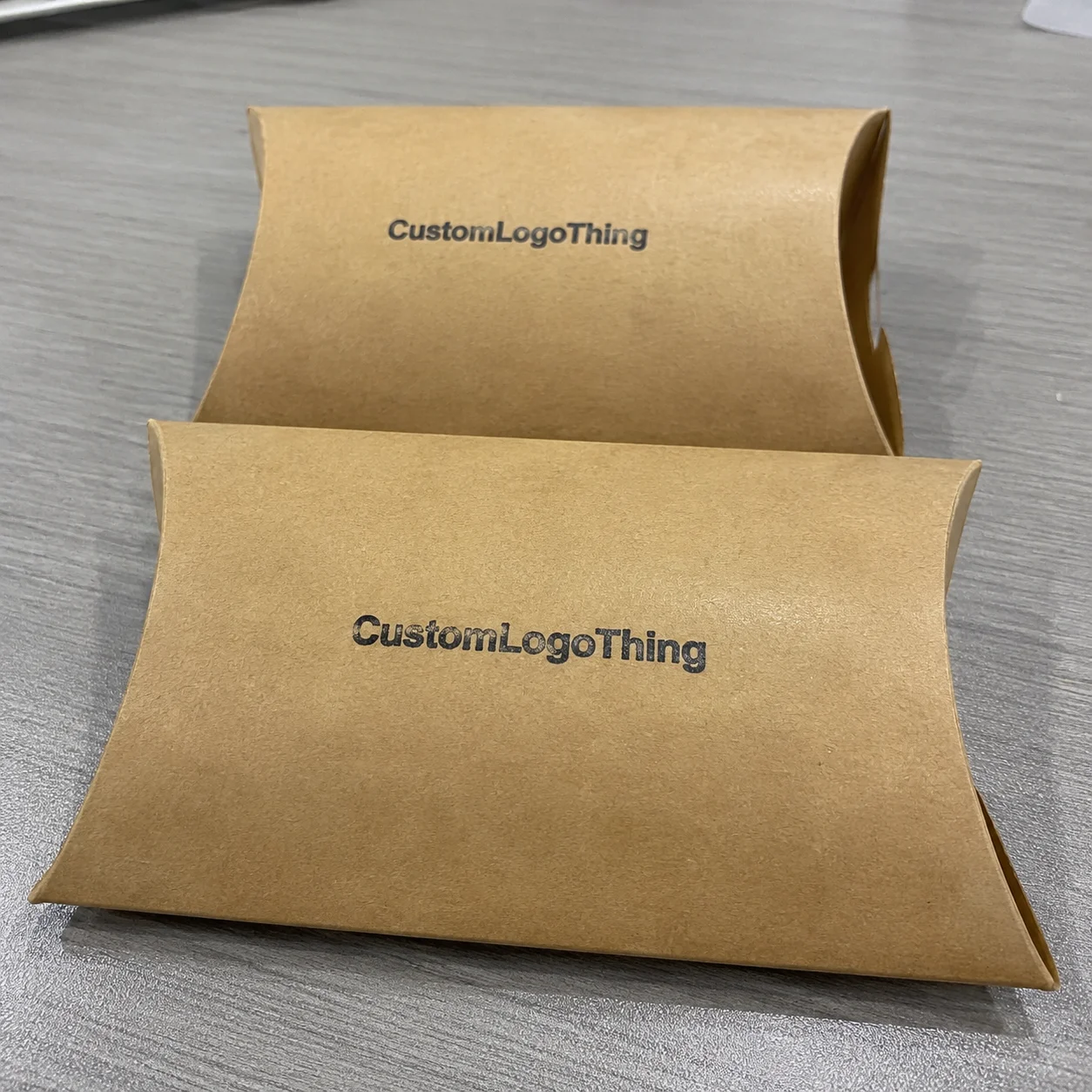
Folding cartons are one of the most common options for cosmetics, supplements, small electronics, and retail packaging. They ship flat, print well, and scale nicely in a packaging budget bulk order. If you choose SBS paperboard or CCNB correctly, you can keep the cost under control while still getting strong shelf appeal. A standard 350gsm C1S carton with matte varnish often lands in a very workable range for 5,000 to 10,000 pieces, especially when the size is already standardized.
Mailer boxes work well for ecommerce, subscription kits, and apparel. E-flute corrugated board offers a good balance of protection and price. I like mailers when the brand needs unboxing value but does not want to spend like a luxury label. A good mailer in a packaging budget bulk order often beats a fancy rigid box that costs too much to ship. I’ve seen brands fall in love with a rigid sample, then cry when the freight estimate arrived from Yantian to Chicago. Understandable, honestly.
Rigid boxes are beautiful, but I rarely call them “budget” unless the brand absolutely needs that premium feel and has the margin to support it. A rigid setup usually means higher labor, more material, and more freight weight. They can still belong in a packaging budget bulk order, but only if the product price can carry them. In my experience, rigid packaging often makes more sense for $80 gift sets than for $12 retail items.
Labels and sleeves are the quiet winners. If the container is standard, you can use a label or printed sleeve to Create Branded Packaging without paying for a fully custom carton. For many startups, that is the smartest packaging budget bulk order strategy because it keeps inventory flexible and reduces dead stock. A 2,000-roll label run out of Shenzhen can be easier to replenish than a fully printed carton order tied to one SKU.
Inserts need a reality check. Not every product needs a custom insert. I once saw a skincare brand spend $0.22 per set on molded pulp inserts when a simple folded paperboard divider would have done the job. They were impressed by the sample. The CFO was not. If the insert is only there to make the box look “complete,” you’re probably overpaying in your packaging budget bulk order. A paperboard insert in 300gsm stock can often do the same work for far less.
| Packaging type | Best for | Typical budget impact | Notes for bulk buying |
|---|---|---|---|
| Folding carton | Cosmetics, supplements, small retail items | Lower unit cost at volume | Great for packaging budget bulk order programs with standard sizes |
| Mailer box | Ecommerce, apparel, kits | Moderate cost, strong protection | Best when shipping damage is a concern |
| Rigid box | Luxury or gift products | Higher material and labor cost | Use only when perceived value justifies spend |
| Sleeve + tray | Multi-SKU products, shelf retail | Efficient if the inner pack is standard | Useful for branded packaging without full custom structure |
| Label-only solution | Jars, bottles, pouches | Lowest setup burden | Often the easiest packaging budget bulk order for small brands |
Material choice matters just as much as format. SBS paperboard is a common pick for retail packaging because it prints cleanly and feels stable. CCNB can be a cost-effective choice for inner liners or budget-oriented cartons, though the look is less premium. Kraft stock is popular for eco-minded brands and rustic aesthetics, while E-flute corrugated works well when shipping strength matters more than a smooth retail finish. In one factory visit in Guangzhou, I watched a buyer switch from a 400gsm coated board to 350gsm SBS and cut the carton cost by $0.04 per unit without any loss in stiffness for a 220g product.
Print method changes the economics too. Offset printing is usually better for larger runs because the per-unit price becomes more efficient as quantity rises. Digital printing is useful when the MOQ is lower or artwork changes often. If your packaging budget bulk order does not need full photographic coverage, a single-color or two-color print can save real money. One of my clients in the candle category cut their cost by 17% just by dropping from four PMS colors to one black ink and a kraft base. The box still looked good. It just stopped pretending to be a perfume launch.
There are smart spec tradeoffs that buyers should make without drama. Fewer PMS colors. Standard box sizes. No custom window. No soft-touch lamination unless the product actually needs a premium hand feel. A packaging budget bulk order does not need every finish under the sun. It needs the right ones. A matte aqueous coating in place of soft-touch can save $0.03 to $0.07 per unit on a 10,000-piece run, and that difference adds up quickly.
For brands that want mixed sourcing support, our Wholesale Programs are often the better fit when the order includes multiple packaging lines, labels, and Shipping Cartons That need coordinated pricing.
Industries use these options differently. Cosmetics often want strong shelf presentation and sharp color control. Supplements care about compliance and batch consistency. Candles need structure that protects glass and heavy fills. Apparel usually wants low-cost mailers with clean branding. Food packaging adds another layer because storage and regulatory requirements can change the spec fast. That is why a packaging budget bulk order should start with product needs, not a design board full of mood words. A snack box sold in California has different coating and storage needs than a soap carton shipping from a warehouse in New Jersey in February.
Packaging budget bulk order specifications buyers should lock in first
If you want your packaging budget bulk order to stay under control, lock the specs before you talk about foil, textures, or fancy finishing. The biggest cost mistakes happen when people chase visuals before they define the actual box structure. I’ve seen a brand approve artwork on a box that was 4 mm too tall. The product fit, but the shipping carton didn’t. That tiny error turned into extra void fill and a higher freight bill on Every Shipment. Tiny mistake. Big bill. Packaging’s favorite trick.
Start with exact dimensions. Length, width, height. Not “about this size.” Exact. A box that is 2 mm off can change nesting efficiency, packing speed, and damage rates. In a packaging budget bulk order, those tiny numbers matter because they compound across 5,000 or 50,000 units. A sloppy dimension spec is basically a tax you pay forever. If the finished size should be 120 x 80 x 35 mm, say that. Do not say “roughly match the jar.” Packaging factories in Dongguan are good. They are not mind readers.
Then define material thickness. If the product is light, you may not need heavy board. If the product is glass or fragile, underbuilding the carton is false economy. I usually ask clients what the product weighs, how it ships, and whether the box will be displayed on a shelf or tossed into an ecommerce shipper. That answer determines whether you need 300gsm paperboard, 350gsm C1S artboard, or corrugated E-flute. A good packaging budget bulk order balances cost with protection, not ego with price tags.
Lock these specs before quoting
- Exact finished dimensions with tolerances
- Material grade such as SBS, kraft, CCNB, or E-flute
- Print colors and PMS requirements
- Surface finish like matte varnish, gloss varnish, or no coating
- Insert requirement if any, with material type
- Pack count per carton for shipping efficiency
- Drop and crush needs based on shipping route
Structural choices can save money if you choose them early. A tuck-end carton is often cheaper than a more complex auto-lock bottom, but auto-lock can speed packing if the line is manual and labor costs matter. In a packaging budget bulk order, the cheapest box is not always the cheapest outcome. If assembly takes 8 seconds longer per unit, that labor can burn through the savings fast. Eight seconds doesn’t sound like much until you’re watching a pack line in a warehouse in Foshan and realizing it feels like forever.
On one supplement project, we replaced a heavy custom insert with a simple internal fold structure and a standard fit carton. That one change saved roughly $0.11 per unit and cut assembly time by about 15%. Nobody cried about the box. They cared that the numbers worked. That is the mindset a packaging budget bulk order needs. In real terms, that meant the client avoided a 4-hour overtime shift every production day.
Artwork setup matters too. Get the dieline approved. Keep your bleed correct. Respect the safe zone. Use the right file format. If your file is still being changed after proofing, expect delays and extra charges. A rushed file is one of the most expensive parts of a packaging budget bulk order because every late change can trigger a reprint or a plate revision. I’ve seen one “small typo fix” add $180 and three business days because the proof had already been sent to plate.
My honest advice? Standardize where you can. If you sell three SKUs, try to use one or two box sizes and vary inserts or internal branding instead of ordering a different carton for every product. Brands that standardize their packaging design usually get better rates and fewer inventory headaches. That is especially true for custom printed boxes in ecommerce and retail packaging, where small changes can make production messy.
For guidance on material sourcing and responsible fiber selection, the FSC site is a solid reference. If sustainability matters in your packaging budget bulk order, use certified paper where it makes sense and avoid overbuying finishes that make recycling harder. Also, if your packaging is moving through transport testing, the ISTA standards are worth reviewing. I’ve seen a box pass a desk test in a Shanghai office and fail in actual transit because nobody checked the real shipping profile. Paper doesn’t care about your optimism.
Packaging budget bulk order pricing, MOQ, and real cost drivers
The price of a packaging budget bulk order is never just the unit price. That is the first thing people want, and the first thing that misleads them. Material grade, quantity, print color count, finishing, dieline complexity, and tooling all move the number. Even the layout on the printing sheet can change waste percentage. I once watched a board cutter in Dongguan save almost 6% in material waste by changing nesting orientation. Six percent is real money when you’re talking about 30,000 units. That’s the kind of detail that separates a decent quote from a useless one.
MOQ matters because it tells you where the per-unit price starts to improve. Higher quantity usually means lower unit cost, but only if you can actually store and sell the inventory. A packaging budget bulk order with a massive MOQ is not smart if it ties up cash for six months. I’ve seen small brands buy 50,000 boxes because the price looked great, then run out of shelf space and move cartons from one warehouse corner in Los Angeles to another like they were family heirlooms. Funny for nobody. Especially the warehouse manager.
Here’s a practical pricing framework I use when reviewing a packaging budget bulk order quote:
- Setup fees for plates, dies, or prepress work
- Sample or proof costs before production
- Production cost per unit
- Freight from factory to warehouse
- Customs and duties if the route requires them
- QC or inspection charges
- Contingency for reprints, damage, or overage
“Cheap” quotes are often incomplete quotes. They leave out freight, inspection, or even the final packing method. That is how a buyer thinks they saved $500, then discovers the actual invoice is $1,200 higher after add-ons. In a packaging budget bulk order, I would rather see a fair quote with everything included than a suspiciously low quote with holes in it. Hidden costs are not a strategy. They’re just a delayed argument.
Ask suppliers for tiered pricing. I like to see pricing at 1,000, 3,000, 5,000, and 10,000 units. That way you can see the break-even point and decide whether the inventory risk is worth the savings. Many buyers discover that the sweet spot for a packaging budget bulk order is not the highest volume. It is the volume where the unit price drops enough to justify the cash tied up on the shelf. For example, a carton might move from $0.19 at 1,000 pieces to $0.15 per unit for 5,000 pieces, then down to $0.13 at 10,000 pieces. That extra savings only matters if you can actually move the stock.
Lead times and pricing are linked too. If you rush a job, the factory may charge more for scheduling priority, labor overtime, or air freight. I’ve negotiated with suppliers in Shenzhen who were perfectly willing to move a job up, but only after the buyer accepted a higher unit rate to cover production disruption. Fair enough. The press doesn’t run on wishful thinking, and neither does my patience.
A good supplier should tell you the truth about what costs more. Sometimes it’s the finish. Sometimes it’s the structure. Sometimes it’s the fact that your “simple” box has three lock tabs, a window cutout, and foil stamping on two sides. That is not a simple packaging budget bulk order. That is a manufacturing puzzle. If you need gold foil on both sides and a custom insert, don’t be surprised when the quote reflects reality.
If you want a broader buying path, FAQ content can help with prep questions before you request pricing. But for real comparison, always ask for the landed total and not just the factory line item. That number tells the truth.
Packaging budget bulk order process and production timeline
A solid packaging budget bulk order follows a predictable process. First comes the quote request. Then the supplier reviews spec, structure, and quantity. After that comes artwork prep, proof approval, production, QC, packing, and freight booking. If any of those steps get sloppy, the schedule slips. That is not pessimism. That is packaging reality. On a standard run out of Shenzhen, the full cycle often takes 18 to 25 calendar days, depending on materials and shipping method.
Typical timeline pressure points are easy to spot if you have done this more than once. Artwork revisions can eat 2 to 5 business days. Proof approval can sit for another 1 to 3 days if the buyer’s team is slow. Material sourcing can take longer if the board stock is special or the factory is running peak capacity. A packaging budget bulk order is faster when the file is final and the supplier can keep everything in-house. For standard folding cartons, production is often 12-15 business days from proof approval; custom rigid boxes usually take longer, often 15-20 business days.
Here’s the basic flow I recommend:
- Send exact dimensions, print requirements, and quantity.
- Review the quote and confirm landed cost.
- Approve the dieline and artwork layout.
- Request a physical sample or pre-production proof if the structure is new.
- Approve production only after checking the sample.
- Run QC at key checkpoints.
- Book freight once packing photos and counts are confirmed.
Speed comes from preparation. Finalize dimensions early. Send print-ready files, not “draft one” and “just a quick change.” Approve samples quickly. Avoid mid-run design changes. Every change after the proof can trigger waste. I watched one cosmetics client delay a packaging budget bulk order by almost two weeks because they decided to move a logo 8 mm to the left after production had started. Was it worth it? Not even close. Nobody bought the lipstick because the logo was centered by committee.
Quality control is where a smart buyer protects margin. Ask for a pre-production sample, an in-line inspection, a final carton check, and shipment photos or a report before dispatch. If the supplier cannot show you what got packed, you are buying blind. I like suppliers who can document these steps because it reduces arguments later. A packaging budget bulk order should be measured, checked, and packed like the money matters. Because it does. On export orders leaving Ningbo or Shenzhen, I also want packing counts listed clearly: 100 units per inner carton, 10 inner cartons per master case, and a gross weight that actually matches the freight booking.
In-house capabilities help too. When a supplier handles printing, finishing, and QC internally, the process usually moves with fewer handoffs. Outsourcing every step can introduce delays and errors. I’ve walked into factories where the print was perfect but the die-cutting partner missed the cutting tolerance by 1.5 mm. That kind of miss ruins the whole batch. One roof is not always mandatory, but it sure makes a packaging budget bulk order easier to manage.
Why Custom Logo Things is built for packaging budget bulk order projects
Custom Logo Things is built for buyers who want a packaging budget bulk order that makes financial sense, not one that looks good in a quote email and falls apart in production. I’ve spent years sitting across from factory owners, board suppliers, and print managers in Dongguan, Shenzhen, and Guangzhou who all had opinions. Some were helpful. Some were expensive. The useful ones always started with the same question: what does the product actually need?
That approach saves money. I’ve negotiated board grades, nesting layouts, and finish changes that shaved real dollars off the job. Once, a simple shift in board grade reduced total cost by over $900 on a mid-size run without hurting product protection. Another time, tightening the dieline layout lowered waste enough to improve the margin by nearly 4%. That is the kind of thinking a packaging budget bulk order deserves. On a 12,000-piece run, that sort of change is not theoretical. It shows up on the invoice.
We focus on clear numbers. Real MOQ guidance. Practical specs. No pretending a luxury finish is “budget” because someone wants to close a deal. If the order needs a soft-touch coating, we’ll say what it costs. If a standard matte varnish will do the job, we’ll say that too. A good packaging budget bulk order depends on honesty more than clever selling. If the quote says $0.15 per unit for 5,000 pieces, we’ll explain exactly what that includes and what it does not.
Our strength is working directly with manufacturers, so the questions get answered faster and the pricing is more grounded. That matters when you are ordering custom printed boxes, inserts, labels, or a full packaging set. It also matters when one part of the order needs adjustment. Surprise charges usually happen when the middleman cannot explain the production line. We prefer to explain it before you pay. That usually saves 2 to 3 revision rounds and a small pile of unnecessary emails.
Transparent revisions are part of the value. If the dieline is wrong, we flag it. If the artwork needs bleed correction, we flag it. If the order quantity is too low to hit the unit price target, we say that too. I’d rather lose a deal than watch a buyer waste money on a bad spec. That is not a dramatic line. That is just good business.
One-stop sourcing helps as well. Boxes, inserts, labels, and shipping cartons under one roof reduce coordination time and prevent mismatched specs. That is especially useful for branded packaging programs where everything has to line up visually and structurally. When the outer box, inner insert, and label all match, the final package feels intentional. That is packaging design doing its job. It also helps when the production schedule is tight and the buyer wants one shipment from one region, usually Guangdong, instead of chasing three vendors in three cities.
Custom Logo Things also supports buyers who want retail packaging that can survive transit and still look polished on arrival. We pay attention to print consistency, corrugate strength, and how the product sits inside the box. That is the difference between package branding that looks nice on a mockup and package branding that keeps working after the box has been shipped 700 miles.
“A cheap box is not cheap if the product breaks, the brand gets blamed, and you have to reorder 5,000 units.” That’s what I told a candle client after we reviewed their first sample together in a factory near Shenzhen. They laughed. Then they approved the better spec.
How to place your packaging budget bulk order and avoid expensive mistakes
Before you request pricing for a packaging budget bulk order, collect the basics: exact dimensions, product weight, artwork files, target quantity, and shipping destination. If you send a supplier a vague request, you get a vague quote. That is not a mystery. It is what happens when the spec sheet is thin. And yes, “please advise” is not a spec sheet. Neither is a screenshot of a notebook sketch from a meeting in Brooklyn.
Ask for three quote levels. I want to see the minimum MOQ, the preferred volume, and the best-value volume. That gives you the unit cost curve and helps you judge where inventory risk starts to outweigh savings. A smart packaging budget bulk order decision comes from comparing unit price against cash tied in stock, not from picking the lowest number on the page. If a supplier quotes 3,000 pieces at $0.19, 5,000 at $0.15, and 10,000 at $0.13, you can make an adult decision instead of a guess.
Request a sample or pre-production proof before you approve full production, especially if the structure is new or the print setup is complex. I’ve seen too many clients skip sampling because they wanted to move fast, only to discover the closure tab did not fit the product. That fix cost more than the sample would have. In a packaging budget bulk order, the sample is cheap insurance. A physical prototype from Guangzhou is a lot cheaper than a warehouse full of unusable cartons.
Also confirm the use condition. Will the box sit on a shelf? Ship in ecommerce cartons? Handle hot warehouses? Deal with moisture? Be exposed to retail handling? Those conditions change the material choice. A carton for dry shelf display is not the same as one traveling through a humid distribution center in Miami in August. If your product packaging spec ignores the actual use environment, the box can fail in a way that is entirely predictable. Packaging loves to punish assumptions.
Here’s the order checklist I recommend:
- Finalize dimensions and product weight
- Choose board stock and finish
- Confirm print colors and brand files
- Approve dieline and sample
- Review landed cost, not just unit price
- Reserve production capacity
- Lock freight timing with your receiving team
One more practical rule: do not keep waiting for a mythical perfect quote. I’ve watched buyers stall for three extra weeks trying to save $0.03 per box, only to miss a launch window that cost thousands in sales. That is a painful lesson. A packaging budget bulk order should be judged by total business impact. If the order protects the margin and gets you to market on time, it’s a win.
The actionable takeaway is simple: lock the dimensions, material, print count, and landed-cost target before you ask for quotes, then compare suppliers on the full job, not the cheapest line item. That’s how you keep a packaging budget bulk order from turning into a mess with a tracking number.
If you want help comparing options, our Custom Packaging Products page and Wholesale Programs page are good starting points, and our FAQ answers the usual setup questions before you send a quote request.
For brands serious about margin, the conclusion is simple: a well-planned packaging budget bulk order cuts waste, protects the product, and keeps the business from paying for avoidable mistakes twice. That is how you cut Costs Without Cutting corners.
FAQ
What is the best packaging budget bulk order quantity for small brands?
The right quantity depends on monthly sales velocity, storage space, and cash flow. Many small brands start at the MOQ or the first pricing tier where the unit cost drops enough to matter, then scale up once reorder data is stable. In practice, that is often 1,000 to 3,000 pieces for startups and 5,000 to 10,000 pieces for brands with a steady reorder cycle.
How can I lower packaging budget bulk order costs without hurting quality?
Use standard sizes, reduce print colors, and choose materials that match the product weight instead of overbuilding the box. Compare landed cost, not just unit price, because freight and rework can erase savings fast. A switch from soft-touch to matte varnish, for example, can trim $0.03 to $0.07 per unit on a 5,000-piece order without wrecking the look.
What files do I need before requesting a packaging budget bulk order quote?
Have box dimensions, product weight, logo or artwork files, print requirements, and target quantity ready. If possible, send dieline-ready files or ask the supplier for a template before finalizing design. A good brief also includes shipping destination, such as Los Angeles, Toronto, or Rotterdam, because freight changes the landed total.
How long does a packaging budget bulk order usually take?
Timing depends on sample approval, material availability, print complexity, and freight method. For a standard folding carton, production is often 12-15 business days from proof approval; rigid boxes can take 15-20 business days. Add 3 to 7 business days for sea freight planning or 2 to 5 business days for domestic trucking, depending on the route.
Can I mix sizes in one packaging budget bulk order?
Sometimes yes, but mixed sizes can reduce pricing efficiency and complicate production scheduling. A better approach is often to standardize sizes across SKUs and adjust inserts or internal fit instead of making every box unique. If you need multiple sizes, ask for separate pricing tiers so you can see whether a 2,000-piece run of each size beats one larger combined order.