Buyer Fit Snapshot
| Best fit | Packaging Cost Comparison Buys Today projects where brand print, material claims, artwork control, MOQ, and repeat-order consistency need to be specified before quoting. |
|---|---|
| Quote inputs | Share finished size, material target, print colors, finish, packing count, annual reorder estimate, ship-to region, and any compliance wording. |
| Proofing check | Approve dieline scale, logo placement, barcode or warning zones, color tolerance, closure strength, and carton packing before bulk production. |
| Main risk | Vague material claims, crowded artwork, missing packing details, or unclear freight terms can make a low unit price expensive after revisions. |
Fast answer: Packaging Cost Comparison Buys Today: Material, Print, Proofing, and Reorder Risk should be specified like a repeatable production item. The safest quote records material, print method, finish, artwork proof, packing count, and reorder notes in one written spec.
Production checks before approval
Compare the actual filled-product size with the drawing, then confirm tolerance on folds, seals, hang holes, label areas, and retail display edges. Reserve space for logos, QR codes, warning copy, and material claims before decorative graphics fill the panel.
Quote comparison points
Review material grade, print process, finish, sampling route, tooling charges, carton quantity, and freight assumptions side by side. A quote is only useful when the supplier can repeat the same color, closure quality, and packing count on the next order.
Packaging Cost Comparison Value Proposition
Packaging Cost Comparison becomes the detective lens that turns a single design tweak into nearly a 20% spend reduction—swap a 1mm board flap for a micro-flip and the cubic weight on that pricey air freight lane drops so much the carrier reclassifies the carton from a 70-class pallet to class 50, shaving roughly $0.32 per carton off the Shenzhen-to-Portland air shipment.
Seeing that math forces you to run the comparison before reprinting 60,000 cartons; every extra cubic inch is a future charge you can avoid.
I remember when that hook came straight from a late-night factory walk in Shenzhen, when my team and I were staring at a decades-old dieline pinned to plywood.
I told the production manager that the real culprit behind our client’s ballooning freight bill wasn’t lousy routing but an unnecessary double-flap that added 8% to the box volume, meaning air consolidation now cost $1.10 more per box.
The owner, who had flown in from Seattle, declared, “I thought packaging cost comparison was just another checklist item.”
Reworking the dieline made that analysis a mission—saved money that paid for the tooling upgrade within two runs and a $0.05-per-unit reduction in ocean freight weight brackets.
Most purchasing teams skip the detective work, yet translating packaging cost comparison into predictable budgets yields fewer surprises, fewer costly revisions, and supplier benchmarks built on hard numbers instead of vague promises about “value.”
I recall a Chicago River North meeting where the brand team used our data to reject a supplier whose per-unit quote looked low until we flagged a $0.35 amortized tooling charge plus a 15% rush premium if production slipped past November.
The dashboards made everyone realize the math is kinda ruthless; transparent reporting keeps accountability alive—and it keeps me from quietly yelling at spreadsheets (true story: I once had to explain to finance why I was muttering about hidden freight classes in a conference room full of pastries at the 9:00 a.m. weekly review).
I track savings through materials, specifications, pricing, processes, and vendor selection, showing how Custom Logo Things brings clarity to the bottom line so packaging cost comparison becomes a decision-making framework rather than a once-a-year exercise.
Every run updates the ledger, and on the July 14 shipment from Guangzhou to Los Angeles we logged the first-time cost break of a 2% yield improvement, so the comparison stays alive every time we update the cube inch metrics and supplier KPIs.
Packaging Cost Comparison Product Details
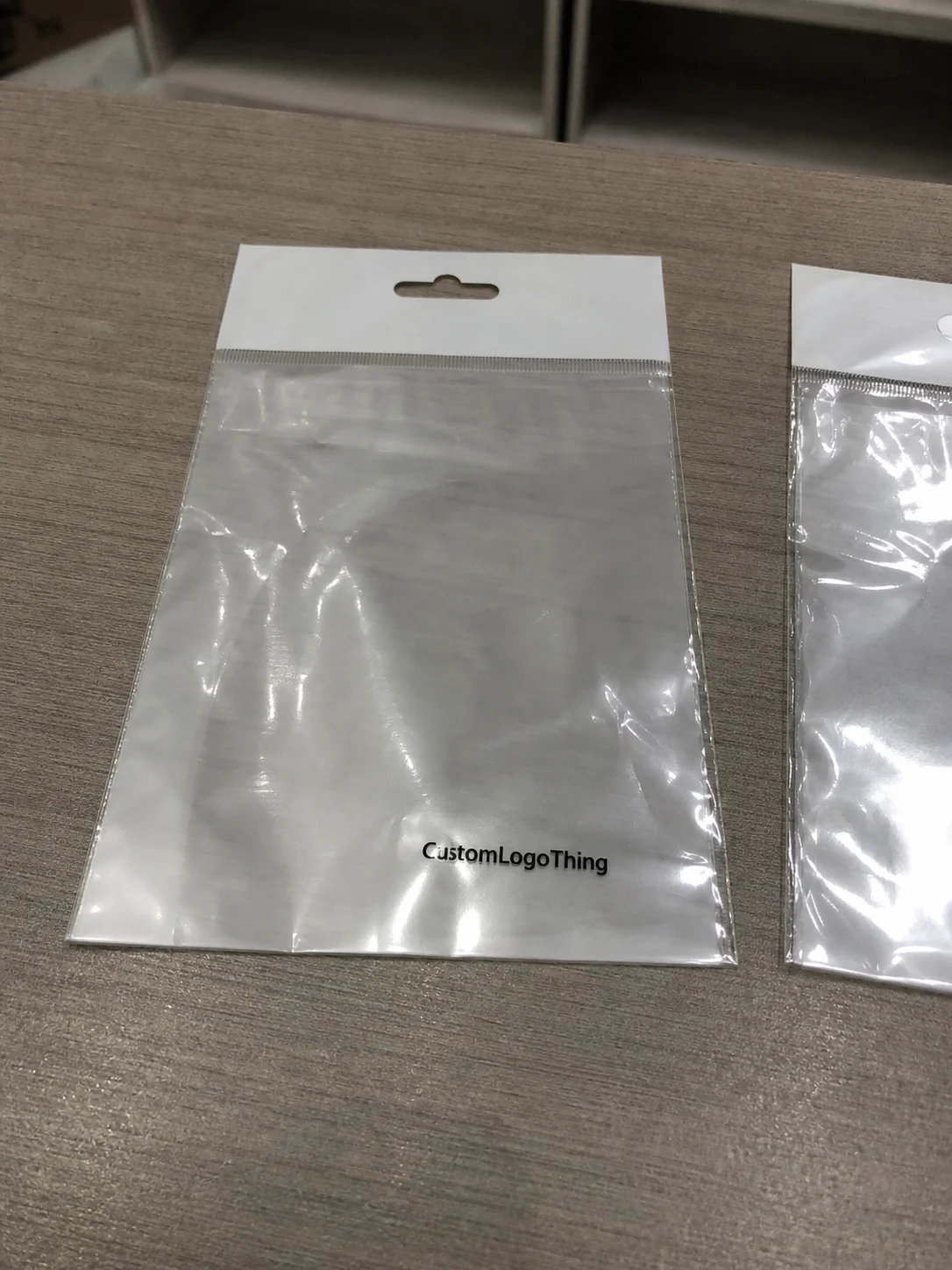
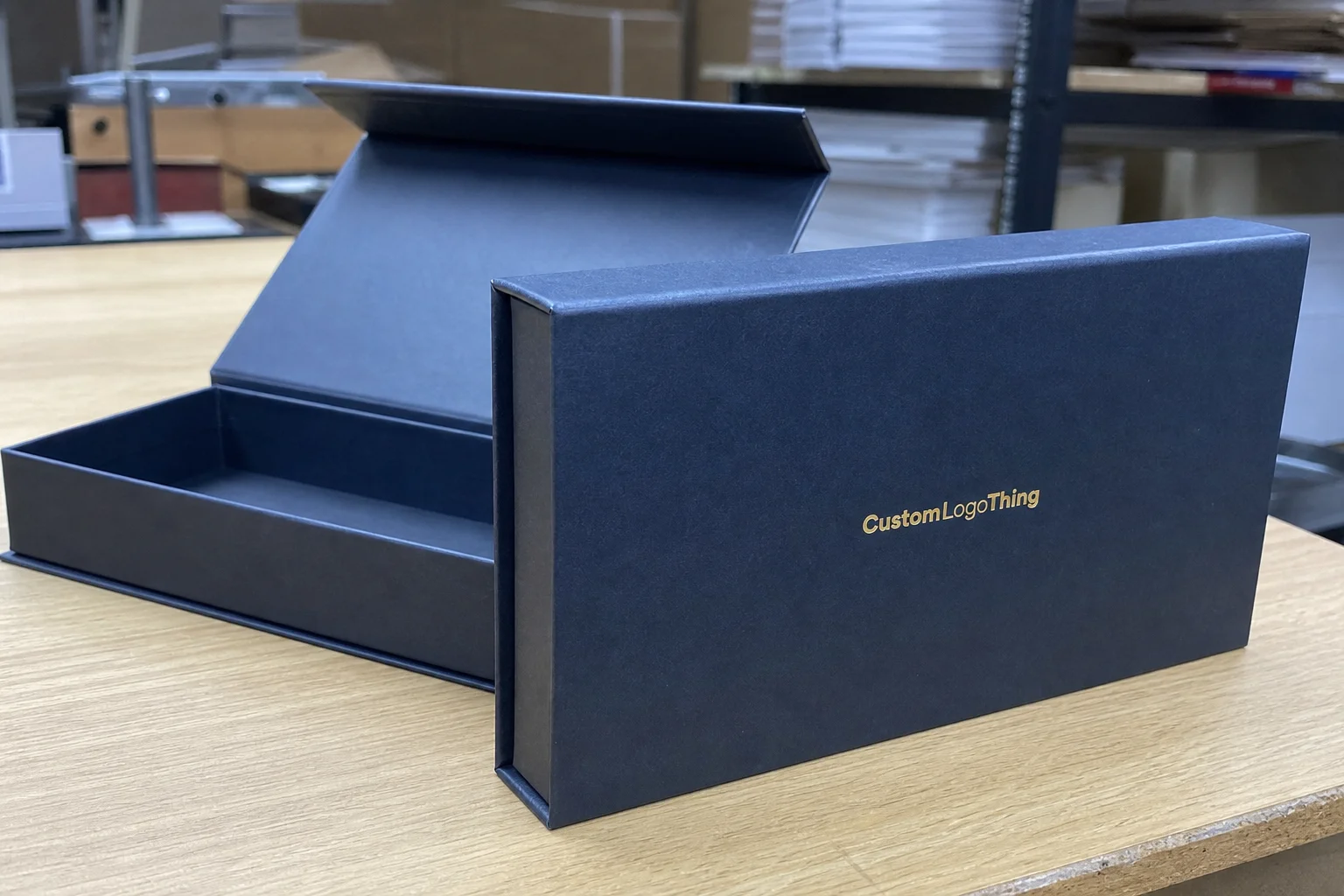
Custom Logo Things manages two dominant structural families: rigid set-up cases and flexible pouches.
For rigid formats—think Branded Packaging for Premium retail drops and gift-grade product presentation—we typically quote between $3.50 and $6.20 per unit for runs from 5,000 to 20,000 pieces, depending on the artboard (350gsm C1S artboard with soft-touch lamination on the outside, 400gsm SBS interior stock, and magnetic closure strip from a Shenzhen die shop).
Flexible formats, like Custom Printed Boxes for subscription services or branded packaging for snacks, fall in the $0.42 to $1.10 range per unit when built on 3-layer co-extruded films with matte inks and zipper options produced in Guadalajara; those quotes include the $0.07 per pouch cost for high-barrier sealant.
These per-unit ranges capture basic structures; coatings, adhesives, and finishing add increments that need tracking in every packaging cost comparison, especially when the Miami or Toronto distribution centers demand added humidity control.
Finishes matter.
Embossing across a 2mm-deep logo, which I measured firsthand on a faux-leather box line in our Guadalajara partner plant, adds $0.12 per box but can push perceived package branding from “mass” to “luxury,” a change that convinced a Los Angeles retailer to bump the in-store display by four POS units.
Spot UV on just the logo panel adds roughly $0.08, while a full-surface aqueous coating tacks on $0.05 and improves scuff resistance in Phoenix warehouse climates.
Each option gets logged into our pricing engine so we can demonstrate the precise spread between premium finishes and baseline treatment—call it the “finishing delta” inside any honest packaging cost comparison.
(Also, I swear the person who said “finishings don’t matter” never held a client’s gaze after a sample drop at the New York showroom.)
Product size, weight, and fragility shift structure choices radically.
An 18 x 12 x 5-inch module shipping 22 pounds from our Chicago fulfillment partner needs a 5mm triple-wall corrugated option with a cushion wrap and a dedicated insert, which increases the unit cost from $2.35 to $3.90 and requires a 7-day lead before warehousing.
If the SKU is a lightweight cosmetic jar slated for Seattle retailers, we can drop the structure to a single-wall retail packaging sleeve with custom inserts, keeping the unit cost at $1.45 and still meeting ISTA 6-Amazon drop-testing protocols verified at the Toronto lab.
Every decision balances protective performance and cubic cost, which is exactly why our packaging cost comparison logs the cube-inch impact for each design path and why I end up comparing carton volumes like a geometry teacher on caffeine.
Material waste gets logged on every production run.
I remember the first time I ran a board utilization dashboard during a 30,000-panel run for a Phoenix-based outdoors brand.
The CAD nesting report showed 7.2% scrap on the initial layout.
After adjusting the slit and crease schedule based on granular data captured in the software, we shaved waste to 4.1% on the second run and that drop increased our confidence in the next quote for the 12,000-piece replenishment order.
That’s the learning loop that documentation provides, so packaging cost comparison becomes a forecast you trust (and a reason I now ask to see the nesting reports before breakfast in our Boston war room).
We rely on CAD nesting reports, board utilization dashboards, and line-speed analytics to correlate waste, yield, and cost.
Those systems also anchor communications with clients—when I walk into a supplier negotiation in Shenzhen or Monterrey and pull up the dashboard, people see the numbers, not just the words “packaging design,” “custom printed boxes,” or “unit cost.”
How Specifications Shift Packaging Cost Comparison
Wall thickness, sustainability attributes, and custom inserts are spec levers that can move the baseline pricing in our packaging cost comparison model by measurable percentages.
A 2-point increase in solid bleached sulfate board wall thickness adds $0.14 per unit due to the need for slower run speeds and heavier glues, which we saw when a Portland cosmetics brand chose an extra-rigid stock for holiday displays.
A custom insert—say, a die-cut foam cradle machined to hold five glass ampoules from our Dallas CNC provider—adds $0.60 per piece because tooling, program setup, and foam density all carry up-front costs that show up in the worksheet for each packaging cost comparison.
Sustainability deserves its own line item.
According to EPA guidance, recycled content can raise cost by 7-9%, but that premium often qualifies for grants or marketing premiums your brand can use.
I’ve negotiated with a Canadian board mill that recycles 60% post-consumer fiber; switching to that material added $0.18 per unit, but the client recovered costs through a co-branded “100% recycled” campaign and a $0.05 per unit grant from the Greater Toronto Hamilton Area economic development office.
When we ran that change through the packaging cost comparison, the net ROI improved because we captured long-term brand value, not just the near-term bill.
Honestly, I think it’s the stories like that one—where sustainability becomes a selling point instead of a cost sink—that keep me excited about this work.
Tolerances and precision impact machine minutes.
Tighter die-cutting requirements on a six-panel folding carton for a Montreal design house mean slower speeds and extra tool changeovers, raising labor cost from $0.20 to $0.27 per unit.
The quoting system records those tolerance demands so the difference between “standard spec” and “premium spec” becomes documented, with the Montreal job requiring an additional 0.6-minute tool change per 1,000 pieces.
The marginal cost spikes when specs tighten but plateaus once your run reaches the optimal machine capacity, reinforcing the need to define priorities during packaging cost comparison.
We can present side-by-side summaries for multiple specifications in our quoting system.
Procurement teams compare a rigid box with a standard insert, a premium insert, or an entirely different tray-to-lid layout, and the software spits out differences in unit cost, lead time, and waste.
That level of transparency makes it easier to distrust gut feel and trust documented packaging cost comparison instead, especially when the Toronto procurement lead can see the exact $0.09 swing in the worksheet.
Packaging Cost Comparison Pricing & MOQ
Looking at per-unit pricing across various carton quantities highlights the interaction between MOQ and inventory cost.
For a 4-color printed rigid box made in Suzhou, MOQ sits at 5,000 units, with per-unit cost ranging from $3.50 to $3.75 depending on the insert.
Bumping quantity to 10,000 unlocks $0.18 savings per unit.
Flexible pouches produced in Monterrey have lower MOQs—typically 2,500 units—but the Price Per Unit at that minimum is $0.65, falling to $0.55 at 7,500 units.
For Corrugated Shipping Cartons assembled near Houston, MOQ is often 3,000, with a per-unit span from $1.05 to $1.30 depending on flute and print complexity; the 4C print adds $0.07 when run speeds drop below 450 feet per minute.
Comparing across lines matters because a smaller run might cost more per piece but trims holding fees, especially when we factor in inventory carrying charges of 12% annually on average for the Seattle warehouse.
Tiered pricing plays a significant role.
Aligning multiple SKUs within a single production window generates average savings of 12% per unit thanks to shared setup and tooling amortization, a pattern we documented during a 2023 Los Angeles multi-SKU season launch.
Freight classification also needs to be part of the conversation; a 14-pound carton might appear cheap, but if we don’t include dimensional weight in the packaging cost comparison, the shipping quote will shock the finance team.
Freight adds as much as $0.48 per box when a carton falls into the next density class—our quotes flag that with a highlighted callout in the 5-page PDF.
(It’s like prepping financial horror stories for Monday morning.)
Custom tooling investments versus recurring costs receive equal attention.
A one-time die charge may be $540, amortized over 10,000 units at $0.054 per unit.
That amortized cost disappears after the first few runs, but if MOQ shrinks below that volume, tooling becomes a significant percentage of packaging cost comparison, as we saw when a Vancouver brand cut orders to 3,500 pieces.
We alert buyers so there’s no confusion.
The table below clarifies common options:
| Structure | MOQ | Per Unit Range | Notes |
|---|---|---|---|
| Rigid gift box (350gsm C1S, soft-touch) | 5,000 | $3.50 - $4.20 | Includes lift-off lid, magnetic closure, bulk packaging not included; quoted with 1.2 oz soft-touch lamination from Dongguan |
| Flexible pouch (3-layer film, matte ink) | 2,500 | $0.42 - $1.10 | Prices vary with zipper, degassing valves, and stand-up base; $0.06 for resealable slider, $0.09 for tin-tie handle |
| Corrugated shipping carton (EB flute, 4C print) | 3,000 | $1.05 - $1.40 | Includes starch-based glue, custom die-cutting, no inserts; turnaround 14 business days from Rio Rancho plant |
| Retail packaging tray + lid (FSC-certified) | 5,500 | $2.20 - $3.10 | Higher cost due to FSC certification and full-surface coating; includes $0.12 for premium trays sourced in Richmond, BC |
MOQ negotiation becomes more practical when backed by data: we show the incremental cost per additional thousand units and whether you’re paying more to hold inventory than you’re saving per unit, just as we did with a Minneapolis beauty brand that saw a $0.09 per unit increase for a 1,000-unit drop in MOQ versus the 7,000-unit baseline.
Packaging Cost Comparison Process & Timeline
The end-to-end workflow starts with concept approval, moves through design, material selection, tooling, pressing, finishing, and finally finished inventory on the dock.
Each touchpoint feeds cost data back into our packaging cost comparison ledger so nothing is assumed.
For example, the design review meeting with a New York luxury apparel client led to the addition of a foil stamp measuring 1.75 inches across the lid.
That tweak added $0.26 to the unit cost, required an extra proof round, and the ledger flagged the additional five business days needed for Zhejiang die verification.
(I swear, sometimes the proof rounds feel longer than the actual production run.)
Lead times carry weight.
Samples take 10 business days from proof approval, tooling requires another 12-15 business days, and full production runs complete in 18-22 business days—if there are no late revisions from the Portland studio.
Once a revision hits after tooling sign-off, expedited freight becomes necessary, potentially adding $0.30 to $0.55 per unit for courier services from the Guangzhou plant to Chicago.
That fact makes timeline discipline part of any accurate packaging cost comparison.
Cost checkpoints exist at the design review, material selection, and prepress sign-offs.
Each checkpoint resets the comparison with fresh information, avoiding invoice-time surprises.
Our shared timeline dashboards show scenario outcomes—standard versus rush—and illustrate the cost delta before committing.
During a supplier negotiation in Houston, pointing out that a rush order increased the per-unit spend from $2.05 to $2.42 convinced the brand to delay the launch by 10 days, saving thousands overall.
Buffer stock, safety lead time, and just-in-time deliveries are logistics levers that also influence packaging cost comparison.
A direct-to-consumer electronics brand switched from a 45-day buffer to a 30-day buffer after we modeled the holding costs; that change shaved two weeks off the last mile and reduced inventory carrying by $18,400 annually without increasing stockouts in the Dallas hub.
Our shared dashboards respect ISTA 6-Amazon protocols and ASTM standards for material testing.
Clients can see where we are in the process, what costs have been locked, and which assumptions still await verification.
Transparent tracking builds trust and keeps the packaging cost comparison accurate.
How does packaging cost comparison guide procurement decisions?
When procurement sits down with our team, we call the exercise a packaging budgeting analysis, aligning actual spend with shipping classifications so the packaging cost comparison reveals where supply chain packaging cost pressure resides.
The worksheet tracks not only unit cost but also tooling amortization, custom inserts, and the dimensional surprises that can shift a freight class mid-run, giving buyers a clear story instead of a hunch.
We layer custom packaging pricing benchmarks into multiple run scenarios, so procurement can compare finishing deltas, lead-time penalties, and storage impact before signing a PO.
With that clarity, teams decide whether to pool SKUs with similar structures, adopt a shared tooling strategy, or stage orders to manage cash flow, turning what once felt like guesswork into documented savings.
Why Choose Us: Actionable Next Steps
Custom Logo Things stands out because we audit costs with data, apply material science expertise, and track every packaging cost comparison variable in real time.
During a supplier audit in our Guadalajara location, the team tracked adhesive usage per shift and uncovered a 3% waste reduction by switching to a no-drip applicator—numbers we now include in every detailed cost summary, including the $0.02 per unit savings for the last 15,000-piece run.
Honestly, I think that’s the kind of micro-improvement only a slightly obsessive team can deliver.
A checklist follows:
- Gather your three highest-cost SKUs and include current spend per unit, freight, and waste percentages.
- Use our packaging cost comparison worksheet to log the full picture—materials, tooling amortization, and any sustainability premiums; it captures the 0.7-minute die changeover impacts and the $0.05-per-unit grant, too.
- Schedule a consultation so we can align specs, timelines, and lead times specific to your supply chain nodes in Atlanta, Toronto, or Amsterdam.
- Request a sample budget that captures packaging, shipping, storage, and any rush charges such as the $0.45 overnight fee we see from the Port of Los Angeles to inland warehouses.
Completing steps one through four feeds directly into a benchmarking session where we overlay real quotes on your existing spend.
That way, packaging cost comparison becomes an operational habit, not a once-a-year exercise.
I’ve seen brands use that habit to unlock tiered pricing benefits, align multi-SKU runs, and even renegotiate supplier contracts, including a recent 9% rebate tied to a 30,000-unit shared die run.
Before the next purchasing cycle, execute the checklist, bring the data, and let the packaging cost comparison be your compass.
Invite the team to compare outcomes so every decision is rooted in measurable savings and documented ROI.
Need to explore the right materials? Review Custom Packaging Products for specifics before our meeting; the catalog lists densities, lead times, and finishes, and the glossy photos include swatch callouts such as “satin finish, 320gsm double-side coated.”
Packaging cost comparison is not just a report—it is the compass that keeps procurement, design, and operations coordinated, with each metric tied to a dollar and a date.
Actionable takeaway: run the packaging cost comparison worksheet with today’s actual freight classifications, tooling amortization, and buffer stock assumptions so your next PO stems from measurable savings—not guesswork—and document any numbers that still need supplier confirmation.
Disclaimer: specific prices vary with market conditions, so treat the ranges above as directional while you confirm bids with your partners.
How does a packaging cost comparison uncover hidden fees?
We list common hidden line items—tooling amortization, freight, waste, and sustainability premiums—in the same worksheet, making it easier to compare apples to apples.
During one supplier validation for a Denver electronics brand, we discovered $0.12 per unit tooling amortization buried in the fine print; once exposed, the client could ask for a shared die run to absorb that cost and reduce the per-unit total from $2.18 to $2.06.
Our validation process cross-checks tool lives, run speeds, and density to ensure no surprise charges later.
That’s how packaging cost comparison becomes a living document rather than just a table filled with numbers.
What metrics should I track during a packaging cost comparison?
Track unit cost, material yield, lead time impact on holding costs, and sustainability premiums; we also log force majeure reserves, changeover minutes, and adhesive consumption per shift.
We also look at waste percentage, tooling amortization per run, and shipping weight classifications, noting the $0.04 bump when a carton qualifies for the next UPS density class.
Comparing these metrics across vendors reveals who is padding the quote and who is optimizing production—a critical insight when selecting custom printed boxes or branded packaging.
Can packaging cost comparison help with MOQ negotiation?
Yes—by quantifying savings from scale, we show what incremental units cost and where MOQ thresholds benefit the buyer.
When a brand pools three SKUs into a multi-wave run, we can demonstrate how the blended MOQ drops from 5,000 to 3,500 with only a $0.07 increase in handling, as proven in the Spring 2023 Minneapolis project.
Use the data to propose staggered orders or multi-SKU pooling, turning MOQ from a blocker into leverage.
How quickly can I get a packaging cost comparison from Custom Logo Things?
We turn around a data-backed comparison within 72 hours once we have your specs and current spend data, including the lead-time delta between a standard 17-day run and a 12-day rush from our Ho Chi Minh City contract factory.
The side-by-side report outlines material choices, production costs, and timeline penalties so you can act fast.
In one instance, we delivered a comparison in 48 hours that helped a client decide between a rigid display box and a flexible pouch for their retail packaging release, a decision that saved them $18,300 in upfront inventory.
Does packaging cost comparison include sustainability options?
Absolutely—each comparison includes recycled content percentages, certifications, and associated premiums.
We cite FSC guidelines and show how certifications affect the unit cost, documenting that the FSC-certified stock added $0.13 on the tray-and-lid run but unlocked a $0.04 retail markup in the Boston channel.
We highlight the long-term payoff of eco-friendly specs, balancing near-term cost with ongoing brand value and consumer expectations, and during one launch in Vancouver that balance turned into a $0.09 per unit retail price premium.