Custom Printed Resealable poly bags are built for products that are handled more than once. That includes items opened in a store, resealed after sampling, returned to inventory, or stored by the customer after the first use. The bag has to do three jobs at once: protect the contents, present the brand, and close again without fuss.
That combination explains why these bags show up across apparel, accessories, hardware, craft supplies, consumer goods, and small electronic items. The format looks simple, but small specification changes can alter how the bag performs. Film type, thickness, closure quality, and print layout all affect whether the finished piece feels dependable or flimsy.
For buyers comparing branded packaging options, custom printed resealable poly bags often sit alongside cartons, sleeves, and other Custom Packaging Products. The difference is that the bag remains visible and usable after opening, which makes the packaging part of the product experience rather than a one-time wrapper.
A resealable bag only works well if the closure feels reliable, the artwork stays readable, and the film matches the product’s weight and shape. Miss one of those and the package starts working against you.
Why custom printed resealable poly bags solve everyday packaging problems
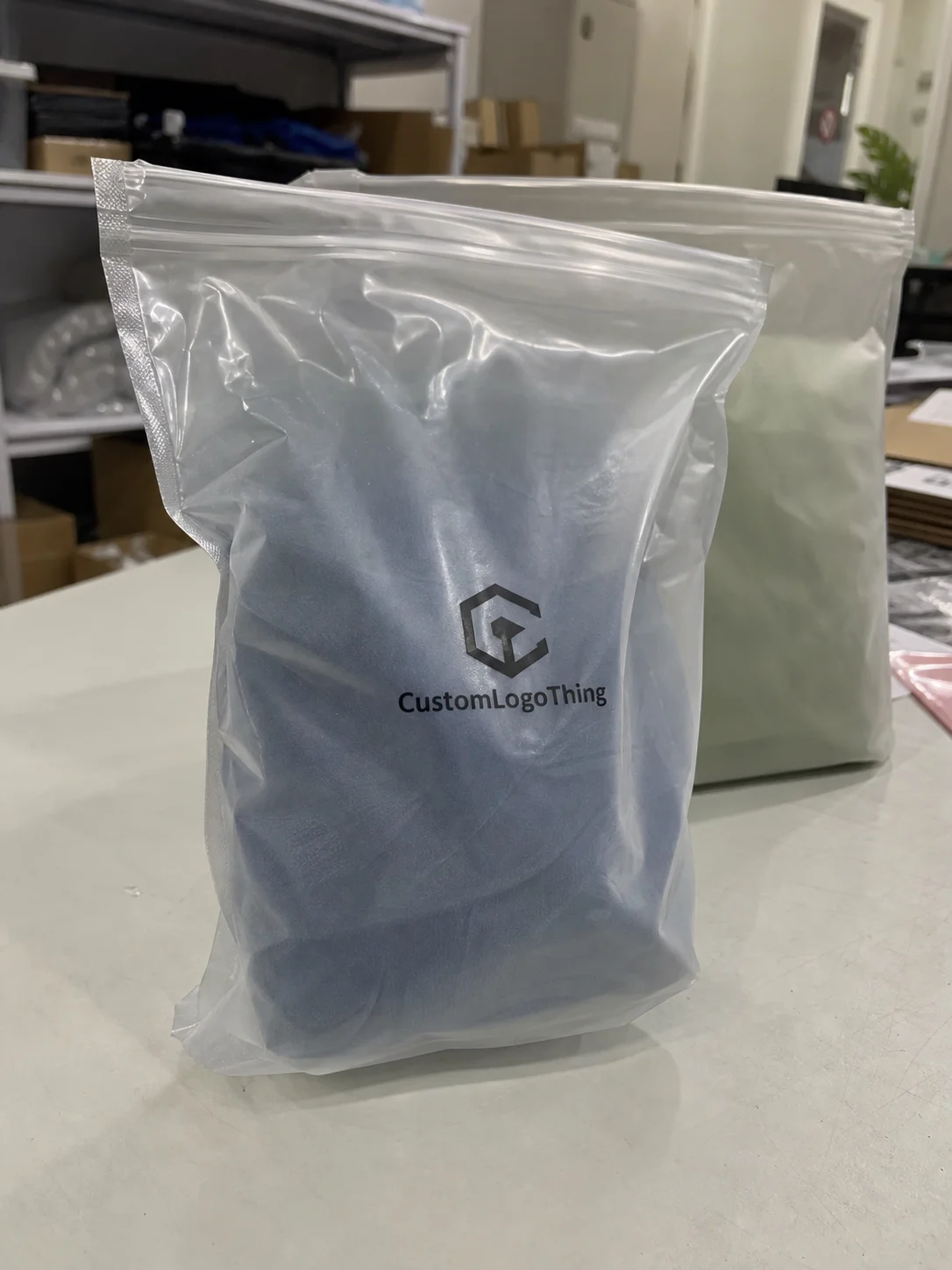
The best packaging removes friction. A sample may be opened by staff, checked by a buyer, and closed again later. A retail item may be handled several times before purchase. A parts kit may be counted, recounted, and put back into storage. In each case, custom printed Resealable Poly Bags help keep the contents together without tape, clips, or an extra outer layer.
The resealable closure is the feature that carries the most practical value. A press-to-close or zipper-style seal lets the customer reopen the bag without destroying it, which is useful for storage, returns, and repeat access. The printed surface adds a second layer of value by carrying the logo, product details, warnings, or size information in a space that stays in view.
That matters because retail buyers judge packaging quickly. A plain unmarked bag can protect a product, but it rarely adds confidence. A clean, printed bag suggests order and consistency, especially when the design is aligned with the item inside.
There is also a cost angle that gets overlooked. A bag that can serve as both display packaging and reclosable storage may reduce the need for additional inserts or secondary wrapping. That does not make it the cheapest option on paper, but it can simplify packing and reduce handling steps.
Not every printed poly bag should be treated the same way. A 2 mil bag may be enough for a soft accessory or sample pack. A 4 mil or 6 mil structure is often a better fit for heavier contents, sharp edges, or products that will be opened and closed many times. Choosing film weight based on the product’s actual behavior prevents tears, split seals, and complaints that start with packaging but get blamed on the item.
- Protects the product from dust, handling, and light moisture exposure
- Supports package branding with printed logos and product details
- Improves shelf appeal with a tidier, more finished presentation
- Helps storage and reuse after the initial opening
How the resealable closure and print process work
A resealable bag has three main elements: the film body, the closure, and the printed graphics. Most retail versions use polyethylene film, usually LDPE or a coextruded structure when extra clarity, puncture resistance, or print consistency is needed. The closure is commonly a press-to-close track or zip seal. Some formats also include a hang hole, header area, tear notch, or euro slot for merchandising on a peg.
The closure affects both the user experience and the packing line. A track that snaps shut with a clean, even feel tends to perform better in the customer’s hand than one that needs repeated pressing. Buyers notice that immediately. They may not know the technical reason, but they do know whether the bag feels secure.
Print method depends on order size, artwork complexity, and the number of colors. Flexographic printing is often used for larger runs with repeat artwork because the setup cost spreads out over more pieces. Digital printing is more practical for shorter runs or jobs that need less setup and faster changes. Both can produce sharp branding, but the layout must respect the safe print area around the seals, folds, and edges.
That safe area is not a formality. If the print sits too close to the zipper track or side seal, parts of the artwork can distort during filling or get cut off in conversion. Logos, barcodes, and instructions need enough breathing room to stay legible once the bag is sealed and handled.
Finish and film clarity also change how the design reads. On a clear bag, the product itself may become part of the presentation. On frosted, tinted, or opaque film, the artwork needs stronger contrast and more deliberate placement. A design that looks crisp in a flat PDF can behave differently once it is on a flexible surface and folded around the contents.
For teams comparing Custom Poly Mailers with resealable bags, the distinction is simple. Mailers are built for shipping. Resealable retail bags are built for access, display, and reuse. They may share film as a base material, but they are not interchangeable.
Key specs that affect performance, shelf appeal, and unit cost
The price of Custom Printed Resealable poly bags usually changes because of a handful of specs that sound minor until they hit the quote. Size, film construction, thickness, print coverage, quantity, and added features all affect the final number. A hang hole, matte finish, custom opacity, or special header can improve function, but each one adds cost and sometimes lead time.
Material choice is the first decision. LDPE is common because it is flexible, easy to seal, and familiar to converters. Coextruded films are used when a buyer needs stronger puncture resistance, a better print surface, or more consistent performance across the bag. Products with sharp corners, metal components, or rough edges often need a tougher film than the buyer expects at the start.
Thickness is usually quoted in mils, and that number should be treated as a performance decision rather than a shopping preference. A thinner film may reduce unit cost, but it can also mean more tearing, weaker seal performance, and more returns tied to damage. A heavier gauge may improve durability, yet it can also make a small retail item feel overpacked or stiff.
Print coverage matters too. A one-color logo on a mostly clear bag is a very different job from a multi-color layout that includes warnings, sizing, barcodes, ingredient notes, or artwork across multiple panels. More colors usually mean more setup and more complexity. For many buyers, the practical middle ground is a clean logo, product name, and enough open space to keep the contents visible.
| Common option | Typical use | Approximate price impact | Best fit |
|---|---|---|---|
| Clear LDPE, 2 mil, one-color print | Light retail goods, samples, accessories | Lowest setup and unit cost | Simple branded packaging with high product visibility |
| Coextruded film, 3-4 mil, two-color print | Moderate-weight products, kits, parts | Moderate increase | Better durability and stronger shelf presentation |
| Heavy-gauge film, full-coverage print, added hang hole | Retail display, sharper items, repeated handling | Higher cost per unit | Premium retail packaging with more function and branding |
MOQ matters as well. Lower minimums help with product launches or short test runs, but the unit price usually drops as quantity rises because setup gets spread across more bags. Freight can shift the final cost, especially for larger cartons or rush schedules. A quote without assumptions is hard to compare, so ask what is included before judging the number.
For many buyers, the real comparison is not between bags and no bags. It is between a bag that performs well enough to reduce handling problems and a bag that creates extra labor or rejects. One reprint can erase a small unit-cost saving quickly.
Custom printed resealable poly bags process, timeline, and production steps
The production path is usually direct, but it still depends on the buyer providing usable information early. A typical project begins with a quote request that includes product dimensions, closure preference, print colors, quantity, and any special features. From there, the supplier confirms material options and sends artwork requirements or a dieline if the bag dimensions are being customized.
Proofing is the stage where many schedules slow down. Missing vector files, low-resolution art, unclear copy, or late changes to size and seal placement can add several days. If the artwork is final and the specification is stable, the project moves faster. If the team keeps revising the dimensions or moving the logo closer to the seal, the timeline stretches.
Lead time varies by complexity. A stock-size bag with a simple one-color print usually moves faster than a fully custom size with added features and detailed graphics. In straightforward cases, a production window of about 12 to 15 business days after proof approval is common. More complex projects can run longer, especially if the artwork needs multiple revisions or the order is large.
Sampling is worth the time. A preproduction sample or proof can reveal issues that are easy to miss on screen: barcode readability, seal placement, fit, opacity, and how the product sits once loaded. Buyers sometimes skip that step to save time, then discover the logo lands too close to the closure or the bag is just slightly too small for easy packing. That kind of mistake is expensive because it usually appears after production has already started.
There is also a supply chain reality to keep in mind. Film availability, print scheduling, and freight capacity can all affect timing. A quote that looks fast on paper may not stay fast if approval stalls for artwork review or if the order is placed during a busy production window.
If sustainability is part of the brief, the material conversation should happen early. Some projects call for recycled-content film, while others are shaped by packaging recovery targets or internal sustainability policies. Buyers comparing material direction can use guidance from organizations such as packaging.org to think through recovery, disposal, and material choice before artwork is finalized.
Common mistakes buyers make before ordering printed poly bags
The first mistake is sizing the bag to the product alone. That sounds logical, but it ignores insertion space, closure clearance, and the possibility that the item will go back into the package after opening. A product that measures six inches long does not always belong in a six-inch bag. Extra room helps the bag close cleanly and keeps the item from crowding the seal.
Another common problem is choosing film based on appearance rather than load requirements. A thin glossy bag may look good in a proof, then tear once the product is packed, shipped, or handled repeatedly. Sharp edges, metal parts, and dense contents usually require more protection than the buyer first assumes.
Artwork placement causes avoidable waste. If a logo sits too close to the zipper, it can look distorted after closing. If print runs too near the edge, trimming may cut into the design. Safe print areas exist to prevent those problems. Ignoring them often leads to rework or a full reprint.
Buyers also assume all resealable closures feel the same. They do not. Opening force, track alignment, and repeat closure performance vary by construction and by supplier. A closure that feels fine once may become annoying after repeated use or after fine powder, dust, or residue gets into the track. If the bag will be used often, test it under realistic conditions.
- Do not size the bag only to the product body
- Do not choose film weight by price alone
- Do not place logos too close to the seal
- Do not assume every zip closure behaves the same
- Do not ignore how the bag will be displayed or stored
For broader package branding decisions, it can help to compare the bag format with sleeves, cartons, or custom printed boxes. The right answer depends on visibility, protection, stackability, and how much product information needs to stay visible on shelf.
Expert tips for ordering the right bag the first time
Start with the product, not the artwork. That sounds basic, but it prevents a lot of expensive guesswork. If the item is irregular, brittle, greasy, or sold in mixed sets, test samples with the real contents before approving a large run. A bag that works for a flat accessory may fail with a bulkier kit or a product that has rounded parts.
Give the bag a little extra room so the closure closes easily and the print stays centered after filling. That space is not wasted. It helps the package look intentional instead of compressed. On the shelf, a few millimeters can change the way the bag hangs, folds, and reads.
Decide early whether the bag should emphasize visibility or privacy. Clear film works well when the product itself is part of the appeal. Frosted, tinted, or opaque film is better when you want to hide multiple parts, cut visual clutter, or create a more controlled branded look. There is no universal answer.
Check artwork before production, not after. Barcode readability, logo clarity, and spot-color consistency should all be reviewed against the production spec. If the bag includes warnings, ingredient notes, or sizing details, small text must be kept large enough to survive printing and handling. Fine type can disappear quickly on a glossy, flexible surface.
Compare quotes on the same basis. If one supplier includes material, closure type, print method, MOQ, and freight assumptions while another gives only a unit price, the cheaper line item may not be the cheaper order. For launch inventory and seasonal replenishment, the full cost picture matters more than the headline number.
It also helps to think about handling conditions before the order is placed. If the bagged product will move through rough distribution channels, the spec should account for fit, seal integrity, and transport stress. Resources such as ISTA and EPA recycling guidance can be useful references when your team is weighing material direction, recovery, or packaging performance.
Next steps for choosing the right packaging spec
The cleanest way to move forward is to write a short spec sheet before requesting quotes. Include product dimensions, approximate weight, closure preference, print colors, quantity, and any required copy such as warnings, sizing, or product identification. If the bag needs a hang hole, tear notch, or specific finish, put that in writing too.
Send artwork in vector format if possible. Keep the safe print area with the file set, and verify barcode size and quiet zone requirements before submission. A good proof should show how the final bag will appear once sealed and filled, not just how the artwork looks on a flat screen.
Request a sample or proof review and compare it against the actual product. Look at closure feel, transparency, print placement, and whether the contents sit naturally inside the bag without bunching. If the first sample is off, that is the time to revise the spec. After approval, lock the details early so the schedule stays tied to the launch plan.
If your team is coordinating inserts, cartons, or shipper formats as well, map the system together. That way the custom printed resealable poly bags support the rest of the packaging instead of competing with it. Good packaging does not need to shout; it just needs to fit the product, the channel, and the handling conditions without creating extra problems.
What are custom printed resealable poly bags used for?
They are used for products that need protection, repeat opening, and a clean branded presentation. Common uses include retail goods, parts, kits, accessories, samples, and items that customers may store again after opening.
How thick should resealable poly bags be for retail products?
Thickness depends on product weight, shape, and whether the item has sharp or abrasive edges. Lighter products may work well in thinner film, while heavier or sharper items usually need a more durable gauge.
What affects the price of custom printed resealable poly bags?
Major factors include size, film type, thickness, print colors, coverage area, closure style, and quantity. MOQ, setup, proofing, and freight can also affect the final unit cost.
How long does the production timeline usually take?
Timeline depends on artwork readiness, proof approval speed, print method, quantity, and whether the bag is a stock or custom size. Complex artwork or special features often extend lead time compared with simpler runs.
Can I add a logo and product information on the same bag?
Yes, many printed resealable poly bags can include logos, sizing, instructions, warnings, barcodes, or other essential copy. The layout should preserve seal function and keep key information readable after the bag is filled and handled.


