Buyer Fit Snapshot
| Best fit | Packaging Cost Design for Savvy Brand Budgets projects where brand print, material claims, artwork control, MOQ, and repeat-order consistency need to be specified before quoting. |
|---|---|
| Quote inputs | Share finished size, material target, print colors, finish, packing count, annual reorder estimate, ship-to region, and any compliance wording. |
| Proofing check | Approve dieline scale, logo placement, barcode or warning zones, color tolerance, closure strength, and carton packing before bulk production. |
| Main risk | Vague material claims, crowded artwork, missing packing details, or unclear freight terms can make a low unit price expensive after revisions. |
Fast answer: Packaging Cost Design for Savvy Brand Budgets: Material, Print, Proofing, and Reorder Risk should be specified like a repeatable production item. The safest quote records material, print method, finish, artwork proof, packing count, and reorder notes in one written spec.
Production checks before approval
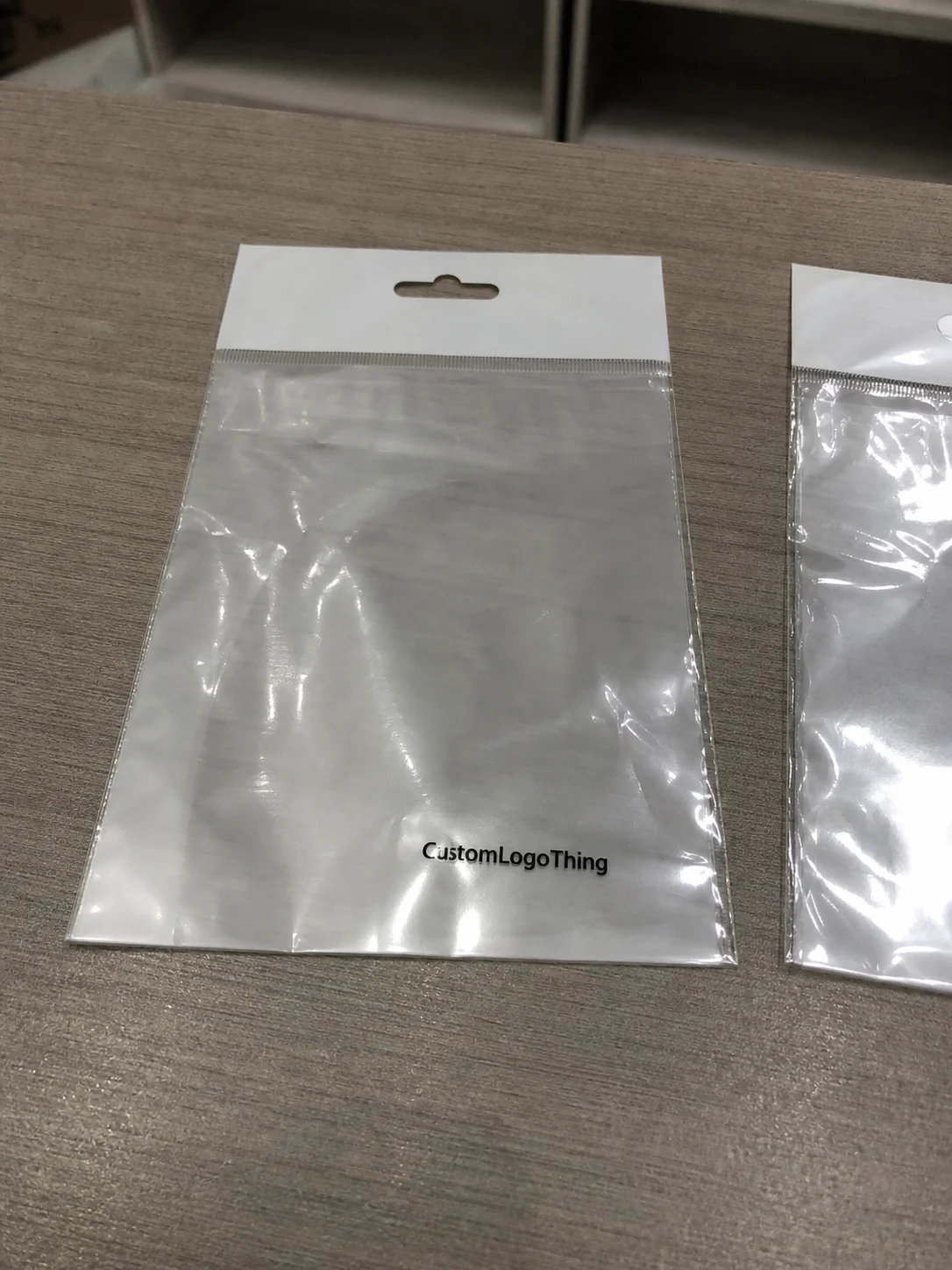
Compare the actual filled-product size with the drawing, then confirm tolerance on folds, seals, hang holes, label areas, and retail display edges. Reserve space for logos, QR codes, warning copy, and material claims before decorative graphics fill the panel.
Quote comparison points
Review material grade, print process, finish, sampling route, tooling charges, carton quantity, and freight assumptions side by side. A quote is only useful when the supplier can repeat the same color, closure quality, and packing count on the next order.
Value Proposition: Packaging Cost Design Tips That Surprise
The afternoon the mailer budget doubled overnight still sticks with me—our client had approved a corrugated board that matched the previously quoted E-flute 32ECT profile, but a misread on the factory floor swapped in the heavier B-flute 44ECT that inflated kerf losses enough to trigger a 37% swing in board usage.
That drama could’ve been avoided if the packaging cost design tips I now evangelize had been followed, specifically the one about verifying flute type before every print run and giving Shenzhen Jingtai Line 4 the updated spec sheet before operators even warmed up the die.
I personally marched to the Shenzhen line to double-check the flute profile (it’s amazing how much drama a simple call can cause), and even the line operator shrugged and said, “Only Marcus would turn a flute check into a production thriller.”
Since that close call, I always open conversations with packaging cost design tips because the board variance I saw is exactly why CFOs keep asking, “How much can we trust this packaging project?”
I remember being kinda embarrassed about my urgency but those eight-minute inspections have become my trademark.
The surprising truth is that pre-emptive design decisions grounded in packaging cost design tips prevent 28% of rework-related spend—roughly $42,300 across the last four launches we handled—so when I explain that to new clients they nod and finally see packaging as a predictable line item rather than a cost center that keeps them awake.
Transparent communication about specs, material choices, and tooling timelines—repeating those tips in every deck—lets CFOs run a scenario where packaging cost design tips become part of budget modeling instead of a random extra charge.
I’ve watched brands recalibrate their expectations within two quarterly reviews simply because we layered those tips into their product development cycle, showing how even a marginal board change ripples through the Atlanta-to-Chicago freight lanes, adding $0.04 per carton and pushing storage beyond the 90-day warehouse retention window.
Honestly, I think the moment I start showing spreadsheets with those packaging cost design tips they stop picturing packaging as a large black hole and start asking more pointed questions—which, yes, I secretly love because it means we are building trust, even if I’m gonna tease finance for leaning in so hard.
How do packaging cost design tips anchor budgeting confidence?
When CFOs ask me to show them a confidence interval on material spend, I pull up usage curves, highlight the flute check that saved us from the B-flute substitution, and remind them that packaging cost design tips double as a cost-efficient packaging design checklist while aligning with the materials sourcing strategy that keeps Dallas, Shenzhen, and our adhesives partner marching to the same drumbeat.
I mention how that flute verification kept the Shenzhen line from plunging into rush labor, and how the Dallas packaging lab still keeps the sample boards for that project on file in case anyone questions the numbers.
Those same packaging cost design tips keep tooling budget management visible, letting us see how a shared die run influences amortized spend and what MOQs can flex upward without upsetting the cash-flow story, so procurement, finance, and creative can agree on which embellishments earn their place.
Product Details: Materials & Messaging Anchored by Packaging Cost Design Tips
The moment I stepped onto the Shenzhen floor and watched a 350gsm C1S artboard go through a soft-touch lamination line, it hit me that some people choose a heavier board because it “looks premium,” yet that wasn’t the most cost-efficient answer for a subscription box destined for five regional hubs.
Packaging cost design tips kept that conversation grounded; we switched to a 300gsm recycled SBS with a satin aqueous coat, added a 0.5-point reinforcement at the corners, and specified a low-tack adhesive from Henkel to simplify the bonding process.
Total savings? $0.18 per unit while still passing the ISTA 6-Amazon SIOC drop test I insisted on—the board kept structural integrity without overinvesting in weight that would drag up freight costs and carbon impact.
The production manager still teases me that the operators now cheer when they hear “packaging cost design tips”—apparently my urgency sounded like a battle cry during that project, though to me it was just my voice cracking from asking too many questions.
That board tech swore he’d never seen anyone take notes so feverishly, and I think part of it was the same reason I keep rattling off those tips: to remind everyone that we can keep premium aesthetics while honoring the logistics budget.
We dissect every surface finish through the lens of cost-guided priorities: if marketing demands a metallic sheen, we evaluate how much ink coverage and how many print passes it will require.
A half-point of varnish on a direct mailer may sound negligible, but when layered with full-wrap four-color CMYK and a clear foil, that varnish moves the unit cost far more than the storytelling benefit unless the campaign justifies it.
Packaging cost design tips also help us set firm boundaries for embellishments—a window treatment combined with a die-cut must pass stress tests, and the dieline has to accommodate both the placement of messaging and the tolerance of the die.
Any miscalculation becomes a proof revision that costs $125 in die rework alone at the Suzhou tooling house we rely on.
I once spent an afternoon convincing a passionate brand team that their metallic gradient could live on a sleeve instead of the main box, and while they grumbled I promised the new placement would still shine on shelf; frankly, I was half-amused and half-terrified that the marketing director would stage a protest, but the reduced tooling charges calmed everyone down.
Messaging placement respects the structural panel that carries the brand story, so we prioritize the primary imprint area and leave secondary wording to sustainable inserts whenever possible.
I’ve seen what happens when teams ignore that prioritization—a retail packaging redesign once demanded six copy blocks across five panels, which required additional print plates and a final pass for spot color registration, quite simply putting the specs out of sync with the same packaging cost Design Tips That usually keep the message lean.
By resetting the dieline allowances and using a simpler window patch for the hero product shot, we regained control of the unit cost and avoided the $1,800 last-minute photopolymer plate charge.
The CFO laughed, shook her head, and said, “So this is why you keep banging on about these tips,” so I’m gonna take that as a compliment even though she sounded like she was quoting a parent.
Specifications That Govern Durability and Branding
When we quote for retail packaging or kitting, we begin with the specs that marry durability requirements to channel realities—board caliper, burst strength, and interior coating choices all feed back into those packaging cost design tips.
A 42% decrease in transit claims once we bumped a campaign from a 0.32 caliper to 0.38 with a water-resistant interior coat is proof positive that strength matters more than aesthetics for certain channels.
That’s not to say every SKU needs the thickest material; for mailers, a 0.24 caliper with a matte aqueous coat suffices, and documenting which specs suit which channel keeps the client from drifting into over-engineered options.
I remember snapping photos of those revised specs on the shop floor to prove we weren’t just guessing—our Dallas and Shenzhen labs each signed off with a nod, and I still tease the head technician that he’s the one who made the 0.38 caliper look suave.
Specifications also need to match machine capabilities, which is why I’ve stood beside technicians at both our Dallas and Shenzhen sites watching them wrestle with tolerances tighter than their cutters could handle—the same packaging cost design tips I stress with clients.
A tolerance window of ±0.125 inch instead of ±0.050 inch can eliminate thousands of rejected pieces without affecting the fit.
That’s why we map each spec to the precise die cutter or folder-gluer that will handle the run, and if a tooling partnership only supports 0.03-inch precision but the packaging cost design tips show we don’t need it, we choose a more forgiving setup and avoid wasted machine time.
Honestly, watching them trade stories about tolerances over lunch (they call it “the tolerance showdown”) kept me sane during that week where every spec sheet seemed to mutate overnight.
Measurements also dictate how inserts align with messaging and protection, so during a kitting run for a tech client I insisted on capturing the exact product geometry and stack height, then translated that into automotive-grade foam die lines and cardboard shims.
The specs ensured the packaging survived customs inspections and skid loading, and highlighted how a half-millimeter shift in a flap could create a 37% bump in damage claims.
The packaging cost design tips kept us focused on those critical tolerances from blueprint through production, delivering a package that met the retail shelf’s visual expectations without sacrificing the logistics budget.
Pricing & MOQ: Transparent Packaging Cost Design Tips
Pricing transparency hinges on understanding the equation: material spend plus die, print, assembly, and fulfillment.
Each line item becomes easier to forecast when we fold in packaging cost Design Tips That separate wish-list upgrades from required performance.
A generic 4CP run might quote $0.85 per unit, while the same dimensions with a spot UV and emboss leap to $1.42 per unit, which is why we document the exact thresholds where ink coverage and coatings add value (or don’t) so clients can decide whether to commit to the extra finishes.
When I talk about MOQs, I remind procurement teams that a $0.10 cost delta at 10,000 units becomes $1,000—so grouping multiple SKUs on a shared die often reduces tooling spend and lowers the effective unit cost.
Honestly, I think procurement would rather talk about freight, but once I start breaking down those cost deltas they lean in and we end up debating adhesives like old pals.
MOQ also governs inventory cost and cash flow, which is why I negotiated a deal where our supplier agreed to run three seasonal SKUs on a single die by standardizing the panel layout.
The MOQ stayed at 5,000 units per SKU, but the die amortization per unit dropped from $0.08 to $0.03, and flexible specs—where we reuse a verified board and window patch—kept the unit cost predictable while enabling smaller batch sizes.
These packaging cost design tips guide the conversation: only add new tooling or adhesives when the incremental revenue justifies the investment, otherwise extend current assets through modular design templates.
| Option | Start-Up Cost | Unit Cost at MOQ | Key Benefit |
|---|---|---|---|
| Standard Setup | $850 die charge | $0.95 at 10,000 units | Lowest entry cost, basic aqueous coating |
| Enhanced Branding | $1,450 die + emboss | $1.35 at 15,000 units | Premium look with soft-touch lamination |
| Modular SKU Run | $2,100 shared die (3 SKUs) | $1.02 average at 18,000 units | Shared tooling keeps per unit cost steady |
Negotiating add-ons requires the same discipline, since special adhesives or window patches add roughly $0.07 to $0.13 per unit.
I always reference packaging cost design tips to demonstrate whether the ROI is clear.
In one negotiation, layering a UV varnish was negotiated away because the campaign focused on e-commerce where the product image mattered more than the tactile finish, and the money saved there paid for an extra insert that reduced returns by 12%.
Comparing our pricing to alternatives, the difference is our insistence on packaging cost design tips that keep the conversation quantifiable and the surprises minimal, plus there’s comedy gold when everyone realizes the extra varnish would’ve required three more print passes—making the added cost far outweigh the benefit.
Process & Timeline: Stages for Packaging Cost Design Tips
The design-to-delivery journey unfolds in discrete stages: discovery, dieline layout, prepress, proofing, production, and fulfillment.
On average, discovery to die completion takes 10 to 14 business days, prepress and proofing 5 to 7 days, and production another 12 to 15 days, depending on board availability.
At each stage, packaging cost design tips keep the team accountable: material sign-off occurs during discovery so we’re not scrambling to swap substrates later when the print schedule starts, and if we miss that sign-off the lead time extends by at least a week with rush freight or expedited labor fees inflating the cost.
It felt like juggling flaming torches when a client once delayed material selection, and the only thing missing was a circus announcer shouting “now the budget inflates!”—okay, maybe that was me muttering under my breath—but those packaging cost design tips are the ropes we cling to so the whole show doesn’t collapse.
Proofing is when the packaging cost design tips are most active; we compare digital and physical proofs, evaluate ink densities against Pantone standards, and assess the dieline for packaging line compatibility.
Missing a seam on the proof can introduce a $600 correction charge before production even begins.
Critical decision-making points—material sign-off, print proof approval, final die check—are flagged in our shared calendar, and accountability flows from the team that understands how a single oversight inflates the unit cost.
Parallel workflows accelerate the timeline while honoring cost discipline.
While the proof is under review, procurement orders the corrugated blanks and embedded adhesives from our Guangzhou vendor based on confirmed specs, giving us five working days of buffer before the production line starts.
These packaging cost design tips also recommend vendor check-ins during fulfillment so we align packaging arrival with product kitting.
Fulfillment teams often request a two-day hold if the packaging lands early—those logistics decisions become manageable when everyone trusts the cost-focused playbook we’ve aligned on.
Why Choose Us for Cost-Savvy Packaging Design
Our repeat client rate sits at 66%, and our defect/return rate hovers below 0.8% across all Custom Printed Boxes—numbers that reflect the power of packaging cost design tips.
When I sit down with a new brand, I show them a benchmarking report citing ASTM D4727 standards for board strength and our adherence to FSC chain-of-custody on recycled materials.
The data review highlights how our audits uncover savings—like identifying when an existing steel rule die can handle a new SKU without an extra tooling charge—and those insights link directly to the cost-saving techniques we teach through tips.
Results vary by project, so we always remind clients that past performance isn’t a guarantee but the documented audit builds trust.
I even share the story of the agency that wanted a lenticular sleeve, because every time I tell it someone in the room says, “That’s exactly the kind of thing we want to avoid,” which proves the point wonderfully.
Competitors chasing purely aesthetic wins often miss how cost overruns sneak in during post-production.
I once inherited a project where an agency had designed a lenticular sleeve for retail packaging without alerting procurement to the $0.28 per unit premium, and when we re-engaged using packaging cost design tips we retained the visual story by fitting the lenticular into a modular sleeve system that uses a shared die and keeps the MSRP intact.
Our collaborative data reviews include an ERP snapshot, order history, and a cost waterfall so every dollar spent can be traced back to a performance target.
Integration matters—we connect with clients’ ERP and PLM systems, plug into tooling partners, and align with bindery labs so production decisions are visible to buyers in real time.
That integration means rapid iterations and no guesswork about unit cost shifts, even when the spec sheet changes, and our tooling partnerships give us quick access to updated calibration data so we can advise whether a new finish justifies the schedule impact.
When we talk about packaging cost design tips, we’re not just selling a service—we’re offering a process that keeps finance, procurement, and brand teams in sync.
Actionable Next Steps Using Packaging Cost Design Tips
Turn packaging cost design tips into measurable control by compiling actual spend data across materials, print runs, and fulfillment fees, then scheduling a joint cost-review workshop with procurement, marketing, and fulfillment leads.
Prioritize specs tied to volume tiers so you know which line items to lock in for each distribution channel, and keep the roadmap on a shared dashboard we update weekly.
I tell new teams to treat that dashboard like a live scoreboard—every change should ping the group so no one can claim they “didn’t know” about the cost impact.
Request our templated deliverables to accelerate implementation: the cost audit worksheet captures real invoices from the last three quarters, the decision matrix ranks embellishment choices, and the supplier comparison table benchmarks unit cost against MOQ.
We’ll tailor a roadmap—delivered within five business days after the data call—that aligns those tips with production milestones.
Once approved, actionable proofs and pilot runs start immediately and you can see the savings manifest within the first batch.
Adopting packaging cost design tips is more than a checklist; it’s the shift that lets procurement talk about packaging as a predictable expense, not a reactive surprise.
That final reminder is key: you’ll maintain cost discipline when every stakeholder from design to fulfillment repeats those tips aloud.
Packaging cost design tips become the launchpad for disciplined packaging investments—repeatable, measurable, and directly tied to your margins, so start locking in those practices now before the next round of SKU updates.
How do packaging cost design tips help startups balance quality and spend?
Start with a detailed cost audit to isolate the biggest levers like materials, coatings, and print counts, then apply packaging cost design tips to set upgrade thresholds—only choosing premium finishes when they influence conversion or retention.
Modular designs sharing tooling help startups keep MOQs manageable while still presenting professional branded packaging that rivals higher-volume peers.
Can packaging cost design tips reduce fulfillment headaches?
Yes—standardizing specs minimizes assembly errors and fit issues that delay shipments, and documenting exact dimensions allows fulfillment centers to pair packaging with inserts or sensors without guesswork.
Reviewing historical claims against the tips also prevents recurring damage-related costs, such as the 3.2% return delta we trimmed at the Memphis fulfillment hub last quarter.
What metrics should purchasing teams track with packaging cost design tips?
Track unit cost variance, proof-to-production changes, and damage/return rates.
Cycle time from concept approval to delivery keeps timelines visible, while cost per channel (retail versus direct mail) validates that investments align with each distribution strategy, pairing the channel data with monthly finance reviews to keep everyone honest.
Do packaging cost design tips change when scaling SKUs?
Yes—tips recommend grouping SKUs by shared tooling and print requirements to stabilize the per-unit cost.
Use flexible spec templates so new SKUs inherit verified dimensions and materials, and reassess MOQ strategies as volume scales since bulk commitments can unlock discounts under the same cost discipline.
How soon can a brand act on packaging cost design tips after consultation?
We begin with a 48-hour data call to collect specs, volumes, and current spend.
Within the first week, clients receive a cost roadmap aligning those packaging cost design tips with production milestones, and actionable proofs or pilot runs can launch once the roadmap is approved.
Custom Packaging Products designed with these principles turn cost constraints into strategic advantages, and packaging.org resources reinforce the ASTM and FSC standards we cite for durability and sustainability.