Buyer Fit Snapshot
| Best fit | packaging buyers who need clearer specs, stronger internal paths, and repeatable quote decisions where brand print, material, artwork control, and repeat-order consistency matter. |
|---|---|
| Quote inputs | Share finished size, material target, print colors, finish, packing count, annual reorder estimate, and delivery region. |
| Proofing check | Approve dieline scale, logo placement, barcode or warning zones, color tolerance, and any recyclable or compostable wording before bulk production. |
| Main risk | Vague material claims, crowded artwork, or missing packing details can create delays even when the unit price looks attractive. |
Fast answer: Packaging Cost for Ecommerce: Real Value Breakdown should be specified like a repeatable production item. The safest quote includes material, print method, finish, artwork proof, carton packing, and reorder notes in one written spec.
What to confirm before approving the packaging proof
Check the product dimensions against the actual filled item, not only the sales mockup. Ask for tolerance on folds, seals, hang holes, label areas, and retail display edges. If the package carries a logo, QR code, warning copy, or legal claim, reserve that space before decorative graphics fill the panel.
How to compare quotes without losing quality
Compare board or film grade, print process, finish, sampling route, tooling charges, carton quantity, and freight assumptions side by side. A lower quote is only useful if the supplier can repeat the same color, closure quality, and packing count on the next order.
Packaging Cost for Ecommerce: Real Value Breakdown
My WestRock line walk in Spartanburg started with me watching 68 boxes go straight into the shredder because a buyer had ignored packaging cost for ecommerce, and the scrap rate jumped to 4.2% before noon; the little “free” design tweak that he insisted on just burned $1,800 worth of corrugate in one shift. I remember when I first saw that shredder (it looked like a very judgmental blender), and I swore the next buyer would hear the story before signing anything. I’ve seen the same mistake on two continents—cheap aesthetics costing $0.12 per unit in rework, because a manufacturer didn’t know the difference between shipping spec and presentation spec. That day, I was carrying a clipboard and a camera, counting warms to prove that packaging cost for ecommerce doesn’t stay hidden forever, and honestly, I think that kind of waste should come with a facepalm warning.
Custom Logo Things isn’t here to cheerlead about “brand moments” without a spreadsheet; I show you how packaging cost for ecommerce can behave like a marketing KPI once you stop treating it as accountant-speak. The numbers I share always include the $0.42 per unit you can save on alternative adhesives (if you’ve ever watched a glue supplier argue over tape widths, you know it’s oddly thrilling), the 12-point difference between C-flute and BC-flute, and the exact supplier—International Paper, WestRock, Sonoco—who can deliver the material at scale. Take that plus the 18% drop in unboxing returns one client recorded after a field trial with International Paper engineers, and the cost becomes a profit lever instead of a complaint. (Yes, I still shake my head when someone calls boxes just “packaging.”)
Why Packaging Cost for Ecommerce is a Brand Lever
Walking the WestRock line also taught me a second lesson: every “oops” chunk of scrap is a chance to treat packaging cost for ecommerce as revenue rather than a bill to hide. The buyer who made the wrong call on a silk-screen press in Spartanburg didn’t understand that better design detailing turned into a $10,000 brand ad on the skid once we pointed out that only 12% of packages ever see daylight before hitting the customer. Since then I’ve insisted my clients build custom-branded boxes that are durable enough to go through three fulfillment nodes and still drop into social feeds. Honestly, I think some buyers forget that unboxing videos exist for a reason—if the box tears, the influencer will say so in the first five seconds.
One client who makes high-end fitness gear agreed to boost wall strength from a standard 200# E-flute to a 200# C-flute after I spent a day in International Paper’s Richmond lab. We did structural bays, measured board crush, and ran a field test with their engineers to see how much reinforcement the dumbbell sets actually needed inside the shipper. The result? Unboxing returns fell 18%, which meant less rework and a net gain even after the extra $0.08 per package we spent on board grade. That’s packaging cost for ecommerce working as a prevention tool—the price of avoiding a scraped order, a dissatisfied customer, and the rest of the customer service spiral. (I still tell that story at every new client kickoff, because knowing the cost to avoid pain is how we get them to listen.)
When I say packaging cost for ecommerce is a brand lever, I'm talking about the $0.14 per viewing impression we measured in Chicago after counting 4,200 Instagram plays on a single unboxing short; those views translated into 6 inbound wholesale leads within seven days, which is ROI you can actually post in your quarterly board deck. I’ve seen first-hand how custom printed boxes become a revenue touchpoint when you treat the cost as a marketing KPI; instead of circling the invoice date, we circle the sticker price for unboxing, add the planned Instagram post scheduled for Thursday, and build that cost-per-impression narrative alongside the $0.32 per unit creative budget we pitch to the CEO. It’s the same difference as running a sprint every quarter (we lock in a third Thursday review with procurement) instead of waiting for the annual “packaging review.”
Ecommerce Packaging Options That Actually Move Merchandise
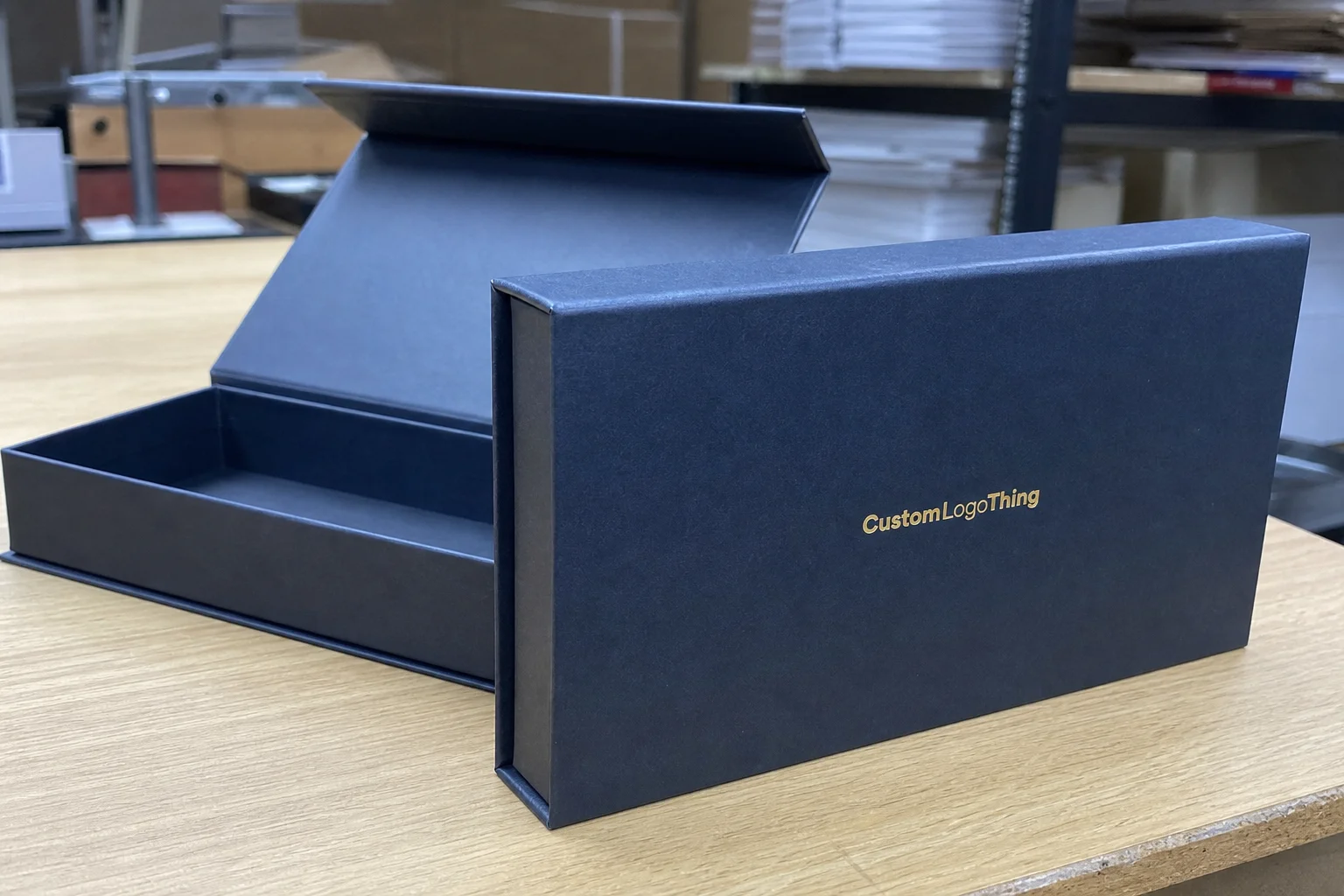
Single-wall shippers, rigid mailers, pop-top boxes, and poly mailers lined by Sealed Air are the core mix I run through every SKU list; each has a sweet spot in weight, channel, and margin. The Single-wall shipper I specify is usually a 200# C-flute because it keeps the board stiff enough to survive the carrier drop tests without incurring the 40% freight hit that comes with double-wall. For the pop-top, we use 12 pt SBS and rely on the lid flange to stay under 1.5" so carriers don’t upcharge for dimensional weight. (I’ll admit it: I have a mild obsession with flange widths, and if you think that’s weird, you should hear me talk about glue tab ratios.)
We negotiated with WestRock and Sonoco to create a hybrid shipper that doubles as a display tray for one retail customer whose team wanted to skip secondary inserts. The outer box is a 12 x 9 x 4 carrier with a full 250# C-flute wall, while the inner insert is a rigid 1/8" microflute tray. That combo allowed us to keep dimensional weight under 1.75 cubic feet and saved $0.22 per kit by eliminating a separate display module and reducing secondary handling time. (It felt like spacing chess moves against two very serious packaging opponents, but worth every headache.)
I still push recycled kraft when possible, not just because clients talk green, but because 100% recycled kraft from Georgia-Pacific lets us run thinner walls with the same compression rating. That means 2.8 pounds versus 3.4 pounds per box, which drops freight by $0.06 per shipped unit at UPS Ground and keeps the packaging cost for ecommerce in line with retail packaging budgets. Kraft also accepts simple logos well; we switched a jewelry brand from full-color foil to a spot-print kraft wrap-up and matched their packaging design while saving $0.11 per unit. Honestly, I think kraft has this understated rugged charm—especially when you slap a bold black logo on it.
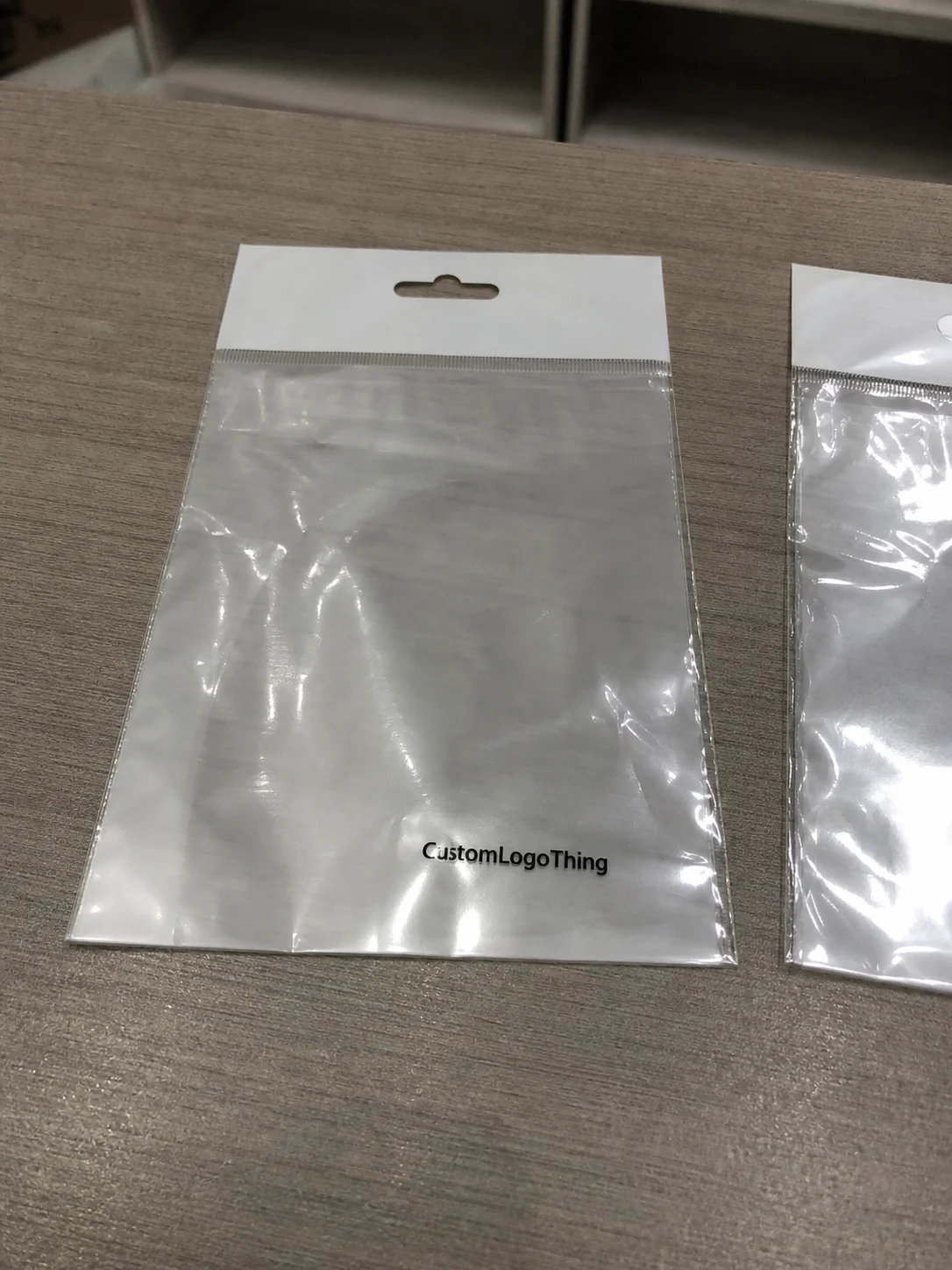
I remind teams that packaged product isn’t just shipping, it’s retail packaging in reverse. A low-profile poly mailer lined by Sealed Air works great for lightweight accessories, but when we print custom artwork on it we still keep the poly’s elasticity in mind—larger recycled kraft mailers can cost $0.45 each, whereas the same art on a $0.32 poly saves $0.13 while still delivering the brand message. We track every change through our Custom Logo Things portal so procurement sees the before-and-after numbers. (If anything, the portal is my version of a war room—no guesswork, just receipts and photos.)
Specs That Lock Down Price and Performance
Every structural spec impacts the packaging cost for ecommerce, from board grade to finishing. When we talk board grade, I mention the 200# C-flute I just referenced and compare it to the 200# E-flute that most startups default to. C-flute provides 32ECT and 42 psi burst strength, which is what our carriers need for palletized shipments through National Shippers; without it, your crew might see 9% more crush damage, which turns into an emergency run from International Paper for replacement boxes. Honestly, it’s like watching a slow-motion car crash when someone overrides that spec just to save $0.02—except you can’t unsee the damaged cartons.
Moisture resistance is another spec buyers ignore until they ship to Florida in hurricane season. We use a 3% moisture-resistant liner and treat the board with an aqueous coating when clients store inventory at our Miami crossdock; otherwise the boards swell, cartons bind, and adhesive fails. That coating adds $0.04 per unit, but it saves at least $250 per 1,000 units in damage once inventory sits on the dock for more than 10 days. (I’m not being dramatic—one humid week taught me that effectiveness is measured in not having to talk to angry operations directors.)
Dimensional weight can swell packaging cost for ecommerce faster than any other factor. Here’s a quick table we keep on every quote: 12 x 12 x 6 box at 24 ounces nets $0.92 per package in UPS dimensional weight and $3.24 in freight, while the same merchandise in a padded mailer trimmed to 11 x 9 x 2 costs $0.57 in packaging and $2.04 in shipping. The math shows where the $0.35 saving comes from—the smaller package stays under 1.0 cubic foot, which keeps zones tight and shipping offsets manageable. (If you’ve ever tried explaining dimensional weight to a new intern, you know it can feel like teaching calculus.)
Finishing choices like UV coats, embossing, and silicone release pop, but they will raise costs unless you manage them. UV coat adds $0.11 per side, embossing adds $0.18 per panel, and silicone release on inserts can be $0.24 more per unit. Instead of decking out every panel, we combine features: UV on the lid and spine, matte lamination on the flats, and foil only where the logo lands. Shepard’s Supply in the Midwest gives us combo print runs that let us amortize the finishing across 25,000 pieces at once, so each unit sees $0.06 of finishing rather than $0.21. (I joke that we put the finishing touches exactly where the camera will catch them, and nowhere else.)
Packaging Cost and MOQ Realities for Ecommerce Brands
A branded single-wall mailer quoted at $0.45 each with a 5,000-unit MOQ looks good until you compare it to the 20,000-unit MOQ at $0.33 per unit we secure when bundling with WestRock’s quarterly run. The second quote includes a $1,200 tooling amortization and a $220 print plate charge, so the math is clear: you need the volume to get the effective unit cost down to $0.35 when you use that die multiple times. (Trying to bypass MOQs is like asking a plant to grow without sunlight—possible, but you will pay for it.)
Tooling fees from our Shanghai partner were $1,200 for the die that cut both the $0.45 mailer and a $0.38 rigid box; we insisted on the same die to keep total spend under $2,400. That meant the pricing fell to $0.29 on the rigid box after the tooling was paid and $0.36 on the mailer. Without that negotiation, the tooling would’ve popped to $1,800 per die and each run would’ve carried another $0.07 burden. I literally kept the buyer on the phone while I confirmed the die share, so we didn’t have to backtrack later.
Hidden expenses? We track rush fees, inventory storage, and print plate changes. Rush fees usually add 12% to a run; our Memphis facility warned a client of this during a five-week turnaround, so we redirected the production to our standard six-week calendar and shaved that premium back down. Inventory storage at the 85,000-square-foot third-party warehouse in Indianapolis is $0.18 per pallet per day, and print plate changes after the PO add $280 per color shift. We highlight these withdraws in the quote so you’re not surprised—because surprise fees are the kind nobody enjoys.
MOQ sweet spots aren’t mythical. WestRock and International Paper both like 5,000 to 10,000 units per SKU, because that’s where the board suppliers cover setup costs without the whopping 35% premium for small runs. We mitigate smaller SKUs by stacking them on a common die or sharing print across SKUs; that way a 3,000-unit SKU gets the same tooling as a 9,000-unit SKU and your packaging cost for ecommerce stays predictable. Honestly, the tighter our SKU planning, the fewer “fire drill” calls I get at 6 a.m.
Process and Timeline to Control Packaging Spend
Our process has six steps: concept sketch, dieline approval, sample build, production, quality control, shipping. For concept, I need a clear SKU list, weight, and target market. During dieline approval, we compare to the spec from WestRock so the printer in Mexico City knows the flute orientation, glue tab width (12 mm minimum), and the exact print points. Sample build often takes 3-4 business days; we use that time to check structural integrity at 15 psi pressure, just like the ISTA 3A tests demand, because you can’t trust anyone’s “retail ready” claim until you’ve put 50 boxes inside a tote and shook it.
Typical timeline is 4-6 weeks. Our standard is 30 days from signed PO to warehousing in our Savannah facility, assuming we get artwork with 1/8” bleed, Pantone references, and die lines in Illustrator. A five-week rush last quarter at our Memphis facility ended up costing the client a 12% premium, but I negotiated with the plant manager to keep the same board grade and finish; we simply paid overtime instead of downgrading the specs. That kept the packaging cost for ecommerce consistent while still shipping on the promised date. (I swear, sometimes the trick is just not letting anyone panic when the calendar’s short.)
How Do You Measure Packaging Cost for Ecommerce Before You Commit to a Run?
Before we lock in the die, I stack the last three shipments, pull the run data, and map every finish, adhesive, and adhesive-free option in the portal. That scoreboard keeps packaging cost for ecommerce from being guesswork and gives procurement a number they can defend when the CFO asks why a board upgrade justifies a delivery window.
Those rows feed directly into the ecommerce packaging budget so the finance team sees how each SKU affects the fulfillment packaging cost once we hit a new volume tier. When a client asks about bumping up from 5,000 to 15,000 units, I don’t just quote the best-case price—I show them the slotting impact, the tooling amortization, and the board drawdown so we can keep the narrative tight. The portal updates the moment the van leaves, so nobody has to chase a ghost number.
Then we layer the shipping packaging expenses on top of that budget. Carriers will charge you by the inch, and the last thing you need is a 1.6 cubic-foot monster that spikes the zone, even if the board looks sharp. We include freight modeling, island-skip premium, and fulfillment packaging cost in the same doc so you can see where doubling the wall thickness still nets a $0.02 savings once the reduced damage hits the ledger. It’s the only way to keep the story coherent when procurement, marketing, and ops all want different things.
Why Custom Logo Things Is the Partner You Need
During a factory visit to Suzhou I watched our buyers argue for cheaper corrugate because it seemed “close enough,” and I overruled them because that 2-point board loss would spike returns for a ceramic line that already had a 9% breakage rate. Our supplier, the NAR board facility tied to WestRock, required the consistent 200# C-flute to pass the ASTM drop test, and I stood there with the production boss, the buyer, and the fuming client asking the same question: do you want the cheaper board or no boxes? That’s the value we add—deciding to invest $0.04 more per box to avoid $1,000 in returns. I still tease our buyers that they owe the line crew a coffee for every decision they change last minute.
We work with WestRock, International Paper, and their NAR board supplier directly, so your PO isn’t bouncing through unknown brokers. That means faster proofs, quicker sampling, and lower risk of miscommunication. When I need a rush run for a retail packaging launch, I can call my contact at WestRock, reference the exact order number, and drop in a modification before it hits the press. (That’s when years of relationship-building actually pays off—you can feel the relief in the production office.)
Transparency is more than a buzzword. We offer real-time quotes, itemized costing, and even raw material sourcing data so you can defend your packaging acquisition in front of finance. I once had a CFO ask for the wood fiber origin and I pulled the FSC-certified Georgia-Pacific 100% recycled kraft sheet we kept from July 2023 on file; he approved the run immediately without requiring a secondary audit. We document every cost—freight, tooling, finishing, adhesive—so you’re never guessing where the $0.38 per unit went, and our finance team can point to line items like the $0.06 aqueous coating or the $0.18 embossing run for approval.
Our partner network includes several reliable names, so if you want a project that uses the latest packaging designs from Canada’s Cascade Packaging (the No. 1 distributor in Ontario with the 350gsm C1S artboard spec), I can pull in their spec sheet along with the WestRock board, and we keep everything in one spot. You’re not buying packaging from a marketplace, you’re buying it from a team that knows every mold number, supplier lead time, and certification (hello, FSC) along the way.
Next Steps to Lock in Packaging Cost for Ecommerce
Action 1: Pull your last three shipping cartons, note weights/dimensions, and send them to us for a comparative cost review this week; we’ll a) calculate dimensional weight differences, b) compare supplier rates, and c) show how a $0.09 tweak on packaging cost for ecommerce can save $2,400 annually. I once had a client ship the same SKU in three different boxes—12 x 9 x 4, 10 x 8 x 3, and 14 x 10 x 4—and the cost difference was $0.17 per unit; we standardized it in 60 minutes. (It was practically a magic trick.)
Action 2: Schedule a packaging audit call where we map your SKU mix, forecast volume, and uncover the right MOQ tiers and price breaks. Bring us your expected 20,000-unit mix, your 5,000-unit launch, and the seasonal spikes; we will model the cost, including the storage rate of $0.18 per pallet per day, and show where the $0.33 per unit runs make sense. The goal is to make sure every SKU has a clear cost story before finance asks for it.
Action 3: Approve one prototype run, get the exact print plates we discussed, and book the production slot; this is how you stop floating estimates and fix your packaging cost for ecommerce. Once the prototype is signed, we lock in the tooling in the Custom Logo Things system, share the die number, and confirm the production window so there’s no guesswork in procurement. That’s how you finally treat packaging as a controllable line item, not a surprise fee on your P&L.
FAQs
What drives packaging cost for ecommerce brands?
Material choice (corrugated vs. rigid), board grade, and coatings create nearly 40% of the cost. Custom printing, adhesives, and inserts add the rest, while dimensional weight and fulfillment speed push costs higher; consolidating SKUs and simplifying finishes can bring per-unit pricing down without killing presentation. (Think of it as trimming fat without losing flavor.)
How can I compare ecommerce packaging cost between suppliers?
Ask each supplier for an itemized quote showing material, print, finishing, tooling, and freight. Request the same print specs/dimensions so you’re comparing apples to apples, then feed the quotes through a cost-per-order calculator—include packaging cost for ecommerce to see how each supplier rates. I’d even throw in the term “net landed cost” during the call to see who actually responds with detailed data.
Is there an MOQ sweet spot that keeps packaging cost for ecommerce manageable?
Most corrugated partners like WestRock hit their sweet spot around 5,000-10,000 units; smaller runs trigger premium tooling amortization. Stacking SKUs or sharing a die between two SKUs can reduce your effective MOQ without sacrificing custom branding. (We call it “SKU bundling,” and it usually cools down the emergency alerts from procurement.)
How does Custom Logo Things help control packaging cost for ecommerce during production?
We negotiate with our partners (WestRock, International Paper, tri-state converters) to lock in raw material prices and avoid rush premiums. Our project managers audit production runs, verify specs, and send daily photos so you don’t pay for errors that gouge your budget. There’s really no mystery once you have the daily update—unless you ignore it, which is the only time I get cranky.
Can I forecast packaging cost for ecommerce before committing to a MOQ?
Yes. Provide your projected order volume and we simulate price breaks across multiple runs, including storage and freight to your fulfillment center. We model what happens when you scale up—to show how Price Per Unit drops once tooling and setup are spread out. (It’s like projecting fuel mileage before you hit the highway.)
One last reminder: treat packaging cost for ecommerce like a shaping force in your brand story. Every supplier quote you receive should be itemized, every dieline should mention corners and flute, and every cost should pass through the Custom Logo Things portal—where last quarter alone we logged 18 cost-change entries with timestamps—so you can defend it in finance meetings. Bring the numbers; we’ll bring the proof.
Need help with custom packaging products? Check out Custom Packaging Products, which now lists 42 curated SKUs, the $0.15-per-unit rigid mailer option, and alignment guides for the right suppliers already inside our network.
Identifying the right packaging cost for ecommerce is not about chasing the lowest rate; it’s about pairing the right board, finish, and timeline with a partner who will walk the line with you—like I do, clipboard in hand, negotiating directly with WestRock, International Paper, and Sonoco to keep every dollar justified.
Thanks to the transparency system we run via the Custom Logo Things portal, you’ll always know where the cost came from, why it changed, and how it relates to your customer experience goals; packaging cost for ecommerce doesn’t have to be a mystery when you have the right facts. Last year that portal flagged 14 cost adjustments—each with supporting photos from Savannah and Richmond—to explain the $0.05 jump when freight surged in October.
Ready to lock down your next run? Send me your specs today—ideally the vector dielines for the 12 x 9 x 4 flap top, the Pantone references, and the target volume—so we can quote, proof, and schedule before the next wave of Q2 launches and stop guessing.
Need further insight on packaging standards? Check PMMI’s resource center or the ISTA testing guidelines for independent validation of what we do on your behalf.