Buyer Fit Snapshot
| Best fit | Packaging Cost Manufacturer projects where brand print, material claims, artwork control, MOQ, and repeat-order consistency need to be specified before quoting. |
|---|---|
| Quote inputs | Share finished size, material target, print colors, finish, packing count, annual reorder estimate, ship-to region, and any compliance wording. |
| Proofing check | Approve dieline scale, logo placement, barcode or warning zones, color tolerance, closure strength, and carton packing before bulk production. |
| Main risk | Vague material claims, crowded artwork, missing packing details, or unclear freight terms can make a low unit price expensive after revisions. |
Fast answer: Packaging Cost Manufacturer: Pricing, Specs, and Lead Times should be specified like a repeatable production item. The safest quote records material, print method, finish, artwork proof, packing count, and reorder notes in one written spec.
Production checks before approval
Compare the actual filled-product size with the drawing, then confirm tolerance on folds, seals, hang holes, label areas, and retail display edges. Reserve space for logos, QR codes, warning copy, and material claims before decorative graphics fill the panel.
Quote comparison points
Review material grade, print process, finish, sampling route, tooling charges, carton quantity, and freight assumptions side by side. A quote is only useful when the supplier can repeat the same color, closure quality, and packing count on the next order.
When buyers ask me for a Packaging Cost Manufacturer, what they usually want is pretty straightforward: a quote that stands up to scrutiny, a box that performs on the line, and no surprise charges hiding in the middle of production. I’ve stood beside sheeters in Shenzhen, watched stacks of Custom Printed Boxes feed into a folder-gluer, and seen the same design return at very different unit costs because one quote called for 300gsm CCNB while another specified 350gsm SBS with a soft-touch finish. That difference is not theoretical; it shows up in board weight, press setup, and the amount of handwork needed at the end.
A strong packaging cost manufacturer does not simply sell a carton or a mailer. They balance material yield, print coverage, die-cut efficiency, and freight class so the final unit cost works for your margin. Compare only the headline price and the bill often grows once tooling, inserts, and shipping land on your dock. I’ve watched that happen in client meetings more times than I can count, especially when a quote looked attractive until we added a rigid insert, foil stamp, and export freight.
For buyers comparing branded packaging, the smartest path is to treat each quote like a technical document rather than a shopping cart. The real value comes from comparing the same size, the same structure, the same print method, and the same finish across suppliers. If you need a starting point, review our Custom Packaging Products and see how box style changes affect structure, presentation, and cost.
Why packaging cost changes so much from one manufacturer to another
A few years ago, I was in a corrugated plant where two folding cartons looked nearly identical on the outside, both printed in four colors with a matte varnish. One quote came in 18% lower than the other. The difference? The lower quote used a looser tolerance on the dieline, a thinner board grade, and a simplified glue pattern that worked only because the carton was being hand-packed. That is exactly why a packaging cost manufacturer needs to quote from production reality, not from a template.
Material selection drives a huge portion of pricing. A 350gsm SBS board with a clean white face costs differently than 300gsm CCNB or kraft, and the gap widens when you move into rigid chipboard, E-flute, or specialty wraps. Structure complexity matters too. A straight tuck carton with a standard reverse tuck bottom runs faster than a sleeve-and-tray box with a shoulder, a magnetic closure, or a custom insert. Each extra step adds time, glue, or manual labor.
Print method changes the math as well. Offset litho gives crisp image control for larger runs, while flexo is often better for corrugated work, and digital print can help lower volumes or fast-turn projects. Digital jobs, though, often carry a higher per-piece cost once you move past a certain quantity because the setup spreads differently. Then there is finishing. Foil stamping, embossing, spot UV, and window patching can make retail packaging look more premium, but they also add plates, tooling, labor, or extra passes through the finishing line. If you want a practical benchmark on environmental and packaging choices, the EPA packaging waste reduction guidance is worth reviewing for material efficiency thinking.
Hidden costs show up in places buyers do not always expect. Plates, cutting dies, proofing, color matching, and insert development can all move the quote. I’ve sat through supplier negotiations where a client approved a low base price, then discovered the custom foam insert needed a separate tooling charge and a two-day hand-trim process. A careful packaging cost manufacturer should spell those items out before the order is placed. Otherwise, the quote is incomplete.
The most honest way to compare suppliers is apples-to-apples. Ask each packaging cost manufacturer for the same dimensions, the same board, the same coating, the same insert, and the same shipping terms. A $0.28 unit price on a 10,000-piece run may be worse than $0.31 if the lower quote excludes tooling, overseas freight, or QC sampling. The lowest number is often the least useful number unless the spec sheet is identical.
Packaging product options that shape your total cost
Different products create different cost structures, and a good packaging cost manufacturer will guide you toward the right format rather than forcing one box type onto every job. Folding cartons work well for cosmetics, supplements, and light consumer goods because they ship flat and print beautifully. Rigid boxes suit premium gift sets, electronics, and presentation kits where the customer expects a heavier feel. Corrugated mailers make sense for subscription programs and e-commerce shipments because they protect contents during transit and usually stack efficiently in warehouse storage.

Retail display boxes sit somewhere in between. They need enough strength to survive pallet movement and enough visual appeal to stand out on a shelf. Protective inserts, whether paperboard, molded pulp, or foam, also shape the total packaging cost manufacturer quote because they require extra design work and often their own tooling. For heavier products, a simple custom printed carton may not be enough; the structure has to carry the load without crushing in transit.
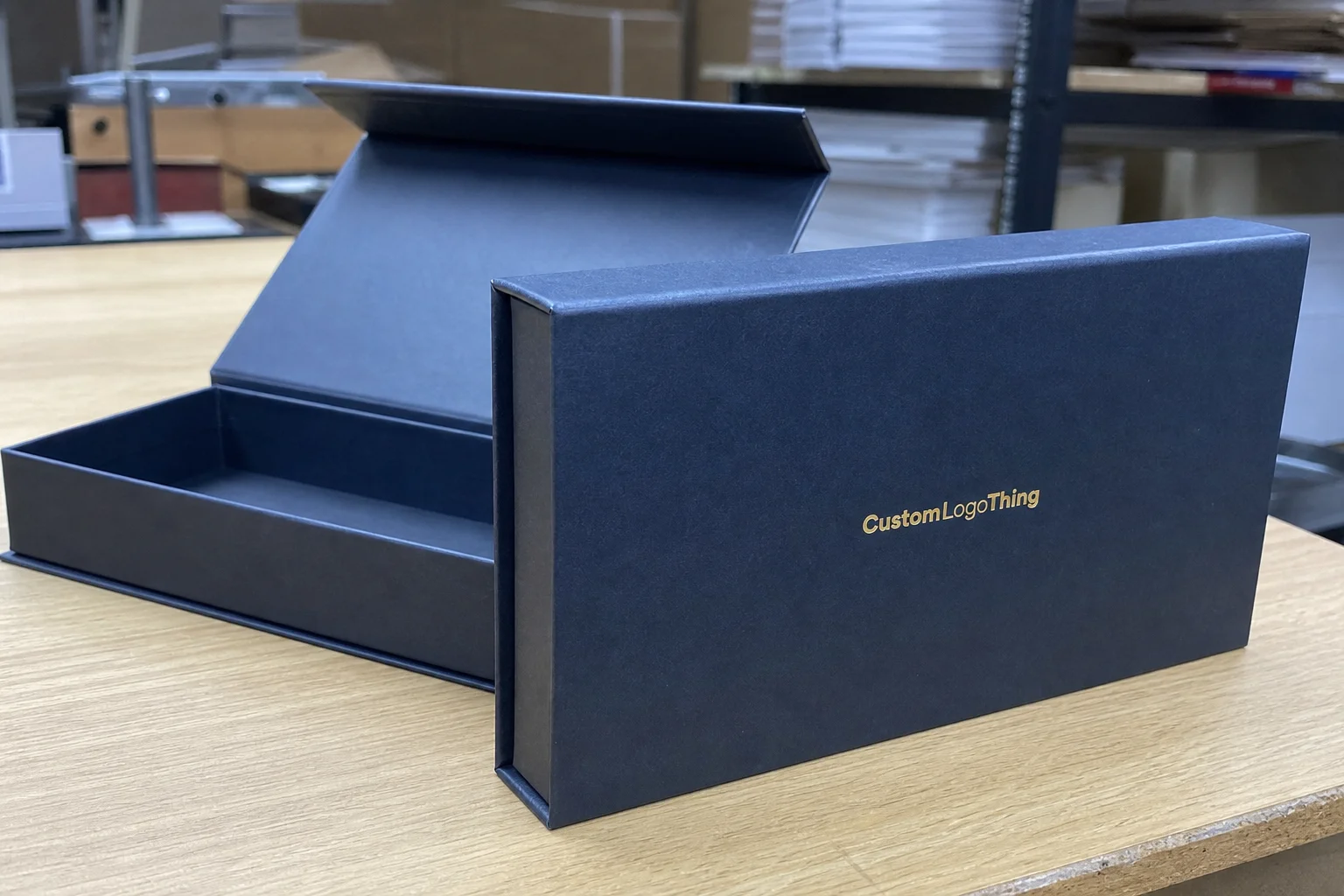
Material choice is where budget decisions get real. SBS paperboard gives a clean, bright surface for high-end package branding. CCNB is often used when budget matters and the print result still needs to look polished. Kraft brings a natural look that works well for organic or handmade products, while E-flute and B-flute corrugated board add strength for shipping or mailer applications. Rigid chipboard, usually wrapped in printed paper or specialty stock, creates that firm, premium feel many retailers want for luxury packaging.
Finishes affect both cost and perceived value. Matte lamination is common because it protects the print and gives a calm, modern appearance. Soft-touch coating adds a velvet feel, but it increases production steps. Foil stamping can be subtle or bold, and embossing adds texture that customers notice when they hold the box. Spot UV creates contrast on logos or key graphics. Window patches are useful when the product itself should be visible. I’ve seen brands spend an extra few cents per unit on finish and gain much better shelf presence, which can be money well spent if the product sits in a competitive retail environment.
There is no single “best” package. A cost-conscious startup selling lightweight cosmetics may do well with a compact folding carton and one-color print. A subscription kit with multiple components may need a corrugated mailer with die-cut inserts. A premium candle brand may prefer a rigid box with foil and embossing. The right packaging cost manufacturer should explain how each choice affects storage space, shipping performance, and shelf presentation so you can choose the most efficient route for your business. If you want to learn more about our team and production background, see About Custom Logo Things.
Key specifications that directly affect packaging pricing
Dimensions are one of the first places a packaging cost manufacturer looks because they affect board consumption, carton nesting, shipping volume, and sometimes the strength of the finished box. A carton that is 102 x 76 x 38 mm may fit on a sheet more efficiently than one that is 104 x 79 x 41 mm, and that small difference can change the waste percentage on a large run. I’ve watched press operators save real material by rotating the layout a few degrees on the sheet and improving yield by 3% to 5%.
Print specifications matter just as much. A one-color logo on kraft board is a very different job from a full-bleed CMYK design with interior print, registration marks, and a spot Pantone. Full coverage uses more ink and demands tighter control. Inside printing adds another pass or a more complex press setup. If color accuracy matters, a packaging cost manufacturer may recommend spot Colors for Brand-critical elements rather than relying only on CMYK conversion, especially for retail packaging where shelf consistency matters.
Structural choices also shape cost. Tuck end, auto-lock bottom, sleeve, shoulder box, hinged lid, and mailer style all have their own setup logic and labor requirements. An auto-lock bottom may be better for faster packing, but it can cost more than a simple tuck-end carton. A shoulder box often looks impressive, yet it adds parts and assembly time. I’ve been on factory floors where a client changed from a standard mailer to a magnetic rigid box after samples were approved, and the price jumped not because of markup, but because the assembly time went from seconds to minutes.
Tolerances and compliance requirements should be written clearly. If the packaging must fit a device within a 1 mm range, say so. If the carton needs moisture resistance for warehouse conditions, include that. If the product is food-contact sensitive, the manufacturer needs to understand food-safe inks, coatings, or regulatory printing notes before quoting. For structural performance and test standards, the ISTA testing standards are a useful reference point for shipment integrity expectations. A seasoned packaging cost manufacturer can read a brief and immediately tell whether the carton is overbuilt, underbuilt, or just right.
Here is the simplest rule I use: the clearer the spec sheet, the more accurate the quote. List box style, exact dimensions, board type, print colors, finish, insert needs, tolerance, and delivery location. That saves days of back-and-forth and helps the packaging cost manufacturer price the job correctly the first time.
Packaging cost, MOQ, and what a realistic quote should include
MOQ changes the economics fast. A lower MOQ often carries a higher unit cost because setup, tooling, and press calibration are divided across fewer boxes. A 1,000-piece run may be practical for a product launch, but the packaging cost manufacturer has to recover the same prepress, die-cut, and proofing effort that a 10,000-piece order would spread more efficiently. That is not a penalty; it is how the production math works.
A realistic quote should include more than the unit price. Ask for tooling, plates, cutting dies, sample cost, inserts, packaging materials, shipping, duties, and storage if applicable. Some manufacturers build those line items into one total, while others separate them. I prefer transparency, because it makes comparison easier and avoids those awkward conversations after approval when a cost suddenly appears. The best packaging cost manufacturer will tell you whether the tooling is one-time or repeatable, and whether the sample fee is credited back on production.
Volume tiers are also important. You may see a price break at 3,000, 5,000, or 10,000 units because the press setup is already complete and the die-cutting process becomes more efficient at scale. I once helped a client move from 4,000 to 8,000 units and the unit price dropped enough to cover their extra storage for three months. That is the kind of tradeoff a practical packaging cost manufacturer should help you evaluate.
Compare total landed cost, not just factory price. Freight class, carton count, duty, and local delivery can change the final number significantly, especially on larger or heavier packaging. A corrugated mailer that looks cheap at the plant can become expensive once palletized freight is added. On the other hand, a slightly pricier carton with better dimensional efficiency may reduce shipping waste and lower the overall bill. That is one reason experienced custom packaging manufacturers can help buyers balance cost, inventory risk, and replenishment frequency.
For buyers who manage recurring programs, the smartest strategy is often to quote several tiers at once: 1,000, 3,000, 5,000, and 10,000 pieces. That gives you a clean view of where the best value begins and whether your warehouse can support the higher order. A strong packaging cost manufacturer will not just give you one number; they will show you the breakpoints.
Manufacturing process and timeline from quote to delivery
The production flow usually starts with inquiry, specification review, quoting, artwork prep, proofing, sample production, approval, mass production, and shipment. That may sound straightforward, but each step can move if the packaging is complex. A packaging cost manufacturer with real floor experience will ask early questions about print coverage, insert design, and delivery timing because those details change the schedule. If the dieline is still being finalized, the project cannot move into plates or cutting dies.
Sampling time and production time are not the same. A structural sample for a folding carton can sometimes be turned quickly, while a printed prototype with special coating, foil, or embossing may take longer. Production on a standard folding carton may move in 12 to 15 business days from proof approval, while a rigid box with hand assembly and specialty finishing can take longer depending on material availability and factory load. That difference matters if your launch window is fixed. A clear packaging cost manufacturer will separate sample timing from mass-production timing so you can plan realistically.
Lead time changes with tooling readiness, board sourcing, seasonal workload, and finishing complexity. During peak periods, even a well-run plant can back up because everyone wants the same die-cutting slot or lamination line. I’ve seen a factory in Guangdong keep three shifts moving on folding cartons while a special foil job waited for press time. The schedule was not delayed by laziness; it was delayed by process sequencing. That is why I always tell clients to build buffer time into launch planning.
Quality checks happen at multiple points. On the floor, operators watch color control, die-cut registration, glue line integrity, and final carton count. If the job involves retail packaging with high visual standards, the QC team may compare printed panels against approved swatches or a signed master sample. If the product is export-bound, the packaging cost manufacturer should also confirm carton pack counts, pallet configuration, and export marks before shipment. These are small details until they are missing.
International shipping adds another layer. Customs clearance, inland freight, and port congestion can affect delivery by several days, sometimes more. A responsible supplier will provide a real ship date and a buffer. I’ve learned the hard way that promising a perfect arrival date without freight variability is a recipe for frustration. A good packaging cost manufacturer gives you the actual production window plus the transit window, not wishful thinking.
Why choose a packaging cost manufacturer with production expertise
Factory experience changes the quality of the quote. A packaging cost manufacturer who understands board behavior, press limits, and finishing tolerances can spot problems before they become expensive. I’ve seen inexperienced resellers underquote a sleeve box because they ignored the extra wrap stock and hand labor needed to assemble it cleanly. Production teams catch those issues early because they know how the materials behave on real equipment, not just on a screen.
In-house capability matters too. Prepress, die-making, printing, lamination, folding-gluing, and QC under one roof usually mean fewer handoffs and less confusion. That often leads to better timing and better accountability. A direct packaging cost manufacturer can also advise on substrate selection, carton strength, and artwork fixes before the job goes live. I prefer direct manufacturing relationships because they reduce the chance that a broker’s margin or a missed detail distorts the final result.
There is also a practical cost advantage. When a manufacturer controls more of the workflow, the quote can reflect actual production steps instead of guesswork passed between middlemen. That does not automatically make every direct supplier cheaper, but it usually makes the pricing more honest. A thoughtful packaging cost manufacturer will tell you when a design is overbuilt, when a finish is unnecessary, or when a slightly smaller size can save board and freight without hurting presentation.
That kind of advice protects margin. It also protects your brand. The right packaging should not just look good on a sample table; it should survive fulfillment, stack well in storage, and meet shipping expectations. Industry standards from organizations like the Sustainable Packaging Coalition and packaging industry groups can help frame material and recycling discussions, but the final decision still depends on your product, your channel, and your budget. A strong packaging cost manufacturer knows how to translate that into a buildable spec.
Here’s what most people get wrong: they assume cost control means stripping a package down until it feels cheap. In practice, the best savings often come from smarter structure, tighter dimensions, and fewer unnecessary decoration steps. That is where production expertise earns its keep.
Next steps to get an accurate packaging quote fast
If you want a fast, accurate quote from a packaging cost manufacturer, prepare a clean specification sheet before you send the inquiry. Include box style, dimensions, quantity, material preference, print method, finishing, insert requirements, and delivery location. If you already have artwork, send it in the best available format, and if you do not, say whether the project is still at concept stage or ready for prepress. That one detail can save days.
For new structures or complex packaging design, request a structural sample or dieline review before final artwork approval. I’ve seen launches delayed because a product measured 2 mm taller than expected and the printed sleeve no longer fit cleanly. A prototype prevents that kind of mistake. If the carton will be used for retail packaging, ask the manufacturer to confirm shelf-facing dimensions and pack-out efficiency before production begins.
Compare at least two or three quotes using the same spec sheet. If one supplier quotes 300gsm board, another quotes 350gsm, and a third includes a coated insert while the others do not, the numbers are not really comparable. A good packaging cost manufacturer should help you match the brief and explain any differences clearly. Ask for sample photos, estimated timelines, and freight estimates up front so the final cost is not a surprise later.
My practical recommendation is simple: send the specs, review the first quote, approve the prototype, and lock the schedule before artwork goes final. That sequence keeps the project controlled and gives the manufacturer room to build correctly. If you want a team that understands those details from the factory floor up, our About Custom Logo Things page explains how we work with brands on custom printed boxes, branded packaging, and product packaging programs that need clear pricing and dependable timing.
For many buyers, the right packaging cost manufacturer is not the one with the flashiest sales pitch. It is the one that can explain the numbers, show the spec, and deliver on the date promised. If you have a real project, that is the partner worth keeping.
“The cheapest quote on paper is rarely the cheapest carton in the warehouse. The right quote is the one that survives production, ships on time, and still leaves margin in the deal.”
When I stand on a line and watch finished cartons stack into export master cases, I’m reminded that packaging is part engineering, part scheduling, and part cost control. A reliable packaging cost manufacturer respects all three. The best next step is simple: send a complete spec sheet, demand apples-to-apples pricing, and compare landed cost before you approve anything. That is how you keep the project honest and the numbers under control.
FAQs
How does a packaging cost manufacturer calculate custom box pricing?
They combine material usage, print setup, cutting, finishing, labor, tooling, and shipment into one quote. Box size, quantity, and decoration complexity are usually the biggest price drivers. A clear specification sheet helps the manufacturer quote more accurately and avoid hidden add-ons.
What MOQ should I expect from a packaging cost manufacturer?
MOQ depends on box type, material, and print process; simple digital jobs can be lower, while offset and rigid packaging usually need higher volumes. Lower MOQ often means a higher unit cost because setup is spread across fewer boxes. Ask for pricing at two or three quantity breaks to see where the best value starts.
What details should I send to get an accurate packaging quote?
Include dimensions, box style, material, print colors, finish, quantity, insert needs, and shipping destination. Share artwork status and whether you need samples or structural development. The more complete the brief, the faster the quote and the fewer revisions later.
How long does custom packaging production usually take?
Timeline depends on sampling, artwork approval, tooling, and factory workload. Simple printed cartons move faster than rigid boxes with special finishes or inserts. Build in extra time for freight, customs, and final quality checks before launch.
Can I reduce packaging cost without lowering quality?
Yes, by simplifying finishes, optimizing dimensions, choosing a cost-efficient substrate, and ordering at a smarter volume tier. Removing unnecessary custom inserts or heavy decoration can lower cost while preserving brand presentation. A manufacturer with production experience can suggest structural changes that save money without making the packaging feel cheap.