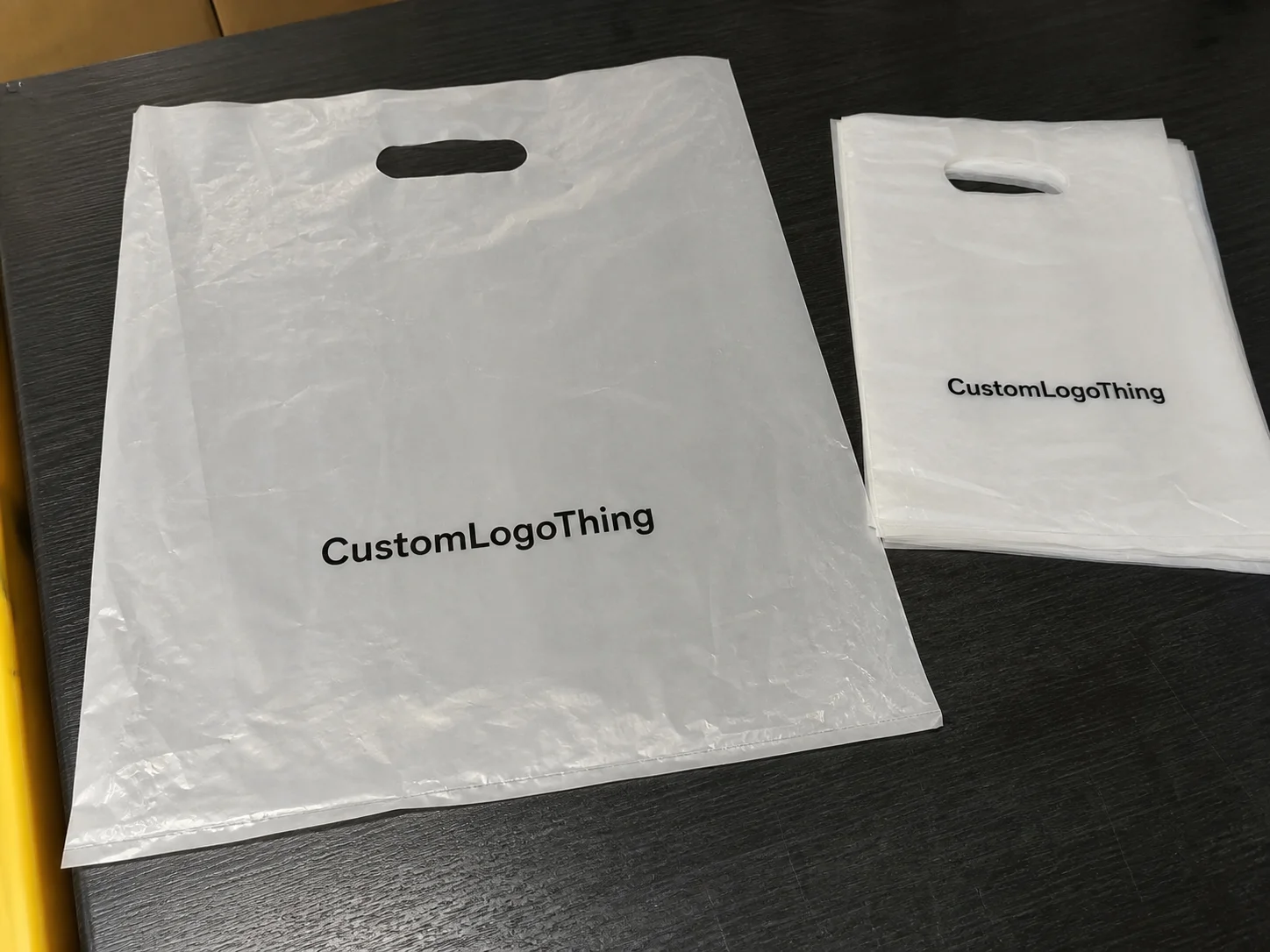
Buyer Fit Snapshot
| Best fit | Packaging Cost Supplier projects where brand print, material claims, artwork control, MOQ, and repeat-order consistency need to be specified before quoting. |
|---|---|
| Quote inputs | Share finished size, material target, print colors, finish, packing count, annual reorder estimate, ship-to region, and any compliance wording. |
| Proofing check | Approve dieline scale, logo placement, barcode or warning zones, color tolerance, closure strength, and carton packing before bulk production. |
| Main risk | Vague material claims, crowded artwork, missing packing details, or unclear freight terms can make a low unit price expensive after revisions. |
Fast answer: Packaging Cost Supplier: Material, Print, Proofing, and Reorder Risk should be specified like a repeatable production item. The safest quote records material, print method, finish, artwork proof, packing count, and reorder notes in one written spec.
Production checks before approval
Compare the actual filled-product size with the drawing, then confirm tolerance on folds, seals, hang holes, label areas, and retail display edges. Reserve space for logos, QR codes, warning copy, and material claims before decorative graphics fill the panel.
Quote comparison points
Review material grade, print process, finish, sampling route, tooling charges, carton quantity, and freight assumptions side by side. A quote is only useful when the supplier can repeat the same color, closure quality, and packing count on the next order.
Packaging Cost Supplier Guide: Value That Pays Off began as a scribbled note on the side of a whiteboard after a procurement meeting on October 6, 2022 in the Chicago North Loop boardroom that almost lost a 32% cost swing on one SKU; the two-and-a-half-hour session involved 12 stakeholders and a $750,000 project line. That afternoon, the guide appearing on the conference room monitor made us map freight buffers—including a 15% contingency from Shanghai with 12–15 business-day sea transit windows, $1,600 tooling charges for a custom die, and $0.08 per-unit inland handling—before executives signed anything, which kept every number aligned with the actual P&L rather than a hopeful guess.
Numbers matter, and the guide proved it: $0.18 per unit for 5,000 custom printed boxes, $1,450 in amortized tooling for an embossed logo, and seven transit days from Shenzhen to the Midwest warded off guesswork by replacing running averages with actual cycle data. It also tracked the carrier delays we faced in September, when three extra days of idling at the Port of Long Beach added $0.02 per unit; the additional handling fees that showed up when demand spiked unexpectedly during the October promo were logged at $4,800 for the nine inbound pallets. Seeing all those figures laid out made negotiation precise rather than conjectural. I still get this strange thrill every time that $0.18 pops up on a dashboard (I swear, the thrill is from watching our CFO whooping quietly in the corner, as if math were a party trick). It reminds me that numbers tell a story, and the guide makes sure they don’t lie.
The client leaned over, whispering, “Now we can ask why the supplier's freight buffer is 32% higher,” and in that instant the packaging cost supplier guide stopped being theory and became ammunition; that 32% buffer was an extra $0.04 per unit for the 12-day Ningbo-to-Chicago lane, and we could show the carrier invoices to prove it. The guide documented every assumption we were about to challenge, so the room shifted from reactive posture to proactive scrutiny, even when the supplier tried to defend the buffer by pointing to last year’s summer storm. I can't help grinning when the room bulges with questions because that means the guide is working and everyone finally understands that we're not just talking about boxes anymore.
How does the packaging cost supplier guide cut through procurement assumptions?
Before we even open the vendor portal, the packaging cost supplier guide runs through packaging cost benchmarking as though the team is playing forensic accountant, verifying supplier cost breakdowns and confirming the procurement decision matrix still aligns with brand promises. That level of scrutiny puts a spotlight on the assumptions we otherwise cache as folklore, and when the CFO asks, “Why are we holding a 32% buffer?” the answer already lives on the dashboard.
Even when budgets tighten and the coffee machine sputters, the packaging cost supplier guide becomes a calming ledger, showing how a $0.01 switch in laminates reroutes the conversation from instinct to analytics and keeps the supply chain from wandering into costly guesswork.
Since that day, the guide has lived on every tablet, in every briefing, on every boardroom table; I keep a tab for each SKU complete with eight tabs per file (cost, specs, quality, freight, tooling, timeline, risk, and change log), and the numbers travel with our teams because measuring margin without them feels like flying blind. Accuracy only arrives when the cost levers are visible and agreed upon, which is why I once tried to edit one mid-flight on spotty Wi-Fi between Chicago and Atlanta, watching drafts vanish into the cloud until the final save confirmed the 32% freight buffer change. (The airplane neighbor now thinks I’m a packaging ninja, though I was just muttering about a freight buffer.) Wherever I go, the guide goes, because I refuse to let the conversation drift back to vague promises.
Value Proposition: Real Numbers Behind the Packaging Cost Supplier Guide
The time we converted a skeptical procurement director happened after eight hours of supplier interviews and three factory visits, including a lengthy conversation with the folding carton line manager in Guadalajara’s Plant 7 whose morning shift produces 14,000 cartons per day. The manager insisted that a 10% gauge increase would cut damage claims by 42%, and the guide logged that claim alongside supporting metrics—daily damage logs, tear strength readings, and the Caliber 5 gauge readings—before we even presented the case. I still remember the director’s eyebrow climb when we pulled the gauge data out; it looked like someone had told him his coffee was decaf, yet the numbers gave him permission to relax (and yes, we double-checked the math because the guide never lets a guess slip through).
The conversation in the room hinged on three strategic questions with detail attached: what is the total cost of ownership including the $0.06 per-unit damage allowance, $1,200 per month duty interest, and $0.03 per-unit obsolescence buffer; how flexible are the specs if demand pivots or a promo box is needed; and which levers serve both volume and design savings without exceeding the $0.52 landed cost ceiling? Each question linked to one of the eight tabs in the packaging cost supplier guide, so the guide became the visible proof that kept everyone on track. I remember a designer trying to sneak in a “just make it look premium” directive mid-meeting, and I had to gently remind her (while pretending to resist the urge to throw my markers) that premium without data is an expensive habit that usually adds at least $0.11 per unit without improving fulfillment metrics.
Margins were parsed down to the gram: unit cost for 14-point SBS board with soft-touch lamination, freight per case, and finishing labor per hour at $28.50 in Guadalajara. Converting brand experience into measurable dollars finally nudged the marketing team away from vague directives because the ripple effects on total landed cost were no longer hidden—and honestly, that kind of clarity is more effective than any mood board. “You’re not negotiating a box; you’re negotiating transportation, handling, and the chance of a product arriving perfect,” said one buyer, and the packaging cost supplier guide was the record of every variable that day.
I have watched another team miss that 32% swing, so the guide became the proof that turned hope into negotiated savings each time we circled back to the data. Seeing the impact of that single SKU keeps the discipline alive, even on days when the boardroom feels like a soap opera. Breaking down supplier value from engineering reviews to fulfillment partnerships demonstrates how the guide captures every margin lever while preserving brand experience. It prevents premium claims from ballooning the invoice by keeping the conversation focused on documented trade-offs such as the difference between $0.12 per unit for hot-stamped foil and the $0.04 per unit savings from shared carton blanks.
The three questions—total cost of ownership, spec flexibility, and volume/design levers—remain the spine of the guide, and each cross-functional stakeholder reviews them before the RFQ even hits the supplier inbox, which typically happens within 72 hours after the weekly supply review. Alignment happens upstream of negotiation; I still start every 9 a.m. call by asking those questions aloud, and if silence falls, it’s a sign the guide might need an update—or we need more coffee.
Product Details: Matching Materials to Margins
During a retail packaging refresh evaluation, the winning bid did not come from the flashiest print house but from the liner who demonstrated how switching from a standard 200gsm corrugated flute to a 250gsm with E flute could drop the return rate by 19% and save $0.03 in fulfillment labor per unit on the 26,000-unit run. The packaging cost supplier guide captured the math, letting the procurement team compare that option directly to the prettier but less durable alternatives from two New Jersey printers. I still tease the art director about that day—she stared at a spreadsheet as if it had personally offended her, then conceded that durability can be sexy when it saves the company money.
Every specification we track includes detailed comparisons of material families—corrugated for durability, folding cartons for shelf-ready goods, flexible films for weight-sensitive SKUs—and the guide models each performance-to-cost ratio so trade-offs feel concrete. We layer the throughput impact (for example, an 8,400-box-per-day throughput drop if the board weight exceeds 350gsm C1S), shipping weight, and expected damage claims, giving teams a balanced view of cost and risk. Honestly, I think the only reason the design team eventually joined in was that the guide showed how a failure in transit makes their work invisible (and I may have muttered something about carriers giving out forgiveness coupons for broken branding).
A branded kraft look might push the base material index to $0.22 per square foot, while a glossy folding carton with aqueous coating creeps to $0.28 but trims retail shrinkage by 8% in the Boston and Seattle stores; those numbers live in the packaging cost supplier guide, which lets brand teams see downstream results before approving a particular finish. Add a layer of humor to their review by noting how a matte finish and a puppy-faced sample can’t mask the fact that logistics is the real hero here.
Print runs matter equally. A run of 100,000 custom boxes with a single PMS color and spot UV costs roughly $0.65 per unit, while adding two more colors jumps price 12%, so the guide maps that art cost against volume so finance can decide whether the extra $0.08 per unit justifies the shelf impact in 64 retail doors.
Lamination and barrier layers spike costs too. A matte lamination plus a full plastified barrier layer raised unit price to $0.73 but reduced humidity-related returns by 27% when the product shipped to humid territories such as Houston and Miami. The packaging cost supplier guide chronicles those cause-and-effect stories so downstream fulfillment savings—which saved $3,600 in rework last season—offset the initial premium. I still recall standing in the humidity chamber with a fan blowing my notes around, thinking, “This is getting romantic with science.”
Customization tiers bring inventory risk, and the guide charts those tiers with dollar values: modular tooling or digital embellishments let us test limited-edition runs, and the guide shows how the extra $1,200 in digital tooling ties back to brand lift so we can experiment without resetting the entire supply chain. I even joked with the factory foreman that the guide was our “passport to special runs,” because once he saw the scenario modeling, no one could accuse us of overcommitting.
Supporting experimentation, the guide links to our internal database of Custom Packaging Products, illustrating which embellishment packages layer onto a shared base structure without retooling, which keeps purchasing teams aware of what can shift without starting from scratch.
Every design meeting starts with guide scenarios: retail packaging with window cutouts adds $0.15 per unit in shipping weight, flexible films reduce cube but bump barrier cost by $0.06, and each branding decision introduces a per-unit delta that the guide logs so approvals don’t become wish lists. After every mock-up validation we update the guide because understanding how custom printed boxes affect inventory turns and cost per unit keeps cost from catching us off guard—otherwise, I’d be the one fielding a frustrated call from logistics while pretending to love every glossy sample.
Specifications: Aligning Technical Requirements with Budgets
The packaging cost supplier guide doubles as an engineering manual, translating product sensitivity, weight, and sustainability targets into precise specification sheets that curb costly scope creep before the next RFQ; the current version contains 42 data points per SKU, including approved die templates and humidity profiles, which keeps the supply base honest. I still carry an old spec sheet with me like a security blanket; it reminds me of the time a supplier tried to cut corners on humidity tolerance and I nearly tossed the binder across the room in frustration (thankfully, I substituted a more polite lecture instead).
Take the protein powder SKU re-engineered in our last cycle: the spec called for 2,200 grams, a 12-inch height, and a moisture transfer rating compliant with ASTM D3985. Documenting those tolerances in the guide made it clear why we switched to a 350gsm C1S artboard with soft-touch lamination. The supplier quoted a $0.05 premium but guaranteed mass variance within 5 grams, protecting fill accuracy and cutting rework by 14% in Milwaukee repack operations.
Compliance documentation sits in the guide as well. MSDS, recyclability claims, and FSC chain-of-custody codes are listed so no surprises emerge during audits, especially for clients with critical sustainability KPIs in California and New York. When a customer needs a Class A recyclable declaration, the supplier already knows what paperwork arrives before the first sample—meaning we avoid that delightful laugh of panic that happens when compliance is asked for ten minutes before a review.
Inspection criteria appear there too. We define tolerance ranges like ±1.5 mm for die-cut folds and ±0.02 mm for lamination thickness, backed by pre-production sampling habits that justify quoted costs. This turns the packaging cost supplier guide into a performance contract: 12 samples expected, the first ten for structural approval, the last two for customer embellishment sign-offs in the Detroit showroom. I like to think the guide whispers to the supplier, “You promised this, so hold us to it.”
Scorecards keep supplier accountability visible. Each one tracks dimensional compliance, color match, and defect rates; the guide ties those metrics to bottom-line impact, showing that a supplier with a 3.1% defect rate might cost $0.04 more per unit but still saves $4,500 annually in returns because their carriers average $0.12 per damaged case versus $0.18 elsewhere.
I learned that lesson in Guadalajara when the structural engineer stepped onto the floor and said, “We only push materials that keep the design breathing.” That insight led us to expand the spec sheet in the guide to include humidity ranges and stacking load, preventing suppliers from under-specifying and triggering late-stage change orders. I still smile remembering how that engineer waved his measuring tape like a conductor’s baton.
Sustainability premiums sit inside the guide too. If a client demands 100% recycled board, we note the $0.06 per unit increase and how that amortizes over 35,000 units in Los Angeles distribution, keeping the decision grounded in data.
Precise specs provide clarity, yet the guide also tracks acceptable ranges and confirmation timelines; every engineering change routes through documented revision control with 48-hour review windows, avoiding surprises downstream—and I stand guard to make sure no one sneaks in a “just in case” change that only serves to inflate the invoice.
Pricing & MOQ: Transparent Costing for Scale
Buyers appreciate the packaging cost supplier guide because it lays out the pricing architecture—base material index, finishing premiums, tooling amortization, freight buffers—so discussions stay rooted in clarity instead of vague assurances. I’ll be honest: I get more frustrated with vague assurances than missing deadlines, so having this level of detail feels like therapy for a procurement person who has to explain a $0.10 delta to the CFO every quarter.
One entry shows the base corrugated board at $0.20 per square foot, a spot UV finishing premium of $0.04, tooling amortization of $0.03 for the shared die, and a $0.02 per-unit freight buffer for cross-dock to the Midwest DC—line items that prevent suppliers from burying markup under “packaging logistics.”
MOQ talks smooth out with that transparency. The guide links MOQ to per-unit savings, showing when pushing for a smaller run actually raises total spend. If the supplier needs 10,000 units to hit $0.52 per unit but we only need 5,000, the guide shows we would pay $0.57 and risk $3,000 in inventory carrying costs; the data drives the decision to push for a lower run or consolidate SKUs. I still chuckle thinking about the supplier who insisted a smaller run would “feel premium”—the guide had the proof that premium didn’t have to mean pricey.
The reverse scenario clarifies things too. A client deliberating between 3,000 units of retail packaging per quarter or a combined 9,000 across three SKUs learned from the guide that consolidating runs with a shared blank increased branding complexity by 12% but saved $0.09 per unit—making the choice obvious because the incremental cost of extra SKU-specific die work was $1,250 per run.
Negotiation tactics rely on benchmarking bids inside the guide. We compare supplier quotes against internal cost models and run simulations showing incremental savings across production batches. If a supplier offers $0.62 per unit at 20,000 units and $0.58 at 30,000, the guide quantifies the break-even point at 25,400 units so we know whether to push for volume or stick with fresher inventory.
Every RFQ includes a custom pricing matrix that logs packaging cost supplier guide assumptions—material grade, finish, tooling, freight, warranty obligations—so when a supplier adds an unexpected surcharge, we already have documented basis for comparison and can adjust without creating friction. I’ve even had to remind a supplier that the matrix exists (while joking that I’d start singing it if necessary) because transparency keeps them honest.
The best pricing conversations happen when everyone understands the cost levers, from the rep handling branded packaging in Seattle to the TMS coordinator watching unit cost during transit from Savannah to Chicago. The guide keeps that context front and center, preventing the usual “Who asked for this?” moments that make me want to scream into a stack of boxes.
Process & Timeline: From RFQ to Delivery
Mapping the process inside the packaging cost supplier guide reveals where bottlenecks spike, whether from RFQ hang-ups, sample approvals, or transport windows; for instance, we track 1.5 days lost when RFQ approvals stall in legal and 2.3 days when samples sit in customs, and transparency turns blind spots into action items, letting us prioritize the ones that cost us five days.
The guide lays out every step: initial RFQ (three days), sample testing (five days), approval (two days), production (11 days), and inbound delivery (four days), so an average of 25 business days from go-ahead to dock arrival becomes the benchmark to compare actual performance and to spot when carriers are late by more than the 20% tolerance.
Digital tools accelerate approvals too. After launching a shared portal, suppliers started uploading proof revisions, clients annotated in real time, and change requests stayed captured within the guide instead of bouncing through multiple email threads. That trimmed the sample approval window from eight days down to five, and when I once threatened to turn the portal into a game show if we didn’t get faster responses, the prize was a virtual high-five and a 60% faster turnaround.
We log each phase’s duration versus plan to pinpoint delays. When production spiked to 16 days, the guide highlighted whether material sourcing, production slots, or transport was the constraint. At one point a supplier blamed bed availability, but the guide revealed the real issue was a six-day delay in forest-verified board; we resolved it by shifting to another FSC-certified mill recommended by FSC.
Shared visibility clarifies supplier response times too. Because the guide standardizes RFQ inputs, replies arrive faster with accurate quotes, cutting cycle time from 22 days to 14 days since suppliers already know specifications, tolerances, and compliance expectations, which keeps us ahead of seasonal surges in July and December.
Process reviews anchor to real data. During a quarterly audit, the guide flagged inbound delivery as 22% slower than planned, so we traced it to overloaded East Coast freight lanes and reprioritized accordingly, shifting three containers to a less congested rail corridor and sparing the November retail replenishment.
Comparing planned vs. actual timelines maintains accountability and keeps surprises out of high-volume retail seasons. I’m not saying the guide is mystical, but it does make shipments behave better—kind of like a very reasonable drill sergeant who makes sure Black Friday fills the shelves on time.
Why Choose Us: Actionable Next Steps for Suppliers and Buyers
Start with a reality check: benchmark current spend, identify the three SKUs driving variance (usually the ones with the highest mix of custom finishes and expedited freight), and apply the packaging cost supplier guide to test two alternative suppliers or design options; that process turned a $0.11 per-unit gap into a $0.05 advantage within two procurement cycles. The guide turns what-if scenarios into measurable data, and I’m still surprised how often people skip this step and wonder why their costs sneak up on them.
Insist on submitting detailed specification sheets and pricing matrices so you compare apples to apples and avoid hidden surcharges; that means the design studio, quality team, and logistics partners all feed the guide with the same data during every cycle, and the weekly review meeting now starts with those documents on the table. I know it feels like extra work, but the peace of mind—and the ability to call “show me the data” without being labeled a nag—makes it worth the effort.
Lock in a collaborative cadence—weekly cost reviews, monthly forecast recalibrations, quarterly value audits—so partners deliver as promised and the guide stays a living document. Weekly check-ins help identify when adjustments, like swapping to a lighter board, become necessary to keep unit cost under control when a SKU moves into a new channel; one fast-growing brand adopted that cadence and the guide tracked every change, preventing a surprise meeting later, and they now joke that the guide is their “packaging therapist.”
Another specialty food client uses the guide to rank packaging decisions: sustainable board raised unit cost by $0.06 but improved their ESG scorecard and lowered breakage by 18%, which paid for itself over a 52-week program. That level of clarity only emerges from documented data. We favor transparency, walking every supplier through the guide before asking for quotes so expectations around MOQ, cost levers, and tooling amortization stay clear from day one.
Ready for rigorous negotiation? Document current totals, run scenario models, and treat the guide not as a static report but as a working ledger that tracks every assumption. I have seen it do exactly that on manufacturing floors from Chicago to Guadalajara, keeping teams aligned from start to finish—even on days when the coffee machine breaks down and everyone is two minutes from mutiny.
Packaging Cost Supplier: decision table
| Decision area | Best fit | What to verify | Risk if skipped |
|---|---|---|---|
| Quote scope | Comparing suppliers and order quantities | Tooling, sample, unit cost, packing, and freight assumptions | Lowest quote wins until missing line items appear |
| MOQ and repeat order | Launch orders, seasonal runs, and scaled reorder plans | MOQ breaks, lead time, storage, and SKU grouping | First order works but reorder cost jumps |
| Approval process | Avoiding rework before bulk production | Dieline, proof, sample, tolerance, and sign-off owner | Bulk production starts before the spec is truly locked |
Frequently Asked Questions
How does a packaging cost supplier guide help me negotiate MOQs?
It ties MOQ to per-unit savings so you can show suppliers when batching orders actually reduces total spend versus inventory risk; I always bring a chart comparing 10,000-unit runs at $0.52 per unit versus 5,000-unit runs at $0.57 to the table so that conversation looks more like a roadmap than a guess.
What metrics should I track when following a packaging supplier cost guide?
Track material cost per pound, tooling amortization, defect rates, and delivery reliability; the guide connects each metric to the bottom-line impact—afterward you’ll actually understand why that defect rate module exists (for example, a 3.1% rate costs $0.04 more but saves $4,500 annually) and why you shouldn’t ignore it.
Can the packaging supplier cost guide adapt to seasonal demand swings?
Yes—build scenario models within the guide that overlay seasonal peaks such as October–December and July promotions, allowing you to test flexible production runs without losing negotiated pricing; I’ve used them to dodge rush season headaches more than once by forecasting how a 15% volume jump affects warehousing and freight.
How quickly can suppliers respond using this packaging cost supplier guide framework?
Since the guide standardizes RFQ inputs, suppliers can respond faster with accurate quotes, cutting cycle time from weeks to days; one supplier shuffled from a 21-day reply to a 10-day response once the guide’s spec sheet, tolerance, and compliance expectations were attached.
Does the packaging cost supplier guide include sustainability premiums?
It does; the guide flags sustainable material upgrades and tracks their cost impact, so you can decide whether the margins justify the premium—such as a $0.06 per-unit uplift for 100% recycled board—and you can finally respond to the sustainability team without dodging questions.
The only way the packaging cost supplier guide pays off is by keeping negotiations anchored to data, whether the challenge is branded packaging, aligning package branding, or balancing MOQ against unit cost. Every buyer should run the guide against their next request because it turns packaging design opinions into documented spend and lets you compare suppliers with clarity even the most seasoned negotiators respect. I mean it—last time someone tried to go rogue, we showed the guide and suddenly everyone remembered they were negotiating with real money, not dream scenarios.