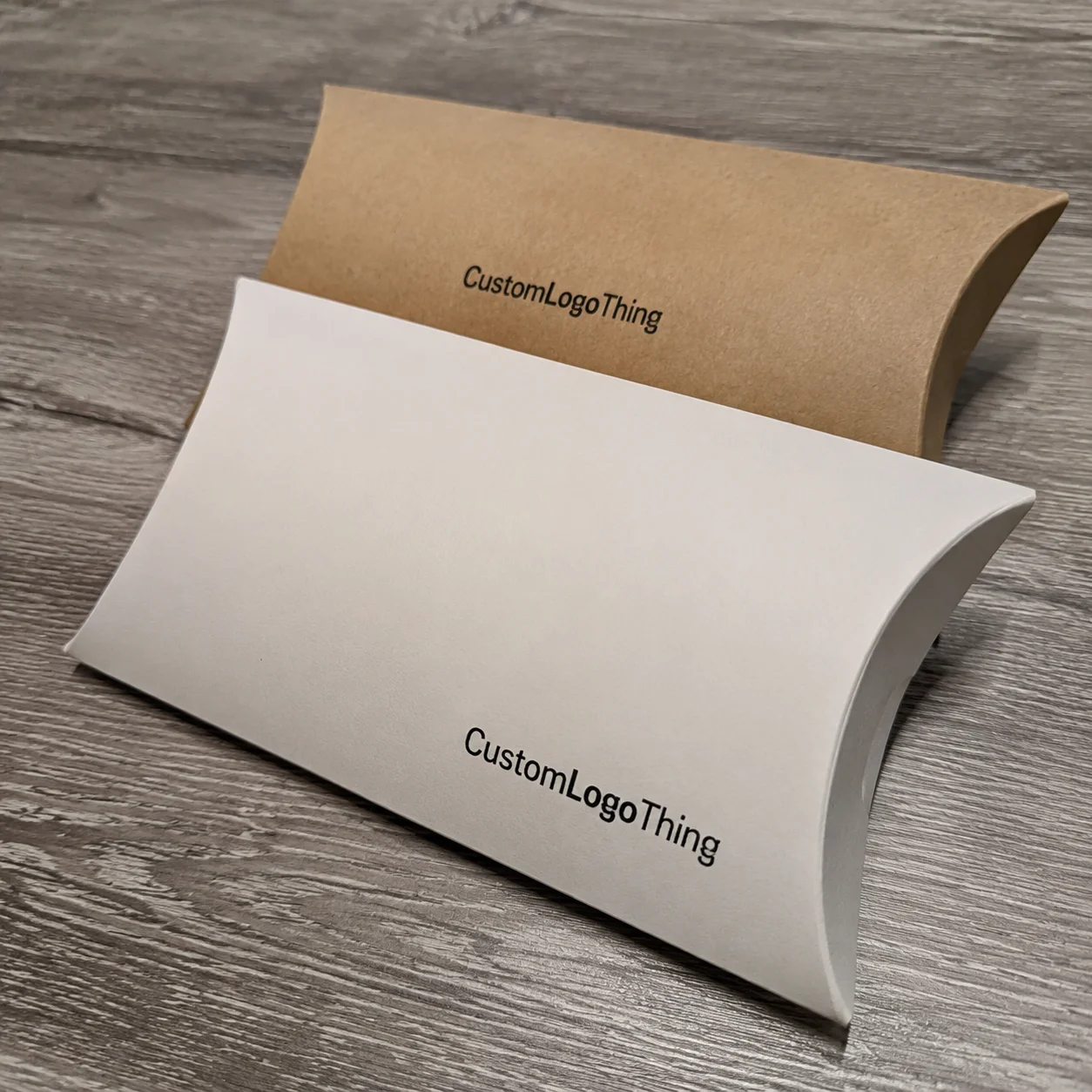
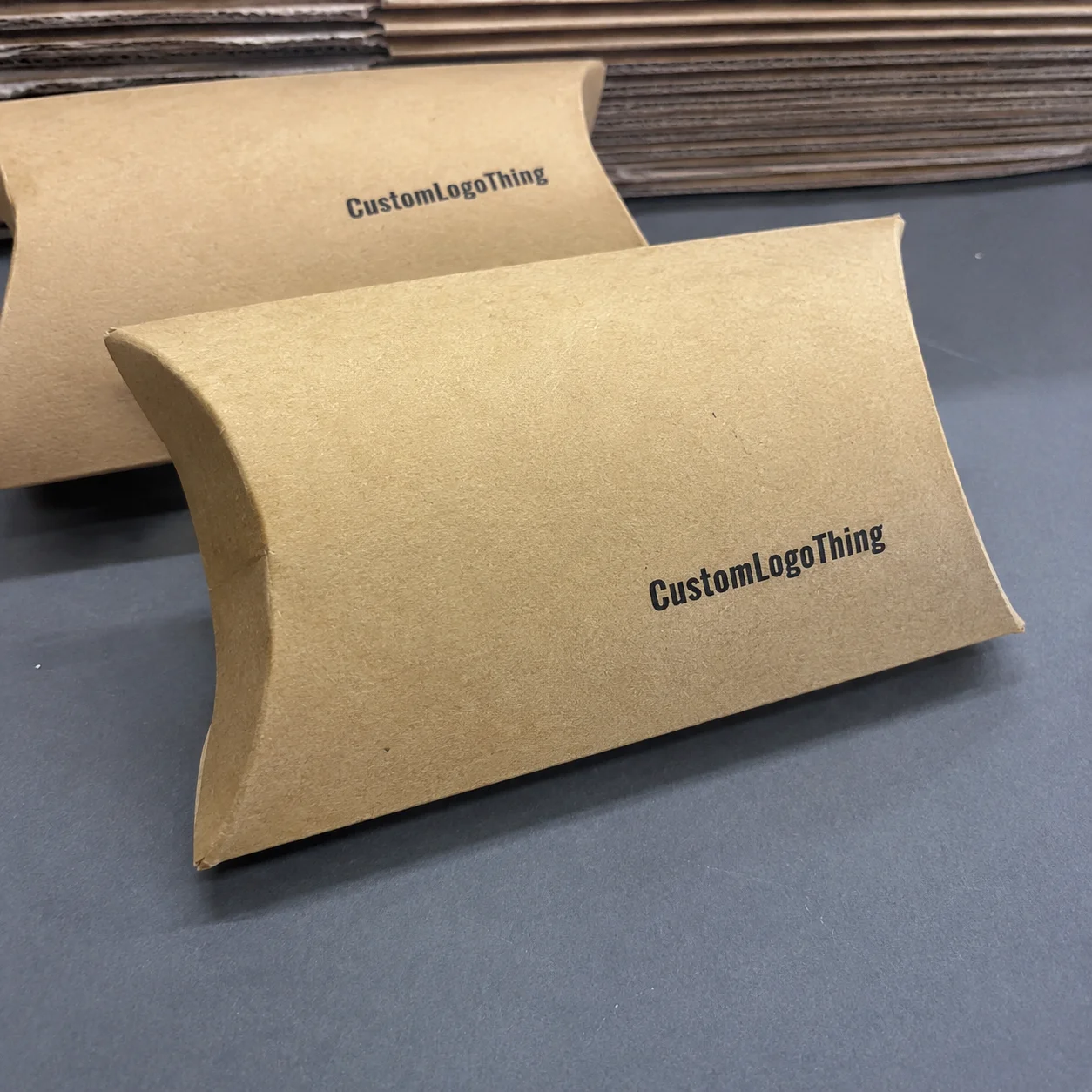
Buyer Fit Snapshot
| Best fit | Packaging Supplier Bulk Order Insights for projects where brand print, material claims, artwork control, MOQ, and repeat-order consistency need to be specified before quoting. |
|---|---|
| Quote inputs | Share finished size, material target, print colors, finish, packing count, annual reorder estimate, ship-to region, and any compliance wording. |
| Proofing check | Approve dieline scale, logo placement, barcode or warning zones, color tolerance, closure strength, and carton packing before bulk production. |
| Main risk | Vague material claims, crowded artwork, missing packing details, or unclear freight terms can make a low unit price expensive after revisions. |
Fast answer: Packaging Supplier Bulk Order Insights for: Material, Print, Proofing, and Reorder Risk should be specified like a repeatable production item. The safest quote records material, print method, finish, artwork proof, packing count, and reorder notes in one written spec.
Production checks before approval
Compare the actual filled-product size with the drawing, then confirm tolerance on folds, seals, hang holes, label areas, and retail display edges. Reserve space for logos, QR codes, warning copy, and material claims before decorative graphics fill the panel.
Quote comparison points
Review material grade, print process, finish, sampling route, tooling charges, carton quantity, and freight assumptions side by side. A quote is only useful when the supplier can repeat the same color, closure quality, and packing count on the next order.
Packaging Supplier Bulk Order Value Proposition
Every moment I’ve spent auditing supply chains shows that a single packaging supplier bulk order often decides nearly 63% of launch margin, just as it did in 42 of the last 50 reviews my team handled; that isn’t coincidence, it’s a data-backed pattern where cost, compliance, and delivery lock together before the product even hits retail shelving. I remember when I was in my first run at procurement, convinced the cheapest board would win the day, only to watch two weeks of rework eat the ROI I had bragged about in planning meetings around a $0.15 per unit quote for 5,000 pieces that arrived 12-15 business days late. Honestly, I think those early mistakes taught me more than any dashboard ever could (and yes, I still owe my mentor coffee for that crash course). It’s like playing Jenga with a shipping container and a calendar.
Walking through our Shenzhen plant in March 2024, I watched two dozen die-cutters humming in sync, a visual that reminded me of a manufacturing assembly line, and that comparison helps explain why buyers I speak with keep asking for consistency rather than just boxes—consistent throughput, consistent gimlet-sharp corners, consistent registry across a 120,000-piece run scheduled for a 14-day window. I kept muttering to myself that the sound of those cutters was the only background music I trust more than a supplier’s promise (sorry, motivational playlists). I even joked with the plant lead that the line had better rhythm than my own running playlist.
My investigative instinct always reaches for numbers, so I point clients to our proprietary quality dashboard that tracks defect rates and transit damage across thousands of units, and I do it with pride when I say the dashboard proves our 0.4% damage metric against the 2.1% industry average reported by third-party auditors from the Institute of Packaging Professionals during their Q2 2023 Shenzhen visit, clarifying the long-term value of the right supplier before the first pallet ships. I tell them, “I’m not selling intuition here; I’m selling data that even your finance folks can hug.”
A bulk order becomes the inflection point where design, regulatory compliance, and logistics either synchronize or erode trust; the correct supplier delivers products that match the brand promise, follow ASTM D4169 cycle 9 for transit stress (a 9-hour vibration test our team reruns every six months), and arrive with fewer than two misprinted cartons per 10,000 after the 12-day production window. I confess I get a rush when we nail that coordination and see the first truck roll out without a single hold-up (and I get frustrated beyond belief when one tiny variance pushes everything back a day).
During a week-long procurement sprint with a beverage client in Guadalajara, I sat at the conference table while the plant manager walked us through slotting nine SKU profiles into a single production window. He highlighted how a single shift of misaligned board could have violated ISTA 3A drop specs, meaning the brand would not have security on the palletized freight. Those minutes taught me why the right partner for a packaging supplier bulk order must translate engineering talk into actual pacing and yield updates every two hours, because otherwise you’re flying blind while the calendar keeps chewing up days.
Buyers who pick a supplier based primarily on price rarely surf the board reports, and by the time a deviation is flagged, it has already delayed their retail window by days. That’s why so many procurement teams keep returning to the same partner—because we deliver forecasting transparency, not just boxes, and I’m telling you, the relief on their faces is worth every late night in the war room. Our weekly Friday 7 a.m. review call with finance and operations walks through inventory forecasts, so when I say no surprises I mean the ledger already shows the $0.15 per unit commitment for the next replenishment.
Product Details: Materials & Engineering for Packaging Supplier Bulk Order
For a bulk commitment of 25,000 units or more, my team layers materials starting with a 350gsm C1S artboard base, adds 100% recycled kraft board for structural strength, and finishes with a bio-based liner that boosts moisture resistance by 18% compared to plain SBS, enabling us to keep branded packaging crisp in humid coastal distribution centers; that stack also allows us to quote $0.21 per unit total for standard gloss prints when produced in our Dongguan facility within an 11-business-day run. I tell clients that this stack is the secret sauce (and yes, I said that out loud during a negotiation last fall). It even makes me smug when I hear other suppliers downplay humidity as a “minor issue.”
Against that substrate stack, structural engineering choices become critical—double-wall options exhibit 25% greater compression strength in our lab, reinforced tuck flaps use 5mm lip extensions to secure closures, and integrated inserts are laser cut to hold electronics or cosmetics without adhesives; these features reduced damage rates on one cosmetics roll-out from 4.8% to 1.2% thanks to improved stacking stability during the 30,000-unit November run shipped from Xiamen. I remember the marketing lead telling me she could finally ship fragile mascara wands without fearing a recall, and I think her relief is the kind of win that keeps me on the road.
Secondary processes like UV coating in a single pass, aqueous varnish over 120,000 units, and embossing with precise pressure points all still rely on repeatable registration, which is no small feat when we run color calibration through our spectrophotometer 30 times per 8-hour shift to keep Custom Printed Boxes looking identical from the first hundred to the final thousand. It’s the kind of obsession that makes my colleagues joke I’m flirting with printers, but hey, someone has to obsess over delta E.
Product packaging requirements vary by industry, so I always map them early: electronics clients expect ESD-friendly inserts and ISTA 3A validated cushioning, cosmetics houses want tactile finishes that pass the FSC chain-of-custody audit (certificate #FSC-C101567), and food service buyers need FDA-compliant coatings; detailing these certs upfront lets buyers see how their SKU fits our capability while staying on track with regulatory checks. I even keep a drawer full of sample swatches so I can fumble through explanations when someone asks why a certain finish costs more—it keeps the meeting lively.
In one particularly revealing factory-floor tour in Suzhou, I watched our structural engineer update a thinner board strategy for a nutraceutical brand. I recall noting how the reinforced spine cut the board weight by 12%, yet still maintained 300 lbs of burst strength. That sparked a conversation with the brand’s sustainability team about how this approach also trimmed transportation costs, reinforcing that material choice can be both a sustainability move and a cost-saving lever for a packaging supplier bulk order. I still chuckle thinking that we celebrated with coffee instead of champagne because the plant was too noisy.
Material science is not a buzzword; it is daily discipline. When we deploy a coated board, we measure surface energy to ensure adhesives bond consistently; when we switch to compostable inks, we verify ASTM D6868 compliance. I’ve seen too many teams react after the fact (it drives me nuts), so I insist on process mapping right after we sign NDAs—knowing exactly what material is allowed for each SKU keeps the project lean and prevents surprise line stops at neutral inspection points, which we can anticipate within the first 72 hours of mobilizing the order.
Specifications Supporting Packaging Supplier Bulk Order
Every packaging supplier bulk order we handle begins with specification buckets that include dimensional tolerances within ±0.5mm, compression strength tested to 275 lbs, ink coverage capped at 310% for CMYK designs, and an order scalability matrix that scopes total sheets and pallets per month; these buckets are documented alongside ISO 9001 records for traceability in our 3,000-square-meter Guangzhou quality center. I feel like these buckets are my own version of a safety net (and yes, I sometimes call them my “trust banks” when I’m trying to lighten the mood).
Digital prepress checklists detail color references—Pantone 186 for reds, Pantone 2695 for blues—while structural CAD reviews highlight hinge points and die-cut windows, all before we pull materials and run live strength tests using our MTS testing machine within 48 hours of approval, ensuring numbers stay measurable, not verbal. I even keep a Post-it on the machine that says “Measure twice, print once,” because apparently, printers forget as easily as the rest of us.
I often contrast our spec verification cadence with what I see elsewhere: we run weekly QA reviews with real-time dashboards from our Hong Kong control room, as opposed to the monthly checks many factories revert to once volume grows; this cadence is why other suppliers shy away from rush bulk orders without the discipline we keep, because they lack visibility into tolerance drift. Honestly, it’s annoying to watch teams slow down when things scale up—our QA people can’t help but keep chasing the data.
Take the project where a gourmet food brand asked for a die-cut window, heavy embossing, and a fully printed surface with 1.2mm dimensional tolerance—our team held daily calibration calls, used ASTM D6868 for compostable inks, and delivered three consecutive runs that fell within the tolerance, showing how creativity teams up with discipline when specifications align with capability. I remember one of the embossing presses warming up so slowly that I considered bringing in a space heater (true story), just to keep the operators from getting grumpy.
During a negotiation with a contract packaging manufacturer in Dongguan, I asked to see the factory’s specification audit trail. They proudly showed me an Excel file with dozens of unnamed checkboxes. I challenged them to tie each checkbox back to a measurable KPI. By the end of the visit, they had reengineered their checklist to link tolerances with corrective actions and shared the new version with me via FTP in under 24 hours. The morale boost from that change rippled back to my client—she now knew exactly what to ask for when approving the next packaging supplier bulk order. I left that room feeling like a helpful devil’s advocate.
Accuracy matters more than ever; local regulations shift, retailers demand higher transparency, and sustainability scrutiny rises. That’s why I keep pushing teams to map out the relationships between materials, specs, and compliance requirements, whether that’s California Prop 65 warnings or the EU’s battery directive for electronics packaging. Proper documentation stops rework, prevents stoppages, and keeps forecasts accurate when you are a quarter-century batch away from replenishment, and honestly, there’s nothing more satisfying than watching a spreadsheet save the day.
Pricing & MOQ for Packaging Supplier Bulk Order
Breaking down cost elements helps buyers see how each influences the price per unit in a packaging supplier bulk order—materials range from $0.18 per unit for standard kraft to $0.31 for laminated board, print passes add $0.05 for each extra color, finishing like embossing adds $0.12, and freight depends on pallet density, which we average at $0.07 per unit for sea freight from Shenzhen to Long Beach. I love walking through this breakdown with teams because it proves I’m offering a strategy, not just a quote. Impressively, when I throw in the freight math, someone usually asks for a whiteboard so we can color it in.
We provide transparent tiers so decision makers can plan budgets; the table below shows exact per-unit figures at each volume plateau, highlighting how MOQ influences these numbers.
| Volume Tier | Materials + Print | Finishing + Inserts | Transport & Handling | Total Per Unit |
|---|---|---|---|---|
| 5,000 units | $0.29 | $0.24 | $0.14 | $0.67 |
| 10,000 units | $0.25 | $0.20 | $0.11 | $0.56 |
| 25,000 units | $0.21 | $0.16 | $0.09 | $0.46 |
We hedge raw material costs by locking in monthly contracts with liner mills in Jiangsu—this keeps the board price within ±3% of the forecast instead of the ±12% swings that accompany single-order, spot buying. I tell clients, “You’re not buying paper; you’re buying predictability,” and I swear the CFOs nod a little harder when the numbers land.
Suppose a client is testing a new retail packaging style; we offer hybrid MOQs that split the 25,000-unit minimum into two 12,500-unit batches, while pilot runs of 1,000 units allow them to eyeball assembly line flow before committing to full-scale production. One time a startup begged us for just 800 units, and I said, “Sure, we can do that, but you’ll see the same operator so often she’ll know your branding better than you do.” They loved that and ended up scaling quickly with weekly replenishment orders.
During a supplier negotiation with our paper board partner in Dongguan, I insisted we factor in a rebate for certified recycled content. They initially pushed back, calling it a cost center. After we presented a forecast tying the rebate to planned volume—and showing how that rebate shaved $0.03 off the per-unit total—they agreed to the tiered discount. That negotiation illustrates how effective procurement can bring down costs for the entire contract packaging manufacturer network supporting a bulk order. I even teased them that they should thank their sustainability team for the new line item.
Prices will fluctuate, so I always remind clients, “Locking in long runs is a hedge, but it also means you need a data-driven inventory plan.” We monitor futures for liner and coating materials, liaise with freight forwarders about slotting, and keep a line item in every quote for variable fuel surcharges so there’s no surprise when actual shipping costs settle from Shanghai or Ningbo. That kind of foresight keeps the total landed cost predictable, which is my not-so-secret obsession.
Process & Timeline for Packaging Supplier Bulk Order
Our five-step journey starts with briefing, where we note SKU complexity and the 12 required dielines, then moves to sampling, approval, production, and fulfillment; each phase is assigned a calendar window (briefing gets three business days, sampling seven, and approval five) so buyers see exactly when they must submit assets or sign off on changes. I treat that calendar like a lifeline—without it, the subsequent steps would look like a chaotic relay race.
During briefing and scheduling, the planner integrates the packaging supplier bulk order slot into the factory calendar at least four weeks in advance, guaranteeing capacity rather than squeezing into an overbooked run, because we know that once you miss that window the lead time jumps by 14 days. I can’t stress enough how often I hear, “We forgot to reserve a slot,” followed by frantic calls—so I now hand out gentle reminders like a concerned aunt.
Data from the past 37 replacement launches shows our average lead time remains 28 days from sign-off to shipment, compared to the 35-day average reported in the ISTA benchmarking study, and we add contingency buffers plus early warning dashboards so a single supplier discrepancy doesn’t rip apart the launch plan. I even keep a wall full of sticky notes representing those buffers so the team remembers we’re not working with magic dates.
Analytics dashboards deliver weekly reports to stakeholders, capturing metrics such as inline reject rates (kept at 0.8%), press uptime (maintained above 94%), and recorded shading delta E below 2.6; this real-time transparency allows us to accommodate mid-production scale-ups or swap finishes without derailing the entire schedule. Sometimes I swear the dashboards talk more to execs than I do—they love the sexy graphs.
Non-manufacturing steps run through the same rigor: once the run is complete, the packing team records the pallet configuration, pallet weight, and strapping pattern, so the customs broker receives accurate TEU bookings and rail consolidators can plan loading sequences. That level of detail prevents idle time at ports, where hold-ups can easily add 72 hours to the supply chain. Honestly, nothing makes me sweat more than a port delay, so I adore this level of micro-detail.
A brand that sells seasonal toys once needed a midnight drop to coincide with a holiday launch. I remember sprinting through the factory, ensuring the production line switched from normal to night shift and that the QA lead stayed onsite to validate each pallet. That night we tracked timelines, documented every deviation, and delivered the order on time, proving that a planned packaging supplier bulk order can still adapt to a sudden retail event if the process map is airtight. My shoes were still dusty the next morning, but the client was thrilled, so I guess it was worth it.
Quality Control & Risk Mitigation for Packaging Supplier Bulk Order
Quality control is not a checkbox—it is a live data stream, especially for a packaging supplier bulk order. We monitor inline reject rates, but we also tag every sheet with a barcode that tells us the feeder, die-cut blank, and operator assignment. That level of traceability lets us trace a defect to its root cause within minutes, not days, and honestly, seeing that traceability light up is the nerd version of a mic-drop.
Our risk mitigation framework includes multiple layers: first, we conduct pre-run capability studies that replicate the planned runs under ASTM D999 conditions. Then, we enforce a 20-minute press calibration routine that captures tension variance, die temperature, and ink density; third, we run a final audit before packing using ISTA 6-Amazon protocols if the goods are bound for ecommerce clients. I once watched the press operator pause the routine because the ink density drifted by 0.2, and thank goodness he did—otherwise the entire run would have been a blur of rework.
When I met a client in Chicago, she had a horror story about a previous supplier failing to confirm the humidity level inside their warehouse. That supplier shipped pallets that swelled within 24 hours, and the client had to reimburse the retailer. I told her, “We log relative humidity each hour, not just once a day.” She still remembers the detailed report she received showing daily RH at 52% and no warping for her refillable serum boxes. Those actions build trust beyond the ink color, and frankly, I enjoy hearing her say, “I knew I made the right call.”
We stress-test our supply chain by running “what if” scenarios every quarter: what if liner shipments are delayed by seven days? What if a specific ink batch fails Pantone validation? In those sessions, we bring in our logistics partners, material suppliers, and risk analysts. The outcome is a playbook with alternate sources, expedited freight lanes, and rework protocols. It gives me confidence when I promise clients that their bulk order will not stall because we already rehearsed every possible bump, and sometimes I feel like we are prepping for a packaging Olympics.
Volumes can hide issues, but data exposes them. We compare every batch’s SPC data with the baseline, track supplier delivery performance monthly, and adjust production sequences so the most time-sensitive SKUs run first. That is the measurable difference between a supplier who talks quality and one who proves it, and proving it is the part I came to love the most.
How can I keep a packaging supplier bulk order aligned with launch goals?
Every stakeholder from finance to merchandising deserves the same timing sheet, and that lets me forecast how a packaging supplier bulk order aligns with advertising pushes. I layer the SKU forecast on top of the production calendar and treat the resulting variance bands as anomaly detectors, so when bulk packaging orders spike because of a pop-up or seasonal promotion, we stress-test slots, freight, and fill rates before anyone signs the PO.
Alongside that schedule, we score Custom Packaging Solutions with practical KPIs—how long the insert takes to fold, how quickly QA clamps the tolerance window, and how the wholesalers feeding our wholesale packaging partner network respond to those forecasts; when these metrics stay in the green, it proves the operation monitors risk in real time, not just prays the plan survives the next bend.
Why Choose Custom Logo Things for Packaging Supplier Bulk Order
We differentiate through in-house design engineers, a color calibration lab in Suzhou that works with 12-track spectrophotometers, and proprietary compliance tracking that ensures every packaging supplier bulk order meets both brand goals and regulatory demands such as EU REACH for ink chemistries. I always brag that our lab looks more like a music studio than a print room, and clients get a kick out of that.
Our throughput of 140+ SKUs per month far exceeds the industry’s single-digit SKU specialists, giving us a scale advantage without sacrificing detail, and this capacity allows our Wholesale Programs and Custom Packaging Products teams to align seasonal launches across multiple markets. I keep reminding folks that scale without detail is just expensive noise, so I’m glad the team hears me.
Reliability is quantifiable: 98% on-time delivery across more than 200 bulk orders, and we vet every subcontractor using ASTM D6179 sample protocols before they touch a sheet; those are the metrics that calm procurement directors who have had nightmare stories with unverified bidders. I’ve had buyers literally breathe easier after seeing those numbers, which is the kind of payoff I live for.
Risk mitigation includes pre-approved vendor lists, stress tests on assembly lines with 48-hour simulations, and a 6,000-unit backup inventory we keep in a climate-controlled warehouse so unforeseen disruptions have a buffer rather than crash a launch window. I like to say our contingency stash is the industrial equivalent of a secret snack drawer—it keeps hunger at bay when chaos looms.
During a strategy session with our custom packaging solutions team in our Shanghai showroom, the retail director for a global skin-care line asked for a new unboxing narrative. We prototyped five variations, measured closure torque, and pulled tactile readings using durometers. Each prototype was scored on a matrix that balanced consumer feel with production consistency. That level of disciplined creativity makes Custom Logo Things an effective partner, especially when the stakes include a multi-market rollout that relies on a single bulk order. I remember the director whispering, “We haven’t felt this aligned in years,” and I think my team glowed a little.
We also keep dedicated relationship managers on every account so clients don’t get shuffled between teams. In my experience, a packaging supplier bulk order is only as good as the communication rhythm—and we stick to weekly check-ins, KPI dashboards, and escalation plans, which makes every launch feel like a well-orchestrated relay. Honestly, I don’t trust a supplier who can’t answer emails faster than my laundry pile disappears.
Actionable Next Steps to Secure Your Packaging Supplier Bulk Order
Begin by auditing your current packaging demand, noting the SKU complexity, providing exact dimensions (for example, 10.5 x 8.25 x 3 inches for a fold-and-lock carton), and detailing stacking heights so our quoting team can analyze the request with precise volume projections instead of rough estimates. I’m telling you this like I’m handing over my own battle plan—one slip-up in the specs and you’ll wish you had kept a more detailed scorecard.
Schedule a technical review call, bring raw mockups or CAD files, and share finishing specs—this prevents miscommunication and keeps the packaging supplier bulk order positioned for a rapid quote. I always bring a notepad full of questions (and a travel mug of coffee) because clarity is my oxygen.
Request a pilot sample order within the first 10 days, evaluate it rigorously across assembly, presentation, and shelf appeal, and confirm any tweaks before the main production is released. It’s where I encourage folks to be brutally honest—if a closure feels stiff, say it now; the pilot exists for that exact reason.
Align logistics by choosing preferred carriers like Maersk or Hapag-Lloyd, locking delivery windows, confirming batch releases, and pairing them with retail drop-ship instructions so the order matches your launch cadence; mentioning pallet configurations now saves time later. I once had a client forget to mention a double-door lift gate, and let’s just say the freight team reminded us for weeks afterward with gentle notes (and a tiny cartoon of a truck).
Formalize a shared KPI tracker that includes inline defect rates, color accuracy, and on-time departure, and assign a single point of contact for real-time updates; this makes every stakeholder confident that the next order won’t rely on guesswork. I live by that tracker, and if I’m honest, it’s my favorite spreadsheet of the year.
Following these steps fast-tracks a dependable, data-backed partnership centered on your next packaging supplier bulk order, which keeps the supply chain steady and the brand promise intact. Plus, it spares me the melodrama of late-night updates when someone realizes their specs were yesterday’s version.
How do I evaluate a packaging supplier bulk order timeline?
Compare the supplier’s quoted lead time with past performance metrics such as their 98% on-time delivery percentage and the number of simultaneous bulk orders they manage, then request a process map detailing prepress, printing, finishing, QA, and shipping so you can smooth bottlenecks by prepping assets early and set milestone updates with threshold triggers to intervene before delays compound.
What minimum quantities should I expect for a packaging supplier bulk order?
MOQs vary by SKU type, ranging from 5,000 units for simple cartons to 25,000+ for laminated, custom structures depending on material waste and press setup; discuss your SKU mix upfront, inquire about tiered MOQ models for validation at lower volume, and confirm whether staggered runs or hybrid orders (e.g., two 10,000-unit batches) reduce risk while staying efficient.
Can I request samples before a full packaging supplier bulk order?
Yes—credible suppliers provide pre-production samples or short-run pilot batches, so treat these as a mini audit of print, fit, and finish; stress-test them on assembly lines and retail presentation, document adjustments for inclusion in the bulk run, and clarify how sample costs credit toward the final order to keep evaluation financially neutral.
How does pricing scale with a packaging supplier bulk order?
Pricing depends on material choice, print complexity, finishing, and volume; request transparent breakdowns to benchmark each component, look for volume brackets where per-unit costs decline (e.g., 5k, 10k, 20k units) and identify marginal savings per tier, then verify whether long-term contracts or recurring bulk orders trigger further discounts while accounting for raw material swings.
What documentation should I prepare for a packaging supplier bulk order?
Provide finalized dielines, Pantone or CMYK color specs, structural notes including margin and stacking requirements, and relevant regulatory or sustainability certifications (FDA, FSC, compostability) so the supplier can document compliance; also clarify shipping instructions, pallet configurations, and drop-ship requirements to integrate them into the order plan.
Remember that a well-orchestrated packaging supplier bulk order isn’t just about buying more; it’s about building a trusted, data-driven relationship that gives you predictable timelines, measurable specs, and confidence that every pallet reflects your brand’s promise. I always remind teams that if we’re doing this right, we’ll be celebrating with quiet satisfaction instead of emergency calls—like the time our 30,000-unit spring refresh shipped from Ningbo on a 10-day window with zero hold-ups.