Why Cuffed Beanies Wholesale for Retail Brands Sell So Reliably
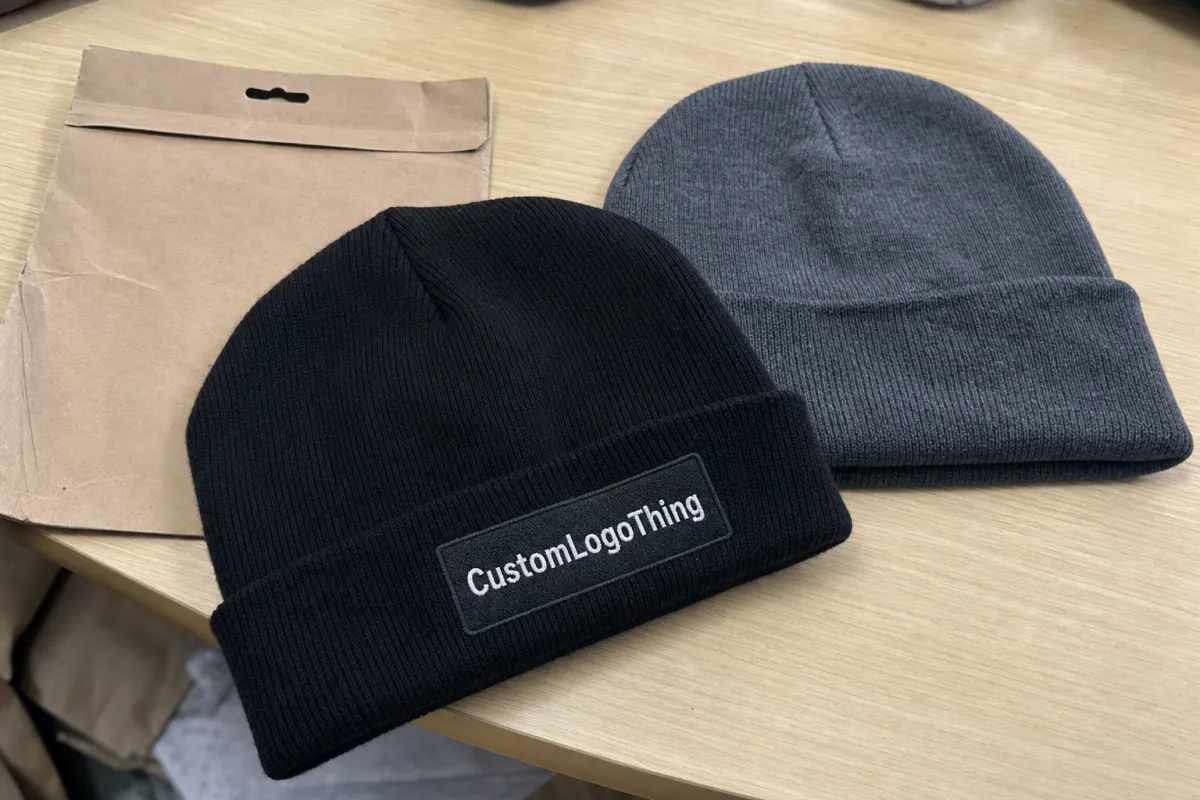
A cuffed beanie is one of the rare branded apparel items a shopper can see, touch, try on, and buy without decoding a size chart. Cuffed Beanies Wholesale for retail brands work because the folded cuff creates a built-in decoration zone that stays visible on shelves, hooks, gift bundles, ecommerce photos, and actual daily wear.
That is not a small advantage. A T-shirt front can wrinkle. A tote can collapse into a sad fabric puddle. A hoodie program can trap cash in a size run no one forecasted correctly. A cuffed beanie keeps the buying decision cleaner: fit, stretch, color, hand feel, logo placement, price.
Retail buyers like the category for practical reasons. Beanies take a compact inventory footprint, often ship efficiently in 12-piece or 24-piece inner packs, and fit a wide mix of channels: outdoor shops, streetwear drops, campus stores, brewery merch, music retail, resort programs, gift shops, and corporate stores. Cold weather helps, obviously, but the selling window is wider than people assume. A black acrylic cuffed beanie with a woven label can move through fall, winter, and spring. A lighter cotton-blend version can sit closer to fashion accessory than winter gear.
The cuff does more than hold a logo. It adds structure, frames the decoration, gives the hat a finished retail look, and keeps branding consistent across black, charcoal, navy, cream, forest, and other colorways. That consistency helps with photography, planograms, receiving, and reorders. Boring operational stuff. Also the stuff that keeps margins from leaking.
Practical rule: do not buy the cheapest beanie first and then try to make it retail-ready later. Start with yarn, fit, decoration, packaging, and reorder needs. Then work back to the unit cost.
Most weak beanie programs fail before production starts. The buyer chases a low base price, then discovers the yarn feels stiff, the embroidery puckers, the cuff height varies, or the packaging does not support retail receiving. Good branded beanies are a balance of material, knit density, logo method, presentation, and reliable replenishment. Miss one piece and the product still arrives. It just arrives with problems.
Product Details That Separate Retail-Ready Beanies from Giveaways
A retail cuffed beanie is usually a knit hat with a folded cuff, made from acrylic, cotton blends, recycled yarns, wool blends, or performance-oriented synthetic blends. Acrylic is common because it offers warmth, bright color options, decent softness, washability, and predictable pricing. Cotton blends feel more natural but may have less spring. Wool blends can lift perceived value, though they may increase cost, care complexity, and minimum order quantity.
Knit construction changes the whole product. Rib knit is the workhorse because it stretches well and recovers after try-on handling. Flat knit can look cleaner and more refined, especially for minimalist brands. Waffle knit and fisherman-style knits add texture, which can justify a higher retail price if the decoration stays sharp. Double-layer knits give more warmth and a heavier hand; great for outdoor retail, too much for some indoor event merch.
Cuff height deserves more attention than it gets. A taller cuff, often around 2.75 to 3.5 inches depending on the blank, gives more decoration space and a heritage workwear look. A shorter cuff feels sleeker, but it may limit patch height or embroidery scale. If the logo includes fine lettering under 0.2 inches tall, the decoration method may need to change before the artwork gets crammed onto the cuff and everyone pretends it will be fine.
Color planning should stay disciplined. Start with core neutrals such as black, heather gray, navy, cream, and charcoal. Add one or two brand colors after demand is proven. For a first run, five colorways can sound smart on a spreadsheet, but it also splits inventory, complicates picking, and leaves slow-moving shades sitting in cartons. Better to sell through three strong colors than babysit eight average ones.
- Centered front cuff: the standard retail placement for patches and embroidery.
- Offset cuff: useful for streetwear and outdoor brands that want quieter branding.
- Woven clip label: clean, compact, and effective at the side seam.
- Leatherette patch: rugged look for lodge, farm, brewery, and workwear styling.
- Chenille or PVC patch: tactile and bold, but usually more specialty-driven.
The difference between a merch-quality beanie and a retail-quality beanie is not always visible in a catalog thumbnail. It shows up in finishing, shaping, yarn recovery, decoration alignment, and packaging that looks intentional on arrival. If the beanie will hang beside $28 to $40 accessories, it needs to feel like it belongs there.
Material, Decoration, and Packaging Specifications to Confirm
A good quote starts with specifications, not vibes. Before pricing cuffed beanies Wholesale for Retail brands, confirm yarn content, knit density or gauge, finished size, cuff height, stretch tolerance, color standard, logo size, decoration method, label requirements, and individual packaging. If these details are vague, the quote will be vague too. Then the final invoice will be “surprising,” which is rarely the fun kind of surprise.
Acrylic remains the most common wholesale choice. It can deliver a soft hand, strong color range, washable performance, and stable cost. Recycled acrylic or recycled polyester blends may suit brands with sustainability goals, but availability and color range can shift. Cotton-blend beanies feel breathable and casual. Wool blends can feel premium, though some shoppers find wool scratchy unless the blend is carefully selected. Not every material belongs on every retail shelf.
Decoration should follow the logo. Not the other way around. Direct embroidery is durable and familiar, but small lettering, tight outlines, gradients, and complex multi-color marks may not sew cleanly on a stretchy cuff. Woven patches handle fine detail better because the art is produced on a stable patch before attachment. Leatherette patches create a rugged retail look, especially with debossed or laser-marked designs. Woven labels suit minimalist branding, particularly on premium neutral beanies.
| Decoration Option | Best Use | Typical Watchouts | Retail Feel |
|---|---|---|---|
| Direct embroidery | Simple logos, bold text, 1 to 6 thread colors | Can pucker thin cuffs or lose tiny details | Classic and durable |
| Woven patch | Fine lettering, small icons, clean brand marks | Patch size and border color need approval | Polished retail presentation |
| Leatherette patch | Outdoor, lodge, brewery, workwear styling | Care expectations and edge finish matter | Rugged and higher perceived value |
| Woven clip label | Minimal branding and side placements | Less visual impact from a distance | Subtle and fashion-oriented |
Packaging needs to be quoted early. Retail-ready packaging may include individual poly bags, recycled bags where available, belly bands, hang tags, barcode stickers, color labels, fiber content labels, master carton markings, and inner pack organization. A 500-piece ecommerce run going to one fulfillment center has different needs than a 5,000-piece program split by color for store distribution.
Compliance can stay quiet until it gets expensive. Fiber content labels, country of origin labeling, care instructions, barcode placement, carton labeling, and retailer routing requirements should be confirmed before proof approval. For broader packaging expectations, buyers can review resources from the International Safe Transit Association and sustainability guidance from the EPA Sustainable Materials Management program. Those references do not replace retailer instructions, but they help frame smarter packaging decisions.
Pricing, MOQ, and Unit Cost Drivers for Branded Beanies
Pricing is shaped by yarn type, knit structure, decoration method, logo complexity, number of colors, packaging, labeling, quantity, and shipping method. A useful quote needs more than a logo file and a rough quantity. It needs the finished retail intent.
Stock-style decorated beanies usually allow lower minimums because the blank already exists and production is focused on decoration and packaging. Fully custom knit colors, private-label builds, custom yarn blends, special patches, or sewn-in branded labels usually require higher quantities because setup, material sourcing, and line time are greater. That is not a supplier being difficult. That is textile production math.
A simple one-location embroidery on a stock acrylic cuffed beanie will price very differently from a custom-colored beanie with a woven patch, hang tag, barcode label, individual retail bag, and organized inner packs. Depending on quantity, decoration, and packaging, many stock decorated beanie programs land in a broad wholesale range around $5 to $12 per unit. More customized retail builds can move higher. Freight, duties if applicable, sampling, and rush handling can change the landed cost.
The cheapest quote can create hidden costs. If decoration is off-center by even a quarter inch, customers notice. If yarn recovery is weak, the beanie feels tired after a few try-ons. If cartons arrive without clear SKU labels or color groupings, warehouse teams lose time sorting. If barcode labels are missing, retail receiving can stall. Those problems can cost more than the few cents saved on the front end.
Request tiered pricing at practical breaks. Compare a launch quantity, a reorder quantity, and a margin target instead of guessing. A buyer might ask for 300, 600, and 1,200 pieces by color mix, or 1,000, 2,500, and 5,000 pieces for a larger program. The tradeoffs become visible fast.
- Quote inputs: quantity by color, target retail price, logo art, material preference, decoration method, packaging needs, delivery zip code, and required in-hands date.
- Retail inputs: barcode needs, hang tag specs, carton labeling, sales channel, fulfillment destination, and retailer compliance notes.
- Margin inputs: desired landed cost, expected retail price, markdown risk, reorder timing, and seasonal sell-through window.
Custom Logo Things can review broader program needs through its Wholesale Programs support, especially for buyers balancing decoration, packaging, and fulfillment requirements in one purchase order.
Sampling, Production Steps, and Timeline Before Launch
A clean beanie program follows a sensible path: specification review, art cleanup, product recommendation, quote, proof, sample if needed, production approval, bulk decoration or knitting, quality checks, packaging, carton labeling, and shipment. Skip steps and the risk moves downstream, usually into the warehouse or store. That is where problems become slower and more expensive to fix.
Sampling is worth the time for a new retail program, premium price point, unfamiliar decoration method, custom patch, exact brand color requirement, or any order that will sit in stores and needs to look right the first time. Not every order needs a pre-production sample. The ones that do usually need it for a real reason. A digital proof can confirm placement and scale; a physical sample confirms hand feel, stretch, patch edge, embroidery tension, and retail presence.
A strong proof should show logo scale, stitch or patch placement, cuff orientation, thread or patch colors, label details, packaging notes, barcode placement, and hang tag instructions. If the proof only shows a logo floating on a generic hat image, ask for more detail. The proof is the control document. A vague proof gives production too much room for interpretation.
Timeline depends on stock availability, art readiness, decoration queue, patch production, custom yarn or knit requirements, packaging complexity, freight method, and seasonal demand. Stock decorated cuffed beanies may move in roughly 10 to 20 business days after approval in many standard cases. Custom knit or private-label programs can require several additional weeks. Rush work may be possible, but it usually narrows material choices and increases cost.
Build in approval time. Even a fast production schedule slows down if the design team has not approved art, the retail team has not approved barcode placement, or operations has not confirmed carton labels. Three internal stakeholders can add a week without touching the production floor.
For cuffed beanies wholesale for retail brands, the best timeline is built backward from the in-store date. If the beanies need to support a holiday display, campus launch, brewery release, or outdoor season, quote early enough to allow proofing, corrections, packaging confirmation, and freight without turning every decision into a rush charge.
Retail Quality Checks That Protect Your Margin
Wholesale beanies should be judged like retail SKUs, not decorated promo items. Customers notice fit, softness, logo placement, and packaging before they ever think about your purchase order savings. A low unit cost does not help if the item gets marked down because it feels thin or looks crooked on the shelf.
Start with the cuff. Check that cuff height stays consistent across units and colorways, especially if the decoration sits close to the top or bottom edge. Look for clean seams, balanced stretch, no loose yarns, no obvious shade variation within the same color, and no distorted shaping after the beanie is unfolded and refolded. A good cuff should hold the decoration flat enough to read clearly.
Fit and recovery matter. The beanie should stretch comfortably over an average adult head, return to shape after handling, and avoid feeling overly tight, scratchy, thin, or limp. If the yarn feels rough in hand, it will not improve under store lighting. If the crown shape collapses badly, product photography may suffer too.
Decoration durability is another margin protector. Embroidery should not pucker the cuff or pull the knit so tight that the front panel cups inward. Patches should be firmly attached, with secure edges and clean stitching. Woven labels should sit straight. Leatherette or specialty patches should match the brand’s care expectations because some materials age differently under washing, abrasion, and heat.
Fulfillment quality counts as retail quality. Cartons should be labeled clearly, inner packs should match SKU and color requirements, and individual packaging should support receiving, counting, shelving, or direct-to-consumer shipping. If a retailer requests specific carton markings or routing labels, put those requirements into the production notes before approval.
Returns, markdowns, repacking, late relabeling, and emergency freight can wipe out margin. That is why good production planning treats quality control as a cost-saving step, not a luxury.
How Custom Logo Things Supports Retail Beanie Programs
Custom Logo Things supports retail brands that need clear options, realistic pricing, and execution help across product selection, decoration, labeling, and packaging. The goal is not to push one default beanie into every order. The goal is to match the beanie construction to the retail price point, choose decoration that suits the logo, and identify packaging needs before production begins.
That fact-first approach helps different program types: a first small wholesale run, a seasonal capsule, a private-label merch drop, a gift-shop assortment, an ecommerce bundle, event retail, or an ongoing reorder program. A brewery may need a rugged leatherette patch and hang tag. A campus store may need barcodes and color-coded cartons. A streetwear brand may care more about cuff height, tonal branding, and a tighter neutral palette. Same category. Different build.
Buyers can share brand standards, Pantone targets, logo files, label requirements, packaging instructions, delivery dates, and margin goals. With those details, the quote reflects the finished retail item rather than a stripped-down base product that grows more expensive later. If a woven patch is a better fit than embroidery, say so early. If a belly band will add cost and slow packing, that should be visible before approval.
Custom Logo Things also helps buyers compare options without burying them in technical clutter. A clear recommendation might include a stock acrylic rib knit beanie with a 3-inch cuff, woven patch, individual bag, barcode sticker, and 24-piece inner packs. Another program might call for a cotton-blend beanie with a side clip label and hang tag. The right answer depends on channel, budget, timeline, and brand feel.
For buyers reviewing past branded merchandise or building a larger assortment, the Case Studies page can help frame how product decisions connect to program outcomes. For beanies specifically, dependable production means good-looking hats, clean packaging, clear cartons, and fewer surprises between quote and delivery.
Next Steps to Prepare a Clean Beanie Wholesale Quote
A clean quote begins with a clean brief. Choose a target quantity, list colorways, confirm the desired material feel, provide vector logo files when available, decide whether you prefer embroidery or patches, note packaging requirements, and share the delivery deadline. If the order has to arrive before a store reset or event date, say that upfront.
Add retail context. What is the target selling price? Will the beanies sell through ecommerce, one warehouse, multiple stores, a fulfillment center, or a gift-shop distributor? Do they need barcodes, hang tags, fiber content labels, or specific carton markings? Are you planning a one-time capsule or a reorderable SKU? These details change the smartest production path.
- Confirm the launch quantity and likely reorder quantity.
- Select core colorways before adding seasonal shades.
- Send logo files, Pantone targets, and brand standards.
- Choose preferred decoration, then stay open to better technical recommendations.
- Define individual packaging, hang tags, barcode labels, and carton needs.
- Compare quotes by construction, decoration, packaging, timeline, and freight terms.
Evaluate the quote beyond the final unit price. Compare the beanie construction, decoration method, packaging scope, approval steps, production timeline, and freight terms. If the first configuration misses margin, timeline, or look, ask for alternate options. A buyer may reduce color count, change from chenille to woven patches, simplify packaging, adjust patch size, or move from a custom knit program to stock decorated blanks.
There is nothing wrong with protecting cost. Just protect the product too. Beanies are handled, tried on, photographed, gifted, boxed, and worn in public. Weak yarn and sloppy decoration have nowhere to hide.
When sourcing cuffed beanies wholesale for retail brands, the cleanest path is to define the retail-ready details upfront so the finished beanie looks intentional on the shelf, arrives organized in the carton, and performs well after purchase.
FAQ
What is the best decoration method for wholesale cuffed beanies for retail brands?
Embroidery is durable and familiar, woven patches handle fine detail well, leatherette patches create a premium outdoor or workwear look, and woven labels are best for subtle minimalist branding. The right choice depends on logo detail, desired retail price, brand style, and whether the cuff needs a bold front mark or a quieter side label.
What MOQ should retail brands expect for custom cuffed beanies?
MOQ depends on whether the program uses stock beanies with decoration or a fully custom knit, yarn color, patch, label, and packaging build. Stock decorated beanies usually support lower starting quantities. Private-label or custom-yarn programs generally require larger production runs because sourcing and setup are more involved.
How long does it take to produce cuffed beanies in bulk?
Timeline depends on product availability, artwork readiness, decoration type, sampling needs, packaging complexity, and shipping method. Stock decorated programs may move in roughly 10 to 20 business days after approval in many standard cases. Custom builds usually need more time.
Can cuffed beanies be packaged for retail sale?
Yes. Retail packaging can include individual bags, hang tags, belly bands, barcode labels, fiber content labels, care instructions, carton markings, and inner pack organization. Packaging should be specified during quoting because it affects unit cost, production handling, carton count, and fulfillment readiness.
How can I reduce the unit cost of branded cuffed beanies without hurting quality?
Simplify the decoration, reduce the number of colorways, use a proven stock beanie, choose standard packaging, and order at a quantity that fits a better price tier. Avoid cutting quality in yarn, fit, or decoration alignment. Poor retail presentation can create markdowns, returns, or unsellable inventory.