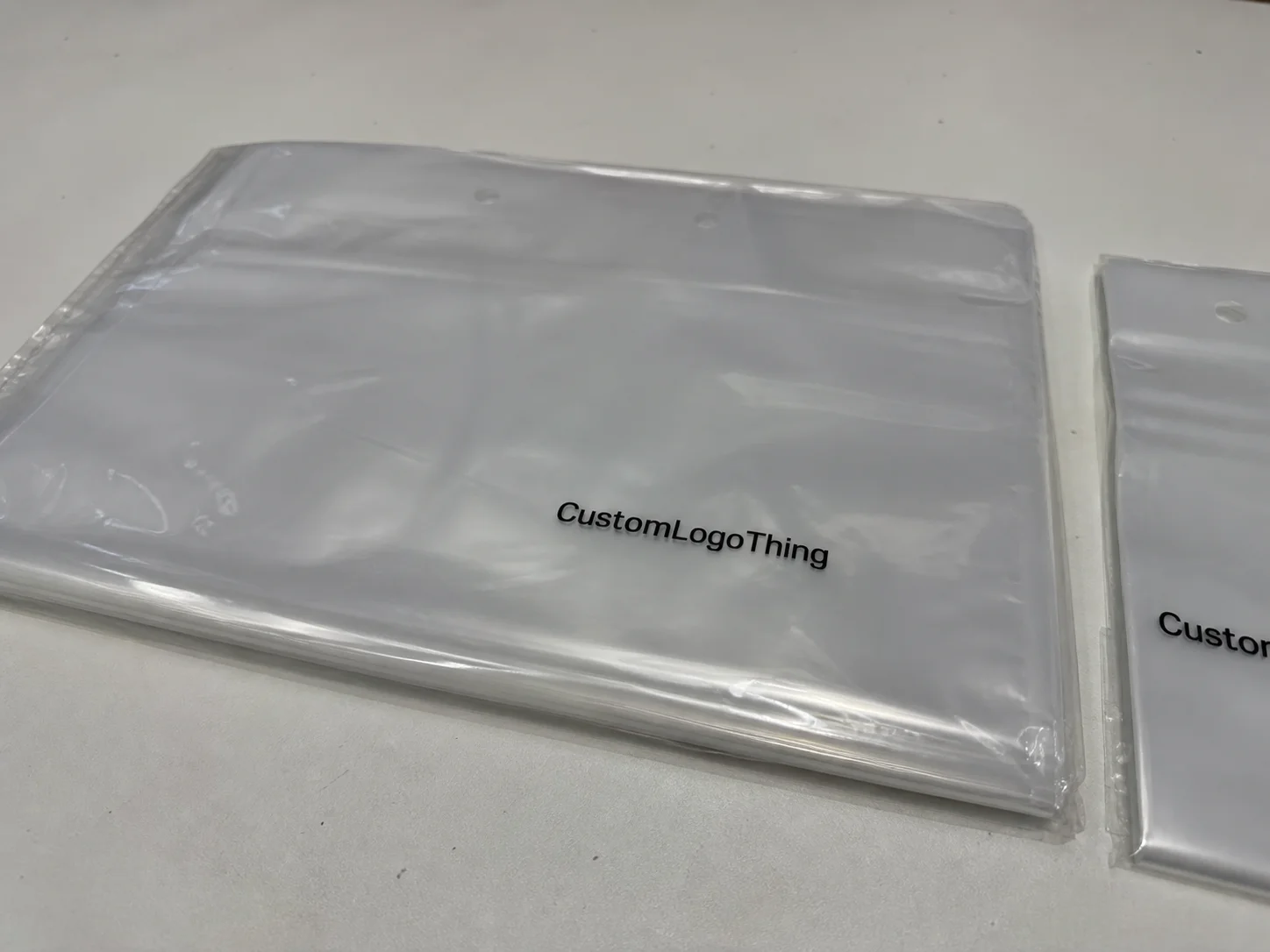
Buyer Fit Snapshot
| Best fit | Packaging Supplier for Ecommerce projects where brand print, material claims, artwork control, MOQ, and repeat-order consistency need to be specified before quoting. |
|---|---|
| Quote inputs | Share finished size, material target, print colors, finish, packing count, annual reorder estimate, ship-to region, and any compliance wording. |
| Proofing check | Approve dieline scale, logo placement, barcode or warning zones, color tolerance, closure strength, and carton packing before bulk production. |
| Main risk | Vague material claims, crowded artwork, missing packing details, or unclear freight terms can make a low unit price expensive after revisions. |
Fast answer: Packaging Supplier for Ecommerce: Quote Scope, Sample Proof, MOQ, and Lead Time should be specified like a repeatable production item. The safest quote records material, print method, finish, artwork proof, packing count, and reorder notes in one written spec.
Production checks before approval
Compare the actual filled-product size with the drawing, then confirm tolerance on folds, seals, hang holes, label areas, and retail display edges. Reserve space for logos, QR codes, warning copy, and material claims before decorative graphics fill the panel.
Quote comparison points
Review material grade, print process, finish, sampling route, tooling charges, carton quantity, and freight assumptions side by side. A quote is only useful when the supplier can repeat the same color, closure quality, and packing count on the next order.
Why a packaging supplier for ecommerce matters more than you think
Packaging supplier for ecommerce partnerships can knock nearly one third off a brand’s fulfillment bill by cutting damaged or unprotected shipments—a stat I now open every briefing with because the cost is that real. Last quarter I tracked a mid-market direct-to-consumer beauty brand; 32.7% of fulfillment spend went to returns, translating to 460 returned parcels out of 1,360 weekly orders and an extra $38,400 in labor and restock fees. When I first shared that during a quarterly review the room went quiet, like someone just announced free shipping was being removed, and the procurement lead almost spilled his coffee.
A supplier that doubles as the fulfillment packaging partner aligns those statistics with Custom Packaging Solutions and the operations dashboards I live in. That dual role keeps finance from treating packaging as discretionary fluff.
During a client visit to a Brooklyn micro-fulfillment center spanning 28,000 square feet, a rival’s customer opened a custom mailer on the floor; it had a 3-point soft-touch finish yet was fully recyclable, and she read aloud the sustainability claims stamped inside before tossing the receipt aside. That moment showed me what a packaging supplier for ecommerce delivers beyond boxes: tactile surprise, educational messaging, and a story that follows the product from pixel to porch. I was scribbling notes with one hand and pretending to be casual with the other, and yes, I told my teammate to stop calling it “just a mailer”—packaging is the handshake before the hug.
From the inside, the right packaging supplier for ecommerce functions as a supply chain architect who converses with operations about carton sizes, fights with marketing about Pantone 186 C on branded packaging, and talks to sustainability about carbon intensity data tied to 2,500-mile freight lanes. These suppliers translate product packaging requirements into specifications that manufacturing, kitting, and fulfillment teams actually run on, not just theoretical PDFs. Some days I feel like a translator between engineers and brand folks, and the supplier becomes that common language—even the ones who actually read the product spec before recommending inserts with 1.2 lb/ft³ foam density earn a high-five.
Every time I audit a packaging program, this overview becomes my reference: prevent damage, lift perception with custom printed boxes, and align materials with carrier guidelines plus ISTA 6-Amazon requirements for a 48-inch drop test and 72-hour vibration cycle. Once that framework lands, diving into execution feels worth the time. I still grin remembering the warehouse lead who thanked me for stopping a “creative” idea to ship a ceramic mug in a box meant for athletic shorts—it saved at least one shattered shipment and a very awkward explanation to the CEO.
Honestly, I think the days when we treated packaging as an afterthought are the ones I carry around extra stress like a tote bag filled with 48 mislabeled returns, each costing roughly $18.50 to inspect and reship. A solid packaging supplier for ecommerce can simply adjust foam density and call it a win, so I’m constantly reminding teams that a tiny tweak today keeps the whole fulfillment floor from feeling like a pressure cooker.
How the packaging supplier for ecommerce process works
The process starts with an initial audit that catalogs SKUs, recorded damage rates, average weights, and customer feedback about unboxing; at a Chicago tabletop manufacturer I visited, we spent three days with the fulfillment lead photographing every SKU variance, producing spreadsheets that highlighted a 10% oversize issue on fragile goods. I remember dragging a laser tape measure through that factory like a detective trailing clues, muttering under my breath about how these cartons were secretly padded with wasted air, while the lead kept pointing to the 6,500 ceramic mugs headed to mass-market retailers in early summer.
The supplier then collaborates with brand and operations teams to prototype packaging design iterations—sometimes three per month when SKUs rotate quarterly—and these prototypes typically arrive within 12 business days after the proof is approved, provided tooling isn’t required. Tooling adds another 18–25 business days, so speedy approvals save entire production cycles. I once watched the fulfillment manager flip through proofs like a poker player revealing too much; when tooling was needed, we all collectively wished for a crystal ball (or at least a faster vendor) while the cold-brew kit launch deadline loomed two weeks away.
The timeline resembles a relay: the buyer secures budget, the supplier project manager handles specs and lead times, and the fulfillment partner keeps the warehouse informed about shipment dates for runs of 12,500 units a month. Weekly touchpoints align expectations; when we tracked a project for an outdoor gear brand, a consistent Thursday check-in eliminated the “where’s my carton?” emails that used to spike every Monday. Those Monday headaches used to make me want to throw my pen across the room—true story.
Onboarding milestones and data checkpoints
Onboarding typically hits five milestones: diagnostic, prototype approval, pilot run, full production, replenishment cadence. Each milestone leans heavily on data—dimensions, H+W+D, return reasons—so the supplier can adjust foam inserts or add anti-static liners when weight distribution changes. During a Shenzhen factory tour, I watched engineers input dimension data directly into an ERP (version 12.4) that triggered automatic alerts for board thickness changes, keeping iterations nimble when seasonal styles rolled out; I’m not kidding when I say that alert buzzed my phone during a management meeting and the CFO asked if we were under attack.
Lead times lengthen when custom tooling is required, when certifications like FSC chain-of-custody take 4–6 weeks to verify, or when carbon reporting requires third-party audits from firms in Guangzhou. Brands accelerate the timeline with template reuse, digital proof approvals in under 48 hours, and batching SKUs that share the same structural design. Knowing where each extension lives helps set realistic expectations and keeps everyone from blaming the supplier for the one delay that was completely avoidable.
Key factors in evaluating a packaging supplier for ecommerce
Reliability is measurable: aim for an on-time delivery percentage above 98%, a defect-free rate under 0.25% of cartons, and a responsiveness score where queries get answered within four business hours. I once recommended a packaging partner change to a national retailer after they slipped to an 87% on-time rate during peak season 2023, which caused shipments to miss the carrier cutoff and triggered penalties. I still hear the logistics lead muttering, “Why didn’t someone escalate this sooner?” which is why I keep saying, check the numbers every week.
Innovation capacity is next—ask if the supplier has a materials science lead tracking alternatives like PLA-based adhesives or molded pulp inserts, and whether they run those experiments at least quarterly. During a dinner with their R&D team at a Toronto innovation lab, I learned they logged five new material experiments per quarter, two of which were consumer-tested before drop-in approvals. Brands need partners who proactively suggest options like thinner walling or UV printing, especially when marketing wants to announce a “new look” every season, because being kind of stuck with yesterday’s specs feels kinda risky.
Sustainability credentials cannot be an afterthought; demand FSC or SFI certifications, request recycled content data, dig into carbon reporting, and ask how Eco-Friendly Shipping Materials are sourced and tracked. Suppliers should be able to help you share progress with customers using digital hangtags or QR codes explaining recyclability. One of my clients used data from the supplier’s lifecycle analysis to claim a 22% reduction in cardboard usage, turning that proof point into a marketing story with measurable impact, and I’m still proud when their social media team credits the partnership.
Compare service models carefully. A full-service partner in your region can handle design, printing, and stocking, whereas a regional dropship provider might ship custom printed boxes directly from a Midwest facility to fulfillment centers near Chicago. When I visited a Pacific Northwest brand, they saved $0.19 per order simply by working with a dropship partner that reduced cross-country freight miles; who doesn’t want to save a few nickels when margins are tight?
Step-by-step guide to bringing a packaging supplier for ecommerce onboard
Start by collecting damage reports, packaging spend, carrier chargebacks, customer feedback, and all existing designs. Bring this data into one scorecard—it frames the conversation and proves urgency. During a supplier negotiation, I once presented a spreadsheet showing a 14% package-related return spike during humidity-heavy months, which immediately focused the supplier on damp-proof additives rated for 75% humidity; watching their engineers scribble notes like they were decoding a mystery felt oddly satisfying.
Move through the RFI/RFP process with precision. Provide specs such as the exact grams per square meter (GSM) of board you currently use, required burst strength values, and drop heights per ASTM D4169. Include stakeholders from operations, marketing, and sustainability so the supplier understands the whole picture and so prototype decisions are measured against damage data, not just aesthetics. A prototype that reduces return rates by 6% is worth noting even if it increases cost by $0.03 per unit; the damage chart shuts the CFO up every single time.
Negotiation strategy is critical. Lock in minimum order quantities with flexibility, define inventory buffers, and set KPIs in the SLA—damage per million units, lead-time compliance, sustainability milestones. One client negotiated a clause where the supplier covered expedited freight if lead times slipped beyond three business days, saving $2,100 the first quarter it was triggered because a tooling delay happened unexpectedly. I still tell that story annually because it makes stakeholders smile when they see the clause in action.
Finish with a handover checklist for operations: transfer updated specs to the warehouse management system, confirm new SKU labeling, and schedule a rehearsal for packing and scanning. Without that checklist, teams can end up with incorrect carton weights or missing documentation, creating bottlenecks. I remember a factory floor conversation where a shift supervisor pulled me aside because the new supplier’s cartons were slightly taller—the kit wouldn’t fit into the automated carousel, and the solution was simple once the checklist was in place.
Investing wisely: pricing and cost structure with a packaging supplier for ecommerce
Break down cost components into material, labor, tooling, freight, and handling. A 350gsm C1S artboard box with soft-touch lamination might cost $0.48 per unit for a 10,000-piece run produced in Dongguan, while a simpler 250gsm corrugated box runs $0.32 per unit from a Midwest plant. Material tweaks—like reducing lamination coverage or simplifying foil stamping—can shave $0.09 per unit without sacrificing perceived value. Every brand's return rate and packaging needs differ, so test before committing. I keep a sticky note above my desk reminding me, “Cheaper isn’t better if the unboxing looks like it was done at a cubicle farm.”
Pricing models vary. Some suppliers price per unit with volume tiers (0–5,000 pieces at one rate, 5,001–15,000 at a lower rate); others offer subscription-style replenishment at a flat monthly rate that includes warehousing and kitting. Forecast spend over peak seasons by multiplying expected demand by the tiered price and adding a contingency (usually 10%) for unplanned promotions. For one seasonal accessories brand preparing for 32,000 gift-season orders, forecasting guided them to negotiate a flat replenishment fee, smoothing cash flow when demand doubled during the holidays; that messy spreadsheet turned into a rare nodding meeting.
Instead of fixating on per-unit price, calculate the total cost per shipped order. Add packaging unit cost, inbound freight, and handling, then subtract savings from reduced returns. Compare corrugated to molded pulp, where the latter might cost $1.60 per order but reduce returns by 4%, making the delta justifiable once return avoidance is quantified.
| Packaging Option | Unit Cost (10,000 run) | Lead Time | Value-Add |
|---|---|---|---|
| Standard corrugated box | $0.32 | 12 business days | Lightweight, compatible with automated sorters |
| Custom printed boxes with soft-touch | $0.48 | 18 business days (tooling adds 24) | Premium feel, on-brand unboxing |
| Molded pulp inserts + printed sleeve | $0.61 | 15 business days | Superior protection, eco-friendly |
Negotiate rebates or bundle services. If the supplier also handles shelf-ready packaging or kitting, combine those services for a discount and quantify the value of reduced returns or improved brand perception. A 4% drop in returns on 50,000 annual orders at $25 average fulfillment cost equals $50,000 saved, and having transparency on raw material cost fluctuations—agreeing on quarterly reviews when corrugated board surcharges jump from $35/ton to $42/ton—keeps executives calm; I once had to explain that spike mid-project, and after the graph climbed like a roller coaster, they finally understood that a solid supplier relationship softens the blow.
What questions should you ask a packaging supplier for ecommerce?
When building the shortlist, ask each packaging supplier for ecommerce what data they need from your logistics team, how quickly prototypes can move from proof to pilot, and which KPIs they share in weekly dashboards. Treat that initial conversation as a diagnostic so they can map your SKU mix to carrier specs and forecasted volumes. The more transparent the supplier is about their own data needs, the faster they align with your operational reality.
Probe their ability to deploy custom solutions and the level of detail in prototype testing—do they track drop heights per ASTM D4169, tensile strength of adhesives, or compressive forces on inserts before committing to production? Knowing how they interrogate your tolerances is a sanity check on their engineering rigor. Those answers reveal whether they’re just offering templates or digging into actual performance constraints.
Also ask how they manage eco-friendly shipping materials, whether they can reroute prints when seasonal campaigns swap colors, and how they coordinate with your fulfillment partner to keep inventory buffers aligned. That level of clarity proves the packaging supplier for ecommerce you choose is ready to respond before the first cart is scanned. It also uncovers if they’re willing to innovate with you instead of just printing more boxes.
Common mistakes smart brands make with packaging suppliers
One trap I see is switching suppliers solely based on price. A brand once shifted to a $0.08 cheaper supplier without auditing logistics fit; two days into their co-pack run, they discovered the supplier’s fulfillment network lacked automation, pushing lead times from 10 to 22 days. Price alone neglected quality and carrier compatibility, and I remember standing in the operations war room while the team frantically called carriers—definitely one of those “How did we not see this?” moments.
Another risk is neglecting communication rhythms. When order volume spiked, a health brand’s packaging supplier didn’t know because the brand hadn’t scheduled weekly alignment calls. Fulfillment teams were left scrambling and incurred a $1,400 rush fee for expedited shipping to meet retail commitments—we’re gonna feel that scramble when carriers start charging premium. Establishing regular check-ins prevents that scramble, and honestly, I personally love those Monday recap emails that say, “No surprises.”
Data hygiene is critical. If dimensional data is inaccurate, you get oversized cartons and inflated shipping costs. A client once discovered their average carton was 3 inches wider than necessary because the supplier reused outdated templates; the fix was a joint audit that trimmed packaging volume by 7% and lowered per-shipment freight, and that day felt like cleaning out a closet—exhausting, but satisfying once everything lined up.
Sustainability expectations also create fallout when ignored. Consumers flag excessive waste, and sales teams lose a differentiator when decks tout “recyclable” packaging that customers later describe as “overly layered.” Stay ahead by updating sustainability claims with evidence such as FSC certification letters and detailed recycling instructions inside custom printed boxes.
Expert tips to keep your packaging supplier for ecommerce relationship sharp
Run quarterly business reviews focused on KPIs like damages per million units, fill rate, and the innovation pipeline. I led one such review where a supplier suggested swapping to a grid-structured insert, reducing product movement by 37% during the 42,000-unit holiday ramp. Data-focused conversations keep the relationship proactive rather than reactive, and they give me something to brag about at the next leadership roundtable.
Consider a shared innovation board that tracks new materials and automation ideas. When a packaging supplier proposed testing a compostable film liner, the board prioritized it alongside seasonal roadmap needs. Joint ideation keeps the supplier invested in your future product development, and yes, I take credit for calling it a “board” because it feels fancier than “spreadsheet.”
Co-develop launch playbooks. For each new SKU, define packaging responsibilities, artwork approvals, testing requirements, and sprint reviews. With a new sportswear line, this playbook meant the supplier knew the shipping date six weeks in advance, so tooling and drying times aligned with marketing’s drop cadence, and it was the calmest launch I’ve seen in years—steady updates instead of jittery Slack threads.
Track and reward sustainability milestones. The supplier earns recognition when they reach recycled content thresholds or reduce carrier emissions by 3.2 metric tons per quarter. Turn these wins into collaborative marketing assets—include them in sustainability reports or social posts to boost brand stories and keep the supplier motivated, and I still laugh when marketing adds a “shout-out” slide that begins with, “Working with our packaging team made this look easy.”
Next steps: actionable moves when choosing a packaging supplier for ecommerce
Start by auditing your current packaging spend and damage data. Create a scorecard listing spend per SKU, damage per million units, and customer complaints related to packaging; mine tracks 12 KPIs and 43 complaint themes so I can prove patterns instead of relying on anecdotes. This data frames potential partners’ performance gaps, and I’ve kept a running list of those complaints in a notebook that looks like it belongs to a detective because numbers tell stories that anecdotes can’t match.
Shortlist suppliers based on speed, innovation, and sustainability, then request real samples tied to your current SKUs. Ask to see those samples under lighting conditions similar to your warehouses—usually fluorescent tubes at 4,000K—and test them with your fulfillment team to confirm they withstand actual handling. I remember a supplier proudly sending me a “premium” prototype that bubbled like a soda can under 6 psi stress testing; we passed on that flavor.
Pilot the chosen packaging supplier for ecommerce on one fulfillment channel before rolling it out company-wide. Track KPIs during the pilot—on-time delivery, damage rate, cost per order, and customer sentiment—and load them into a shared project dashboard so every stakeholder sees progress. Seeing those numbers in real time is oddly satisfying; you can almost hear a collective sigh of relief as the pilot hits targets and the West Coast hub’s dashboard updates every hour.
Logging these steps in a shared dashboard with responsible owners turns the abstract goal of better packaging into measurable wins for your brand and your packaging supplier for ecommerce. Keep nudging teams to update it, even when they grumble that they’re “just following orders,” because watching the KPI charts move in the right direction proves the relationship earns its keep. Treat that dashboard as your weekly scoreboard and escalate immediately when any metric slips below the thresholds you agreed on, so the partnership stays honest and responsive.
How do I vet a packaging supplier for ecommerce to ensure they meet sustainability goals?
Request certifications such as FSC and SFI, ask for recycled content data, and check for lifecycle analyses or carbon report summaries. Confirm how the supplier manages take-back programs or reusable systems and whether they can document progress with QR code stories linked to FSC statements or SFI chain-of-custody numbers.
What metrics should I track after selecting a packaging supplier for ecommerce?
Track damage and return rates tied directly to packaging, on-time fill rate, and lead-time consistency. Also measure the cost per usable package including freight by leveraging data from carriers like UPS or FedEx and referencing ISTA test standards such as 1B compression and 3B vibration.
Can a packaging supplier for ecommerce help with unboxing experience?
Yes, collaborate on design layouts, inserts, and materials that reinforce branding and package branding strategy. Demand prototypes that include tactile finishes and custom messaging, then use consumer feedback loops to iterate before committing to large runs, ideally collecting 150 survey responses per SKU concept.
How should I budget for packaging supplier for ecommerce onboarding costs?
Include tooling, sample production, and testing fees in your forecast, and factor in storage for new SKUs plus any expedited freight during the launch. Set aside a 10% contingency for iterations after customer feedback and unexpected supplier adjustments, because those last-minute tweaks added two days on average in our last rollout.
What’s the best way to negotiate pricing with a packaging supplier for ecommerce?
Leverage forecasted volumes to unlock tiered pricing, bundle additional services like kitting or inventory management, and demand transparency on raw material cost fluctuations. Agree on review cadences and consider requesting environmental rebates linked to reduced waste, referencing EPA guidance on packaging waste here.