Caps & Hats

Snapbacks Embroidery Quote for Clothing Brands: Fast Orders

✍️ Emily Watson πŸ“… May 22, 2026 πŸ“– 15 min read πŸ“Š 2,971 words
Snapbacks Embroidery Quote for Clothing Brands: Fast Orders

Snapbacks Embroidery Quote for Clothing Brands: What the Numbers Should Tell You

A snapbacks embroidery quote for clothing brands should do more than show a unit price. It should reveal whether the supplier understands stitch count, crown structure, artwork limits, packing needs, and the difference between a one-off sample and a repeatable retail product. If a quote ignores those details, the final order usually does too. That is how budgets slip and timelines drift.

Embroidered snapbacks keep earning their place in apparel lines because they are easy to understand fast. The logo reads from a distance. The product feels more finished than a blank cap. And unlike a lot of promo items, a good snapback still looks acceptable after a season of use, a few rough shipments, and a reorder. Clothing brands use them for launch drops, artist merch, staff kits, seasonal collections, and wholesale add-ons for a reason: they sell the brand without a long explanation.

The useful comparison is not embroidered versus unembroidered. It is sell-through versus inventory that sits around getting dusty. If the hat is meant to support margin, you need a clear view of decoration cost, production risk, lead time, and how easy it will be to reorder later without the spec changing under your feet.

Why embroidered snapbacks still win on the rack
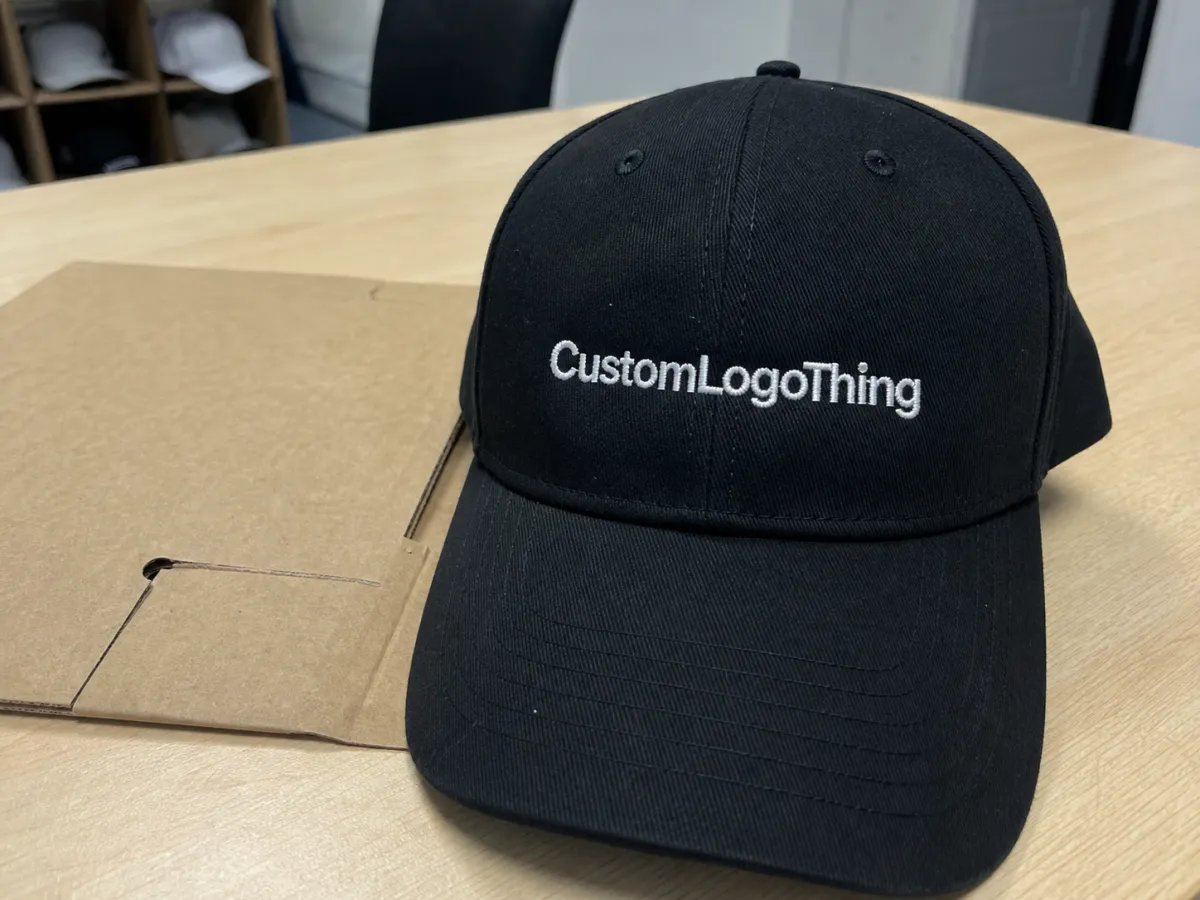
Why embroidered snapbacks still beat plain headwear on the rack - CustomLogoThing packaging example

Embroidery still has the strongest visual shorthand for logo-led headwear. A woven label can look refined. A patch can add texture. But embroidery is the quickest way to make a cap feel like part of the actual brand, not an afterthought. That matters on a retail wall where every item is competing for attention and nobody has time to decode subtle design choices.

The raised thread catches light in a way flat decoration does not. On camera, it reads cleanly at social-media distance. On a rack, it adds depth. Those details sound small until you compare them to a plain cap with a tiny mark that disappears the moment it leaves perfect lighting. Perceived value matters because perceived value supports pricing. Simple as that.

There is also the durability side. A properly digitized embroidered logo can hold up far better than surface print on a product that gets worn hard. Stitch quality still depends on the fabric and the file, but once the setup is right, embroidery gives a brand a more durable retail signal than a lot of faster, cheaper decoration methods.

A good order should answer one question early: will this still look right on the third reorder?

That question forces everyone to focus on the things that matter. Intended use. Quantity. Logo size. Deadline. Channel. The quote should reflect those inputs, not hide them behind one neat number that looks nice until the first invoice lands.

Snapbacks embroidery quote for clothing brands: what the number actually means

A snapbacks embroidery quote for clothing brands is really a shorthand risk report. A clean quote breaks out base cap cost, decoration, setup, proofing, packing, and freight. A vague one blends everything together and leaves the buyer guessing where the real cost sits. Guessing is expensive.

The first thing to check is whether the quote is built for a reorderable product or a one-time sample run. Those two jobs are not the same. A retail-ready quote usually shows the cap style, placement size, thread assumptions, and any add-ons like labels or custom packaging. That level of detail matters if the cap might move from a launch item into a core accessory later.

Compare the quote against the selling channel. Direct-to-consumer drops can tolerate smaller runs and slightly higher per-unit pricing if the retail margin is strong. Wholesale programs usually need tighter landed cost control because freight, duties, and fulfillment cut into room very quickly. A quote that does not make that difference visible is not helping you buy.

Revision policy matters too. Many suppliers assume one proof round and no artwork changes. Fair enough. Multiple revisions take time, and time costs money. The problem is not the policy. The problem is when nobody says it out loud until the clock has already started.

If the quote includes odd wording like β€œall-in” pricing, ask what that actually covers. Setup? Sampling? Thread matching? Inner labels? Freight? Sometimes the answer is clear. Sometimes it is a polite mess. Either way, you need the Breakdown Before You approve anything.

Build choices brands compare first

Most buyers narrow the decision down fast: 5-panel or 6-panel, structured or unstructured, flat brim or curved brim, snap closure type, and fabric weight. Those decisions change both the look and the embroidery result. No surprise there. The cap is the canvas.

A 5-panel snapback gives a broader front area with fewer seam interruptions. That helps when the logo is wide, bold, or text-heavy. A 6-panel cap has the more familiar streetwear profile and often fits brands that want a classic shape. Structured fronts keep the crown upright, which usually gives cleaner embroidery. Unstructured caps feel softer, but dense stitching can make them slump if the fabric is too light.

Fabric choice is not a side note. Cotton twill is still the common starting point because it is stable, familiar, and easy to source. Heavier twill helps the front panel hold shape under embroidery. Nylon and performance blends make more sense for activewear or utility lines where lightness and dry time matter. If the design is large or uses raised stitching, thin fabric is asking for trouble.

Decoration placement deserves the same attention as construction. One front logo is usually enough for a clean retail cap. Side hits can work if the brand system is disciplined. Back hits add a little value if they are small and readable. Once the crown starts carrying too many elements, the hat looks busy instead of premium.

  • Front embroidery is best for the main brand mark.
  • Side embroidery works for small icons or drop names.
  • Back marks suit short text or subtle branding.
  • Patch and embroidery mixes add texture if the layout stays controlled.

For most brands, the safest starting point is straightforward: a structured 6-panel cap, a stable fabric like cotton twill, a flat brim, and one strong front logo. Fancy is fine. Confusing is not.

Logo specs that change stitch quality

Good embroidery starts before the machine does anything. The digitizing file decides how the thread moves, where it pulls, and whether the logo stays legible once it is stitched into fabric. Weak digitizing can make a good design look tired. That is the part that frustrates buyers because the artwork can look perfect on screen and still fail on the cap.

The most important technical inputs are stitch direction, minimum line weight, and color count. Tiny letters need simplification. Fine outlines can close up. Thin negative spaces can vanish. Embroidery likes bold shapes and clear edges, not microscopic detail. If the logo depends on delicate gradients or hairline type, it may need to be redesigned for headwear instead of forced into a format that does not suit it.

Placement and size matter just as much. A center-front logo around 50-90 mm wide is common, but the right size depends on the panel shape and design complexity. Side marks are usually smaller, often 30-45 mm wide. Back branding and under-brim details need separate planning because those zones do not behave like the front crown. If the design uses 3D puff, the shape needs enough room and enough contour to support the foam cleanly.

Before approval, a buyer should have these pieces in hand:

  1. Vector artwork in AI, EPS, or editable PDF.
  2. Exact logo placement and size in millimeters or inches.
  3. Pantone or approved thread references.
  4. A proof that clearly marks the decoration area.
  5. Any text or detail limits confirmed before production starts.

That kind of discipline matters because the same small errors that wreck cap embroidery also wreck packaging specs, label placement, and carton layouts. The file needs to be right before the order moves. Otherwise the supplier is cleaning up avoidable mistakes instead of producing.

Pricing, MOQ, and hidden costs

Pricing for embroidered snapbacks usually moves with six variables: quantity, stitch count, number of thread colors, decoration method, specialty materials, and rush timing. If a supplier gives you one line with no breakdown, ask for one. The difference between an honest quote and a trap is often buried in the details.

MOQ is usually the first strategic choice. A newer brand testing demand might prefer 100 to 250 units, even at a higher unit cost, because cash flow and inventory risk matter more than scale. A core product with repeat demand can support 500 units or more if the unit cost drops enough to improve margin. There is no magic number. The right MOQ depends on how quickly the product can move.

A practical pricing range many clothing brands use for planning looks something like this:

Order profile Typical MOQ Indicative unit cost Best use Main tradeoff
Simple front embroidery, standard thread, no extras 100-250 pcs $8.50-$13.50 Launch drops, small merch runs Higher unit cost, lower inventory risk
Heavier stitch count, 2-4 colors, structured build 250-500 pcs $6.25-$10.25 Core retail programs More cash tied up upfront
Raised detail, patch mix, custom labels 500+ pcs $5.25-$8.75 Replenishment and longer runs More setup coordination and tighter spec control

Hidden costs can turn a good quote into a mediocre one. Setup fees often range from $35 to $120 depending on the logo and construction. Samples may be free, charged, or credited later. Freight changes everything, especially if the order shifts from ocean to air. Custom boxes, hangtags, size stickers, barcode labels, and polybagging all add cost, even when each item looks small on its own.

The best buying habit is to compare two pricing tiers: one for a minimum viable launch and one for the likely reorder. That tells you more than a single price ever will.

Process timeline and common delay points

A clean order usually moves through the same stages: quote request, artwork review, digital proof, sample or pre-production approval, production, inspection, and shipment. The order of operations does not change much. The speed does.

Typical timing depends on how prepared the buyer is. A quote can return in 1-2 business days if the artwork is complete. A digital proof often needs another 1-3 business days. If a physical sample is required, budget 5-10 business days for build and review, sometimes longer if the fabric is custom or the decoration is complicated. Once approved, standard production often takes 12-20 business days for normal quantities. Specialty materials or large volumes can add time.

Shipping has its own clock. Domestic freight may take 3-7 business days. International freight can run 5-20 business days depending on carrier, customs, and route. If the launch date matters, count backward from the date the product needs to be in hand, not the date production starts. That mistake causes more stress than any supplier ever will.

The most common delay points are predictable:

  • Artwork files that need cleanup or reconstruction.
  • Late color changes after the proof is already circulating.
  • Logo sizes that were never pinned down clearly.
  • Slow approval loops between merchandising, marketing, and finance.

If the proof is not exact, the production order is not exact.

That sounds blunt because it is. A decent supplier will push for final decisions before production starts. That is not resistance. That is how you avoid fixing expensive mistakes after the fact.

Quality control for repeat orders

Repeat orders are where headwear programs get tested. The first run can look fine even if the documentation is sloppy. The second or third run exposes every weak point. If the original thread codes, logo placement, and panel notes were never recorded properly, the cap can drift just enough to look off.

The checks that matter most are thread tension, logo placement, panel alignment, seam consistency, and color match from lot to lot. On a cap, a shift of a few millimeters can make the embroidery look too high, too low, or just slightly wrong. On a product that is meant to sit on a shelf or show up clearly in photos, slightly wrong is still wrong.

Good suppliers store approved specs in a way that is actually useful later. That means artwork files, color notes, placement measurements, sample photos, and construction references all live in the same order record. Reorders should use that file, not somebody's memory. Memory is not a quality system.

Packaging needs the same discipline. Carton labels, SKU stickers, case counts, and fold consistency affect how quickly retailers or fulfillment centers can receive the shipment. If the caps travel through multiple handling points, the packaging should match the route instead of being treated as an afterthought. For brands that care about transit testing logic, ISTA is a useful reference.

One more thing that gets missed often: not every spec should be allowed to float. If the brim shape, front panel height, and embroidery placement are fixed, write that down. If a packaging detail can change without affecting the product, note that separately. Clear boundaries keep later runs from turning into improvisation.

How to compare suppliers without getting lost in sales talk

Suppliers are not interchangeable, and the difference shows up fast once the order gets specific. A factory-direct partner may offer tighter production control. A trading company may make communication easier across multiple product categories. A full-service partner can reduce coordination load if hats, packaging, and labels are all being handled together.

The useful comparison points are practical. How quickly do proofs come back? How are revisions handled? What happens if the sample needs a small fix? Can the supplier store and reuse approved specs for future runs? If the answer is fuzzy, expect the order process to be fuzzy too.

The strongest partner is usually the one that can manage multiple SKUs and reorder cycles without losing the approved version of the product. That matters if the cap sits inside a larger apparel line with tees, hoodies, woven labels, and carton work. Separate silos slow everything down and increase the odds of variation.

Before approving a supplier, ask for three things:

  • Proof turnaround time and revision policy.
  • How reorder files are stored and updated.
  • What is included in the quote versus billed separately.

That is enough to separate a real production partner from a polished sales deck.

What to send for a cleaner quote

The fastest quote requests are the ones that give the supplier very little room to guess. Send vector artwork, cap style, quantity, color references, logo placement, deadline, destination, and packaging needs in one message. If the supplier has to collect those basics one by one, the quote will take longer and the proof will likely need extra edits.

Two quantity tiers are better than one. Ask for pricing at 100 and 300 units, or 250 and 500 units, so you can compare margin, inventory risk, and unit cost side by side. That is especially useful for preorder programs and launch drops, where the right volume matters as much as the decoration itself.

If the hats need retailer-specific labels, barcode stickers, folded polybags, or case markings, include that up front. Those little details are easy to forget and annoying to fix later. They also affect timing more than people expect.

The cleanest request format looks like this:

  1. Artwork file: AI, EPS, or editable PDF.
  2. Cap spec: 5-panel or 6-panel, structured or unstructured, brim style.
  3. Decoration: front only, front plus side, patch mix, or raised embroidery.
  4. Quantity: two pricing tiers.
  5. Deadline: in-hand date and shipping destination.
  6. Packaging: labels, polybags, cartons, or retail-ready packing.

That kind of input lets a supplier quote the actual job instead of a guessed version of it. A good response should be fast, specific, and easy to compare. If it is not, the order probably will not be either.

FAQ

How many snapbacks do I need to get a better embroidery quote?

Ask for tiered pricing at 100, 250, and 500 units so you can see where the unit cost changes. Lower quantities usually carry higher per-unit pricing because setup and labor are spread across fewer pieces. If demand is uncertain, compare the price break against the cost of holding extra stock.

What artwork file is best for a snapback embroidery quote?

Vector artwork is the safest choice. AI, EPS, or editable PDF gives the digitizer clean shapes to work from and reduces back-and-forth. If the logo is only available as a raster image, ask whether it can be rebuilt before the quote is finalized.

How long does custom embroidered snapback production usually take?

For a standard order, a rough planning range is 12-20 business days after approval, plus freight time. Sampling, revisions, and custom fabric can extend that schedule. Rush orders are possible, but they usually cost more and leave less room for correction.

Can embroidery match brand colors exactly on snapbacks?

Thread can be matched closely, but it will not always look identical to print or screen color. Provide Pantone references or approved swatches so the supplier can choose the closest thread chart match. A pre-production sample is the safest way to check color before the full run.

What changes raise the unit cost most on embroidered snapbacks?

High stitch counts, extra thread colors, specialty thread, and raised embroidery usually raise cost. Low quantities and rush timing can push the price up even more. Custom packaging, extra labels, and multiple proof rounds can also increase the final number.

Get Your Quote in 24 Hours
Contact Us Free Consultation

Warning: file_put_contents(/www/wwwroot/customlogothing.com/storage/cache/blog/61eff54a6d5107c4aff74b3a437697f9.html): Failed to open stream: Permission denied in /www/wwwroot/customlogothing.com/inc/blog/PageCache.php on line 20