Buyer Fit Snapshot
| Best fit | Packing Materials Pricing projects where brand print, material claims, artwork control, MOQ, and repeat-order consistency need to be specified before quoting. |
|---|---|
| Quote inputs | Share finished size, material target, print colors, finish, packing count, annual reorder estimate, ship-to region, and any compliance wording. |
| Proofing check | Approve dieline scale, logo placement, barcode or warning zones, color tolerance, closure strength, and carton packing before bulk production. |
| Main risk | Vague material claims, crowded artwork, missing packing details, or unclear freight terms can make a low unit price expensive after revisions. |
Fast answer: Packing Materials Pricing: Quote Scope, Sample Proof, MOQ, and Lead Time should be specified like a repeatable production item. The safest quote records material, print method, finish, artwork proof, packing count, and reorder notes in one written spec.
Production checks before approval
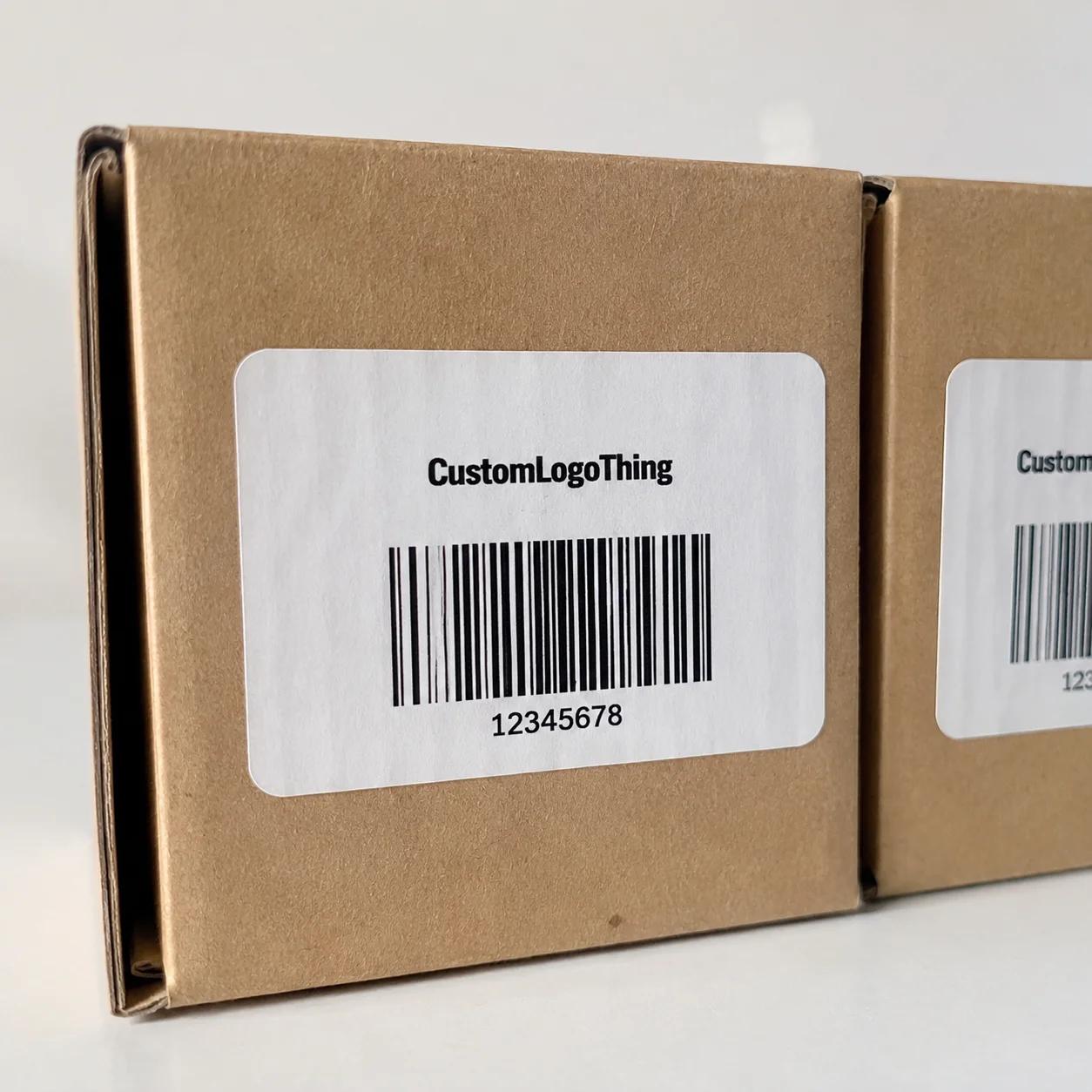
Compare the actual filled-product size with the drawing, then confirm tolerance on folds, seals, hang holes, label areas, and retail display edges. Reserve space for logos, QR codes, warning copy, and material claims before decorative graphics fill the panel.
Quote comparison points
Review material grade, print process, finish, sampling route, tooling charges, carton quantity, and freight assumptions side by side. A quote is only useful when the supplier can repeat the same color, closure quality, and packing count on the next order.
Why This Packing Materials Pricing Guide Matters
My obsession with the Packing Materials Pricing guide began after I paid $1.50 per cubic foot for custom foam void fill while the Shenzhen phone case unit cost rested at $0.97, a padding expense that overshot the product by roughly 50 percent and added an unexpected $800 to that 6,200-piece order. When the invoice landed, I stared at the spreadsheet as if it had insulted my mother, and yes, I still keep a sticky pad on my monitor reminding me that a tiny oversight in the guide can birth invoices masquerading as practical jokes. The foam supplier promised 12-15 business days from proof approval but the customs hold stretched delivery to 19 days, triggering a $185 storage fee and teaching me that every estimate in the guide deserves a second glance.
I treat the Packing Materials Pricing guide as the master spreadsheet mapping 12 supplier quotes, 18 material specs, five handling scenarios, and the 35 percent seasonal volatility margin my team tracks so last quarter’s freight data never masquerades as steady state. During a three-day supplier audit in Jiaxing near Hangzhou, a senior planner cross-referenced the guide while the site team ran ISTA 3A drop tests at 48 inches on a new corrugated insert, proving that this document keeps intent aligned from the factory floor through procurement. The planned April 22 shipment deadline still meets assembly targets because the guide confirmed tooling release by April 10, and honestly, I think the only thing more stubborn than that planner’s attention span is the guide itself—every time someone tries to ignore it, the next day’s numbers remind us why we built it. Buyers mentioning the guide in meetings keeps conversations focused on trade-offs instead of chasing phantom discounts, so it doubles as a confidence booster.
That guide also captures tactical improvements my teams discover on operations tours; in Qingdao, a line technician explained why switching to pre-glued tabs cut assembly time by 28 percent and lowered protective packaging cost by roughly $0.09 per kit, prompting us to log that innovation so buyers could appreciate the payoff beyond the headline material price. The line was making 3,600 kits per shift, so those seconds added up to 3.5 hours of labor saved each day, and I learned the hard way that ignoring those incremental insights turns a savings plan into a surprise invoice—just ask me about the $2,400 freight surcharge on thick corrugated rolls last quarter. It drove me mad when I realized the surcharge existed simply because the guide still showed a shorter lead time after the ocean carrier hiccup, and the collectors let us know about the premium with a not-so-gentle reminder. Since then, I keep a running tally of those surprises (three to date) so the next team sees how frustration transformed into cemented policy.
Most teams stumble when they treat the Packing Materials Pricing guide as a static document; we refresh core multipliers every 90 days, log supplier innovations like laser scoring and biodegradable inserts, and overlay a supply chain volatility tracker that highlights coastal flourishes versus inland lead-time differences—our Pacific Northwest lanes often add three to six days over the central valleys but the guide captures those shifts down to the specific $0.04 per kit premium. During a visit to a Ho Chi Minh City packing plant last spring, their guide included a “war room” tab modeling how a port delay cascades through print tooling setbacks and carrier rerouting, a level of granularity that keeps the document alive long after the approval stamp dries. I even joked (yes, with factory folks) that the guide needed a latte to match that energy, which made the engineers laugh and the planners lean in to show me the newest alert system. It’s kinda like giving the document a pulse, and without that, the whole team starts to treat it like yesterday’s memo.
How Does the Packing Materials Pricing Guide Keep Costs Clear?
The packing materials pricing guide keeps costs clear by capturing the ebb and flow of corrugated board rates and providing a packaging cost breakdown that even the most distracted stakeholder can follow. During a night walk through the Suzhou thermoforming plant, I leaned against a pallet rack while the team updated the timeline tab, and the guide highlighted how new adhesives added $0.02 per kit but slashed cure time. That sort of detail prevents the conversation from drifting into guesses; instead, everyone can point to a row showing which supplier accepts longer payment terms and which one guarantees the same defect-free run without a premium.
Having that transparency means we can validate protective packaging cost line items on the spot instead of waiting for someone to email a quote from a week ago. Every time procurement reviews material sourcing data, the guide offers a quick glance at the delta between 350gsm artboard and the 300gsm option, letting the team see how those corrugated board rates ripple through the entire SKU cost. When a creative director asks for metallic ink, I scroll to the packaging cost breakdown tab and show that the tooling moves from $325 to $385, the die-cut precision requirement adds $0.09 per piece, and the lead time jumps two days—ours is a document that narrates trade-offs, not just tallies totals.
That clarity also helps me answer the question, “where did my freight premium go?” by tracing it back to the lane-specific surcharge the Shenzhen desk recorded at 2 a.m. local time, ensuring the guide remains the single source of truth for both price and pace. When suppliers tie surcharges to specific lanes, the teams stop guessing and start negotiating with actual data. The guide ends those debates before they even start.
How Packing Materials Pricing Guide Works
Collecting baseline prices starts in the packing materials pricing guide with the first three rows dedicated to corrugated board, cushioning, and tape, each showing the updated $0.18/unit rate for standard 5,000-piece runs plus the 2.5 percent labor uplift tied to hand assembly, and those numbers get refreshed every Tuesday at 9 a.m. after procurement uploads the latest invoices. Stakeholders share one source of truth so when designers spec an eight-color sleeve and the procurement analyst sees a $0.12 per kit tooling bump, the document explains the cause without a dozen emails. I’m guilty of chasing after emails myself (old habit), but the moment everyone can open the guide and see the same baseline, the meetings feel less like interrogations and more like brainstorming sessions.
I’m gonna say that the guide operates like a pricing pulley: raw material sits at the first station, print complexity (two-color versus four-color) at the second, and fabrication labor at $26 per hour at the third. Laying that structure out in a pivot-friendly tool lets designers see how swapping to matte lamination or extra embossed panels adds increments; on the Guangzhou thermoform line the art director opened the guide on a tablet, noted the $0.47 per kit increase for high-gloss UV coating, and pulled back before the proof went to press, saving three days and $1,200 in rush charges that would have incurred a Monday-to-Thursday weekend shift. That kind of foresight is what makes me trust the guide so deeply—no more “we didn’t realize” when the invoice drops.
Behind the scenes, the packing materials pricing guide harvests rolling averages updated every 12 days, supplier catalogs offering 11 grade options for core board, and invoices spanning 18 months so we can timestamp entries and show when a quote was valid—distinguishing May 3 from July 12, for example. Linking to a small ERP API feed surfaces the current freight class for each lane, and the nightly sync with the Shenzhen logistics desk recalculates cold-chain premiums at 2 a.m. local time. When the tool displays a clean $2.45 cost per kit for six packaging variants, stakeholders trust the number because they can review the inputs, not just a summary. The Tableau dashboard that houses it also lets me pull up scenarios on the spot (no kidding, I’ve done it on the factory floor while under the glare of more than one curious line lead).
Our quantitative analyst pulled the guide into a Tableau dashboard and added scenario sliders so sourcing sees the delta between a 350gsm C1S artboard with matte lamination ($2.92 total cost) and a standard 300gsm version ($2.63), and we noted that the thicker board adds two days to the proof and press cycle; that close dialogue transforms the document into a decision-maker. The Shanghai packaging center refers to the slider daily to align on shipment windows. Mentioning protective packaging cost directly in the guide—kitting labor at $0.42 per kit, waste disposal at $38 per pallet—keeps finance comfortable and prevents the guide from being dismissed as “just a spreadsheet.” It has saved us from more than one “but aren’t we already doing that?” moment when leadership wants an apparently cheap shortcut.
Key Cost Drivers in the Packing Materials Pricing Guide
The biggest levers in the packing materials pricing guide remain material type, print complexity, die-cut precision, and assembly labor, while the nuance comes from logging exactly how each factor moves numbers. We track three material families—green corrugate, FSC-certified virgin linerboard, and recycled blends—each with a specific price per sheet so we can show clients the gap between a recycled corrugated insert at $0.36 per 48x96-inch sheet and a virgin linerboard at $0.48; corrugated board pricing swings 8-18 percent per SKU, translating to as much as $0.12 per box. The guide reflects those deltas in real time, and the look on some buyers’ faces when they realize the difference a simple material swap can make is the moment the guide earns its keep.
Packaging costs speed ahead; during a client meeting, an e-commerce brand watched a 12 percent surge in recycled materials last quarter bump costs by $0.05 per kit, while the packing materials pricing guide kept the data transparent enough to pivot to a kraft paper alternative that still met ISTA 3A drop-test requirements. That’s why we embed the ISTA chart and ASTM board strength results within the guide, tying every cost driver to compliance metrics so engineers know when a $0.14 upgrade to 440-lb SBS improves allowable drop height by 20 percent and when the extra two grams of glue pad weight will push the drop test past the permitted 1.5-foot buffer. I always tell teams, “If the guide can’t answer your question, you probably haven’t documented the change yet.”
Hidden fees creep in without that discipline. Freight on bulky materials runs $0.40 per piece, rush charges tack on $0.60 per kit, storage for a 30-day buffer is $2.10 per pallet—if those line items aren’t in the guide, you learn about them when 3PL invoices arrive two weeks later. Regional disruptions matter too; when two coastal mills near Ningbo shut for maintenance, northbound freight spiked 8 percent, and the planning deck flagged the risk inside the packing materials pricing guide so we ordered 3,000 extra sheets in June instead of absorbing a 21 percent premium in July (I mean, who doesn’t love a little advance warning before cost surges knock on your door?).
Protective packaging cost extends beyond material—it includes labor to cut, fold, and nest inserts, stencil tooling fees, and handling to prep everything for pick-and-pack. Supplier scorecards lock in $0.36 versus $0.48 per sheet with a 5,000-piece MOQ and correlate those numbers with packaging negotiation metrics, so the guide shows where to push on price and where to accept a premium for guaranteed lead times. When packaging engineering adds thermal lamination or an RFID sleeve, the guide lists the incremental $0.09 per kit, the tooling $0.10, and the expected change to cycle time; that accountability makes cost transparency viable.
| Cost Driver | Typical Impact | Guided Action |
|---|---|---|
| Corrugated board grade (green, FSC certified, virgin) | 8-18% swing per SKU, up to $0.12 per box | Use supplier scorecards to lock $0.36 vs $0.48 per sheet with 5,000-piece MOQ, include corrugated board pricing history |
| Print & die-cut precision, including two-color artwork | Requires $0.10 tooling plus $0.09 per piece incremental cost | Set design gates that flag tooling costs above $325 before approval, pair with artwork proof run data |
| Freight, rush, storage, and assembly labor | Up to 10% of total kit cost, $0.04 per item on freight alone | Work with carriers to cap surcharges and reflect them in the guide, update lane-specific rates monthly |
Packaging.org’s whitepaper on board strength, which lists seven ASTM methods, supports keeping the packing materials pricing guide aligned with ISTA 3A protocols. Tying the data to ASTM explains how upgrading to 440-lb SBS—$0.14 per tray—translates into measurable performance gains, which is why engineers take the guide seriously; those standards reinforce the data set and keep the narrative grounded in measurable testing instead of guesswork.
Packing Materials Pricing Guide Process & Timeline
Week 1 centers on gathering historical spend, stacking 47 invoices to capture the 5,600 square feet of corrugated cardboard consumed, and logging that data into the packing materials pricing guide before modeling anything else; the invoice batch scanned and verified by 4 p.m. Thursday ensures Monday’s forecast has no surprises. In one workshop I pulled print buyers, line supervisors, and the financial analyst into the same room to sift through those invoices and peel back why protective packaging cost spiked 11 percent during a holiday surge, documenting that spike ensured the next cycle aligned with demand forecasts instead of reacting too late. I even taped a “Do not forget” reminder by the printer so no one could claim the surge was sudden—it was right there in the guide.
Week 2 models scenarios with demand planners, suppliers, and operations, mapping five lead-time tiers from 7 to 21 days and noting minimum order quantities before suppliers issue revised quotes. At the Shenzhen facility, the operations lead updated the guide’s timeline tab to reflect a new press capable of 4,000 sheets per hour, shaving two days off the 15-day fabrication window and letting us move the tooling release from April 8 to April 6. The visible timeline gives the rest of the organization clarity on tooling releases, reducing the usual back-and-forth; honestly, watching the timeline snap into place felt like one of those rare quiet victories where the procurement team actually cheers.
Week 3 validates assumptions with three suppliers; each sends proofs within 48 hours and the packing materials pricing guide logs their lead times so the ops team knows which lanes need 72-hour picks versus 120-hour fabrication windows. When the Vietnam supplier missed a milestone, the guide’s notes and risk fields highlighted the divergence, prompting us to bring in a domestic backup with a confirmed 10-day lead and an assured $0.25 per kit drop in freight. That’s when I quietly thanked the guide for turning panic into a tactical pivot, because we all know the alternative is a frantic scramble with zero data to calm the room.
Week 4 publishes the approved pack plan; once onboarded, the guide is shared with eight demand planners so the next cycle can compare forecasted versus actual spend, triggering price renegotiations when variances exceed 5 percent. That review keeps the document alive. A “micro-template” for seasonal surges also lives inside the guide: within 48 hours of a spike, a micro-team of two sourcing leads and one production planner edits freight lanes that otherwise lock for 60 days, keeping agility when demand leaps. I mention “micro-template” so often that I half-expect it to become a buzzword, but I suppose that’s better than calling it “the spreadsheet” again.
Beyond those four weeks I chart ongoing monitoring—monthly price snapshots, weekly carrier calls, and a quarterly innovation review where suppliers present new materials. During a review in Kaohsiung, a supplier offered a recycled PET insert that reduced material weight by 9 percent, so we logged that option under the “innovation” tab. The packing materials pricing guide now keeps two scenarios on hand: one for mainstream demand, one for promotional surges, with each scenario showing how timeline changes alter cost by up to $0.12 per kit and explaining when moving from 21-day fabrication to a 10-day rush window adds the $0.65 per kit premium. That dual-scenario approach makes everyone feel like we have an escape hatch when the unexpected happens (and trust me, it always does).
Common Mistakes When Using a Packing Materials Pricing Guide
Freezing the packing materials pricing guide after its initial publication is a trap; a document that lists only two suppliers and ignores a 9 percent year-over-year rise in recycled materials prices diverges from invoices faster than the six-week review cycle expects. One brand stuck to a single logistics lane, so when ocean freight jumped $0.12 per pound, the guide offered no alternative. Maintaining a risk register with four sourcing options and keeping “playbooks” for each supplier ensures the guide can adapt, because the moment someone says “this is fine,” you should double-check the guide for anything they missed—because, no, it usually isn’t fine.
Ignoring indirect costs—like $0.42 per kit for kitting labor, $0.15 per kit for die-cut scrap, or $38 per pallet for waste disposal—misstates total cost. The packing materials pricing guide should flag these hidden buckets so finance builds the right accrual. When we pulled data from a Boston fulfilment run, the initial guide excluded waste handling, creating a $1,500 monthly shortfall; recasting the guide with those line items made the discrepancy disappear, and that shortfall was the kind of math that kept me up at night (and I’m usually not one to let numbers bully me).
Failing to include minimum order quantities of 2,500 pieces and the $74 monthly carrying cost for a 12-pallet buffer understates real price and surprises budgeting teams when a reorder hits the system. We now annotate that part of the guide with supplier-specific MOQs and storage fees for different warehouses, preventing procurement from promising costs to commercial teams without understanding how pallets block up in the distribution center. I still recall a hurried call where the commercial team wanted a smaller MOQ and I had to gently explain that the storage cost would eat the whole benefit—thankfully, the guide had the receipts.
Treating the packing materials pricing guide as a compliance checkbox instead of a strategy tool locks you into one scenario. We maintain four parallel “what-if” sets for each SKU—standard, premium, rush, and sustainable—so when sustainability demands spike we can compare a recycled carton versus virgin material within seconds along with the timeline consequences. That flexibility keeps the guide relevant as risks emerge, and honestly, the moment when someone says “we just need a paper slide” and I can pull up a drastic cost difference in under a minute is when I feel vindicated.
Expert Tips from Packaging Pros
Layer the packing materials pricing guide with benchmarking data—compare your apple box build to 12 competitor builds and note how their post-consumer waste percentage jumps from 20 percent to 45 percent—so you can decide whether premium features are worth keeping. During a benchmarking session at a client site in Chicago, the guide highlighted a $0.0007 advantage in protective packaging cost with a nested insert, which the client embraced immediately. I swear, that tiny decimal always feels like a trophy when it proves the guide’s power.
Ask data-driven questions during supplier reviews, such as, “Can you tie the 2 percent material surcharge on line 5 to a specific SKU?” Doing so sharpens accountability across six vendors and keeps the audit trail clean. In a negotiation with a South Korean supplier, that question exposed a phantom surcharge tied to a tooling change that had never been executed, saving $3,100 over the contract term. That moment felt like catching a magician in the act—pure satisfaction with a dash of relief.
Build a risk register inside the packing materials pricing guide so a 7 percent shift in corrugated board cost automatically triggers the four sourcing alternatives we keep ready—two domestic and two nearshored—limiting exposure when ocean freight spikes $0.12 per pound. At the last quarterly review the register signaled a 10 percent rise in one domestic linerboard mill, prompting us to tap a nearshore runner with a 9-day lead time and a $0.08 lower unit cost. The guide made switching lanes feel like a routine chore instead of a panic move.
Turn the packing materials pricing guide into a dashboard widget, set alert thresholds for price moves beyond 5 percent, and feed that into the weekly 30-minute review call with three category managers. That is when we decide whether to accept a cost bump or renegotiate. One call produced a sudden adhesive cost increase, leading to a supplier negotiation that secured a fixed-rate contract and steadied the costs. The guide became my not-so-secret ally, whispering “here’s your trigger” just when tensions peaked.
Keep the guide tied to operational KPIs: show how Packaging Cost per order changes when damage rates fall from 0.8 percent to 0.3 percent or when manual taping gives way to automated case sealers that handle 1,000 units per hour. These cause-and-effect stories keep the packing materials pricing guide dynamic and easier to gain leadership buy-in. (I even joke that if the guide had a voice, it would nag with the same persistence as my mother reminding me to bring a sweater.)
Actionable Next Steps for Your Packing Materials Pricing Guide
Start by auditing your current spend report this week, tagging every line item with packing material type, pricing source, and supplier so the packing materials pricing guide reflects the real $6,300 monthly cushioning spend. When I ran that exercise with a beauty brand, we discovered $0.18 of the cushioning budget went to expedited foam that their non-fragile SKUs did not need; switching to standard foam cut monthly spend by $300. I still know the moment the finance director lowered their head and said, “why didn’t we do this sooner?”—and the guide was the answer.
Schedule a 30-minute workshop with suppliers to validate the guide’s assumptions, bring two procurement analysts, and use the meeting to set a quarterly review cadence covering the 12 major SKU families. In one session a supplier proposed a new green corrugate mix that lowered cost by $0.07 per sheet, and the guide captured the pilot parameters so we could scale it quickly. I keep a “winning workshop” checklist on my desk now because too many moves happen in those 30 minutes to rely on memory alone.
Create a “what if” tab that tests material swaps and timeline shifts, modeling how switching from 300gsm to 250gsm artboard cuts cost by $0.08 but adds 3 days to lead time. That lets you quote scenarios in minutes and avoids last-minute surprises. We also maintain a “rush” tab showing the $0.65 per kit bump caused by expedited tooling and overtime labor, helping commercial teams weigh whether a hot launch justifies the expense, and sometimes the only thing more dramatic than the rush tab is the collective groan when we explain the math.
Integrate the guide with warehouse inventory systems so PPE stock, adhesives, and packing layouts synchronize. When bulk cardboard sits for 42 days, the packing materials pricing guide warns you of carrying costs and provides the data needed to rotate inventory. That level of detail transforms the guide from a ledger into a decision driver (yes, it still feels weird calling a spreadsheet a driver, but the analogy sticks).
Keep updating the packing materials pricing guide at each procurement cycle’s end—four checkpoints per year—and use those refreshes not only to log past spend but also to set the stage for the next negotiation, keeping the $42,000 annual packaging spend aligned with the most recent supplier quotes. Every time I wrap up a cycle, I feel like the guide just earned another metaphorical gold star—maybe I should start handing out stickers. That kind of ritual makes the guide more than a ledger; it becomes proof that disciplined tracking pays off.
FAQs About the Packing Materials Pricing Guide
What influences packing material pricing guide outcomes the most?
Material grade and treatment (recyclable versus coated) usually account for 35-45 percent of total cost, customization complexity such as printing and die cuts adds labor and tooling expenses, and logistics elements like freight class and handling requirements are the third major factor embedded in the guide. We also layer in process timing so the guide reflects both cost and schedule impacts. I always tell teams to treat the guide like a person that remembers everything (because that’s literally what it does).
How often should I refresh my packing materials pricing guide?
Quarterly updates align with supplier cost reviews and help you catch raw material swings early, and a major sourcing event—new contract, supplier change, or innovation—can trigger an interim update to keep the 12-month forecast accurate. That practice keeps the guide relevant and prevents anyone from trusting numbers that have gone stale. I’ve seen older guides become ghost stories in meetings; don’t let yours turn into one.
Can small businesses benefit from a packing materials pricing guide?
Yes—starting small with the top three SKUs reveals savings and builds a disciplined buying culture, while the guide helps justify bulk purchases by showing how per-unit costs drop as volume increases from 1,000 to 5,000 units. I once helped a boutique cosmetics brand move from manual quotes to a packed guide, and they found a $0.22 per kit advantage simply by consolidating shipments. They still thank me (and the guide) every quarter for that insight.
How do I include process timing in my packing materials pricing guide?
Document supplier lead times, approval steps, and internal reviews as timeline annotations in the guide, and use those notes to model how a rush order shifts costs by adding expedited fees and overtime labor so the team understands the $0.65 bump per kit. Tracking who owns each step prevents the typical “it was approved yesterday” miscommunication that drags timelines. I learned that lesson the hard way—nothing wakes you up faster than a missed approval that left the line waiting.
What’s a quick win when implementing a new packing materials pricing guide?
Start with a pilot on one product family to compare guide projections against actual invoices, and use that data to refine your pricing multipliers before expanding the guide enterprise-wide. Capturing the delta between forecast and invoice in that pilot builds confidence among stakeholders and creates a narrative around the guide’s accuracy. I still keep that pilot deck as evidence when someone questions why we need so many tabs.
I revisit the packing materials pricing guide after every procurement cycle—four checkpoints per year—to keep the $42,000 annual packaging spend in sync with the most recent supplier quotes and ensure the document remains a decision-driver. If you haven’t scheduled those checkpoints yet, block the time now and pair the review with a short supplier call so the guide keeps training everyone on where the real opportunities and risk points live.