Personalized chapstick labels look simple until the proof arrives with a logo that is too small, a seam that lands across the brand name, or colors that drift from screen to print. The product is tiny, but the decisions are not. A good label has to survive handling, heat, curved surfaces, and the usual habit of tossing a lip balm into a bag until it gets used weeks later.
That is why buyers who treat the label as packaging rather than decoration usually get better results. The same small cylinder can support wedding favors, wellness kits, trade-show giveaways, or short-run retail samples, but each use case needs a different balance of durability, readability, and cost.
On tiny packaging, legibility beats cleverness. If the logo, product name, and one short message do not read at arm’s length, the layout is overworked.
What personalized chapstick labels actually do
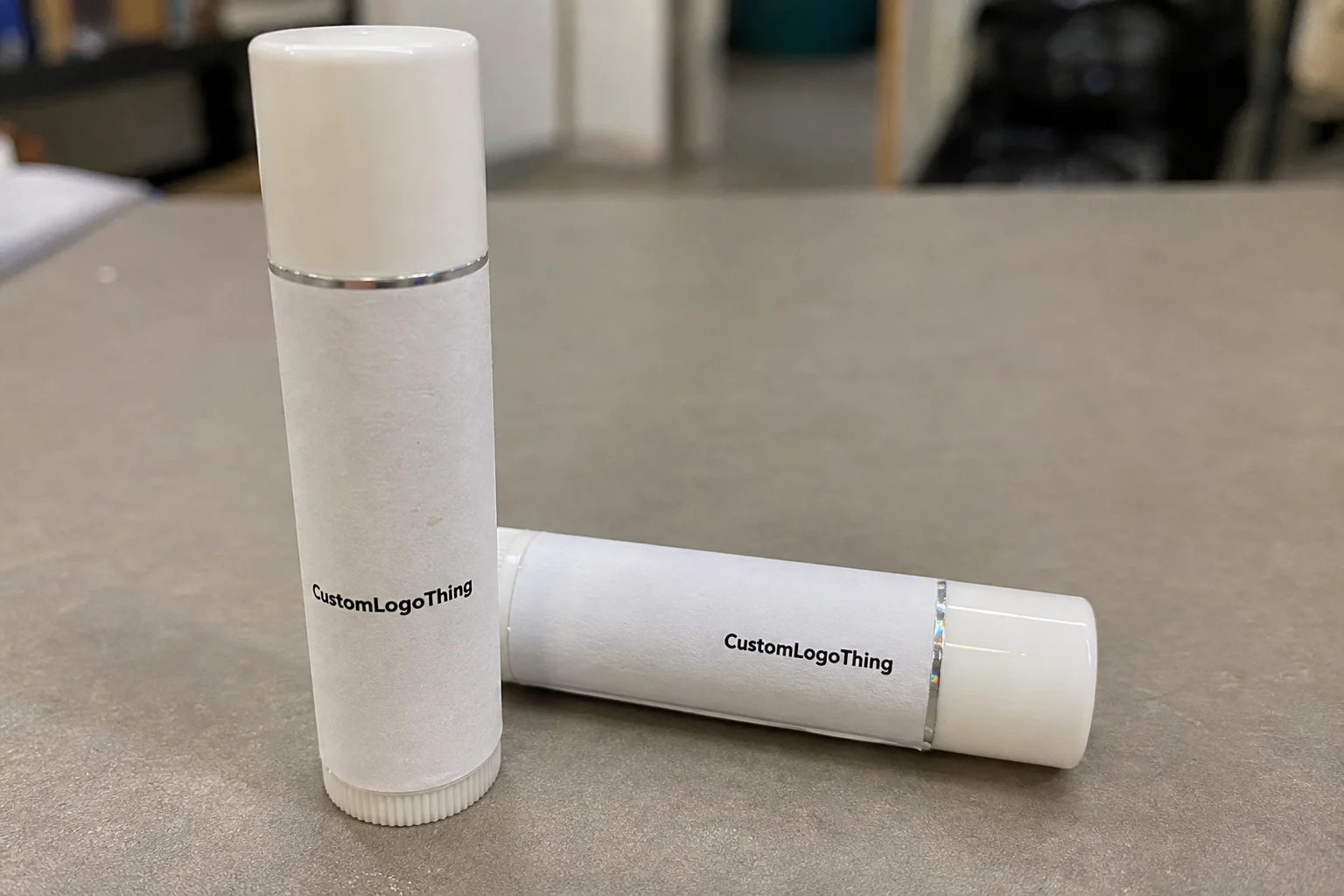
Personalized chapstick labels turn a plain tube into something that looks intentional. That can mean a full wrap around the tube, a front-facing label on a stocked base product, or a custom printed tube if the order volume supports it. The right format depends on quantity, budget, and how finished the final piece needs to feel.
Full wraps are the most flexible. They give room for a logo, flavor or scent, a short slogan, and often the small-print details some buyers need. Front labels are simpler and usually cheaper, but they leave less room to work. Custom printed tubes look the most integrated, yet they usually require higher volume and tighter prepress control.
For short runs and event work, labels usually win because artwork can change without committing to expensive tooling. That matters for seasonal promotions, rotating messaging, or campaigns that need multiple versions. A direct-print tube may look cleaner at scale, but it is less forgiving when the design changes often.
The use cases are broad. A wedding favor needs initials and a date. A nonprofit fundraiser may want sponsor visibility. A wellness brand might need a calm, minimal look that fits the rest of the kit. A trade-show handout has a different job again: it must read quickly under harsh lighting and still look decent after a day of handling.
The cheapest-looking labels are rarely the cheapest orders. Weak adhesive, poor seam placement, or muddy print can turn a low unit cost into a waste problem. A better label spec often saves more money than chasing the lowest quote.
How label fit, material, and finish change the result
Fit comes first. If a wrap label is even slightly too wide or too short, the result is obvious: wrinkles, edge lift, or a seam that looks crooked no matter how clean the artwork is. Chapstick tubes are narrow, curved, and unforgiving.
Material choice matters just as much. Matte paper gives a softer, handmade feel and usually works well for short indoor events. Gloss film makes colors pop and generally handles moisture and friction better. Clear labels can look sharp on colored tubes, but they need stronger contrast and careful layout because any weak area becomes visible. If the product may sit in a warm car, travel in event bags, or get handled a lot, film-based stocks are usually the safer choice.
Finish changes how the label is perceived before anyone reads it. Matte tends to feel quieter and more premium in soft light. Gloss reads brighter and more retail-ready. Neither is universally better. A minimal wellness brand often looks more coherent in matte. A bold giveaway with a bright logo may benefit from gloss because it catches attention faster.
Adhesive quality deserves attention too. A label that behaves well in a cool office can start lifting after a few hours in heat. Temperature swings, curved surfaces, and repeated handling are real stress points. If the order will be shipped in summer or packed into kits, ask for a material recommendation that accounts for those conditions.
For buyers comparing options, a side-by-side view usually helps more than generic product language:
| Option | Best for | Typical strengths | Tradeoffs |
|---|---|---|---|
| Full wrap label | Events, branding, product info | More space, better visibility | Requires precise fit and seam planning |
| Front-only label | Simple giveaways, tighter budgets | Lower cost, faster approval | Less room for copy and compliance text |
| Matte paper | Handmade, softer brand looks | Warm feel, easy readability | Less resistance to moisture and abrasion |
| Gloss film | Bright retail or event displays | Color pop, stronger durability | Can glare under strong lighting |
| Clear label | Colored tubes, minimalist branding | Modern appearance, less visual bulk | Needs strong contrast and careful art setup |
For broader packaging standards, the Institute of Packaging Professionals is a useful reference if you want to think beyond appearance and into performance.
Pricing, MOQ, and unit cost: what moves the number
Pricing for personalized chapstick labels usually moves with quantity, material, finish, setup, and artwork complexity. A simple run on standard stock may come in at the lower end of the market. Custom sizing, waterproof material, specialty die cuts, or extra proofing pushes the number up. The smarter question is not “What is the cheapest quote?” It is “What will this cost finished, delivered, and usable, with no surprises?”
Unit price can hide the real cost. A low quote loses its appeal quickly if the adhesive is inconsistent, the labels cut off-center, or the proofing process is rushed. One reprint can erase the savings from a cheaper run. In small packaging, quality control is part of the business case.
MOQ, or minimum order quantity, changes the math in a predictable way. Smaller minimums are useful for testing, limited events, or seasonal orders, but setup costs are spread across fewer pieces, so the unit price stays higher. Once the run gets larger, the per-piece cost usually drops enough to justify ordering extra inventory.
Here is a practical way to compare quotes without getting distracted by the first number you see:
- Standard size vs. custom size: custom sizing often adds setup time and may require template adjustments.
- Simple art vs. layered art: fewer colors and fewer revisions generally reduce prepress cost.
- Paper vs. film: film costs more, but it usually handles moisture and handling better.
- Flat label vs. specialty shape: die-cut shapes add complexity and may increase waste.
- Proof included vs. paid revision cycles: proofing terms vary more than buyers expect.
As a rough buying range, many small label jobs land around $0.18-$0.28 per unit at moderate quantities with standard specs. Specialty materials, custom shapes, or heavy coverage can raise that. Very small orders can cost more per piece, and larger runs usually improve the unit rate.
Also check whether the quote includes shipping, packaging into sets, and proofing. A low unit number with separate charges can be more expensive than a cleaner all-in quote. This matters especially for time-sensitive orders where a missed shipment window has a cost beyond printing.
If a supplier also offers Custom Labels & Tags, that often signals they understand flexible label production rather than only a single narrow format.
Process and timeline: from proof to delivery
The workflow is usually straightforward: request specs, send artwork, review the digital proof, approve the final layout, then production starts. Printing, cutting, packing, and shipping follow. The process only gets messy when one handoff is unclear or a deadline appears too late.
The most common delays are boring and preventable: missing artwork files, dimensions that were “close enough,” slow sign-off from multiple stakeholders, and copy changes after the proof is already in motion. Printing itself is usually predictable. Approval is where schedules slip.
For standard custom work, a realistic production window is often around 12-15 business days after proof approval, with extra time for shipping or revisions. Complex shapes, specialty finishes, and larger runs take longer. Rush service may be available, but it can narrow material options and increase cost. If the labels are tied to a wedding, fundraiser, or launch date, build in buffer time rather than betting on the fastest path.
Ask these questions before the order is placed:
- How long does proof turnaround usually take?
- Does the quoted lead time include shipping or only production?
- How many revision rounds are included?
- Will custom sizing or a specialty cut add time?
- What shipping method fits the deadline and the destination?
For shipments that matter, pack-out and transport conditions matter too. If the labels will travel in sets, the logic used in packaging tests is worth understanding. ISTA’s guidance is useful here: ISTA packaging standards. You do not need a full lab plan for every lip balm order, but you do need to think past the proof screen.
Step-by-step ordering checklist for clean results
Start with the tube, not the artwork. Measure the labelable area on the actual product you plan to use. Confirm width, height, curvature, and seam location. A template from one supplier can be off from another tube by just enough to create problems.
Next, decide what the label must do. Is it meant to sell, inform, identify, or support another component in a kit? A giveaway can stay simple. A retail sample may need product name, scent, ingredients, and barcode space. The function should shape the layout.
Artwork needs to work at a small scale. High-resolution files help, but the bigger issue is clarity. One strong logo usually beats a crowded layout. One short message usually beats three competing slogans.
- Use vector files for logos whenever possible.
- Check text size at actual print dimensions, not only on a large monitor.
- Leave clear space near the seam so the key art is not broken.
- Match contrast to both tube color and label material.
- Confirm barcode placement if the product will be scanned or sold.
Before approving the proof, review the details that are easiest to ignore and hardest to fix later. Spelling. Bleed. Barcode quiet zone. Alignment. Legal copy, if needed. Quantity. Packaging method. Delivery date. These are not administrative extras; they are the difference between a usable run and a cleanup project.
If the labels are part of a larger kit, check how they sit alongside inserts, bags, or outer packaging. A label that looks polished by itself can feel off if the rest of the set uses a different tone, finish, or color balance. Consistency matters more than perfection.
Common mistakes that trigger waste or reprints
The biggest mistake is designing a flat label as though it will live on a flat surface. It will not. A round tube changes how type and graphics read, especially if the seam lands in a bad place or the layout depends on long lines of text.
Small text causes another round of avoidable trouble. Buyers often try to use every bit of space because the label itself feels small. That usually makes the design harder to read and less premium. If someone has to lean in to identify the brand name, the layout has already failed its first job.
Color mismatch is subtle but common. Screen previews, label stock, and tube color all influence the final result. A pastel that looks bright on a monitor can become flat on matte paper. A clear label can pick up the tube color underneath. Gloss changes contrast perception.
Skipping proof review is expensive in the dumbest possible way. A rushed approval can let spelling errors, awkward line breaks, or misaligned graphics slip through. Printing does not correct those mistakes. It reproduces them at scale.
Heat and moisture deserve respect as well. Chapstick gets touched repeatedly, stored in bags, left in cars, and passed around at events. If the material is not suited to that use, edge lift starts early and the package looks tired before the campaign is over. Reprints create waste, and waste is avoidable when the spec is matched to the environment.
Packaging and waste-reduction guidance from the EPA recycling and waste reduction resources is a useful reminder that bad orders cost more than money.
Expert tips and next steps before you place the order
Keep the design simple. High contrast. Readable at arm’s length. Small packaging rewards clarity, not visual gymnastics. If the first draft depends on another icon, another line, and another slogan to feel complete, it probably needs to be stripped back.
Ask for a sample proof or material reference if the order is large or the event matters. Catching a problem before print is far cheaper than managing labels that are technically correct but practically wrong.
Use a short comparison list before you place the order:
- Label size and tube dimensions
- Finish such as matte, gloss, or clear
- Quantity and price breakpoints
- Turnaround time and proof window
- Shipping method and delivery date
If sustainability is part of the brief, ask about FSC-certified paper options where they are available. That is not the right answer for every order, especially where moisture resistance matters more, but it is a meaningful data point. FSC certification information is a useful starting point for understanding that standard.
The final decision should be grounded in the use case. Confirm the measurements. Choose the material that fits the environment. Approve the proof only after the seam, color, and copy all make sense together. Then place the personalized chapstick labels order with the quantity, timing, and spec aligned to the real job.
FAQ
How do personalized chapstick labels stay on without peeling?
A correct fit matters more than extra adhesive. If the label is sized to the tube and applied cleanly, it bonds evenly and stays smoother over time. Waterproof or film-based materials usually perform better than standard paper in humid conditions or heavily handled settings. Seam placement also matters, since lifted edges usually start where the label is under the most stress.
What size should personalized chapstick labels be for standard tubes?
The right size depends on the exact tube brand, not just the product category. Measure the labelable area and account for curvature, seam overlap, and any cap or twist mechanism. A template from the supplier is the safest place to start because even small dimensional differences can affect alignment.
How much do personalized chapstick labels usually cost per unit?
Unit cost usually drops as quantity rises because setup costs are spread across more pieces. Material selection, custom shape, and finish upgrades can raise the price faster than artwork complexity. Compare total landed cost rather than only the per-label number, since proofing and shipping can change the final figure.
How long does production usually take for personalized chapstick labels?
Timing depends on proof approval, material selection, and order size. Standard runs are usually quicker than custom shapes or specialty finishes. Build in extra time for revisions and shipping so the labels arrive before the event or launch date.
What should I send to get an accurate quote for personalized chapstick labels?
Send the exact product dimensions, quantity, artwork file, and preferred finish. Include whether you need a full wrap, front label, or another format so the quote matches the real spec. If the deadline matters, state it up front rather than assuming it will be obvious later.