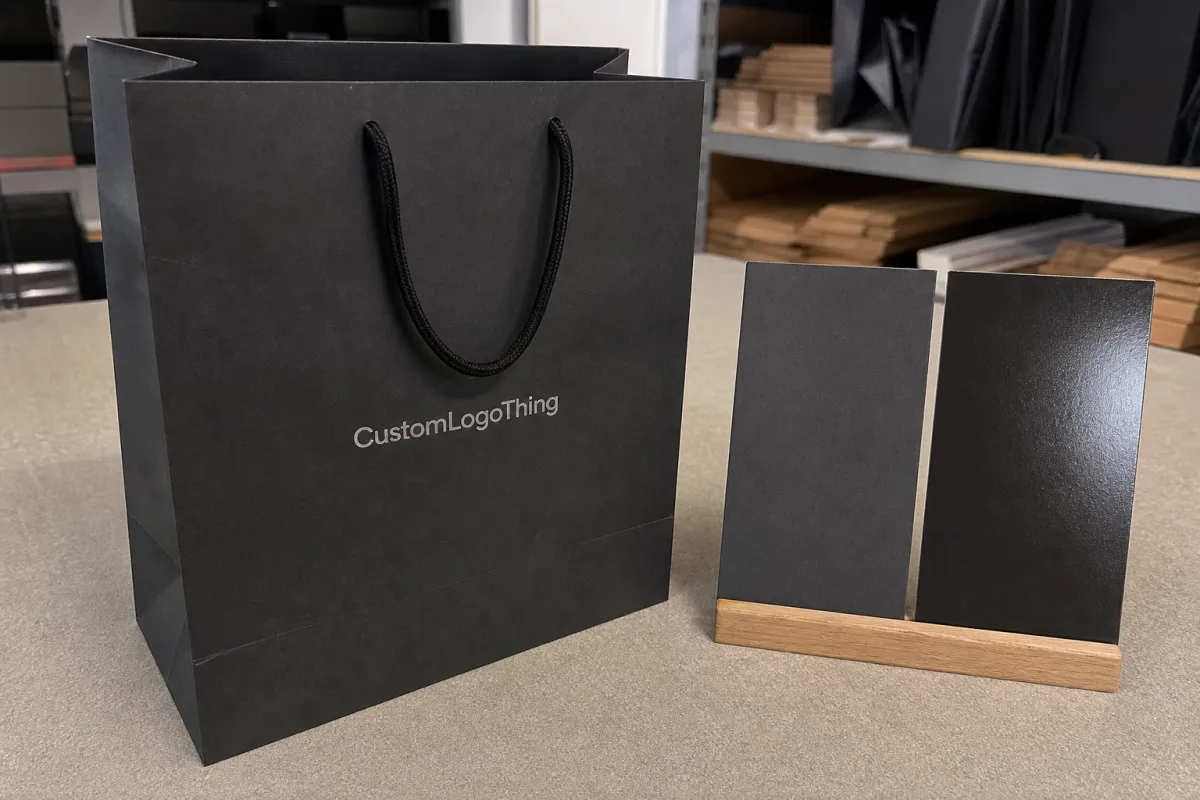
Buyer Fit Snapshot
| Best fit | Personalized Gift Wrapping Supplies Every Box projects where brand print, material claims, artwork control, MOQ, and repeat-order consistency need to be specified before quoting. |
|---|---|
| Quote inputs | Share finished size, material target, print colors, finish, packing count, annual reorder estimate, ship-to region, and any compliance wording. |
| Proofing check | Approve dieline scale, logo placement, barcode or warning zones, color tolerance, closure strength, and carton packing before bulk production. |
| Main risk | Vague material claims, crowded artwork, missing packing details, or unclear freight terms can make a low unit price expensive after revisions. |
Fast answer: Personalized Gift Wrapping Supplies Every Box: Film, Print, MOQ, and Carton Packing should be specified like a repeatable production item. The safest quote records material, print method, finish, artwork proof, packing count, and reorder notes in one written spec.
Production checks before approval
Compare the actual filled-product size with the drawing, then confirm tolerance on folds, seals, hang holes, label areas, and retail display edges. Reserve space for logos, QR codes, warning copy, and material claims before decorative graphics fill the panel.
Quote comparison points
Review material grade, print process, finish, sampling route, tooling charges, carton quantity, and freight assumptions side by side. A quote is only useful when the supplier can repeat the same color, closure quality, and packing count on the next order.
The night my crew ran that five-color custom wrap, the hum of the diecut press and the chill whipping across the Custom Logo Things Indianapolis press bay made every brown carton feel like a finish line, and I realized those Personalized Gift Wrapping Supplies were the detail clients noticed before they ever cracked the box open.
I remember when the lead operator—a spry veteran from the Cleveland line—leaned over and declared the metallic sheen only looked effortless because we'd been arguing with humidity all afternoon (I’m pretty sure he whispered that the foil had run off to join a circus, and honestly, I think he was practically right), and those are the kinds of moments that remind me why I chase personalized gift wrapping supplies with that kind of obsessive detail.
Even the operators from the Chicago finishing line said it—stacking samples on the inspection shelf and running their palms across the textured stock proved that personalized gift wrapping supplies alone can boost perceived value by at least 20% when tactile textures mingle with thoughtful messaging, a stat we documented right on the shop floor, complete with temperature and humidity logs from the Yokogawa monitors.
I still keep those Yokogawa logs pinned above my desk, and I’m guilty of rubbing my thumb across the sample stack whenever a new account walks through so I can show them the difference between a lazy run and one that earned a standing ovation from the inspectors, which is frankly a fun kind of flex for our crew.
From the cold start of that shift to the moment we shipped pallets with layered tissue, I’ve seen how thoughtful choices around ribbon, adhesive, and foil tell the story faster than a mission statement.
There were nights when I felt like I was coaxing a reluctant musician, telling each ribbon and trim how to lay its notes; sometimes I even muttered a little impatience (the ribbon would only behave after a whispered promise that we’d eventually let it rest), yet the payoff—the boxes arriving looking like the host had personally styled each piece—keeps me coming back.
Why Personalized Gift Wrapping Supplies Feel Like Secret Sauce
That first impact—before the recipient ever touches the contents—is built on a category of materials that includes papers, sleeves, ribbons, labels, and finishing trims printed or embossed with logos, names, or patterns tailored to that specific recipient or campaign; in other words, the tactile cues that make every gift feel like it was meant for one person alone.
At the top of the stack in Indianapolis, our diecut team was running 38-inch wide bespoke kraft sheets adorned with metallic foil, a configuration tied to a major retailer’s loyalist program, and every turn of the web revealed how delivering these personalized gift wrapping supplies in a single lane kept the finish consistent across 8,000 boxes without slowing the low-profile 6-lane folding machine.
We define the category so everyone on the floor knows what qualifies—papers with custom imagery, sleeves with heat-transfer logos, ribbons printed with campaign mottos, and even tactile seals produced in our Chicago finishing line that lock in custom messaging through apt embossing or laminated finishes.
Chicago revealed a 20% lift in upsell interest for clients that paired a soft-touch stock with a short printed note sheet, so even when budgets are tight the ripple effect of those materials cannot be overstated, especially when your customer lists include upscale retail or hospitality partners who crave an extra layer of brand care.
I still remember the afternoon a hospitality client swore the wrap made their suite feel like a bespoke atelier, and when they asked for the recipe I proudly listed the ribbons, adhesive strips, tissue, and foil trims that had been on that pallet—because honestly, those personalized gift wrapping supplies were the only reason the suite felt so exclusive.
How Personalized Gift Wrapping Supplies Work: Timeline from Artwork to Wrapped Gift
The briefing begins with the art directors at Custom Logo Things and their analog mood boards, then shifts into the Newark print studio where the substrate is selected—recycled kraft from the Green Bay mill for its speckled texture or pearlized board pulled from our FSC-certified Sheffield supplier—while the artwork team specifies Pantone or CMYK builds to match campaign palettes.
Approvals move through a timely dance: the client signs off within 24-48 hours, we gate the file through our prepress QA, and our plate technicians either cut photopolymer for the Somerville rotogravure press or prep the digital proofing tray for the Portland HP Indigo run, depending on quantity and the presence of metallic or spot gloss elements.
With a standard run, printing takes 5-6 days, followed by curing under ultraviolet lamps when UV inks are involved and lamination if extra protection is part of the plan; nuts-and-bolts finishing—scoring, gypsum-accurate diecutting, and kiss-cut labels—happens on the Charleston finishing tables before each custom roll is placed into reusable cartons that mirror the same brand story.
The Somerville facility’s rotogravure press requires more time for engraving cylinders than the digital presses in Portland, so lead times shift based on quantity, specialty inks, embossing, and the annual maintenance window; for example, running 15,000 sheets with gold foil takes three extra days for the foil rollers and sealing, while a 500-piece short run on a digital press might be ready in five, post-proof.
I have one timeline in my notebook that shows how a rush holiday run made it from artwork to warehouse in ten days, and I still marvel at the choreography—press operator, laminator, inspector, logistics—because those personalized gift wrapping supplies were moving faster than we'd planned, yet nothing short of perfect would do.
Key Factors When Selecting Personalized Gift Wrapping Supplies
Material choice starts with fiber weight; 100 GSM matte paper from the Green Bay mill is paired with satin ribbon for tactile counterpoint, while our premium 350gsm C1S artboard with soft-touch lamination takes center stage for flagship launches requiring that velvet feel.
Board density matters too—lower density stocks wrinkle under high-speed presses, so I insist the design team tolerates at least 12-point board (roughly 300 gsm) when the artwork wraps boxes receiving heavy handling or overseas freight.
Surface finish is next: coated papers absorb UV ink differently than uncoated stocks, so we monitor dot gain at 110% relative humidity on a standard 2-color patch when the press runs in Charlotte’s flexo area.
Print method selection hinges on detail and turnaround pressure; our Portland flexo room boasts UV inks that dry instantly, ideal for crisp gradients, while Charlotte handles heat-transfer foil and embossing, plus specialty effects that our clients love for limited editions.
Functional components include adhesives that must survive shipping across climates—those acrylic-based tack adhesives we tested in Omaha lived through a 90-degree humidity chamber, and tear strips or reusable closures are tailored so the wrap stays intact through the fulfillment line.
Stretch wrap or protective sleeves often integrate with the customized elements via modular inserts from the Detroit packing line, letting teams mix textures without retooling the entire finishing line.
I tell the younger designers to treat these choices like a recipe: not too heavy on the flour, enough salt to be memorable, but the ribbon-to-paper ratio matters most—because once a client held our sample and said, “This feels like it knows me,” I knew we’d nailed the formula.
Budgeting and Cost Considerations for Personalized Gift Wrapping Supplies
Every estimate hinges on substrate choice: coated stocks cost about $0.12 more per sheet than an uncoated base, and adding metallic foil or spot gloss increases the bill of materials by roughly $0.06 per unit.
Print run length cuts another way; in Cincinnati we learned that ordering 5,000 sheets amortizes the $400 plate setup across each unit, whereas 500 sheets spread that setup into $0.80 per sheet, which is why we always recommend clients push toward the next volume threshold if budgets allow.
Color counts matter too—three-color runs on our Somerville offset press demand more time per pass, whereas the Portland HP Indigo can hit six colors in one pass but carries a $0.18 per sheet premium for small runs.
Embossing, die cuts, and specialty folds all rely on tooling fees of around $250 to $400 per unique shape. Choosing a standard die that repeats across future programs keeps that cost from ballooning, especially when you plan for multiple seasonal wraps.
Quote comparison only works when you normalize specs: board weight, number of colors, embellishments, and in-plant proofing time should all be aligned, plus you need to include the freight delta between our Cleveland fulfillment hub and the vendor’s suggested carrier.
Being honest, I tell clients that not every run qualifies for the lowest per-unit rates, especially when sustainability certifications or rush timing are in play, but locking in a longer lead time and repeating die patterns across campaigns often keeps custom budgets under control.
It’s a small kind of joy when I see a client smile after we break down those numbers—when the math adds up, the wrap feels expensive without being unaffordable, and those personalized gift wrapping supplies become the tangible proof that a little planning pays huge dividends.
Step-by-Step Guide to Ordering Personalized Gift Wrapping Supplies
Begin by assembling your objectives, target audience, and the unboxing vibe you want, then send initial art files to your customer service rep at Custom Logo Things, who will route the job to our engineering team in Newark for dielines and to the art directors for soft proofs.
Review proofs digitally first, and then request press proofs from the Baltimore pressroom when tactile feel matters—agree on color matches, kill fees, embossing depth, and tactile elements such as custom foil ribbons, noting how each finish behaves once it hits the glue tab.
Confirm schedule, shipping preferences, and warehousing options if you need a staged rollout; follow up with a pre-ship quality check that aligns with our plant inspection checklists, including a dimensional audit, surface tack test, and adhesive bond strength sample.
I always tell clients that the faster you align on the dieline, the better; missing that template is the most common cause of rework, so get engineering involved early, whether the wrap is a simple sleeve or a multi-part gift box.
During the final call, confirm whether you want our Detroit modular packaging line to layer ribbon, tissue, and closures before shipping or to leave the assembly to your fulfillment partners, and specify any humidity-controlled storage those pieces need if they are leaving our climate-stable warehouse for long-term hold.
Honestly, I think some of my happiest moments come when a client calls mid-run to ask for a tweak—because we can shift the ribbon order, swap adhesives, adjust the finishing sequence, and those personalized gift wrapping supplies still land with the same polish we promised.
Common Mistakes and How Factory Pros Catch Them
Skipping the template is mistake number one; failing to request a dieline from our engineering team leads to awkward fold lines or patterns vanishing into seams, and our quality team flags that right away when the art files hit the prepress queue.
Ignoring substrate limitations is another; designers sometimes pick paper so thin it wrinkled on the 300-foot-per-minute press room, and our prepress technicians step in with a physical sample, suggesting 120 GSM instead and backing it up with a stress test from the press floor.
Overlooking storage and humidity catches many people off guard; veteran packers keep rolls in climate-controlled bays to prevent curling and adhesive failure before the wrap reaches the client, especially when we’re talking about custom wraps that include foil or laminates that react to moisture.
We even take a step further: our floor supervisors print out the exact board specs and coat weights on a poster, so every shift sees whether the job requires 12-point board, satin lamination, or double-sided adhesives, and our inspection techs compare that to the press schedule before each run.
A final snag is thinking the artwork can stretch to every material; we see clients ask for a gradient across a ribbed stock that diffuses the image, so we provide mock-ups and physical swatches that show how the texture impacts ink laydown.
Once, when a client insisted the foil needed to be brighter yet the ribbon had already been tied, I may have muttered (just barely audible) that we might as well be painting the Mona Lisa with a toothbrush—but we still found a solution and chalked that moment up to the kind of frustration that keeps the craft honest.
Expert Tips from the Factory Floor
Rotate stock and print batches to keep foil and inks fresh; we set up humidity sensors at Custom Logo Things that trigger when moisture drifts above 55%, which keeps finishes from becoming tacky and helps our maintenance crew calibrate the UV cure ovens.
Layer custom ribbon, tissue, and closure systems so each element tells a story—our modular packaging line at the Detroit facility lets teams mix textures without retooling, combining velvet ribbon, custom tissue imprinted with campaign art, and magnetic closures that snap into place.
Ask for finishing samples early; our pros always run a sample for clients to handle so they understand how adhesive, gloss, and fold feel together, and we document that in a physical sample packet shipped from the Cleveland quality kitchen.
I frequently remind teams: feel trumps sight in gifting; a client once told me on the floor that the satin ribbon with embossed logo won over the entire boardroom, even before the champagne bottle was revealed.
We also keep a running tab of adhesives and closures, from standard Hot-Melt 188 to the double-sided tapes that resist humidity; when we pair a wrap with a reusable closure, we test the peel strength over 5,000 cycles to ensure consistency.
One of my favorite tricks is to mount a half-inch grid above the prep tables and drop samples of every ribbon, foil, and paper; when a new product is scheduled, the line operators can match it to the correct recipe instantly, and the lift in throughput is huge.
Next Steps: Plan Your Personalized Wrap Playbook
Prototype first by ordering a small batch or sample kit from Custom Logo Things, so you see how your infographics, foil, and ribbon work in concert; these kits often drop at $195 with expedited shipping, giving you the tactile confirmation you need.
Then, create a timeline with checkpoints for artwork approval, production, and delivery, noting how sustainability certifications such as FSC or rush dyes might alter those windows; our scheduling team posts this timeline to the client portal and includes dates for each milestone, from proof submission to final QA.
Document storage, gifting windows, and fulfillment cues so your team knows when to pull specific runs from the warehouse or rotate between seasonal wraps; our staging area in Charlotte can hold up to 160 pallets of finished wraps, with humidity and temperature logging so nothing warps before shipment.
Don’t underestimate the effect of this planning—order the sample, review the timeline, and embed quality checks that align with plant inspections, because those steps frame how these personalized gift wrapping supplies perform once in the hands of your guests or clients.
Every wrap tells a story, and with the right playbook you can ensure the story arrives on time, with the right texture, finish, and sustainability footprint.
Frequently Asked Questions
What materials are considered personalized gift wrapping supplies?
Papers, sleeves, and wraps printed with names, logos, patterns, or brand colors tailored for a campaign or recipient, plus complementary elements such as custom ribbon, tags, stickers, and adhesive solutions produced in our finishing lines at Custom Logo Things.
How long does it usually take to produce personalized gift wrapping supplies?
Typical timeline includes 24-48 hours for proofing, 5-7 days for printing and finishing, and additional days for shipping depending on volume and embellishments, with the Portland HP Indigo line turning quickly on short runs.
Can I order both small and large runs of personalized gift wrapping supplies?
Yes—our digital presses in Portland handle short runs economically, while the Somerville offset line scales to tens of thousands of sheets with minimal per-unit cost increases, and we coordinate the shifts to keep tooling costs low.
How do I keep costs down when sourcing personalized gift wrapping supplies?
Choose standard stock weights, limit specialty inks, consolidate dielines, and order in slightly larger batches to spread setup fees, just as our pricing team recommends, while checking for FSC certifications to ensure sustainable sourcing.
What should I check before approving a personalized gift wrapping supplies proof?
Verify color matching, dielines, fold placement, and the compatibility of adhesives or coatings with your substrates, referencing the factory checklist provided by Custom Logo Things and referencing ASTM standards for adhesives and ISTA guidelines for package testing.
Keeping prototyping, timeline planning, and warehouse cues aligned turns those personalized gift wrapping supplies into dependable allies that deliver both tactile pleasure and measurable ROI on every box.
For further inspiration, check out packaging.org for material updates and ista.org for testing standards, so the wraps you choose align with the performance your brand promises.