Toy Museum Paper Bags Bulk Quote for Busy Gift Shops
Why Toy Museum Paper Bags Fail or Sell at the Exit
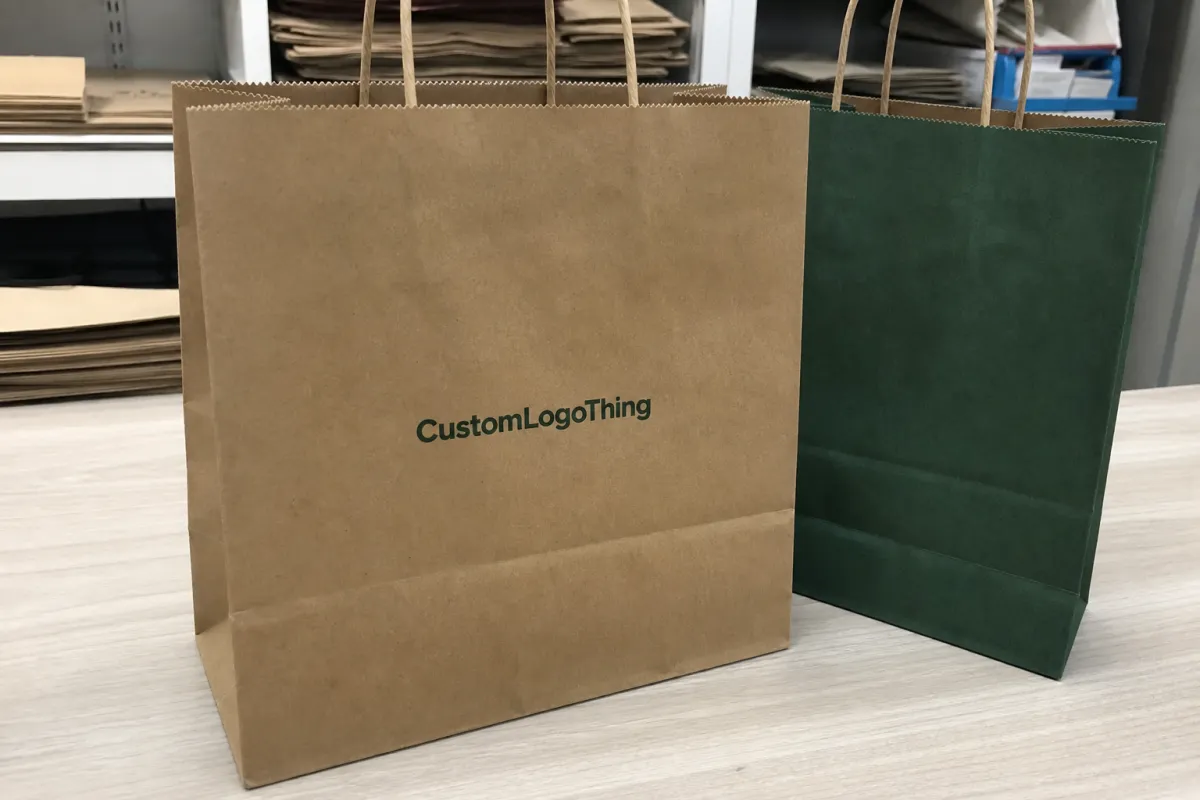
A family leaves the museum store with a model train, two plush animals, a boxed puzzle, and a postcard set. The buyer requesting a toy museum paper bags bulk quote is not buying a commodity sack. They are buying the last piece of retail equipment a visitor touches before the parking lot, hotel elevator, school bus aisle, or kitchen table unpacking later that night.
That small object carries more pressure than it gets credit for. Museum stores behave like compact specialty retailers, but the baskets are odd. A mall toy shop may sell predictable boxed products. A toy museum gift shop might ring up a wooden yo-yo, a thick activity book, a tin robot, a plush dinosaur, a pencil set, and a membership brochure in the same transaction. Those items do not stack neatly.
Paper fails in specific ways. Thin stock tears at sharp puzzle-box corners. Weak gussets split when staff pack a plush toy beside a hardcover book. Narrow handles cut into a parent’s fingers after a minute of carrying. None of that looks dramatic on a quote sheet. It looks bad at checkout.
A plain stock bag vanishes as soon as the visitor leaves. A well-designed museum bag keeps moving. It appears on sidewalks, trains, classroom cubbies, family photos, and birthday-party gift tables. That visibility matters because museum stores often depend on repeat visits, memberships, camps, exhibit launches, grandparents buying gifts, and parents recommending educational retail they trust.
Packaging buyer reality: the bag does not need to be extravagant. It needs to fit the merchandise, carry the load, present the brand clearly, and arrive before the next traffic surge.
Custom Logo Things approaches a museum paper bag quote by locking the practical variables first: size, paper weight, handle type, print coverage, quantity, and delivery location. Plain variables. Expensive consequences if they are left vague.
Paper Bag Styles That Fit Toy Museum Retail Traffic
The right bag style depends on the transaction pattern. Not the prettiest mockup. Not the largest item in the store. The basket pattern.
Kraft Paper Shopping Bags are often the economical daily retail choice. They suit postcards, books, small boxed toys, figurines, modest plush items, and educational kits that do not have sharp corners. Recycled kraft can also support a sustainability message, especially if the design uses restrained ink coverage and avoids finishes that complicate recycling.
White paper retail bags give brighter artwork. If the museum uses colorful mascots, primary-color exhibit graphics, sponsor marks, or illustrated toy patterns, white stock usually holds cleaner contrast than brown kraft. That can matter for child-facing brands, where a dull color palette can make even lively artwork feel tired.
Laminated paper bags and eurotote-style gift bags sit at the premium end. They work for donor-store merchandise, holiday gift bundles, limited exhibit products, gala shops, and higher-ticket purchases. Rope or cotton handles feel better in hand and photograph well, but they raise unit cost and often increase the minimum order quantity. Gloss and matte lamination can also affect recyclability, so buyers with environmental standards should ask before approving the finish.
Flat merchandise bags still have a job. A postcard set, sticker sheet, enamel pin card, slim activity booklet, or small stationery purchase does not always need a handled shopper. Using a large handled bag for every small item increases paper consumption, carton count, and backroom storage pressure.
- Small bags: postcards, mini figurines, pins, stationery, stickers, small activity sheets, and party favors.
- Medium bags: puzzles, plush animals, books, dinosaur figures, boxed science toys, and educational kits.
- Large bags: boxed train sets, apparel bundles, multiple books, gift bundles, and birthday-party purchases.
For most toy museum stores, a two- or three-size system is more disciplined than six sizes that confuse staff. Bags should support the most common basket mix. If one oversized train set sells twice a month, it probably does not deserve its own bulk custom bag size.
Material options can include recycled kraft paper, FSC-certified paper, soy-based inks, and recyclable finishes where available. Buyers who need chain-of-custody paper should review requirements early and reference the Forest Stewardship Council certification framework before artwork and quoting begin. Certification language is not decorative; it affects sourcing, documentation, timing, and price.
Specifications Buyers Should Lock Before Artwork
A clean toy museum paper bags bulk quote starts with specifications, not artwork. Design matters, but pricing is driven by dimensions, material, construction, print method, finish, quantity, and freight.
Use plain dimension language: width x gusset x height. Width is the front panel. Gusset is the side depth. Height is the vertical measurement from bottom to top edge. If the gusset is too narrow, staff will force boxed puzzles in at an angle and crush the corners. If the height is too low, the handles take the strain before the bag has fully supported the product.
Paper weight should match the load. Lighter kraft may work for postcards, stickers, and small souvenirs. Heavier paper is safer for puzzles, books, wooden toys, boxed science kits, and multi-item purchases. In practical retail quoting, buyers often compare options around 120gsm, 150gsm, 180gsm, or heavier structures depending on bag size and handle style. Not every supplier uses the same stock range, so ask for the actual GSM or basis weight rather than accepting a vague “standard paper” description.
Handle construction changes both cost and durability. Twisted paper handles are common for daily shoppers and can be economical at volume. Flat paper handles usually cost less but feel less refined. Rope and cotton handles improve presentation, especially on premium bags, yet they add material, labor, and sometimes longer production time. Reinforced handle patches can reduce tearing on heavier purchases, though they also add cost.
Print choices create large differences. A one-color logo on kraft is usually more cost-efficient and faster to approve. Full-color artwork can support exhibit branding, mascot illustrations, toy diagrams, sponsor panels, or collection objects. Neither option is automatically better. The right one depends on budget, brand value, product mix, and how long the bag is expected to remain visible after purchase.
Hidden variables count. Ink coverage near folds can crack or look uneven. Bottom board inserts can help heavier purchases stand flatter, though they add material and packing complexity. Matte lamination feels refined; gloss lamination gives stronger shine. Aqueous coatings, varnishes, foil, embossing, and spot treatments can add polish, but they rarely belong on every daily retail bag. Use them where the bag supports a premium program or event.
Before requesting a quote, pull store data if it exists. Average items per basket. Top-selling toy dimensions. Monthly transaction count. Peak field-trip months. Birthday-party volume. A buyer guessing from memory will usually overestimate the largest items and underestimate the average order.
Toy Museum Paper Bags Bulk Quote: Cost, MOQ, and Unit Cost
A toy museum paper bags bulk quote is shaped by eight practical cost drivers: paper grade, bag size, handle construction, print method, number of colors, finishing, order quantity, and freight. Change one, and the unit price can move materially.
Minimum order quantity follows setup logic. Simple Printed Kraft Bags may have more flexible minimums. Premium laminated gift bags, custom structures, rope handles, specialty finishes, or full-coverage printing usually need higher quantities because setup, proofing, press preparation, and machine time have to be spread across the run.
That is why larger orders often reduce unit cost. Plate charges, proofing time, press setup, material preparation, and carton packing do not scale one-to-one with bag count. A 5,000-piece run can carry those fixed costs more efficiently than a 500-piece run, assuming the museum has storage space and predictable usage.
| Bag Option | Typical Use | Cost Position | Buyer Tradeoff |
|---|---|---|---|
| Kraft paper bag with twisted handles | Daily gift shop purchases and small toy baskets | Lower to mid-range | Efficient for volume, less vivid color than white paper |
| White paper retail bag with color print | Mascot art, exhibit graphics, and colorful merchandise | Mid-range | Sharper artwork, usually more sensitive to scuffs |
| Laminated eurotote with rope handles | Premium gifts, donor events, limited merchandise | Higher | Better presentation, higher MOQ and finish cost |
| Flat merchandise bag | Postcards, stickers, small stationery, pins | Lower | No handle, limited capacity |
Realistic Custom Printed Paper bag pricing can range widely. A simple kraft shopper may land around $0.18-$0.45 per unit at larger quantities, while premium laminated gift bags can move beyond $0.80-$1.50 per unit depending on size, handle, finish, print coverage, order quantity, and freight. These are planning ranges, not promises. Paper markets, carton counts, shipping zones, and artwork all affect landed cost.
Freight deserves scrutiny. Paper bags are bulky even when flat-packed. A low unit price can lose its advantage if cartons ship inefficiently or travel across expensive zones. Ask for a line-item quote that separates bag unit cost, print setup, proofing, cartons, freight, and optional upgrades. If receiving hours are limited or delivery requires a liftgate, mention that before the quote is finalized.
Custom Logo Things can quote good-better-best options through Wholesale Programs rather than forcing one specification. For tight budgets, the practical levers are clear: choose kraft instead of laminated paper, reduce ink coverage, consolidate to two sizes, approve digital proofs quickly, and order before peak demand compresses the schedule.
Production Steps, Proofing, and Lead Time for Museum Orders
Production does not start with a purchase order alone. It starts with complete information. Missing dimensions, low-resolution artwork, undecided quantities, unclear delivery dates, or unconfirmed finish preferences can stall a job before paper is allocated.
The normal process is straightforward: specification review, artwork check, quote, proof, approval, production, quality control, packing, and shipment. For many custom paper bag orders, buyers should plan for roughly 12-25 business days after proof approval, depending on complexity, quantity, material availability, and transit. Premium structures, specialty handles, imported materials, or physical samples can extend that timeline.
Artwork should be supplied as vector files when possible. AI, EPS, or editable PDF files give production teams the cleanest logo edges and color control. High-resolution raster files may work for some designs, but they are less forgiving at bag scale. Pantone and CMYK expectations should be confirmed before proofing, especially if the museum has strict brand standards or sponsor colors.
Digital proofs confirm layout, placement, scale, and general color direction. They do not always show paper texture, ink absorption, or the way color shifts on kraft stock. Physical samples or pre-production samples may be useful for large orders, sponsor-funded projects, premium gift bags, or programs where brand color accuracy is sensitive. They add time. Sometimes the added time prevents a larger mistake.
Quality-control checks should be practical, not theatrical. Confirm handle attachment, gusset alignment, bottom seal strength, print registration, carton labeling, and whether the packed cartons match the approved quantity. For heavier museum baskets, ask whether the bag structure includes reinforced tops, bottom inserts, or load guidance. A bag can look attractive and still be underbuilt for books and boxed toys.
Known traffic spikes should drive the buying calendar: school holidays, exhibit openings, museum camps, holiday shopping, donor events, and birthday-party weekends. If the in-hands date is fixed, share it early. Production finish date is not the same as delivery date, and receiving teams may need another 1-2 days to check cartons and move stock into the retail backroom.
Rush orders are possible only when the specification gets simpler. Standard sizes, fewer colors, no specialty finish, digital proof approval, and faster shipping can help. A complex laminated bag with rope handles, heavy ink coverage, and a hard event deadline is not a rush-friendly product.
For transit testing language and distribution risk, packaging buyers may also reference the International Safe Transit Association. Most museum paper bag projects do not need formal ISTA testing, but the mindset is useful: packing, cartons, freight handling, and arrival condition all matter.
Branding Details That Make the Bag Worth Keeping
A toy museum bag should carry more than products. It can carry memory, wayfinding, education, and a reason to come back.
The best designs do not simply enlarge the museum logo. They build a small retail object. Exhibit icons. Collection silhouettes. Mascot illustrations. Historic toy diagrams. A pattern made from gears, blocks, puppets, train wheels, spinning tops, marbles, or puzzle pieces. A QR code for memberships or camps can work if it is placed with restraint and tested at real scale.
Procurement teams sometimes miss the media value. A generic bag creates one checkout interaction. A memorable bag extends the museum brand into hotel lobbies, subway platforms, classrooms, grandparents’ houses, and family photo albums. That is low-cost outdoor media, paid for inside the retail transaction.
Design hierarchy matters. The logo should be visible, but child appeal and parent polish have to coexist. If the bag looks too corporate, children ignore it. If it looks too chaotic, parents may not reuse it. Contrast, white space, and scale matter as much as illustration style.
Overprinting is the trap. Too many exhibit messages, sponsor marks, QR codes, product claims, and membership offers can turn a bag into a cluttered flyer. One strong front panel and one useful back panel often beat five competing messages. If the back panel has a job, give it one: membership reminder, camp registration, exhibit teaser, or simple educational fact tied to the museum collection.
Substrate changes color behavior. Kraft paper warms earthy palettes, vintage toy graphics, black line art, and muted reds or greens. White paper supports brighter toy colors, sharper illustration, and cleaner sponsor marks. Test artwork at actual bag size. A logo that looks crisp on a monitor can lose force when folded, creased, shadowed by handles, or viewed from 20 feet away.
Reusability should be earned. Visitors reuse bags that feel sturdy, look intentional, and are not overloaded with dated event language. If the bag promotes a temporary exhibit, consider whether the order quantity will be used before the date passes. Leftover bags with expired messaging create awkward retail presentation and sometimes force unnecessary markdown-style explanations at checkout.
Mistakes That Inflate Paper Bag Costs or Cause Stockouts
The most common mistake is requesting a toy museum paper bags bulk quote with only a logo and quantity. That leaves size, paper weight, handle type, finish, print method, and shipping destination unresolved. The first number may look attractive, then change once the real specification appears.
The second mistake is under-ordering before a predictable spike. A museum that uses 1,200 bags in a normal month may need 1,800-2,200 during school-break traffic, camps, exhibit openings, or holiday weekends. Emergency reorders often mean higher freight, fewer print options, or temporary stock bags that weaken the retail presentation.
Lowest unit cost can also be expensive. A bag that tears at checkout costs staff time. A dull print can make premium merchandise feel ordinary. A poor size fit can force double-bagging, which destroys the savings calculation immediately. If staff routinely double-bag, the quoted unit price is no longer the real unit price.
Storage is another quiet constraint. Bulk paper bags need dry, organized space. Too many sizes create back-of-house confusion, and cartons can be damaged if stored near damp floors, crowded receiving areas, or exterior doors. Before ordering 10,000 units, confirm shelf space, carton count, and who will rotate stock. Paper can warp or weaken if it sits in poor conditions long enough.
Artwork delays are preventable. Missing fonts, low-resolution logos, unapproved sponsor marks, late exhibit names, and last-minute color changes can all push proof approval. In practice, the retail manager, marketing, procurement, and finance should agree on budget range, forecast, brand requirements, and deadline before the quote request goes out.
Another mistake: quoting every supplier on different assumptions. One quote may include freight while another excludes it. One may price a 150gsm bag; another may use lighter paper. One may assume one-color printing; another may include full-color coverage. The comparison looks mathematical, but it is not clean. A controlled specification sheet saves time and prevents false savings.
A simple usage calculation helps: monthly transaction count multiplied by the percentage of shoppers who need a bag, plus a safety buffer of 15%-30% for field trips, parties, weather changes, and holiday weekends. It is not perfect. It is better than guessing from the last frantic reorder.
Next Steps to Get a Clean Paper Bag Quote
Start with the shelf, not the catalog. Count current bag usage for at least one normal month if possible. Measure the top-selling toy boxes, puzzles, plush animals, book bundles, and apparel items. Then choose one to three bag sizes that cover the majority of transactions without making every small purchase ride in an oversized shopper.
- Choose the intended use: daily gift shop retail, exhibit launch merchandise, birthday-party favors, donor gifts, or traveling shop events.
- Select target quantity tiers such as 1,000, 2,500, and 5,000 bags so unit cost breaks are visible.
- Decide handle preference: twisted paper, flat paper, rope, cotton, or no handle for flat merchandise bags.
- Gather vector artwork, brand colors, sponsor requirements, and any sustainability preferences.
- Provide delivery ZIP code, required in-hands date, and receiving location type: dock, retail backroom, warehouse, or third-party fulfillment address.
If the budget is tight, ask for alternatives. Lighter paper, fewer print colors, standard dimensions, kraft substrate, reduced ink coverage, or fewer bag sizes can all lower cost without making the bag look careless. The key is comparing controlled options, not random quotes built on different assumptions.
Custom Logo Things can help buyers translate retail reality into a quote-ready specification. Send the merchandise mix, quantity range, artwork, and deadline through Contact Us. With clear specs, artwork, quantity, and delivery targets, a toy museum paper bags bulk quote becomes easier for procurement to compare, approve, and order without guesswork.
FAQs
What details are needed for a toy museum paper bag bulk quote?
Provide bag size, quantity, paper type or GSM, handle style, print colors, artwork files, delivery ZIP code, and required in-hands date. If size is uncertain, share measurements of your most common toy boxes, plush items, puzzles, book bundles, and apparel purchases so the quote reflects actual store use.
What MOQ applies to custom paper bags for toy museum gift shops?
MOQ depends on bag style, print method, material, handle, and finish. Simple Kraft Paper Bags usually have more flexible minimums than premium laminated gift bags. Requesting multiple quantity tiers helps show where the unit cost drops enough to justify ordering more.
How long does production take for bulk printed museum paper bags?
Timing depends on artwork approval, bag complexity, production capacity, quantity, and freight method. Many custom paper bag orders require roughly 12-25 business days after proof approval, though premium structures or physical samples can take longer. For exhibit openings, school-break traffic, or holiday sales, start early enough to protect proofing and transit time.
Which paper bag size works best for toy museum merchandise?
Most museum shops benefit from two or three sizes: a small bag for postcards and figurines, a medium bag for puzzles and plush toys, and a larger bag for boxed kits or apparel. Choose sizes based on actual top-selling products rather than the largest item in the store.
Can Custom Logo Things quote eco-friendly toy museum paper bags in bulk?
Yes. Available options may include recycled kraft paper, FSC-certified paper, recyclable construction, and lower-coverage ink strategies depending on the bag style. Eco-focused specs should be included at the quote stage because materials, finishes, certification requirements, cost, and lead time are connected.
