Why personalized graduation water bottle labels work so well
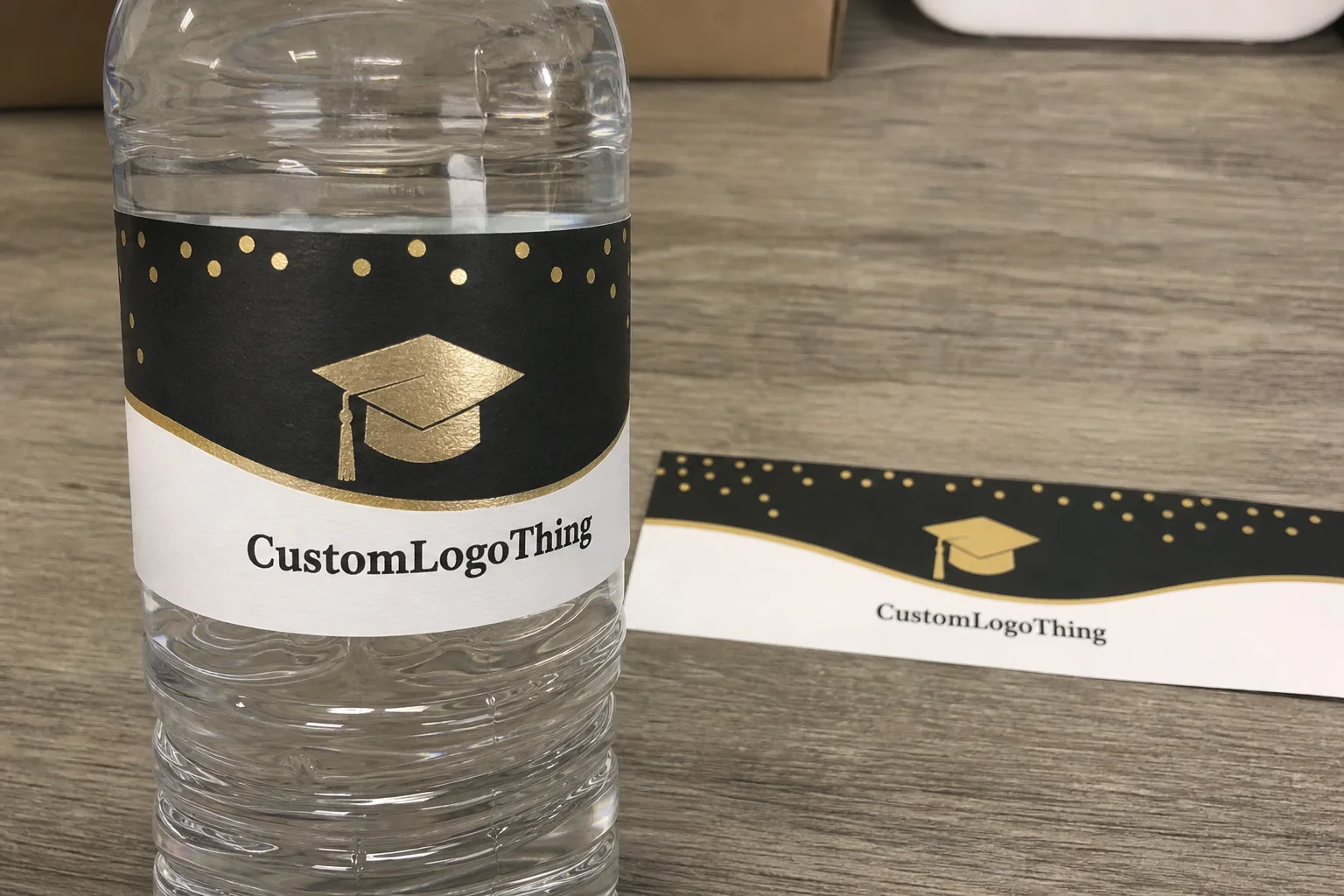
Personalized graduation Water Bottle Labels help a party feel coordinated without adding much labor. Bottled water is visible on tables, in coolers, and at serving stations, so even a simple label creates a stronger event look than a plain bottle. The bottle becomes part of the décor instead of a supply item.
The main advantage is efficiency. Graduation events often need a repeated custom element that can carry the graduate’s name, school colors, class year, date, or a short phrase in a small space. A label does that job well, and it scales cleanly from a few dozen bottles to a few hundred.
The best results come when the bottle is treated like a package, not just a container. Bottles sweat, get handled, and move between room temperature and ice. That means the label must be designed for real use, not just for appearance on a screen. If the stock, adhesive, and size do not match the bottle and the event conditions, the labels can lift, wrinkle, or look uneven before guests are served.
Materials, adhesives, and print choices that affect performance
The label material has a bigger effect on performance than many buyers expect. For dry indoor service, paper labels can be adequate. Once condensation or ice enters the picture, paper becomes less reliable because moisture can soften the surface and weaken the adhesive.
For chilled bottles and repeated handling, film-based stock is usually the better option. BOPP, or biaxially oriented polypropylene, is commonly used because it resists moisture and keeps print detail sharp. It is a practical choice when labels need to survive coolers, ice bins, and setup handling without curling at the edges.
Adhesive choice matters too. A permanent adhesive is usually the safest default for event labels that need to stay put through the full celebration. A removable adhesive can work for short-term use, but it may not grip as well on cold, damp plastic. Smooth bottle surfaces are easier to label than textured or curved ones, so bottle shape should be confirmed before the order is finalized.
Print method and finish shape the final look. Full-color digital printing is common for custom artwork, names, and multiple colors. Gloss finish tends to make colors look brighter and more vivid under indoor lighting, while matte finish reduces glare. Rounded corners can help reduce edge lift, and a clean die cut makes the label look deliberate rather than temporary.
Typical label formats buyers use
- Pre-cut sheets for hand application at home or during event setup.
- Roll labels for faster placement when many bottles need to be prepared.
- Full-wrap labels for complete coverage around the bottle body.
- Front-panel labels for lower cost and a cleaner, simpler display.
Full-wrap labels create the strongest custom look because they cover more of the bottle surface. Front-panel labels are usually less expensive and easier to apply, and they still look polished when the artwork is centered well. The right choice depends on the bottle shape, how visible the bottles will be, and how much custom coverage the buyer wants.
Bottle dimensions should be confirmed before artwork is finalized. Two bottles that look similar can have different curvature, panel width, or shoulder height. A template built for one brand may not fit another brand cleanly, so a quick measurement or confirmed bottle specification can prevent overlaps, gaps, and awkward placement.
For general material and packaging context, the Packaging School and packaging industry resources can be useful if you want a broader view of substrates, print behavior, and packaging performance beyond a single event order.
Pricing factors that change the quote
Pricing is mostly driven by a short list of variables. Quantity is the biggest one. A smaller run usually has a higher unit price because setup, proofing, and finishing are spread across fewer pieces. Larger orders normally reduce the per-label cost even when the design stays the same.
Size also affects cost. A narrow front-panel label uses less material and less print coverage than a full-wrap label. Print complexity matters too. Simple text-and-color layouts are easier to produce than photo-heavy designs, and images with gradients or fine detail may require more careful color handling.
Special finishes increase the total. Soft-touch coatings, gloss varnish, metallic accents, Custom Die Cuts, and rounded corners all add production work. Those upgrades are not necessary for every graduation order, but they can improve presentation if the labels need a more polished look.
Rush timing can change the quote as well. If proofing, printing, and shipment all have to happen in a short window, the schedule becomes tighter and shipping may need to be upgraded. For a fair comparison between vendors, the quote should list the same quantity, size, material, finish, and turnaround.
| Option | Typical use | Common unit range | Notes |
|---|---|---|---|
| Paper label, standard finish | Dry indoor display | $0.10-$0.18 | Works best when condensation is not a concern |
| BOPP film label | Chilled or frequently handled bottles | $0.14-$0.26 | Better moisture resistance and better edge stability |
| Custom shape or specialty finish | Higher-end presentation | $0.20-$0.40+ | Rounded corners, die cuts, and coatings can increase cost |
Those figures are broad, but they reflect how event label pricing usually behaves. Small runs, premium materials, and rush delivery move the number up. Larger runs with standard specs usually lower the unit cost.
Production steps and realistic timelines
A typical order follows a simple path: artwork submission, proof review, approval, printing, finishing, quality check, packing, and shipment. Each step matters. If the artwork is not sized correctly, the label can wrap poorly. If the proof is approved too quickly, a typo or color issue can slip through. If the finish does not match the event conditions, the labels may not hold up once the bottles are cold.
Revisions are one of the most common causes of delay. A misspelled graduate name, a school color that needs adjustment, or a logo file that arrives too small can trigger another proof round. Print-ready files save time, especially when the design uses clean vector art or high-resolution images. Screenshots and compressed web files usually create problems later.
Lead time should include both production and transit. A label that ships on time but arrives the day before the event still leaves little room for sorting or replacement if something needs correction. Planning ahead matters because graduation schedules fill quickly, and bottle labels are often ordered later than they should be.
“The schedule problem usually starts long before printing. It starts when the bottles are chosen late and the labels have to be designed around them under pressure.”
If you want a useful reference point for why packaging durability matters, even for smaller printed pieces, the ISTA testing framework is a solid industry source: ISTA. Event labels are not laboratory-tested in most cases, but the same logic applies. Handling, temperature, and transport all influence how the final piece performs.
How to order with a clean layout and fewer delays
Ordering goes more smoothly when the bottle dimensions are known before the artwork is built. The label area, bottle curve, and service conditions all shape the final layout. A design that looks fine on screen can feel too small or too crowded once it is wrapped around a curved surface.
- Confirm the bottle size and brand. The printable panel can vary even between bottles that look nearly identical.
- Choose the material based on conditions. Use moisture-resistant stock if the bottles will be chilled, iced, or handled often.
- Keep the design clear. A strong name line, one supporting line, and one visual accent usually work better than a crowded layout.
- Review the proof slowly. Check spelling, graduation year, school name, colors, and any logo or photo placement.
- Plan the application process. Clean and dry the bottles first, then apply each label from one edge to avoid bubbles and crooked placement.
Layout discipline matters more than decoration density. A clean design with good spacing usually looks more refined than a label that tries to fit too many messages onto one surface. For graduation events, a name, class year, and school color treatment often carry the whole look. A small photo can work too, but only if the resolution is high enough and the crop is simple.
Font choice deserves attention as well. Thin scripts can disappear at label size, especially on a bottle viewed from a few feet away. Stronger fonts read more clearly on a crowded table, and they hold up better when the label is printed smaller than expected. If a decorative typeface is part of the design, pairing it with a bold secondary line can keep the overall piece legible.
Mistakes that lead to peeling, smudging, or crooked labels
Most label issues are preventable once the bottle conditions are taken seriously. The most common mistake is using standard paper stock on cold bottles. Once condensation forms, paper can start to lift at the edges, and a label that curls even a little can make the whole table look less finished. Moisture-resistant film is usually the safer choice when the bottles will be chilled.
Artwork quality is another frequent problem. A file that looks sharp on a phone screen can still print soft if it was pulled from a screenshot or low-resolution download. School logos are especially vulnerable because they are often copied from web images with too little detail. Vector art is better whenever it is available because it holds clean edges at label size.
Application timing can also cause trouble. Labels applied too early may be scuffed during storage, while labels applied too late can slow down event setup. Bottle switches create another issue. Even if the replacement bottle seems close, a slightly different diameter or shoulder shape can shift the placement enough to look off-center.
There is also proofing fatigue. People often scan the proof, see the right colors and layout, and stop there. The more reliable habit is to read every word again, especially names, dates, and class details. Once the print is approved, every mistake is repeated across the full order.
For broader event branding, Custom Labels & Tags can help keep the bottle look aligned with other printed pieces, but the bottle label itself still needs to match the actual bottle and the actual event conditions if it is going to perform well.
Practical tips for better adhesion, color, and display
If the bottles will be chilled, choose a label stock that is built for moisture. That single decision has more impact than most styling choices. A label that stays flat and clean will always look better than one with curling corners or lifted edges.
Surface prep is simple but easy to overlook. The bottles should be clean and dry before application, and they should not be touched too much once the label is on. Finger oils, dust, and condensation can all interfere with adhesion. If the event setup involves ice tubs or outdoor heat, keep the bottles in a controlled area until the labels are fully applied.
Color presentation also matters. Gloss can make bright school colors feel stronger under indoor lighting, while matte can soften the look and reduce glare. Neither one is automatically better. The choice depends on whether the event is aiming for crisp and vivid or calm and understated.
- Order a few extra labels to cover setup mistakes or last-minute bottle count changes.
- Keep fonts and colors consistent with the rest of the event print pieces.
- Match the label size to the actual bottle profile instead of estimating from photos.
- Use clean, dry surfaces and allow the adhesive to settle before handling the bottles heavily.
Consistency makes a simple beverage station look planned rather than pieced together. When the bottle labels, table décor, and signage all share the same visual language, the whole display feels more polished. That is one of the main reasons these labels work so well for graduation parties: they do not demand much space, but they have a noticeable effect on the room.
Final checklist before you place the order
Before you send an order, confirm the bottle count, bottle brand, label size, and whether the design should wrap fully or only cover the front panel. Those choices affect the layout, the pricing, and the material recommendation. If the bottles will be displayed in coolers or on ice, say so at the start so the correct stock is chosen.
Gather the content that is already finalized: graduate name, school, class year, colors, date, quote, and any approved logo or photo. If the school has brand guidelines, include them. Color matching is easier when the intended shade is clear, and it reduces the chance of a proof that looks close but not quite right. Ask for a quote that lists quantity, size, material, finish, and turnaround in the same place so comparisons are fair.
For buyers who want to think about material responsibility as well as appearance, the FSC site remains a helpful general reference for responsibly sourced paper standards: FSC. Not every label needs a certified paper stock, but it helps to know the available options if recycled or responsibly sourced material is part of the decision.
The simplest way to avoid last-minute pressure is to build a little cushion into the schedule, approve the proof early, and keep the bottle specification fixed once production starts. If those pieces are handled well, the labels can arrive with a clean finish, stay in place through the event, and give the table a coordinated look that feels intentional from the first bottle to the last.
What material works best for personalized graduation water bottle labels?
Moisture-resistant film is usually the safer option if the bottles will be chilled, placed on ice, or handled frequently. Paper can work for dry indoor service, but it is more vulnerable to condensation and edge lift.
How far in advance should I order graduation bottle labels?
Order early enough to account for proofing, printing, shipping, and any corrections. A little extra time helps, especially if the event date is fixed and the bottle labels need to arrive before setup day.
Can I use my own artwork for custom graduation labels?
Yes, provided the file is high resolution and sized correctly for the label template. Vector logos and clean image files usually print better than screenshots or compressed web images.
What affects the unit cost of graduation water bottle labels the most?
Quantity, label size, material, print complexity, and finish are the main cost drivers. Rush turnaround and specialty shapes can also raise the price.
How do I keep bottle labels from peeling at the event?
Apply them to clean, dry bottles and choose a stock that matches the event conditions. If condensation or ice is involved, moisture-resistant material is usually the better choice.