Mini bottles look simple until you try to dress them properly. A label barely larger than a business card has to carry branding, flavor cues, event details, and sometimes legal copy too. That is why personalized mini liquor bottle labels have become such a practical packaging tool: they can turn a standard miniature into something that feels planned, polished, and worth photographing.
From weddings to corporate gifts, the label often does the heavy lifting. It can make a $2 mini bottle read like a curated favor instead of a last-minute add-on. The challenge is not decoration for its own sake. It is getting the size, adhesive, material, and print quality right so the label fits the bottle and still reads clearly from arm’s length.
Why personalized mini liquor bottle labels stand out on small packaging
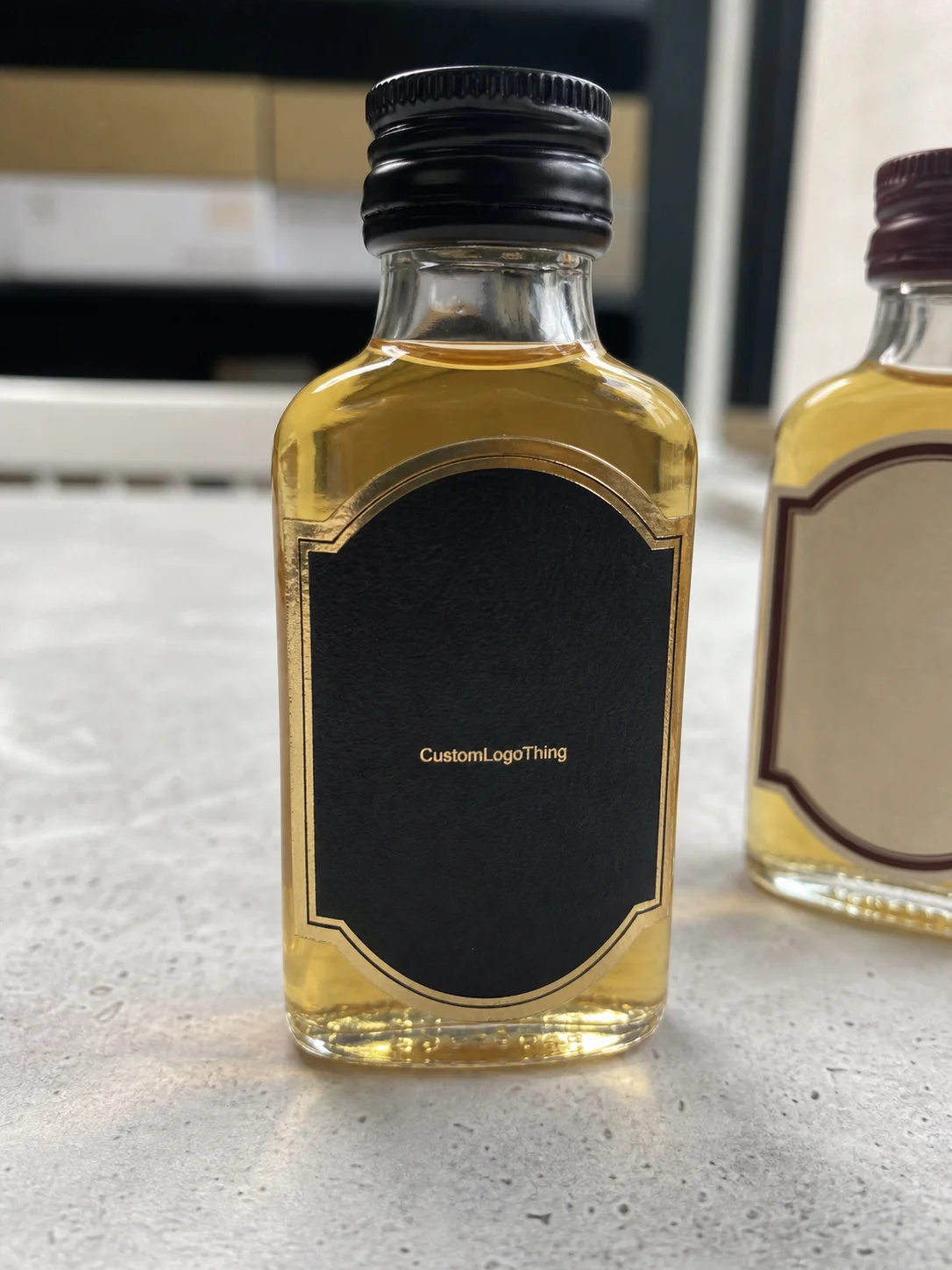
Miniature bottles create a strange kind of branding pressure. The surface area is tiny, but the expectations are not. A label only a few inches wide may need to communicate a name, date, logo, flavor, and event theme in one glance. That is a lot of work for a piece of paper or film that has to survive handling, chilling, and transport.
That pressure is exactly why personalized mini liquor bottle labels can outperform more elaborate packaging ideas. You do not need to redesign the bottle or add a custom carton to make the item feel premium. A well-sized label with strong contrast and clean typography can coordinate the whole favor table. It also photographs better, which matters more than many buyers admit. People post what looks intentional.
In practice, these labels show up in a few recurring scenarios:
- Weddings and bridal showers, where the bottle doubles as a favor.
- Corporate gifting, especially for client events and holiday mailers.
- Tasting kits or sampler packs, where the label supports flavor differentiation.
- Hotel minibars and VIP amenities, where presentation influences perceived value.
- Event favors for reunions, birthdays, and milestone celebrations.
Here is the part buyers sometimes miss: on a small bottle, decorative complexity is not the main factor. Typography, contrast, and adhesive choice matter more than fancy flourishes. A thin script that looks beautiful on a screen can turn into visual noise once it is shrunk to fit a curved glass bottle. Likewise, a glossy finish may look rich under showroom lighting but become hard to read under warm banquet lighting.
“Small packaging punishes weak design faster than large packaging does. If the label cannot be read quickly, it is not doing its job.”
The core question is simple: how do you create a Label That Fits, sticks, and still looks intentional from a few feet away? That is the standard to use before you approve anything.
How personalized mini liquor bottle labels are made and applied
The process usually starts with bottle measurements, not artwork. That order matters. A supplier may offer a template, but the actual flat panel, shoulder curve, and wrap area vary widely between brands. Two 50 ml bottles can look almost identical and still need different label dimensions by a quarter inch or more.
Most orders for personalized mini liquor bottle labels follow a standard workflow:
- Measure the bottle body, curve, and usable panel.
- Choose the label size and shape.
- Prepare artwork or text copy.
- Review a digital proof.
- Approve a sample or test print if needed.
- Print, finish, and ship.
- Apply by hand or in a small production run.
Material choice changes the result more than people expect. A basic paper label can work well for dry indoor events, especially if the bottles are not chilled. A waterproof film is usually the safer pick for cold storage, ice buckets, or condensation. Matte finishes tend to feel more understated and modern. Gloss finishes reflect more light and can make colors look louder. If you need a more premium feel, soft-touch lamination or foil accents can help, but they add cost and complexity.
Curved glass and tapered shoulders create the biggest fit issues. A wraparound label may look tidy on a straight-sided miniature, then wrinkle on a bottle with a pronounced taper. That is why pressure-sensitive labels are common: they are quick to apply, they bond well to smooth glass, and they can be run in smaller batches without special equipment. But pressure-sensitive does not mean “any adhesive will do.” Cold bottles, oily hands, and humid venues all change performance.
Artwork files also matter more at this size. A design can look fine in a preview and still fail in production if the bleed is missing, the safe area is too tight, or the resolution is low. For small labels, vector artwork is usually best, with raster elements at 300 dpi or higher. A tiny typo on a miniature label is far more visible than on a larger carton, because the viewer expects clarity and gets very little space to process.
For buyers who want a broader packaging system, it helps to pair labels with matching accessories. A coordinated favor box, tag, or insert can make the set feel deliberate instead of pieced together. That is where Custom Labels & Tags become useful beyond the bottle itself.
| Label type | Best use | Typical strengths | Watch-outs |
|---|---|---|---|
| Paper | Dry indoor events | Lower cost, easy print quality | Less durable near condensation |
| Matte film | Modern, understated branding | Cleaner look, better moisture resistance | Slightly higher cost |
| Gloss film | Bright displays and colorful artwork | Vivid color, strong shelf presence | More reflective under direct light |
| Waterproof laminated label | Chilled service and transport | Best condensation resistance | Higher unit price |
Key factors that affect cost, pricing, and MOQ
Pricing for personalized mini liquor bottle labels is usually driven by six things: size, material, finish, quantity, color complexity, and setup time. The smallest labels are not always the cheapest per unit. That surprises people. A tiny run may still require proofing, file checks, die setup, and packaging, so the fixed costs do not shrink just because the label does.
As a rough buyer’s range, simple paper mini labels in moderate quantities can land around $0.18-$0.28 per unit at 5,000 pieces, while premium waterproof or foil-enhanced versions can move into the $0.30-$0.60+ range depending on coverage and finishing. Smaller orders often cost more per label. A short run of 100 to 250 pieces may carry a higher per-unit price because setup is spread across fewer labels.
Minimum order quantity, or MOQ, varies by supplier. Some vendors can offer low minimums because they print digitally or keep standard materials in stock. Others need larger runs to keep conventional print equipment efficient. Neither model is automatically better. The right choice depends on your timeline, budget, and how many bottles you are actually using.
Premium finishes deserve a closer look. Foil can elevate the design, but it is best used sparingly on small-format labels. Soft-touch lamination feels excellent in hand, though it may matter less on a bottle that will be handled briefly. Waterproof coatings help preserve adhesion and print quality around cold drinks. The point is value, not just price. Paying more makes sense only if the finish improves the bottle’s performance or presentation.
Request quotes using the exact bottle dimensions whenever possible. A supplier estimating from a “standard mini bottle” is guessing, and guessing usually costs money later. If your bottle has a rounded body or narrow panel, the final label may need to be smaller than you assumed. That can save material and reduce waste.
One more practical comparison:
- Template-based labels are faster and usually cheaper, but less distinctive.
- Fully custom artwork gives better branding control and may justify a higher setup cost.
- Short-run digital printing suits small events or design tests.
- Longer production runs bring the best unit economics if you need volume.
Process and timeline: from proof to delivery
The usual path from quote to delivery is straightforward, but delays stack up fast when details are missing. A realistic sequence looks like this: quote request, artwork submission, digital proof, revision if needed, approval, production, and shipping. If the order includes specialty materials or finishing, the schedule stretches.
For many orders, simple production can move in roughly 12-15 business days from proof approval. Add foil, specialty lamination, or multiple proof rounds, and that window can grow. Shipping time is separate. If your event is fixed, count backward from the day labels must be in hand, not the day you want to start decorating bottles.
Late artwork is one of the most common bottlenecks. So is incomplete information. A supplier cannot judge fit accurately if the bottle dimensions are vague or if the label area includes a taper you forgot to mention. Changes after proof approval are another problem. Once production starts, revisions can mean reprinting. That is where costs creep up.
For event buyers, I recommend building in a buffer for hand application. People often plan for printing, then forget the labor. Applying hundreds of mini bottle labels one by one takes longer than expected, especially if the bottles are cold or the room is busy. If you have volunteers or venue staff doing the labeling, schedule a test batch first so the process feels manageable.
If the bottles are intended for chilled service, test the adhesive against condensation before approving a full run. ASTM and ISTA testing standards matter more for larger packaging systems, but the mindset still applies here: simulate real handling conditions before you commit. Packaging that looks good on a desk can fail in a cooler.
For broader packaging guidance, the EPA’s packaging and sustainability resources and the ISTA testing framework are useful references when durability and transit are part of the brief.
Step-by-step: how to order labels that fit and stick
If you want fewer surprises, keep the ordering process disciplined. Tiny labels do not forgive loose planning.
- Measure the bottle first. Check the flat body area, shoulder curve, and any recessed panels. A bottle with a 1.75-inch usable panel is a different job from one with a 2.25-inch panel.
- Define the label purpose. Is it branding, a gift message, a flavor marker, or an ingredient panel? The purpose controls layout.
- Choose the finish for the environment. Matte for elegant table settings, gloss for vibrant color, waterproof film for cold storage.
- Prepare the copy carefully. Names, dates, and event details need a final human check. Small labels make mistakes impossible to ignore.
- Approve a real proof. A screen preview is helpful, but a printed sample or test label tells you much more.
- Test on the actual bottle. One fit check can prevent a full run of mis-sized labels.
That sixth step is the one many buyers skip. Then they end up with labels that are 1/8 inch too wide, or adhesives that lift after refrigeration. There is no elegant workaround for a bad fit. The sticker either conforms or it does not.
Before placing the order, decide whether you need a label that wraps fully around the bottle or one that sits on a front-facing panel. Wrap labels offer more space, but they are less forgiving on curved surfaces. Front panel labels are simpler, cleaner, and often easier to align by hand.
For brands or events that want multiple packaging components to match, use the same color palette, type family, and finish across the bottle label, insert card, and any add-on tag. That visual repetition does a lot of work. It makes a small package feel considered.
Common mistakes that ruin small-bottle labels
The biggest mistake is trying to cram too much onto a small label. When the space is limited, the design must get ruthless. A logo, a name, and one short line are usually enough. Add too much copy and the label stops reading like branding and starts looking like a laundry list.
Low-contrast color palettes are another trap. Pale gray text on a soft cream background may look tasteful in a digital mockup. On a real bottle, it can vanish. Thin fonts and ornamental scripts do the same thing. They create elegance in theory and frustration in practice.
Buyers also assume all mini bottles are standardized. They are not. One brand may have a smooth cylindrical body; another may have a slight taper or shoulder ridge that cuts into the label area. If you do not measure the exact bottle in hand, you are guessing.
Adhesive mismatch causes its own set of problems. Paper labels may lift in ice buckets. Some films perform well in the fridge but not on condensation-heavy bottles that are handled after a long transport. Even oily fingers during setup can reduce bond strength if the surface is dirty.
Proofing mistakes are equally costly. I have seen buyers approve a label with a typo because they were focused on the design, not the text. I have also seen metallic finishes shift perception enough that the chosen logo color looked darker than expected once printed. A proof is not a formality. It is the last checkpoint before you turn artwork into inventory.
“If the proof is only reviewed on a phone screen, the odds of missing a problem go up. A real bottle mockup is the safer standard.”
Expert tips for a cleaner, more premium result
The cleanest labels usually follow one rule: one focal message per face. That might be a name, a date, a logo, or a flavor cue. Not all four at once. Small packaging rewards restraint. It is easier to make a tiny label feel upscale than it is to make it feel crowded and expensive.
Bold contrast helps more than elaborate decoration. Strong black-on-white, navy-on-cream, or white-on-deep color often reads better than delicate gradients. Keep whitespace generous. On a mini bottle, blank space is not wasted space. It gives the eye somewhere to rest.
Match the finish to the setting. Matte works well for quiet, elegant events. Gloss pops under display lighting. Waterproof film is the safer choice for chilled bottles, transport, and high-touch environments. If the bottles will be stacked, packed, or transported long distances, ask whether the label stock has been tested for abrasion. Packaging buyers often think about print first. Durability matters just as much.
When the bottle shape is unusual, order a small test batch or at least one proof on the exact substrate. That small expense can prevent a larger mistake. If the event is high stakes, the safest route is a mockup on the actual bottle with the final label size before full production.
Finally, coordinate the label with other packaging elements. A mini bottle in a clear box with a tissue insert and matching ribbon does not need an overly busy label. In fact, a simpler label often looks better because the whole set works together. That is the real advantage of personalized packaging: the bottle feels intentional without shouting.
Next steps for planning your mini bottle label order
Start with measurements, quantity, and exact copy. Then decide on one label purpose and one finish direction. That keeps the brief tight and reduces revision cycles. If you already have bottle dimensions, share them with your supplier alongside a photo of the actual bottle. That single image can prevent a surprising amount of back-and-forth.
Before you request pricing, gather these basics:
- Bottle capacity and brand, if known
- Usable label area in inches or millimeters
- Approximate quantity
- Desired finish: matte, gloss, or waterproof
- Artwork files or copy text
- Event date or delivery deadline
If you are comparing options, ask for unit pricing at several quantities. The difference between 100 pieces and 500 pieces can be enough to change the best production route. Also ask whether setup fees, proof revisions, or rush handling are included. That is how you avoid a quote that looks cheap until the add-ons appear.
One last practical point: keep a few extra labels on hand. Misapplied pieces happen. Bottles get scratched. Someone tests a sample and changes their mind. A small overage is much easier to absorb than a shortage the day before the event.
If you are ready to move forward, gather the specs first so personalized mini liquor bottle labels can be priced and produced with fewer revisions. That is the easiest way to keep the process efficient, the bottles consistent, and the final presentation sharp.
What size should personalized mini liquor bottle labels be?
Start with the actual bottle dimensions, especially the flat label area and any curved shoulders. Most mini bottles need a smaller, simplified layout so the text stays readable after application. A test fit on one bottle is the safest way to confirm the final dimensions.
How much do personalized mini bottle labels usually cost?
Price depends on size, quantity, finish, material, and whether the order needs custom artwork setup. Unit cost usually drops as quantity increases, but very small orders can carry higher per-label pricing. Request a Quote using exact bottle measurements to get the most accurate estimate.
Are personalized mini liquor bottle labels waterproof?
Some are, but it depends on the stock and coating or laminate used. Waterproof film is best for chilled bottles, condensation, or cooler storage. Paper labels can work for dry, indoor settings if moisture exposure is minimal.
How long does it take to produce custom mini bottle labels?
Turnaround varies by order size, proof revisions, and finishing choices. Simple label runs move faster than orders with foil, specialty materials, or multiple proof changes. Plan extra time if you need labels applied by hand before an event.
What mistakes should I avoid when ordering mini liquor bottle labels?
Avoid overcrowding the design with too much text. Do not assume all mini bottles share the same dimensions. Always approve a proof and, if possible, test one label on the actual bottle before full production.