What personalized mini tote bags really solve for buyers
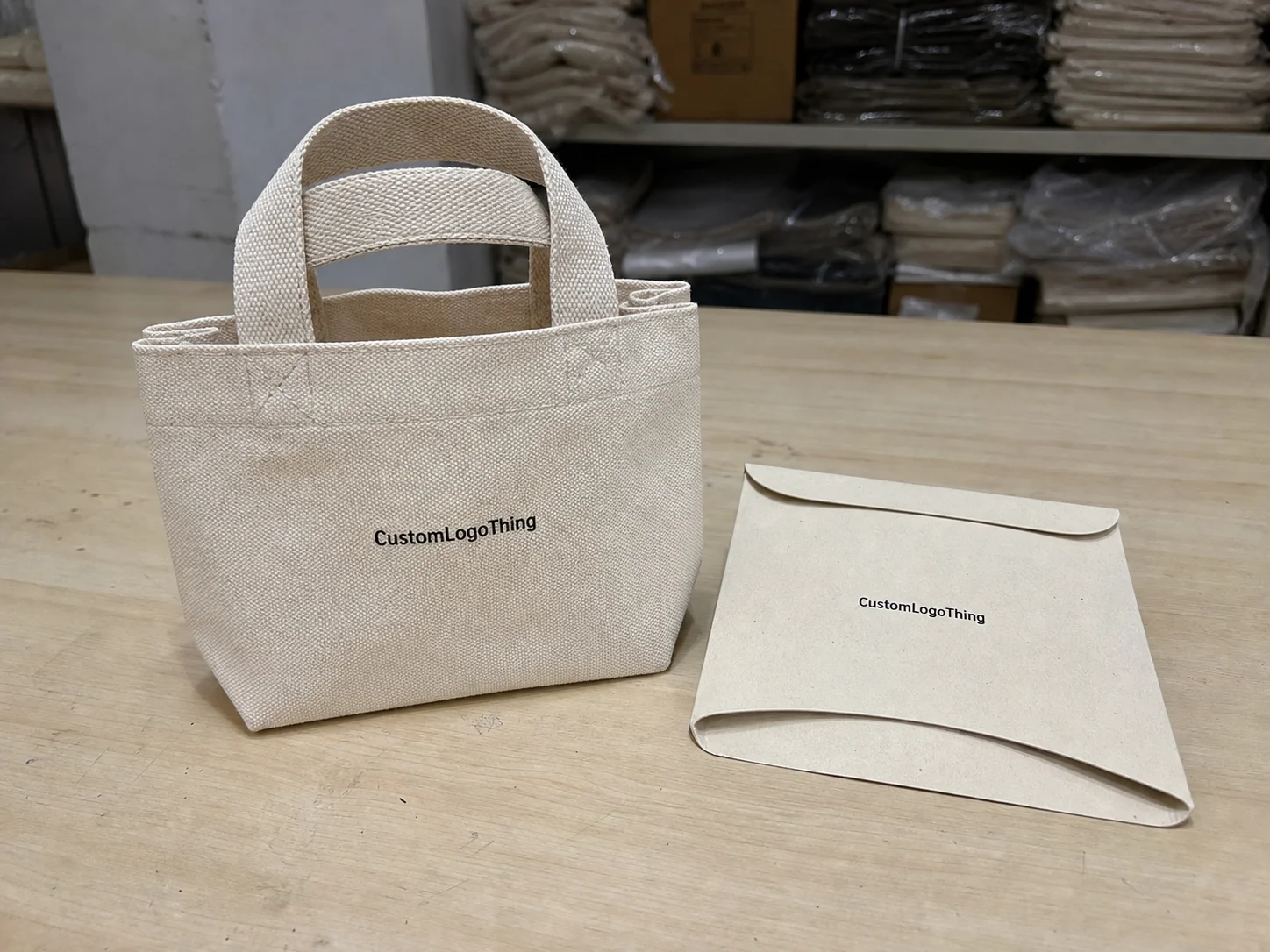
Personalized Mini Tote Bags look straightforward. They are not. The size is small, which sounds easier, but small formats are less forgiving. Every choice shows up faster: the bag size, the handle length, the print scale, the fabric weight, the stitching, even the way the bag sits on a table before someone picks it up.
That matters because a mini tote usually has a job to do in a very specific moment. It might hold a sample kit, a cosmetic bundle, a gift card, a boutique purchase, or a handful of event materials that need to feel more considered than a plain paper bag. The bag is part of the presentation. If it looks too large for the contents, it feels wasteful. If it looks too flimsy, it pulls the entire brand down with it. People notice both.
For buyers, the real value is efficiency with restraint. A compact tote is easier to hand out, easier to carry through a busy venue, and less likely to be abandoned after the event. It also forces better packaging decisions. Teams have to decide what actually belongs in the kit instead of stuffing the bag with filler. That usually improves the whole experience.
The strongest programs use personalized mini tote bags as packaging, not afterthoughts. A well-sized tote can make a small item feel intentional. That effect comes from proportion, not decoration alone. A 6 x 8 x 3 inch bag serves a different purpose than an 8 x 10 x 4 inch bag. Handle drop, gusset depth, seam placement, and fabric density matter just as much as face dimensions because those details determine whether the bag carries cleanly or collapses awkwardly in the hand.
That is the actual buying question: what mix of size, material, print method, and timeline produces a tote that looks deliberate, carries well, and gets reused after the event is over?
How the customization process works from concept to proof
The process usually starts with one decision: stock construction or custom construction. Stock mini totes move faster and cost less because the base bag already exists. Custom dimensions are slower and more expensive, but they solve a real problem if the contents need a tighter fit or a more polished presentation. Forcing the contents to adapt to the bag is how projects go sideways.
Artwork comes next, and this stage is where a lot of weak designs fall apart. Vector files are the safest starting point because they hold sharp edges at small sizes. Tiny type, thin lines, layered gradients, and intricate marks all become risky once they are reduced to fit a compact panel. A logo that looks clean on a monitor can get messy when it crosses a seam or sits close to a gusset fold.
Print method changes the conversation fast. One-color screen print is still the cleanest option for many orders because it keeps the design readable and the cost under control. Full-color transfer or digital print gives more flexibility, but it can change the surface feel and the price. Embroidery can add value on thicker materials, but on a small tote it can become bulky or expensive very quickly. There is no free upgrade. Every method adds tradeoffs.
The proof stage is where disciplined buyers save money. A digital mockup is useful for layout and placement, but it will not always reveal scale problems. If the order is tied to a launch, event, or retail rollout, a physical sample is worth serious consideration. One bad approval on 1,000 bags is far more expensive than a single sample fee. The goal is not perfection. The goal is to avoid preventable mistakes.
Practical rule: if the logo needs to be readable from arm’s length, simplify it before production. Small surfaces punish decorative clutter.
Cost, MOQ, and unit price drivers to compare
The cost of personalized mini tote bags is driven by five variables more than anything else: quantity, material, print method, number of colors, and finishing. Freight matters too. So do insert packing, labeling, and rush service. A quote that looks attractive on paper can get ugly once the real job is added in. Buyers learn that lesson once, then stop trusting the first number they see.
MOQ, or minimum order quantity, changes with bag construction. Stock nonwoven bags may start around 250 to 500 pieces. Custom sizes and heavier materials often push the minimum to 1,000 pieces or more. Comparing a small-run quote against a large-run quote is a common trap. Lower unit price does not automatically mean lower total cost. Setup charges, freight, and packaging can flatten any savings if the quantity is too small or the spec is too custom.
Ask for tiered pricing. A useful quote should show at least three breakpoints, such as 500, 1,000, and 5,000 pieces. That tells you where the real price drop begins. Just as important, ask for landed cost instead of factory cost only. Landed cost includes shipping and any duties or taxes that apply to your route. Without that number, the comparison is incomplete.
| Material option | Typical MOQ | Rough unit price at 5,000 | Best for | Main tradeoff |
|---|---|---|---|---|
| Nonwoven polypropylene | 300-1,000 | $0.35-$0.75 | Trade shows, giveaways, simple retail handouts | Lower perceived value than woven fabrics |
| Cotton | 500-1,000 | $0.85-$1.40 | Brand events, lifestyle programs, reusable packaging | Cost rises with heavier fabric and larger prints |
| Canvas | 500-1,000 | $1.20-$2.20 | Premium gifting, boutiques, elevated retail packaging | More expensive, especially with dense artwork |
| Laminated nonwoven | 300-1,000 | $0.55-$1.10 | Glossy presentation, stronger structure, wipeable finish | Lamination can feel less soft and may limit recycled content claims |
Those numbers are planning ranges, not promises. A one-color print on a stock bag will price very differently from a full-color design on a Custom Canvas Tote with sewn handles and tighter finishing. The useful comparison is the same assumption set across every quote. Otherwise you are comparing apples to bolts of fabric.
A second habit helps more than people expect: ask the vendor to separate setup fees, print charges, packaging charges, and freight. If those are blended into one neat number, you lose the ability to see where the cost is really coming from. Blended quotes are convenient. They are also harder to audit.
Process and timeline: what to expect before delivery
A normal order path is quote, artwork check, proof approval, sample review if needed, production, packing, and shipment. On paper, that is simple. In practice, delays usually happen between proof and approval, or between approval and sample sign-off. Those are the steps that get rushed and then regretted.
For a stock mini tote with a simple one-color print, a realistic timeline is often 10 to 15 business days after proof approval, plus transit time. If the bag is custom-sized, includes multiple print colors, or uses special finishing, 15 to 25 business days is a safer expectation. Add another 5 to 10 business days if a physical sample is required, depending on how quickly feedback moves.
Rush orders can work, but only inside narrow limits. The bag style should already exist, the art should be clean, and the proof should be approved on the first round. Once the order includes multiple decorated panels, color matching, or sewn changes, the schedule gets brittle. It can still happen. There is just less room for correction.
Transit is not an afterthought. It is part of the production calendar. If these bags are going into event kits, build in time for receiving, count checks, and internal distribution. If the order crosses borders, customs can add enough delay to break a launch or event date. For teams that ship fragile or high-value kits, the transit test standards published by the ISTA are a useful reference for compression, drop, and vibration risk.
Artwork delays are another common problem. Missing fonts, low-resolution files, and vague color references can stall production for days. A supplier should catch those issues early, but the fastest orders always start with clean files and one person on the buyer side who can approve changes quickly. More stakeholders sounds safe. It usually slows everything down.
Key specs that affect durability and brand impact
Material choice affects both feel and performance. Nonwoven polypropylene is the budget-friendly workhorse because it is light, easy to print, and inexpensive to ship. Cotton feels softer and more natural. Canvas carries more structure and a higher perceived value. Laminated stock adds stiffness and a glossier finish, though that finish changes the tactile impression. Some brands want that. Some do not.
Fabric weight matters more than many buyers expect. A light bag may look fine in a mockup, then start stretching once real contents go in. For cotton or canvas, heavier fabric usually improves shape retention and reduces the chance that the bag sags after a few uses. For nonwoven material, density affects how crisp the bag feels in the hand and how well it holds a panel print. None of this is cosmetic. It affects how the brand is judged when the item is carried around.
Size is not just a visual issue. It is a usability issue. A mini tote with a narrow gusset may look neat, but the real test is whether it can hold the contents without bulging or collapsing. Handle length matters too. A short handle gives a compact, gift-like feel. A longer drop is easier in a crowded venue or retail setting. If the bag will be reused, comfort matters more than people expect.
Print placement deserves serious attention. Centered logos read quickly and usually work well on smaller formats. Top-left placement can look retail-forward, but it can disappear if the bag is busy or the mark is too small. On dark substrates, high-contrast art performs better than delicate detail. On light bags, oversized type often reads better than a thin elegant mark that looks great on screen and weak in the hand.
For buyers with sustainability requirements, material documentation belongs in the spec sheet, not in a follow-up email. Not every tote should be treated as disposable. The U.S. Environmental Protection Agency’s materials guidance at epa.gov/smm is a useful reminder that reuse and end-of-life planning matter. In practice, the more useful the bag feels, the more likely it is to stay in circulation.
Think in this order: contents first, structure second, decoration third. If the bag cannot carry the load well, the print will not rescue it.
Common mistakes that waste budget or weaken results
The most expensive mistake is usually the simplest one: artwork that is too detailed for the print area. Fine lines, tiny registration text, and multi-shade gradients can all turn muddy on a small tote. The fix is not always a better printer. Often the fix is a cleaner logo.
Another common error is pricing the bag before pricing the use case. A mini tote for a beauty sample set needs a different spec than one meant to hold folded apparel or a boxed snack kit. If the bag is too light for the contents, the handles stretch, the seams take too much load, and the brand looks careless. If it is too heavy for the need, the budget gets hit for no real gain.
Cheapest quote? Usually incomplete. The missing line item is often freight, setup, or a second color charge that appears after proof approval. Buyers Should Ask for the full bill up front. The real comparison is not unit price. It is unit price plus every cost required to get the bags into the right building on time.
Approval mistakes can be just as damaging. People sign off on artwork without checking the actual dimensions, then discover the logo is too small to read or the gusset hides part of the design. Others approve a sample that looks fine on a screen but does not match the texture, handle feel, or print density they expected.
- Do not overstuff a tiny bag spec just because the artwork exists.
- Do not assume a low MOQ means low total cost.
- Do not treat transit time as guaranteed.
- Do not approve a proof until the contents, dimensions, and print scale are checked together.
Expert tips and next steps for a stronger order
The fastest way to improve a quote cycle is to send a short but complete spec sheet before asking for pricing. Include bag size, material, handle style, print method, quantity tiers, deadline, and target budget. If the supplier has to guess, the quote will be fuzzy. Then everyone wastes time pretending otherwise.
I also recommend asking for three volume levels every time. The price break may happen earlier than expected, or it may not show up until a much larger run. Either way, you learn something useful. That is better than a vague promise that the unit price will improve somehow.
For higher-value retail programs or event kits, request a sample or at least a detailed digital mockup with dimensions marked clearly. A bag can look cheap or premium depending on details that are easy to miss in a quick proof. Stitching, seam placement, logo scale, print opacity, and handle finish all change the final read.
QC should not be an afterthought either. Before approval, check the exact print position against the bag panel, verify color expectations with a reference code or swatch, confirm handle attachment strength, and ask whether the seams are reinforced at stress points. A bar-tack on the handle can matter more than another color pass. That is the kind of detail that keeps a mini tote from failing at the one moment it is actually used.
Here is the order of operations I would use:
- Define the contents first.
- Match the bag dimensions to those contents.
- Select the material based on weight, reuse expectations, and budget.
- Choose the simplest print method that supports the design.
- Compare landed cost across at least three price tiers.
- Approve the proof only after the scale and placement are checked against the real item.
That approach is methodical because it has to be. The payoff is fewer surprises, fewer reprints, and a tote that does the job it was hired to do. If the order needs to feel polished rather than promotional, personalized mini tote bags should be treated as part of the product itself, not as a bonus item stapled on at the end.
Frequently Asked Questions
What size works best for personalized mini tote bags?
Most buyers choose a compact size that fits samples, small retail items, or gift sets without leaving a lot of empty space. A practical starting point is 6 x 8 x 3 inches to 8 x 10 x 4 inches, then adjusting handle drop and gusset depth to match the contents.
How much do personalized mini tote bags usually cost?
Price depends on quantity, material, print colors, and whether setup or finishing charges apply. A small run of simple nonwoven bags can land well below a premium cotton or canvas order, so ask for tiered pricing and a landed-cost estimate before comparing vendors.
What turnaround should buyers expect for mini tote bags?
A straightforward order may move from proof approval to production in roughly 10 to 15 business days, with more complex constructions taking longer. If you need a sample, a custom size, or a tight event deadline, build in extra buffer for revisions and transit.
Which materials are best for reusable mini tote bags?
Nonwoven polypropylene is common for budget-friendly promotions, while cotton and canvas usually feel more premium and invite reuse. The best option depends on the weight of the contents, the expected lifespan, and the brand image you want associated with the bag.
What artwork files are best for custom mini tote bags?
Vector files are the best starting point because they keep logos sharp at small sizes and across different print methods. Use high-contrast art, simplify fine detail, and make sure the logo still reads clearly when scaled down to fit the tote panel. If readability matters more than decoration, personalized mini tote bags reward restraint.


