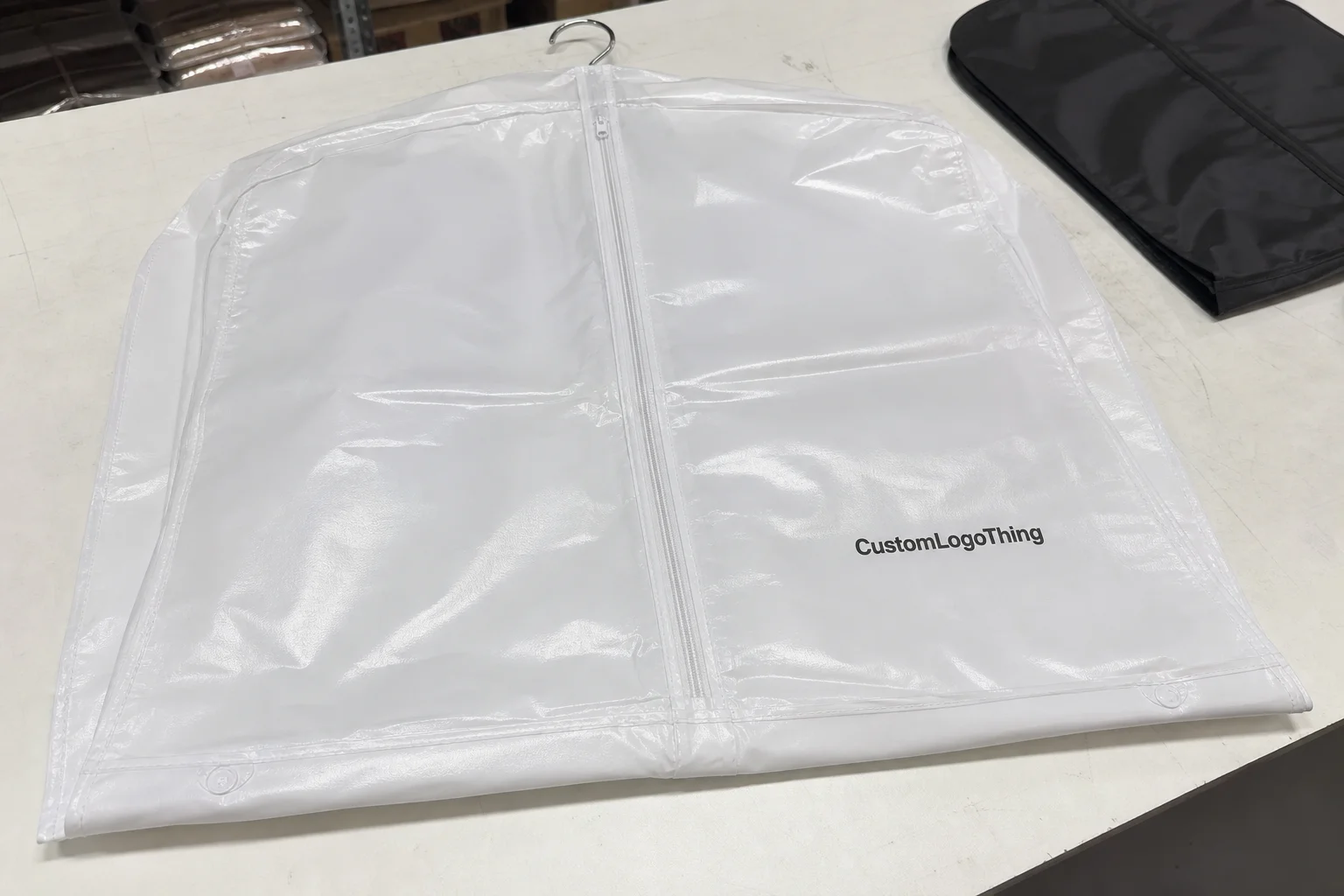
Personalized monogrammed garment bags do more than cover clothing. They block dust, reduce scuffing, and keep garments easier to handle, but they also carry a quieter job: they signal that a brand cares about the details customers notice before they consciously register them. That matters in bridal retail, hospitality closets, premium uniform programs, and any setting where the garment itself is expensive, delicate, or simply expected to look spotless.
The interesting part is that the artwork is usually not the hardest decision. Buyers often spend the least time on the area that matters most: material thickness, hanger access, closure style, and print method. A monogram can look elegant on a proof and still fail on the finished bag if the film wrinkles, the print sits too close to a seam, or the hanger opening is incompatible with the hangers already in use.
That is why these bags deserve a closer look. They sit at the intersection of packaging and utility, which means the best choices are not always the most decorative ones. A clean, well-made bag can elevate presentation without drawing attention to itself. A poorly specified one does the opposite, and it does so fast.
Why personalized garment bags punch above their weight
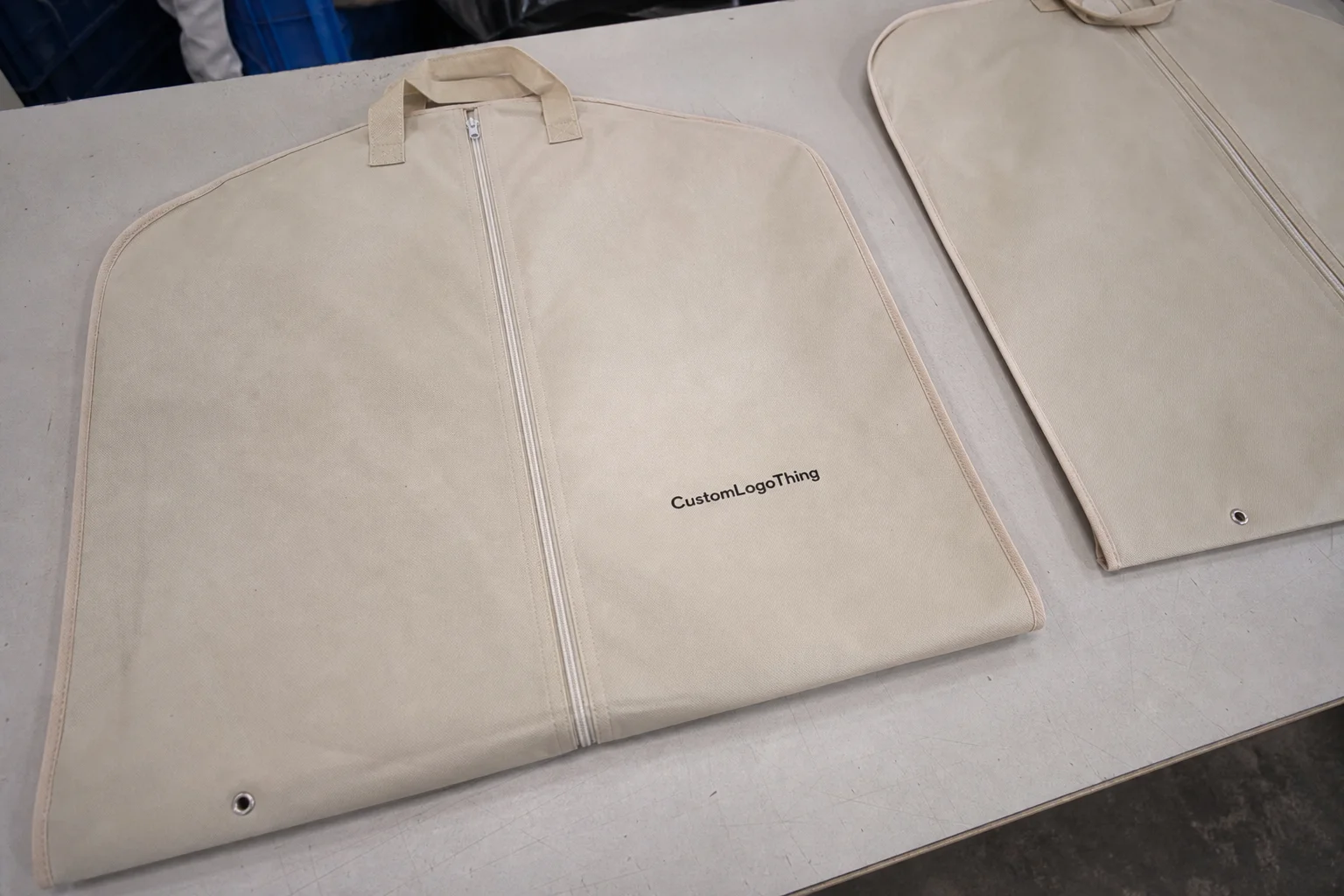
A garment bag is a basic item on paper. It keeps clothing clean, makes transport easier, and helps reduce wrinkles and accidental damage. Yet branded packaging changes the equation. A plain sleeve looks temporary. A personalized sleeve looks planned.
That difference is visible in the retail environment immediately. In a boutique or bridal shop, a bag with a centered monogram or small logo makes the garment feel handled with care. In hospitality, branded storage helps housekeeping, valet, and concierge teams present items more consistently. In uniform programs, personalized bags help organize inventory while keeping a professional appearance.
Most buyers assume the winning design is the most elaborate one. In practice, restraint usually works better. A single-color monogram or wordmark is often easier to read, more cost-efficient to produce, and less likely to look dated. On clear or frosted film, the material already does part of the visual work, so the branding does not need to compete with it.
That is where personalized monogrammed garment bags stand out. They make practical storage feel intentional without turning the bag into a billboard. The best versions are familiar from across the room and unremarkable up close, in the best possible way.
A strong garment bag should protect the product first and support the brand second. When it does both, buyers stop thinking about the bag and start noticing the presentation.
How personalized monogrammed garment bags are made
Production begins with the substrate. Suppliers commonly work with LDPE, LLDPE, and PP films, plus recycled-content blends or fabric-based alternatives depending on the buyer's policy, clarity needs, and budget. For film bags, a typical thickness range is 60-120 micron, or about 2.4-4.7 mil. For reusable fabric covers, common weights are 120-180 gsm for nonwoven and 150-220 gsm for cotton twill. Material selection drives feel, drape, stiffness, and print behavior. A bag that feels slightly heavier in hand usually hangs better and shows branding more cleanly because the surface lies flatter.
After the material is chosen, sizing comes next. Suit-length, dress-length, gown-length, and travel-length bags each solve different problems. Standard sizes often fall around 24 x 54 in, 24 x 60 in, 24 x 64 in, and 24 x 72 in, with gussets ranging from 3 to 8 in depending on volume. Then the artwork is prepared, the proof is built, and the printing method is selected. Finally, the bags are cut, sealed, inspected, and packed.
For personalized monogrammed garment bags, the customization method usually falls into a few categories. One-color printing is the most common because it keeps setup simple and unit cost manageable. Multi-color printing adds complexity and can require tighter registration, which means more opportunities for visual drift if the supplier's process is loose. Some buyers prefer embroidered patches, woven labels, or a reserved logo panel instead of a bold front print. For fabric covers, embroidery thread count and stitch density matter; too dense and the fabric puckers, too loose and the logo looks soft.
Artwork quality matters more than buyers expect. A clean vector file in AI, EPS, or vector PDF format is the standard starting point. Thin scripts, tiny details, and fuzzy screenshots often translate poorly to translucent film. If the logo must be simplified to print well, that usually needs to happen before production, not after the first sample. For film printing, a safe minimum stroke weight is usually 0.35 mm, and small text below 5 pt often becomes unreadable once sealed or folded.
The process itself is straightforward:
- Confirm bag size, material, closure style, and whether the bag needs a gusset, vent hole, or hanger opening.
- Submit artwork or monogram layout in vector format.
- Review a digital proof with placement, size, and color callouts.
- Approve print placement, seal lines, and zipper or snap details.
- Run a pre-production sample if needed, then production, inspection, and packing for shipping.
What changes the outcome is not the sequence but the discipline behind each step. A thicker film can improve print sharpness and reduce tearing. A looser film may cost less, but if it wrinkles around the logo area, the finished presentation suffers. This is the kind of difference buyers only notice after they compare samples side by side.
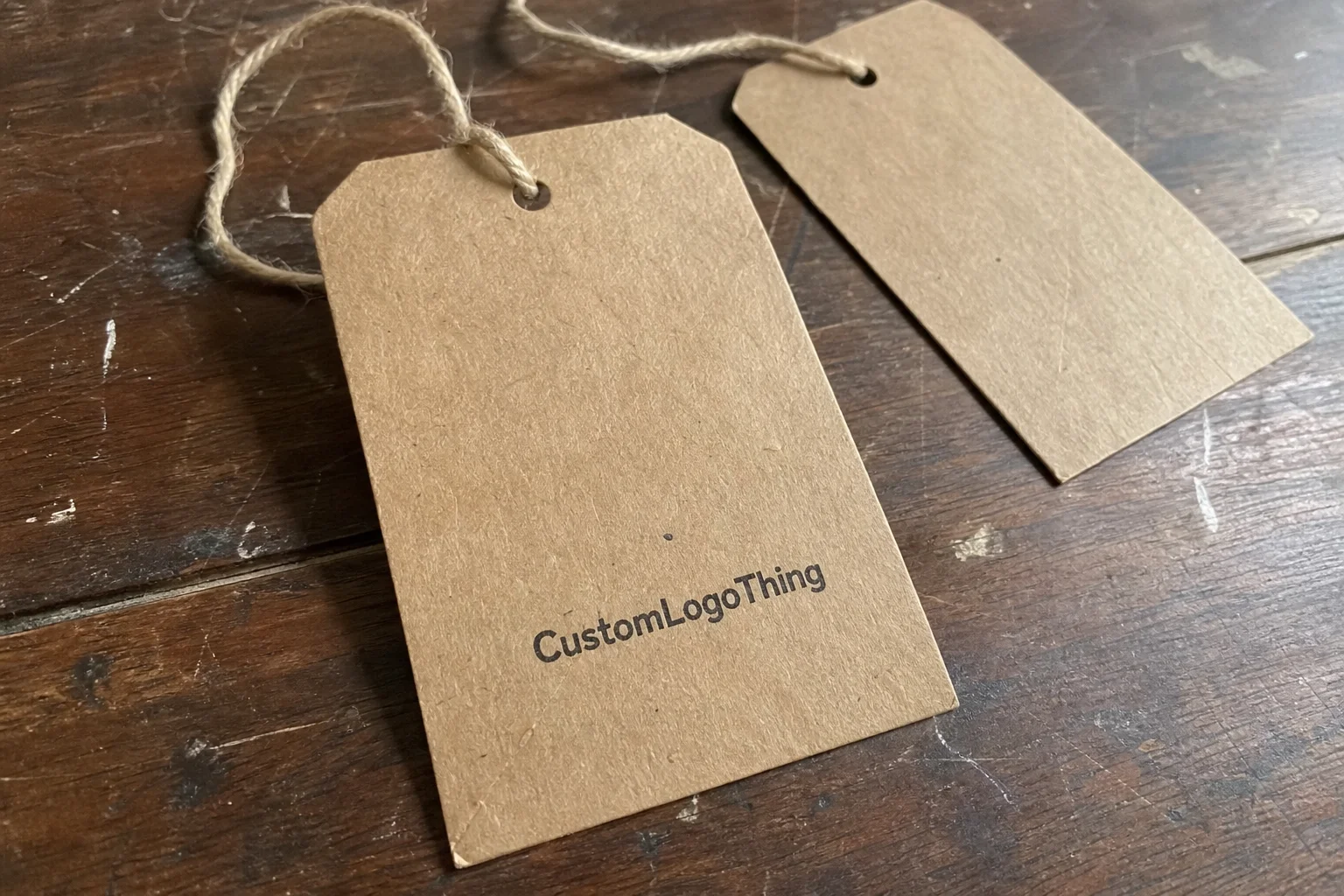
If the bag uses textile components, buyers should ask for real compliance documents rather than generic promises. GOTS is relevant for organic cotton covers and sewn textile programs, OEKO-TEX Standard 100 is useful when buyers want testing for harmful substances in textile components, GRS supports recycled-content claims, and WRAP or BSCI are common social compliance references for factory audits. For paper inserts, hangtags, or shipping cartons, FSC can be relevant, but it does not apply to plastic film itself.
Key factors that affect fit, finish, and branding
Size is the first filter, and it is the one most often guessed at rather than measured. A short bag can crush hems. A long bag can waste material and push shipping costs up for no benefit. That is especially noticeable with gowns, coats, and layered uniforms, where a few inches make a real difference in whether the bag hangs naturally or bunches awkwardly at the bottom.
Material selection usually comes down to LDPE, LLDPE, PP, and fabric-based options, with recycled-content versions entering the conversation more often than they did a few years ago. LDPE is flexible and usually cost-friendly. PP tends to feel crisper and can hold a flatter presentation. Recycled-content film can work well, but buyers should ask for samples because clarity and consistency vary by resin blend. If the program includes reuse and laundering, a sewn fabric bag with a zipper and hanger opening can be more durable than a thin disposable sleeve.
Print placement is another quiet decision with a large visual impact. A centered monogram reads differently from a corner mark. A small logo near the hanger hole can feel understated and refined. Repeated branding down the front has a more retail-forward look, but it also raises the risk of visual clutter if the film is too light or the artwork is too busy. Matte and foil effects can look sharp, yet they only work when the substrate supports them cleanly. For clear or frosted film, white, black, and metallic silver are the most reliable print colors because they hold contrast better.
Several practical details deserve more attention than they usually get:
- Hanger hole style and whether it matches the hangers already in use
- Closure type, such as zipper, flap, or open-bottom design
- Venting for airflow and reduced trapped moisture
- Gusset depth for fuller garments and layered pieces
- Anti-dust protection for both storage and transport
Fit and Finish are where a bag earns its keep. A garment bag meant for presentation should prioritize clarity, print precision, and a clean surface finish. A bag meant for back-of-house use needs more emphasis on durability, closure performance, and easy handling. The right choice depends less on aesthetics than on how often the bag is opened, moved, stacked, and reused.
| Bag style | Best for | Typical material feel | Common tradeoff |
|---|---|---|---|
| Clear or frosted hanging bag | Retail display, bridal, hotel closets | 60-90 micron LDPE or LLDPE, light to medium stiffness | Clean presentation, but can show wrinkles and scuffs |
| Travel-length garment bag | Frequent transport, staff use | 50-80 micron PP or flexible laminated film | Easier to carry, but less formal in appearance |
| Gown or suit-length bag with gusset | Bridal, formalwear, uniforms | 80-120 micron LDPE/LLDPE or 160-220 gsm fabric | Higher unit cost and more storage space required |
| Recycled-content bag | Brands with sustainability targets | 30-100% post-consumer or post-industrial recycled content, varies by blend | Performance depends on resin consistency |
For buyers who want a general reference point on fiber sourcing and packaging claims, the FSC system can be useful for paper-based components, while textile bags may be better evaluated through GOTS, OEKO-TEX Standard 100, and GRS depending on the material. The right certification depends on what the bag is actually made from, not on the logo the supplier uses in a brochure.
Cost, pricing, and MOQ basics
Pricing for personalized monogrammed garment bags usually depends on material, bag size, print colors, closure type, and order volume. For a basic clear PE bag with one-color print, buyers often see pricing around $2.50-4.00 per unit at 500 MOQ. Heavier gusseted bags, recycled-content builds, or fabric covers with zippers usually move into the $4.50-8.50 range at the same quantity. Small runs below 300 units are possible, but the per-unit price can rise by 20-40% because setup, cutting, and print screening are spread across fewer pieces.
MOQ depends on construction. Simple film bags are commonly offered at 300-500 pieces per design, while more customized sizes, printed gussets, or multi-color artwork often start at 500-1,000 pieces. Embroidered fabric covers may be available at 200-300 pieces, but that usually assumes a limited color palette and a straightforward logo. If the bag needs custom hardware, like a premium zipper pull or reinforced hanger opening, the MOQ can climb to 1,000 pieces or more.
Sampling has its own cost structure. A digital proof is usually included, but physical samples can run $35-120 depending on the material and print method. A pre-production sample often costs $60-180 because it is made with the real setup, real material, and real finishing steps. Buyers should expect a sample lead time of 3-7 business days for a blank or mockup sample and 7-12 business days for a printed pre-production sample.
One more cost detail matters: freight. A lightweight film bag sounds inexpensive until packaging density, carton size, and shipping mode are added in. Flat-packed bags can ship efficiently, but oversized garment bags with gussets or rigid inserts can increase carton volume quickly. In practice, a supplier quote should always separate unit price, sampling fee, tooling or plate cost, and shipping so the buyer can compare apples to apples.
| Order type | Typical MOQ | Typical unit price | Notes |
|---|---|---|---|
| Basic one-color PE bag | 300-500 pcs | $2.50-4.00 | Best for simple branding and fast repeats |
| Gusseted printed bag | 500-1,000 pcs | $4.50-6.50 | More material, better shape retention |
| Recycled-content or premium finish bag | 500-1,000 pcs | $5.50-8.50 | Higher consistency checks and stricter input control |
| Fabric garment cover with zipper | 200-300 pcs | $6.00-12.00 | Depends on GSM, embroidery, and closure hardware |
Process and timeline: from artwork to delivery
The cleanest projects move through the same sequence every time: specification, proofing, sampling, production, inspection, and shipment. What changes is the timing. A standard one-color film bag with approved artwork can usually move from confirmation to dispatch in 18-22 business days. More complex projects, including embroidery, recycled-content verification, or multi-color print, often take 25-35 business days.
The proof stage usually takes 1-2 business days if the artwork is ready. If the supplier needs to redraw the logo, adjust the monogram, or simplify small text, that can add another 1-3 days. Buyers who want fewer delays should submit vector files, Pantone references if color matters, and a marked-up size spec that lists height, width, gusset depth, and logo position.
A typical sample path looks like this:
- Submit artwork and bag spec.
- Receive a digital mockup within 24-48 hours.
- Approve size and print placement or request edits.
- Order a blank or printed sample if needed.
- Approve the pre-production sample before mass production starts.
Inspection should not be left to a single end-of-line glance. A solid quality plan checks incoming material thickness, print registration, seal width, seam integrity, zipper function, hanger opening size, and carton count. For film bags, a practical registration tolerance is usually within 1 mm and logo placement within +/- 3 mm. For sewn bags, buyers should also check stitch density, thread trimming, and corner reinforcement. A simple zipper test should include at least 10 open-close cycles on each sample lot to catch drag or misalignment early.
Packaging also deserves a checkpoint. Bags should be counted by bundle, then by carton, then by master case. The carton label should match the PO, size, color, and pack count. If the bags are going into retail or hospitality programs, buyers should ask for a final visual sort so scratches, ink smears, dust contamination, and miscuts are removed before shipment.
Common mistakes buyers make with custom garment bags
The most common mistake is choosing the bag around the logo instead of the garment. A monogram that looks beautiful on screen may fail if the bag is too short, too thin, or too stiff for the item it needs to protect. The garment should dictate the structure first, and the artwork should adapt to that structure.
Another frequent error is underestimating how much film or fabric color changes the final print. A white logo on clear film can read sharply, but the same logo on frosted film may soften. Metallic prints can look premium in proofs and muted in production if the substrate is too glossy or too thin. Buyers should always ask for a hard sample, not just a digital mockup, before approving a large run.
Skipping spec details is another easy way to create avoidable problems. If the buyer does not specify zipper direction, hanger opening size, vent placement, or gusset depth, the supplier will fill in the blanks with a standard construction. Standard is not always wrong, but it is often not what the user needs.
Here are the missteps that create the most friction downstream:
- Using low-resolution artwork or screenshots instead of vector files
- Choosing a bag length without measuring the actual garment on hanger
- Ignoring closure type and hanger compatibility until the sample arrives
- Approving a color on-screen without checking a physical sample
- Not confirming whether recycled-content or textile certifications are actually documented
The last point matters more than many buyers realize. If the supplier claims OEKO-TEX Standard 100, GOTS, GRS, WRAP, or BSCI alignment, buyers should ask for current documentation that matches the exact material and production site being quoted. Certifications are useful only when they apply to the product being ordered.
Expert tips for better-looking custom monogram bags
Use fewer colors than you think you need. One-color branding often looks more premium than a crowded multi-color mark because it lets the material and the silhouette do the work. In garment packaging, the shape is part of the visual identity, so the logo should support the form rather than compete with it.
Keep the artwork away from high-stress areas. Logos placed too close to seams, zippers, or hanger holes are more likely to distort during sealing, stitching, or handling. A safe rule is to leave at least 12-15 mm of clearance from heat seals and 10-12 mm from stitched edges. That buffer helps the bag stay visually clean after packing and transit.
Specify the finish as carefully as the size. Clear, frosted, matte, and semi-gloss film each change the way ink sits on the surface. For a crisp monogram, a slightly heavier film with a flatter lay usually beats a very thin glossy film. If the project uses embroidery, choose a stable base fabric and ask for a sample stitch-out to verify density and thread sheen before mass production.
If the bag will be reused, ask for durability rather than just appearance. That means checking seam strength, zipper smoothness, and whether the hanger opening tears when the garment is pulled on and off the rack. If the bag is for presentation only, then visual cleanliness and dust protection may matter more than long-term abrasion resistance.
A strong buyer brief usually includes these four items:
- Exact garment dimensions on hanger
- Target material and thickness or GSM
- Logo file, size, and placement reference
- Required certifications or audit documents, if any
Next steps for ordering the right bag
If you are ordering personalized monogrammed garment bags for the first time, start with the garment, not the artwork. Measure the tallest item that will live in the bag, note the hanger width, and decide whether the bag needs a gusset. Then choose the material based on whether the bag is for retail presentation, transport, storage, or repeated reuse.
After that, set the practical guardrails: target MOQ, acceptable unit price, desired timeline, and any certification requirements. A buyer who knows they need GRS for recycled-content claims, OEKO-TEX Standard 100 for textile safety testing, or WRAP/BSCI for social compliance can filter suppliers quickly instead of discovering gaps after the sample stage.
Once the spec is written, ask for a digital proof, a physical sample if the construction is new, and a production timeline that names the lead time in business days rather than vague weeks. The most useful quote is the one that clearly separates material, print, sample, tooling, and freight so the project can be compared accurately.
The cleanest outcome is usually the simplest one: a well-fitted bag, a restrained monogram, a verified material, and a supplier who can show exactly how the bag will be made before the first production run begins.
FAQ
What is the best material for personalized garment bags?
For disposable or low-cost programs, LDPE or LLDPE film around 60-90 micron is common. For a crisper look, PP can work well. For reusable covers, 120-180 gsm nonwoven or 150-220 gsm cotton twill is a stronger choice.
What MOQ should I expect?
Most simple printed film bags start at 300-500 pieces. More customized sizes or recycled-content builds often start at 500-1,000 pieces. Fabric garment covers with embroidery can sometimes begin at 200-300 pieces.
How long does production take?
A standard run usually takes 18-22 business days after approval. Complex orders, including embroidery, multi-color print, or special recycled-content documentation, often take 25-35 business days.
Which certifications matter?
For textile bags, GOTS, OEKO-TEX Standard 100, and GRS are the most relevant depending on the material. WRAP and BSCI are common factory audit references. For paper inserts or cartons, FSC can be relevant. Buyers should only accept certificates that match the exact material and production scope.
What should I check on a sample?
Check bag length, hanger opening, closure function, logo placement, print clarity, seam or seal quality, and overall drape. For film bags, confirm the print sits at least 10-12 mm from stress points and that the logo stays within about 1 mm of the approved placement.
Can I get a custom monogram without paying for a full logo setup?
Often yes. Simple one-color monograms can use a basic print plate or screen setup, which keeps costs lower than multi-color graphics. The final price still depends on size, material, and order volume.