When a Garment Bag Costs Less Than a Return
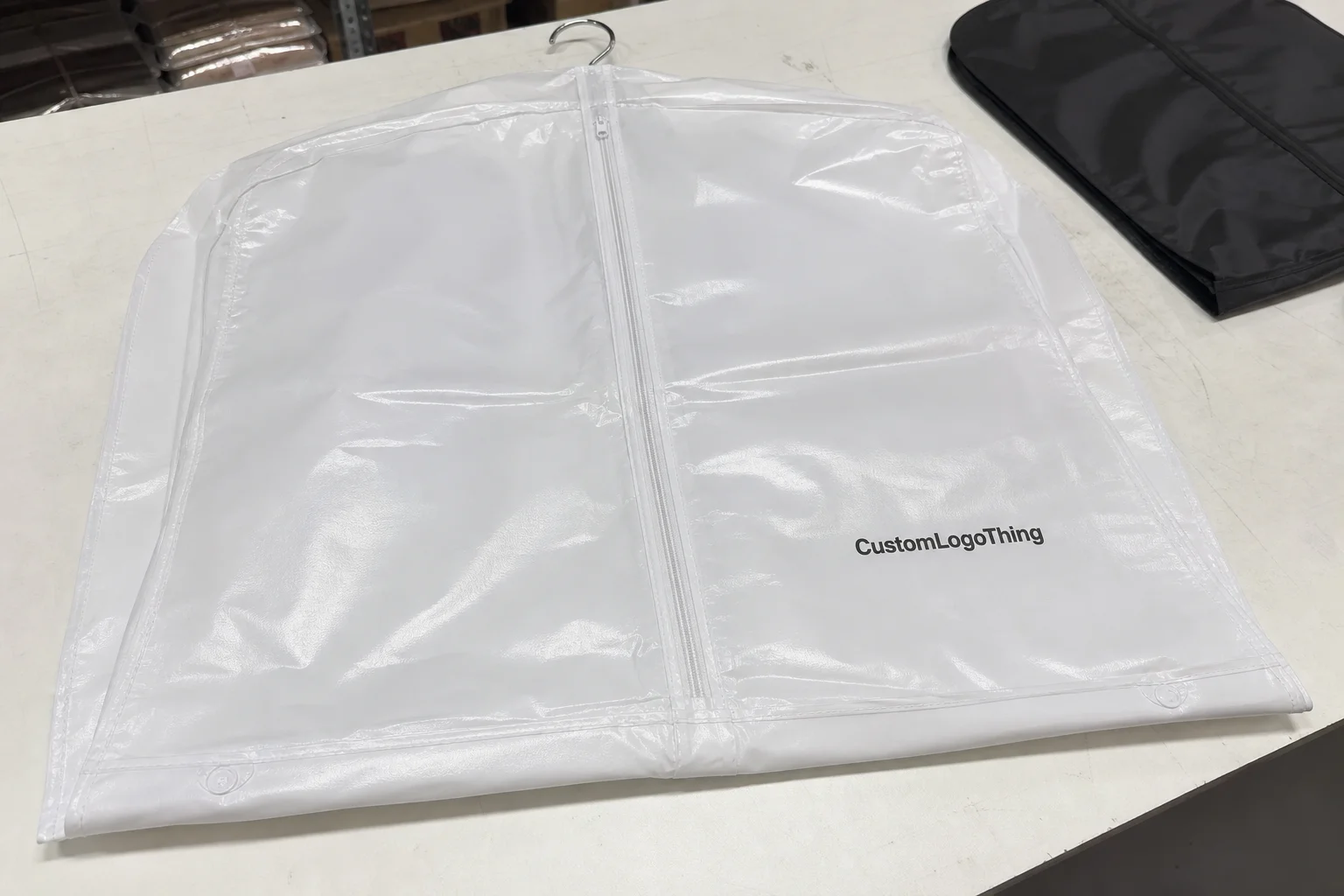
One crushed suit shoulder, dusty formalwear delivery, snagged bridal hem, or torn zipper cover can cost more than the bag that should have protected it. That is why a heavy duty garment bags Unit Cost Breakdown deserves attention before purchasing starts. On a spreadsheet, the bag may sit under packaging. On the floor, it behaves more like risk control for apparel brands, dry cleaners, uniform suppliers, costume departments, bridal shops, tailors, and e-commerce garment shippers.
A heavy duty garment bag protects presentation. It reduces rework. It helps staff move garments faster during peak pickup windows, dressing-room prep, or packing runs. But that value only appears when the specification matches the garment and the handling path. Film gauge, finished width, finished length, side gusset depth, hanger opening, venting, closure type, print coverage, and carton pack all affect performance.
Cheap can become expensive quickly. A bag 2 inches too narrow may strain across coat shoulders. Film that is too light may split at the hanger slit during delivery. A high-coverage logo printed without enough cure time, surface treatment, or the right ink system may scuff when bags are bundled tight in cartons. These are not rare failures. They are the ordinary problems buyers try to eliminate before a second production run.
The goal is not to buy the thickest bag available. That is one of the more common purchasing mistakes. The sharper move is to understand the cost structure, decide which features matter for the garment and workflow, then remove details that do not improve protection, speed, or presentation.
Buyer rule: compare the bag price with the cost of a damaged garment, a replacement shipment, a delayed fitting, or a poor counter handoff. The math changes fast.
Product Details That Change Performance and Price
Most custom poly garment bags use LDPE, LLDPE blends, or a related polyethylene structure. LDPE has a soft, flexible feel and good clarity, which helps in counters, stockrooms, and retail pickup areas where staff need to identify garments quickly. LLDPE blends can improve puncture resistance, tear resistance, and stretch under hanger stress. That extra toughness matters with coats, gowns, uniforms, and multi-piece sets.
Clear film supports inventory checks. Frosted film gives a more private, finished look while still showing the garment shape. Tinted or opaque film can make sense for branded retail programs or privacy-sensitive deliveries, but it can slow visual sorting if the team relies on fast garment identification.
Gauge matters because garment bags have a large film footprint and hang from a concentrated stress point. A moderate gauge may work for lightweight shirts, blouses, or single dry-cleaning pieces. Heavier garments usually need stronger film so the hanger slit, shoulder area, and side seals hold up during loading, rack movement, delivery, and customer pickup. Cost per piece tells only part of the story. The harder test is what happens after 500 bags are pulled from the carton and used on a busy floor.
Construction changes both speed and price. Flat garment bags are simple and economical for slimmer items. Side gusset garment bags create extra depth for coats, gowns, padded shoulders, boxed garment sets, or uniforms with bulk at the sleeve. Bottom-sealed bags, open-bottom bags, perforated roll bags, wicketed bags, and loose bundled bags each fit a different packing rhythm. A dry cleaner usually wants fast loading. A premium retailer may care more about a polished handoff. A uniform supplier may need repeatable handling across thousands of nearly identical pieces.
Closures deserve more attention than they usually get. An open bottom is simple, fast, and low cost. An adhesive flap adds containment, but it also adds material and process cost. Zipper-style closures, snap closures, reinforced hanger slits, die-cut hanger holes, vent holes, and tear-off formats can all be useful. Each detail changes tooling review, run speed, waste allowance, and sometimes MOQ. A closure that sounds minor in a meeting can become a real cost driver on a converting line.
Branding pushes the quote in another direction. A one-color logo on one side is usually the most economical custom print. Repeat patterns, care messaging, QR codes, retail warnings, and larger graphics can be clean and practical. Plate count, ink coverage, registration tolerance, and print location still influence final pricing. Flexible film is less forgiving than a rigid box panel; very fine type and heavy ink coverage need a careful artwork review before approval.
Durability is not just thicker plastic. Seal strength, resin blend, correct sizing, print cure, carton compression, and bundle count all matter once finished bags are being pulled, opened, loaded, stacked, and shipped. A useful heavy duty garment Bags Unit Cost Breakdown connects those durability choices to actual handling conditions instead of treating every bag as interchangeable.
Specifications Buyers Should Confirm Before Quoting
A useful quote starts with a clean specification. Before asking for bulk pricing, gather the finished width, finished length, side gusset depth if needed, target gauge or durability level, material color or clarity, hanger opening style, closure type, venting requirement, print colors, logo placement, and order quantity. Add the delivery zip code and carton preferences if receiving or storage conditions matter.
Size has a direct effect on unit cost because each bag uses a meaningful amount of film. Adding 3 inches in width and 4 inches in length may sound minor. Across 10,000 pieces, it increases resin use, roll weight, carton count, and freight cube. Better garment bag sizing starts with the garment on the hanger, not a guess pulled from an old purchase order.
Measure shoulder width across the actual hanger. Check finished garment length from the hanger hook area to the hem. Account for sleeve spread, padding, embroidery, tissue, belt loops, hangtags, protective foam, and any multi-piece set packed on one hanger. Gowns and long coats need enough length so the bottom does not bunch and crease. Suits and uniforms need close attention at the shoulder and sleeve area because undersized bags often fail there first.
Stock-like sizes can keep cost down, especially when the dimensions fit common production widths. Custom sizing gives a better fit and presentation, though it may involve minimum runs, setup charges, or tooling review depending on construction. Neither choice is automatically better. The right option depends on garment value, reorder frequency, storage space, and how much presentation matters at handoff.
Compliance details belong in the quote request too. Suffocation warnings, recycling marks, ventilation holes, country-specific bag labeling, and retail distribution requirements should be reviewed before production. The U.S. Environmental Protection Agency provides useful background on recycling and plastic material considerations at epa.gov/recycle. Distribution testing programs such as ISTA are also useful for buyers thinking about shipping systems and handling risk; see ista.org.
Photos help. An existing bag sample helps even more. If the current bag tears at the hanger slit, feels too cloudy, fits too tight at the shoulders, or slows down a dressing station, say it plainly. A physical reference often prevents mismatched gauge, poor closure placement, and undersized production. It also makes pricing more precise because the supplier can compare the old bag against the new performance target.
Heavy Duty Garment Bags Unit Cost Breakdown
The main cost drivers are resin and film gauge, bag dimensions, construction style, closure hardware or adhesive, print colors, ink coverage, plate or cylinder setup, production quantity, packing method, and freight. A clear heavy duty garment bags unit cost breakdown separates those factors so purchasing can compare true landed cost rather than chase the lowest quoted unit price.
Resin is usually the largest material component in a poly garment bag quote. Heavier gauge improves strength, but it also increases material weight per bag. Wider and longer bags do the same. A simple clear heavy duty garment bag for lighter apparel may price very differently from a frosted side-gusset bag for coats with an adhesive flap and two-color print, even if both are labeled "garment bags" on a quote sheet.
| Specification Choice | Typical Cost Effect | Practical Buying Note |
|---|---|---|
| Moderate gauge clear LDPE, one-color logo | Often lower cost per piece | Works for lighter garments, counter pickup, and simple brand presentation. |
| Heavier LLDPE blend or thicker film | Higher resin cost | Useful for coats, uniforms, gowns, and repeated handling. |
| Side gusset construction | Higher film use and setup review | Helps prevent shoulder strain and improves fit around bulky garments. |
| Adhesive flap, snap, or zipper-style closure | Adds component or converting cost | Best used when containment or presentation justifies the extra spend. |
| Multi-color or high-coverage printing | Higher setup charges, ink cost, and make-ready time | Ask for artwork review before assuming fine detail will print cleanly on film. |
| Larger order quantity | Lower setup cost per bag | Compare MOQ, mid-volume, and annual-volume price breaks. |
Printing changes the math. A simple one-color logo in a controlled area is usually economical. Full-panel coverage, tight registration, small reversed-out type, multiple colors, or two-sided printing add make-ready time and can increase waste allowance during setup. Plate or cylinder charges may appear as separate line items, or they may be built into the quote depending on the job and supplier process.
MOQ is tied to real production conditions. Film extrusion, print setup, sealing setup, machine run length, carton packing, and waste control all work better above a certain volume. A small run carries more setup cost per bag. A larger run spreads tooling fees and setup charges across more pieces, which is why pricing often improves sharply at the second or third quantity break.
Freight belongs in the calculation. Garment bags are light, but they can be bulky once packed in cartons. Carton count, carton dimensions, palletization, delivery location, dock access, and shipment speed all affect landed cost. A $0.04 difference in quoted unit cost can disappear if one option ships in more cartons or takes up more trailer space because of cube.
For a precise quote, prepare the target quantity, reorder forecast, delivery zip code, bag sample or dimensions, artwork file, print expectations, warning copy, carton labeling needs, and any storage limits. That information lets a supplier build a price that reflects production reality instead of a generic estimate.
What Should a Heavy Duty Garment Bags Unit Cost Breakdown Include?
A practical breakdown should include material, gauge, finished dimensions, construction, closure, print setup, ink coverage, order quantity, packing, and freight. It should also state whether tooling, plates, samples, carton labeling, and compliance markings are included or quoted separately. Without those details, two prices can look close while describing very different bags.
Think of the quote in layers. The first layer is the base film: resin type, clarity or color, gauge, and bag size. The second layer is converting: side seals, bottom seal, perforation, gusseting, hanger opening, vent holes, and closure. The third layer is decoration and compliance: logo printing, warning copy, recycling marks, QR codes, and retail messaging. The fourth layer is logistics: carton count, bundle count, pallet pattern, delivery location, and transit speed.
This structure helps buyers spot false savings. A quote may look lower because it uses lighter film, omits freight, excludes plate charges, assumes a simpler closure, or packs the bags in cartons too heavy for the receiving team. Another quote may look higher because it includes the actual landed cost and a better-fit construction. The breakdown is the only way to compare them cleanly.
For high-value garments, the calculation should include operational cost too. If a better carton pack saves five seconds per garment during loading, the labor effect becomes visible over 20,000 pieces. If a reinforced slit reduces failures during delivery, the savings may show up as fewer replacements, fewer customer complaints, and fewer rush shipments. Packaging looks small until it fails. Then it becomes very large.
Production Process and Timeline From Artwork to Delivery
The usual process is straightforward, but every step needs clean information. Specification review comes first: size, gauge, film type, construction, closure, print, quantity, carton pack, and delivery details. After that, the quote is confirmed, artwork is checked, a digital proof is created, material and print setup are scheduled, production runs, quality checks are completed, cartons are packed, freight is booked, and the order ships.
Clean vector artwork protects the schedule. Logos, QR codes, small text, registration marks, and warning copy need to be readable at final printed size. AI, EPS, or editable PDF files usually review better than low-resolution JPG or PNG files. Pantone callouts help manage color expectations, although exact color on flexible film can vary based on film opacity, ink system, surface treatment, and print coverage.
Proofing should confirm more than the logo. Review finished bag size, print placement, color callouts, closure position, hanger opening, vent holes, warning copy, carton labels, and bundle count. A proof approval without a closure check can create a production run that looks correct on screen and performs poorly at the packing bench.
Lead time depends on material availability, print complexity, order volume, approval speed, and freight distance. A simple repeat order may move faster than a new custom printed side-gusset bag with closure details and warning copy. Buyers should separate production time from transit time, especially for retail launches, uniform rollouts, bridal season, costume schedules, and seasonal apparel drops.
Quality checks should match the product risk. Common checks include film gauge verification, seal integrity, print clarity, count per carton, closure function, hanger opening placement, vent hole placement, carton labeling, and random pull testing where suitable. For heavier garments, extra attention should go to hanger slit performance and side seal strength. Those stress points often show problems first.
Hard event dates need to be stated early. Expedited freight may help, but it cannot repair a late artwork approval, missing warning copy, or a bag size that still has not been confirmed against an actual garment sample. Dependable pricing depends on confirmed production details, not last-minute assumptions.
Costly Specification Mistakes to Avoid
Under-sizing is one of the most common mistakes. A garment bag may look correct flat on a table and still strain across shoulders, sleeves, padded fabrics, or several garments on one hanger. Add real-world bulk before finalizing dimensions. The extra inch that feels wasteful during quoting may be the inch that keeps the side seal from splitting during daily handling.
Choosing gauge by price alone can backfire. If the bag tears at the hanger slit, creates rework, damages presentation, or forces replacement shipments, the lower unit cost did not save money. Ask whether the gauge fits the garment weight, hanger style, packing method, and handling distance.
Over-specifying creates its own waste. A very thick film, unnecessary zipper-style closure, full-coverage print, oversized format, or specialty finish may add cost without improving the buyer's actual experience. Premium does not always mean heavier. Sometimes it means the right fit, clean print, easy loading, and cartons your team can handle without slowing down.
Artwork can create delays and added cost. Low-resolution logos, small reversed-out type, fine lines, heavy ink coverage, and color expectations not tied to Pantone callouts or approved samples all create friction before production. Flexible film moves through converting equipment. It is not a rigid display panel, so artwork needs to respect registration tolerance and film behavior.
Packing instructions matter too. The wrong count per bundle can slow dressing stations. Cartons packed too heavy can frustrate receiving teams. Bags packed in the wrong orientation can add seconds to every garment loaded, which becomes real labor over thousands of pieces. If your team needs bags bundled in 50s or 100s, or cartons kept below a target weight, put that in the quote request.
A sample or prototype is worth considering when the garment is unusually heavy, delicate, long, embellished, or intended for premium retail presentation. Not every project needs a formal lab test. A practical hang test, loading check, closure check, and carton pull check can reveal problems before the full production run begins. It can also validate whether the heavy duty garment bags unit cost breakdown reflects the bag your team actually needs.
Next Steps for a Precise Custom Garment Bag Quote
Start with the garment. Measure it on the hanger, confirm shoulder width and finished length, check bulk at sleeves and lower hem, and decide whether a side gusset is needed. Then choose clear, frosted, tinted, or opaque film; set a target durability level; confirm open bottom, adhesive flap, snap, zipper-style closure, or another access method; estimate order quantity; and prepare usable logo artwork.
If an existing bag is available, provide it with notes. Say what works and what fails. Maybe the current bag looks good but tears at the slit. Maybe the size is fine for shirts but too tight for coats. Maybe the print is attractive but scuffs in cartons. Those details turn floor experience into a better production specification.
A complete review should cover film structure, gauge, finished size, side gusset needs, printing method, MOQ, carton pack, freight assumptions, warning copy, recycling marks, and retail compliance details before quoting. That review is where buyers often find practical savings, such as reducing unnecessary ink coverage, choosing a better standard size, adjusting carton count, or using a simpler closure that still protects the garment.
Ask for price breaks. A helpful quote may show MOQ, a mid-volume quantity, and an annual-volume or reorder quantity so purchasing can compare unit cost against storage space, cash flow, forecast confidence, and reorder frequency. Sometimes the lowest cost per piece requires more inventory than the operation can comfortably store. Other times, the higher quantity is clearly worth it because setup charges spread cleanly across the run.
A heavy duty garment bags unit cost breakdown is most accurate when the quote is built from actual garment dimensions, artwork, quantity, construction details, carton needs, and delivery requirements rather than a generic per-bag estimate. Bring those details into the quoting process and the conversation becomes more useful: better fit, clearer pricing, fewer surprises, and a garment bag that does the job it was bought to do.
FAQ
What affects a heavy duty garment bags unit cost breakdown the most?
The largest cost drivers are film gauge, bag size, material type, print colors, closure style, order quantity, setup requirements, carton packing, and freight. For most custom poly garment bags, increasing thickness or dimensions raises resin use, which usually has the biggest impact on unit cost.
What MOQ should I expect for custom heavy duty garment bags?
MOQ depends on size, film structure, print method, and production setup, but custom printed garment bags usually require a run large enough to justify extrusion, printing, sealing, and packing setup. Buyers should request price breaks at multiple quantities to see how setup costs spread across the order.
How do I choose the right gauge for heavy duty garment bags?
Choose gauge based on garment weight, hanger stress, handling distance, closure type, and whether the bag will be used for storage, retail handoff, delivery, or shipping support. Coats, gowns, uniforms, and multi-piece sets generally need stronger film than lightweight shirts or single dry-cleaning garments.
Does printing a logo change the heavy duty garment bags unit cost breakdown?
Yes. Logo printing can add plate or setup costs, ink cost, production time, and waste allowance during setup. A one-color logo in a controlled print area is usually more economical than multi-color artwork, large ink coverage, tight registration, or printing on both sides.
What information is needed for an accurate custom garment bag quote?
Provide bag width, length, gauge target, material preference, closure style, hanger opening, print colors, logo file, order quantity, delivery location, and any carton or labeling requirements. Photos or samples of the current bag and garment help confirm fit, strength needs, and practical production details before pricing.