Personalized name tag stickers sound simple. They are not. Once they move from a design file into actual use, they have to identify a person or role, stay readable, and survive the kind of handling that ruins weak labels fast. Condensation, abrasion, cold storage, stacked cartons, curved surfaces, and rushed application all expose weak material choices immediately.
That is why these labels should be treated like production components, not office supplies. The right material, adhesive, finish, and data setup decide whether the final piece looks crisp or turns into a reprint. If the label is going on packaging, event materials, or a temporary staff badge, the specs matter more than the mockup.
What Personalized Name Tag Stickers Actually Solve on Packaged Goods
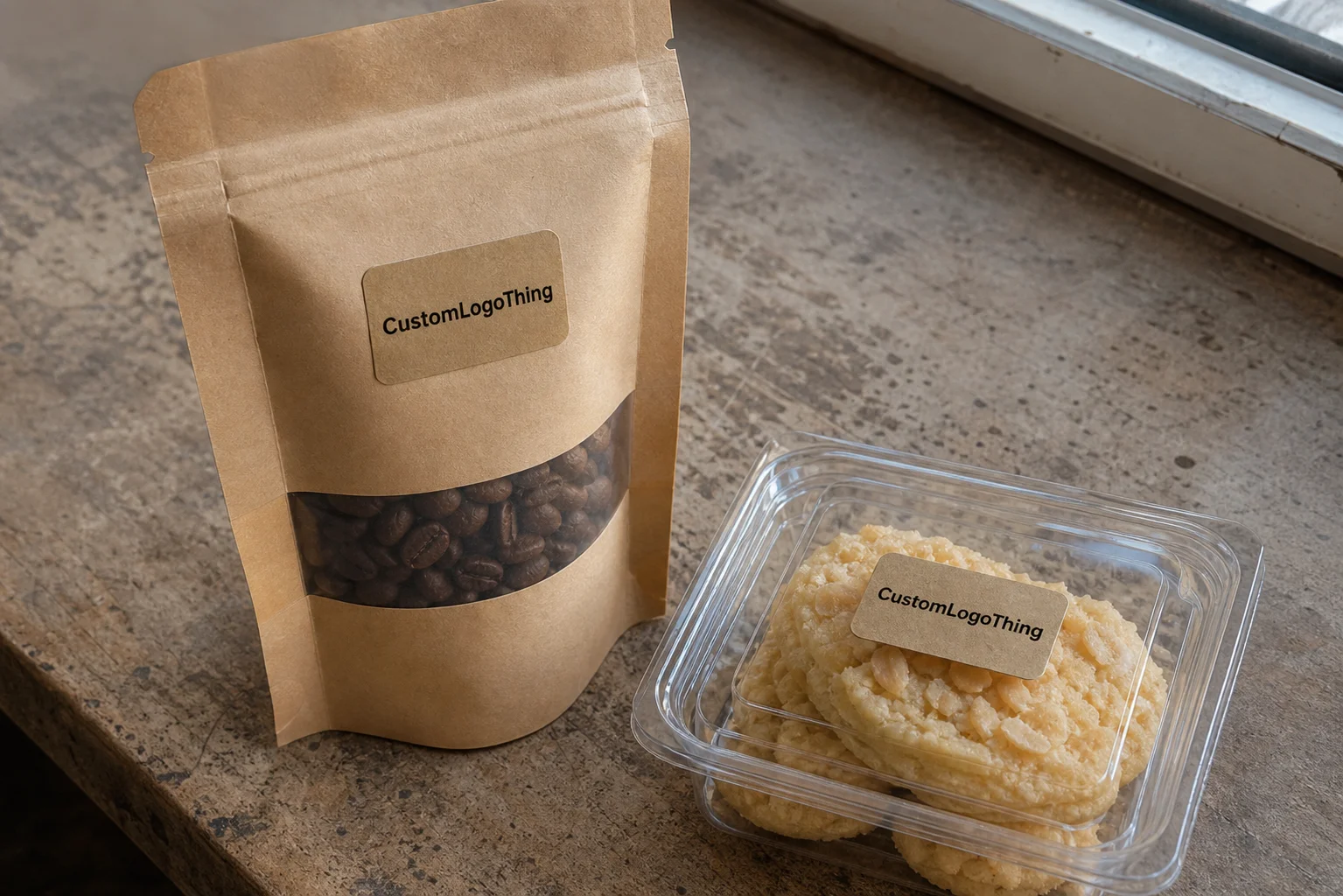
On packaged goods, a name label usually does more than identify a person. It may show a picker’s initials, a department, a visitor name, a conference title, or a short brand message that needs to stay readable after transport and handling. In practice, personalized name tag stickers are small adhesive identifiers built for real use, not just decoration.
Handwritten labels create problems quickly. Marker ink smears on glossy stock, pencil fades under friction, and handwriting varies enough to make a batch look inconsistent. Printed labels solve the consistency problem first, then the presentation problem. That matters when the same format is being used across a large team, a multi-day event, or several facilities.
The difference between a decorative sticker and a working label is easy to spot after a few hours in the field. One looks fine on a screen. The other still reads cleanly after people touch it, stack it, scan it, or pack it. If the label will be handled, it should be engineered like any other packaging part.
Legibility comes first. If the type is too small, the color contrast is weak, or the adhesive fails on the surface, the label already lost.
Buyers usually save money by defining the job clearly before asking for quotes. Material, adhesive strength, finish, quantity, and variable data all affect the final price and performance. If the format needs to be compared with other packaging label structures, related options in Custom Labels & Tags can help narrow the construction before production starts.
How the Artwork, Material, and Adhesive Build the Final Label
The workflow usually starts with file review, then a proof, then production, finishing, inspection, and packing. For jobs with different names, titles, or IDs on each piece, variable data printing is the key step. It lets one run produce many unique labels without resetting the press for every line.
Material choice changes performance more than most buyers expect. Paper stock is usually fine for dry indoor use and short-term events. Film stocks, such as polypropylene or polyester, resist scuffing and moisture better, and they hold up more consistently when labels are touched often. On a bottle, coated carton, mailer, or handled bag, film is often the safer default.
Adhesive selection matters just as much. Removable adhesives work for temporary signage or event use. Permanent adhesives are better when the label needs to stay put through storage, sorting, or shipping. High-tack and freezer-safe options exist for difficult conditions, but they should match the actual substrate and temperature range, not a guess.
Artwork also affects whether the label reads quickly. Typeface weight, line spacing, contrast, and empty space around the text all influence scan speed. Thin fonts, decorative backgrounds, and crowded layouts can make a clean design look busy once printed at small size. A good proof makes the text feel obvious from arm’s length.
| Material | Best Use | Typical Strength | Tradeoff |
|---|---|---|---|
| Paper label stock | Short-term indoor naming, events, dry cartons | Sharp print, lower cost | Weaker against moisture and rubbing |
| Polypropylene film | Handled packaging, damp conditions, general durability | Better scuff resistance and flexibility | Slightly higher cost than paper |
| Polyester film | Rough handling, longer wear, tougher environments | Strong stability under stress | Usually the highest price of the three |
For buyers comparing options, the useful question is not which material is “best” in the abstract. It is which one survives the real use case at the lowest acceptable cost. Transit and handling tests help here. If the package is likely to face vibration, drops, or temperature swings, references from ISTA are worth using. For paper sourcing claims, FSC is the place to verify them instead of relying on vague marketing language.
Which Specs Change Durability, Appearance, and Readability
Size is the first decision that changes how a label behaves. Too small, and the name has to be crammed into tiny type. Too large, and the label looks awkward or wastes usable space. The right size is usually the smallest format that still gives the text room to breathe.
Shape affects both appearance and production cost. Square and rectangular labels print efficiently and are easy to stack. Circle labels feel softer and are often used for event branding or simple callouts. Custom contours can make a label stand out, but they add tooling complexity and can push up the cost on shorter runs.
Finish changes how the label looks under real light. Matte reduces glare and tends to read better in bright rooms or under direct lamps. Gloss can make color look richer, but it reflects more light and shows scratches sooner. Soft-touch feels premium, though it is less common for purely functional naming labels unless presentation is part of the brief.
Color management is where some orders go sideways. A logo that looks balanced on a monitor may print darker, flatter, or less saturated depending on the stock and process. Black text is still the safest choice for readability. If a brand color or metallic accent matters, proof it before production. Warehouse lighting and event check-in counters are not forgiving.
Surface compatibility is the part people underestimate. Cardboard, coated cartons, glass, smooth plastic, and textured materials all behave differently. A label that sticks neatly to a flat sample card may lift on a curved bottle, cold surface, or dusty carton. Testing on the actual substrate is usually worth more than another round of design tweaks.
| Spec | What It Affects | Buyer Consideration |
|---|---|---|
| Size | Readability and placement | Measure the actual application area before approving artwork |
| Shape | Branding and production efficiency | Simple shapes usually cost less; custom contours add setup |
| Finish | Glare, scratch visibility, perceived quality | Matte is often safer for fast reading; gloss suits brighter presentation |
| Adhesive | Hold strength and removability | Match it to surface texture, temperature, and expected handling |
A clean proof should still read correctly from arm’s length. If the label only looks good zoomed in on a screen, the layout is not ready. That is a design problem, not a production problem.
Cost, Pricing, and MOQ Factors That Affect Your Quote
Pricing usually comes down to quantity, size, number of colors, substrate, finish, and whether each label needs unique data. A simple black-on-white paper job with one static design is usually the cheapest path. Add variable names, specialty film, or a custom die line, and the price moves because setup time, proofing, and production complexity all increase.
Small quantities carry a higher unit cost because the fixed work has to be spread across fewer pieces. Larger runs usually lower the per-unit price because setup is diluted. A quote for 500 pieces can look very different from a quote for 5,000, even if the artwork barely changes.
Special adhesives and premium finishes also matter. High-tack adhesives, freezer-grade constructions, and specialty laminations add cost. On a dusty warehouse carton or a cold surface, that extra expense is often justified because a cheap label that fails is more expensive in labor, waste, and delay.
Minimum order quantities vary by supplier. Some can handle short runs, especially with digital printing. Others are built for bigger production lots. The best quote comes from sending the actual use case, target quantity, material preference, and the surface the label will touch. That gives the supplier enough detail to price the real job, not a placeholder.
| Run Size | Typical Unit Price Range | What Drives the Cost |
|---|---|---|
| 250-500 pieces | $0.28-$0.65 each | Setup and proofing make up a larger share of the order |
| 1,000-2,500 pieces | $0.16-$0.34 each | Better spread of setup cost, more efficient print run |
| 5,000+ pieces | $0.08-$0.22 each | Higher efficiency, though specialty materials can raise the range |
Think in production terms, not sticker terms. A quote for personalized name tag stickers is really a quote for materials, press time, finishing, file preparation, and quality control. The same-looking label can fall into very different price bands depending on the specs behind it.
Production Steps and Lead Time From Proof to Ship Date
A normal workflow starts with file review, then a digital proof, then approval, then print production, finishing, inspection, and shipment. If the artwork is complete and the data file is clean, the job can move fast. If names are missing, the layout needs correction, or the color needs adjustment, the schedule stretches immediately.
Standard turnaround often depends on the supplier’s queue, but custom label jobs commonly land around 7-15 business days after proof approval. Rush work can shorten that window, though it often limits finishing options or increases cost. Custom shapes, unusual substrates, and specialty adhesives can extend lead time because they may need extra setup or sourcing.
Variable-data jobs need disciplined prepress. A spreadsheet with inconsistent spelling, duplicate fields, or broken formatting can slow production more than people expect. If each sticker needs a different name, department, or number, the fastest path is a clean file and a clear naming format before the proof is released.
Ask about shipping method, cut-off times, and whether partial shipments are possible. For urgent events or launch schedules, a partial shipment can be useful if part of the order is ready while the rest is still finishing. That is not always available, but it is worth asking before the job starts.
If packaging support extends beyond one label format, compare the naming labels with other Custom Labels & Tags so the print method, finish, and adhesive stay consistent across the order. Mixed specs across a line usually create more problems than they solve.
Common Ordering Mistakes That Raise Rework or Waste
The biggest mistake is guessing the size. A label that looks fine in a mockup may be too wide for the panel or too small for the text you need to fit. Measure the real placement area and leave safe margins so the layout does not feel crowded.
Low contrast is another common failure. Pale text on a busy background can look polished on screen and still become unreadable in real use. If the label has to be scanned or read quickly, dark type on a clean, light field is still the most reliable approach.
Adhesive mismatch causes plenty of rework. A label intended for a smooth carton may fail on a cold, dusty, curved, or textured surface. Saving a few cents on adhesive can cost far more in labor if the labels lift, shift, or wrinkle on the line.
Skipping proof review is expensive. One typo in a name list, one wrong title, or one alignment problem can ruin an entire batch. Check spelling, spacing, line breaks, and file order carefully before approval. Even simple personalized name tag stickers can become expensive mistakes if the data file is rushed.
Format matters too. Sheets are convenient for manual handling. Rolls are better for some applicators and higher-volume packing operations. If the production floor expects one format and receives the other, the problem shows up immediately in labor time.
| Common Error | Typical Result | Better Move |
|---|---|---|
| Guessing the size | Crowded text or wasted label area | Measure the actual placement zone first |
| Using weak contrast | Unreadable names under real lighting | Test the design in black and white first |
| Wrong adhesive choice | Peeling, lifting, or residue issues | Match adhesive to the target surface and temperature |
| Skipping proof review | Spelling and layout errors | Check the data line by line before approval |
Expert Tips and Next Steps for a Cleaner First Order
Send a simple intake package if you want a smoother order: final quantity, size, placement photo, target surface, finish preference, and a complete list of names or data fields. That gives the producer enough information to recommend the right construction instead of guessing.
Choose the smallest readable type size that still prints cleanly. Overfilling a label rarely helps. A little breathing room around the text usually improves legibility more than adding extra decoration or squeezing in more information than the format can comfortably hold.
If the label will be handled often, exposed to moisture, or applied to an unfamiliar substrate, ask for a sample or short proof run. A small test is cheap compared with a full reprint. That is especially true for event check-in labels, temporary staff badges, or Packaging Inserts That will be touched many times.
Before approval, run a final checklist:
- Spelling is correct for every name or field.
- Line spacing leaves the text easy to read.
- Adhesive matches the target surface.
- Finish matches the lighting and handling environment.
- The label still reads clearly from arm’s length.
Personalized name tag stickers are small pieces, but the production details decide whether they feel cheap, durable, or exactly right for the job. Gather the specs, confirm the file, and make sure the final label matches the real use case instead of the mockup alone.
FAQ
What are personalized name tag stickers used for in packaging and events?
They identify people, roles, departments, or product handlers with a clean printed look. They are useful anywhere handwriting would smear, look inconsistent, or slow down sorting and setup. They can be built for short-term events or longer wear depending on the material and adhesive.
How do I choose the right size for personalized name tag stickers?
Measure the actual placement area first, then leave room for safe margins around the text. Use larger sizes when the name, title, or branding has to be read quickly from a distance. Avoid shrinking the layout so much that the text becomes hard to scan or the design feels crowded.
Which material works best for durable name tag stickers?
Paper works for short indoor use, but film is usually better for moisture, scuffing, and repeated handling. Gloss and matte finishes change glare and perceived quality, so choose based on where the label will be seen. The adhesive matters as much as the face stock, especially on curved, cold, or textured surfaces.
Why does the price of personalized name tag stickers vary so much?
Price changes with quantity, size, finish, material, and whether each sticker needs unique data. Small orders usually have a higher unit cost because setup and proofing are spread across fewer pieces. Special shapes, specialty adhesives, and fast turnaround requests can raise the quote.
What information should I send before requesting a quote?
Send the target quantity, size, material preference, finish, and the surface the sticker will stick to. Include the names or variable data, plus any artwork files, logo files, or layout references you already have. Add a photo of the real application area so the supplier can verify readability, fit, and adhesive choice.