Personalized santa labels do a simple job that has real consequences: they identify, decorate, and help a holiday item feel finished. For a buyer, that means the label has to look seasonal, survive handling, and fit the surface it will live on. If it misses any one of those, it becomes a wasted line item instead of a useful detail.
The decision is usually less about style than about format. A woven clothing label, a printed tag, and a pressure-sensitive sticker all solve different problems. The right choice depends on whether the item is being worn, gifted, packed, or shipped, and whether the label needs to stay readable after use.
A holiday label only earns its place when it still looks clear after folding, shipping, washing, or repeated handling.
What Personalized Santa Labels Are, and Why They Matter
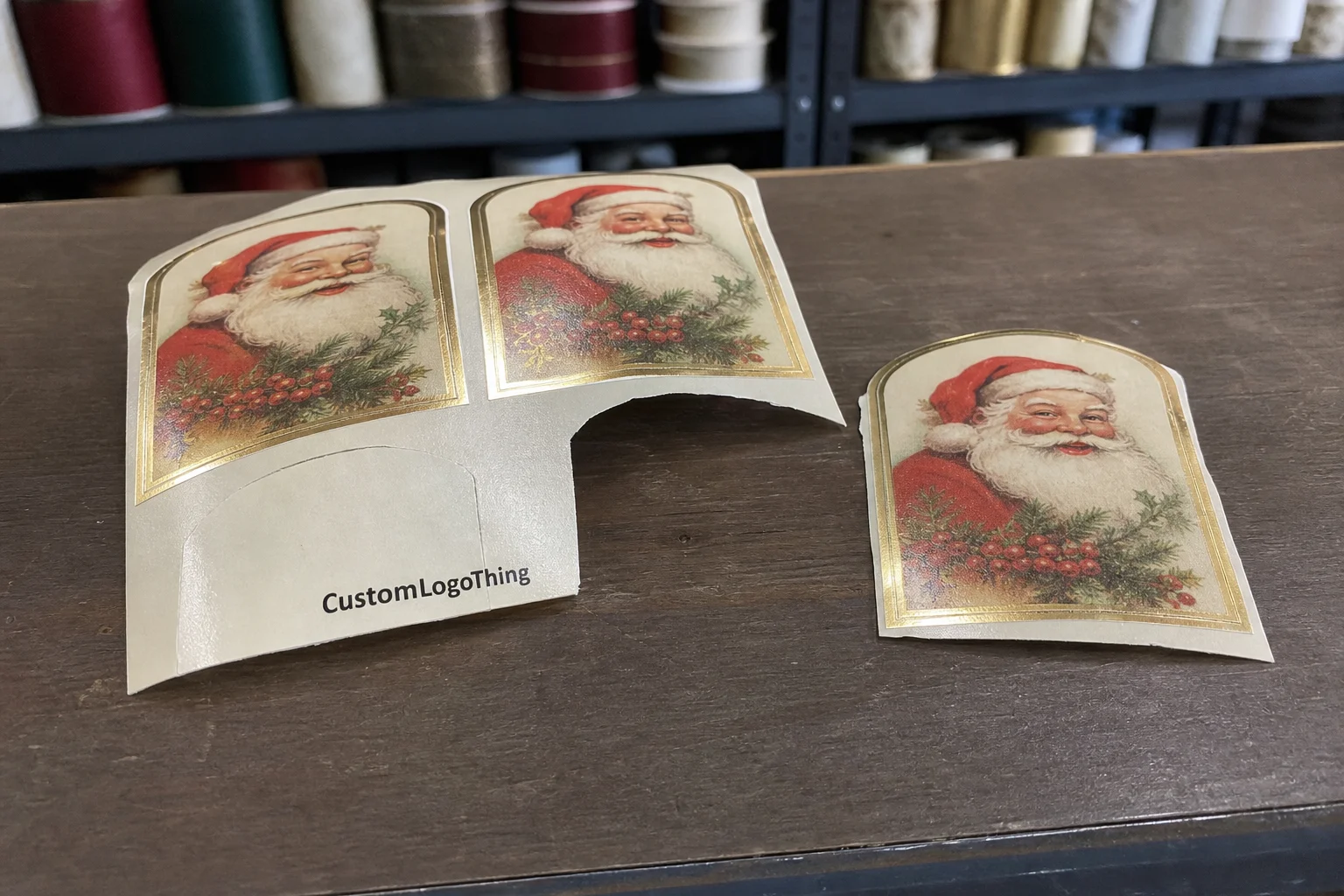
Personalized santa labels are custom holiday labels or tags that combine Santa-themed artwork with names, logos, or other variable text. They can be sewn into garments, tied to gift packaging, or applied to seasonal product bundles. The format changes, but the buying question stays the same: will this label work in the real environment where it is used?
For apparel, the label often functions as both identification and decoration. For packaging, it may need to carry a seasonal message without adding much labor at pack-out. For schools, retail promotions, and family gifts, the goal is usually to make holiday items easier to sort while keeping the presentation festive and consistent.
That is why many buyers move toward Custom Labels & Tags instead of using a generic off-the-shelf label. The custom route lets the buyer match size, material, attachment method, and artwork to the actual product. The useful label is not the most elaborate one; it is the one that stays legible and practical at finished size.
There is also a brand effect. A clean holiday label signals planning, which matters whether the item is a retail garment or a gift bundle. Buyers who already pay attention to trim, packaging, and presentation tend to see this quickly: a small label can raise or lower the perceived quality of the whole item.
How Personalized Santa Labels Move Through the Production Steps
The production path is usually straightforward: artwork, proof, production, finishing, and packing. The quote is only meaningful once the supplier knows the size, material, quantity, and intended use. If those details are vague, the price will be less reliable and the proof cycle will take longer.
Artwork quality matters at final size, not just on screen. Vector files are best for logos and simple Santa graphics because they hold shape cleanly. If the label includes names or variable text, the supplier needs a clean list with spelling checked and a clear character limit. Small labels are unforgiving; weak contrast, crowded type, and bad line breaks show up immediately.
Material choice changes the workflow. Woven sew-in labels, printed fabric labels, adhesive labels, and hang tags all use different production steps. A woven label is better for apparel durability. Adhesive is usually better for boxes, bags, and flat surfaces. A hang tag is useful when the buyer wants branding without making the mark permanent.
Proofing is where most problems should be caught. A proper proof checks text accuracy, spacing, edge margins, fold placement, and how the label will actually be attached. If the proof is approved without checking the longest name, the smallest font, and the intended surface, the risk of reprint goes up fast.
For buyers who want a broader reference point on shipping tolerance, the International Safe Transit Association is worth reviewing. Their standards are not label-specific, but they help frame how packaging components behave under transport stress. That matters when a label has to arrive flat, clean, and ready to apply.
Cost, Pricing, and MOQ: What Changes Your Quote
Pricing for personalized santa labels usually comes down to five variables: quantity, material, print method, size, and finishing. Quantity has the biggest impact because setup cost is spread across the run. Small orders cost more per piece; larger runs usually reduce the unit price, but only if the volume matches actual demand.
MOQ, or minimum order quantity, is one of the first questions a buyer should ask. A lower MOQ gives flexibility, which matters for limited holiday runs. A higher MOQ usually improves the unit economics, which matters for retail programs or recurring seasonal use. The best choice depends on whether the buyer is testing a concept or supporting ongoing demand.
| Label format | Typical use | What drives cost | Buyer tradeoff |
|---|---|---|---|
| Woven sew-in | Garments, knitwear, children’s clothing | Thread count, size, fold style, quantity | Best durability, higher setup than stickers |
| Printed adhesive | Boxes, bags, flat packaging | Adhesive grade, finish, die-cut shape | Fast application, not ideal for every fabric |
| Hang tag | Retail gifts, bundles, seasonal apparel | Stock weight, print coverage, hole punch, stringing | Flexible branding, less permanent than sew-in labels |
As a rough buying range, simple projects at higher volumes may land around $0.10-$0.25 per unit, while more detailed custom versions with specialty finishing can move closer to $0.25-$0.60 per unit or more. The real driver is not just the artwork; it is the combination of run size, material, and process steps. Rush production, extra proof rounds, and custom packaging can increase the total quickly.
For paper-based tags or packaging components, FSC certification is worth checking if sustainability is part of the buying brief. It will not answer every sourcing question, but it is useful when the project includes paper stock and the buyer wants cleaner fiber documentation.
Cost should be judged in total, not only on the line item. A label that applies faster, reads better, and avoids reprints is often the cheaper option overall even if its unit price is slightly higher.
Choosing the Right Material, Adhesive, and Finish for Clothing
Material should follow the garment and use case. Apparel gets folded, washed, stretched, and handled repeatedly, so the label has to survive real wear, not just the mockup. If the label is for clothing, choose for durability first and appearance second. The best-looking sample is not useful if it frays, peels, or becomes unreadable.
Woven labels usually suit permanent garment applications. They hold detail well and feel finished, especially on children’s clothing, knitwear, and seasonal apparel. Satin can offer a smoother hand and a softer visual finish, while cotton gives a more natural look. Printed film or adhesive-backed formats can work for temporary use, but they are not the best answer for repeated laundering.
Adhesive is the right answer only when the surface can support it. On boxes, bags, and flat packaging, it is efficient. On fabric, the bond is much less reliable, especially with washing, heat, or stretch. If the label is expected to live on a garment, sew-in formats are usually safer. If it is tied to a gift box or holiday bag, adhesive may be the better fit.
Finish also changes the result. Matte reduces glare and makes small text easier to read. Gloss can make colors brighter, but it can also reflect light and hide details. Fold style matters too. Center fold, end fold, and loop fold all place text differently, so the layout has to be built around the final structure rather than adapted after the fact.
Edge treatment is another detail that buyers should not ignore. A cut edge that looks clean in a sample may fray or lift later if the finishing method is weak. Asking how the edges are sealed, folded, or cut is one of the fastest ways to separate a serious label quote from a superficial one.
Timeline and Lead Time: What to Expect Before You Order
The schedule usually moves through four stages: quote, proof, production, and shipping. If the artwork is ready and the specs are clear, the proof stage can move quickly. If the buyer is still deciding on size, material, or format, the timeline extends before production even starts.
For standard orders, a common lead time is often 12-15 business days after proof approval, though the exact timing depends on the format and factory load. Woven labels, specialty folds, and multi-version name runs take more coordination than a simple printed tag. Holiday season demand can lengthen the schedule even when the design itself is simple.
Rush orders are possible, but they usually reduce flexibility and raise cost. A rushed job may limit finish choices, reduce proof rounds, or require a higher minimum. Buyers should build buffer time into the calendar instead of assuming the fastest case will hold, especially when the order has a fixed ship date.
Variable text adds another layer of risk. A standard logo can be approved once and repeated. A name list can fail because of one misspelling, one long name, or one bad line break. That is why many experienced buyers request a proof or sample before releasing the full run. The upfront check is small; the cost of a batch error is not.
Quality Checks That Prevent Reprints
Effective proofing checks more than spelling. The buyer should confirm the finished size, the longest name, the smallest font, the safe margins, and the amount of empty space around the edges. If the label feels tight in the proof, it will look tighter once it is cut or folded.
Color is another common failure point. Holiday artwork often uses red, green, white, and metallic accents in close proximity. Those colors can shift after print depending on stock, ink, and finish. A deep red may print brighter than expected, and dark green can flatten under matte coating. Buyers who review a physical sample or a careful digital proof usually avoid that surprise.
Attachment method should also be checked against the item itself. A sew-in label can feel bulky on a thin knit if the fold is wrong. An adhesive label can fail on a textured surface even when the artwork is perfect. The proof should show not only the label face, but also how it sits once attached.
If the project includes many personalized names, the supplier should run a second check before print release. Most expensive mistakes come from small errors: a missing accent, a transposed letter, or a spacing issue in one version. On a small order, each error matters more because there is less volume to absorb it.
Incoming inspection matters too. Check several labels from different parts of the batch, not just the top layer. Look at print clarity, edge finish, adhesive tack if relevant, and consistency across versions. A quick inspection can prevent a bad batch from being applied across the full order.
Common Ordering Mistakes That Make Labels Look Cheap
The fastest way to cheapen a label is to crowd it. Tiny text, too many decorative elements, and low-contrast colors make the label harder to read and less polished. A Santa motif should support the typography, not compete with it.
Another mistake is choosing a format because it looks good in a mockup rather than because it fits the real use. A label can look excellent on a screen and still fail after washing, folding, bending, or repeated handling. That mismatch is especially common with apparel, where hand feel and attachment method matter as much as artwork.
Overloading the label with copy is also a problem. If the label tries to include a logo, name, greeting, date, website, and illustration all at once, the design becomes cramped and the error risk rises. Buyers usually get better results by keeping branding and decoration separate and letting each element do one job.
Skipping a proof or sample is the most expensive mistake. That matters even more when the run includes names, dates, or short holiday messages that must be exact. A proof costs far less than reprinting a batch with one wrong letter. For clothing labels, a sample is even more useful because it shows feel, fold, and placement in a way a screen cannot.
If the label depends on precision, treat the proof as part of production, not as a formality.
Next Steps: A Simple Ordering Checklist for Buyers
Start with the use case. Decide whether the label needs to identify clothing, decorate a gift, support retail packaging, or handle all three. Then confirm how often the item will be handled, whether it will be washed, and how visible the label needs to be once attached. Those answers narrow the format quickly.
For a clean quote, gather the basics before contacting a supplier: artwork, finished dimensions, preferred material, attachment method, quantity, and target delivery date. If the label includes multiple names or variable text, send a clean list with spelling checked line by line. If the brand has color requirements, include them up front.
Ask for a sample or digital proof before approving the full run, especially if there is more than one version. This is where readability, spacing, and material feel can be checked against reality. Buyers comparing options can also review holiday-ready custom labels and tags to make sure the final choice fits the product and not just the artwork.
For holiday deadlines, work backward from the delivery date and leave room for proof revisions, production, and transit. The best order is the one that arrives with enough margin to absorb a correction without forcing a rush.
The best purchasing decision balances durability, readability, and unit cost. When those three align, personalized santa labels look deliberate instead of decorative, and they keep doing their job after the holiday packaging is gone.
What are personalized santa labels used for on clothing?
They identify garments or seasonal items while adding a holiday-specific look. They are useful when the label needs to serve both organization and presentation.
How much do personalized santa labels usually cost?
Price depends on quantity, material, print complexity, and finishing details. Larger runs usually reduce unit cost, while rush orders, specialty materials, and variable names increase the quote.
What file should I send for personalized santa labels?
A clean vector file is usually best for logos and artwork because it scales without losing sharpness. If you only have a rough concept, send the text, size, colors, and reference images so the proof can be built correctly.
How long does production take for personalized santa labels?
Timeline depends on proof approval speed, material selection, and current production volume. Holiday demand can extend lead time, so it is wise to build in extra buffer for seasonal orders.
Should I choose sew-in or adhesive personalized santa labels?
Choose sew-in for clothing that will be washed often or handled repeatedly. Choose adhesive only when the surface and use case support it, since not every fabric or finish holds adhesive well.