Personalized watch boxes do more than hold a timepiece. They set the tone before the watch is even lifted from the tray, and that first impression tends to stick. A compact product can feel far more valuable when the package is tight, well-finished, and built around the watch instead of borrowed from a generic carton. If you are comparing structures and finishes, review Custom Packaging Products early so the box format fits the way the watch will be sold, shipped, and displayed.
From a buyer's point of view, the job is practical: protect the watch, reduce handling damage, and make the brand look deliberate. The complication is that "custom" can mean very different things. A printed sleeve over stock packaging is not the same thing as a rigid setup box with a cut-to-fit insert, and neither is the same as a transit mailer designed to survive carrier abuse. That difference matters because a premium exterior will not fix a loose interior, and a strong shipper will not create a luxury unboxing moment.
Watch packaging also has a way of exposing weak decisions quickly. If the insert is off by a few millimeters, the clasp can press into the lid. If the closure is too weak, the box opens in transit. If the finish looks good under studio lights but scuffs on contact, the product comes back looking tired before it reaches the customer. The best packaging teams design for those failure points before the first sample is made.
What personalized watch boxes do at the point of sale
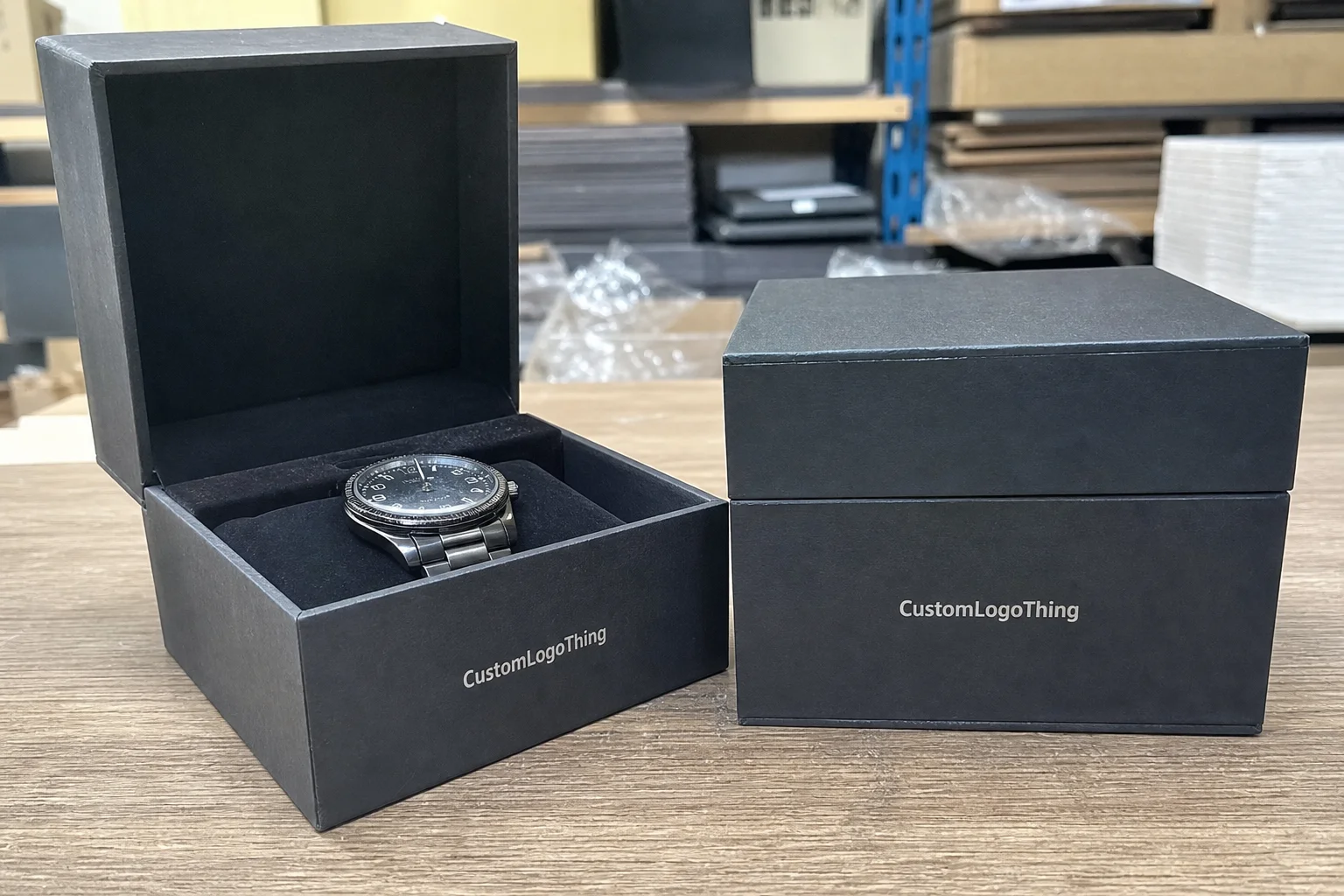
A watch is small, but the buyer still reads the box as a quality cue. In practice, a 40 mm case rattling in a loose carton feels less valuable than the same watch seated in a rigid box with a clean insert and a lid that closes with some precision. That is why personalized watch boxes are not just containers with a logo printed on them. They are branded packaging built around the product itself.
There are three common use cases, and they should not be blurred together. Display packaging sits in a case or on a shelf and prioritizes visual clarity. Gift packaging aims for a more controlled reveal, often with a softer lining and a more refined outer finish. Transit protection is about compression, vibration, drops, and abrasion. A brand can combine those roles, but only if the insert, wall strength, and closure system are chosen with discipline.
Personalization can go far beyond a printed mark on the lid. It may include foil stamping, embossing, debossing, full-color print, color-matched inserts, magnetic or ribbon closures, sleeves, window cutouts, and dedicated spaces for warranty cards or instructions. Some brands also ask for a specific watch angle in the tray because the face, bezel, and crown all read differently depending on how the piece is seated. That sounds minor until a customer opens the box and sees the watch leaning awkwardly to one side.
The best packaging teams treat the box as part of the product system, not an afterthought. If the watch is positioned as entry luxury, the box should be restrained and clean. If the line is built for gifting, the packaging can carry more visual weight through soft-touch lamination, foil detail, and a slower reveal. If the watch is sold online, the outer package has to survive the carrier network and still arrive clean enough to impress when the customer opens it.
A box that looks expensive but lets the watch move around is not premium packaging. It is decoration with a protection problem.
Customization process and lead time: what happens after you brief a supplier
The production workflow is predictable if the brief is complete. It usually starts with inquiry and spec review, then sizing confirmation, dieline or mock-up creation, artwork proofing, sampling, revision if needed, production, and final inspection. The fastest projects are the ones where the supplier gets the watch dimensions, insert needs, and branding method on day one.
Most delays come from missing details rather than manufacturing itself. If the supplier does not know the crown height, clasp bulk, or whether the watch ships with a pillow, the insert may need to be redrawn. If artwork arrives without bleed, correct font outlines, or logo placement, proofing slows down. If the finish changes halfway through, say from a paper wrap to soft-touch lamination with foil, the material stack and setup can change with it.
Lead time depends on quantity, decoration complexity, material availability, and how quickly the sample gets approved. A straightforward run can often move from proof approval to production in about 12 to 15 business days. More complex packaging, especially boxes with custom inserts, special papers, or multiple finishing steps, usually needs more time. For a first order, planning backward from the launch date is safer than assuming the factory schedule will absorb any revision you discover later.
Sample timing matters too. A physical sample may take 5 to 10 business days, depending on the structure and whether the supplier already has the right board and wrap in stock. That sample is where weak assumptions get exposed. A drawing can hide a lid that sits too high or an insert that compresses unevenly. A sample does not lie in the same way a digital proof can.
If the boxes will be shipped long distance or folded into an e-commerce process, ask whether the supplier can test the structure against common transit risks. Many teams refer to protocols from the International Safe Transit Association and then compare those expectations with internal drop or compression checks. The point is not paperwork for its own sake. It is to avoid discovering a failure after 2,000 units are already packed.
Size, inserts, and finish choices that affect protection and presentation
Size starts with the watch, not the box. Measure the largest model in the line, then add clearance for the crown, bracelet, buckle, pillow compression, and any protective wrap. A lot of teams measure only case diameter and then wonder why the clasp presses against the lid. That is avoidable. Case depth, strap length, and the shape of the clasp matter just as much as width.
Rigid Setup Boxes are still the most common choice for premium watches because they combine structure and presentation. A typical rigid board in this category often sits around 1.5 mm to 3 mm, depending on the supplier and the target feel. Drawer-style boxes are useful when the unboxing moment matters and the product needs a slower reveal. Hinged boxes can feel classic and familiar, but they need good tolerances because the lid and base must align cleanly. Folding cartons are lighter and cheaper, and they work for lower-price lines or secondary packaging, but they offer less crush resistance unless they are paired with a strong insert and an outer shipper.
Insert selection determines whether the watch stays still or drifts. Foam inserts are common because they are easy to shape and hold the piece securely. EVA gives a firmer, cleaner cut and works well when the product needs a defined pocket. Velvet-lined trays add softness and a more jewelry-like feel. Molded pulp is a practical choice when sustainability is a major buying criterion, though it changes the look and the tactile experience. Pillow-style supports work well for bracelets and leather straps, but they have to be sized carefully so the watch face does not tilt too far forward or back.
Material choice affects the way the package ages. A soft-touch finish feels premium on day one, but it will show rub marks if the outer shipper is tight or if the boxes are stacked with too much pressure. Linen wrap can hide minor handling marks better than high-gloss surfaces. Matte stock looks clean and restrained, though it can pick up fingerprints depending on the coating. Foil stamping adds contrast and helps a logo read from a distance, but too much foil on a small box can make the layout look crowded rather than refined.
For sourcing questions, ask whether the paper components can be made with FSC-certified materials. That does not answer every environmental question, but it gives procurement teams a more concrete specification than a vague "eco" claim. It also helps when a brand needs a paper trail for retailer requirements or internal reporting.
Quality control should not stop at cosmetics. A decent watch box should be checked for lid alignment, insert fit, print registration, adhesive odor, surface scuffing, and whether the watch remains centered after opening and closing the box several times. Those checks sound basic because they are. They are also the details that separate a functional package from one that looks finished only in a photo.
| Structure | Typical Use | Common Cost Driver | Protection Level |
|---|---|---|---|
| Rigid setup box | Premium retail, gifting, resale | Board thickness, wrap material, insert complexity | High |
| Drawer style | Luxury presentation, special editions | Extra board, tray fit, pull ribbon or tab | High |
| Hinged box | Classic presentation, display | Closure alignment, lid fit, lining | Medium to high |
| Folding carton | Entry-level packaging, secondary pack | Print coverage, board grade, insert choice | Low to medium |
Cost, pricing, and MOQ: what actually changes the quote
Quote differences usually come from five variables: material grade, box structure, insert type, decoration method, and shipping weight. A small watch box with a printed paper wrap and a basic foam insert can be priced very differently from a rigid magnetic box with soft-touch lamination, foil, and a velvet tray. The product may look similar on a screen, but the production cost is not similar at all.
MOQ matters because setup costs do not disappear on a small run. If a supplier has to prepare boards, plates, die cuts, and finishing equipment for only a few hundred units, the unit price rises quickly. That is normal. It is also why a quote for 500 boxes may look strangely expensive next to a quote for 5,000. The line setup cost is being spread across fewer pieces, and the factory may be reserving time on a production schedule that could have been used for a larger order.
For a practical reference point, a simple branded folding carton might land around $0.35 to $0.80 per unit at higher volumes, while a rigid watch box with a custom insert often sits in the $1.10 to $2.40 range or higher depending on finish, quantity, and shipping terms. Special decoration, such as foil, embossing, magnetic closures, or a custom molded insert, can move the number again. Small changes add up fast, especially when the box uses multiple materials.
Samples, tooling, and freight belong in the real budget. A first order can look inexpensive on a per-box basis and still overshoot the budget once prototype fees, plate charges, packing, and delivery are included. That is why apples-to-apples comparison matters. Match the same dimensions, board thickness, insert material, finish, quantity, and delivery basis before you compare suppliers. Otherwise, the lowest quote is often just the least complete quote.
A clean pricing matrix makes tradeoffs visible. It also keeps the conversation honest when a buyer wants to know why one finish moved the price more than another.
- Base structure: rigid box, drawer box, or folding carton
- Insert: foam, EVA, velvet tray, molded pulp, or pillow support
- Decoration: print only, foil, embossing, spot UV, or mixed finishes
- Delivery terms: factory pickup, port delivery, or door delivery
One more reality check: low MOQ often comes with less room for negotiation on setup. That does not make the offer bad. It just means the economics are different. A brand buying 300 boxes for a limited release should expect a higher unit cost than one ordering 10,000 for a core line, even if both boxes look almost identical from the outside.
Step-by-step: how to order a custom watch box without costly revisions
Start with the watch itself. Measure the largest model in the line, not the smallest. Include the case, the crown, the clasp, and any buckle or deployant closure that sticks out. Then add clearance for insert compression and a small handling margin. If the box will hold both a bracelet watch and a leather strap version, design around the bulkier one.
Next, build a spec sheet that covers the essentials in one place. List box dimensions, insert style, material, finish, print method, quantity, target delivery date, and whether the box is for retail display, gifting, resale, or shipment. A tidy spec sheet cuts down on back-and-forth and helps the supplier catch conflicts early. If you already have a packaging family, align the watch box with your Custom Packaging Products choices so the product line stays consistent.
Ask for a physical sample or a detailed prototype before production. A rendered image is useful for layout checks, but it will not show closure tension, lid height, foam resistance, or how the watch sits when the user opens the box. For a premium product, those details are not minor. They are the difference between a box that feels intentional and one that feels improvised.
Approve artwork only after checking logo placement, color, and the fit of the insert. Fold lines can shift the visual center of a design. Metallic finishes can read darker or brighter in person than on screen. A logo that looks centered in a proof may sit too high once the insert is installed. It is better to spend one extra round on proofing than to discover a 3 mm misalignment after the run is complete.
Once the sample is approved, lock the spec and avoid casual changes. Late-stage revision is the most common source of cost creep. A small change to the insert shape can alter the die cut, and a finish change can alter material lead time. That is why disciplined buyers keep one version-control sheet and one named approver. It sounds plain because it is. It also prevents expensive confusion.
After approval, ask the supplier how final inspection is handled. A proper check should include dimensions, color consistency, surface defects, adhesive residue, insert placement, and carton count. For higher-value orders, many buyers also request a packed sample or a short pre-shipment inspection. Those steps do not make the process glamorous. They do reduce surprises.
Common mistakes that weaken personalized watch packaging
The most common error is sizing from the outside only. A box can look right on paper and still fail if the watch shifts inside it. If the insert cavity is loose, the clasp may hit the lid or the face may rub against the tray. That creates pressure marks, scuffs, and a less precise presentation. Outer dimensions do not matter much if the product moves.
Another mistake is choosing a premium finish before the structure is settled. Teams sometimes fall in love with foil, soft-touch, or a special paper before confirming whether the board, hinge, or tray can support it cleanly. The result is either a cost overrun or a quality compromise. Finish should support the structure, not rescue it.
Quote comparison errors are just as common. A supplier who includes only the box, but not freight, sample costs, or tooling, is not giving a full price. A supplier who includes all of those items may appear more expensive at first but end up cheaper in the real budget. Packaging buyers get burned when they compare the headline number instead of the delivered number.
Skipping transit checks is another easy way to damage an otherwise good design. A box that sits beautifully on a desk can still fail in a carrier network if the lid pops open or the insert loosens under vibration. If the packaging will travel, test it under realistic conditions. A few sample drops and a compression check often reveal issues that would otherwise appear only after inventory has moved.
There is also a quieter mistake: overdesign. Too many finishes, too many materials, and too much visual noise can make a small watch box feel crowded. Premium packaging usually looks controlled, not busy. The watch should be the center of attention. The box should support it, not compete with it.
If the box only looks good in photos, it is not ready for production.
Expert tips and next steps for your first order
Standardize one master spec sheet if You Sell More than one watch SKU. It reduces mistakes on reorders, and it gives your team a stable reference when the line expands. If a new model is slightly thicker than the last one, that change should show up in the spec before it becomes a production problem.
Request a sample with the actual watch inside it. A dummy object can help with rough fit, but it will not tell you how the clasp behaves, whether the crown presses into the insert, or whether the strap springs back after closing. Real fit testing catches real problems. That saves more money than a prettier proof ever will.
Ask for a tolerance check if the watch has unusual hardware. Oversized crowns, exhibition backs, butterfly clasps, and wide bracelets can create issues that are invisible on the drawing. A tray that looks perfectly sized may still scrape the case back or leave the watch slightly off-center. That kind of flaw is subtle in production and obvious in use.
Plan reorder timing around inventory turnover and sales peaks. Packaging can become the bottleneck when the product itself is ready but the box is not. That is especially true for seasonal gifting or a product launch with a fixed ship date. If the packaging schedule is tight, build in enough buffer to absorb one revision and one production delay without creating a stockout.
For teams that want a cleaner process, the next steps are straightforward: collect measurements, choose the structure, Request a Quote, approve a sample, and lock the production schedule. If the line is still evolving, start with a practical version rather than the most ornate one. A simpler exterior with a well-fitted insert usually performs better than a luxurious shell hiding a weak interior.
Handled well, personalized watch boxes support protection, resale value, and brand perception in one package. Handled poorly, they become a cost line with little return. The difference is not mystery or luck. It is measurement, specification, and disciplined approval.
How do personalized watch boxes protect watches during shipping?
A fitted insert keeps the watch from shifting, which reduces scuffing, pressure marks, and clasp damage. A rigid outer structure adds crush resistance, especially for e-commerce and long-distance transit. If the watch has a large crown, buckle, or bracelet, the insert should be shaped to keep those parts from rubbing the lid.
What do I need before getting a quote for personalized watch boxes?
Provide watch dimensions, quantity, preferred materials, insert style, and any branding method you want. Include whether the box is for retail display, gifting, resale, or shipping, because the structure changes with the use case. Send artwork files early so the supplier can confirm print area, logo placement, and any setup requirements.
What affects the price of personalized watch boxes the most?
Structure, material grade, and insert complexity usually move the price more than simple logo printing. MOQ affects the unit cost because setup expenses are spread across the full run. Special finishes like foil, embossing, and soft-touch lamination usually add more cost than basic printed wrap.
How long does it usually take to produce personalized watch boxes?
Timeline depends on sample approval speed, production complexity, and whether the supplier already has your chosen materials in stock. Simple runs can move faster, while custom inserts, special finishes, or revisions add days or weeks. The best way to avoid delay is to approve the sample and artwork quickly and keep the spec unchanged.
Can personalized watch boxes include foam inserts and premium finishes?
Yes, foam inserts are common when the watch needs extra immobilization or a specific display angle. Premium finishes such as foil, embossing, textured wrap, and magnetic closures are often added for gifting or luxury positioning. The key is balancing finish choice with function so the box looks premium without sacrificing fit or protection.