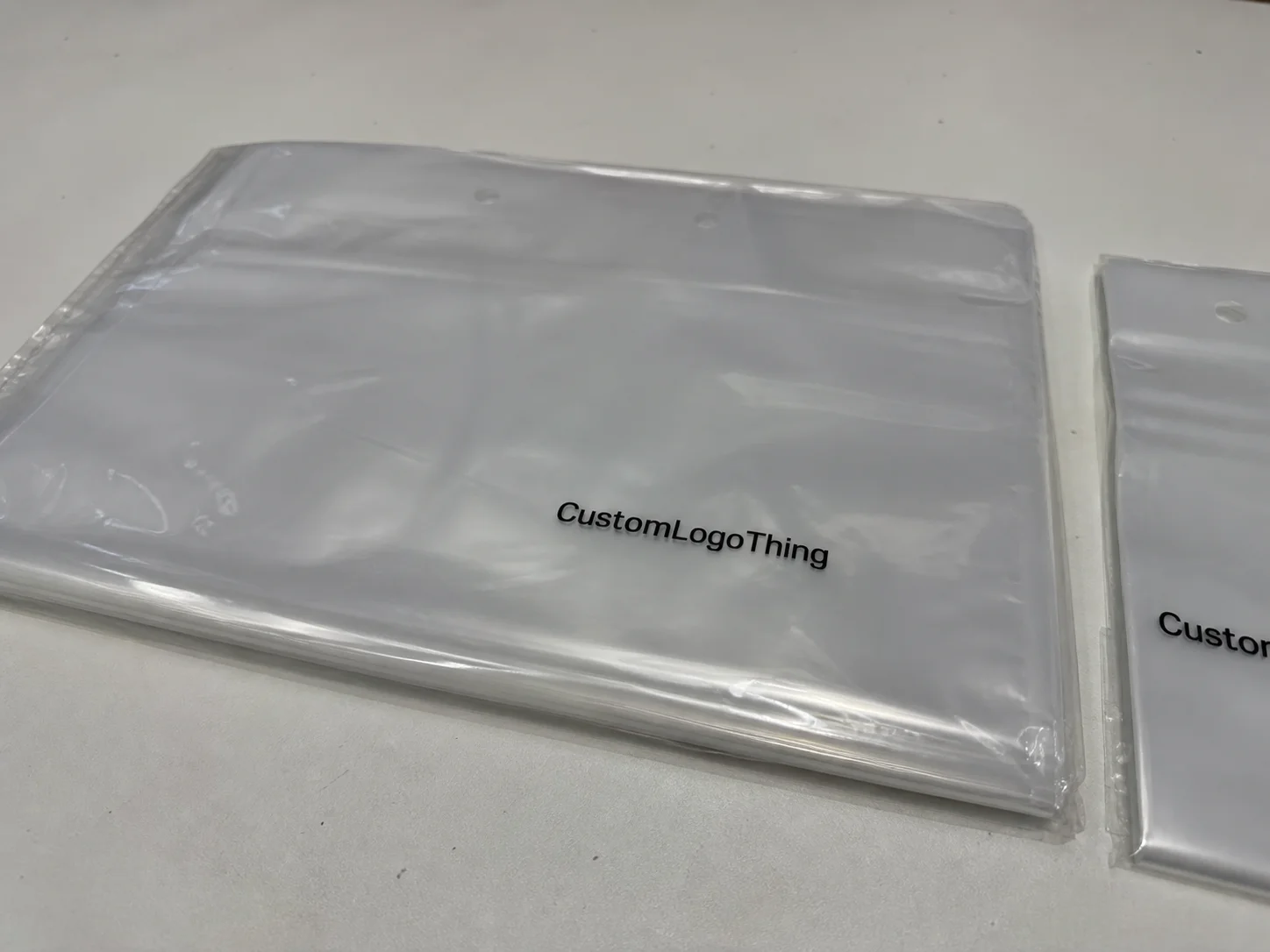
Buyer Fit Snapshot
| Best fit | Poly Mailer Wholesale Supplier Comparison projects where brand print, material claims, artwork control, MOQ, and repeat-order consistency need to be specified before quoting. |
|---|---|
| Quote inputs | Share finished size, material target, print colors, finish, packing count, annual reorder estimate, ship-to region, and any compliance wording. |
| Proofing check | Approve dieline scale, logo placement, barcode or warning zones, color tolerance, closure strength, and carton packing before bulk production. |
| Main risk | Vague material claims, crowded artwork, missing packing details, or unclear freight terms can make a low unit price expensive after revisions. |
Fast answer: Poly Mailer Wholesale Supplier Comparison: What Matters should be specified like a repeatable production item. The safest quote records material, print method, finish, artwork proof, packing count, and reorder notes in one written spec.
Production checks before approval
Compare the actual filled-product size with the drawing, then confirm tolerance on folds, seals, hang holes, label areas, and retail display edges. Reserve space for logos, QR codes, warning copy, and material claims before decorative graphics fill the panel.
Quote comparison points
Review material grade, print process, finish, sampling route, tooling charges, carton quantity, and freight assumptions side by side. A quote is only useful when the supplier can repeat the same color, closure quality, and packing count on the next order.
Poly Mailer Wholesale Supplier Comparison: What I Learned on the Factory Floor
The cheapest quote usually hides something ugly. Thin film. Weak sealing. Or that classic surprise freight charge that shows up after you already told finance “we saved money.” I’ve done enough Poly Mailer Wholesale Supplier comparison work to know the pretty PDF is not the product. The product is what survives a forklift, a conveyor belt, a rainy porch, and a customer who opens the package like they’re angry at it. A mailer that looks fine in a 300 dpi mockup can still fail at 3.5 mil film thickness and split at the side seam after two warehouse handoffs.
I remember walking a plant in Shenzhen in Guangdong Province where two poly mailers looked identical on paper: same 12 x 15 inch size, same white exterior, same black print, same quoted weight of 18 grams per piece. Then we ran abuse testing. One sample tore at the corner after three drops from waist height. The other held after being dragged across a rough pallet and tossed into a carton with a metal zipper pouch. Same spreadsheet. Very different outcome. That’s why a real poly mailer wholesale supplier comparison starts with performance, not a glossy sales deck. The difference was visible in the seal width too: 8 mm on the weak sample, 15 mm on the stronger one.
Honestly, I think most buyers get trapped by unit price. They compare $0.06 against $0.08 and call it a day. That misses the real math. If the cheaper mailer has a 4.5 mil film that stretches badly, a weak hot-melt adhesive, and inconsistent print registration, you’ll pay for it in returns, damaged goods, and reorders. The smarter poly mailer wholesale supplier comparison looks at material quality, print consistency, MOQ, turnaround, and landed cost. Not just the quote line that makes procurement look clever for five minutes. (I’ve seen that movie. It’s not a good one.)
When I buy or source packaging, I want the supplier to protect margin and reduce shipping headaches. That’s the whole game. A good poly mailer wholesale supplier comparison should help you choose the partner who can actually ship on spec, on time, and without drama. If you’re buying for apparel, cosmetics, subscription boxes, or accessories, those details decide whether your packaging becomes a cost center or a quiet brand asset. For a 10,000-piece reorder, even a $0.01 difference per unit means $100, and that is before you count reships or customer service labor in Los Angeles, Chicago, or Dallas.
Client note from a fashion brand owner: “We saved $1,400 on the quote, then spent nearly $900 replacing crushed returns and customer service time. The cheap mailer wasn’t cheap.”
That story is common. Not every low quote is bad, and not every expensive supplier is better. But if you don’t run a proper poly mailer wholesale supplier comparison, you’re basically buying with your eyes closed. I’ve seen brands in New York and Toronto make the same mistake because the quote landed in an inbox with nice formatting and a fake sense of certainty.
Product Details That Separate Good Suppliers From Bad Ones
A proper poly mailer wholesale supplier comparison starts with the structure of the bag itself. Standard polyethylene mailers are the common choice: lightweight, flexible, water-resistant, and inexpensive. Co-extruded film is stronger because it layers different materials together, which helps with puncture resistance and print appearance. Recycled content blends can work well too, but only if the supplier controls material consistency. I’ve seen recycled film that ran beautifully at a plant in Dongguan, and I’ve seen recycled film that looked like it was mixed in a bucket with blindfolds on. If the resin blend is off by even 8% to 12%, the whole roll can curl, haze, or seal unevenly.
Security and tamper-evident options matter for higher-risk shipments. If you’re mailing high-value cosmetics or small electronics, a security strip or tamper band can reduce theft claims. It won’t make you invincible, but it gives the customer and your team a clear sign if the mailer was opened in transit. In a poly mailer wholesale supplier comparison, that feature should be judged against your actual product risk, not marketing fluff. A tamper strip that adds $0.012 per piece on a 20,000-piece order is a real cost, but it can be cheaper than replacing a $38 lipstick set or a $79 Bluetooth accessory.
Print method matters more than people think. Flexographic printing is usually the better choice for higher volumes because it runs fast and keeps per-unit cost down once setup is done. Digital printing makes more sense for shorter runs, multiple SKUs, or frequent artwork changes. I’ve stood next to a flexo press in Shenzhen with an operator adjusting registration by tiny increments so a logo didn’t drift off center by even 2 millimeters. That kind of control separates a clean brand presentation from a sloppy one. In any poly mailer wholesale supplier comparison, ask how they handle repeat patterns, edge alignment, and ink consistency over the full run. A 4-color flexo job may take 2 hours of setup, while a digital run can start faster but cost more above 5,000 pieces.
For apparel brands, a matte white mailer with a sharp black logo is usually enough. For cosmetics, a soft-touch or frosted finish can raise perceived value without adding a ridiculous amount to cost. Subscription boxes often need a stronger seal because they move through more touchpoints. Accessories brands may care most about tear resistance because product corners can punch through thin film. The right poly mailer wholesale supplier comparison links the packaging spec to the shipping environment. A 14 x 19 inch mailer with 4 mil co-extruded film is often a better fit for heavy hoodies than a 12 x 15 inch bag that saves a cent and creates a mess later.
Branding value is real, but I keep it practical. A clean custom print does improve the unboxing moment. It also makes the parcel look intentional instead of like a generic plastic sack from the back of a warehouse. I’ve watched buyers spend $7,000 on a new logo refresh in Austin and then ruin it by choosing a mailer with fuzzy print and crooked repeat spacing. A good poly mailer wholesale supplier comparison helps you get the look without bloating cost. Even simple choices like a 1-color black logo on a 2.75 mil white mailer can look premium if the print density and edge alignment are controlled properly.
I’m also gonna be blunt here: recycled material is not magic. If a supplier says the film is “eco” and leaves it at that, keep asking questions. You need to know the actual blend, the odor level, the repeatability, and whether the same grade is available for your next reorder. Otherwise you’re just buying a label, not a packaging spec.
Common material types worth comparing
- Standard polyethylene — lower cost, lighter duty, fine for simple apparel and soft goods.
- Co-extruded film — better durability and better puncture resistance for rougher shipping.
- Recycled content blends — useful for sustainability goals, but ask about consistency and odor.
- Tamper-evident structures — smart for high-value, small-format products.
If a supplier cannot explain these options in plain language, that’s a red flag. A serious poly mailer wholesale supplier comparison should reveal who actually understands the material and who just forwards a catalog. I’d rather hear “our standard film is 3.2 mil with a 14 mm seal and 60% opacity” than “it’s premium.” Premium what, exactly?
Poly Mailer Wholesale Supplier Comparison: Specifications Buyers Should Check
Here’s where a poly mailer wholesale supplier comparison gets serious. You need the specs on one sheet, side by side, or you will miss the differences that matter. I always ask for film thickness, dimensions, seal width, adhesive type, print coverage, and weight tolerance. Those numbers tell you far more than words like “premium” or “heavy-duty.” Marketing language is cheap. Microns cost money. If one supplier quotes 70 microns and another quotes 90 microns, that difference can change puncture resistance by 20% or more depending on resin blend and seal design.
Thickness is one of the first things I check. Some suppliers quote in mil, some in microns, and some do a weird dance around both because their film is thinner than they want to admit. A 2.5 mil mailer may be fine for light apparel. A 4 mil or 4.5 mil structure may be better for heavier goods or longer shipping routes. In a real poly mailer wholesale supplier comparison, compare thickness against your actual product weight and corner shape, not against what sounds tough in a sales email. A 1.1 lb sweater in a 2.5 mil bag is asking for trouble if the parcel goes through a hub in Memphis or Atlanta with rough mechanical sorting.
Seal width matters too. A narrow seal can split under pressure. A stronger seal gives you more forgiveness during packing and transit. Adhesive type matters because some peel-and-seal strips stick well on day one but fail in colder warehouses. I’ve tested mailers at a facility in Suzhou where the adhesive performed beautifully at 75°F and then failed after sitting in a cold loading bay at 48°F for six hours. That’s the kind of thing that never shows up in a polished quote. It absolutely shows up in a warehouse complaint. For cold-chain-adjacent storage or winter shipping in Minnesota or Alberta, ask for peel strength data, not vague confidence.
Print coverage and color consistency should also be in the comparison. If your logo sits near the edge, ask about print bleed tolerance and registration. If you use a large block of color, ask how they prevent streaking and banding. If the supplier says “we’ll make it work,” that’s not a spec. That’s hope dressed as production planning. A solid poly mailer wholesale supplier comparison should include proof samples and written tolerances. A 2 mm registration window is acceptable for some jobs; for a luxury apparel brand, you may want 1 mm or tighter.
For quality control, I like to ask for color match standards, puncture resistance checks, seal integrity testing, and dimensional accuracy. ASTM methods are useful if the supplier can cite them, and ISTA testing is even better when you’re shipping through tougher networks. You can review packaging standards through the International Safe Transit Association, which is a lot more useful than generic “our bags are strong” claims. If a supplier can speak to standards, I trust the conversation more. If they can tell you the seal passes a 180-degree peel test at 1.5 kgf and the dimensions stay within ±2 mm, that’s a supplier I’ll keep in the stack.
Also ask about sustainability claims carefully. “Recyclable” and “recycled content” are not the same thing. “Post-consumer recycled” is not just a buzz phrase. It needs consistency, and consistency is what keeps the print and seal from going sideways. The EPA recycling resources are helpful if your team wants to understand the broader claim language. In a poly mailer wholesale supplier comparison, sustainability should be real, not decorative. If a supplier says 30% PCR content, ask for the actual blend, the odor level, and whether the same grade is available on repeat orders in 2025 and 2026.
Spec checklist to request from every supplier
- Material type and thickness in mil or microns.
- Exact size, including usable interior space.
- Seal width and adhesive type.
- Print method and maximum color count.
- Color tolerance and proofing method.
- Minimum order quantity and overrun policy.
- Sample availability and sample cost.
- Lead time from proof approval to shipment.
| Spec | Quote A | Quote B | What I’d watch |
|---|---|---|---|
| Film thickness | 2.75 mil | 4.0 mil | Higher thickness usually means better puncture resistance, but confirm flexibility. |
| Seal width | 12 mm | 18 mm | Wider seals can reduce split risk in transit. |
| Print method | Digital | Flexographic | Digital is useful for shorter runs; flexo can cut cost on volume. |
| MOQ | 1,000 pcs | 5,000 pcs | Lower MOQ helps cash flow, but check unit cost and shipping. |
That table is the kind of thing I build for buyers before they lock anything in. A real poly mailer wholesale supplier comparison should make those differences obvious. If one quote includes a 15 mm seal and 80 micron film while another uses 10 mm and 60 micron, you are not looking at equal choices. You are looking at different risk profiles.
Pricing, MOQ, and Real Supplier Comparison Math
The easiest way to waste money is to compare only the unit price. A proper poly mailer wholesale supplier comparison needs the full landed cost. That means unit price, printing setup, shipping, customs if relevant, payment fees, sample costs, and waste from over-ordering. I’ve watched a team celebrate a quote that was $0.015 lower per mailer, then lose the savings because the supplier charged $185 for setup and $240 for freight on a smaller run. Math is rude like that. It doesn’t care that the purchase order looked tidy in a spreadsheet.
Let’s use simple numbers. Suppose Supplier A quotes 5,000 custom mailers at $0.12 each, with a $180 setup fee and $260 freight. Supplier B quotes $0.14 each with no setup fee and $190 freight. On paper, Supplier A looks cheaper. Total cost is $600 plus $180 plus $260, or $1,040. Supplier B is $700 plus $190, or $890. That’s a $150 difference, and it matters. A smart poly mailer wholesale supplier comparison forces every supplier to quote the same spec. If Supplier A is offering 3 mil film and Supplier B is quoting 4 mil co-extruded film, then the “cheaper” option may actually be the weaker product.
MOQ is another trap. Lower MOQ sounds friendly. Sometimes it is. But the per-unit cost usually rises. A 1,000-piece order might be perfect for a launch test or seasonal SKU. A 10,000-piece order might be better if you have steady demand and storage space. The problem is inventory risk. I’ve seen brands order 20,000 mailers to save $0.02 per unit and then sit on half of them for 14 months because the packaging size changed after a product reformulation. That is not savings. That is expensive shelving. If your warehouse space in Phoenix or Newark costs $18 to $24 per pallet per month, the math gets ugly fast.
Here’s a simple framework I use in a poly mailer wholesale supplier comparison:
- Quote A: lowest unit price, but add setup, freight, and likely spoilage from weak seals.
- Quote B: mid-range unit price, better print quality, lower waste rate.
- Quote C: higher unit price, but lower MOQ and faster replenishment.
The best option is not always the cheapest. It’s the one that keeps your shipping cost stable and your customer complaints low. If a supplier gives you tiered pricing, ask for the breakpoints in writing. For example: 3,000 pcs at $0.16, 5,000 pcs at $0.13, 10,000 pcs at $0.105. Then calculate whether you can really store the larger quantity for six or eight months without tying up cash. On a 10,000-piece order, saving $0.025 per unit is only worth it if your cash flow and storage costs stay manageable.
Sample and proof costs matter too. Some suppliers charge $50 to $120 for samples or printed proofs. That is normal. Cheaply made packaging is much more expensive than a proper sample. I’d rather spend $80 on testing than chase 800 damaged parcels later. A disciplined poly mailer wholesale supplier comparison treats sample spending as insurance. If the sample arrives in 7 business days from Yiwu or Guangzhou, great. If the supplier needs 18 business days just to send a sample, that tells you something about their response speed before production even starts.
If you buy frequently, compare supplier stability as well. Can they repeat a prior color? Can they hold the same thickness? Can they source the same adhesive next month? I’ve negotiated with film vendors who tried to swap material grades without telling anyone because resin costs moved by a few cents per pound. Good suppliers tell you. Bad ones hope you won’t notice. That is why a poly mailer wholesale supplier comparison should include trust, not just math. A supplier in Shenzhen that can keep a 4.0 mil spec stable across three reorders is worth more than one in a cheaper region that changes every batch.
Process and Timeline: From Quote to Delivery
A clean poly mailer wholesale supplier comparison also checks process. The normal workflow is simple: inquiry, spec confirmation, artwork setup, proofing, sample approval, production, inspection, and shipping. The real world is messier. Delays usually happen when the buyer sends a fuzzy logo file, forgets to confirm the exact size, or takes four days to approve a proof that could have been reviewed in ten minutes. A supplier in Dongguan can only move as fast as the files and approvals allow.
When I visited a supplier near Dongguan, the production manager showed me a wall full of delayed jobs. Most of them were not delayed by the factory. They were delayed by buyers who changed artwork after proof approval or sent a final file that wasn’t actually final. That’s why I tell clients to have the size, quantity, print colors, destination, and target delivery date ready before asking for quotes. A tighter poly mailer wholesale supplier comparison starts with better inputs. If you know you need 8,000 pieces, 3.5 mil film, and a 1-color print shipped to Houston, say that up front.
Lead time depends on the order type. Stock mailers can move quickly, sometimes in 5 to 8 business days if the warehouse has inventory and the artwork is simple. Custom printed jobs usually need 12 to 20 business days after proof approval, and that can stretch if the design has multiple colors or special finishes. Shipping time sits on top of that. If you’re running a launch, build a buffer. I’ve seen a brand schedule a product drop for Friday and approve artwork on Tuesday. That’s not a timeline. That’s a panic event. A realistic custom run from proof approval to shipment is typically 12-15 business days for a 5,000-piece order with standard flexo print in one or two colors.
A trustworthy supplier should communicate milestones. You should know when the proof is ready, when printing starts, when QC is done, and when cartons leave the dock. If they disappear after deposit, that’s a problem. I don’t care how good the sample looked. Communication is part of the product. In a real poly mailer wholesale supplier comparison, responsiveness is a measurable feature. I prefer suppliers who send updates within 24 hours and confirm shipment documents, carton counts, and tracking numbers before the truck leaves the facility.
One useful detail: ask what happens if there is an error. If the color is off, if the dimensions miss spec by more than tolerance, or if the seal fails in inspection, what is the replacement policy? Some suppliers are fair. Some will argue about a 3 mm deviation as if it were a philosophical debate. Get that policy before you pay. If the supplier agrees to replace any lot that falls outside ±2 mm on width or below 90% seal integrity in testing, that is far more useful than a vague “we stand behind our product” line.
Why Choose Us for Poly Mailer Wholesale Orders
At Custom Logo Things, we keep the conversation practical. No theater. No fake urgency. Just a clear poly mailer wholesale supplier comparison process that focuses on specs, price transparency, and production control. I’ve spent 12 years in custom printing, and I know where supplier quotes tend to get slippery. Sometimes it’s the adhesive. Sometimes it’s the freight. Sometimes it’s a “minor” material swap that turns into a customer complaint two weeks later. I’ve seen a quote for 10,000 mailers at $0.118 turn into a headache because the factory quietly changed the film from 4.0 mil to 3.2 mil after resin pricing moved.
What helps us is direct factory relationships. That matters because it reduces translation errors and keeps QC standards tighter. When I’m negotiating with film and adhesive suppliers, I ask exact questions: What is the seal peel strength? What is the film’s puncture resistance? What happens if the color delta drifts across the run? Those aren’t fancy questions. They’re basic. A supplier that can answer them usually knows what they’re doing. A supplier that dodges them is usually hoping the buyer won’t check. I’d rather hear “our peel strength is 1.8 kgf and we hold a 14 mm seal width” than get a hand-wave and a nice logo on a PDF.
I’ve had factories tell me they could “match any color.” Sure. Then I asked for a drawdown and a measured reference under standard lighting. Suddenly the answer got less enthusiastic. That’s normal. I’d rather hear the truth than hear confidence and get a crooked print run. A good poly mailer wholesale supplier comparison is built on facts, not polished promises. If a factory in Shenzhen, Dongguan, or Xiamen cannot provide proof images within 48 hours, I already know I’ll be chasing them later.
We also help buyers Choose the Right custom size and structure for the product they actually ship. Too many brands pick packaging that looks good in a mockup but wastes space in fulfillment. A 12 x 15 inch mailer may be fine for lightweight apparel. A 14 x 19 inch mailer might be better for thicker garments or bundled sets. Wrong size means higher postage, more void space, and more product movement. That’s not branding. That’s a bill. On USPS and other carrier networks, even a few ounces of extra dimensional weight can change costs enough to erase packaging savings.
If you want a broader packaging mix beyond mailers, our Custom Packaging Products page covers other options we source and print. If you already know you need mailers, our Custom Poly Mailers are the main starting point. For recurring buyers, our Wholesale Programs are built around repeat orders, predictable specs, and less back-and-forth on every reorder. That matters when you’re placing 5,000 or 25,000 pieces and need the same 3-color art to print the same way every time.
I’ve seen brands save money by standardizing on one or two sizes instead of four. That makes warehousing easier, reduces reprint risk, and simplifies fulfillment. It also makes your poly mailer wholesale supplier comparison more useful because you’re comparing the same item repeatedly instead of reinventing the wheel every quarter. A 12 x 15 inch and a 14 x 17 inch mailer may cover 80% of what most apparel brands ship from Shopify or Amazon FBA.
What do buyers get when the supply chain is managed properly? Fewer tears. Better print consistency. Less time spent chasing updates. And a packaging line that behaves like a tool, not a surprise. That’s the value here. Not hype. Not buzzwords. Just better output from a better poly mailer wholesale supplier comparison. If the order leaves the factory in Guangdong on a Tuesday and lands in your distribution center by the following Friday, that’s the kind of boring result I like.
What Makes a Strong Poly Mailer Wholesale Supplier Comparison?
A strong poly mailer wholesale supplier comparison is not a price hunt. It is a risk check. That means comparing material grade, print quality, adhesive performance, MOQ, lead time, and freight terms with the same exact inputs. If you change the bag size, thickness, or artwork from one quote to the next, the comparison is already broken. You’re not comparing suppliers. You’re comparing different products and hoping no one notices.
The best comparison also includes the boring stuff. Response time. Proof accuracy. Reorder stability. Packaging carton quality. Even pallet loading standards. I’ve had buyers obsess over a $0.01 unit difference and then get crushed cartons because the supplier used flimsy outer boxes. That sort of thing sounds small until 2,000 mailers arrive bent, dirty, or useless. In a real poly mailer wholesale supplier comparison, the factory’s handling of cartons, cartons per pallet, and wrap quality can matter just as much as the mailer itself.
Another thing I look for is consistency across reorders. One good run means nothing if the next run shifts from a 4.0 mil co-extruded film to a thinner blend with the same quote. That happens more often than people think. Resin prices move. Suppliers get creative. Suddenly your “same” order is not the same at all. A proper poly mailer wholesale supplier comparison should ask the factory how they control repeat batches, how they store approved samples, and what they do when a raw material changes.
I also like to compare who is actually answering the questions. If you ask about seal width, color tolerance, or peel strength and get a vague sales answer, that’s a warning. If the supplier can respond with measured data, testing method, and tolerance range, you’re probably dealing with a factory that understands packaging beyond the quote sheet. That matters because the quote sheet does not ship anything. The factory does.
There’s also the question of fit. A custom mailer that is too large wastes postage. One that is too small forces staff to overstuff packages and stress the seal. In many cases, the better answer is not the cheapest mailer but the right-size mailer. That is exactly why a poly mailer wholesale supplier comparison should include the actual product dimensions, the usable interior space, and the carrier class you plan to ship through. A bag that works for lightweight tees may be a disaster for thick hoodies or boxed accessories.
Next Steps for a Smarter Poly Mailer Wholesale Supplier Comparison
If you want a clean poly mailer wholesale supplier comparison, use the same specs for every quote. Same size. Same thickness. Same print colors. Same destination. Same quantity. If one supplier quotes a 2.5 mil mailer and another quotes 4 mil, you are not comparing suppliers. You are comparing different products and pretending it is a buying decision. I’ve seen teams in San Francisco and Miami do this and then act surprised when the landed cost math falls apart.
Request samples before you place a full order. Then test them with real products. Put in your heaviest SKU. Drop the packed mailer from waist height. Rub the print. Check the seal after a cold day and a warm day. If you ship through rough handling, test for puncture resistance. A proper poly mailer wholesale supplier comparison uses real shipping conditions, not showroom conditions. If you can, test 20 pieces with a 2 lb item and 20 pieces with a 4 lb item so you know where the structure starts to fail.
Ask every supplier these questions:
- What is the exact film thickness?
- What is the MOQ for this print method?
- What is the lead time after proof approval?
- What are the freight terms to my destination?
- What happens if the print is off-spec?
Then compare landed cost, not just unit price. Include setup, shipping, and expected waste. If one supplier gives you a lower price but higher variability, that variability costs money. Sometimes the cheapest quote is the one that costs the most later. I’ve lived that lesson more than once, usually after a buyer said, “We can probably get away with it.” Probably is not a packaging strategy. If you’re comparing two suppliers at $0.13 and $0.15 per unit for 5,000 pieces, the extra $100 may be the price of a cleaner seal, better print, and fewer customer complaints.
Here’s the action plan I recommend:
- Gather exact specs and product weight.
- Request two or three quotes with identical inputs.
- Ask for samples and printed proofs.
- Check print quality, seal strength, and material feel.
- Calculate total landed cost.
- Place the order that balances cost, consistency, and lead time.
If you do that, your poly mailer wholesale supplier comparison stops being a guessing contest and starts being a purchasing decision that protects your margin. That is the whole point. Lower damage rates. Fewer surprises. Better customer experience. And Packaging That Actually holds up after it leaves your dock. A 5,000-piece order with a 12-15 business day production window and a 4 mil film spec is a lot easier to manage than a “cheap” quote that turns into rework, returns, and a very annoyed finance team.
At Custom Logo Things, that is how I prefer to work. Clear specs. Honest pricing. Real samples. Fewer headaches. A proper poly mailer wholesale supplier comparison should end with a supplier you can reorder from without crossing your fingers every time the truck arrives. If the supplier is in Shenzhen, Ningbo, or Dongguan and can hit your tolerance, your timing, and your price target, that’s a relationship worth keeping.
FAQs
What should I compare first in a poly mailer wholesale supplier comparison?
Start with film thickness, seal quality, and print method. Then compare MOQ, lead time, sample availability, and shipping costs so you know the real landed cost. A low quote with weak material is a classic trap. If one supplier offers 2.5 mil film and another offers 4 mil co-extruded film, the unit price alone won’t tell you which one protects your shipments better.
How do I know if a poly mailer supplier’s quote is actually competitive?
Make sure every quote uses the same size, thickness, print colors, quantity, and destination. A low unit price can still lose if setup fees, freight, or weak material increase your total cost. That’s why a consistent poly mailer wholesale supplier comparison matters. A quote at $0.12 per unit for 5,000 pieces may be worse than $0.14 per unit if the second supplier has no setup fee and lower freight from Guangdong to your warehouse.
What MOQ is normal for custom printed poly mailers?
MOQ varies by print method and supplier, but custom runs usually cost less per unit at higher volumes. Ask for tiered pricing so you can compare whether a larger order really saves money after storage risk and cash flow are included. A common spread is 1,000 pieces for digital print and 5,000 pieces or more for flexographic print, depending on the factory in Shenzhen, Dongguan, or Yiwu.
How long does a custom poly mailer order usually take?
The timeline depends on artwork approval, proofing, production, inspection, and shipping method. Stock orders move faster; custom printed orders need extra time for setup and quality checks. In practice, I usually see 12 to 20 business days after proof approval for custom work, depending on the run size. For a standard 5,000-piece custom order, 12-15 business days after proof approval is a realistic factory timeline before transit time is added.
Can I get samples before placing a wholesale order?
Yes, and you should. Samples reveal seal strength, print quality, and material feel better than any spec sheet. Test them with your actual products and shipping conditions before you commit to a full run. That one step saves a lot of pain later. I’d rather spend $80 on a sample pack than discover a weak adhesive after 800 parcels have already gone out.