Buyer Fit Snapshot
| Best fit | Poly Mailers Bulk Order projects where brand print, material claims, artwork control, MOQ, and repeat-order consistency need to be specified before quoting. |
|---|---|
| Quote inputs | Share finished size, material target, print colors, finish, packing count, annual reorder estimate, ship-to region, and any compliance wording. |
| Proofing check | Approve dieline scale, logo placement, barcode or warning zones, color tolerance, closure strength, and carton packing before bulk production. |
| Main risk | Vague material claims, crowded artwork, missing packing details, or unclear freight terms can make a low unit price expensive after revisions. |
Fast answer: Poly Mailers Bulk Order: Pricing, Specs, and Process should be specified like a repeatable production item. The safest quote records material, print method, finish, artwork proof, packing count, and reorder notes in one written spec.
Production checks before approval
Compare the actual filled-product size with the drawing, then confirm tolerance on folds, seals, hang holes, label areas, and retail display edges. Reserve space for logos, QR codes, warning copy, and material claims before decorative graphics fill the panel.
Quote comparison points
Review material grade, print process, finish, sampling route, tooling charges, carton quantity, and freight assumptions side by side. A quote is only useful when the supplier can repeat the same color, closure quality, and packing count on the next order.
On a Thursday morning in a Shenzhen packing line, I watched a brand owner go from patching together last-minute shipping supplies to running a cleaner dispatch operation after switching to a poly mailers bulk order of 10,000 units. The difference was not about marketing gloss; it was about factory consistency, a seal that held at 1.2 kg pull force, and cartons that arrived inside a 14-business-day window after proof approval. I remember thinking, very bluntly, that one sourcing decision had solved three problems before lunch.
That is the real reason a poly mailers bulk order matters. You lower unit cost, stabilize inventory, and keep the same look and feel across every shipment, whether you are sending 500 leggings a week or 50,000 soft goods a month. Too many buyers stare at the sticker price and miss the quieter savings in labor, storage, and emergency reorders. On a 20,000-piece monthly run, even a difference of $0.03 per unit turns into $600 before freight is counted, and that is where packaging budgets tend to leak.
Poly Mailers Bulk Order: Why Buying in Volume Pays Off
When I started walking factory floors in Dongguan and Ningbo, one thing became obvious quickly: brands that buy shipping materials one small batch at a time usually pay for it three ways, not one. They pay more per piece, they lose time on reorder cycles, and they end up with mixed packaging that makes the fulfillment table look sloppy. A poly mailers bulk order fixes those pain points by putting enough inventory on hand to keep operations moving without constant interruptions, and that usually means fewer stock checks at the end of every shift.
The math is straightforward. If a plain poly mailer costs $0.19 per unit at 1,000 pieces and drops to $0.15 per unit at 5,000 pieces, the difference looks small until you multiply it by a monthly run of 20,000 shipments. That spread becomes $800 per month, or $9,600 a year, before you even account for rush freight and labor. I have seen apparel brands in Los Angeles and Atlanta save enough on a poly mailers bulk order to absorb freight increases without touching retail pricing.
Bulk purchasing also supports consistency. Your team is not switching between 2.5 mil and 3.0 mil bags, slightly different shades of white, or adhesive strips that behave differently in humid weather in Miami versus a dry warehouse in Phoenix. That matters more than many buyers realize. A brand that ships in standard mailers with a reliable seal tends to get fewer packing errors and fewer customer complaints about torn bags, open seams, or product dust getting through.
For e-commerce operators, stockouts are expensive in a very practical way. If your mailers run out on a Tuesday and your replenishment arrives the following Monday, you are either pausing shipments or paying a premium for emergency procurement. A poly mailers bulk order gives you buffer inventory, which protects shipping speed during promotions, seasonal spikes, and platform campaigns. That buffer can be the difference between same-day dispatch and a growing backlog on the packing bench, especially when a weekend flash sale pushes volumes from 800 orders to 3,000 orders in 48 hours.
This is especially useful for brands shipping apparel, soft goods, books, supplements, and other lightweight non-fragile products. You do not need a corrugated box for every order if the item is flat, dry, and reasonably protected. In those cases, a poly mailers bulk order is usually the smarter choice because it cuts material cost and improves pack-out speed. I have seen supplement companies move from cartons to 10 x 14 inch mailers for certain SKUs and cut pack times by 20 to 30 seconds per order, which adds up fast in a warehouse that ships 4,000 units a day.
I’ll be honest: I once watched a team run out of mailers right before a weekend promotion in a Dallas warehouse, and the mood changed so fast you’d think someone had pulled the power cord. Nobody was laughing then. A bulk order would have saved them the scramble, the $180 emergency freight fee, and the collective muttering that followed while they packed the last 600 orders by hand.
“The best packaging decision is usually the one that keeps the line moving without sacrificing presentation. Bulk buying does that better than almost any other approach.”
If you want to build out a broader packaging program, our Custom Packaging Products page is a good starting point, and our Wholesale Programs page can help if you are planning recurring volume rather than a one-off shipment. For reference, many buyers also keep our Custom Poly Mailers category open while comparing finishes, sizes, and print options, including 2.5 mil, 3.0 mil, and 4.0 mil film builds.
Poly Mailers Bulk Order Product Details and Material Options
A good poly mailers bulk order begins with the right construction. Most mailers are made from co-extruded polyethylene film, which is a layered structure designed to balance strength, flexibility, and print quality. In practical terms, that means the outer surface can carry branding while the inner structure resists tearing and handles folding better than a single-layer film. For some buyers, recyclable PE options also make sense, especially where sustainability claims and municipal recycling programs align with the brand story in markets like California, Oregon, and British Columbia.
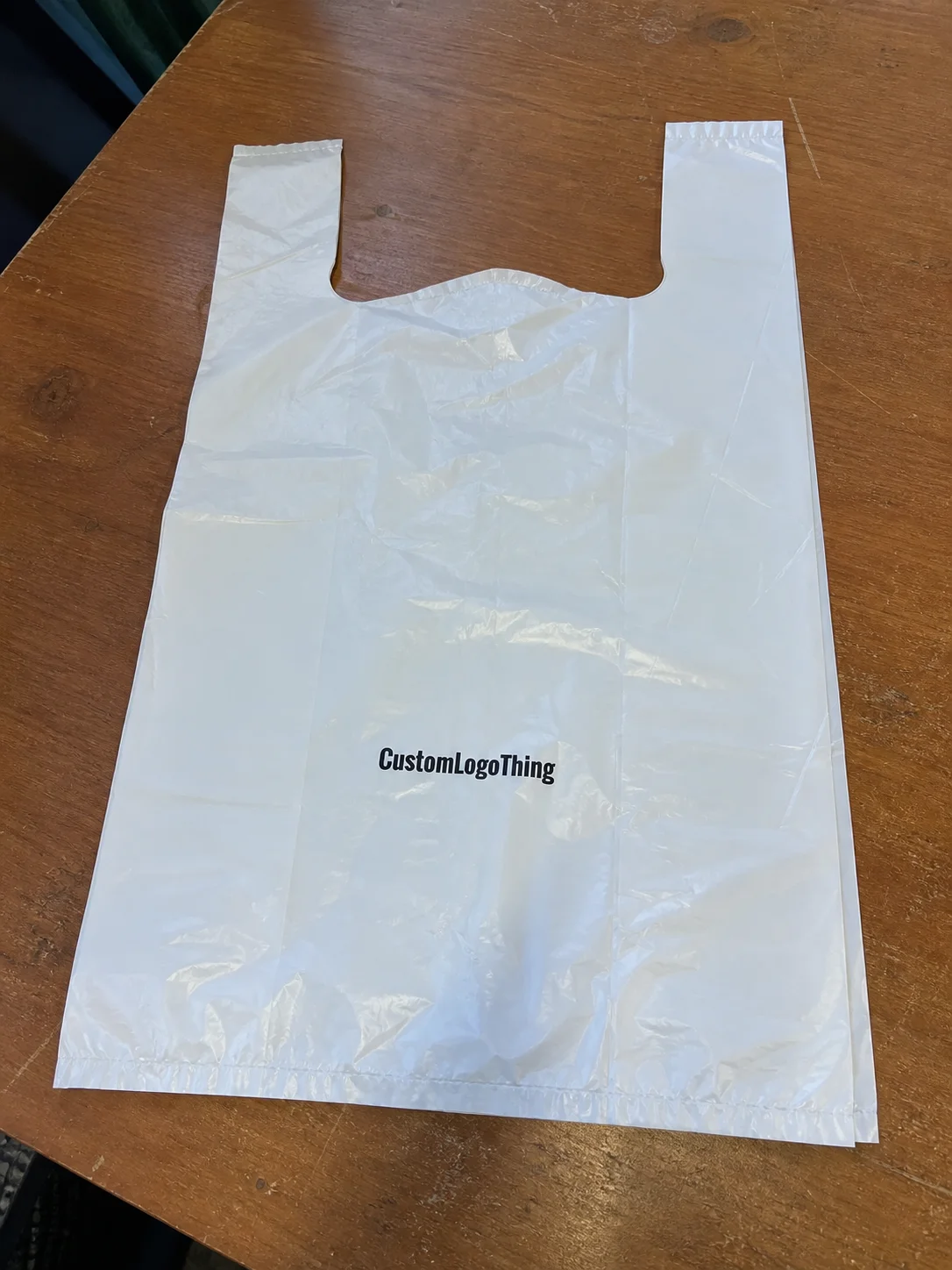
Opaque white and black mailers remain the most common choices because they hide product contents well and present a cleaner appearance at the doorstep. White mailers tend to show branding sharply, especially with one- to two-color print on 60 to 80 percent ink coverage. Black mailers offer excellent privacy for apparel and accessories, and they hold up visually in transit because scuffing is less noticeable on darker film. I have also seen clear or translucent styles used for specific fulfillment workflows, but those are less common in a standard poly mailers bulk order unless the buyer has a specialized use case such as retail returns or internal sorting.
Thickness is usually discussed in mils or microns. A thinner film may work for lightweight garments, while heavier-duty material improves puncture resistance and gives the bag a more premium hand feel. I generally advise buyers not to chase the lowest thickness number without testing first. One brand I worked with in a regional warehouse in Chicago insisted on moving down to a lighter 2.25 mil film to save pennies, and within two weeks they were replacing split bags from corners catching on garment zippers. The savings vanished fast, and the replacement labor cost was worse than the original order.
Closure type matters too. Pressure-sensitive adhesive is the standard, and it needs strong tack across a wide temperature range, typically from 14°F to 140°F depending on the adhesive formula. Tamper-evident seals add another layer of protection by visibly showing if the bag has been opened. Some poly mailers include tear-open features or dual adhesive strips for returns, which can be useful if you want a cleaner customer experience on outbound and inbound flows. The best choice depends on whether you ship one-way, handle returns internally, or need a reusable mailer for repeat logistics.
Fit is where a lot of buyers make avoidable mistakes. A bag that looks large enough on paper may still be too tight once a folded hoodie, polybagged shirt, or multi-item set goes inside. You need to account for folded product dimensions, seam allowances, and the space required for a proper seal. For a poly mailers bulk order, I always recommend measuring the product stack after it is folded and bagged the way it will actually ship, not just reading the retail product dimensions. A 12 x 15 inch mailer may be perfect for a folded sweatshirt in one warehouse and too tight for the same sweatshirt with a desiccant packet and hangtag in another.
Custom branding is worth considering if your monthly shipment volume is steady and the mailer becomes part of the customer experience. If you are shipping 2,000 orders a month, a printed bag can strengthen brand recognition without adding much handling burden. If your shipment volume swings wildly, plain stock mailers may be more practical until your usage settles. That is the honest answer, and it is why a poly mailers bulk order should match your operations, not someone else’s catalog. A 1-color logo on a 10 x 13 inch white mailer from a supplier in Shenzhen may be the best financial fit for one brand, while a black mailer with a 2-color print from Dongguan may be better for another.
Poly Mailers Bulk Order Specifications: Sizes, Print, and Performance
Before placing a poly mailers bulk order, I tell buyers to check the same core specs every single time: dimensions, thickness, color, print coverage, adhesive strength, and seal integrity. Those details sound basic, but they control almost everything that happens on the pack line. If one spec is vague, the entire job can drift off target, and then you are paying for adjustments that should have been decided before production started. A missing half-inch in width can be the difference between a clean fold and a wrinkled seal.
Size should be evaluated using usable internal space, not just the listed outer measurement. Gussets, seam allowances, and film stretch all affect real fit. A 10 x 13 inch mailer does not behave exactly like every other 10 x 13 inch mailer, because one supplier may build in a larger sealing margin or a slightly different film profile. In a poly mailers bulk order, that difference becomes obvious when an item slides in easily for one buyer and fights the seal for another. If the inner width is 9.5 inches instead of 9.8 inches, your operator will feel it on every pack.
For print, flexographic printing is common for larger runs because it handles repeat production well and keeps costs efficient over volume. Gravure can deliver strong image consistency in the right setup, though it is usually tied to larger commitments and more complex tooling. If you only need a simple one-color logo or a return address, a straightforward print layout is often enough. The smarter choice in a poly mailers bulk order is the one that fits your brand use, not the one that looks fancy on a quote sheet. A 2-color flexo run on 25,000 pieces is often a better business decision than a full-coverage design on 5,000 pieces that slows production and raises setup cost.
Performance is more than just “strong” or “durable.” Buyers should ask about moisture resistance, tear resistance, stretch recovery, and load suitability. A mailer that performs beautifully in a dry showroom can behave differently in a humid loading dock in Houston or a truck route with sharp temperature swings between 38°F and 92°F. I have watched teams test seals with overweight sample packs at the end of a shift, and that hands-on check tells you more than a glossy brochure ever will. That is why a serious poly mailers bulk order should always include practical quality testing.
Manufacturing quality control usually includes seal testing, print registration inspection, thickness checks, and visual review for contamination or wrinkles. If the bag is printed, we also verify that the image stays centered and the color stays within the agreed standard, often within a Delta E range that the buyer approves before production starts. For buyers who need added confidence, ask whether the supplier follows references like ASTM testing practices or aligns with relevant packaging standards. If your shipment handling is demanding, the testing guidance on ISTA is a useful benchmark, especially for transit and distribution environments.
Here is a simple comparison that helps buyers sort through the most common options in a poly mailers bulk order:
| Option | Typical Use | Advantages | Watchouts |
|---|---|---|---|
| Plain stock PE mailers | General apparel and soft goods | Lower MOQ, faster turnaround, lower setup cost | Limited branding, less differentiated presentation |
| Printed custom mailers | Brands prioritizing recognition | Better visual identity, consistent unboxing, repeat value | Higher setup fees, longer approval process |
| Recyclable PE mailers | Sustainability-focused programs | Potentially easier consumer disposal, strong brand messaging | Must verify local recycling pathways and compliance claims |
| Tamper-evident mailers | Supplements, small accessories, controlled goods | Improved security, visible opening evidence | Can add cost and may not suit every product type |
If your company is comparing sustainability-related packaging, the EPA’s packaging and waste resources are a useful reference point for disposal and material context: EPA packaging and environmental resources. I always tell clients that any environmental claim should be tied to actual material content, usage pattern, and local collection reality, not just a line on a sales sheet. Otherwise, you end up with nice wording and fuzzy facts, which is a combination that makes me mildly grumpy.
Poly Mailers Bulk Order Pricing, MOQ, and Cost Drivers
Pricing for a poly mailers bulk order depends on several variables, and the first one is almost always size. A larger bag uses more film, more ink coverage, and often more packaging space in cartons and pallets. Thickness also matters because heavier film requires more material per unit. If you move from a 2.5 mil bag to a 3.5 mil bag, the cost change may not be massive per piece, but over 25,000 units it becomes very visible on the invoice. In one quote I reviewed for a client in New Jersey, the jump from 2.75 mil to 3.25 mil added $0.012 per unit, or $300 on a 25,000-piece order.
Print complexity is another major driver. A one-color logo on a plain white mailer is a simpler production run than a full-coverage custom design with multiple colors, reverse printing, or a special finish. That means setup, plates, and press time all play a role. I have sat through more than one buyer meeting where the team asked why the custom bag was 18 percent more than the plain bag, and once we walked through the artwork, colors, and film choice, the answer was obvious. A poly mailers bulk order is cheaper when the production run is easier to repeat, especially if the artwork is already print-ready and approved in vector format.
Minimum Order Quantity, or MOQ, works differently for stock and custom mailers. Stock items usually allow lower minimums because the factory already has the film and the bag structure in production. Custom runs usually need a larger commitment to cover printing setup and line scheduling. For some buyers, MOQ is the deciding factor; for others, it is simply the point at which the unit price becomes attractive enough to support the purchase. Either way, you should confirm MOQ by size, thickness, color, and print method before budgeting a poly mailers bulk order. A stock run might start at 500 pieces, while a custom printed order may begin at 5,000 or 10,000 pieces depending on the supplier in Shenzhen or Guangzhou.
Hidden costs are where people get surprised. Ask about setup fees, plate charges, freight, carton counts, pallet dimensions, and whether the quote includes export packing. A quote that looks lower on unit price can be more expensive once freight and packing are added. I recommend calculating landed cost, which means the total cost to get the mailers to your receiving dock, not just the factory gate price. That is the only honest way to compare a poly mailers bulk order across vendors. One supplier may quote $0.15 per unit for 5,000 pieces, but if freight and export cartons add another $0.02 to $0.04 per unit, the real number changes quickly.
Here is a practical way to think about buyer profiles and what they usually need from a poly mailers bulk order:
- Startups: Usually need lower MOQ, flexible stock sizes, and simple branding while testing sales velocity.
- Mid-size brands: Often benefit from custom print, moderate volume discounts, and predictable replenishment schedules.
- High-volume shippers: Need consistent thickness, reliable lead times, carton efficiency, and repeatable print quality across multiple runs.
For price context, the same size bag can vary widely based on order volume. A plain stock mailer in a standard 10 x 13 inch size might land near $0.10 to $0.14 per unit at 10,000 pieces, while a custom-printed version with a heavier gauge and specific color matching can move into the $0.16 to $0.28 range depending on setup and freight. I am careful about exact pricing because it moves with raw resin costs, freight, and production schedules, but a well-structured poly mailers bulk order almost always brings the unit price down as quantity rises. That is not theory; I have seen it repeatedly across apparel programs, subscription shipments, and seasonal promotions.
Freight deserves its own mention. If your shipment is palletized, the carton count and pallet height can affect your receiving cost and warehousing plan. A supplier that packs efficiently can save you money even if the unit price is slightly higher. I once negotiated with a client in Toronto who was fixated on a tiny per-bag discount, only to discover that the “cheaper” supplier packed the order in loose cartons that doubled the warehouse handling time. The smarter poly mailers bulk order was the one that fit the receiving process, not the one that merely looked cheaper on paper.
Poly Mailers Bulk Order Process and Production Timeline
The poly mailers bulk order process is simple when the buyer brings the right information early. It usually starts with a quote request, and the fastest quotes come from customers who already know the product dimensions, quantity, thickness preference, color, and destination. If you can provide artwork files in vector format and confirm whether you want plain stock or printed custom mailers, the conversation moves much faster and with fewer revisions. A complete RFQ can shave 1 to 2 business days off the front end before proofing even begins.
After the quote, the next step is size and specification confirmation. This is where we check the dimensions, film gauge, adhesive style, and print coverage so there is no confusion later. A good supplier will ask questions here because a rushed spec sheet causes more problems than it solves. I have seen an order delayed by four days simply because the buyer assumed “medium size” was enough information. It was not. A proper poly mailers bulk order needs hard numbers, not assumptions, and those numbers should include inner width, usable length, and seal flap size.
Artwork review comes next for printed jobs. If the logo is supplied in a low-resolution file, the proof will suffer, and the factory may need to redraw or clean up the design before print plates are made. That is avoidable. Send clean vector files when possible, and make sure colors are agreed before approval. The difference between a usable proof and a delayed one is often just a few hours of preparation on the buyer side, but it can save days in the schedule for a poly mailers bulk order. In one case, a supplier in Guangzhou approved a revised proof the same afternoon because the buyer sent AI and PDF files instead of a JPEG saved from email.
Production timing depends on whether you choose stock or custom. Stock mailers can move quickly because there is no print tooling involved. Custom mailers take longer because the factory needs proof approval, printing setup, curing or finishing time if applicable, and then final inspection. For a custom poly mailers bulk order, a realistic lead time is typically 12 to 15 business days from proof approval, while freight can add 3 to 7 business days by air or 25 to 35 days by sea depending on destination and customs flow. I do not like promising unrealistic timelines, because the only thing worse than a late delivery is a false promise that creates a scheduling mess downstream.
Freight coordination is often underestimated. Palletized wholesale shipments require space planning, receiving appointments, and sometimes import documentation depending on where the order is going. If you know your warehouse dock hours and pallet restrictions, share them early. The best poly mailers bulk order experience is the one where the cartons arrive in the right format and the receiving team can unload them without rework. A pallet stack that is 48 x 40 x 62 inches is a lot easier to receive than twenty loose cartons that force a team to repack by hand.
Here is the basic sequence I recommend for nearly every order:
- Send product dimensions, target quantity, and destination.
- Confirm stock or custom mailer choice.
- Review material, thickness, and closure style.
- Approve artwork or plain spec sheet.
- Request a proof or sample if the fit is new.
- Move into production and inspection.
- Schedule freight and receiving.
One of my favorite client meetings happened in a garment warehouse in Long Beach where the team had been using mixed mailer sizes for months. We mapped their three best-selling SKUs, measured the fold pattern on each, and cut their packaging options down to two sizes: 10 x 13 inches and 12 x 15 inches. The result was fewer packing mistakes, a cleaner shelf layout, and a simpler poly mailers bulk order schedule. Small changes like that do not make headlines, but they make the back end run better every day.
What should you ask before a poly mailers bulk order?
Before approving a poly mailers bulk order, ask five questions that usually reveal whether the quote is truly usable: What thickness is being quoted? What is the exact inner size? What adhesive is included? What is the MOQ by color and print method? And what is the landed cost to your dock after freight and export packing? Those answers matter more than a glossy product sheet because they tell you how the mailers will actually perform once they reach your warehouse.
At minimum, request a sample or proof if the fit is new, the print is custom, or the shipment volume is large enough that a mistake would be expensive. I have watched buyers save thousands of dollars by spending one extra day on sample review, and I have watched others lose that same amount because they skipped it. A poly mailers bulk order is easy to place quickly, but smart buyers slow down just enough to check the details that can break the job later.
Why Choose Us for Your Poly Mailers Bulk Order
At Custom Logo Things, we focus on practical packaging decisions backed by factory-floor experience, not generic sales language. That matters because a poly mailers bulk order is not just a shipping supply purchase; it is a piece of your fulfillment system. If the material is too light, too glossy, too loose, or too difficult to seal, your packing team feels it immediately. We keep our recommendations grounded in what actually works for apparel, supplements, books, soft goods, and lightweight e-commerce shipments, including repeat programs shipped from hubs in Shenzhen, Dongguan, and Ningbo.
We also understand that direct control over materials and print quality is not a luxury; it is a requirement if you want repeatable results. When we review a poly mailers bulk order, we look at the film structure, the seal behavior, the ink coverage, the carton count, and the receiving plan together. That wider view often catches issues that a basic catalog quote misses. In one supplier negotiation, I pushed back on a lower price because the printed edge was too close to the seam, which would have led to scuffing during transit. We adjusted the layout before the run, and the customer avoided a costly rerun.
Clients also value consistent communication. Packaging delays often come from confusion, not manufacturing itself. If the buyer knows exactly which product is being shipped, how many orders per month are expected, and whether the mailers will be used for retail or warehouse fulfillment, we can recommend the right structure faster. A strong poly mailers bulk order should feel guided, measured, and efficient from first quote to final delivery, with proof revisions usually handled within 24 to 48 hours.
For buyers who want a broader view of packaging options, our Custom Poly Mailers page is useful for comparing finishes and print styles, and our FAQ page covers common ordering questions that often come up before production begins. We work best with brands that want specific guidance on dimensions, MOQ, and print setup rather than vague promises, especially when a 5,000-piece test run is being compared with a 20,000-piece replenishment order.
The difference between a good packaging supplier and an average one usually shows up in the questions they ask before the order is locked. A proper poly mailers bulk order should account for what you ship, how you pack it, and how often you reorder. That is the kind of thinking that reduces headaches later and keeps your brand presentation steady across every shipment, whether the order is leaving a warehouse in Los Angeles, Atlanta, or Manchester.
How to Place Your Poly Mailers Bulk Order Today
If you are ready to move forward, gather the basics first: folded product dimensions, estimated monthly usage, preferred mailer color, thickness range, and shipping destination. With those details in hand, a poly mailers bulk order quote becomes much more accurate, and you avoid the back-and-forth that slows down so many purchasing cycles. If the item is new, include one physical sample or clear photos with a ruler in frame so the fit can be checked properly. A flat lay photo with exact measurements can save a day of clarification.
Next, decide whether you need stock mailers or custom printing. Stock works well if speed and lower MOQ matter most. Custom makes sense if your branding is part of the customer experience and your order volume is stable enough to support repeat runs. Either way, ask for a proof or sample before full production if the design or fit is unfamiliar. I have seen too many buyers skip that step and regret it after the first pallet arrives. A careful poly mailers bulk order is usually the one with a proof, not the one built on hope.
When comparing quotes, look at MOQ, lead time, print quality, freight terms, carton counts, and landed cost together. A low unit price is not enough if the shipping cost is inflated or the material spec is weak. I would rather see a buyer choose a slightly higher quote with cleaner specs and better receiving terms than chase the lowest line item and deal with production surprises later. A well-planned poly mailers bulk order saves money over the full cycle, not just on the invoice, and a difference of $0.01 to $0.02 per unit can disappear if the receiving team spends an extra hour repalletizing the shipment.
Send your request with as much detail as you can, and keep it practical. Quantity, size, thickness, print style, and destination are the core fields. If you need help deciding, that is exactly the point where a good supplier should step in and give you a clear recommendation based on real shipping use, not guesswork. The goal is to make your next poly mailers bulk order easier, faster, and more predictable than the last one, with timelines and specs you can actually plan around.
For brands that are planning recurring replenishment, our Wholesale Programs page can help structure repeat buying, and our Custom Packaging Products catalog gives you a broader view of related packaging formats. If you want to move straight into sourcing, the next step is simple: define your specs, request a quote, and compare the landed cost before you place the order. A good quote for a 10,000-piece run should show unit price, freight, and estimated delivery window side by side.
That is the practical path. Not flashy, just effective. A well-executed poly mailers bulk order gives you better control over cost, presentation, and shipping speed, and those three things tend to matter long after the purchase order is closed.
FAQ
What is the minimum quantity for a poly mailers bulk order?
MOQ depends on whether you choose stock plain mailers or custom-printed mailers. Stock items usually allow lower minimums, while custom printing often requires a larger run to cover setup and production costs. A stock order may start at 500 pieces, while a printed run might start at 5,000 or 10,000 pieces depending on size, thickness, and print complexity. Always confirm MOQ by size, thickness, and print method before budgeting a poly mailers bulk order.
How do I choose the right size for a poly mailers bulk order?
Measure the folded product size, not just the retail dimensions. Leave room for closure and easy insertion without overstuffing the mailer. For apparel and soft goods, choose a size that fits the folded stack with a little slack to avoid stress on the seal, especially in a poly mailers bulk order that will be used on a high-speed pack line. A 12 x 15 inch mailer often works well for hoodies, while a 10 x 13 inch bag may fit T-shirts and lightweight sets.
Are custom poly mailers bulk orders more expensive than plain ones?
Yes, custom printing usually adds cost because of setup, plates, and press time. The unit price can still make sense at volume if branding matters or if you want a cleaner, more professional shipping presentation. Comparing landed cost helps determine whether custom branding is worth the premium in a poly mailers bulk order. For example, a plain bag at $0.12 per unit and a printed bag at $0.18 per unit may still be worth the difference if it replaces extra inserts or branded tape.
How long does a poly mailers bulk order usually take?
Stock mailers generally move faster because they do not require print setup. Custom orders take longer due to proofing, production, and quality checks. For printed orders, a typical timeline is 12 to 15 business days from proof approval, plus freight time depending on air or sea shipping. A poly mailers bulk order should always be planned with a realistic buffer, especially if your warehouse has fixed receiving days or a scheduled promotion.
What should I ask before placing a poly mailers bulk order?
Ask about thickness, material type, seal strength, MOQ, lead time, and freight cost. Request clear confirmation on print method, color matching, and whether samples or proofs are available. Ask for total landed cost so you can compare vendors accurately before committing to a poly mailers bulk order. If the supplier can also confirm carton counts, pallet dimensions, and the factory location in Shenzhen, Dongguan, or Ningbo, you will have a much clearer purchasing picture.
When you are ready to buy with confidence, keep the conversation grounded in measurements, material specs, and freight reality. That is how a poly mailers bulk order turns from a purchase into a dependable part of your fulfillment operation, and it is the approach I trust every time a client wants packaging that performs as well as it presents. A precise quote, a clear proof, and a 12- to 15-business-day production window can make all the difference.