Buyer Fit Snapshot
| Best fit | Poly Mailers Price Per Bag projects where brand print, material claims, artwork control, MOQ, and repeat-order consistency need to be specified before quoting. |
|---|---|
| Quote inputs | Share finished size, material target, print colors, finish, packing count, annual reorder estimate, ship-to region, and any compliance wording. |
| Proofing check | Approve dieline scale, logo placement, barcode or warning zones, color tolerance, closure strength, and carton packing before bulk production. |
| Main risk | Vague material claims, crowded artwork, missing packing details, or unclear freight terms can make a low unit price expensive after revisions. |
Fast answer: Poly Mailers Price Per Bag: Pricing, MOQ, and Value should be specified like a repeatable production item. The safest quote records material, print method, finish, artwork proof, packing count, and reorder notes in one written spec.
Production checks before approval
Compare the actual filled-product size with the drawing, then confirm tolerance on folds, seals, hang holes, label areas, and retail display edges. Reserve space for logos, QR codes, warning copy, and material claims before decorative graphics fill the panel.
Quote comparison points
Review material grade, print process, finish, sampling route, tooling charges, carton quantity, and freight assumptions side by side. A quote is only useful when the supplier can repeat the same color, closure quality, and packing count on the next order.
Poly Mailers Price Per Bag: Pricing, MOQ, and Value
Poly Mailers Price per bag sounds simple until the quote lands and the real cost starts showing up in the details. A low number looks great on a spreadsheet, then the film splits, the seal lifts, or freight lands higher than the bags themselves. That is why poly mailers price per bag has to be treated as a landed cost, not as a lonely factory number sitting by itself.
From a packaging buyer’s point of view, the goal is never just to grab the cheapest bag on paper. The goal is to buy a mailer that protects the product, prints cleanly, and still leaves enough margin for the business to breathe. A bag that saves a fraction of a cent but causes re-shipments, customer complaints, or hand-taping on every carton is already expensive. That is the trap people fall into when they chase poly mailers price per bag as if the lowest quote wins by default.
I have reviewed enough quote sheets over the years to know that the first number is rarely the full story. One supplier may be quoting a lighter gauge, another may be excluding freight, and a third may be pricing only one print side while the buyer assumes full coverage. If you compare those apples to oranges, the cheapest line item is just the most misleading one. What follows is a practical look at the details that move the number, the specs worth locking before you request pricing, and the way MOQ shapes unit cost in the real world. If you are comparing custom Custom Poly Mailers against other Custom Packaging Products, the same rule holds: compare equal specs, not polished promises.
Poly Mailers Price Per Bag: Why the Cheap Quote Fails
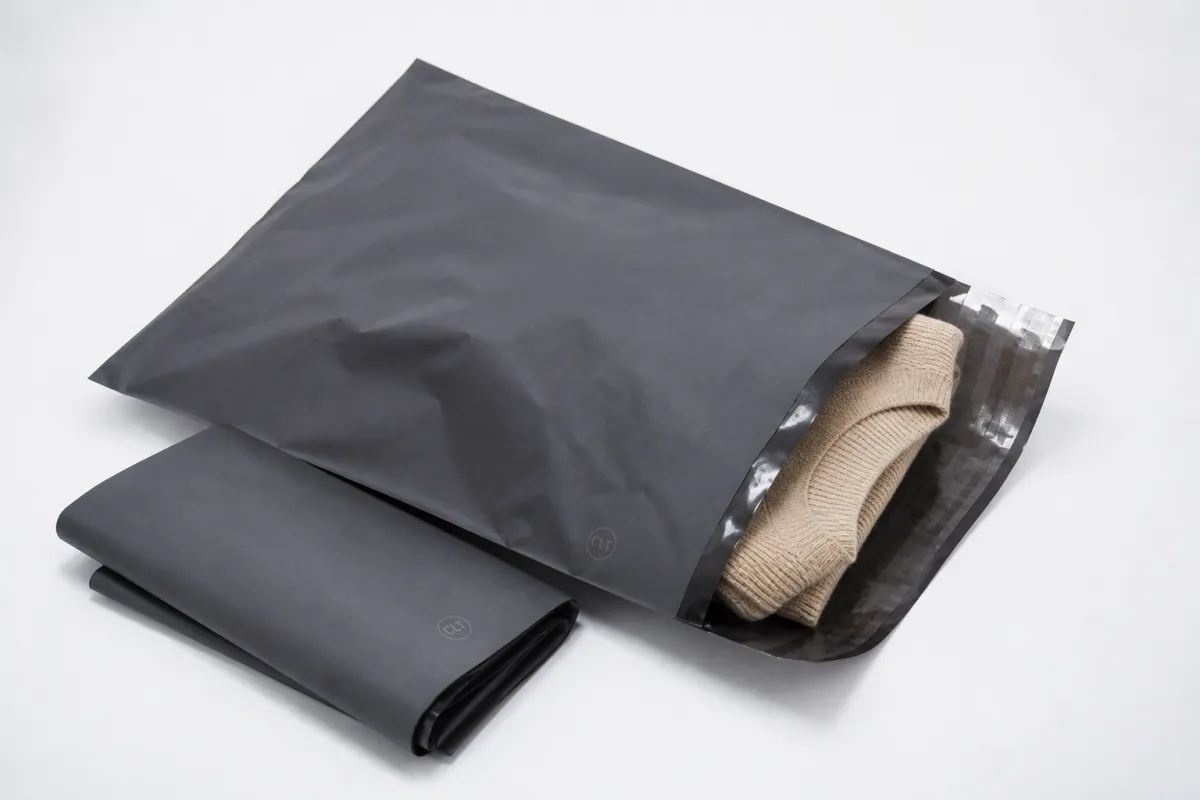
The cheapest quote often looks cheap because it leaves out something important. The supplier may have trimmed the film thickness, reduced the adhesive, limited the print to a tiny logo, or quoted only one side of the bag. Freight may be excluded. Duties may be excluded. Carton counts may be different from what you expected. A quote like that is not really cheaper; it is just unfinished. Poly mailers price per bag needs to be checked against the full spec, not admired from a distance.
A mailer that saves a sliver per bag can still cost more overall if it creates damage claims or replacement shipments. A torn mailer on a small apparel order is not just a packaging defect. It becomes a return, a repack, an apology, and another freight charge. The math gets ugly pretty fast. That is why the first question should be simple: what is included in the quoted poly mailers price per bag, and what is missing?
The quickest way to compare numbers is to normalize every quote to the same basis. If the size, thickness, print method, adhesive type, carton count, or shipping terms differ, the prices are not truly comparable. One supplier may look more expensive because the bag is thicker or the print area is larger. Another may look cheaper because it quietly moved quality out of the spec. Once the quotes are lined up, the real picture becomes easier to see:
- Same size so material usage matches.
- Same thickness so strength is comparable.
- Same print coverage so decoration cost is honest.
- Same shipping basis so freight does not distort the math.
“A cheap mailer that fails in transit is not cheap. It is a refund with a logo on it.”
That sounds blunt because it is. Buyers are not rewarded for the lowest line item if the package arrives torn, the adhesive fails in humidity, or the print rubs off after a short haul. They are rewarded for mailers that arrive intact, print consistently, and keep the fulfillment line moving. If poly mailers price per bag is your only filter, the hidden cost shows up later in labor, complaints, and rework.
For apparel, accessories, soft goods, or lightweight boxed items, the right question is not who is cheapest. The better question is who can hold the spec, keep defects down, and still give a fair poly mailers price per bag at your volume. That is the buying lens that saves money without weakening the shipment.
Product Details That Change Poly Mailers Price Per Bag
Several specs move poly mailers price per bag more than buyers expect. Some are obvious, like size. Others feel minor until the order is running and the extra film, extra ink, or extra handling starts showing up in the quote. The cleanest way to control cost is to know which details actually change the number.
Film structure is the first lever. Standard PE film is usually the most economical choice. Co-extruded film costs more, yet it can improve puncture resistance and appearance. Recycled-content options are worth a look when the brand wants a lower-material story, although color and surface finish may be less consistent. If the mailer has to survive abrasion through a larger fulfillment network, co-extruded film often earns its keep. If the product is light and the route is short, standard film may be enough. That balance shifts poly mailers price per bag quickly.
Size is the next obvious driver. A poly mailer that is too large wastes film. A poly mailer that is too tight can stress the seal or slow packing on every unit. Oversized bags can raise poly mailers price per bag faster than people expect because every extra inch adds material and can affect the print layout too. It also changes carton count and shipping weight, which is where the bargain bag quietly stops being a bargain.
Thickness, usually measured in mil or micron, affects both price and failure rate. Thicker mailers cost more, yet they usually resist stretch, puncture, and tearing better. Soft apparel may do fine in a lighter bag. Shoes, boxed cosmetics, and products with sharp corners often need a heavier gauge. A bag that is too light may reduce the poly mailers price per bag by a cent or two and then erase that savings with one damaged shipment. That tradeoff is real, and it is gonna show up eventually if it is ignored.
Print choices matter more than most people think. A simple one-color logo on one side is usually the least expensive branded option. Full coverage, multiple colors, metallic inks, white underbase, or inside printing all add cost. Matte finishes can change the look and feel, but they also change production setup. If poly mailers price per bag has to stay inside a tight range, print area is one of the first places to simplify without making the bag look unfinished.
Other cost drivers are smaller, yet they are real:
- Seal type such as hot-melt self-seal or tamper-evident adhesive.
- Opacity when full concealment is needed for apparel or returns.
- Tear resistance for rough handling and longer freight lanes.
- Extra features like handles, dual adhesive strips, or return labels.
If you are still setting the spec, sanity-check the bag against the product. A clean fit keeps waste down and helps the poly mailers price per bag stay within reason. A sloppy fit can make even a decent quote useless.
Quality also affects price in a quieter way. A bag with poor gauge consistency or weak seals may pass a quick inspection and still fail under pressure. That creates hidden cost through returns and labor. A stable spec is usually cheaper than a constantly changing one, even if the line-item poly mailers price per bag looks a little higher.
Specifications to Lock Before You Request a Quote
Quotes get messy when the request is vague. “Need custom mailers” is not a spec. It is an invitation for guesswork. If you want a useful poly mailers price per bag, give the supplier enough detail to calculate material, print, packing, and freight without filling in the blanks. Guessing is where bad pricing lives.
Start with the basics:
- Dimensions — width, length, and whether gussets or extra lip space are needed.
- Thickness — mil or micron, depending on how the supplier measures film.
- Color — white, black, gray, clear, metallic, or a custom tint.
- Print area — one side, both sides, full bleed, or limited logo space.
- Quantity — actual run size, not a rough guess.
- Shipping destination — zip code, port, or warehouse location.
Those six details do most of the heavy lifting. Leave one out and the poly mailers price per bag can shift after the quote, which makes supplier comparison a waste of time. A quote that looks better because it assumed a thinner film or a smaller print area is not a better quote. It is a different product.
Ask for samples or sample photos if presentation matters. That matters even more when the mailer is part of the brand experience in direct-to-consumer shipping. A sample tells you more than a rendering ever will. Color tone, seal behavior, stiffness, and hand feel all show up right away. For a high-visibility order, time spent on samples is cheaper than discovering a problem after pallets are already moving.
Packaging format changes cost too. Confirm these details before you approve the run:
- Bags per carton so storage and handling stay predictable.
- Carton size so warehouse space is not wasted.
- Pallet pattern if bulk shipments are part of the plan.
- Carton labeling if your receiving team needs fast SKU checks.
Those details are not just logistics trivia. They affect freight density, storage, and labor. A clean spec sheet reduces mistakes and makes the poly mailers price per bag more accurate on the first pass. That saves back-and-forth, which is usually where timelines start drifting.
For brands building a broader packaging system, it helps to keep the whole program aligned. If you are ordering outer mailers, inserts, or cartons together, the right mix of Custom Packaging Products can improve buying power and simplify replenishment. It also makes vendor comparison cleaner, because you are not pricing one component in isolation and pretending the rest does not matter.
Poly Mailers Price Per Bag: Cost, MOQ, and Unit Cost
MOQ is where packaging pricing shows its structure. Lower quantity means higher unit cost because setup charges get spread across fewer bags. That is not a trick. It is simple math, and packaging math rarely cares about budget pressure. Poly mailers price per bag is usually highest at the smallest order tier, then it drops as quantity rises.
Here is the general pattern buyers should expect:
| Option | Typical Poly Mailers Price Per Bag | Common MOQ | Best Fit | Tradeoff |
|---|---|---|---|---|
| Plain stock mailer | $0.04-$0.10 | Low to moderate | Simple shipments, basic protection | No branding, limited differentiation |
| Custom one-color print | $0.08-$0.18 | Moderate | Apparel, accessories, DTC orders | Setup cost and proofing time |
| Full-coverage printed mailer | $0.14-$0.30 | Higher | Brand-heavy retail and ecommerce | More ink, more setup, tighter approval loop |
| Recycled-content or specialty film | $0.10-$0.24 | Varies | Sustainability-led programs | Color and finish can be less uniform |
Those are not magic numbers. They are practical working bands, and they move with size, thickness, and freight. If your bag is larger, heavier, or printed on both sides, the poly mailers price per bag rises. If volume climbs, the unit cost usually drops. Past a certain breakpoint, the savings flatten out. That is normal. Anyone promising endless drops forever is selling a fantasy with adhesive on it.
One-time charges matter just as much as the bag price. Watch for these items:
- Plate or setup fees for print production.
- Color matching fees if a specific brand tone is required.
- Sample or proof charges for physical validation.
- Freight and duties if the quote is not truly landed.
A quote can look attractive until those extras are added in. Then the poly mailers price per bag quietly rises, sometimes by more than the bag cost itself on smaller runs. That is why quotes should be compared on the same basis: same spec, same MOQ, same packing count, same shipping terms. If one supplier quotes EXW and another quotes delivered, you do not have a comparison. You have a trap.
Ask for at least three quantity tiers. Five thousand, ten thousand, and twenty thousand pieces is a useful spread. The poly mailers price per bag usually improves at each step, but not evenly. Sometimes the jump from 5,000 to 10,000 is the one that matters. Sometimes the best value sits at 15,000 because the setup cost gets diluted enough to matter. A good quote should show that breakpoint clearly.
If you need Branded Shipping Bags for a launch, use the tiered quote to protect margin. If you already know your reorder curve, use volume to your advantage. Either way, poly mailers price per bag should be judged together with MOQ, not in isolation.
For buyers who want a more dependable production path, transit testing and packaging validation are not optional extras. Check the test methods and handling guidance from ISTA if you want a better sense of how packages behave under real shipping stress. If your goal is to reduce material use or tighten your packaging footprint, the EPA Sustainable Materials Management resources are a solid reference point. Both are more useful than a supplier’s vague promise that the bag is “strong enough.”
At this stage, poly mailers price per bag is less about chasing a bargain and more about finding the right breakpoint. The cheapest run is not always the best run. The smarter run is the one that keeps waste low, shipment damage low, and reorder planning simple.
Process, Timeline, and Turnaround for Custom Orders
Custom packaging lives and dies by process discipline. A clean order flow saves time and money. A sloppy one turns every small issue into a delay. If you are trying to control poly mailers price per bag while keeping lead times reasonable, you need to know where the calendar usually moves and where it usually stalls.
A standard order often moves through these steps:
- Quote request with dimensions, quantity, thickness, print detail, and destination.
- Artwork review to make sure the logo fits the print area and the file is usable.
- Proof approval so color, placement, and copy are confirmed.
- Production once the final spec is locked.
- Quality check for film consistency, seal strength, and print clarity.
- Packing and shipment with carton counts and labels verified.
That sequence looks obvious on paper. In practice, delays keep showing up in the same places. Missing artwork files are common. Late proof approvals are common. Changing the spec after production starts is another classic mistake. If the buyer decides to alter the size or print after the run is underway, the poly mailers price per bag can rise and the timeline can stretch. Nothing about that is mysterious. It is just avoidable.
For planning, simple stock-style custom orders may move faster than fully bespoke work. A straightforward printed mailer with ready artwork often takes less time than a special film, unusual size, or dense full-coverage design. Once the proof is approved, production often takes roughly 12-15 business days, though busy periods, complex print, or specialty materials can push that longer. Shipping time is separate, and that is where people under-plan and then act surprised when inventory does not appear by magic.
Rush jobs are possible, but they rarely come free. Faster turnaround may reduce flexibility on print options, increase freight cost, or require the plant to prioritize your run over a more efficient slot. If a launch date is fixed, paying more can make sense. If the launch date is flexible, your budget will appreciate a little patience.
For more complex programs, ask the supplier how they handle:
- Artwork revisions and whether there is a revision limit.
- QC checkpoints before shipment.
- Packing counts per carton and per pallet.
- Reorder records so the next run matches the first one.
The last point matters more than it sounds. Repeatability is what keeps poly mailers price per bag stable from one order to the next. If the first order is priced one way and the second order is priced differently because nobody preserved the exact spec, then your margin planning is already leaking.
Inventory planning should match the sales cycle too. If the reorder window is six to eight weeks, do not wait until the last pallet is open. Build a lead-time buffer. That buffer is often cheaper than an emergency order, especially once freight and expedited handling are added. The bag price is only one piece. The calendar has a price too.
Why Choose Us for Poly Mailers That Hold Up in Transit
We focus on the part that actually matters: consistency. A good poly bag is not just printed nicely. It has steady thickness, a reliable seal, and print that does not wander across the panel like it got lost on the way to work. That is the difference between packaging that helps fulfillment and packaging that creates cleanup.
Factory-direct sourcing helps when it is handled with discipline. Direct sourcing can keep communication tighter, reduce middleman markups, and make the poly mailers price per bag easier to manage. Direct is not automatically better if the supplier cannot control the run, though. A low number with unstable quality is still a bad purchase. The value comes from direct control plus stable output.
We also think in packaging terms, not just print terms. Apparel, accessories, subscription inserts, and lightweight ecommerce goods all behave differently in transit. A bag that works for tees may not be right for shoeboxes or hard-edged bundles. A team that understands that difference can recommend the right thickness, adhesive, and print structure before the first proof is even sent. That is how you keep poly mailers price per bag aligned with the actual use case.
Quality control is another non-negotiable. Good QC reduces weak seams, color drift, off-size runs, and print registration issues. Those defects are not cosmetic only. They are hidden costs. A defect rate that looks small on paper can still create a lot of labor when a warehouse has to inspect, sort, or repack. So yes, unit price matters. Stability matters more. That steadiness protects your margin.
For buyers who want a broader packaging setup, there is also a practical reason to work with a supplier that understands the full mix. If you are sourcing mailers, cartons, and inserts together, the purchase is easier to manage when the same team can coordinate Custom Packaging Products around one schedule and one spec sheet. Fewer moving parts usually means fewer mistakes. Packaging is not a poetry contest. It is a production system.
The proofing process matters too. A clear proof, a realistic sample, and a clean confirmation reduce the chance of expensive rework later. That is where professional service actually pays for itself. Not in slogans. In fewer surprises.
If you want one more packaging reality check, keep this in mind: the best supplier is the one that gives you clean numbers, a stable spec, and straight answers about poly mailers price per bag. No smoke. No confusion. No mystery fees hiding in a freight line. That kind of clarity is refreshing.
Next Steps to Get an Accurate Poly Mailers Price Per Bag
If you want a quote that is actually useful, send the full spec the first time. A vague request slows everything down and makes the answer less trustworthy. The goal is not just to get a price. The goal is to get the right poly mailers price per bag for the exact product you intend to ship.
Send these details together:
- Bag size with width and length.
- Film thickness in mil or micron.
- Color and finish such as matte, gloss, or opaque.
- Print artwork including logo placement and number of colors.
- Order quantity plus any alternate tiers you want priced.
- Destination so shipping can be calculated properly.
Then ask for tiered pricing. A proper quote should show how poly mailers price per bag changes at different volumes. If the supplier only gives one quantity, you are missing the main decision lever. Three tiers are better than one because they reveal where the value actually sits. Sometimes the middle tier wins. Sometimes the larger tier is the only one that makes the setup fee worthwhile.
Ask for samples or proof approval before production if the bag will be front-facing in DTC shipping. If the product lives in a warehouse carton and never touches the customer’s eye, simpler decoration may be fine. If the mailer is part of the brand reveal, do not wing it. The best-looking quote is not worth much if the actual mailer looks off-color or flimsy.
Compare landed cost, not just factory cost. Freight, cartons, palletization, and duties can shift the final number enough to erase a savings claim. That is where many buyers get fooled. A supplier may look cheaper on the bag itself, but the final poly mailers price per bag can end up higher once the logistics are counted.
If you are ready to move, keep the process tight: confirm the spec sheet, lock the quantity, review the proof, and approve production. That is the cleanest path to a reliable order and a realistic poly mailers price per bag. Start with the exact bag size, the exact film gauge, and the exact print scope, then price three volume tiers side by side. That one habit cuts through most pricing confusion and gives you a number you can actually use.
Bottom line: the right poly mailers price per bag is the one that matches your product, your quantity, and your shipping reality. Not the lowest random number. Not the flashiest quote. The one that lands cleanly, prints well, and keeps the whole order honest.
What is a normal poly mailers price per bag for standard apparel sizes?
Plain standard-size bags usually cost less than printed bags because there is no setup or color matching cost. The price can still move a lot with thickness, size, and quantity, so a bag priced at 1,000 units may look very different from the same bag at 10,000 units. A better comparison is landed cost per thousand bags, not just the factory number.
How does MOQ affect poly mailers price per bag?
Lower MOQ usually means a higher poly mailers price per bag because setup costs get spread across fewer units. Once the order passes a common breakpoint, the unit price often drops sharply and then levels off. If your budget is tight, ask for two or three quantity tiers so you can see the real tradeoff.
Does printing raise poly mailers price per bag a lot?
Yes, but the increase depends on print coverage, number of colors, and whether the design is on one side or both. Simple one-color branding usually adds less than full-coverage artwork or specialty finishes. The cheapest print is the one that stays clean and fits the packaging budget without looking rushed.
What specs should I confirm before asking for a price per bag?
Confirm size, thickness, color, print area, quantity, and shipping destination first. If those details are missing, quotes will bounce around and comparison shopping becomes close to pointless. A clear spec sheet usually gets a more accurate poly mailers price per bag on the first attempt.
How fast can I get a custom poly mailers price per bag quote?
A simple quote can come back quickly if the size, quantity, and artwork are ready. Custom print, special material, or vague specs can slow the process because proofing and revisions take time. The fastest route is still the simplest: send a clean request with exact dimensions and target quantity.


