Buyer Fit Snapshot
| Best fit | Poly Mailers Price Per Piece projects where brand print, material claims, artwork control, MOQ, and repeat-order consistency need to be specified before quoting. |
|---|---|
| Quote inputs | Share finished size, material target, print colors, finish, packing count, annual reorder estimate, ship-to region, and any compliance wording. |
| Proofing check | Approve dieline scale, logo placement, barcode or warning zones, color tolerance, closure strength, and carton packing before bulk production. |
| Main risk | Vague material claims, crowded artwork, missing packing details, or unclear freight terms can make a low unit price expensive after revisions. |
Fast answer: Poly Mailers Price Per Piece: What Drives the Cost should be specified like a repeatable production item. The safest quote records material, print method, finish, artwork proof, packing count, and reorder notes in one written spec.
Production checks before approval
Compare the actual filled-product size with the drawing, then confirm tolerance on folds, seals, hang holes, label areas, and retail display edges. Reserve space for logos, QR codes, warning copy, and material claims before decorative graphics fill the panel.
Quote comparison points
Review material grade, print process, finish, sampling route, tooling charges, carton quantity, and freight assumptions side by side. A quote is only useful when the supplier can repeat the same color, closure quality, and packing count on the next order.
Poly Mailers Price Per Piece: What Drives the Cost
Poly mailers price per piece looks tidy on a quote sheet, which is exactly why so many buyers get tripped up by it. Freight enters the picture, thickness changes, print setup appears, and usable yield exposes the real number. I have seen procurement teams celebrate a low unit quote, then spend the next quarter paying for re-ships, damaged goods, and customer complaints. That is a messy trade, and it is more common than people admit.
A few cents more per unit can lower total spend if the mailer packs faster, ships cleaner, and cuts replacement orders. The goal is not to chase the smallest figure in isolation. The goal is to weigh poly mailers price per piece against protection, throughput, and the cost of getting a shipment wrong. A cheap mailer that fails on a cross-country lane is not cheap for long.
Poly Mailers Price Per Piece: The Cost Trap Most Buyers Miss
Most teams start with the same question: what is the poly mailers price per piece? Fair question. The trap is simple. The number on the quote rarely includes the whole picture. A mailer can look inexpensive at first glance and still become costly once freight, a heavier film, a custom plate, and the labor from a poor seal or a ragged tear line are added. Poly mailers price per piece is only useful when the quote matches the same size, the same gauge, the same print coverage, and the same delivery terms.
Damage is the blind spot that hurts most. A low-cost mailer that splits in transit turns into a double hit. The product moves again, margin shrinks again, and customer service absorbs the frustration in the middle. A buyer who compares only sticker price is often comparing the wrong thing. Poly mailers price per piece should sit beside total landed cost, and landed cost should include rework, reshipment, and the awkward order that cannot be used because the film tears too easily.
A second mistake shows up often: teams assume the cheapest mailer is acceptable because it closes around the product. Closure is not the same as dependable performance. A bag with uneven adhesive, weak opacity, or flimsy seams may survive a tabletop test and fail under volume. A stronger spec might raise poly mailers price per piece by a few cents and still lower the total shipment cost because packers move faster and returns fall. For e-commerce, that trade is often positive. For subscription boxes or wholesale packs, it can reshape the economics entirely.
Cheap stops being cheap once the package has to be opened, repaired, or resent after it leaves the dock.
From a packaging buyer's point of view, the clearest frame is this: poly mailers price per piece changes with material, customization, and volume, but the right number is the one that protects product, keeps fulfillment moving, and supports the brand at the doorstep. That is the business case. The carton price alone never tells the full story.
Product Details: What You Actually Get in a Poly Mailer
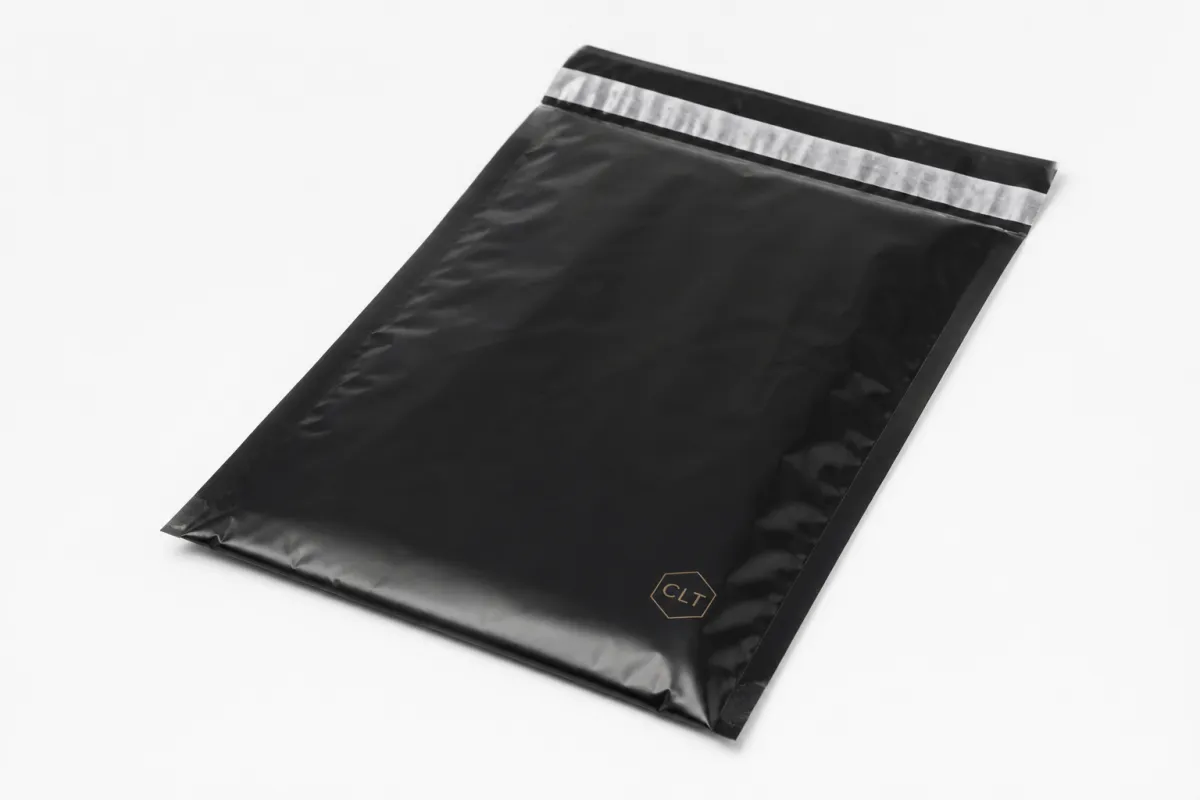
A production-ready poly mailer is usually made from co-extruded polyethylene film. Multiple layers of PE are combined so the bag can balance puncture resistance, print quality, and seal strength. Most buyers will see an opaque outer layer, a printable face, a self-seal adhesive strip, and side or bottom seams built to stay closed during normal parcel handling. The outside may look plain. The structure beneath it does the real work. Poly mailers price per piece reflects that structure, especially when the film is thicker or the adhesive is upgraded.
Standard features usually include water resistance, a reasonable tear profile, and steady seal performance from bag to bag. Plain stock pricing is mostly material, converting, and transport. Custom printed units bring in artwork prep, color separation, registration control, and press time. A one-color logo on one side is a very different production job from a full-bleed branded mailer that wraps the entire surface. That is why poly mailers price per piece can shift quickly even before the order quantity changes.
Operationally, poly mailers are attractive because they take up less shelf space than cartons, weigh less than most rigid alternatives, and move through packing stations with less tape, less void fill, and less time. A fulfillment team packing 1,000 orders a day feels a 10-second difference per unit. That sounds small until the week is over. Ten seconds multiplied by 1,000 orders is nearly three hours of labor. Poly mailers price per piece may rise slightly for a better spec, yet the labor savings can be larger than the unit increase.
Waste matters too. If a product does not need corrugate, then adding corrugate means extra material, extra freight, and extra disposal. The EPA's recycling guidance puts source reduction ahead of recycling in the waste hierarchy: use less material first, then think about recovery. For a light apparel item, an accessory, or a flat product, a properly specified mailer can be the cleaner system.
For shipping validation, a serious vendor should be able to discuss performance against ISTA protocols. A buyer does not need to become a lab technician, but it helps to know whether the sample was evaluated for puncture, seal retention, and simulated transit abuse. That level of discipline gives context to poly mailers price per piece. A lower number means very little if the bag has never been tested against the handling it will actually see.
Specifications That Change Poly Mailers Price Per Piece
Specs drive the quote more than most buyers expect. Size is the first lever. A 6 x 9 inch mailer uses less film than a 10 x 13 inch unit, so the poly mailers price per piece should move down with the smaller format, all else equal. Thickness is the second lever. Film gauge is often expressed in mils, and a jump from a lighter gauge to a heavier one can improve puncture resistance, reduce stretch, and make the bag feel more substantial in hand. That improvement is not free. Poly mailers price per piece usually rises as film thickness rises because the material cost climbs and the machine output may slow.
Print coverage is the third lever. A simple logo in one or two colors is easier to run than full coverage art, especially if the design demands tight registration or multiple print hits. Matte finishes, specialty inks, full bleed layouts, metallic effects, and soft-touch looks can all move the final number. Recycled content may also add cost if the resin blend is harder to source or process. Even so, those upgrades can be worth it. A brand that wants a cleaner shelf or a more premium unboxing may decide that a slightly higher poly mailers price per piece is justified by stronger customer perception.
Structural options matter as well. Gussets add capacity and help with bulkier products. Tear notches improve opening. Stronger adhesives reduce failures on humid routes or in warmer distribution environments. Custom sizing changes the entire job because the line has to be set up for a different cut and a different seal pattern. If a buyer asks for "just a custom mailer," the quote is almost meaningless. If the buyer asks for a 2.5 mil co-extruded mailer, 10 x 13 inches, full-bleed one-side print, hot-melt adhesive, and recycled content, the poly mailers price per piece becomes measurable and comparable.
Here is a simple buyer checklist that helps prevent quote drift:
- Exact finished size, not approximate size
- Film thickness in mils
- Plain stock or printed, plus number of print colors
- Front-only, back-only, or full-bleed coverage
- Matte, gloss, recycled content, or specialty finish
- Required quantity and acceptable MOQ
- Ship-to location for freight calculation
Buyers who provide those details get cleaner answers. That is not sales language; it is production reality. If the spec sheet is vague, the poly mailers price per piece will be vague too. If the spec is tight, the quote can be checked against actual usage, damage rates, and pack-out speed. For most teams, that is the difference between buying packaging and buying a headache.
Pricing, MOQ, and Quote Structure Explained
Poly mailers price per piece is almost always tiered by volume. Lower quantities carry a higher unit rate because setup, material handling, and print preparation get spread across fewer bags. At larger volumes, the unit rate usually drops. That is why a 1,000-piece quote and a 10,000-piece quote can look like they came from different suppliers, even if the material and print method are identical. The math is straightforward: the more units you run, the more the fixed costs are diluted. The buyer still has to watch freight and over-order risk, but the unit curve is real.
MOQ stands for minimum order quantity. It exists because printing and converting are much more efficient at a certain run size. Below that threshold, waste rises, setup time becomes expensive, and the line may spend too long switching from one job to another. For plain stock, MOQ may be relatively low. For custom branding, it is usually higher. That does not mean a smaller buyer is stuck. It means the buyer should ask for the nearest standard run size, then compare the poly mailers price per piece at that level against a smaller, higher-cost option.
A quote should be easy to audit. If it is not, ask for a breakdown. The line items matter because two suppliers can have the same unit cost and still create very different total spend. One may include freight; another may list it separately. One may quote a setup fee up front; another may hide it in the piece rate. One may include artwork adjustments; another may bill them later. Poly mailers price per piece only makes sense once the quote structure is clear.
| Option | Typical MOQ | Illustrative Price Per Piece | Best For | Tradeoff |
|---|---|---|---|---|
| Plain stock mailer | 500-1,000 | $0.08-$0.14 | Fast replenishment and low branding needs | Less brand impact |
| 1-color custom print | 1,000-3,000 | $0.12-$0.20 | Simple logos and controlled budgets | Limited visual coverage |
| Full-bleed custom print | 3,000-5,000 | $0.18-$0.35 | Strong branding and retail presentation | Higher setup and press cost |
| Recycled-content mailer | 1,000-5,000 | $0.14-$0.24 | Sustainability messaging and material reduction goals | Can narrow color and finish options |
| Heavy-duty mailer | 1,000-3,000 | $0.20-$0.38 | Sharp edges, dense items, and rough transit | Higher material weight |
The table stays broad on purpose because the exact poly mailers price per piece depends on film grade, print method, freight lane, and whether the order is stock or fully custom. Even so, the table gives buyers a clean comparison framework. If one supplier quotes a lower unit price but leaves out freight, sample approval, or print setup, that lower quote may not be the lower total spend. The smarter comparison is total landed cost against total business value. Procurement teams should be using that level of analysis.
For buyers building a wider packaging program, a good supplier should also be able to support related formats through Custom Packaging Products. That matters because the same team ordering mailers often needs labels, inserts, or boxes. Bundling those needs can simplify communication and reduce spec confusion. If the packaging plan is coherent, the poly mailers price per piece becomes easier to manage across the full SKU range.
Process, Timeline, and Lead Time From Quote to Delivery
The production path is straightforward, but every step affects poly mailers price per piece if the order needs revisions. First comes the request: dimensions, thickness, quantity, print coverage, and destination. Next comes the quote. Then a proof. Then artwork approval. Only after that should production begin. If the customer changes artwork after the proof is signed, the schedule usually shifts and the cost may rise. That is normal. Packaging is a physical job, not a text file.
Lead time depends on complexity. Plain stock can ship faster because the bags already exist or need minimal converting. A custom printed run usually takes longer, often 12-15 business days from proof approval, sometimes more if the artwork has multiple colors or if the line is busy. Heavy-duty or specialty film can add time as well. Freight adds another layer. If the destination is remote, or the shipment needs special handling, the clock stretches. Buyers who understand this can plan better and avoid emergency air freight, which wipes out any savings in poly mailers price per piece.
The common delay is not manufacturing. It is indecision. Teams hold artwork too long, then ask for a resized logo after the proof is already in motion. Or they approve a width that is too narrow for the product, then discover the issue during pack-out. Those are avoidable errors. The faster path is to finalize dimensions, seal style, and artwork hierarchy before the quote is even signed. Poly mailers price per piece stays more stable when the spec is locked early.
A practical planning window looks like this:
- Days 1-2: collect specs and request pricing
- Days 3-5: review quote, ask for revisions, and compare landed cost
- Days 6-8: approve proof and confirm artwork
- Days 9-20: production, inspection, and packing
- Days 21+: freight delivery, receiving, and sampling on your dock
That sequence is not rigid, but it is realistic for many custom orders. The buyer who tries to compress every step usually ends up paying more for rush production or higher freight. If the order supports a launch, a promotion, or a seasonal peak, the schedule should be built backward from the ship date, not forward from the quote date. That one discipline alone can make poly mailers price per piece more predictable.
Packaging teams that need a tighter schedule should ask for pre-production samples or a digital proof before material reaches the press. If the film hand-feel, seam strength, or adhesive activation matters to the end user, samples are cheap insurance. It is far better to solve a design issue before production than after a pallet is wrapped. I have watched one narrow seal spec add a week to a launch because the team assumed a test bag would behave the same under real packing speed. It did not, and the fix was not pretty.
Why Choose Us for Poly Mailers at Scale
Buyers do not just need a supplier. They need consistency. If one run matches the proof and the next run shifts in color, seal strength, or film feel, the price per piece is only half the story. A reliable partner keeps the spec stable from order to order, which protects procurement forecasts and keeps receiving teams from chasing surprises. That is the core reason to evaluate a supplier on repeatability, not only on the first quote. Poly mailers price per piece matters, but poly mailers price per piece only pays off when the product behaves the same way every time.
At scale, communication matters as much as the bag itself. Procurement teams need fast answers on freight, setup, lead time, and any extra cost tied to artwork changes. Better suppliers make those terms visible early. That reduces quote churn and helps the buyer compare true landed cost. If your packaging program is growing, a clear process is not a luxury. It is a budget control tool. For many brands, that is why a dedicated Custom Poly Mailers program makes more sense than buying one-off stock bags from a general catalog.
Another advantage is practical guidance. Not every product needs the thickest bag. Not every shipment needs full-coverage graphics. The best supplier helps the buyer decide where to spend and where to hold the line. A simple logo on a clean white mailer may outperform a busy design if the brand is trying to manage unit economics. In that case, a controlled poly mailers price per piece and a clean brand impression can coexist. That is the kind of tradeoff packaging professionals make every day.
For buyers comparing vendors, these are the signs that matter:
- Clear quotes with freight and setup shown separately
- Sample review before mass production
- Ability to explain film thickness, adhesive choice, and print limits
- Quality checks that catch seal or color issues before shipment
- Advice that aligns package spec with product weight and transit conditions
Those are practical safeguards, not marketing claims. If a supplier can speak to them in detail, the buyer has a better chance of keeping poly mailers price per piece under control without sacrificing pack quality. That balance is what most brands actually need.
For teams building a broader packaging roadmap, consistency across formats is also useful. A vendor that understands mailers, cartons, inserts, and labels can help make the whole packaging stack more coherent. That may not lower poly mailers price per piece by itself, but it can reduce waste elsewhere in the system. Procurement likes that because it creates one clearer line of sight into the total packaging budget.
Next Steps: Build the Right Order Before You Request a Quote
The easiest way to improve poly mailers price per piece is to ask better questions before the quote starts. Gather the exact size, film thickness, print needs, quantity, and shipping destination. If the product is fragile, include weight and surface details. If the branding must match another line, include color expectations and a reference file. A complete brief reduces back-and-forth and cuts the odds of a quote that looks attractive but does not fit the job.
Ask for two or three scenarios. A plain stock option. A light custom version. A fully branded option. Then compare them on total landed cost, not just piece price. The cheapest unit is not always the best outcome. The best outcome is the one that protects the product, speeds fulfillment, and supports the brand without straining the budget. Poly mailers price per piece should sit inside that wider decision, not on top of it.
If artwork quality, seal strength, or material feel affects your customer experience, order a sample or ask for a proof first. That single step can catch issues that are expensive to fix later. The same applies if the brand is moving from boxes to mailers for the first time. Pack a test order. Measure the fit. Measure pack speed. Check how the adhesive behaves after a few minutes in the workroom. Those are the small details that determine whether poly mailers price per piece is actually working for your operation.
For many buyers, the final decision comes down to this: does the mailer reduce total packaging friction? If yes, the unit price is earning its place. If no, the quote is too expensive no matter how low the number appears. Use the spec checklist, compare service quality, and judge the bag by the full order cycle, not by the first line on the invoice. If the numbers are close, pick the option that saves time on the dock and cuts avoidable damage. That is usually the one that wins in the real world.
Frequently Asked Questions
How do I compare poly mailers price per piece between suppliers?
Compare the same size, thickness, print coverage, and quantity tier so you are not mixing unlike products. Then include freight, setup, artwork, and sample costs in the total landed price. Ask whether the quote is based on stock or custom production, because that changes poly mailers price per piece quickly and can make two quotes look similar when they are not.
What MOQ should I expect for custom poly mailers?
MOQ varies by print method, color count, and mailer size. Lower MOQs are more common for plain or lightly customized mailers than for full-color branded runs. If your order is small, ask for the closest standard run size so the poly mailers price per piece stays predictable and you are not paying a premium for an awkward short run.
Why does the price per piece change with thickness?
Thicker film uses more material, which raises the base cost. Heavier gauges can also reduce punctures and returns, so the higher cost may still lower total expense. Ask for the thickness in mils so you can compare quotes accurately. If one supplier gives only a vague description and another gives the exact film spec, the poly mailers price per piece comparison is not reliable.
How long does it take to produce custom poly mailers?
Production timing depends on proof approval, print complexity, and order volume. Plain stock is usually faster than custom printed runs. Build in extra time for artwork revisions, freight, and busy seasonal periods. If a launch date is fixed, work backward from that date so the poly mailers price per piece does not get inflated by rush handling or emergency shipping.
Can I get a sample before I place a full order?
Yes, samples help you verify size, feel, seal strength, and print quality. A sample is especially useful when you are comparing multiple suppliers or testing pack-out speed. If exact printed samples are not available, ask for a similar spec sample and a digital proof. That small step can protect you from a bad spec and a misleading poly mailers price per piece.
Here is the practical takeaway: compare like with like, check freight, verify the spec, and test the bag in your own packing flow Before You Buy at scale. That is the most reliable way to read poly mailers price per piece. If a quote looks good on paper but slows your team down or raises damage rates, it is not a bargain. If it packs fast, holds up in transit, and keeps the brand presentation intact, then the unit price is doing real work.