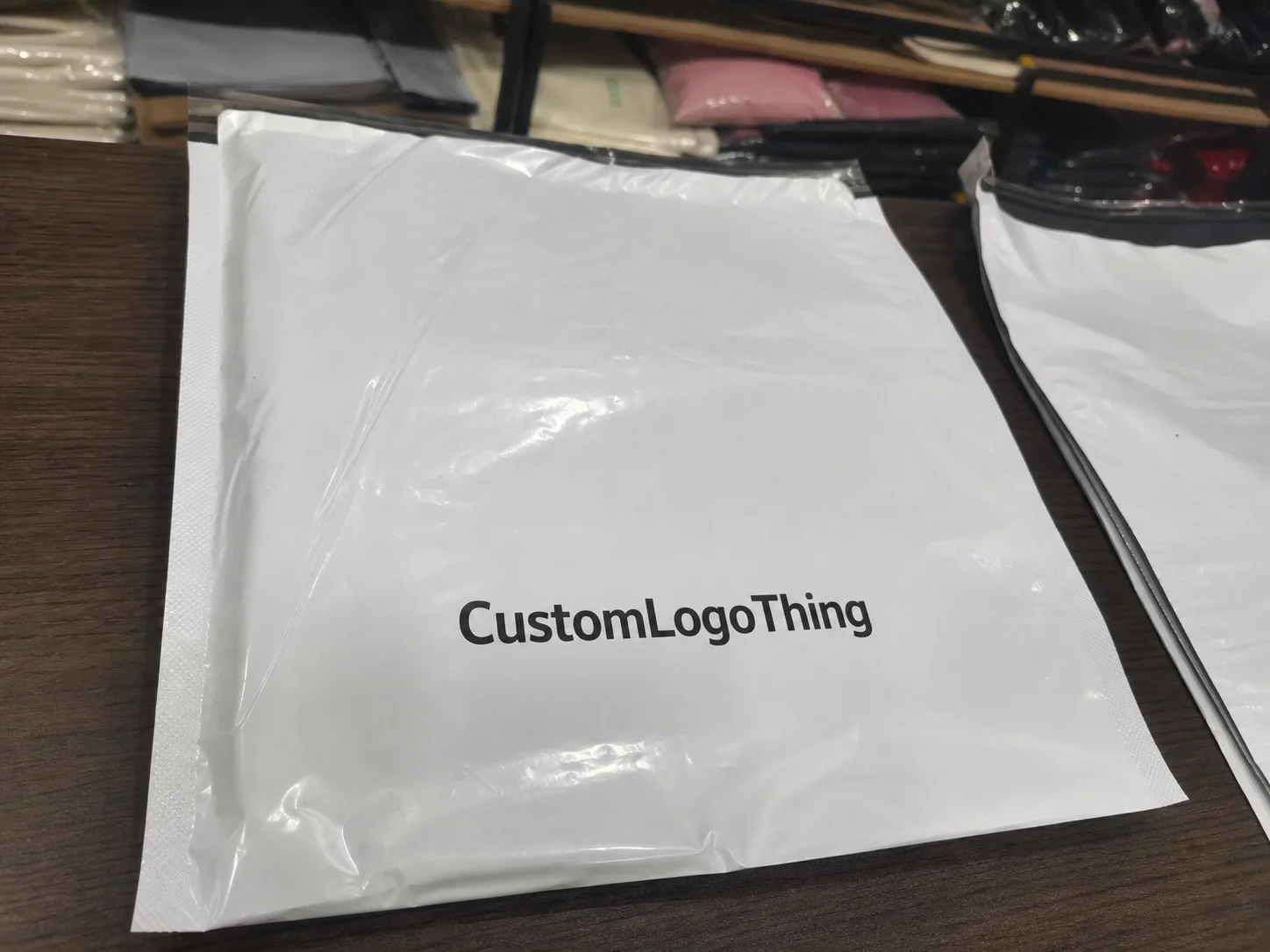
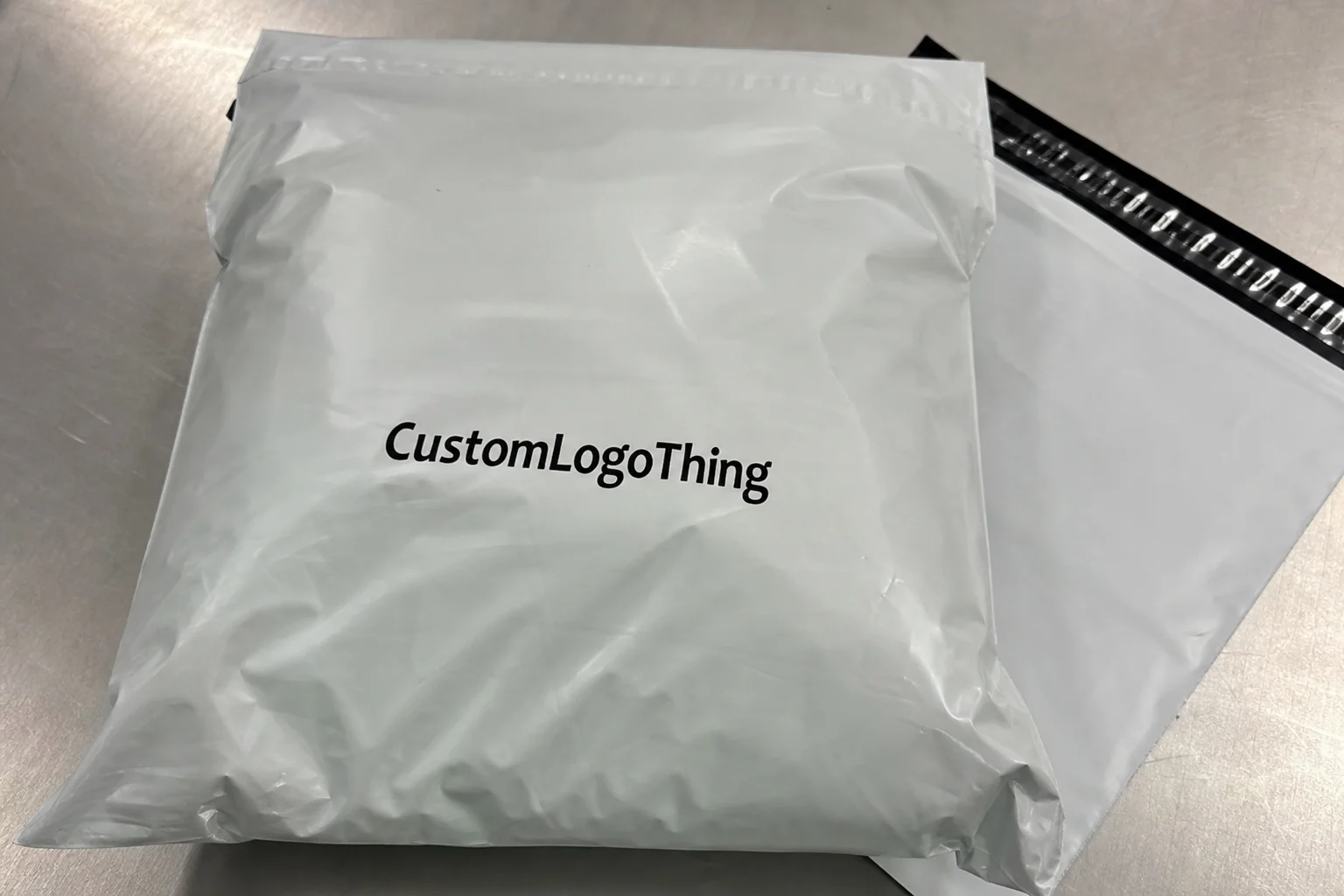
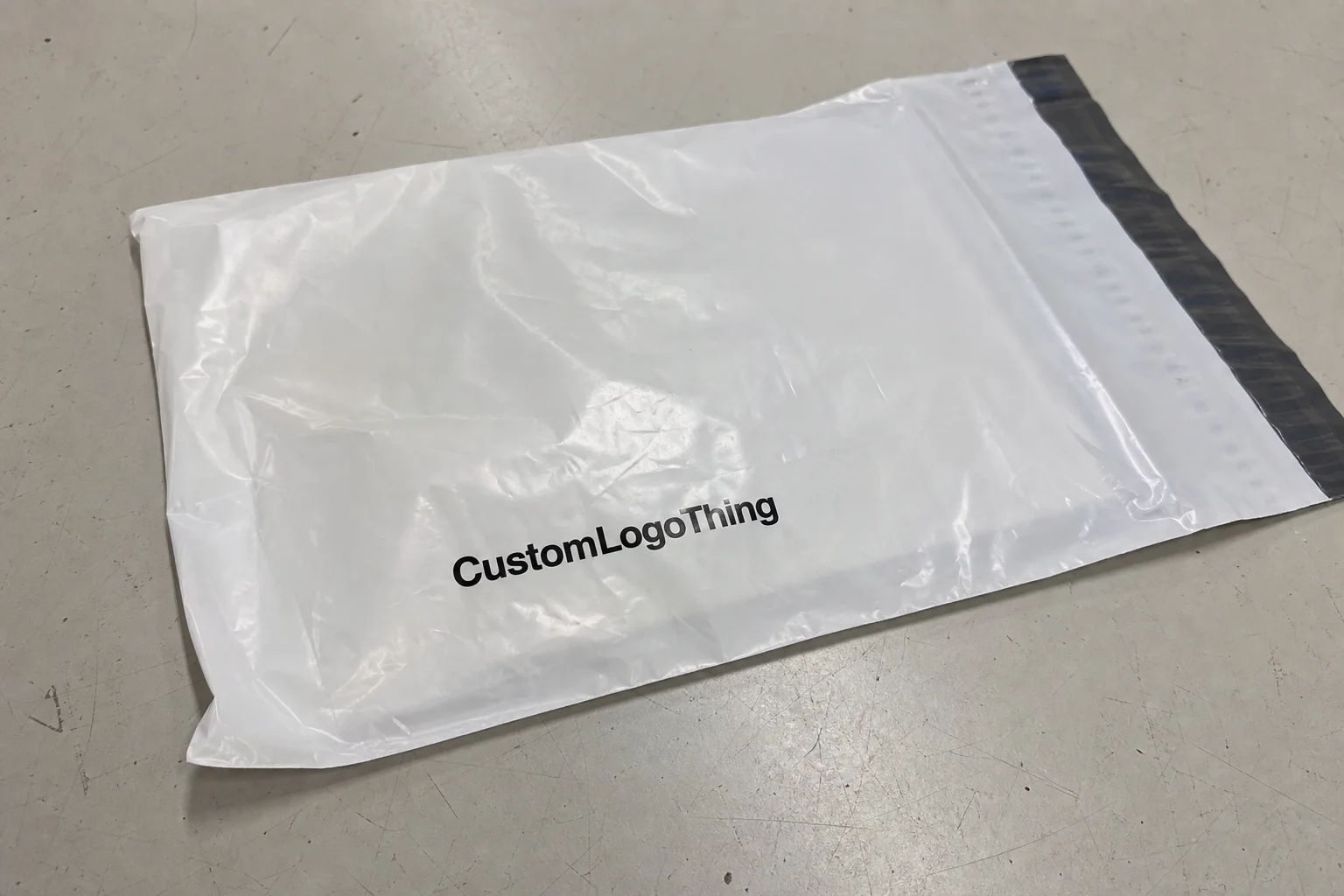
Buyer Fit Snapshot
| Best fit | Poly Mailers Pricing projects where brand print, material claims, artwork control, MOQ, and repeat-order consistency need to be specified before quoting. |
|---|---|
| Quote inputs | Share finished size, material target, print colors, finish, packing count, annual reorder estimate, ship-to region, and any compliance wording. |
| Proofing check | Approve dieline scale, logo placement, barcode or warning zones, color tolerance, closure strength, and carton packing before bulk production. |
| Main risk | Vague material claims, crowded artwork, missing packing details, or unclear freight terms can make a low unit price expensive after revisions. |
Fast answer: Poly Mailers Pricing: Artwork Proof, Packing Count, and Landed Cost should be specified like a repeatable production item. The safest quote records material, print method, finish, artwork proof, packing count, and reorder notes in one written spec.
Production checks before approval
Compare the actual filled-product size with the drawing, then confirm tolerance on folds, seals, hang holes, label areas, and retail display edges. Reserve space for logos, QR codes, warning copy, and material claims before decorative graphics fill the panel.
Quote comparison points
Review material grade, print process, finish, sampling route, tooling charges, carton quantity, and freight assumptions side by side. A quote is only useful when the supplier can repeat the same color, closure quality, and packing count on the next order.
On more than one factory floor, I’ve watched a buyer point to the lowest quote on the page and feel relieved, only to find out later that the “cheap” poly mailers cost more once freight, spoilage, and a rushed reorder got folded in. I remember one meeting in particular in Shenzhen where the buyer literally tapped the spreadsheet like the answer was hiding in column C. It wasn’t. The initial quote was $0.11 per unit for 20,000 pieces, but by the time 12% ocean freight, a 2% overage allowance, and an emergency air shipment were added, the landed cost was closer to $0.17 per unit. That is exactly why a poly mailers pricing guide matters: the sticker price can be tidy, but the real number usually shows up in the warehouse, not the quote sheet.
Poly mailers are those lightweight shipping bags you see everywhere in e-commerce, especially for apparel, soft goods, books, and small non-fragile items. Most are made from LDPE or co-extruded film, often in 2.0 mil, 2.5 mil, or 3.0 mil thicknesses, which means they can be durable, moisture-resistant, and flexible enough to protect a product without adding much shipping weight. In a poly mailers pricing guide, I always tell people to compare like-for-like specs, because a 2 mil single-seal mailer and a 3.5 mil dual-adhesive mailer are not cousins; they are different products with different cost structures. A 10" x 13" bag made in Dongguan with 2.5 mil film is not priced like a 14" x 19" mailer with 3.5 mil film and a second adhesive strip. Honestly, I think the packaging industry sometimes makes this harder than it needs to be, because “close enough” is usually not close enough.
If you use this poly mailers pricing guide the right way, you’ll stop comparing unit price alone and start comparing the actual variables that move cost: size, thickness, print method, closure style, and order volume. I’ll also walk through the hidden costs I’ve seen trip up brands during sourcing, from setup fees to freight charges that quietly wipe out a “great deal.” A quote that looks like $0.09 per unit can turn into $0.15 per unit once you add cartonization, inland trucking from a port like Los Angeles or Savannah, and a 500-piece shortfall that forces a second shipment.
Most packaging budgets get wasted in the gap between what a buyer asks for and what the supplier thinks they asked for. I’ve seen that gap turn into a full-blown mess more times than I can count. So let’s keep this practical, plainspoken, and specific, with enough detail to make the next RFQ cleaner than the last one.
Poly Mailers Pricing Guide: Why the Cheapest Quote Can Mislead
The lowest quote can be misleading because it often leaves out something important, like freight from an overseas port, a higher waste allowance, or a material spec that is just thin enough to save pennies but not strong enough for your product. I saw this firsthand during a client meeting with a fashion brand shipping from our Shenzhen facility: the buyer had a beautiful-looking low quote at $0.08 per unit for 30,000 mailers, but the bags were undersized by 10 mm and the seal area failed the first drop test, so the “savings” disappeared into replacement stock and expedited air freight from Hong Kong. I still remember the room going quiet when we stacked the bad samples on the table. That silence says a lot, especially when the sample carton had already been opened twice before the problem was obvious.
In simple terms, a poly mailer is a flexible shipping envelope made from plastic film, usually LDPE or a co-extruded blend. The outer layer may be printed, the middle layer may carry strength, and the inner seal layer needs to hold an adhesive closure reliably, even when the carton is stuffed in warm conditions or stacked in a warehouse at 85°F. That is why a good poly mailers pricing guide has to look beyond the quote total and into the actual build, down to whether the film is 2.2 mil, 2.5 mil, or 3.0 mil and whether the adhesive strip uses hot-melt or pressure-sensitive glue.
For e-commerce and apparel brands, these bags are popular because they are light, moisture-resistant, and fast to pack. A garment in a corrugated box weighs more and usually costs more to ship, while a properly sized poly mailer can reduce dimensional weight and speed up fulfillment lines. I’ve seen teams on high-volume packing tables shave 3 to 5 seconds off each order just by switching to a mailer with the right opening width and peel-and-seal strip. On a line processing 25,000 orders a week in Louisville or Atlanta, that is not a rounding error; it is labor time that can disappear by Friday afternoon.
Use this poly mailers pricing guide as a comparison tool, not a shopping shortcut. If one supplier quotes a 10" x 13" 2 mil white mailer and another quotes a 9" x 12" 2.5 mil co-ex mailer with a second adhesive strip, those are not equivalent options. You need to match dimensions, material gauge, printing, closure, and quantity before the numbers mean anything, and you should also confirm whether the quoted price includes delivery to your warehouse in Dallas, Newark, or Portland.
The rest of the article follows the same logic I use in plant visits and sourcing reviews: first understand how the bag is built, then see which cost drivers matter most, then compare quotes by landed cost instead of unit cost. That is the heart of any useful poly mailers pricing guide, and it is the difference between a neat spreadsheet and an accurate budget.
I also want to set a realistic expectation. Packaging pricing is never driven by one number alone. The biggest variables are usually size, thickness, print coverage, closure type, and volume, but freight, labor, and quality controls can matter just as much depending on the factory and the route. A supplier in Columbus, Ohio with short transit and low minimums may beat a cheaper overseas quote once you include customs delays and palletized shipping through Long Beach. Packaging math has a nasty habit of humiliating people who only look at the first line.
How Poly Mailers Are Made and How That Affects Price
The production process matters more than most buyers realize, and any solid poly mailers pricing guide should explain why. Resin pellets are melted and pushed through extrusion equipment, then turned into film through blown film or co-extrusion systems. From there, the film is cooled, trimmed, printed if needed, cut to size, sealed on the edges, and fitted with adhesive strips or tear features depending on the design. In many factories in Shenzhen, Ningbo, and Ho Chi Minh City, that sequence runs in lines measured by output per hour, so even a 5-minute stoppage can affect the final unit price on a 50,000-piece order.
Film structure has a direct effect on cost. A mono-layer LDPE bag is usually simpler to make, while a co-extruded structure can combine layers for better strength, opacity, or puncture resistance. If the bag needs a black inner liner for privacy, a metallic look, or a white exterior with a dark inside, the material stack changes and so does the price. In my experience, that extra layer can be worth it for brand image or product protection, but it should be a deliberate choice, not an accident in the spec sheet. I’ve seen too many “we didn’t realize that would cost more” conversations to count, especially when a buyer asked for a matte black exterior and got a quote based on plain white 2.5 mil LDPE instead.
Thickness is another major lever. A 2 mil mailer uses less resin than a 3 mil or 4 mil mailer, so the unit price can look attractive at first glance. But I’ve seen thin mailers fail on sharp zippers, hard corners, or bundled apparel with hang tags. A 0.5 mil difference sounds tiny until you watch a pallet of returns come back because the bags split at the seam. On one run in the Midwest, a 2.0 mil bag saved $0.01 per unit on 40,000 pieces, but the return rate climbed by 1.8%, which wiped out the savings in a single month. That is the sort of hidden cost a careful poly mailers pricing guide should help you avoid.
Printing adds both setup and runtime considerations. Stock mailers can be run in large quantities with minimal setup, while custom Printed Poly Mailers require artwork prep, plate-making for flexographic printing, or digital prepress adjustments depending on the method. When I toured a converter in Dongguan that ran eight-color flexo on co-ex film, the press operator showed me how even a small registration drift could force the line to slow down. Slower lines mean higher labor cost, and higher labor cost finds its way into the quote. A one-color print on a 10" x 13" bag might be quoted at $0.12 per unit for 10,000 pieces, while a full-coverage four-color design on the same bag can push the price to $0.19 or more depending on plate count and ink coverage.
Factory realities matter too. Seal integrity testing, print registration checks, trim waste, and roll-change downtime all affect cost. A plant that performs routine peel testing and burst testing will reject more questionable output than a plant that simply ships whatever came off the line. I’d rather pay a little more for consistent seals than save 2 cents and deal with split seams in a fulfillment center. In practical terms, that might mean a factory in Suzhou needs 1,000 extra units for start-up waste, while a smaller plant in Ahmedabad quotes a lower price but cannot guarantee the same quality control cadence.
Some styles also cost more because of their closure design. A standard single-seal poly mailer is simpler than a dual-adhesive style with a return strip. Add a tear strip, tamper evidence, or a gusset for more volume, and the fabrication steps increase. A 10" x 13" single-seal bag may price at $0.085 per unit for 50,000 pieces, while a returnable dual-strip version can land closer to $0.11 per unit at the same volume. That is one reason a better poly mailers pricing guide always calls out closure style separately rather than lumping it into “mailers” as if all bags were the same.
For buyers who want broader packaging context, I like to cross-check material claims and sustainability language against outside references like the Packaging Machinery Manufacturers Institute and the U.S. Environmental Protection Agency. Those sites won’t give you supplier quotes, of course, but they do help ground the conversation in practical material and recycling realities, especially when a supplier claims a film is recyclable in California but never says whether it is mono-material LDPE or a mixed-layer structure.
Poly Mailers Pricing Guide: Key Cost Factors to Compare
If I had to boil a poly mailers pricing guide down to one lesson, it would be this: compare the full specification, not just the headline price. The best way to do that is to line up the cost drivers one by one and ask where each supplier is making trade-offs. I know that sounds a little dry, but it saves real money and even more headaches, especially when one factory in Yiwu is quoting freight excluded and another in New Jersey is quoting delivered-to-door.
Size is usually the first driver. A 9" x 12" mailer does not use the same amount of film as a 14.5" x 19" mailer, and the larger bag also takes more room in cartons and on pallets. If your product is a folded hoodie, a 10" x 13" mailer may be perfect; if you are shipping a thick blanket or a set of boxed cosmetics, you may need a wider format or a gusseted design. A few inches can change resin use, pack speed, and freight density. A 10" x 13" bag might fit 250 pieces per carton, while a 14" x 19" bag may only fit 150 pieces, which changes both carton cost and pallet count.
Thickness, usually expressed in mil or gauge, is the second major lever. A 2 mil bag is lighter and often cheaper, but a 3 mil or 3.5 mil bag may reduce damage and return risk. In my notebook, I’ve got a note from a subscription apparel client that switched from 2 mil to 2.5 mil after five weeks of field complaints; unit cost rose by less than a cent per bag, but their return damage rate dropped enough to justify the change within the first reorder. They were originally paying $0.07 per unit for 25,000 pieces, then moved to $0.078 per unit for the same quantity, which looks small until 600 damaged orders stop coming back.
Print coverage and number of colors also matter. A one-color logo in a small area is faster and cheaper than a full-coverage print with gradients and edge-to-edge artwork. For flexographic printing, each added color means another plate and another registration check. For digital printing, complex art may be easier to run but still raises total cost through slower throughput or higher ink use. A good poly mailers pricing guide should always ask, “How much of the bag is printed, and how many colors are we really running?” A 30% coverage one-color logo on a white bag can cost materially less than a 90% coverage design with metallic silver ink and bleed to the edge.
Closure style changes cost too. A peel-and-seal strip is standard, but a dual-adhesive return mailer adds a second strip and more converting steps. Tear strips, tamper-evident seams, and extended lip designs can all increase manufacturing complexity. If your operation never processes returns through the same bag, paying extra for a dual-strip closure may not be sensible. That said, for fashion or footwear brands, the return experience can be worth every penny, especially when the return shipping label is applied in New York and the customer reuses the same 12" x 15" bag two weeks later.
Specialty finishes can move pricing in either direction. Soft-touch lamination, matte finishes, metallic inks, or custom window features tend to add cost, while simpler stock finishes stay lower. Recycled-content films or mono-material recyclable structures can also influence price, sometimes upward and sometimes only marginally, depending on resin availability and the supplier’s source chain. The honest answer is that sustainability is not automatically expensive, but it is rarely free. A recycled-content LDPE bag in a 10,000-piece run may cost $0.01 to $0.02 more per unit than standard film, and that difference matters when a brand is budgeting to the cent.
Order quantity is where many people see the biggest swing. Setup fees, plate costs, and prepress work get spread over more units as volume rises, which brings down the per-piece price. A run of 5,000 bags can look expensive next to 50,000 bags, but the per-unit math often tells a different story once fixed costs are distributed. This is why a proper poly mailers pricing guide always shows unit price and total order cost side by side. For example, a 5,000-piece order may price at $0.15 per unit, while a 25,000-piece order on the same spec might come down to $0.09 per unit because the $300 plate cost and $180 setup charge have been spread more efficiently.
| Order Size | Example Spec | Estimated Unit Price | Typical Notes |
|---|---|---|---|
| 5,000 pieces | 10" x 13", 2.5 mil, 1-color print | $0.18/unit | Higher setup impact; freight matters more |
| 10,000 pieces | 10" x 13", 2.5 mil, 1-color print | $0.14/unit | Better spread of plate and prep costs |
| 25,000 pieces | 10" x 13", 2.5 mil, 1-color print | $0.10/unit | Often a stronger balance of price and inventory risk |
| 50,000 pieces | 10" x 13", 2.5 mil, 1-color print | $0.08/unit | Lowest unit cost, but higher storage and cash tie-up |
Shipping and freight can quietly dominate the total if you are buying bulky mailers in small quantities. A light poly mailer compresses well, but a case-packed order still occupies cubic space, and international freight is priced by weight, volume, and route. I’ve seen buyers save 4 cents per bag on product cost, then lose 6 cents per bag in freight because the shipment moved on a slower lane with poor pallet utilization from Shanghai to Los Angeles. That is why a poly mailers pricing guide must include logistics in the cost conversation, including carton counts, pallet dimensions, and whether the shipment moves LCL or FCL.
Supplier location changes lead time, minimum order quantity, and cost structure. Domestic production can offer faster transit and simpler communication, while overseas production may give lower base pricing at larger volumes. Neither is automatically better. A domestic supplier in Ohio or North Carolina may be the right choice for a quick seasonal drop, while an overseas factory in Shenzhen, Ho Chi Minh City, or Ningbo can make sense for a high-volume evergreen SKU if you plan inventory carefully. The right answer depends on your sales velocity, warehouse space, and tolerance for lead time. A brand in Denver with six weeks of inventory can absorb a 20-day ocean transit; a brand in Miami with a two-week promotion cannot.
If you want more packaging options beyond mailers, our Custom Packaging Products page is a useful place to compare formats, and our Custom Poly Mailers page shows the kinds of specs brands usually request before quoting. Those references can help you build a cleaner RFQ, which is half the battle in sourcing.
Step-by-Step Poly Mailers Pricing Guide for Smart Buying
The cleanest way to use a poly mailers pricing guide is to walk through your buying process in the same order the factory does. Start with the product, then the package, then the print, then the volume. That sequence saves time and reduces the back-and-forth that usually causes quote confusion. I wish there were a magic button for this, but there isn’t, and every extra email thread adds another chance for a 10" x 13" bag to become a 12" x 16" bag by mistake.
Step 1: Define the shipment need. Measure the product in its packed form, not just its raw dimensions. A folded sweatshirt, for example, might measure 11" x 12" x 2" after folding and polybagging. A rigid accessory box needs different clearance than a soft tee. Write down the product weight, the target bag size, the desired opening width, and whether the mailer is expected to serve as the shipping package or only an overbag. A 14-ounce hoodie and a 4-ounce tee do not need the same film strength, and a warehouse in Philadelphia will notice that difference on the packing line.
Step 2: Prepare one spec sheet. I cannot stress this enough. Give every supplier the same information: size, film thickness, material type, closure style, print area, number of colors, and quantity. If you send one vendor a loose email asking for “branded mailers” and another vendor a detailed spec sheet, you are not comparing quotes, you are comparing guesswork. A good poly mailers pricing guide protects you from exactly that mistake. If your spec sheet says 10" x 13", 2.5 mil LDPE, one-color print, and 25,000 pieces, you should get comparable answers from every factory, whether they are in California, Guangdong, or Ontario.
Step 3: Ask for true landed cost. Unit price is only one line in the math. Add setup charges, plate costs, freight, customs brokerage if relevant, pallet fees, and a small spoilage allowance. On factory runs, I usually assume a realistic scrap band rather than pretending every sheet is perfect. If a quote omits overage, ask what happens if production falls short by 2% or if a print test run consumes extra film. Those details matter. A quote that says $0.10 per unit for 20,000 pieces may become $0.128 per unit after a $250 setup fee, $180 in domestic trucking, and $60 in cartonization are added.
Step 4: Compare apples to apples. The easiest way is to calculate cost per shipped order rather than cost per mailer. If one bag costs 11 cents and another costs 13 cents, the first one is not always cheaper if it causes extra damage, longer packing time, or higher freight. I’ve sat with fulfillment managers who preferred the slightly pricier bag because the wider seal and easier open edge reduced labor by 1.5 seconds per unit. Over 100,000 orders, that time savings paid for the upgrade many times over. On a 40-person packing floor in Phoenix, that can equal several labor hours a week.
Step 5: Check timing from proof to delivery. A basic stock mailer can ship quickly, but custom Printed Poly Mailers often require artwork proofing, color approval, production slotting, packing, and transit. A normal timeline might be 12 to 15 business days from proof approval for production, plus shipping time. If a supplier promises something much faster, ask what quality checks are being skipped. Good factories do not rush seal tests just to save a day. A factory in Qingdao may quote 10 business days, but if the proof is approved on a Friday and ocean transit takes 18 to 24 days, the calendar math still matters.
“The quote was lower, but the boxes of replacement bags cost us more than the original order.” I heard that from a founder at a Midwest apparel brand after their first custom run arrived with print drift and weak seals. That sentence still comes up in sourcing meetings because it captures the real lesson of a poly mailers pricing guide: a cheap quote is only cheap if it performs.
For brands buying multiple packaging items at once, I often suggest grouping the line items so the supplier can quote paper inserts, cartons, labels, and mailers together. Sometimes the freight savings from consolidating the shipment are more valuable than squeezing another cent from the mailer price alone. That said, keep the spec sheets separate so you do not lose visibility on the mailer cost itself. A bundled purchase might save $140 on trucking from a warehouse near Savannah, but you still need to know whether the mailer itself is $0.09 or $0.11 per unit.
One more practical point: ask for sample units before you place a large run. A sample lets you test seal tack, print clarity, and bag fit in your own packing line. If your team uses an automatic poly bag inserter or a semi-auto sealing station, the sample should move through the same equipment. The bag that looks fine on a desk can behave very differently on a real line at 30 cartons per hour, especially if the film has a static issue or the opening lip is 3 mm too narrow.
This is also where quality standards enter the picture. For shipping performance, some buyers ask whether bags have been checked against common packaging test methods such as ISTA protocols for transit-related handling. That does not mean every mailer must be ISTA-certified, but it does mean your supplier should understand drop, vibration, and compression expectations if your product is fragile or high-value. A bag that passes a basic drop test in Dallas may still fail after a two-day truck move from Atlanta to Miami if the seal margin is too narrow.
Common Pricing Mistakes That Waste Budget
One of the biggest mistakes I see is comparing quotes with different thicknesses as if they were identical. A 2 mil mailer and a 2.75 mil mailer can look close on paper, but the material consumption, durability, and feel are different. If the cheaper bag leads to tears, wrinkling, or customer complaints, the initial savings were an illusion. A careful poly mailers pricing guide should make those differences impossible to ignore, especially when the difference between 2.0 mil and 2.5 mil is only a few hundred dollars on a 20,000-piece order.
Another common error is forgetting shipping. I once reviewed a sourcing file where the unit price looked fantastic, but the freight line added 38% to the landed cost because the buyer had not asked about pallet count, carton loading, or destination port fees. That kind of omission happens more often than people admit, especially when several teams are involved and nobody owns the full landed-cost view. A factory quote from Foshan that excludes delivery to your warehouse in Chicago is not the same as a quote from a supplier in New Jersey that includes freight on a 3-pallet shipment.
Rushed reorders are expensive. When a brand underestimates demand and runs out of mailers during a promo or holiday peak, the replacement order often needs air freight, premium production slots, or both. In the plant, we used to see this happen after a successful influencer campaign or a retail pop-up that sold faster than forecast. The bag price itself didn’t change much, but the emergency logistics turned a normal purchase into a painful one. A $0.09 mailer can become a $0.21 mailer very quickly if it has to move from Shenzhen to JFK on an expedited lane.
Overprinting is another budget drain. A full-coverage design with four or five colors may look impressive, but not every brand needs artwork on every square inch. Sometimes a strong logo, one accent color, and a clean background do more for perceived value than dense graphics. I’ve watched design teams fall in love with heavy ink coverage, then discover the added press time and plate count were eating margin they could have used elsewhere. I’m not against pretty packaging, but pretty should not become expensive for no reason, especially when a 350gsm C1S artboard insert or a simple branded sticker could do the job for less.
Skipping sample approval is a classic mistake. If the film is too glossy, the adhesive is too weak, or the print placement is off by 5 mm, those problems are cheaper to catch in sample stage than after 20,000 units are packed and ready. In one supplier negotiation, the buyer wanted to waive sampling to save a week. I advised against it, and the proof caught a color mismatch on the brand’s plum logo that would have been a disaster at retail receipt level. The sample cost $40 plus courier shipping from Guangzhou; the mistake it prevented would have cost at least $3,200 in rework and reshipment.
Finally, some buyers order too many SKUs. If you need ten sizes when four would do, you complicate purchasing, storage, forecasting, and replenishment. Standardization is not glamorous, but it saves money in a very real way. A tight SKU strategy is one of the most reliable cost-control moves in any poly mailers pricing guide, especially for brands storing inventory in smaller facilities in Austin, Charlotte, or Sacramento where pallet space is already tight.
Expert Tips to Lower Poly Mailers Pricing Without Cutting Quality
The easiest way to lower cost is often to simplify the package without weakening it. Standardize sizes wherever possible so you can consolidate demand across product lines. If three apparel styles can all ship in a 10" x 13" mailer, you may get better volume pricing and fewer inventory headaches than if you insist on three separate formats for minor size differences. A brand moving from three SKUs to one standard 10" x 13" bag can often cut storage errors by 15% or more in a warehouse with five pick aisles.
Print design is a second place to save. Fewer ink colors usually mean lower setup complexity, and cleaner artwork can run faster on press. I’m not saying every brand should strip out personality, because a mailer is part of the customer experience, but there is a difference between smart branding and overbuilt branding. A simple logo on a high-contrast background often looks sharper than a crowded all-over pattern. A one-color print on a matte white mailer can cost $0.12 per unit at 10,000 pieces, while a three-color edge-to-edge design may jump to $0.17 or $0.18 depending on the press and the film finish.
Sometimes the best answer is a stock mailer with a branded label instead of a fully custom printed bag. That approach can work especially well for new brands testing demand, seasonal collections, or product lines with changing promotions. A stock poly mailer plus a printed label gives you flexibility and can keep minimum order quantities lower. Once volume stabilizes, you can move to custom print if the numbers justify it. I’ve told more than one founder, “You do not need to tattoo your logo on every shipping bag before you know if the SKU will sell.” That usually gets a laugh, which helps.
Bundle orders when you can. If you’re already buying cartons, inserts, or tissue paper, ask for the packaging quote as a grouped discussion rather than a one-off RFQ. Suppliers often price more competitively when they can see the whole purchasing picture, and freight can be optimized across multiple items. Just keep the line items clean so you do not lose visibility on the mailer cost itself. A factory in Guangzhou may be willing to reduce per-unit shipping by $0.01 if the carton and label order travels on the same pallet as the poly mailers.
Plan seasonal inventory early. A brand that knows Q4 volume will spike by 40% should not wait until the last minute to reorder. Early planning protects you from premium production slots and emergency shipping. I’ve seen purchasing teams save real money simply by moving their reorder trigger from “we are almost out” to “we have six weeks left at forecasted usage.” If your average monthly consumption is 8,000 units and your lead time is 15 business days from proof approval, a reorder point of 24,000 units is a much saner number than a panicked call at 2,000.
Choose the Right gauge, not the thickest gauge. This is one of my strongest opinions from factory life. Too many buyers think thicker automatically means better, but over-specifying thickness can quietly inflate costs without adding meaningful protection. A 2.5 mil bag may be ideal for a folded tee, while a 3.5 mil mailer may be necessary for sharp-edged accessories. Match the gauge to the product, not to the fear of damage. If the item is under 1 pound and has soft edges, jumping from 2.5 mil to 4 mil can be like buying a freight truck to move a pillow.
If sustainability is part of your brief, ask direct questions. Recycled-content film, recyclable mono-material structures, and certain biodegradable claims can carry different price points and different performance limits. Do not accept vague claims without written material specifics. If a supplier says “eco-friendly,” ask for the composition, the available certifications, and the disposal guidance. For brand trust, clarity beats marketing language every time. Ask whether the bag is 100% LDPE, contains 30% PCR, or uses an additive that changes recyclability in places like California and British Columbia.
For buyers who like a more formal sourcing framework, the Forest Stewardship Council is useful for paper-based packaging references, even though poly mailers themselves are plastic film products. The broader point is that responsible sourcing is a system of materials, not a slogan. Knowing the standards helps you ask better questions, whether you are buying a 350gsm C1S artboard insert in Toronto or a plastic mailer in Taichung.
What to Do Next After Using This Poly Mailers Pricing Guide
After reading this poly mailers pricing guide, the smartest next step is to build a one-page spec sheet before you ask for more quotes. Include the bag size, film type, thickness, closure style, print details, quantity, and whether you want stock or Custom Printed Poly mailers. That single document will save you hours because every supplier will be quoting the same target. If you hand over a spec for 10" x 13", 2.5 mil LDPE, one-color print, and dual adhesive, you’ll get much cleaner pricing than a vague request for “nice gray bags.”
Then collect two or three apples-to-apples estimates and compare them on landed cost, lead time, and quality controls. If one quote is 12 cents per unit and another is 14 cents, ask whether the difference is due to material thickness, freight, or print setup. I’d rather see a buyer spend 20 minutes on spec comparison than six weeks untangling a mismatched purchase order. A quote from a supplier in Vietnam may look better until you learn it excludes port handling and inland trucking to your warehouse in Houston.
Before placing a large run, test a small shipment. Pack a handful of orders, drop them into your normal workflow, and see how the mailers behave under real conditions. Check the seal, the opening ease, the write-on surface if applicable, and the final presentation when the customer receives the bag. A small test shipment can reveal problems that a PDF spec sheet never will. If you can, run the sample through the same 30-carton-per-hour station your team uses on Monday mornings; real conditions expose real problems.
Set a reorder trigger based on your average monthly ship volume. If you use 8,000 mailers per month and your lead time is 3 weeks, your reorder point should leave enough room for proofing, production, and transit. That kind of planning keeps your pricing stable because you are not forced into rush charges or expensive air shipments. A buyer in Nashville who reorders at 18,000 units instead of waiting until 4,000 often avoids the 15% premium that comes with urgent production.
If your product mix changes, revisit the poly mailers pricing guide. New SKUs, larger products, heavier garments, or a rebrand can all change the right mailer spec. I’ve seen companies keep buying the old size for too long simply because nobody revisited the numbers after a packaging refresh. Good sourcing is not a one-time event; it is a habit, and a quarterly review in March, June, September, and December is usually enough to catch drift before it gets expensive.
And if you need a place to start gathering packaging options, our Custom Poly Mailers and Custom Packaging Products pages can help you frame a cleaner request for quote. That makes the next round of pricing conversations faster, calmer, and much more accurate, whether you are sourcing for a boutique in Seattle or a fulfillment center in Phoenix.
FAQ
What factors affect poly mailers pricing the most?
Size, thickness, print coverage, and order volume usually have the biggest impact on pricing. Shipping, setup fees, and closure style can also change the final landed cost, especially if you are comparing domestic and overseas production. A 10" x 13" 2.5 mil mailer at 25,000 pieces can price very differently from a 14" x 19" 3.5 mil return mailer at 5,000 pieces, even if both are “poly mailers.”
Are custom printed poly mailers more expensive than stock mailers?
Yes, custom printed versions usually cost more because they require artwork setup, prepress work, and production changes on the line. Higher order quantities can reduce the per-unit difference over time because the fixed setup costs get spread across more bags. A stock mailer might come in at $0.09 per unit, while a custom printed bag of the same size could land at $0.12 to $0.16 depending on color count and print coverage.
How do I compare poly mailers quotes correctly?
Match the same specs across every quote: size, thickness, closure, print method, and quantity. Then compare total landed cost, not just unit price, so freight and setup charges do not distort the real number. If one supplier quotes delivered pricing to Chicago and another quotes ex-factory pricing from Shenzhen, those numbers are not equal until you add the missing freight and handling.
How long does it take to produce custom poly mailers?
Timing depends on proof approval, print setup, production capacity, and shipping method. Stock styles are usually faster, while custom printed runs need extra time for artwork review, color checks, and quality control before shipment. A typical timeline is 12 to 15 business days from proof approval for production, plus 3 to 7 business days for domestic freight or 18 to 28 days for ocean transit.
Can I lower poly mailers pricing without lowering quality?
Yes, by choosing the right gauge, simplifying print design, and ordering in smarter volumes. Standardizing sizes and planning reorders early also helps reduce cost without giving up protection or brand presentation. A 2.5 mil mailer with one-color print and a clean closure often performs just as well as a heavier, more decorated version, and it may cost 10% to 20% less.
After two decades around extrusion lines, print bays, and shipping docks, I can say this with confidence: a reliable poly mailers pricing guide is less about chasing the lowest number and more about understanding what that number actually includes. If you compare specs carefully, ask about landed cost, and Choose the Right film, closure, and quantity for your product, you will buy smarter and waste less budget. The clearest takeaway is simple: write one exact spec, request landed-cost quotes against that same spec, and test one sample before you place the full order. That’s the part most teams skip, and it’s usually the part that saves the most money.