Buyer Fit Snapshot
| Best fit | Printed Poly Mailers Wholesale projects where brand print, material claims, artwork control, MOQ, and repeat-order consistency need to be specified before quoting. |
|---|---|
| Quote inputs | Share finished size, material target, print colors, finish, packing count, annual reorder estimate, ship-to region, and any compliance wording. |
| Proofing check | Approve dieline scale, logo placement, barcode or warning zones, color tolerance, closure strength, and carton packing before bulk production. |
| Main risk | Vague material claims, crowded artwork, missing packing details, or unclear freight terms can make a low unit price expensive after revisions. |
Fast answer: Printed Poly Mailers Wholesale: Pricing, Specs, Ordering should be specified like a repeatable production item. The safest quote records material, print method, finish, artwork proof, packing count, and reorder notes in one written spec.
Production checks before approval
Compare the actual filled-product size with the drawing, then confirm tolerance on folds, seals, hang holes, label areas, and retail display edges. Reserve space for logos, QR codes, warning copy, and material claims before decorative graphics fill the panel.
Quote comparison points
Review material grade, print process, finish, sampling route, tooling charges, carton quantity, and freight assumptions side by side. A quote is only useful when the supplier can repeat the same color, closure quality, and packing count on the next order.
Shipping bags get only a few seconds of attention, yet Printed Poly Mailers wholesale can do more brand work in that moment than a stack of paid ads ever will. I remember standing at a loading dock in Louisville, Kentucky, during a winter shipment push, watching a customer literally turn a mailer over in their hands before opening it. That pause matters. It is the first physical proof that the brand was intentional about the shipment, not just fast about it. For a growing store, printed poly mailers wholesale also solve a practical problem. You get repeatable branding, predictable unit cost, and a replenishment path that doesn’t involve peeling labels off plain bags one by one.
A lot of brands still underestimate how visible the outer package is in transit. A plain gray poly bag with a sticker can work for a week. Over a 3,000-unit month, it starts to look inconsistent, especially when different staff members apply labels at different angles and in different temperatures. Printed Poly Mailers wholesale remove that step. They also make the shipping bench cleaner, which sounds minor until you’ve seen a fulfillment team in Phoenix pack 600 orders before 2 p.m. and try to keep line speed above 80 cartons per shift. Honestly, I think that kind of orderliness matters more than people want to admit. Chaos on the bench usually becomes chaos in the margins.
When I visited a contract packout floor in Newark, New Jersey, the operations manager showed me the difference in labor between printed mailers and plain bags plus labels. They saved roughly 7 to 10 seconds per parcel by eliminating label placement and alignment checks. That may not sound dramatic, but at 2,000 orders a day, it adds up fast. Printed poly mailers wholesale are not decorative hype; they are a process decision with cost, presentation, and throughput implications. And yes, I know “process decision” sounds like something a consultant would say with a straight face, but in this case it is exactly right.
Why Printed Poly Mailers Wholesale Still Beat Plain Bags
For apparel, cosmetics, subscription inserts, and accessories, the outer mailer is often the first branded surface a customer touches. Printed poly mailers wholesale turn that surface into an asset instead of dead space. A logo, a pattern, a website URL, or even a simple two-color layout can reinforce recognition before the box cutter ever comes out. I’ve seen that matter most with repeat-purchase categories like tees, socks, and beauty kits, where unboxing is fast but memory lasts longer than the shipping label scan.
Wholesale buying changes the economics. Small runs can be useful, but printed poly mailers wholesale give you lower unit cost once the setup is spread across volume, plus consistency across reorders. That matters when a brand ships from multiple nodes or changes fulfillment partners in Dallas, Atlanta, and Columbus. If the bag spec is locked, your print stays stable, and your receiving team doesn’t need to keep re-approving a new size every quarter. That kind of boring consistency is underrated. Boring is often profitable.
Plain bags plus labels can be cheaper on paper for a tiny test order. In practice, you’re paying in labor, label stock, printer maintenance, and error risk. I’ve sat through supplier negotiations where a brand insisted the label route was “good enough,” then came back six weeks later asking why the bags looked mismatched under different warehouse lighting. Printed poly mailers wholesale reduce that variability. The bag itself carries the mark. There is no peeling, no crooked application, no weird label curl that makes the package look like it came from three separate companies.
“We stopped losing time at the packing table once the brand moved to printed mailers. The bag became the label, and the team stopped fighting bubbles, crooked placement, and adhesive failures.”
Customer perception matters too. A printed mailer signals that the order was planned with care, even if the product inside is lightweight. That matters for categories where margins are tight and packaging has to work harder than the product itself. For a cosmetic sample set or a small accessory bundle, printed poly mailers wholesale often deliver more visible brand value per shipped dollar than heavier secondary packaging would. I’m biased here, but I think a customer can feel the difference between “thrown together” and “thought through” in about three seconds flat.
Protection still matters. A good mailer needs tear resistance, consistent seals, and enough opacity to protect contents from view. The right printed poly mailers wholesale do both jobs: they protect the item and communicate the brand. Plain bags do the first job. Sometimes. They rarely do the second job well. And if I’m being blunt, “sometimes” is not the sort of reliability you want attached to your customer’s first impression.
Printed Poly Mailers Wholesale: Product Details That Matter
The best printed poly mailers wholesale order starts with the structure of the bag, not the artwork. I tell clients to think in four layers: the outer film, the seal, the print surface, and the tear behavior. A standard exterior film might be 50 to 60 microns depending on the mailer style, though some brands step up to 70 microns for higher puncture resistance on heavier SKUs. The adhesive seal should close fully without needing a second pass from the packer. If it doesn’t, you’ll hear about it from the warehouse before the customer ever sees the bag. Usually in a tone that is not exactly cheerful.
Print method changes both appearance and durability. Flexographic printing is common for larger wholesale runs because it handles repeated artwork efficiently and keeps unit cost lower at scale. Gravure can produce excellent image consistency for longer campaigns, though the upfront cost structure tends to favor higher volumes. Digital printing is useful for shorter runs or more frequent design changes, but it is not always the cheapest route once quantity rises. For printed poly mailers wholesale, the method should match the brand’s reorder rhythm, not just the designer’s preference. Designers, to their credit, often care deeply. Warehouses care deeply too, just with more dust on their shoes.
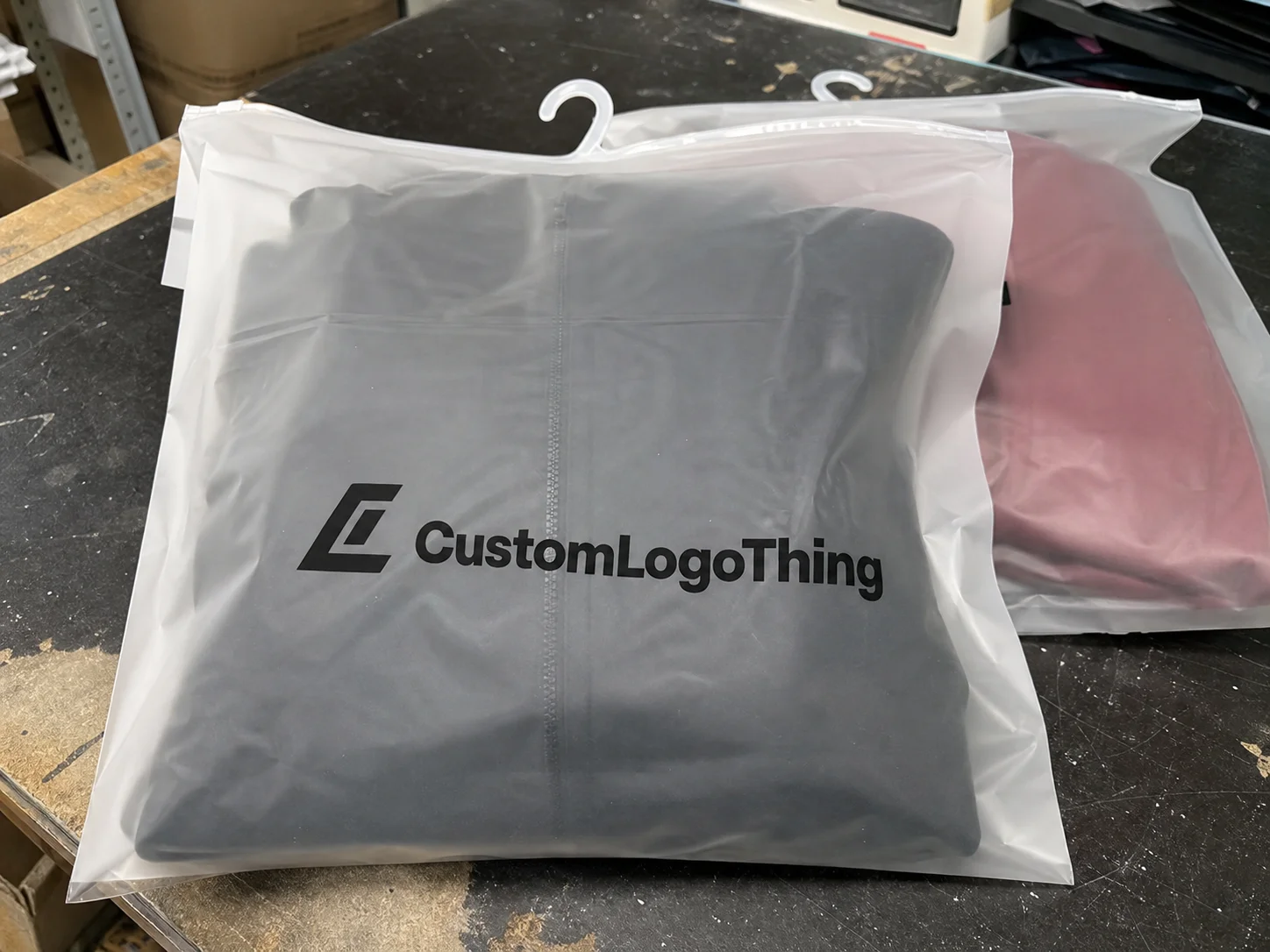
Customization is broader than most buyers expect. You can order matte or glossy finishes, single-color logos, full-coverage graphics, inside printing, and custom sizing that matches apparel folds or accessory cartons. I’ve seen brands make a huge difference with one simple change: moving from a shiny black bag to a soft matte finish with a white logo. The print looked sharper under store lights, and the product looked more premium on social media photos. Printed poly mailers wholesale often get judged on camera as much as at the warehouse. A package that photographs well can quietly do marketing work for free. Free is a lovely price point.
Color control deserves special attention. If your brand relies on a specific Pantone shade, ask how the printer handles matching and whether a tolerance range is defined in the proof. I’ve had clients bring in a teal that looked perfect on screen and then discover that the production ink needed a slight shift to print correctly on polyethylene film. That is normal. The bad news is surprises. The good news is that a proper proof process catches them before a full run of printed poly mailers wholesale is committed. I once watched a team debate “blue” for forty minutes in Shenzhen. Forty. Minutes. At some point you start wondering whether everyone is describing the same planet.
What customers actually notice
In the field, customers rarely talk about microns or adhesive chemistry. They notice three things: whether the bag feels thick enough, whether the print looks centered, and whether the edge seal looks clean. If the bag wrinkles badly or the print sits too close to the seam, the package loses credibility fast. Printed poly mailers wholesale need to look right in the hand and right on a camera phone. That’s especially true for e-commerce apparel and beauty brands, where the mailer may be filmed during an unboxing clip before the product is ever worn or used.
For fragile accessories, I advise checking whether the mailer’s tear resistance is enough to handle sorting conveyors and manual handling. Not every item needs a padded solution, but the bag should survive normal transit abrasion. If the product has sharp edges, add a poly bubble liner or rethink the outer shipper. Printed poly mailers wholesale are versatile, but they are not magic. Match the packaging to the product, then let the branding do its job. I know, that sounds almost too sensible to say out loud, but packaging gets expensive fast when you ignore the obvious.
| Mailer Type | Best For | Typical Finish | Branding Impact | Operational Notes |
|---|---|---|---|---|
| Standard printed poly mailer | Apparel, accessories, soft goods | Matte or glossy | High | Lightweight, fast to pack, strong for volume |
| Inside-printed mailer | Premium apparel, subscription kits | Usually matte outside | Very high | Adds surprise effect; requires design planning |
| Thicker gauge mailer | Heavier garments, multi-item packs | Matte or glossy | Moderate to high | Better puncture resistance; may raise freight weight slightly |
| Mailer with white ink support | Dark artwork, premium branding | Usually customized | High | Improves contrast but can add print complexity |
For buyers comparing Custom Poly Mailers across a few use cases, I recommend starting with actual product dimensions, not the box size that happened to fit last quarter. A 10 x 13 inch garment pack and a 12 x 15 inch bundle may look close on paper, but the closure space and seam allowance can change how the bag performs under pressure. Printed poly mailers wholesale work best when the spec is matched to the item, not guessed from memory. Memory is a terrible measurement tool (I say this lovingly, because I have trusted memory and regretted it more than once).
Specifications to Check Before You Order
Measure the product first. Then add closure space. That simple rule saves a surprising number of costly mistakes. For printed poly mailers wholesale, the right size should fit the folded item with enough room for a clean seal, but not so much room that you pay to ship empty air. Oversized mailers increase material use, can look sloppy, and may push up freight costs if the carton count shifts. I’ve seen brands save more by reducing bag size one inch than by negotiating a tiny discount on print. One inch. That is the kind of number that sounds trivial until it starts showing up on the invoice.
Thickness, often discussed as gauge or micron, affects both puncture resistance and the customer’s impression of quality. A flimsy bag can deform under compression in a carrier network, especially when packed with angular items. A thicker bag feels more deliberate in hand. That said, thicker is not always better. For low-weight apparel, a moderate gauge may be enough, while heavier or sharper goods need more protection. Printed poly mailers wholesale should be spec’d to the product, the route, and the handling profile.
Seal type matters more than most people realize. A strong pressure-sensitive adhesive seal helps prevent tampering and reduces the chance of accidental opening during transit. Some buyers also want a tear strip for easy opening, though this depends on the customer experience you want to create. Moisture resistance is another practical point. Poly mailers are naturally good against splashes, but not every film and seal combination performs the same under rain, cold storage, or humid receiving docks. If your merchandise sits on a porch in Chicago or rides through multiple depots in Memphis, test the seal. I’ve seen a bag fail because of a damp dock and a rushed handoff, and nobody involved was in a good mood afterward.
Print coverage and artwork detail should be checked before approval. Ask whether the printer supports full bleed, white ink, reverse print, and Pantone matching. High-resolution vector art is best; a low-resolution JPG often creates jagged edges or soft text once scaled up. Most factories will want print-ready files in AI, EPS, or a clean PDF. If the artwork has fine lines or tiny taglines, make sure they still read at the bag size you selected. Printed poly mailers wholesale are too visible to leave typography to chance. Tiny text on packaging is where optimism goes to die.
Logistics details matter too. Ask how many bags come per carton, what the carton dimensions are, and whether the finished weight affects freight calculations. A common packing format is 100 bags per carton for smaller sizes and 50 bags per carton for larger formats, though that depends on the factory and the film thickness. Recycling claims should be handled carefully and only if the film structure and local collection streams support them. If you need packaging aligned with sustainability targets, check the material options and documentation. For general packaging and recycling guidance, the EPA recycling basics page is a useful starting point, though your local recovery system still determines what actually gets collected.
Buyers who work in regulated or brand-sensitive categories should also ask about compliance standards. For transit testing, ISTA protocols are often referenced; for fiber-based secondary components, FSC can matter; and for paper-based insert materials, the chain of custody may be relevant. If you are ordering a larger packaging program, it helps to know how the pieces fit together. A factory that understands Custom Packaging Products can keep the mailer spec aligned with inserts, cartons, and shipping labels, instead of treating each piece as a separate project.
Printed Poly Mailers Wholesale Pricing and MOQ
Printed poly mailers wholesale pricing is driven by a handful of variables: size, quantity, print colors, finish, and production complexity. A simple one-color logo on a standard size will cost less than a full-coverage design with inside printing and special matte treatment. That sounds obvious, but I still see buyers compare quotes without checking whether the specs are actually the same. They’re not. A 10 x 13 inch one-color bag and a 14 x 17 inch four-color matte mailer are not peers, even if both are called “custom mailers.” Packaging math has a way of exposing wishful thinking.
MOQ, or Minimum Order Quantity, depends on the production method and the factory’s setup. Smaller runs are available for testing, but the per-unit cost is usually higher because press setup and film prep are spread across fewer units. Deeper wholesale runs drop the unit cost, sometimes sharply. On a recent buyer call, I quoted a brand two pricing tiers for printed Poly Mailers Wholesale: 5,000 pieces at roughly $0.18 per unit and 20,000 pieces at roughly $0.11 per unit, both before freight. The larger order had a higher total spend, of course, but the per-shipment economics were better by a wide margin.
That is where buyers need to think like operators, not just shoppers. A $0.07 difference per bag seems small until the brand ships 15,000 packages in a season. Then it becomes meaningful. I’ve seen those savings pay for upgraded tape, better inserts, or a second round of product photography in Los Angeles. Printed poly mailers wholesale are one of the few packaging lines where unit cost, visual branding, and packout efficiency all move together. Honestly, that triangle is why I pay attention to mailers more than most people expect.
Sample and proof costs should be built into the budget from the start. A digital proof may be included, while a physical sample often carries a fee depending on the setup. Freight matters too. A low ex-factory price can look attractive until the cartons are booked by air or charged into a less favorable zone. Buyers should ask for an all-in estimate that includes production, proofing, and shipping to their destination. That is the real landed cost of printed poly mailers wholesale.
Here’s a practical way to compare order sizes:
- Testing run: 1,000 to 3,000 pieces, higher unit cost, useful for design validation or a seasonal pilot.
- Standard wholesale run: 5,000 to 10,000 pieces, usually the sweet spot for growing e-commerce brands.
- Deep replenishment run: 20,000 pieces and up, lowest unit cost, best for stable artwork and predictable volume.
Seasonality changes the math. If you know Q4 volume will spike or a new product launch will drive repeat ordering, larger printed poly mailers wholesale purchases can make sense because they lock in inventory and reduce reorder risk. If the brand is still changing logos, colors, or seasonal themes every month, a smaller run may be safer. I’ve watched more than one founder overbuy a beautiful bag design, then change the label system two months later. The leftover stock becomes expensive shelf art. It’s the packaging version of buying five black blazers and then deciding your brand is “more casual now.”
For buyers comparing broader buying programs, Wholesale Programs can be a useful route if you want tiered pricing tied to reorder frequency and consistent carton packing. The key is not just getting a quote; it is getting a quote that reflects actual use, storage space, and monthly shipping volume. Printed poly mailers wholesale should support the business model, not strain cash flow.
How Does the Printed Poly Mailers Wholesale Order Process Work?
The order process usually follows a clear sequence: quote, artwork review, proofing, approval, production, quality check, and shipment. The best projects move quickly because the buyer prepares the basics early. The slow projects usually stall at artwork. Fonts are missing, Pantone targets are vague, or the logo arrives as a low-resolution image pulled from a website. When that happens, the proof cycle drags. Printed poly mailers wholesale are efficient to produce, but only after the file is ready.
I’ve seen proof approval cause more delays than machine capacity. A client once asked for three rounds of color tweaks on a metallic logo because the brand team and the sales team had different ideas about “brand blue.” The factory could have produced the order on schedule, but they had to wait for internal sign-off. If you need inventory by a fixed launch date, decide who approves the proof and put that person on the timeline from day one. Otherwise you’ll end up with eight people “just reviewing” the same file and nobody actually moving it forward. Delightful, right?
Typical turnaround depends on complexity and quantity. A straightforward order with approved artwork can move in about 12 to 15 business days from proof approval, while more complex printed poly mailers wholesale projects, especially those with multiple colors or special finishes, may need 18 to 25 business days. Add freight time on top of that. Sea shipping from Yantian to Los Angeles can take about 16 to 24 days port-to-port, while air or expedited transit may be required if launch dates are tight. Buyers should plan the calendar backward from the customer ship date, not from the PO date.
Samples or digital proofs reduce errors before full production. A physical sample is best when the design includes fine text, inside printing, or an unusual finish. Digital proofs are faster and usually enough for simple artwork, but they do not show tactile qualities like gloss level, seal feel, or opacity. I always tell clients that a proof is not just a formality; it is the last low-cost correction point. Once printed poly mailers wholesale go to press, mistakes become expensive.
Shipping and receiving planning matters too. Carton count, palletization, and warehouse storage capacity should be checked before the order lands. I’ve walked into back rooms in Ohio where a brand had ordered the right quantity but nowhere to put 40 cartons of bags. That creates friction with the fulfillment team and slows the launch. Better to confirm carton dimensions, stack height, and receiving windows before the trucks leave the dock. I wish that sounded like a rare mistake. It is not.
For brands interested in testing materials against transit stress, the ISTA test standards site is a credible reference point. Not every order needs a full transit lab protocol, but if your product is fragile, valuable, or shipping internationally, some level of distribution testing can save money later. Printed poly mailers wholesale only work if they survive the actual route.
Why Choose Us for Printed Poly Mailers Wholesale
Custom Logo Things approaches printed poly mailers wholesale the way a packaging buyer would want a supplier to approach it: start with the spec, confirm the artwork, price the actual quantities, and keep the communication honest. I’ve seen too many packaging quotes that sound attractive until the buyer notices the finish, the gauge, or the freight terms were not included. Transparent specs matter more than polished sales language.
What brands need is a packaging partner who can align size, design, and volume in one workflow. That means checking whether the mailer fits the product, whether the logo prints cleanly, and whether the order quantity makes sense for inventory turnover. If a client ships 2,500 packages a month, a 20,000-piece print run may be smart. If they are testing a new SKU with uncertain demand, a smaller order may be the better business call. Printed poly mailers wholesale should match the pace of the company, not force the company to fit the packaging.
Inspection and proofing also matter. A solid production process should include artwork confirmation, pre-press checks, and post-production inspection so the buyer is not discovering alignment errors from customer photos. I’ve worked with factories where a 2 mm shift in seam placement was enough to trigger a reprint because the logo felt visually off-center. That level of detail sounds picky until the package is on the shelf, in transit, and under a buyer’s fingertips. Then it is simply quality control.
Another reason clients come back is practical support. Some need help choosing matte versus glossy. Others need assistance balancing opacity with lightweight construction. Others still want to standardize artwork across several bag sizes so their entire shipping program looks unified. For those situations, a packaging partner who understands both retail presentation and freight handling is worth more than a low quote with vague terms. That is especially true for printed poly mailers wholesale, where the difference between “close enough” and “fit for volume” can show up in returns, damaged shipments, and extra labor.
I also like working with brands that think past the first order. If a customer is planning a label refresh or a seasonal campaign, it helps to build the packaging system around repeatability. Printed poly mailers wholesale, cartons, and inserts can be coordinated so the brand does not reinvent every shipment. That is where a product family like Custom Packaging Products becomes useful: one supplier, compatible specs, fewer surprises.
Here’s the practical truth most people get wrong: packaging only looks expensive when it is badly matched to the order profile. A well-spec’d printed bag can actually lower total handling cost because it speeds packout and improves presentation without adding a separate branding step. That is the value proposition, plain and simple.
Next Steps for Ordering Printed Poly Mailers Wholesale
If you are ready to price printed poly mailers wholesale, prepare five things before you request a quote: bag size, order quantity, artwork file, color targets, and shipping destination. That list sounds basic, but it removes most of the back-and-forth. If you are unsure about size, ask for two or three options so the quote can show how a tighter fit or larger bag changes both the unit price and freight. One extra inch can matter more than people expect.
Ask for a proof, and if possible, a sample review before mass production. A digital proof confirms placement and color direction. A physical sample confirms feel, seal, and print behavior on the actual material. For printed poly mailers wholesale, that small checkpoint can prevent a large, expensive reprint. I would rather delay a launch by two days than explain 10,000 misprinted bags to a finance team. That meeting sounds like a punishment nobody deserves.
Plan reorder timing around your monthly shipping volume. If your brand ships 3,000 bags a month and lead time is 12 to 15 business days from proof approval, you do not want to wait until the last pallet is gone. Give yourself a cushion for freight, customs if applicable, and warehouse receiving. A reorder placed early is cheaper than an emergency air shipment, and it keeps your shipping line from stalling.
One more thing: compare specs, not just prices. Ask whether the quote includes the exact material thickness, print count, seal type, and carton packing quantities. A lower quote without those details is not a real comparison. Printed poly mailers wholesale only make sense when the numbers and the spec sheet line up.
Send the project details, confirm the artwork, and ask for a landed-cost quote. If you want a branded mailer that ships well, looks clean, and fits the numbers, that is the right starting point. For brands that are ready to scale, Custom Poly Mailers ordered through a structured wholesale process are usually the most efficient path forward.
My direct advice: do not buy printed poly mailers wholesale on appearance alone. Buy them on fit, print quality, freight math, and reorder consistency. That is how packaging earns its place in the margin, and it is the reason the same buyer comes back season after season.
FAQ
What is the minimum order for printed poly mailers wholesale?
MOQ depends on size, print colors, and production method. Smaller runs are often available for testing, but wholesale pricing improves as quantity increases. A factory in Guangdong may start a custom run at 1,000 pieces, while a larger flexo program often gets better pricing at 5,000 pieces or more. Ask for tiered pricing so you can compare entry-level and bulk options before committing.
How much do printed poly mailers wholesale usually cost?
Price is driven by quantity, dimensions, material thickness, and print complexity. Single-color logos typically cost less than full-coverage or multi-color designs. For example, a 10 x 13 inch mailer might run about $0.15 per unit for 5,000 pieces, while a larger four-color bag can move closer to $0.28 per unit at the same quantity. Freight and proofing can affect the final landed cost, so request an all-in quote.
What artwork file do I need for printed poly mailers wholesale?
Vector files such as AI, EPS, or high-resolution PDF are preferred. Fonts should be outlined and colors specified clearly to avoid proofing delays. If you only have a JPG or PNG, ask whether it can be converted for print. For best results, many printers want artwork at the final bag size with all critical text kept at least 5 mm from the trim edge.
How long does production take for printed poly mailers wholesale?
Timeline varies by order size, artwork approval speed, and current production load. A straightforward order typically takes 12 to 15 business days from proof approval, while more complex projects can take 18 to 25 business days. Build extra time for sea freight from ports like Shenzhen or Ningbo if you need inventory at a fixed launch date.
Can printed poly mailers wholesale be customized for multiple sizes?
Yes, many brands order different sizes for apparel, small goods, and larger items. Using size-specific mailers can reduce void space and improve shipping efficiency. A brand might order 9 x 12 inches for accessories, 10 x 13 inches for folded tees, and 14 x 17 inches for hoodies. Ask whether you can standardize artwork across sizes to simplify branding and reorders.